By SaffronStays • Malpe • Independence Day 2026 • Karnataka Coast • Weekend Getaways
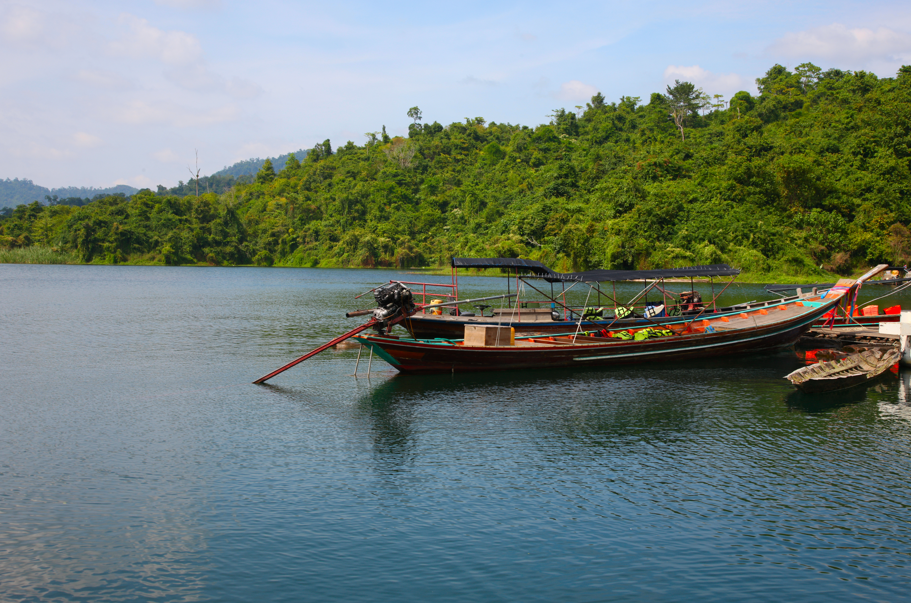
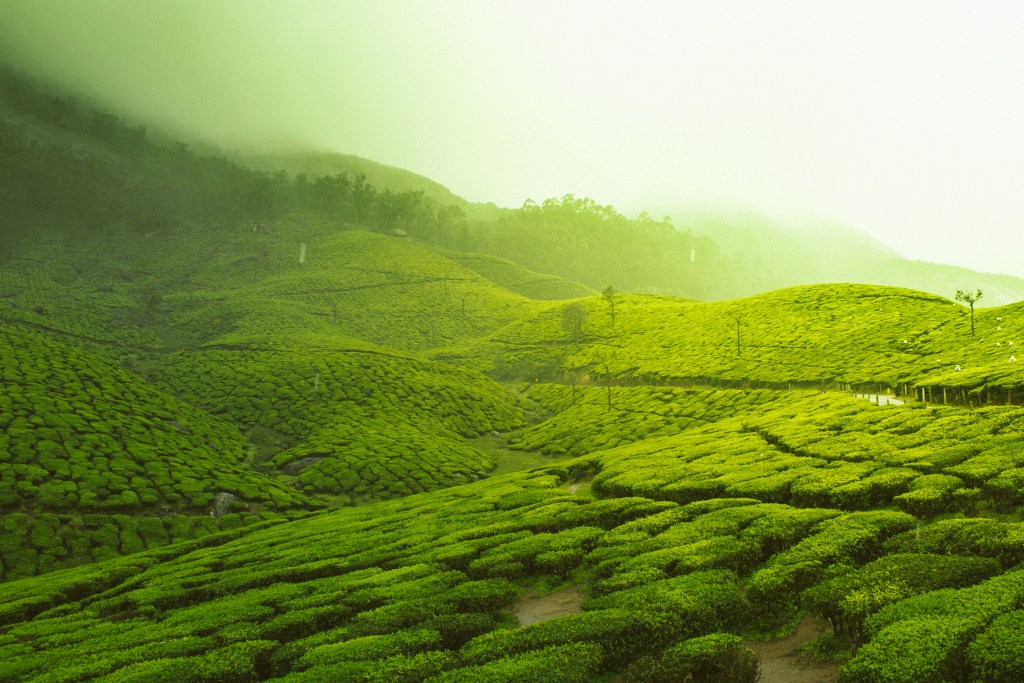
Udupi carries its name into restaurants across the country, dosa and filter coffee travelling far beyond the coastal temple town where that tradition actually started. The town itself sits about seven hours from Bangalore, and August here means something different from a beach holiday: the temple at its most atmospheric, backwaters running full through the monsoon, and a coastline better suited to walking than swimming this particular month. Independence Day 2026 falls on a Saturday, and a Friday off turns this into a proper three-day trip instead of a rushed one.
Bangalore’s own Independence Day ceremony brings no-parking zones and road closures around Central Street, Cubbon Road and MG Road on August 15. Anyone driving through the city centre that morning should route around it rather than through it.
Getting There: A Real Long Weekend, Not a Quick Trip
Bangalore to Udupi is not a casual drive, and this piece will not pretend otherwise. The most direct route runs via NH75 through Hassan and the Charmadi Ghat, a scenic stretch through the Western Ghats that is also the part of the journey most affected by monsoon conditions; heavy rain can slow the ghat section considerably. An alternate route via Shimoga adds distance but avoids the steepest ghat driving, worth considering if the weather forecast looks unsettled on travel day.
Leave early. A 6 AM start from Bangalore makes the difference between arriving in daylight and finishing the ghat section after dark, which is worth avoiding regardless of season.
Hejamady Beach, Udupi
What August Actually Offers Here
Malpe Beach and the coast around Udupi are not swimming destinations this month. Tides run high through the monsoon, and SaffronStays’ own guidance on visiting Udupi is direct about it: the season is not ideal for beach activities. St Mary’s Island, the basalt rock formation a boat ride from Malpe, frequently suspends its ferry service in rough seas, so treat a visit there as weather-dependent rather than guaranteed.
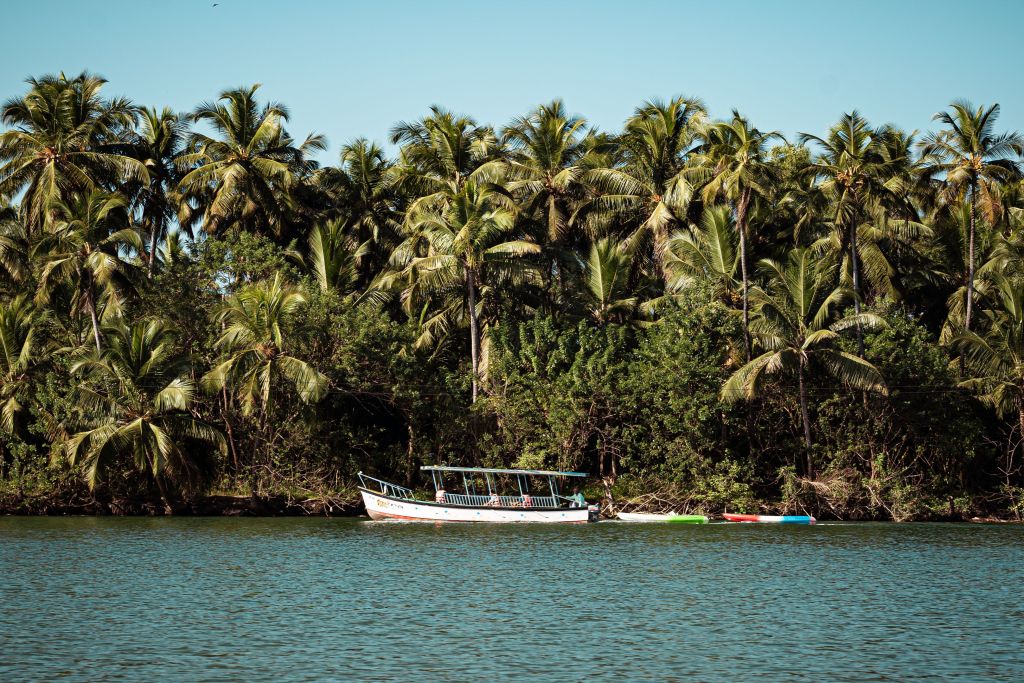
What August does offer instead: a temple town at its quietest, and backwaters at their fullest.
What the season does hand over is different. The backwaters around Udupi run full and green, walking weather along the coast is pleasant between showers, and the town’s temple culture, which runs on its own calendar regardless of tide charts, is worth the trip on its own. Kapu Lighthouse, about 15 kilometres south of Udupi, is a better coastal stop than the beach itself this month: the walk up is short, the structure has stood since 1901, and the viewing point sits high enough to watch the monsoon surf from a safe distance rather than in it. Swimming is not advised here either; the sea runs just as rough as it does at Malpe.
Where to Stay in Udupi
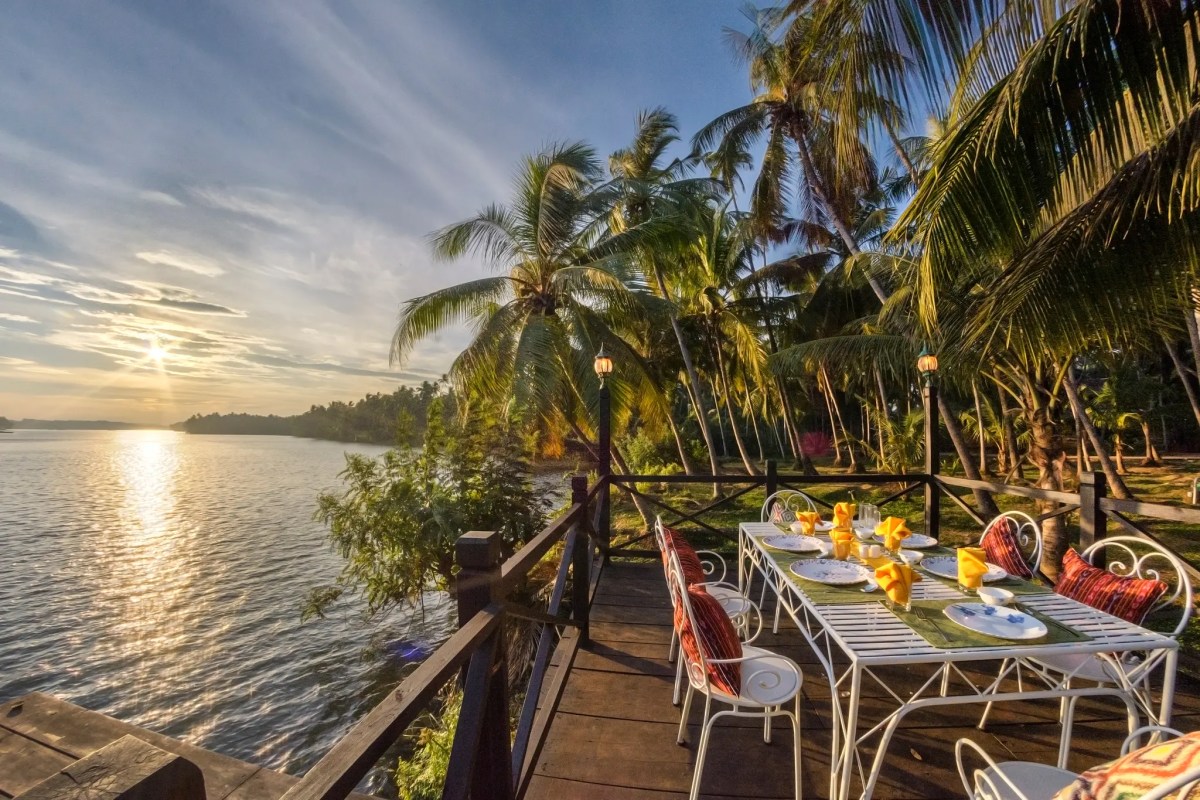
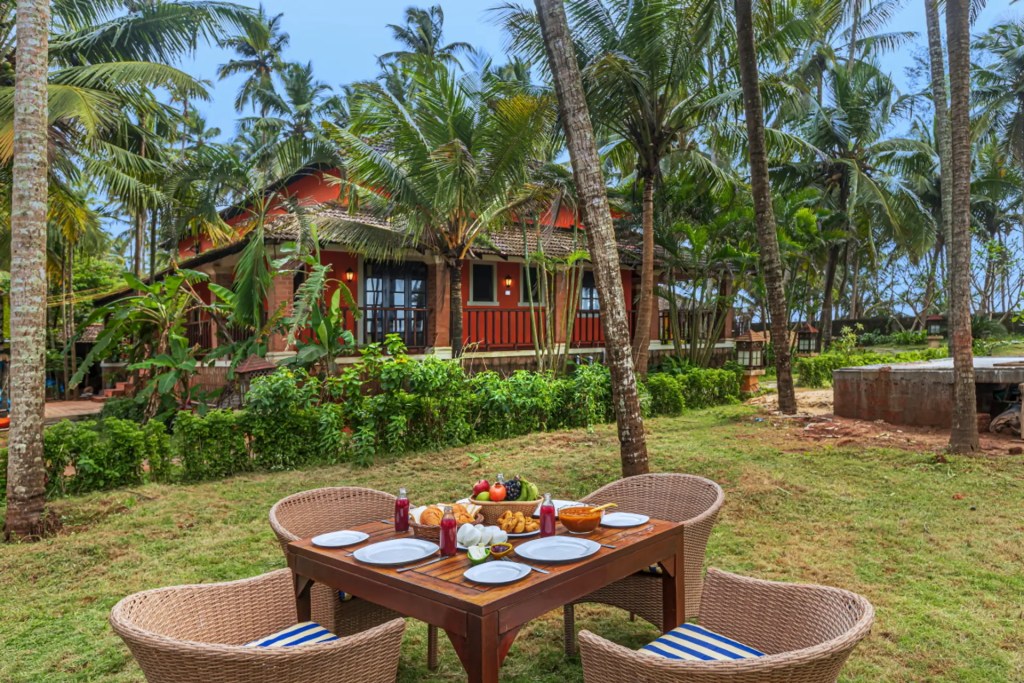
Beachfront private pool villa, Blue Flag House, Udupi
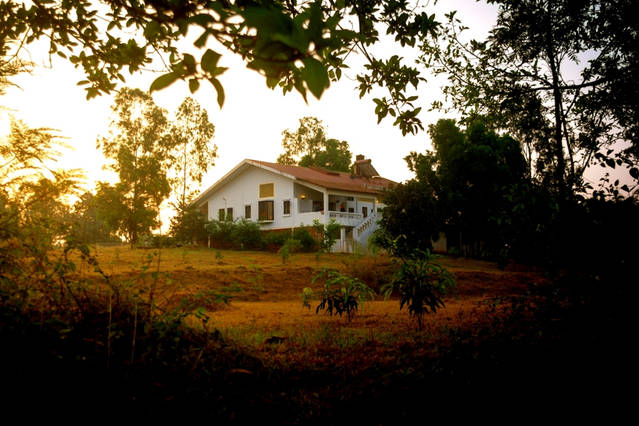
Two villas here cover different versions of this trip. SaffronStays Blue Flag House is a three-bedroom beachfront villa in Hejamady, close enough to the coast to make walking, not swimming, the plan, with a private pool that does the actual swimming work this month. It suits a group that wants the sea nearby without needing to enter it.
SaffronStays Suvarna Sangam Sharavathi takes the quieter, inland version instead: a one-bedroom riverfront villa built for a couple or small family, where the water views come from a backwater rather than the open coast. It suits a smaller, slower trip over a group getaway.
Krishna Matha and the Real Story Behind Udupi Food
Udupi cuisine, the dosa-and-filter-coffee tradition now found in restaurants across the country, started here, at the Krishna Matha temple founded by the philosopher Madhvacharya in the 13th century. The temple kitchens developed sattvic vegetarian cooking, no onion, no garlic, meant as offerings to Krishna, and those same principles still shape what gets served at the temple’s free dining hall today, where devotees are fed twice daily, seated on the floor and served off trolleys.
August carries a specific significance here beyond the monsoon itself: it falls within Chaturmasa, a four-month religious observance period with its own dietary restrictions in the temple kitchens. The temple stays fully open to visitors through this period, free meals continue as usual, and the restrictions affect the kitchen’s ingredients rather than anyone’s ability to visit. For anyone curious about where the dosa actually came from, this is the source, not a recreation of it.
Is This Weekend Worth the Drive
Nine hours each way is a real commitment, and this trip suits a proper three-day weekend more than a rushed two-day one. For anyone who can take Friday, August 14 off, the math works: a full day and two nights in Udupi still leaves real time to see the temple, walk the coast, and use the villa itself as much of the plan. Split the drive if nine hours straight feels like too much in one push; Chikmagalur, roughly three hours from Bangalore and two from Udupi on the route via Agumbe, works as a one-night stop for anyone willing to turn this into a four-day trip instead of three.
Skip it if the only free time is Saturday and Sunday alone; the drive would eat most of both days. Better to wait for a longer window than to spend a weekend mostly in the car.
Temple bells, sea air, and someone else cooking. Browse private-pool villas in Udupi on SaffronStays and lock your Independence Day long weekend.
Frequently Asked Questions
How far is Udupi from Bangalore?
About 400 to 440 kilometres depending on route, roughly 6 to 9 hours by road via the Charmadi Ghat. This is a genuine long-weekend distance rather than a quick day trip.
Is it safe to swim at Malpe Beach in August?
Not recommended. Malpe carries explicit monsoon advisories for high tides and strong currents. SaffronStays’ own guidance notes that monsoon is not ideal for beach activities in Udupi; a villa pool is the safer way to swim this month.
Is St Mary’s Island open in monsoon?
Boat service to the island is frequently suspended in heavy rain and rough sea conditions. Check locally on the day rather than assuming the crossing will run.
What causes Independence Day traffic in Bangalore?
The city’s own flag-hoisting ceremony brings no-parking zones and road closures around Central Street, Cubbon Road and MG Road on August 15. Confirm the current advisory closer to the date.
What is the best villa in Udupi?
SaffronStays Blue Flag House, a three-bedroom beachfront villa in Hejamady, suits a group that wants the coast close by. SaffronStays Suvarna Sangam Sharavathi, a one-bedroom riverfront villa, suits a couple or small family wanting quiet backwaters instead.
Can Krishna Matha be visited during Chaturmasa?
Yes. The temple remains open and the twice-daily free meals for devotees continue as usual; Chaturmasa affects the temple kitchen’s ingredient restrictions, not visiting hours.
What changes in the city, where to stay, and how to get there from Gujarat, Madhya Pradesh, Mumbai, Delhi and Pune
Udaipur looks like a different city once the monsoon arrives. For most of the year, it is a place people visit for clear skies and dry heat, its lakes and white marble palaces photographed under bright winter sun. Between July and September, that picture changes. The Aravalli hills around the city turn green. The lakes rise to levels they hold for only a few months a year, and the light softens into a grey that suits old sandstone and marble better than sharp sunlight usually does.
Most travel advice still treats Rajasthan as a winter destination and skips the monsoon question entirely. That misses what makes this particular season worth planning around. Udaipur was built around its lakes, quite literally, and monsoon is really the only time of year the city looks the way it was designed to look.
Table of Content:
What Changes in Udaipur During Monsoon
Lake Pichola existed before the city did, but Maharana Udai Singh II expanded it further when he founded Udaipur here in 1559. Every ruler after him added another lake, or another palace on an island in the middle of one, and the whole city grew up around water and reflection. For most of the year, Pichola and Fateh Sagar, the two main lakes, sit well below their full level. Monsoon changes that. Rain usually arrives through July, and by August both lakes are close to full, deep enough that the City Palace and its reflection blur into one another on a calm morning.
The weather itself is easier than most people expect. Rain tends to arrive in short bursts rather than settling in for the whole day, so mornings are often clear enough for sightseeing, with showers more likely in the afternoon or evening. Daytime temperatures run from the high 20s to low 30s in degrees Celsius, a real drop from the 40°C-plus the city sees in May and June. The crowds thin out too. Winter remains the busiest season for tourism in Udaipur, which makes monsoon the quietest and most affordable time to visit.
Monsoon shows Udaipur the way it was actually built to look.
Things to Do in Udaipur in Monsoon
The City Palace is worth visiting twice if there is time. Go once in the late morning, when the light is flat and even, and again closer to evening, when the marble catches whatever sun breaks through the clouds. A boat ride on Lake Pichola works better in monsoon than in any other season. The water sits high enough for the palace and surrounding hills to reflect clearly, instead of the muddy shallows visible for most of the year.
Above the city, Sajjangarh, better known as the Monsoon Palace, was built in the 1880s by Maharana Sajjan Singh specifically to watch the clouds roll in over his kingdom. The drive up passes through a wildlife sanctuary that stays thick with mist through most of the season, and on a clear break in the weather, the view from the top stretches across the whole lake basin.
In the evenings, Bagore Ki Haveli, a restored eighteenth-century mansion on the Pichola waterfront, runs a nightly Dharohar dance show, a set of Rajasthani folk performances that ends with a dancer balancing seven brass pots on her head. During monsoon, the courtyard show has rain for a soundtrack, which makes it a good deal more atmospheric than the same performance in dry summer heat.
Food is worth building time around too. A Rajasthani thali, usually a dozen small dishes built around dal, gatte and kadhi, tastes better after a morning spent outdoors in cooler air. The cafés along the lake, half-empty for most of the year, fill up just enough in monsoon to feel lively, without a wait for a table. The old city rewards slow walking as well. Hathi Pol Bazaar, close to the City Palace, is where most of the miniature paintings and Pichwai art on sale in Udaipur are actually made, not just sold.
Where to Stay in Udaipur
Where a traveller stays in Udaipur changes the kind of trip it becomes. SaffronStays Rang Havelii sits close enough to the City Palace to share a version of the same rooftop views. The haveli took a year and a half to rebuild from near-ruin. Each of its eight rooms is designed around a different Rajasthani city’s craft tradition: Molela wall art from a village near Chittorgarh, marble from Makrana, sandstone floors from Dholpur. The rooftop pool looks out at the City Palace on one side and the Karni Mata hills on the other.
Pristine Manor takes a quieter approach. It sits between two lakes, a few hundred metres from Fateh Sagar, with a ten-thousand-square-foot garden that turns fully green by August, room enough for a large family or a pre-wedding function without feeling crowded. Kilakot, also near Fateh Sagar, is built around the same idea: slow mornings, open living, no fixed itinerary.
Between the three, most of what a traveller wants from Udaipur is covered: proximity to the palaces for anyone here to look at architecture, and enough distance from the noise for anyone here mainly to slow down. We have written a full lake-by-lake, café-by-café guide to Udaipur’s monsoon season separately, for anyone planning to spend a full week in the city rather than a long weekend.
Hariyali Teej Falls in August This Year
August adds one more reason to plan around this season. Hariyali Teej, Rajasthan’s main monsoon festival, falls on 15 August this year. It marks the reunion of Shiva and Parvati, and the name roughly translates to green festival. For one day, women dress in green, apply fresh henna, and hang swings from trees and courtyard beams. Rajasthan calls it Shingara Teej locally, and it is celebrated more visibly here, with processions and decorated swings in courtyards and temples, than in most of the other states that also mark the day. It is not something a trip needs to be built around, but arriving during Teej week adds a genuine layer to a Udaipur visit that a dry-season trip does not offer.
Mount Abu: A Short Detour for Drivers
For anyone driving in from Gujarat, and often Madhya Pradesh too, Mount Abu makes a natural stop before or after Udaipur. It is Rajasthan’s only hill station, and the monsoon contrast is dramatic. While the rest of the state sits above 40°C in July, Mount Abu settles into the low twenties, with cloud low enough to touch the hills around Nakki Lake. The Dilwara Temples, a set of 11th and 13th century Jain temples known for their fine marble carving, are worth the climb in any season, but rain does nothing to them except clean the stone.
Rain does nothing to the temples except clean the stone.
SaffronStays Sylvan Farms sits on a hilltop above the town, its gardens and small working farms turning green through the season. Mount Abu to Udaipur is about 160 km, a three-hour drive through hills that turn from brown to green within a few weeks each year.
Getting to Udaipur
For Gujarat, Udaipur is close enough to be a proper weekend trip rather than a full holiday. Ahmedabad to Udaipur is about 260 km by road, a drive of 4.5 to 5 hours via NH48, and it is a route Ahmedabad already knows well, usually for weddings in the winter months. Vadodara and Surat add roughly one to two hours to the drive but follow largely the same road through Mehsana and Palanpur. Driving remains far more common than flying on this route, since the highway is faster door to door than the airport connections from Ahmedabad. Travellers routing through Mount Abu, Rajasthan’s only hill station and already a popular stop for Gujarat travellers, should plan for a full day of driving, with the hill station as a stop along the way rather than a separate detour.
From elsewhere in India, flying is usually the more practical option. Madhya Pradesh is the exception: Indore to Udaipur is about 390 km, roughly 5.5 to 6 hours by road, similar to the Gujarat drive, or under an hour and a half by direct flight. Delhi and Mumbai both have several direct flights to Udaipur a day, each taking around 1.5 hours, a shorter trip than the 10 to 13 hour drive from Delhi or the 750 km-plus drive from Mumbai. Pune has fewer direct options, with most flights connecting through Delhi, Mumbai or Ahmedabad and total travel time running 5.5 to 9 hours depending on the layover. Trains cover all of these routes too, but at 11 hours or more, they suit travellers who prefer an overnight journey over a short flight.
Planning the Trip
Monsoon runs July through September in Udaipur and the surrounding region. Rain tends to arrive in short spells rather than lasting all day, so most mornings stay clear enough for sightseeing. Daytime temperatures: high 20s to low 30s (°C) in Udaipur, low-to-mid 20s in Mount Abu, both a real break from the 40°C-plus both places see in peak summer. Ahmedabad to Udaipur: ~260 km, 4.5 to 5 hours by road. Indore to Udaipur: ~390 km, 5.5 to 6 hours by road. Delhi and Mumbai to Udaipur: ~1.5 hours by direct flight. Pack light layers for daytime humidity, something warmer for Mount Abu evenings if that is part of the trip, and a proper rain layer rather than a travel umbrella.
None of this needs much planning. A long weekend covers Udaipur comfortably on its own. Four or five days allow time for Mount Abu too, for anyone driving in from Gujarat or Madhya Pradesh. A private villa suits this season particularly well, since rain becomes part of a slow day rather than an interruption to a packed one. What changes most about a monsoon trip to Udaipur is not the itinerary but the season most people skip entirely. Winter shows the city at its clearest. Monsoon shows it the way it was actually built to look: lakes full, marble catching grey light instead of hard sun, and considerably fewer crowds in between.
Is Udaipur worth visiting in the monsoon, or is winter really the better season?
Winter remains the most comfortable season for sightseeing, but monsoon is when Udaipur’s lakes, Pichola and Fateh Sagar especially, fill closest to the level they were originally built for, and the city empties of winter crowds.
Is Udaipur a good weekend trip from Ahmedabad?
Yes. At around 260 km and 4.5 to 5 hours by road, Udaipur is one of the easiest weekend drives out of Ahmedabad, Vadodara or Surat, and it is a route Gujarat travellers already make often for weddings and family functions.
How do I reach Udaipur from Mumbai or Delhi?
Both cities have frequent direct flights to Udaipur, taking around 1.5 hours. Trains run too, but take 11 hours or more, so flying is the practical option for a short trip.
Is Indore a good starting point for a Udaipur trip?
Yes. Indore to Udaipur is about 390 km, roughly 5.5 to 6 hours by road, similar in length to the drive from Ahmedabad, and there are also direct flights under an hour and a half.
Can Mount Abu be combined with a Udaipur trip from Gujarat?
Yes, easily. Mount Abu and Udaipur are about 160 km and 3 hours apart, and it is a common route for Gujarat travellers driving in via Ahmedabad.
What is Hariyali Teej, and does it affect travel plans?
Hariyali Teej is Rajasthan’s main monsoon festival, marking the reunion of Shiva and Parvati with green clothing, henna, and decorated swings. In 2026 it falls on 15 August. It does not close attractions, but it brings extra colour and local celebration that week.
The sky over the Alleppey backwaters is the colour of pewter. The water in the canals reflects it perfectly. Rain falls in fine curtains that drift across the lagoons. The banks are so green they barely look real. And there is almost nobody else here.
This is what Kerala looks like when most of India has decided not to come.
Every year, travellers look at the June forecast, see rain, and pivot to the hills. Manali fills up. Shimla overflows. And Kerala, sitting at the other end of the country with its backwaters and its tea estates and its ancient Ayurveda retreats, gets quietly to itself.
Which is, of course, precisely the point.
The monsoon does not diminish Kerala. It reveals it. The tea estates in Munnar turn a green so saturated it looks painted. Waterfalls that were dry rock faces in March are now roaring. The Ayurveda retreats along the coast are at their most effective, because Ayurvedic physicians have recommended the humid monsoon air as the optimal season for deep treatments for centuries. And villa rates, flights, and resort prices across the state drop by 40 to 50 per cent the moment the rains arrive.
The version of Kerala that most visitors see is the polished, peak-season one. The monsoon version is the real one.
Table of Content:
A Landscape Built for Rain
Kerala is not a destination that merely tolerates the monsoon. It is a place that was designed for it.
The landscape here has been shaped by centuries of heavy annual rain. The backwater canal system exists because of it. The spice plantations, the paddy fields, the waterfall-threaded Western Ghats, and the entire tradition of Ayurveda all grew around the rhythm of a landscape that floods and drains and floods again every year without complaint. When the rains arrive, Kerala does not shut down. It opens up.
In 2026, the southwest monsoon reached Kerala on 24 May, the earliest arrival since 2009. By the time most travellers are reading this, the transformation is already complete: waterfalls at full volume, tea gardens gleaming, paddy fields flooded. The seasonal forecast is 92 per cent of the Long Period Average, which means a full, well-established monsoon without the exceptional flooding of unusual rainfall years. For a visitor, this is close to the ideal window.
Alleppey: The Backwaters Without the Tourists
If you have ever seen a photograph of the Kerala backwaters, it was probably taken in December or January. Blue sky, white clouds, a houseboat drifting between coconut palms. Beautiful, certainly. But it is the tourist version.
The backwaters in the monsoon are something else entirely. At night, with the rain on the roof and the water all around, the canals are as quiet as anywhere in India. The kind of quiet that a place surrounded by other tourists in high season simply cannot offer.
The practical question people ask about Alleppey in June is whether the houseboat experience is still good. The honest answer is yes, with some adjustments. Cooking on board continues. Canal cruises operate normally. The difference is that you spend more time on the covered deck watching the rain and less time sitting out in direct sun, which, to most people who have visited the backwaters in February and returned dehydrated and sunburned, turns out to be a significant improvement.
A private villa stay on the backwaters in June gives you something a houseboat cannot: a fixed point with a garden, a kitchen producing fresh Kerala meals, and the ability to wake up to the sound of rain on water without the slight motion sickness that some guests experience on houseboats during heavier rain.
Ayurveda: Why the Monsoon Is the Only Season That Matters
This is not a marketing angle. It is traditional medicine.
Kerala Ayurveda practitioners have recommended the monsoon months, specifically June through August, as the optimal window for Panchakarma and deep detoxification treatments for centuries. The reasoning is physiological: the humid air opens the pores, makes the skin more receptive to oil-based therapies, and the cooler temperatures reduce the body’s stress responses, allowing treatments to penetrate more effectively.
Kerala Tourism’s official programme actively promotes June to August as the peak Ayurveda season. Serious practitioners plan around it. The best clinics and retreat centres are busiest, not quietest, during these months.
Most visitors think of Ayurveda as a nice add-on to a Kerala trip. In June, it is the reason to come.
For a SaffronStays guest, this means that the private villa stays near the backwaters and hill estates are close to some of Kerala’s finest Ayurvedic centres. Treatments can be arranged on-site at several properties, including the WellBeingVilla in Wayanad, which is built specifically around Ayurvedic wellness in a five-bedroom ancestral home amid plantations.
Wayanad: When the Hills Finally Breathe
Wayanad in the monsoon is a different world from Wayanad in December.
The Vythiri forests turn dense and dark. Waterfalls that were dry tracks of rock in March are now roaring cascades. The tea estates around Kalpetta and Lakkidi glow in a way that photographers specifically travel for. Mornings begin in mist so thick you can barely see the valley below.
Important: Wayanad travel advisory for June 2026 The Chooralmala and Mundakkai areas in Meppadi panchayat (Vythiri taluk) remain restricted following the July 2024 landslides. These areas are not accessible to tourists. Check Kerala State Disaster Management Authority advisories before travel, particularly for any hill-station treks in the Vythiri area. The rest of Wayanad, including Kalpetta, the tea estates, Edakkal Caves, Soochipara Falls, and Pookode Lake, is open and welcoming visitors.
With that caveat clearly stated: Wayanad in June is genuinely magnificent for travellers who plan thoughtfully. The Cholamala waterfall, which gives its name to the SaffronStays six-bedroom waterfront pool villa on the hill, is at full volume. The private natural pond on the 12-acre property, fed by a stream, is full. The forests surrounding the estate are alive in a way that simply does not exist in the dry season.
Wayanad rewards travellers who want to be inside the landscape rather than photographing it from a viewpoint. In June, there is no better way to do that than from a private villa with a garden that has been waiting all year for the rain.
The Numbers That Make This an Easy Decision
Beyond the atmosphere and the Ayurveda, there is a straightforward financial argument for Kerala in June.
Flights to Kochi (COK), Trivandrum (TRV), and Calicut (CCJ) from Delhi, Mumbai, and Bangalore are 40 to 50 per cent cheaper in June than in December and January. Five-star resorts that charge Rs 15,000 or more per night in peak winter are available for Rs 4,000 to Rs 7,000 in June. SaffronStays villas across Alleppey and Wayanad reflect a similar pattern, with meaningfully better rates than the winter peak for the same properties.
The same private villa on the Alleppey backwaters that costs Rs 18,000 a night in December might cost Rs 11,000 in June. The backwaters look better in the rain. You do the maths.
This makes June particularly compelling for groups. A family of eight or ten sharing a private villa with a caretaker, backwater views, and in-villa Kerala meals gets a genuinely luxurious experience at a price that would have been impossible in peak season.
What You Are Walking Into: The Honest Version
There is no value in pretending the monsoon is entirely without inconvenience. It is worth being specific about what to expect so you can plan accordingly.
Rain is persistent, not constant. Most days have dry windows in the morning and heavier rain in the afternoon and evening. Plan outdoor activities for mornings.
Sea swimming is not advised. Tides are rough and beaches carry red flag advisories through most of June. The backwaters, lakes, and hill estates are the right focus.
Some treks and outdoor activities close temporarily during heavy rain. Rafting on certain rivers does not reopen until July. Build flexibility into your itinerary.
Leeches appear in forested and damp areas. Wear high socks and closed shoes for any plantation or forest walk. They are harmless but worth knowing about.
Power cuts can happen during heavy rain in more remote areas. Private villa caretakers typically have generators or inverters. Worth confirming at booking.
Roads in hill areas can be slower after heavy rain. Check the Kerala State Disaster Management Authority website before driving into highland zones.
The travellers who love Kerala in June are those who come for the rain, not despite it. If your trip is built around the backwaters, plantation stays, Ayurveda, and the atmosphere of a landscape fully alive, June rewards you. If it is built around beach days, boat rides on open sea, or a checklist of viewpoints, wait until October.
Getting There
Kerala has three major airports: Kochi (COK), Trivandrum (TRV), and Calicut (CCJ). For Alleppey and the backwaters, Kochi is the closest at roughly 80 kilometres or two hours by road. For Wayanad, Calicut is the more practical option at around 75 kilometres from most estate stays.
By train, the Rajdhani and express services from Mumbai and Delhi reach Ernakulam (Kochi) and Shoranur well. Trains are comfortable, scenic through the Ghats, and weather-independent, which makes them a solid choice over flying during heavy rain periods.
By road from Bangalore, Wayanad is around 280 kilometres, typically five to six hours. The drive through the Ghats is spectacular in the monsoon, with cloud cover rolling through the passes, though it requires careful driving and checking road conditions before departure.
The Right Kind of Stay Changes Everything
There is a version of a Kerala trip that involves a large resort, a shared dining hall, a pool that nobody uses because it is raining, and the general feeling of being in a building rather than in Kerala. Most chain hotels in the state, however pleasant, put a layer of hospitality infrastructure between you and the landscape.
A private villa removes that layer entirely.
On the backwaters, waking up in a SaffronStays heritage homestay in Alleppey means stepping onto a garden that touches the water. Your caretaker has already made the filter coffee. The rain is doing something interesting to the surface of the canal. There is nowhere you have to be. Breakfast can wait. The Kerala morning is doing its best work right now, and you are inside it.
In Wayanad, a private villa set in a tea estate or against a forest means the monsoon is not something happening outside your window. It is the entire environment: the smell of it, the sound of it, the way it changes the light every twenty minutes. A hotel room cannot give you that. A private estate can.
FAQ: Kerala in Monsoon
PUBLISHING NOTE These 6 Q&As appear in the visible body of the post. The schema code below goes into the WordPress Custom HTML block or RankMath Schema tab only. Never paste schema into the post body.
Is Kerala worth visiting in June?
Yes, for the right kind of traveller. June is Kerala’s monsoon peak: the landscapes are at their most vivid, Ayurveda retreats are at their most effective, prices are 40 to 50 per cent lower than peak winter, and the state is wonderfully uncrowded. The trade-off is persistent rain, rough sea conditions, and the need for flexibility in outdoor plans. Travellers who come for the backwaters, plantation stays, and Ayurveda find June transformative. Travellers who come for beach holidays are better off waiting until October.
When does the Kerala monsoon start in 2026?
The 2026 southwest monsoon made landfall over Kerala on 24 May, the earliest onset since 2009. By June 4, the monsoon is fully established across the state. Wayanad and Munnar received their first heavy rain within 48 hours of onset. Seasonal rainfall is forecast at 92 per cent of the Long Period Average, classified as normal.
Is Alleppey good to visit in June?
Yes. The backwaters are at their most atmospheric in June: rain-speckled, quiet, and impossibly green. Houseboat and canal cruise operations continue normally. Sea swimming is not advisable due to rough monsoon tides, but the backwater experience has nothing to do with the sea. A private villa stay on the backwaters in June is one of the most distinctive travel experiences in South India.
Is Wayanad safe to visit in June 2026?
Most of Wayanad is open and welcoming visitors. The Chooralmala and Mundakkai areas in Meppadi panchayat remain restricted following the July 2024 landslides. Before any hill-area trekking, check the Kerala State Disaster Management Authority advisories. The tea estates, Edakkal Caves, Soochipara Falls, Pookode Lake, and most estate stays are unaffected and accessible.
What is Ayurveda season in Kerala?
June to August is the traditional Karkidakam or Ayurveda season in Kerala. The monsoon humidity opens the pores and makes the body more receptive to oil-based Panchakarma therapies. Kerala Tourism and Ayurvedic physicians have promoted this period as the optimal window for deep treatments for decades. The best Ayurveda clinics and retreat centres in the state are at their most active during these months.
How much cheaper is Kerala in June vs December?
Flights to Kochi, Trivandrum, and Calicut are typically 40 to 50 per cent cheaper in June than in December and January. Five-star resorts that charge Rs 15,000 or more per night in peak winter are available for Rs 4,000 to Rs 7,000 in June. SaffronStays villa rates reflect a similar pattern, with significantly better rates for the same properties in the monsoon months compared to peak season.
There is a particular kind of morning that only coffee country can offer.
You wake up to the sound of rain tapping softly against tiled roofs. Wisps of cloud drift lazily through rows of coffee bushes. The air smells of wet earth, pepper vines, and freshly brewed filter coffee. Somewhere in the distance, a Malabar whistling thrush announces the start of another monsoon day.
This is June in Karnataka’s coffee heartland.
While much of the country is battling rising temperatures, the hills of Coorg and Chikmagalur begin their annual transformation. Coffee estates turn emerald green, waterfalls return to life, and the roads winding through the Western Ghats become some of the most scenic drives in South India.
Whether you are planning a family getaway, a slow monsoon escape, or simply want to spend a few days surrounded by coffee plantations and mountain views, Coorg and Chikmagalur offer two distinct yet equally memorable experiences.
Table of Content:
Why June Is the Sweet Spot for Karnataka’s Coffee Country
Most travellers associate hill stations with summer. Seasoned travellers know that coffee country comes into its own once the rains arrive.
June marks the beginning of the monsoon season across Coorg and Chikmagalur. The first showers wash away the dust of summer, streams begin flowing again, and entire valleys disappear beneath blankets of mist. The weather remains pleasantly cool, typically ranging between 18 and 25 degrees Celsius, making it ideal for long walks through plantations, leisurely breakfasts overlooking the hills, and afternoons spent listening to rain from a covered verandah.
Unlike peak holiday periods, June also brings a quieter atmosphere. Roads are less crowded, viewpoints feel more intimate, and plantation stays offer a sense of privacy that is increasingly difficult to find in popular destinations.
Practical note: early June (before the 15th) is the most rewarding window. The hills have already greened up and waterfalls started flowing, but the heaviest sustained rain has not yet arrived. Carry a waterproof layer, wear high socks on plantation walks (leeches appear in damp undergrowth), and build flexibility into your plans. Some trails close temporarily after heavy rain.
Coorg: Where Families Find Space to Slow Down
Ask anyone in Karnataka about their favourite monsoon destination and chances are Coorg will feature near the top of the list.
Known as the Scotland of India, Kodagu district combines rolling coffee estates, forested hills, rivers, and charming plantation homes that have been welcoming guests for generations. For families looking for private villa stays in Coorg, the region offers a compelling alternative to conventional hotels. Private villas allow families to gather under one roof, share meals together, enjoy expansive gardens, and experience the slower rhythms of estate life.
A typical day in Coorg rarely needs an itinerary.
Mornings begin with steaming cups of locally grown coffee. Afternoons are spent exploring nearby waterfalls, driving through mist-covered roads, or simply watching clouds move across the hills. Evenings often end around a bonfire when weather permits, accompanied by local Kodava cuisine and stories that stretch long after dinner.
The emphasis here is not on rushing from one attraction to another. It is on allowing the landscape to set the pace.
Among the most rewarding ways to experience Coorg is by staying within a working plantation itself. SaffronStays operates private villas set amid acres of greenery, with views of the Harangi backwaters and the quiet rhythms of a working estate that many day visitors never see.
Chikmagalur: Living Among the Coffee Estates
If Coorg feels established and familiar, Chikmagalur feels wonderfully immersive.
Often regarded as the birthplace of coffee cultivation in India, Chikmagalur has a long association with sprawling estates, mountain landscapes, and plantation culture. The region’s elevation gives it a distinct character. The roads are steeper, the views broader, and the coffee estates stretch as far as the eye can see.
For travellers seeking a luxury plantation stay experience in Chikmagalur, the appeal lies in staying within these estates rather than merely visiting them.
A morning walk here might take you through rows of coffee bushes shaded by silver oak trees. You could spend an afternoon learning about the coffee-growing process from bean to brew, before returning to a verandah overlooking rolling hills wrapped in mist.
Unlike busier hill destinations, Chikmagalur rewards travellers who appreciate slower experiences. Time is measured not by sightseeing checklists but by cups of coffee, changing weather patterns, and conversations that unfold naturally.
SaffronStays properties in Chikmagalur place guests in the heart of plantation landscapes, allowing them to experience the region’s defining character from the moment they wake up. The result is not just a stay in Chikmagalur. It is an opportunity to live, however briefly, within the rhythms of a working coffee estate.
Coorg or Chikmagalur: Which Makes the Better Drive from Bangalore?
One of the biggest advantages both destinations share is accessibility from Bangalore.
Coorg typically takes between five and six hours by road via the Mysore route. Chikmagalur is often a little closer, at four to five hours via NH75 through Hassan. Both are well within reach of a Bangalore weekend drive, making them natural choices for the city’s professionals and families looking to escape between Friday evening and Sunday night.
Choosing between the two ultimately depends on the experience you are seeking. Coorg tends to appeal more to families looking for spacious homes, heritage character, backwater views, and a broader range of activities. Chikmagalur is often preferred by travellers who want to immerse themselves in coffee culture, mountain landscapes, and plantation life with fewer distractions.
The good news is that there is no wrong answer. Both destinations deliver the sense of escape that city dwellers crave, particularly during the monsoon months.
Extending the Journey: Why Kabini Deserves a Place on Your Radar
For travellers planning a longer Karnataka getaway, Kabini offers a compelling addition to a coffee-country itinerary.
While it is better known for wildlife experiences than coffee plantations, the region’s water bodies, forests, and tranquil surroundings create a completely different atmosphere from the hills. Many travellers exploring Kabini waterfront resorts and stays are drawn by the opportunity to spend time near the backwaters, where mornings often begin with bird calls and mist rising over the water.
Combining Kabini with either Coorg or Chikmagalur creates a well-rounded itinerary that blends plantations, forests, and waterfront landscapes into a single journey through Karnataka’s most rewarding countryside.
Why Private Villas Work So Well During the Monsoon
Rain has a way of encouraging people to slow down.
That is precisely why private villas often feel more rewarding than conventional hotels during this season. Instead of navigating crowded dining halls or busy common areas, guests have the freedom to enjoy the weather on their own terms. Breakfast can stretch into lunch. Conversations can continue uninterrupted. Children can explore open lawns while adults settle into a covered sit-out with a book and a fresh cup of coffee.
The experience feels personal rather than programmed.
In destinations built around nature and scenery, that difference matters. A hotel gives you a room with a view. A private estate puts you inside the view.
A Three-Day Coffee Country Escape
A long weekend is often all you need.
Leave Bangalore early on a Friday morning and arrive in Coorg or Chikmagalur by afternoon. Spend the evening settling into your villa and enjoying your first monsoon sunset. Reserve the second day for estate walks, coffee experiences, local cuisine, and nearby viewpoints. Allow room for spontaneity because some of the best moments in coffee country are unplanned.
On the final morning, wake up early, enjoy one last leisurely breakfast overlooking the hills, and begin the drive back with a few bags of freshly roasted coffee in the boot.
The journey home feels considerably shorter when you have spent a weekend above the clouds.
One Last Thought
June transforms Coorg and Chikmagalur into some of the most rewarding destinations in South India. The landscapes are greener, the air is cooler, and the experience feels more intimate than during peak holiday periods.
Whether you choose the spacious charm of a Coorg family villa or the immersive appeal of a Chikmagalur plantation stay, one thing is certain: few places make slowing down feel this effortless.
And sometimes, all it takes is a cup of coffee, a blanket of mist, and a home surrounded by the Western Ghats to remember how refreshing that can be.
Plan Your Monsoon Coffee Country Escape Private plantation villas in Coorg, Chikmagalur, and Kabini. Your caretaker, your kitchen, your estate. saffronstays.com/villas/villas-in-coorg
YOU MIGHT ALSO LIKE
Kerala in Monsoon 2026: Why June Is the Best-Kept Secret for a South India Villa Stay (Published 4 June)
Escaping the Nilgiri Summer Rush: Private Estates in Coonoor and Kodaikanal (Published 4 June)
Best Places to Visit in India in June 2026: SaffronStays Region-by-Region Guide (Publishing 18 June)
FAQ: Coorg and Chikmagalur in June
Is Coorg good to visit in June?
Yes, with the right expectations. Early June is excellent: the estates are vivid green, waterfalls have started flowing, and the worst of the monsoon rain has not yet arrived. By mid to late June, expect sustained rainfall and some trail closures. Pack a waterproof layer, wear high socks on plantation walks, and build flexibility into your plans. For travellers who enjoy the atmosphere of rain and mist, June in Coorg is genuinely magical.
How far is Coorg from Bangalore?
Coorg (Madikeri) is roughly 240 to 260 kilometres from Bangalore, typically a five to six hour drive via the Mysore route (NH275). Traffic through Mysore and road conditions in the Ghats can affect the timing. Most travellers leave Bangalore by 5am or 6am on a Friday to arrive comfortably by early afternoon.
Which is better for a monsoon stay: Coorg or Chikmagalur?
Both are excellent but they offer different experiences. Coorg is better for families wanting spacious villas, heritage character, and a wider range of activities around the Harangi backwaters and nearby attractions. Chikmagalur is better for travellers who want pure plantation immersion: steeper terrain, broader views, and a stronger focus on coffee culture. If you have four or more days, combining both is very rewarding.
What is the drive time from Bangalore to Chikmagalur?
Chikmagalur is roughly 240 kilometres from Bangalore via NH75 through Hassan, typically four to five hours by road. The route passes through pleasant countryside and the drive itself is part of the experience. Start early to arrive before afternoon and make the most of your first evening at the estate.
What should I pack for a Coorg or Chikmagalur monsoon stay?
Waterproof jacket or poncho, waterproof shoes or sandals that can get wet, high socks for plantation walks (essential for leech protection in damp areas), a light fleece for evenings (temperatures drop to 16 to 18 degrees Celsius after dark), and a power bank since signal can be patchy on estates. Leave itinerary pressure at home. The best thing to pack for a monsoon coffee country stay is willingness to let the weather decide the day.
With Indra Devji Maharaj bestowing upon us his blessings, it is time to pack up the bags and leave the pothole riddled, smoke filled city that is constantly caught in a frenzy. It is time to breathe in the earthy smell of wet soil instead of the exhaust fumes in the traffic. Now is the time to take a break from the madness and just sit back and enjoy the pleasant weather.
If you are feeling hemmed in, fret not, because we’ve got the perfect solutions for you to bid adieu to that feeling!
With the onset of monsoon, the best thing to do is just sit out on the veranda and take in the beautiful lush green surroundings. And what better, than having the garma garam chai-pakoras to give you company? So, pack up your bags, and head to SaffronStays Verandah by the Valley in Panchgani where the gorgeous views and tasty pakoras will make your rainy days brighter and better!
Imagine. You, walking along the beach and getting drenched in the coastal monsoon showers while the sound of the sea waves soothe you. You stop, and look at the sea that is stretching infinitely in front of your eyes. The world has stopped for the moment. And you are lost in its beauty.
Now, that sounds tempting, doesn’t it? For this our beachfront villa, Salt Rim,in Alibaug is perfect!
A long romantic drive tops the list of ‘Things to do in Monsoon’. But while you are indulging in the long drive, if the views along the road are an absolute delight, then it is cherry on top. So drive down the coastal roads and green ghats to Dapoli where you can stay at SaffronStays Villa 270, sit back and relax with the panoramic views of the sea.
Breathtaking views of the valley, from a villa perched on top of the hill while you lounge in the open air jacuzzi when there is a downpour of rain! Tip.. tip.. Tip.. the rain falls while you are luxuriating in awesomeness. This amazing dream can be your reality with SaffronStays Maya, a hill-top villa in Khadakvasla.
With rain songs playing on your stereo, turn up the volume and dance away in the rain showers. At Saffronstays Mango Huts in Khopoli you can enjoy the rains and dance to your heart’s content in the midst of the mango orchards. Or you can relive your childhood by making paper boats and sail them on the perennial river nearby!
It’s time to jump in the pool and splash in the waters as the rains come down on you. Get drenched in the monsoon showers while you are swimming in the infinity pool of SaffronStays Cabo de Goa, where the heavenly view of the sea takes your breath away.
On this rainy day, compete with your friends and family to be the reigning champion of games. Challenge them to a game of T.T., Billiards, Basketball, Darts or Air Hockey in the gaming arcade of SaffronStays Bellini, in Karjat. Or beat them at the competitive sport of board games!
Set your inner Messi/Tendulkar free as you battle it out on the grounds with your friends and family in the game of wet football/cricket. Score a goal or a century at the spacious grounds of Saffron Stays La Ferme, this monsoon as you let the kid in you free.
With the much awaited rains, that have now arrived, don’t let your mucky shoes and puddle filled roads dampen your spirit. As SaffronStays comes to your rescue to beat the monsoon blues!
The monsoon’s finally set in, providing some much needed relief from the scorching heat. It’s time for those grey evenings, staring out of your window watching the rains lash down, with a cup of hot coffee by your side. Or, steaming hot kaanda bhajji and cutting chai with friends. Rainbows, colourful umbrellas, full body raincoats, paper boats in puddles, drives on the sea-link, foam sprays on Marine drive; Oh, we have all been waiting for this. Here, let me give you a great idea to upgrade your monsoon experience. Come, visit our beautiful homestays, get drenched in the rains, enjoy delicious hot cuisine and make the most of the rainy season.
#1. Best kept secret of Aamby Valley
This magnificent palatial home in Aamby Valley, Lonavala is nothing short of a 5-star hotel. With the living room opening out into a lush garden, you are bound to be breathless at the view of the valley from here. Imagine watching the rains lash down at the valley, while you sit in the comfort of the living room sipping hot chai. *longingly looks at suitcases*
You can also avail of outdoor activities like zorbing, zip-lining and paintball. Trust me, you do not want to give paintball a miss. As for food, your taste buds are in for a treat as there are 3-4 multicuisine restaurants here. Be sure not to miss out on Mabruk, the Lebanese restaurants. For a getaway with family and friends, its an offer you simply can’t refuse.
Located about 10 kms from Murud, in Agardanda, this beachvilla will take your breath away. Here, the only sound that disturbs the peace is that of the sea waves crashing on the shores, barely 50 meters away. The property has no neighbours, so the stretch of 200-300 meters of beach is almost private. It has 2 units, wooden structures, both with a porch from where one can keep staring at the rains. You will find yourself fixed on the porch the whole day long with a book for company.
Stare into the sea for hours together with a book for company
Nestled between trees and ensconced within nature with a view that overlooks the lake. Add rains to the scene. Nope, I’m not talking about a movie scene. This stone-structured 1980 home is the epitome of beauty and serenity. Decorated with the choicest of ancient Parsi furniture, you are assured of a regal experience. There is a housekeeper and a cook to look after your needs, so you can lie down and take in the peace and quiet.
You can have a perfect family and friends getaway here. Built on an extensive farmland, this home is replete with amenities and luxuries. The living room opens on three sides, so it is always breezy and cool. However, make sure you close the windows during the rains! Challenge your friends to a basketball match, or play football in the backyard.
Football + Rains= Heaven.
The perfectly manicured lawns are great to lounge on and soak in the vacation experience. There is also a shaded trellis where you can relax and cook a delicious barbecue meal while the rain pours down. Who doesn’t love barbecue, right?
If you are longing for a soothing holiday, away from civilisation, we have just the place for you.Tucked away in the Sahyadri hills, touching a beautiful lake & surrounded by lush greenery: Oh, what I wouldn’t give to have this. Enjoy a swim with a breathtaking mountain sunset view or take a refreshing walk in the rains or just relax in the gazebo with a book to leaf through. Completes the whole picture, right?
Get your paintbrushes, sketchpencils and cameras as you are simply not allowed to leave this haven without capturing it in some way.
Go on, pack your bags!
A scenic bungalow in Kamshet
Massive living room for fun-filled activities with family and friends
Come monsoon, and Igatpuri, barely 120 kms from Mumbai bursts into shades of green. making it one of the best locations during monsoon. This farm house is enjoys proximity to the Darna River. Once you are in the house there is a feeling of re living the bygone era where houses were well lit with natural lighting, large windows with ample air circulation.
Farmstay next to river , Igatpuri
Darna river gushing in its full glory adjacent to the farm house
This campsite is specially for the adventurous and the nature lovers. Set against the Western Ghats and the perennial Andra lake, you are bound to be awed at the sheer magnificence of Mother Nature. Aquatic and terrestrial activities are available, and farm-based agro educational tours can be arranged for children. Sleep in a tent or under the stars have yourself a memorable trip. P.S: Don’t forget to keep clicking!
If you want to stay away from civilisation and enjoy a quiet, serene vacation, then this homestay in Chiplun is just the place for you. Wake up to chirping birds, enjoy a traditional Maharashtrian breakfast and then go on a Jungle safari and a boat ride arranged by the host. In the evening, you can lie down on the terrace and be awed by the sheer magnificence of the open, star-studded night sky.
Pool overlooking the valley, lush green in monsoon
SaffronStays.com brings you over 1200 homestays across India. Experience true Indian hospitality, the warmth of your local hosts and home-cooked authentic local food, in these homes.
About the Author:
Aatreya Bhat spends a major part of the day reading, writing and jamming. The rest of the day, he spends explaining his name to others. He loves reading political books and is a big fan of the caped crusader. Skydiving and experiencing a Manchester derby at the Trafford will always top his bucket list.