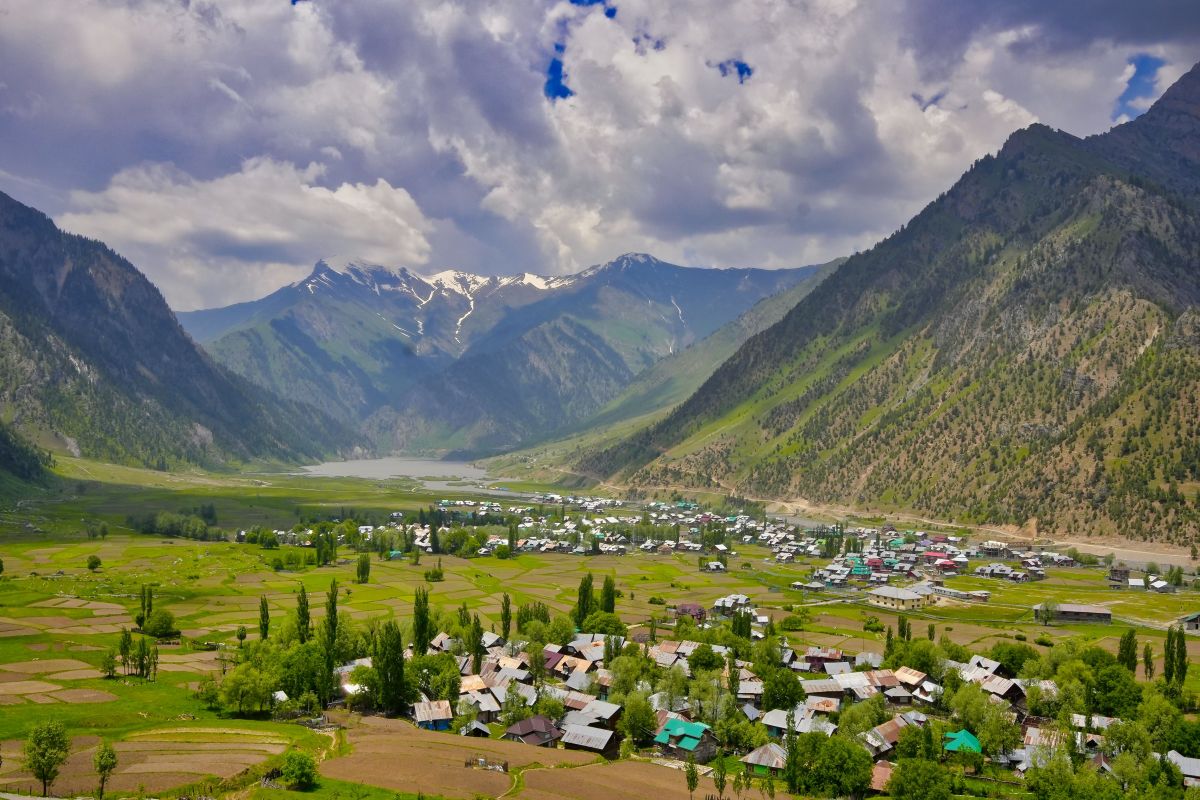
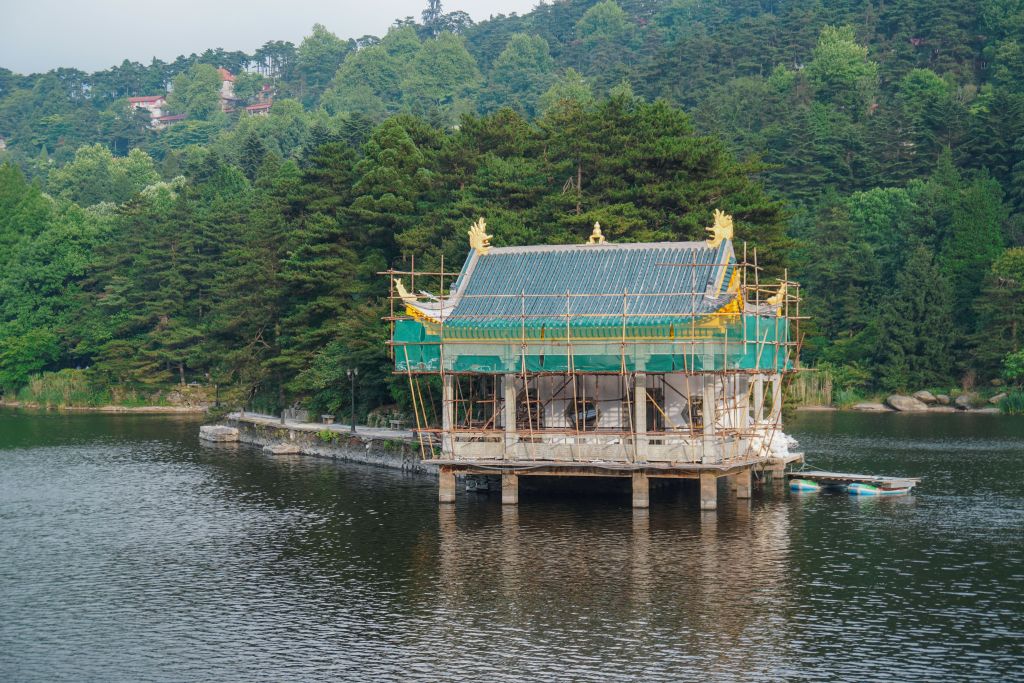
Kashmir in October is chinar season. Srinagar’s chinar trees start turning gold in early October and are at their reddest from late October to mid-November. Pampore’s saffron fields bloom from mid-October. Days are a pleasant 17 to 22°C and nights get cold. Three days is enough for Dal Lake, the Mughal gardens, the saffron fields and a day in Gulmarg.
Most of us know Kashmir from summer photos. Green meadows, blue water and a houseboat on a still lake. October shows you the other Kashmir.
The chinar trees turn gold, then orange, then a deep red. Purple saffron flowers fill the fields outside Srinagar. Mornings on Dal Lake begin with mist and a cup of kahwa, and by noon the sun is warm on your face. Kashmiris call this season Harud. It lasts only a few weeks, so it pays to plan well.
This guide to Kashmir in October covers when to go, where to see the colours, what to pack and how to spend three good days in Srinagar.
Table of Contents-
Why Go to Srinagar in October
October is Srinagar’s quiet season, in the best way. The summer crowds have gone home, the gardens feel calm and the skies are clear and blue. Apples are being picked and walnuts are drying in the sun. Durga Puja falls in mid-October and Diwali is on 8 November in 2026, so the long holiday break lands right in chinar season.
In summer, Srinagar looks like a postcard. In October, you walk right into it.
Chinar Season in Kashmir and Where to See It
The chinar is Kashmir’s most loved tree. The Mughals planted them across the Valley, and many still stand hundreds of years later. Every autumn their big, hand-shaped leaves change colour and the city glows.
When
What you will see
Early October
Green trees with gold edges
Mid-October
Orange and gold
Late October to mid-November
Deep red, the best time to go
After mid-November
Leaves falling, lawns covered in red
A cold spell can shift the peak by a week. Even the fallen leaves get used. Locals sweep them up and turn them into charcoal for the kangri, the clay fire pot people carry under their pherans in winter.
Here are the best places to see the colours.
Naseem Bagh. An old chinar avenue on the University of Kashmir campus that turns into a red tunnel. Carry ID.
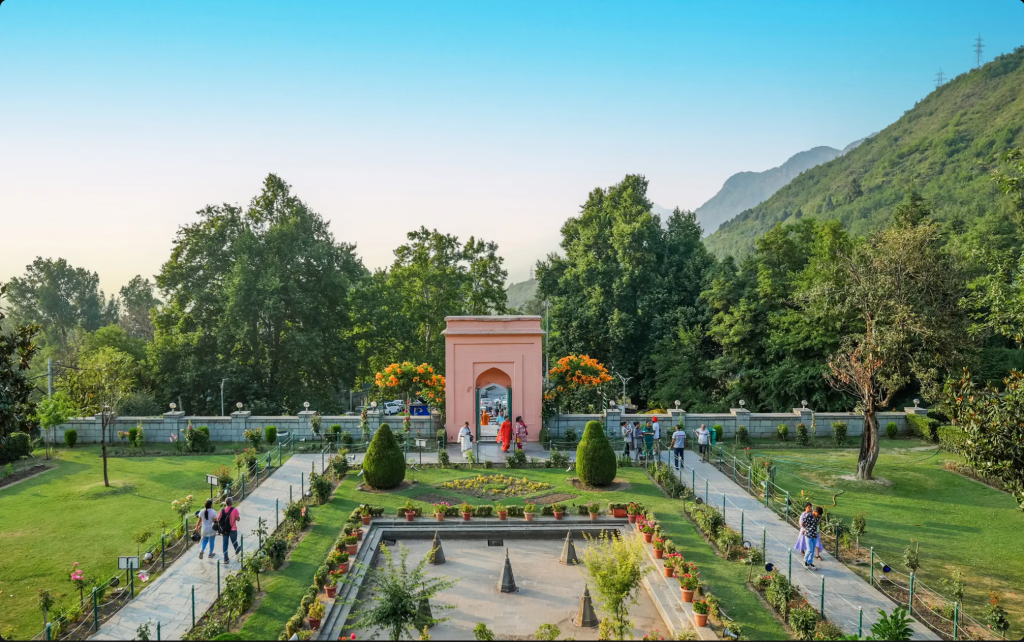
Nishat Bagh. A garden that rises in steps from Dal Lake, with red leaves framing the water.
Shalimar Bagh. Built by Jahangir for Nur Jahan, with some of the city’s oldest chinars.
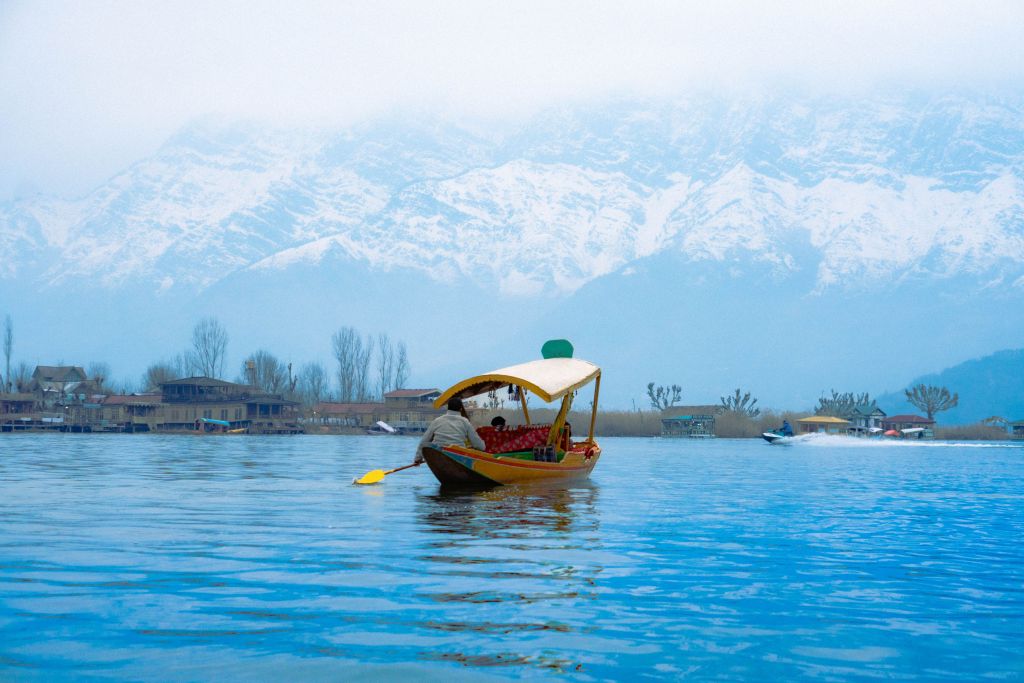
Char Chinar. A tiny island with a chinar at each corner. Go by shikara at sunset.
Saffron Season at Pampore
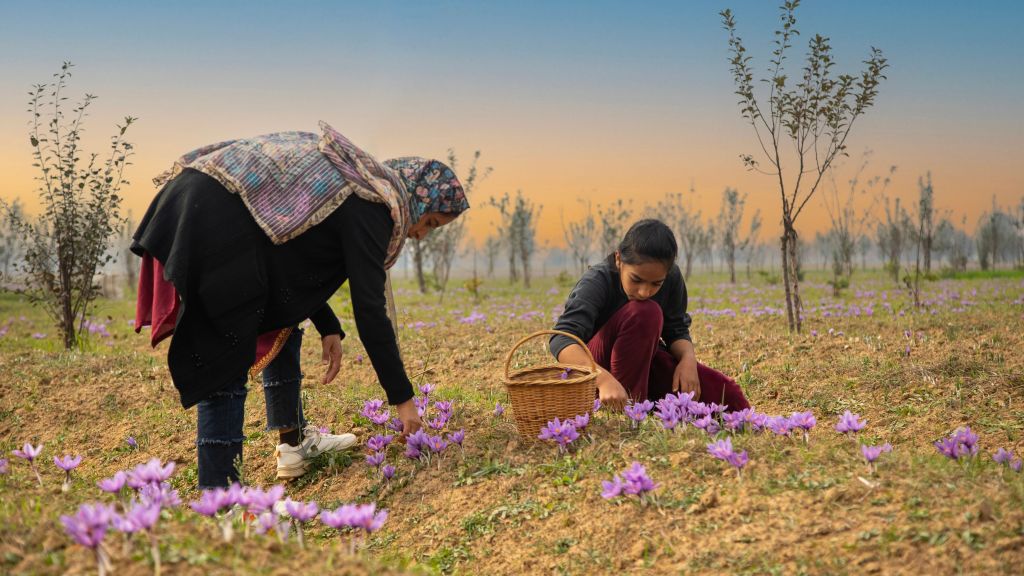
Just outside Srinagar, Pampore grows some of the finest saffron in the world. Around 10 to 15 October its fields turn purple almost overnight, and the saffron harvest runs till mid-November.
Whole families pick the flowers at sunrise and pull out the three red threads from each one by hand. It takes more than one and a half lakh flowers to make a single kilo of saffron, which tells you why it costs what it does.
ADVISORY BOX
Visiting the saffron fields
Go early in the morning, when the picking is on. Stay on the edges of the fields and ask before you take photos. Buy GI-tagged Kashmir saffron from trusted shops. The fresh crop reaches stores by late November.
Kashmir Weather in October
Kashmir weather in October is cool, sunny and mostly dry. In Srinagar, days are 17 to 22°C and nights drop to 4 to 8°C. Gulmarg is colder and can see its first snow by the end of the month. Pack layers, a warm jacket, a woollen cap and shoes with good grip.
A 3-Day Srinagar Itinerary for October
Day 1. Dal Lake and the Mughal Gardens
Catch the floating vegetable market at sunrise, where farmers sell straight from their boats. Spend the day in the Mughal gardens and end it at Char Chinar as the sun goes down. Staying on Kingori Houseboat? Your hosts can line up both shikara rides for you.
Day 2. Saffron Fields and the Old City
Watch the harvest in Pampore, then explore the old city and its carved wooden Khanqah-e-Moula. For dinner, sit down to a wazwan, the famous Kashmiri feast. Vegetarians should try nadru yakhni, lotus stem cooked in yoghurt.
Day 3. Gulmarg or Doodhpathri
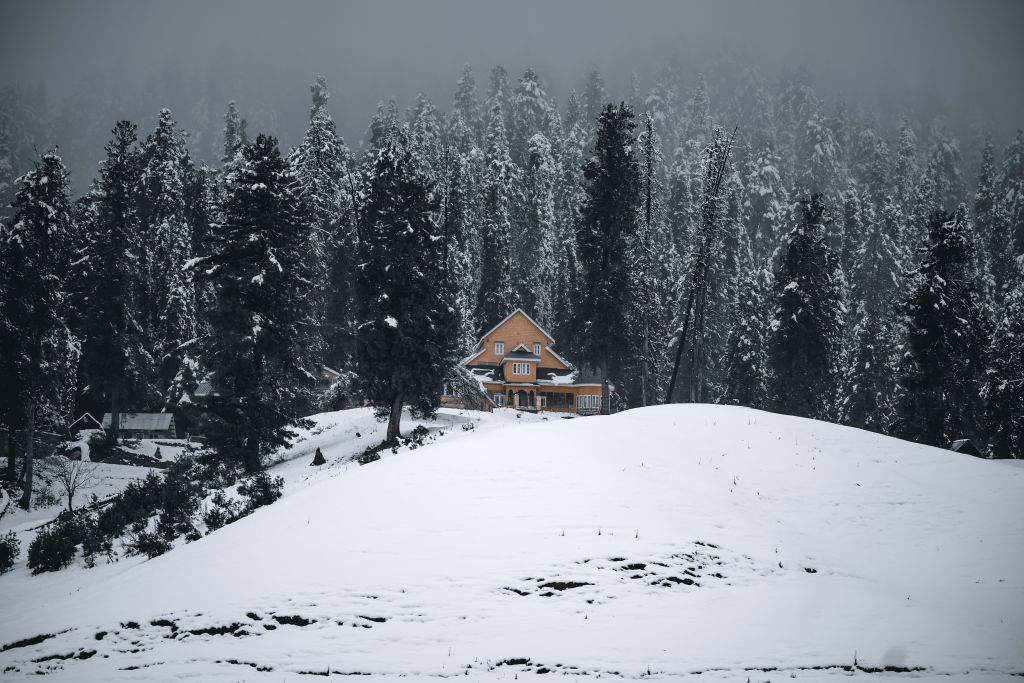
Gulmarg in October means golden meadows and, with luck, the first snow on the peaks. Book your Gondola tickets online in advance. Want a quieter day? Doodhpathri has open meadows, pine forests and far fewer people.
The best way to enjoy chinar season is to wake up right inside it. SaffronStays, India’s largest managed private villa brand, has two homes in Srinagar that let you do just that. One floats on Dal Lake. The other sits in a quiet garden on the edge of the city. Both come with a local team who can set up shikara rides, sightseeing and little extras, so you spend your days out in the colours while we handle the planning.
SaffronStays Kingori Houseboat on Dal Lake
SaffronStays Kingori Houseboat is a 75-year-old houseboat moored at Ghat 14, in a quieter stretch of Dal Lake away from the busy boat clusters. It is built from deodar wood and filled with hand-carved walnut. Picture this. You open the curtains to mist rising off the water and the hills behind turning red. Breakfast is cooked on board, and a shikara is waiting to take you out.
Three bedrooms with attached bathrooms for 6 to 9 guests
A chef on call for Kashmiri meals, veg and non-veg
Shikara rides, fishing, a barbecue or a candlelight dinner on the deck on request
Rated 5 stars by guests
Best for couples, small families and anyone who wants the full houseboat experience.
SaffronStays Badakshan Bliss in Rawalpora
Travelling with family or a big group of friends? SaffronStays Badakshan Bliss is a five-bedroom garden villa close to the airport and on the way out to Gulmarg. Inside, the rooms are done up in Kashmiri style. Outside, a private lawn is made for morning chai in the autumn sun and long evenings with the whole gang.
Five bedrooms for 8 to 10 guests
A private garden and a games corner for the kids
Easy early starts for Gulmarg, Doodhpathri and Pahalgam
Shikara rides, candlelit dinners and celebration setups on request
A caretaker on call and parking for up to four cars
Badakshan Bliss is a self-catered, alcohol-free home, and you can order in from local restaurants.
How to Reach Srinagar in October 2026
By air. Flights reach Srinagar from all major Indian cities. Due to runway work, they run only in the daytime in 2026, so check timings.
By train. The Vande Bharat Express now runs from Jammu Tawi to Srinagar and crosses the Chenab bridge, the world’s highest railway arch bridge. The views alone are worth the ride.
By road. NH44 connects Jammu to Srinagar. Check road updates after rain.
Frequently Asked Questions About Kashmir in October
Is October a good time to visit Kashmir?
Yes. Kashmir in October brings red chinar trees, the saffron harvest, sunny weather and fewer crowds than summer.
When do chinar leaves change colour in Kashmir?
Chinar leaves start turning in early October and are reddest from late October to mid-November. Naseem Bagh and Nishat Bagh are the best spots.
What is the weather in Srinagar in October?
Srinagar in October is cool and sunny, with days of 17 to 22°C and nights of 4 to 8°C. It is usually the driest month of the year.
Does it snow in Kashmir in October?
Snow in Srinagar is rare in October, but the peaks around Gulmarg can get their first snow late in the month. For proper snow, go between December and February.
Yes. Three days covers Dal Lake, the Mughal gardens, the saffron fields, the old city and Gulmarg. Add a fourth day for Pahalgam.
Catch the chinars while they are red. Chinar season lasts only a few weeks. Book Kingori Houseboat on Dal Lake or Badakshan Bliss in Srinagar and wake up to autumn right outside your door. Explore homes in Srinagar
Coastal Karnataka in October is a good time to visit. The monsoon is ending, the sea is calmer and boats to St Mary’s Island are running again. Dasara is on as well. Mangaluru’s procession leaves the Kudroli temple at 4 pm on Wednesday 21 October, and Uchila Dasara near Hejamady ends the same day at Kaup beach. Three days is enough to cover Udupi, Mangaluru and Hejamady, the beach village between them.
October is when the Karnataka coast gets its blue sea back and its temple towns light up for Dasara.
The monsoon has just moved out and the boats to St Mary’s Island are running again. Tiger dancers are out on the streets of Udupi and Mangaluru. We host guests on this coast all year and October is the month we would pick for ourselves. Here is how we would spend it.
Table of Contents-
Why We Recommend October
The heavy rain is done by now. Expect warm, humid days and the odd evening shower, which usually clears the air. Boats to St Mary’s Island are running again after the monsoon break. If you are planning a little later, Diwali on Sunday 8 November makes for a long weekend, and the Kambala buffalo races begin the day before.
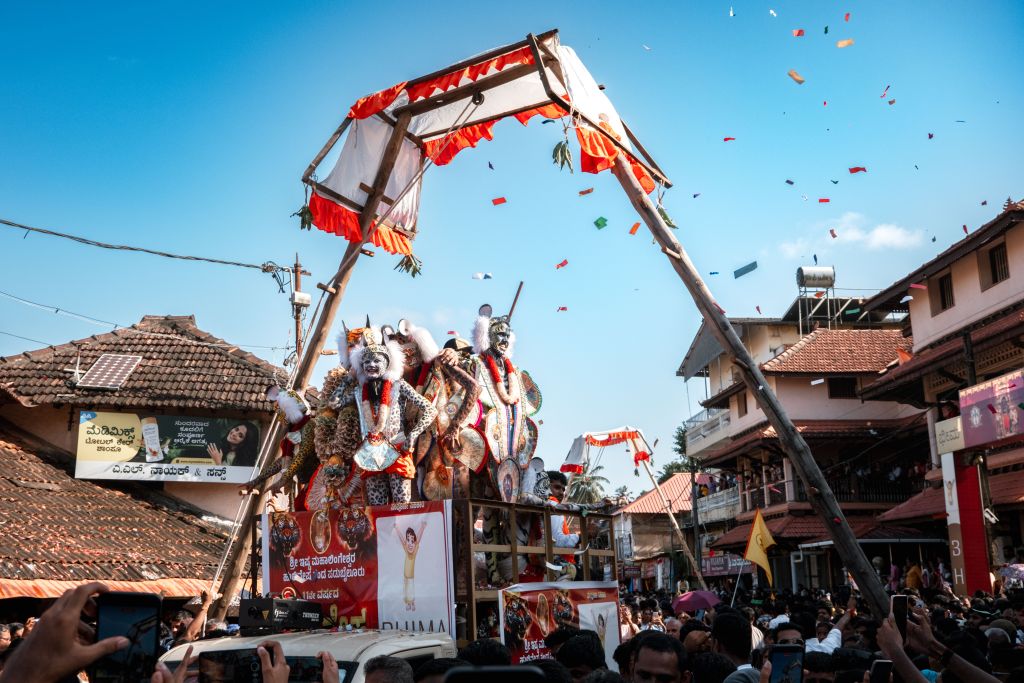
The real reason to come now, though, is Pili Vesha. Dancers, young men and lately young women as well, paint themselves in yellow and black stripes and move through the streets as tigers, the animal Goddess Durga rides. It is loud, sweaty and joyful. Watch it once and you will understand why the whole coast turns out for it.
Udupi: Temples, Dosas and an Island of Basalt
Udupi runs on the rhythm of the Sri Krishna Matha, founded in the 13th century by the saint and philosopher Madhvacharya. Devotees view the deity through the Kanakana Kindi, a small window in the temple wall, and the temple kitchens serve thousands of visitors a free meal every day. Go in the evening, when Car Street, which circles the temple, is quieter and the lamps are lit.
Those same kitchens are where Udupi-style vegetarian food began, the kind now served in Udupi restaurants from Mumbai to Delhi. This is what we tell our guests to order:
Masala dosa, the dish that made the town famous
Goli baje, soft fried dumplings eaten with coconut chutney
Sambar with a touch of jaggery, the way Udupi likes it
Gadbad, a tall glass of layered ice cream, fruit and jelly
Set aside a morning for St Mary’s Island. Boats leave from Malpe beach and drop you on a shore lined with six-sided basalt columns, formed when lava cooled millions of years ago. It is one of India’s national geological monuments, and it has almost no shade, so go early.
Mangaluru: Dasara and a Serious Seafood Habit
Mangaluru celebrates Dasara on a bigger scale than anywhere else on the coast. It all centres on the Kudroli Gokarnanatha Temple, where idols of the Navadurgas and Goddess Sharada stay through the festival, which runs from 11 to 22 October this year.
If you can, be in the city on Wednesday 21 October. The Shobhayatra, the grand procession, is set to leave at 4 pm, with floats, drum troupes and tiger dancers making their way through the centre late into the night. Get there early and leave the car well outside the route, as the central roads close.
Mangaluru also takes its seafood seriously, and so should you:
Chicken ghee roast, red, tangy and finished in ghee
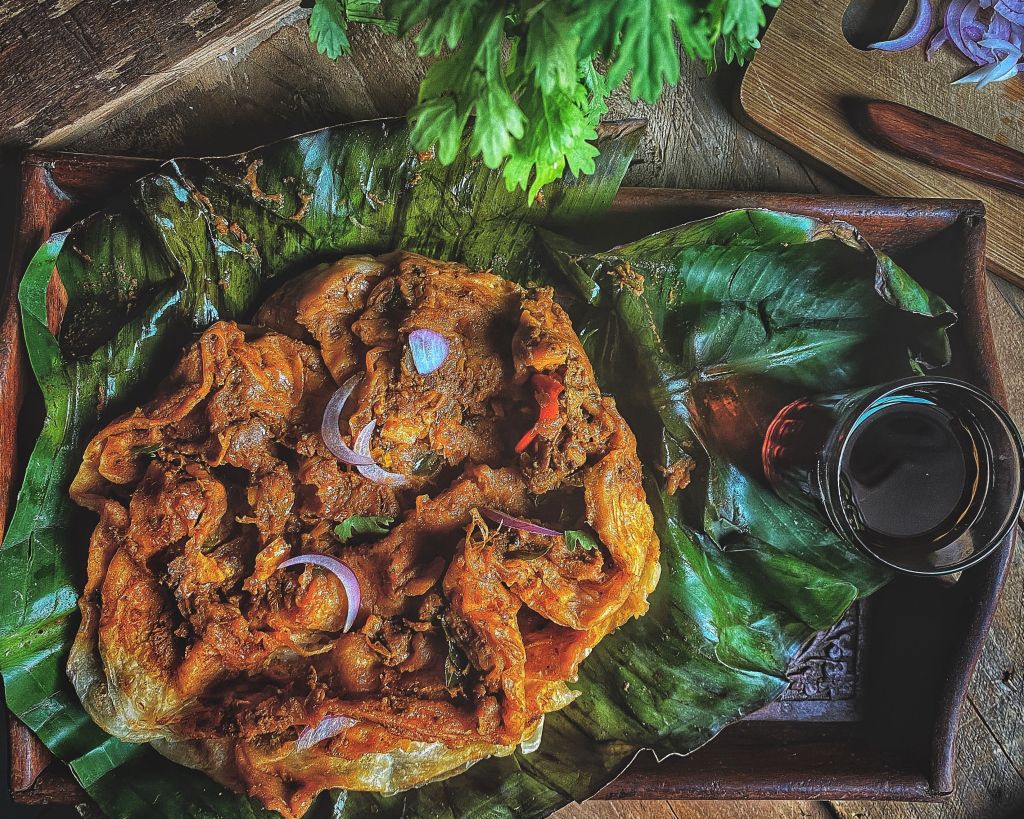
Kori rotti, chicken curry poured over crisp rice wafers
Fish curry with neer dosa, thin rice crepes made for soaking up gravy
Rava fish fry, whatever came in that morning, coated in semolina and fried
Hejamady: Where We Would Base the Trip
Hejamady is a fishing village at the mouth of the Shambhavi river, roughly halfway between Udupi and Mangaluru. The beach is long and mostly empty, the backwaters sit just behind it, and you can spend the day in either city and still be back for sunset. For a trip like this, it is the base we recommend.
Close by:
Padubidri beach, next door, which holds Blue Flag certification and has lifeguards on duty
Surf lessons and night kayaking across the river at Sasihithlu and Mulki, where the water can glow with bioluminescence on dark nights
Uchila Dasara, which keeps the highway from Uchila to Kaup lit until 21 October, when the idols are carried to Kaup beach and immersed in the sea
Kaup lighthouse at sunset, up on its rock above the waves
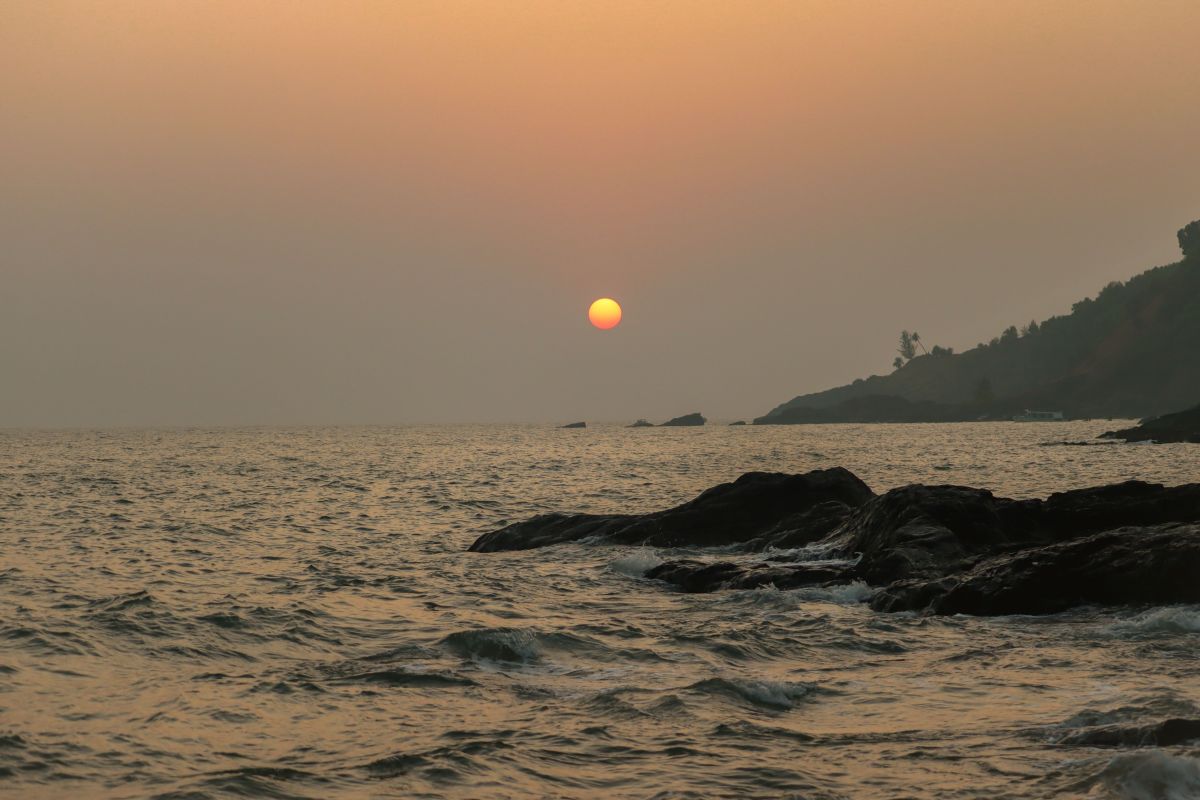
By mid-October, the sea has turned blue again and every temple town on the coast is getting ready for Dasara.
A NOTE ON SWIMMING
The sea is calmer in October, but currents near river mouths are still strong. We ask our guests to swim only where lifeguards are on duty, such as Padubidri, and to follow the flags.
How We Would Spend Three Days
Day
Base
Plan
Day 1
Udupi
St Mary’s Island from Malpe in the morning, a traditional Udupi lunch, then the Krishna Matha and Car Street in the evening
Day 2
Mangaluru
The Kudroli temple, a long seafood lunch, and the Dasara lights or the 21 October procession
Day 3
Hejamady
A slow morning on the beach, Padubidri, kayaking on the Shambhavi and sunset at Kaup lighthouse
Getting There
By air: Mangaluru International Airport has direct flights from Bengaluru, Mumbai, Hyderabad, Chennai and Gulf cities such as Dubai.
By train: the Konkan Railway runs from Mumbai and Goa to Udupi and Mangaluru, and overnight trains run from Bengaluru.
By road: from Bengaluru, the route crosses the Western Ghats. Drive in daylight and check the ghat roads before you set out.
Where to Stay: Our Homes on the Coast
Blue Flag House, Hejamady. Our three-bedroom home here sits on the beach itself, with private backwaters on the other side. It sleeps six and has its own quiet stretch of sand, so it suits families and groups of friends. Ask our caretakers for a bonfire, a boat ride on the backwaters or dinner by candlelight at the water’s edge. Architectural Digest has featured it.
Suvarna Sangam, Udupi. Five single-bedroom villas on the banks of the Suvarna river. Take one for a couple’s break, or book all five for a group. Angling is complimentary, and our team can arrange kayaking, speedboat rides and your boat to St Mary’s Island.
Plan the days however you like. Keep the evenings for the sea and the people you came with.
Plan Your October on the Coast Book a beachfront home in Hejamady or a riverside villa in Udupi. Explore SaffronStays villas in Udupi and Hejamady saffronstays.com
Frequently Asked Questions
Is October a good time to visit Udupi and Mangalore?
Yes. The monsoon is ending, the sea is calmer, boats to St Mary’s Island are running again and Dasara is on in both cities. Expect warm, humid days with the odd evening shower.
When is Mangaluru Dasara 2026?
Mangaluru Dasara 2026 runs from 11 to 22 October at the Kudroli Gokarnanatha Temple. The grand procession is set to leave at 4 pm on Wednesday 21 October. Check local news for road closures.
Is St Mary’s Island open in October?
Yes. Boats to St Mary’s Island start again after the monsoon break in mid-September and run until May, depending on sea conditions. They leave from Malpe, near Udupi.
Can you swim at Malpe or Hejamady beach in October?
Swim only where lifeguards are on duty, and follow the flags. Currents near river mouths can still be strong in October. Padubidri, the Blue Flag beach next to Hejamady, has lifeguards.
How many days do you need for Udupi and Mangalore?
Three days is enough for a first trip. Spend one in Udupi and Malpe, one in Mangaluru and one on the beaches around Hejamady, Padubidri and Kaup. Add a day if you want to catch a Dasara procession.
Where should I stay for an Udupi and Mangalore trip?
Mangaluru International Airport is the closest airport to Udupi, Mangaluru and Hejamady. From Mumbai, the Konkan Railway is a good alternative. From Bengaluru, take an overnight train or drive over the Western Ghats in daylight.
Navratri 2026 runs from Sunday 11 October to Monday 19 October, with Durga Ashtami on Monday 19 October and Dussehra on Tuesday 20 October. For a fasting-friendly staycation, book one of SaffronStays’ pure veg villas near Mumbai and Pune, such as Cyprus in Lonavala, Sonnet in Khopoli, Apricus Farm in Karjat, Vedika Estate in Vikramgad (Palghar) or Mountain Rizz in Panchgani. These homes run veg-only kitchens and offer Jain and vegetarian meals, and the staffed homes can cook Navratri vrat food such as sabudana khichdi and kuttu puri when you share your fasting rules in advance.
Nine days of fasting. One weekend away.
And a single question that can undo the whole plan: who else has cooked in that kitchen?
For every family that keeps Navratri, it is the question that turns a well-earned break into a debate at the dinner table. The resort says it has veg options. The menu even lists a vrat thali. But the tawa that fries your sabudana vada may have seared chicken tikka an hour earlier, and nobody in that kitchen can promise otherwise.
So the trip gets pushed to Diwali. Or the family goes anyway, and someone quietly lives on fruit for three days.
This Navratri, keep the fast and take the holiday. Every home in this guide belongs to SaffronStays’ Pure Veg Homes collection, where the kitchen is vegetarian only, meals can be tailored for Jain and fasting diets, and the cook works for your family alone. Below: how a Navratri staycation works in a pure veg villa, what to ask the cook, and five homes near Mumbai and Pune worth booking for the festive nine nights.
Table of Contents-
Why Navratri Staycations Need a Pure Veg Villa
Navratri fasting is personal and precise. Some families eat one meal a day, some only fruit and milk, some avoid grains and regular salt for all nine days, and many keep onion and garlic out of the kitchen for the whole festival. A regular resort kitchen cooks for everyone at once, which makes those rules hard to guarantee.
A pure veg villa changes the equation in three ways:
Veg-only kitchens: non-vegetarian food is not cooked in these homes, so there is no shared tawa, pan or fryer to worry about.
A cook for your group alone: the caretaker or cook prepares meals only for your family, which makes it easy to follow your fasting rules dish by dish.
Jain-friendly meals: the collection offers customised Jain meals, so no onion, no garlic and no root vegetables can be arranged on request.
It also keeps the festival private. You can set up a small puja corner, light diyas in the evening and play garba music on the lawn without sharing the space with strangers.
Navratri 2026 Dates for Your Staycation
Date
Day
Why it matters
Sunday 11 October
Ghatasthapana, Navratri begins
Start the trip on the first weekend
Saturday 17 and Sunday 18 October
Saptami and Ashtami
The best weekend for families observing Ashtami
Monday 19 October
Navami
Take the day off for a four-day break
Tuesday 20 October
Dussehra
End the long weekend with the festival
Taking Monday 19 October off turns Saturday to Tuesday into a four-day Navratri and Dussehra break, the most popular window for staycations this season, so book early.
What to Ask Your Cook: Navratri Vrat Food at the Villa
Fasting rules differ from family to family, so share yours with the villa team a day or two before arrival. Most vrat menus are built from a short list of ingredients that the cook can prepare fresh:
Flours and grains: kuttu (buckwheat), singhara (water chestnut), rajgira (amaranth) and samak, also called barnyard millet or vrat rice.
Seasoning: sendha namak (rock salt) instead of regular salt, with cumin, green chilli, ginger and black pepper.
Classic dishes: sabudana khichdi, sabudana vada, kuttu puri with aloo, samak rice pulao, rajgira thepla, singhara halwa and makhana kheer.
If your family follows very strict rules, such as using only specific flour brands or keeping vrat cooking entirely separate, carry those ingredients with you and talk to the villa team when you book. For non-fasting members, the same kitchen can cook a full vegetarian or Jain thali alongside.
5 Pure Veg Villas Near Mumbai and Pune for Navratri
1. Cyprus, Lonavala: The Strictest Kitchen Rules in the Hills
Where to stay:Cyprus is a five-bedroom, pure veg private pool villa in Lonavala and one of the newer homes on SaffronStays. It sleeps 10 to 15 guests, has two bedrooms on the ground floor, open lawns, a gazebo and mountain views, and is child, elderly and pet-friendly.
The SaffronStays Advantage
Cyprus serves only Jain and vegetarian meals, cooked in-house by its own chefs, and its house rules allow neither non-vegetarian food nor food from outside. For a family keeping a careful fast, that settles every question before it is asked. The ground-floor bedrooms keep grandparents close to the puja corner, and the gazebo makes an easy place for evening aarti with the hills behind it.
2. Sonnet, Khopoli: Bhajans at the Piano
Where to stay:Sonnet is a four-bedroom, veg-only pool villa in Khopoli, at the foot of the Lonavala ghat on the Mumbai side. It sleeps 8 to 18, has a grand piano, a preview theatre, a games area, an elevator and mountain views, and is child, elderly and pet-friendly. Guests rate it 4.8.
The SaffronStays Advantage
Sonnet serves only Jain and vegetarian meals, home-cooked with fresh local ingredients, with separate veg and Jain menus. Its house rules discourage late-night revelry and loud music, which suits families who want a devotional Navratri: the villa can arrange a pianist for an evening of bhajans, and the elevator means the eldest members of the family move between floors with ease.
3. Apricus Farm, Karjat: Cook Your Own Vrat Menu
Where to stay:Apricus Farm is a four-bedroom, veg-only estate in Karjat with a private pool overlooking greenery, a gazebo, a yoga space, fruit trees, a vegetable garden and a bonfire area. It sleeps 8 to 12 and is child-friendly.
The SaffronStays Advantage
Apricus Farm is self-catered, and its kitchen may be used only for vegetarian cooking (a kitchen usage charge applies). That makes it a strong choice for families who prefer to cook their own vrat food, with their own flours and sendha namak, in a kitchen that has never handled meat. Begin fasting days with yoga in the garden and keep the afternoon for the pool. One honest note: the listing allows guests to order in from restaurants, including non-veg, so if your group wants the whole house kept vegetarian, agree on it among yourselves before you arrive.
4. Vedika Estate, Vikramgad: A Riverside Estate for the Whole Clan
Where to stay:Vedika Estate in Vikramgad, Palghar, is a pair of heritage villas with ten bedrooms between them, set near the Pinjal River and sleeping 20 to 30 guests. It has a private pool, a heated jacuzzi, expansive lawns and bathtubs, with kayaking, bullock cart rides, nature trails and birdwatching on offer. Guests rate it 4.8, and it is child and elderly-friendly.
The SaffronStays Advantage
Vedika serves pure vegetarian meals from a veg-only kitchen, with Jain menus available, which makes it the natural home for the big Ashtami gathering when every branch of the family turns up. The lawns hold a kanya pujan and a garba circle with room to spare, and high tea by the river slows the afternoon down for those who are fasting. Sitting north of Mumbai, it also suits families driving down from Surat and Vadodara.
5. Mountain Rizz, Panchgani: Valley Views and Cool Hill Air
Where to stay:Mountain Rizz is a six-bedroom, veg-only villa on the Panchgani edge of the Mahabaleshwar plateau, with a private infinity pool and wide valley views. It sleeps 12 to 18, is child and elderly-friendly, and sits close to Mapro Garden.
The SaffronStays Advantage
Mountain Rizz serves only Jain and vegetarian meals from a veg-only kitchen. Meals are arranged at an extra charge and are best pre-booked, so share your vrat menu with the team when you confirm. Cool October air makes the long fasting afternoons easier, and the infinity pool deck, facing the valley at sunset, is where the evening aarti belongs.
These five are a starting point. The SaffronStays Pure Veg Homes collection has more than 20 homes across India, from the Sahyadris to the hills further afield.
Celebrating Navratri at the Villa
Bring your puja essentials: a small idol or photo, diyas, a kalash and flowers travel easily, and the villa team can help you set up a corner indoors or on the lawn.
Plan garba nights: carry a speaker and your playlist, and confirm the villa’s music hours when you book. Listings allow music within limits and set hours, and some homes prefer quieter evenings, so early-evening garba works best.
Ashtami and Navami: both fall on Monday 19 October this year. If you perform kanya pujan, tell the cook in advance so puri, chana and halwa are ready that morning.
Keep it safe: use diyas and candles only in the areas the caretaker suggests, especially near curtains and dry gardens.
Celebrate Navratri in a Pure Veg Home Explore the Pure Veg Homes collection saffronstays.com/collection/veg-only-homes
Frequently Asked Questions
Are there pure veg villas near Mumbai?
Yes. SaffronStays has a Pure Veg Homes collection with veg-only villas near Mumbai and Pune, including Cyprus in Lonavala, Sonnet in Khopoli, Apricus Farm in Karjat, Vedika Estate in Vikramgad (Palghar) and Mountain Rizz in Panchgani.
Can the villa cook Navratri vrat food?
Yes, in homes that serve meals. Share your fasting rules a day or two in advance, and the cook can prepare dishes such as sabudana khichdi, kuttu puri, samak rice and makhana kheer with sendha namak. Self-catered homes such as Apricus Farm let you cook your own vrat food in a veg-only kitchen. Carry special ingredients if your family follows very strict rules.
Do SaffronStays pure veg homes serve Jain food?
Yes. The Pure Veg Homes collection offers customised Jain-friendly meals, so food without onion, garlic or root vegetables can be arranged on request.
Is non-vegetarian food allowed in pure veg villas?
Non-vegetarian food is not cooked in these homes. Rules on outside food differ by home: Cyprus allows neither non-vegetarian nor outside food, while Apricus Farm lets guests order in. Check the house rules on each listing before you book.
When is Navratri in 2026?
Navratri 2026 begins on Sunday 11 October and ends on Monday 19 October, with Dussehra on Tuesday 20 October.
When is Durga Ashtami in 2026?
Durga Ashtami falls on Monday 19 October 2026. Because the tithis overlap this year, many calendars mark Maha Navami on the same day.
Can we play garba music at the villa?
Yes, within the villa’s music rules. Each home sets its own hours and some prefer quieter evenings, so confirm the timings when you book and plan garba for the early evening.
Karnataka in October brings together Mysuru Dasara and the coffee hills at their greenest. Mysuru Dasara runs from 11 to 20 October 2026, ending with the Jamboo Savari procession on Vijayadashami, Tuesday 20 October. Pair it with Coorg, where devotees gather at Talakaveri for Kaveri Sankramana around mid-October, and with Chikmagalur and Sakleshpur, where post-monsoon waterfalls run strong and coffee cherries ripen ahead of the winter harvest. The Dussehra long weekend, from Saturday 17 to Tuesday 20 October, is the ideal window.
If you have ever wanted to see Mysuru Dasara in person, this is the year to go.
The festival’s grand finale, the Jamboo Savari, falls on Tuesday 20 October 2026, right at the end of the Dussehra long weekend. And a short drive away, the coffee hills of Coorg, Chikmagalur and Sakleshpur are at their greenest, with waterfalls still running from the monsoon and coffee cherries ripening on the bushes.
That makes Karnataka in October one of the few trips that gives you a royal festival and a misty hill escape in the same four days. This guide shows you how to see Dasara like an insider, which coffee hill to pair it with, a four-day plan built around the long weekend, and where to stay so the crowds stay outside your gate.
Table of Contents-
Karnataka in October at a Glance
Destination
Best for
Drive
SaffronStays pick
Mysuru
Families, heritage lovers
Short
Ayati
Coorg
Families, food lovers, wildlife lovers
Half day
Calamondinn Bungalow
Chikmagalur
Coffee lovers, trekkers, heritage lovers
Half day
Biccode Woodside Heritage
Sakleshpur
Nature lovers, birders, pet owners
Half day
Jerdon’s Perch
Drive times are from Bengaluru: Short is an easy morning’s drive, Half day takes most of a morning or afternoon, and Full day means setting off at dawn.
Why Karnataka Is at Its Best in October
Mysuru Dasara: ten days of illuminations, processions and cultural programmes, from 11 to 20 October 2026, ending with the Jamboo Savari on Vijayadashami.
Post-monsoon green: the Western Ghats are lush, the rivers are full and waterfalls such as Abbey Falls and Hebbe Falls still run strong.
Coffee in the making: cherries are ripening on the bushes, a preview of the harvest that begins in November.
The long weekend: Dussehra falls on Tuesday 20 October, so taking Monday 19 October off gives four days, from Saturday 17 to Tuesday 20 October. Book early, since Mysuru and the coffee estates fill fast.
Weather: warm days in Mysuru and cool, misty mornings in the hills, with occasional showers as the northeast monsoon approaches. Pack a light jacket and rain gear.
Getting Around Karnataka in October
Bengaluru is the main gateway. Mysuru is a short drive along the expressway, and Coorg, Chikmagalur and Sakleshpur are reached through Mysuru or Hassan. Fly-in travellers can also use Mysuru for Coorg and Mangaluru for Chikmagalur and Sakleshpur.
Expect heavy traffic into Mysuru around 20 October, and drive the ghat roads in the hills in daylight, when they are safest after the rains.
1. Mysuru: The Dasara Finale
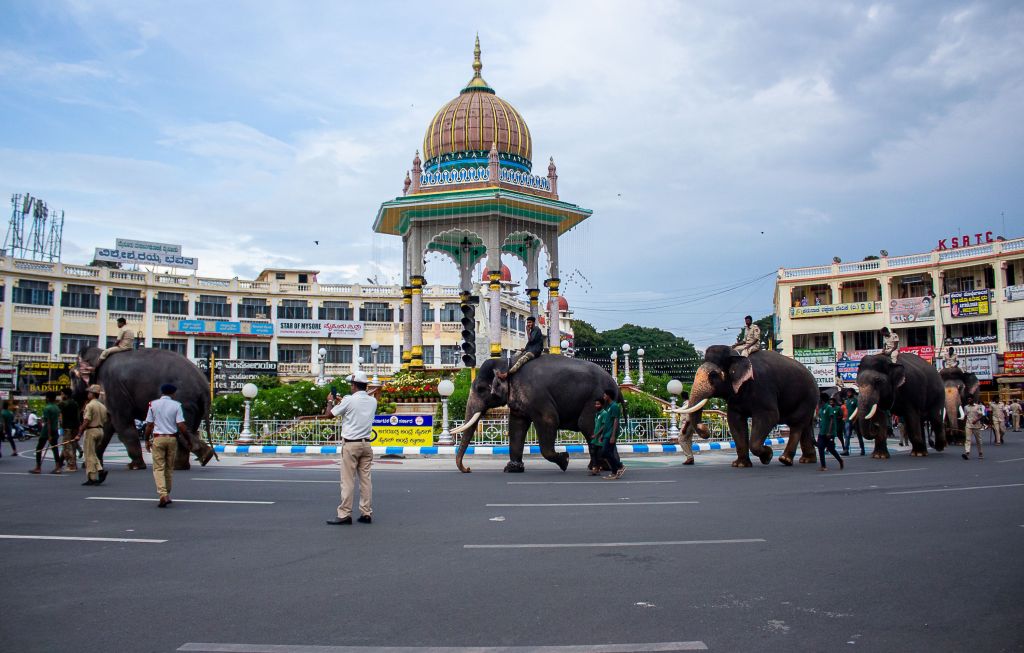
Mysuru Dasara is Karnataka’s state festival and one of India’s grandest. For ten days the palace is lit with thousands of bulbs every evening, the city fills with cultural programmes and food fairs, and on Vijayadashami the Jamboo Savari carries the golden howdah from the palace through the streets, followed by a torchlight parade in the evening.
Things to do
Watch the Jamboo Savari on 20 October; seating passes are released ahead of the day
See Mysore Palace illuminated after dark
Climb Chamundi Hills to the Chamundeshwari temple
Browse the Dasara exhibition and the Devaraja market
Must-visit places: The illuminated palace, Bannimantap, the Chamundeshwari temple on Chamundi Hills, the Dasara exhibition, Devaraja market and, just outside the city, Srirangapatna and Ranganathittu.
What to eat: Mysore masala dosa, Mysore pak from the old sweet shops, and a traditional meal on a banana leaf.
INSIDER TIPS: MYSURU DASARA
Book passes early: seating passes for the Jamboo Savari and the torchlight parade, and the Dasara Gold Card for premium access, are released in limited numbers ahead of the festival on the official Mysuru Dasara channels. See the lights on a weekday: the palace is illuminated every evening of the festival, and weeknights are far calmer than the final weekend. Look for Gombe displays: during Navratri, homes and halls across Mysuru set up tiered displays of dolls, a Karnataka tradition worth seeking out. Walk the final stretch: roads in the centre close for the procession, so park on the outskirts and walk in early.
Where to stay:SaffronStays Ayati sits on a 4.5-acre organic fruit farm on the outskirts of Mysuru, available as a five-bedroom estate, a three-bedroom villa or two private cottages, with a long private pool and traditional Athangudi tiles.
The SaffronStays Advantage
Dasara nights end late and start early, so a calm base is worth more than a central address. Ayati sits away from the festival traffic on its own organic farm. Come back after the palace lights to a festoon-lit pavilion and a bonfire, sleep in, and breakfast on fruit from the orchard before heading back for the Jamboo Savari. Three generations fit comfortably, and the long pool and kids’ play area fill the hours between the festivities.
2. Coorg: Kaveri Sankramana and Coffee Estates
Coorg, or Kodagu, is lush after the monsoon, with its waterfalls running strong and its coffee estates deep green. October also brings Kaveri Sankramana, when devotees gather at Talakaveri, the source of the Kaveri, to witness the river’s sacred welling up; the date and time are announced each year, usually around mid-October.
Things to do
Join the pilgrims at Talakaveri for Kaveri Sankramana, then bathe at the Triveni Sangama in Bhagamandala
See Abbey Falls and Raja’s Seat in Madikeri
Spend a morning at the Dubare elephant camp on the Kaveri
Take a safari at Nagarhole
Must-visit places: Talakaveri, Bhagamandala, Abbey Falls, Raja’s Seat, the Dubare elephant camp, Nagarhole National Park and the golden temple at Bylakuppe.
What to eat: Pandi curry, pork soured with kachampuli vinegar, with kadambuttu rice dumplings, akki otti and noolputtu.
Where to stay:SaffronStays Calamondinn Bungalow is a five-bedroom planter’s bungalow in south Coorg, near Gonikoppal, surrounded by its own coffee and bordering the forests of Nagarhole.
The SaffronStays Advantage
Calamondinn is Coorg as the planters knew it. The bungalow has stood among its coffee since the 1890s, its rooms still furnished with antiques, and October’s guided plantation walks show the cherries ripening ahead of the harvest. Kodava cooking comes from the estate kitchen, and Nagarhole is close enough for a dawn safari before breakfast on the verandah.
3. Chikmagalur: Where Indian Coffee Began
Chikmagalur is where Indian coffee began, when the saint Baba Budan planted seven coffee beans in these hills around 1670. In October the estates are green, Hebbe Falls is still in full flow, the high peaks are clear, and the coffee cherries are ripening ahead of the winter harvest.
Things to do
Climb Mullayanagiri, Karnataka’s highest peak
Walk to Hebbe Falls near Kemmangundi
Visit the hills of Baba Budangiri
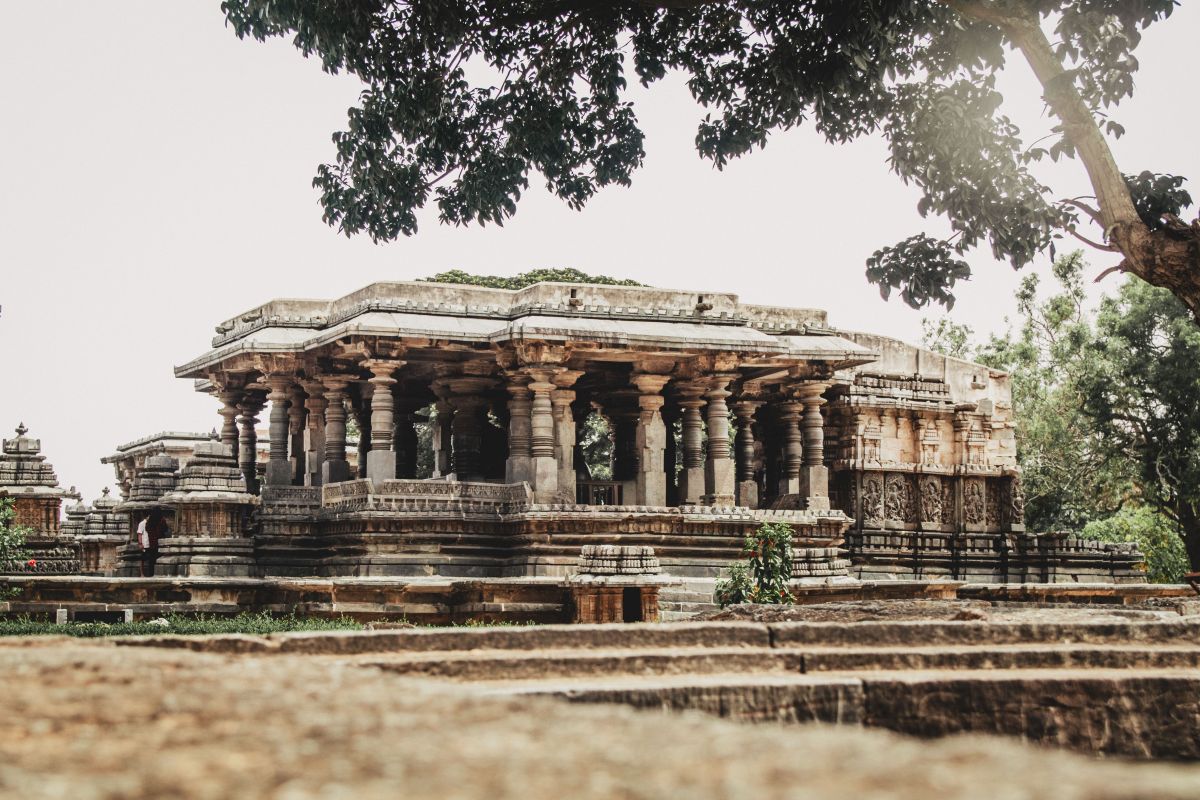
Spend an afternoon at the Hoysala temples of Belur and Halebidu
Must-visit places: Mullayanagiri, Baba Budangiri, Kemmangundi, Hebbe Falls, the Coffee Board’s Coffee Museum and the temples of Belur and Halebidu.
What to eat: Malnad cooking: akki rotti, kadubu and spicy country chicken, with fresh estate coffee at every meal.
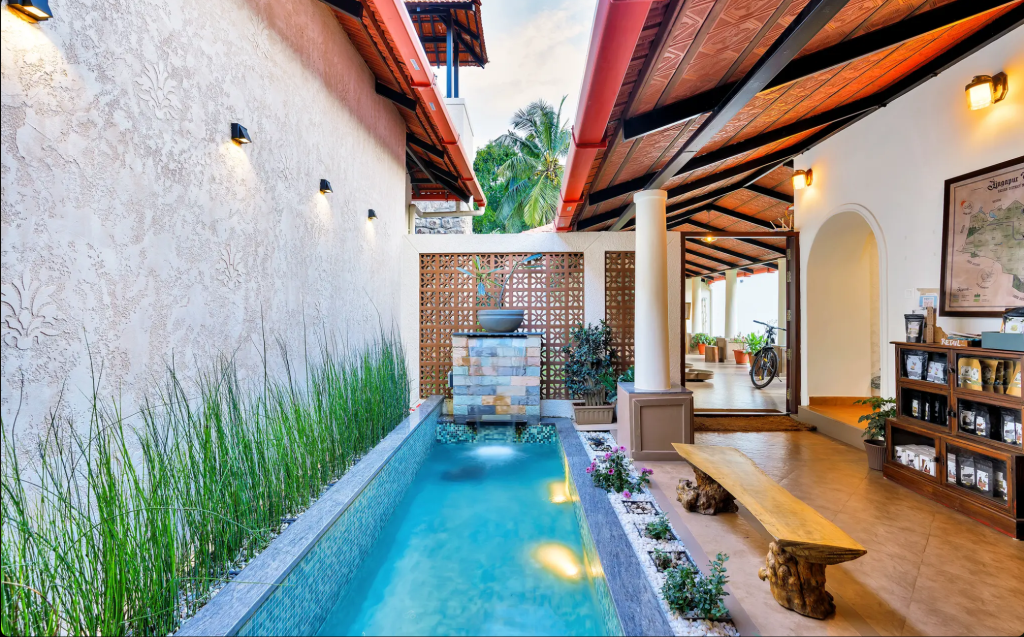
Where to stay:SaffronStays Biccode Woodside Heritage is a century-old colonial bungalow inside a private coffee estate on the Belur side of coffee country, with high ceilings, fireplaces, sloping roofs and a central courtyard with an indoor water feature.
The SaffronStays Advantage
Biccode turns coffee country into a tasting. Order the estate’s own beans at its brew bar and try them as a pour-over, a French press and a South Indian filter, side by side. In between, walk the plantation, and spend a morning among the Hoysala carvings at Belur and Halebidu before coming back to the courtyard and its indoor water feature.
4. Sakleshpur: The Quieter Coffee Hills
Sakleshpur is Karnataka’s quieter coffee country, set among the forests of the Western Ghats. In October its cardamom and coffee slopes are drenched in green, the Hemavathi runs full, and the old star fort at Manjarabad looks out over a sea of forest.
Things to do
Walk through coffee and cardamom estates
Explore the star-shaped Manjarabad Fort
Look out over the ghats from Bisle viewpoint
Visit the Betta Byraveshwara temple
Must-visit places: Manjarabad’s star fort, the Bisle ghat viewpoint, the Hemavathi reservoir, the hilltop Betta Byraveshwara temple and the falls at Magajahalli.
What to eat: Malnad akki rotti, kadubu and spicy curries, with estate coffee from the slopes around you.
Where to stay:SaffronStays Jerdon’s Perchis a pet-friendly villa with a private pool on the edge of Sakleshpur, looking straight out over the Western Ghats from among the coffee estates, with wide open lawns.
The SaffronStays Advantage
Jerdon’s Perch is named after the rare Jerdon’s Nightjar, which birders come to Sakleshpur hoping to hear at dusk. In October, the streams and small waterfalls around the estate are still running after the rains, the Western Ghats fill the view from the pool, and the open lawns give dogs and children room to roam.
The Perfect Dussehra Long Weekend in Karnataka: A 4-Day Plan
The smart move is hills first, Dasara last. Spend the weekend in the coffee country while Mysuru fills up, then arrive for the final two days of the festival.
Day
Plan
Saturday 17 October
Drive from Bengaluru to Coorg via Mysuru; check in to your estate for a Kodava dinner
Sunday 18 October
Abbey Falls and Raja’s Seat, or Talakaveri for Kaveri Sankramana; a plantation walk in the afternoon
Monday 19 October
Dubare in the morning, then drive to Mysuru; palace illuminations and the Dasara exhibition after dark
Tuesday 20 October
The Jamboo Savari in the afternoon and the torchlight parade at Bannimantap in the evening
Swap Coorg for Chikmagalur or Sakleshpur if you prefer coffee history and treks, or a quieter forest weekend.
Plan the drive home: roads out of Mysuru are packed on the night of Vijayadashami, so leave at dawn on Wednesday if you can.
Yes. October brings Mysuru Dasara, post-monsoon greenery and full waterfalls in the coffee hills, and pleasant weather for sightseeing, with occasional showers.
When is Mysuru Dasara in 2026?
Mysuru Dasara runs from 11 to 20 October 2026. The Jamboo Savari procession takes place on Vijayadashami, Tuesday 20 October.
Can you combine Mysuru Dasara with Coorg?
Yes. Coorg is reached from Bengaluru via Mysuru, so you can spend a day or two at Dasara and then head into the coffee estates of Coorg for the rest of the long weekend.
Is Coorg good to visit in October?
Yes. Coorg is lush after the monsoon, Abbey Falls runs strong, and Kaveri Sankramana at Talakaveri usually falls in mid-October. Expect cool, misty mornings and occasional rain.
Which is better in October, Chikmagalur or Sakleshpur?
Choose Chikmagalur for Mullayanagiri, Hebbe Falls, coffee history and the Belur temples. Choose Sakleshpur for a quieter weekend in the forests of the Western Ghats.
When is the Dussehra long weekend in 2026?
Dussehra falls on Tuesday 20 October 2026. Take Monday 19 October off for a four-day break from Saturday 17 to Tuesday 20 October.
Kodaikanal in October is cool, misty and wet. It is the wettest month of the year as the northeast monsoon reaches the Palani Hills, with cool days, chilly nights and rain that usually builds through the afternoon. In return, Silver Cascade, Vattakanal and the other waterfalls run at full force, the shola forests are at their greenest and the crowds are thin. Plan outdoor sightseeing for mornings, carry rain gear, apply for the vehicle e-pass before you drive up, and allow three days to see the lake, the falls, Dolphin’s Nose and Berijam Lake.
By sunset it comes back, dripping and silver, with every waterfall in the Palani Hills roaring.
That is October in the Princess of Hill Stations, and it divides travellers neatly in two. Most wait for the clear skies of December and the crowds that come with them. The rest come now, trade a little sunshine for empty viewpoints, full waterfalls and forests so green they look painted, and go home with a very different Kodaikanal.
If you are in the second group, this guide is for you: what the weather is really like, which waterfalls and treks to prioritise, the e-pass rules for driving up, a 3-day itinerary built around the rain, and where to stay so that the misty evenings become the best part of the trip.
Table of Contents-
Kodaikanal Weather in October: What to Expect
October is the wettest month of the year in Kodaikanal, as the northeast monsoon arrives in the Palani Hills. The rain tends to come in waves rather than all day: mornings are often clear or lightly misty, cloud builds by midday, and afternoons bring showers that can be heavy.
October in Kodaikanal
Temperature
Cool days and chilly nights, roughly 10 to 20°C
Rain
The wettest month of the year; frequent afternoon showers
Mornings
Usually the clearest part of the day for views and walks
Visibility
Mist and low cloud are common; valley views come and go
Crowds
Lighter than summer and December, with busier long weekends
Pack
Waterproof jacket, warm layers, closed shoes with grip, umbrella
Is October a Good Time to Visit Kodaikanal?
October is a good time to visit Kodaikanal if you love waterfalls, forests and quiet, and can plan around rain. It suits couples, writers, photographers and families who are happy with slow, cosy days. It is less suited to travellers who want guaranteed clear valley views or long treks every day.
Why go: waterfalls at full flow, deep green shola forests, misty, cinematic mornings and fewer tourists.
What to accept: afternoon rain, fog on the ghat roads, slippery trails and occasional closures of forest spots in heavy weather.
Good to know: the Dussehra long weekend (17 to 20 October 2026) and the run-up to Diwali bring a rush of visitors, so book stays early for those dates.
Waterfalls in Kodaikanal at Their Best in October
The rains that keep you indoors in the afternoon are the same rains that make October the best month for Kodaikanal’s waterfalls.
Silver Cascade Falls: fed by Kodai Lake, it pours down a high rock face right beside the main ghat road into town, and October gives it real volume. Stop on the way up or down.
Vattakanal Falls: a short walk from the village of Vattakanal, below Dolphin’s Nose, and an easy add-on to that trek.
Bear Shola Falls: a seasonal fall inside reserve forest close to town, at its best only after rain. Access has been restricted at times, so check locally before you go.
Glen Falls and Fairy Falls: smaller, quieter cascades on the edge of town, ideal for a short walk between showers.
Treks and Walks in Kodaikanal in October
Plan walks for the mornings, when trails are driest and views are clearest, and keep longer forest treks for guided outings.
Dolphin’s Nose: a downhill trail from Vattakanal to a flat rock ledge that juts out over a deep valley. It is steep and slippery after rain, so wear good shoes and turn back if cloud closes in.
Coaker’s Walk: a paved path along the edge of the hills, built in the 1870s, with valley views that appear and vanish as the clouds move. Go early.
Kodai Lake loop: walk or cycle around the star-shaped lake at the heart of town, with a boat ride when the weather allows.
Pine Forest and Guna Caves: a short walk among tall pines, followed by the viewing area above the famous caves.
Berijam Lake forest drive: a protected lake deep in shola forest, reached by permit through the Forest Department, often by its own minibus. Heavy rain can close the road, so confirm before you go.
Perumal Malai: for experienced walkers, a guided climb to one of the highest points in the range, best attempted only on a clear morning.
ADVISORY: TREKKING SAFELY IN OCTOBER
Start early and be off forest trails by early afternoon, when rain and fog usually arrive. Expect leeches on forest paths, carry salt or a leech sock, and hire a local guide for anything beyond the marked walks. Respect forest closures, which are often announced at short notice after heavy rain.
A 3-Day Kodaikanal Itinerary for October
This plan puts the outdoors in the mornings and keeps the afternoons flexible for rain.
Day
Morning
Afternoon
Evening
1: Arrive
Drive up from Madurai or Batlagundu; stop at Silver Cascade Falls
Check in, lunch, rest
Walk or cycle around Kodai Lake
2: Valleys and falls
Coaker’s Walk at sunrise, then Vattakanal and Dolphin’s Nose
Vattakanal Falls, then back indoors as the rain sets in
Homemade chocolate shops and a fireside dinner
3: Forests and lakes
Berijam Lake forest drive with permit, or Pillar Rocks and Pine Forest
Bryant Park and Bear Shola Falls if open
A slow evening in your villa
What to Eat in Kodaikanal
Kodaikanal is famous for its homemade chocolates, sold in small shops all over town and best bought in October’s cool weather, when they travel well. Look out for local cheese and fresh hill produce such as plums, pears and avocados, warm up with roasted corn and hot tea at the viewpoints, and settle in with a South Indian meals spread at lunch. Coffee lovers should try the region’s estate-grown coffee, including Nandan Coffee from the Palani Hills.
Getting to Kodaikanal and the E-Pass
Madurai is the nearest airport, and Kodai Road is the nearest railway station. From both, the drive climbs the Batlagundu ghat road through hairpin bends, so plan to arrive before dark: fog and rain make night driving on the ghats risky in October.
Vehicles registered outside Dindigul district need a Tamil Nadu e-pass to enter Kodaikanal. The pass is linked to the vehicle, takes a few minutes to apply for online, and is checked at points such as the toll gate near Silver Cascade. Apply on the official Tamil Nadu e-pass portal before you set out, and carry a reusable water bottle, since restrictions on small plastic bottles apply in the hills.
Where to Stay in Kodaikanal in October
In a month when afternoons often belong to the rain, where you stay shapes the whole trip. A private villa turns the wet hours into the best part of the day.
Nandanvan Estate: A Coffee Estate in the Clouds
Where to stay:SaffronStays Nandanvan Estate is a three-bedroom villa on a 35-acre organic coffee estate in the Palani Hills, with mountain views and a garden, and is the home of Nandan Coffee.
The SaffronStays Advantage
Nandanvan is where Nandan Coffee, the award-winning single-estate coffee, has been grown and roasted by the Mariwala family for three generations. In October, that makes rainy afternoons a pleasure: watch the mist move across the coffee rows with a cup from the slopes outside, walk the estate between showers, and enjoy a calm, private base that guests praise for its serenity.
Wake Up Above the Clouds This October Explore SaffronStays villas in Kodaikanal saffronstays.com
Frequently Asked Questions
Is October a good time to visit Kodaikanal?
Yes, if you enjoy waterfalls, misty forests and fewer crowds. October is Kodaikanal’s wettest month, so plan sightseeing for mornings and keep afternoons flexible for rain.
What is the weather like in Kodaikanal in October?
Kodaikanal in October is cool and wet, with temperatures of roughly 10 to 20°C, frequent afternoon showers from the northeast monsoon, and mist that comes and goes through the day.
Which waterfalls should I see in Kodaikanal in October?
Silver Cascade Falls on the ghat road and Vattakanal Falls below Dolphin’s Nose are the best bets. Bear Shola, Glen and Fairy Falls are also worth seeing after rain; check Bear Shola’s access locally.
Do I need an e-pass for Kodaikanal?
Vehicles registered outside Dindigul district need a Tamil Nadu e-pass to enter Kodaikanal. Apply online on the official portal before you drive up; the pass is linked to the vehicle.
Is Berijam Lake open in October?
Berijam Lake can be visited in October with a Forest Department permit, but heavy rain can close the forest road. Confirm access on the day before you go.
How many days are enough for Kodaikanal?
Three days is ideal in October, giving you enough mornings to see the lake, the waterfalls, Dolphin’s Nose and Berijam Lake while leaving room for rainy afternoons.
The Konkan in October is at one of its best moments. The monsoon has just ended, the coast is still green, the sea calms through the month, and boat trips, dolphin spotting and water sports resume. Alibaug and Kashid suit a short drive from Mumbai, Dapoli and Murud suit a slow coastal weekend, and Redi and Sindhudurg reward a longer trip with the clearest water on the Maharashtra coast, including Tarkarli’s scuba season, which runs from October to March.
If you have been waiting for the Konkan to dry out, October is your month. The rains have just left the coast washed and green, the sea is settling back to blue, and the beaches between Alibaug and Redi are quieter now than they will be at any point until next June.
This guide covers six of the best stretches of the Konkan in October, from the forts of Alibaug to the clear water of Sindhudurg: what each is like, what to do, what to see, what to eat, where to stay, and the experiences a SaffronStays home adds that a hotel room cannot.
The Konkan in October at a Glance
Destination
Best for
Drive
SaffronStays pick
Alibaug
Short breaks, families
Short
Sea La Vie
Dapoli
Slow travellers, families
Half day
Amavi Beach House
Murud
Couples, indulgent escapes
Half day
Ovates By The Sea
Kashid
Beach lovers, families with pets
Half day
Alma Grove
Redi
Couples, pilgrims, quiet seekers
Full day
Stella Maris Beach House
Sindhudurg
Divers, nature lovers, couples
Full day
Araqila Resort
Drive times are from Mumbai: Short is an easy morning’s drive, Half day takes most of a morning or afternoon, and Full day means setting off at dawn.
Why October Is the Right Month for the Konkan
The coast turns: post-monsoon green hills, full rivers and a sea that calms steadily through the month.
The sea opens up: boat trips to the sea forts, dolphin spotting and beach water sports resume as conditions settle, and Tarkarli’s scuba season runs from October to March.
Fewer crowds: October arrives before the Diwali, Christmas and New Year rush, so villas and beaches are easier to find.
Long weekends: the Dussehra long weekend runs from Saturday 17 to Tuesday 20 October 2026 with one day of leave on Monday 19 October, and Diwali falls on 8 November.
Heat and safety: days are warm and humid, so plan beaches for mornings and evenings. Early in the month the sea can still run rough; swim only where lifeguards are posted, and stay out of the water when red flags are up.
Getting to the Konkan
The Mumbai-Goa highway runs the length of the coast, with turn-offs to each destination below. The Konkan Railway stops at Roha for Alibaug, Murud and Kashid, at Khed for Dapoli, and at Kudal and Sawantwadi for Sindhudurg and Redi.
For Alibaug, ferries and speedboats cross from Mumbai’s Gateway of India to Mandwa. For the far south, fly into Sindhudurg’s Chipi airport or Goa’s Mopa airport, or check the M2M RoRo ferry schedule from Mumbai to Jaigad and Vijaydurg.
1. Alibaug: Forts, Beaches and Coconut Groves
Alibaug is the Konkan’s front door, close enough to Mumbai for a ferry ride and still full of coconut groves, sea forts and old villages. In October, the beaches are green-fringed and quiet, and the forts are back within reach at low tide.
Things to do
Walk out to Kolaba Fort at low tide
Climb through the forest to the Kanakeshwar temple
See the Portuguese-era Korlai Fort and lighthouse
Spend an afternoon on Saral, Nagaon or Kihim beach
Must-visit places: Kolaba Fort, Kanakeshwar Temple, Korlai Fort, Revdanda Fort, and the beaches at Saral, Nagaon, Kihim and Varsoli.
What to eat: A Konkani seafood thali with pomfret fry, prawn curry and sol kadhi, and fresh catch in village restaurants.
Where to stay:SaffronStays Sea La Vie is a three-bedroom beachfront villa perched on Saral Beach, with sweeping sea views, a private pool and a lush lawn.
The SaffronStays Advantage
Sea La Vie gives you private access to the beach with the whole sea in view. Arrive by speedboat transfer or a Mandwa jetty pick-up, book an in-villa spa session, and leave dinner to the in-house chef, whom guests single out by name. It is Alibaug with the beach as your back garden.
2. Dapoli: The Konkan, Slowed Down
Dapoli is the Konkan at its most unhurried: red-soil roads, mango and coconut orchards, and wide, empty beaches. October brings the fishing boats back to Harnai and the dolphin trips back to the bay.
Things to do
Watch the evening fish auction at Harnai
Take a dolphin boat trip from Karde or Harnai once the sea settles
Visit the clifftop Kadyavarcha Ganpati temple at Anjarle
Soak at the Unhavare hot springs
Must-visit places: Harnai Port, Suvarnadurg Fort, Anjarle, Karde, Ladghar, Murud Beach in Dapoli and the Panhalekaji caves.
What to eat: A Konkani fish thali, kokum sherbet, and fresh catch from the Harnai auction.
Where to stay:SaffronStays Amavi Beach House is a four-bedroom rustic villa surrounded by mango and chikoo trees, with lush gardens, large lawns and airy indoor and outdoor living, a short walk from Murud Beach in Dapoli.
The SaffronStays Advantage
Amavi is built for a big family weekend in the Konkan. Children have lawns to run on, grandparents have an elderly-friendly home, and everyone has a short walk to the sand. Evenings belong to the garden under the mango trees.
3. Murud: The Island Fort and the Nawab’s Coast
South of Kashid, the town of Murud in Raigad district faces Murud-Janjira, the island fortress that was never taken. The old Nawab’s palace looks down over the bay, and the beach is long, clean and quiet.
Things to do
Sail to Murud-Janjira from Rajpuri jetty
Watch sunset from the Datta temple hill
See the Nawab’s palace from the beach road
Walk Murud’s long shoreline at dawn
Must-visit places: Murud-Janjira Fort, Padmadurg, the Nawab’s palace, the Datta temple and Murud Beach.
What to eat: Koli-style seafood, crab curry, bombil fry and sol kadhi.
Where to stay:SaffronStays Ovates By The Sea is a newly rebuilt beachfront retreat in Murud with six private cabins, each with its own plunge pool with jacuzzi jets and ocean views, plus a large common pool, a spa and meditation space, and rooftop lawns. It is pet-friendly and breakfast is included.
The SaffronStays Advantage
Ovates is built around one promise: uninterrupted sea views, wherever you are. Soak in your cabin’s jacuzzi plunge pool with the ocean ahead, step out of the indoor-outdoor shower, and end the day with a barbeque on the rooftop lawn. Butler-style service and fusion dining built around the local catch make it the most indulgent way to see Murud and its island fort.
4. Kashid: White Sand and Forest Hills
Kashid’s pale sand and clear water make it one of the prettiest beaches within a Mumbai drive, and the forested hills of Phansad rise right behind it. In October, the hills are at their greenest and the beach is far quieter than on winter weekends.
Must-visit places: Kashid Beach, Phansad Wildlife Sanctuary, Korlai Fort, Revdanda Beach and Nandgaon Beach.
What to eat: Fresh seafood thalis at the beach shacks, with kokum and coconut in everything.
Where to stay:SaffronStays Alma Grove is a three-bedroom, heritage-style, pet-friendly villa near Kashid Beach, with a private pool set in a garden and views over the forest and hills.
The SaffronStays Advantage
Alma Grove gives you the beach and the forest in one weekend. Swim in the private pool with the green hills of Phansad behind you, bring the dog along, and head to Kashid’s white sand whenever the tide suits you.
5. Redi: The Last Beach Before Goa
At the southern tip of Sindhudurg, Redi is the last stretch of Maharashtra’s coast before Goa. Its beach is long and empty, an old fort sits on the headland, and the village is home to a Ganpati temple with a remarkable story.
Things to do
Visit the Redi Ganpati temple, whose idol was found in a mine in 1976
Walk up to Yashwantgad Fort on the headland
Go dolphin spotting at sea
Look across the river to Goa’s Terekhol Fort
Must-visit places: Redi Beach, the Redi Ganpati temple, Yashwantgad Fort, Shiroda and Aravali beaches, and Terekhol Fort.
What to eat: Malvani and Goan home cooking: fish curry rice, sol kadhi and bangda fry.
Stella Maris lets you choose how close to the sea you sleep: in the villa or in one of its glamping tents by the beach. Days fill with deep-sea dolphin sightings, walks to Redi Fort and long shoreline strolls, the Ganpati temple is a short walk away, and home-style Malvani and Goan meals come straight from the kitchen.
6. Sindhudurg: Sea Forts and Clear Water
Sindhudurg has the clearest water on the Maharashtra coast and some of its grandest history. Shivaji Maharaj’s sea fort stands off Malvan, coral grows on the rocks around it, and October opens the best months for diving and snorkelling at Tarkarli.
Things to do
Take a boat to Sindhudurg Fort from Malvan
Scuba dive or snorkel at Tarkarli, where the season runs from October to March
Spot dolphins off Tarkarli and Devbagh at sunrise
Swim at sheltered Bhogwe beach
Must-visit places: Sindhudurg Fort, Tarkarli Beach, Devbagh, Bhogwe Beach, Nivati Fort, Vengurla and Sagareshwar Beach.
What to eat: Malvani fish curry, kombdi vade, bangda fry and sol kadhi, with Malvani khaja for something sweet.
Where to stay:Araqila Resort is a 55-acre clifftop estate in Vengurla with 23 sea and lagoon-facing rooms, private beach access, AraSpa and an open-air amphitheatre, its architecture drawn from the language of the Konkan’s sea forts.
The SaffronStays Advantage
Araqila turns the far Konkan into a curated stay. Start the day with a guided beach walk, explore the estate with its resident naturalist, go kayaking or try a pottery session, and end with cliffside dining and live music in the amphitheatre. AraSpa and the private beach are there for the slow afternoons in between.
Your Konkan Villa Is Waiting
Explore SaffronStays villas along the Konkan coast > saffronstays.com
Frequently Asked Questions
Is October a good time to visit the Konkan?
Yes. October brings post-monsoon greenery, calmer seas as the month goes on, fewer crowds than winter, and the return of boat trips, dolphin spotting and water sports. Days are warm and humid, so plan beach time for mornings and evenings.
Is it safe to swim at Konkan beaches in October?
The sea can still be rough early in October and settles through the month. Swim only at beaches with lifeguards, stay between the flags, and stay out of the water when red flags are up.
When is the scuba diving season at Tarkarli?
The best season for scuba diving and snorkelling at Tarkarli runs from October to March, when the water is clearest.
Which Konkan beach is best for a short trip from Mumbai?
Alibaug and Kashid suit a short trip from Mumbai, with Alibaug also reachable by ferry or speedboat to Mandwa. Dapoli and Murud suit a slower weekend, and Redi and Sindhudurg suit a longer trip.
How do you reach Sindhudurg from Mumbai?
Drive down the Mumbai-Goa highway, take the Konkan Railway to Kudal or Sawantwadi, fly to Sindhudurg’s Chipi airport or Goa’s Mopa airport, or check the M2M RoRo ferry from Mumbai to Vijaydurg.
Is there a beach villa with glamping tents in the Konkan?
Yes. SaffronStays Stella Maris Beach House on Redi Beach has a three-bedroom villa and two glamping tents, with private beach access and home-style Malvani and Goan meals.
If your weekends have been lost to Bengaluru traffic, the Dussehra long weekend is your way out: Saturday 17 October to Tuesday 20 October 2026, four days away for just one day of leave on Monday 19 October. It also lands on the finale of Mysuru Dasara, the Western Ghats are lush after the monsoon, and the Nilgiris are cool and clear.
This guide takes you through the 10 best road trips from Bangalore, one destination at a time: what it is like, what to do, what to see, what to eat, where to stay, and the experiences a SaffronStays home adds that a hotel room cannot.
Table of Contents-
The 10 Best Road Trips from Bangalore at a Glance
Destination
Best for
Drive
SaffronStays pick
Hosur
Families with children, pet owners
Short
Amodhini Farmstay
Mysore
Families, heritage lovers
Short
Ayati
Sakleshpura
Nature lovers, birders, pet owners
Half day
Jerdon’s Perch
Chikmagalur
Coffee lovers, trekkers
Half day
Coffeeshire
Coorg
Families, food lovers, wildlife lovers
Half day
Calamondinn Bungalow
Ooty
Families, heritage lovers
Half day
Milton Abbott Estate
Coonoor and Kotagiri
Couples, slow travellers, pet owners
Full day
Valleyfall
Udupi and Hejamady
Food lovers, beach lovers
Full day
Blue Flag House
Kodaikanal
Couples, coffee lovers
Full day
Nandanvan Estate
Kannur
Heritage lovers, families
Full day
Amaya
Drive: Short is an easy morning’s drive, Half day takes most of a morning or afternoon, and Full day means setting off at dawn.
Planning Your Dussehra Long Weekend Road Trip
Book now:Mysuru fills up fast for the Dasara finale, and estate villas in Coorg and Chikmagalur go early on long weekends.
Beat the traffic: leave at dawn on Saturday, and expect heavy traffic on the Mysuru road around 20 October.
Plan the forest roads: the highway through Bandipur and Mudumalai closes to most traffic at night, so cross in daylight on the way to Ooty.
Watch the weather: the northeast monsoon usually reaches Tamil Nadu’s hills later in October, so check the Kodaikanal forecast before you drive.
1. Hosur: The Farm Weekend Across the Border
Just across the Tamil Nadu border, Hosur is the fastest way out of Bengaluru’s traffic and into open countryside. Flower farms, forest edges and quiet villages surround the town, and the Kaveri’s famous falls at Hogenakkal are within reach for a day trip.
Things to do
Take a farm tour through the flower fields
Trek to the Sri Shiva Nanjundeshwara temple on the hill
Ride a coracle at Hogenakkal when water levels allow
Cycle the village roads at sunset
Must-visit places: The Chandra Choodeshwara temple, the Aiyur forest, Kelavarapalli dam and Hogenakkal Falls.
What to eat: Tamil home cooking: idli, dosa and pongal for breakfast, and a full meals spread on a banana leaf for lunch.
Where to stay:SaffronStays Amodhini Farmstay is a three-bedroom, Tamilian-inspired heritage farmhouse set across a 38-acre working flower farm, with gardens, a gazebo and open greens. It is pet-friendly.
The SaffronStays Advantage
Amodhini turns a short drive into a full farm weekend. The stay includes a complimentary flower farm tour, a forest drive, cycling and a trek to the Sri Shiva Nanjundeshwara temple, and you can add a tractor ride, a canvas painting session or yoga on the lawns. Evenings bring high tea in the gazebo, a bonfire and a barbeque under the stars.
2. Mysore: The Dasara Finale
This long weekend is the grand finale of Mysuru Dasara, which runs from 11 to 20 October 2026. The palace glows with thousands of bulbs every night of the festival, and on Vijayadashami, Tuesday 20 October, the Jamboo Savari procession carries the golden howdah through the city on a caparisoned elephant.
Things to do
Watch the Jamboo Savari procession on 20 October; seating passes are released ahead of the day
Wander the Devaraja market among flowers, spices and sandalwood
Must-visit places:Mysore Palace, Chamundi Hills, the Dasara exhibition grounds, Devaraja market, Srirangapatna and the Ranganathittu Bird Sanctuary.
What to eat:Mysore masala dosa, Mysore pak from the old sweet shops, and a traditional meal at one of the city’s darshinis.
Where to stay:SaffronStays Ayati sits on a 4.5-acre organic fruit farm on the outskirts of Mysuru, available as a five-bedroom estate, a three-bedroom villa or two private cottages, with a long private pool and traditional Athangudi tiles. For a riverside stay, SaffronStays Riverstone sits on the banks of the Kaveri in Srirangapatna.
The SaffronStays Advantage
During Dasara, the city is thrilling and crowded, so where you sleep matters. Ayati gives you a quiet farm to come home to: swim the long pool, pick seasonal fruit from the orchards for farm-to-table meals, and end the night in the festoon-lit pavilion with a bonfire and music. With a kids’ play area, a badminton court and room for three generations, it suits a family Dasara trip.
3. Sakleshpura: Coffee, Cardamom and the Western Ghats
Sakleshpura is Karnataka’s quieter coffee country, set among the forests of the Western Ghats. Coffee and cardamom estates climb the slopes, streams still run after the rains, and the views from its ridges stretch across the ghats.
Things to do
Walk through coffee and cardamom estates
Explore the star-shaped Manjarabad Fort
Look out over the ghats from Bisle viewpoint
Visit the Betta Byraveshwara temple
Must-visit places: Manjarabad Fort, Bisle Viewpoint, the Hemavathi backwaters, Betta Byraveshwara Temple and Magajahalli falls.
What to eat: Malnad cooking: akki rotti, kadubu, spicy country chicken, and estate coffee with every meal.
Where to stay:SaffronStays Jerdon’s Perch is a pet-friendly private pool villa at the edge of Sakleshpur, set among coffee estates and hills, with uninterrupted Western Ghats views and expansive open lawns.
The SaffronStays Advantage
Jerdon’s Perch is named after the rare Jerdon’s Nightjar, a bird often spotted in the area, and it rewards anyone who loves the forest. Swim with the Western Ghats laid out in front of you, let your dog run on the open lawns, and walk out to the treks, streams and waterfalls around the estate.
4. Chikmagalur: Where Indian Coffee Began
Chikmagalur is where Indian coffee began, when the saint Baba Budan planted seven beans in the hills around 1670. In late October the estates are green, the coffee cherries are ripening ahead of the winter harvest, and the high peaks are clear.
Things to do
Climb Mullayanagiri, Karnataka’s highest peak
Visit the hills of Baba Budangiri
Walk to Hebbe Falls in Kemmangundi
Spend an afternoon among the Hoysala carvings at Belur and Halebidu
Must-visit places: Mullayanagiri, Baba Budangiri, the Coffee Museum on Kadur Road, Kemmangundi, Hebbe Falls and the temples of Belur and Halebidu.
What to eat: Malnad akki rotti and kadubu, spicy country chicken, and fresh estate coffee.
Where to stay:SaffronStays Coffeeshire is a four-bedroom plantation home inside a working estate of coffee, pepper and banana, with wide verandahs and estate-view terraces.
The SaffronStays Advantage
Coffeeshire is the most hands-on coffee stay near Bangalore. Join a plantation tour through the rows, see the cherries ripening ahead of the harvest, and watch the sun come up over the estate from the terrace with a cup grown on the slope below.
5. Coorg: Kodava Country After the Rains
Coorg’s estates are lush after the monsoon and its waterfalls run strong into October. This long weekend also falls around Kaveri Sankramana, when devotees gather at Talakaveri, the source of the Kaveri, for the river’s sacred welling up; the exact date and time are announced each year.
Things to do
Visit Talakaveri and Bhagamandala around Kaveri Sankramana
See Abbey Falls and Raja’s Seat in Madikeri
Spend a morning at the Dubare elephant camp
Take a safari at Nagarhole
Must-visit places: Abbey Falls, Raja’s Seat, Talakaveri, Bhagamandala, Dubare, Nagarhole and the Namdroling monastery at Bylakuppe.
What to eat: Pandi curry with kadambuttu, akki otti and noolputtu.
Where to stay:SaffronStays Calamondinn Bungalow is a five-bedroom colonial bungalow built in the 1890s, set inside its own coffee plantation near Gonikoppal in south Coorg, on the edge of Nagarhole.
The SaffronStays Advantage
Calamondinn brings Coorg’s history and its forests together. Antique furnishings fill its rooms, guided plantation walks lead through the estate, and home-cooked Kodava meals come to the table. With Nagarhole on the doorstep, an early safari and a lazy estate afternoon fit easily into the same day.
6. Ooty: The Nilgiri Classic
The best-known hill station in the Nilgiris makes for a scenic drive through Bandipur and Mudumalai. Colonial bungalows, tea estates and the mountain railway give Ooty its old-world character, and October days are cool and fresh.
Things to do
Ride the Nilgiri Mountain Railway, a UNESCO World Heritage line
Walk the Government Botanical Garden
Drive up to Doddabetta peak
Tour a tea estate on the edge of town
Must-visit places: The Botanical Garden, Ooty Lake, Doddabetta, the Rose Garden, Pykara and the tea estates around town.
What to eat:Ooty’s homemade chocolates, crisp varkey biscuits from the bakeries, and fresh Nilgiri tea.
Where to stay:SaffronStays Milton Abbott Estate offers heritage suites in an 1865 bungalow next to the Ooty golf course, with vintage charm throughout.
The SaffronStays Advantage
Milton Abbott lets you stay in Ooty’s colonial past rather than just visit it. Wake up in a bungalow that has stood since 1865, take your tea with views over the golf course, and come home from the toy train to the quiet of an old Nilgiri estate.
7. Coonoor and Kotagiri: The Quieter Nilgiris
For a quieter Nilgiris weekend, stay among the tea estates of Coonoor or Kotagiri, the oldest hill station in the range. Clouds drift across the valleys, the roads are emptier than Ooty’s, and every view seems to include a tea garden.
See the Catherine Falls and Kodanad viewpoint near Kotagiri
Tour a working tea factory
Must-visit places: Sim’s Park, Dolphin’s Nose, Lamb’s Rock, Catherine Falls and Kodanad Viewpoint.
What to eat: Fresh Nilgiri tea, Coonoor’s bakeries, and homemade jams from the hills.
Where to stay:SaffronStays Valleyfall is a pet-friendly, three-bedroom villa in Kotagiri with panoramic tea estate and valley views, warm contemporary interiors and work-friendly spaces.
The SaffronStays Advantage
Valleyfall puts the tea country right outside the window. Join a tea estate tour, then spend misty mornings with chai and the valley view that guests remember long after the trip. With pets welcome and space to work, it suits a slower, longer stay in the hills.
8. Udupi and Hejamady: Temple Town and Coast
The drive to Udupi ends in one of South India’s great food towns, with a coastline of long, quiet beaches stretching south towards Mangaluru.
Must-visit places: Sri Krishna Temple, Malpe Beach, St Mary’s Island, Kaup Beach and lighthouse, and Hejamady Beach.
What to eat: An Udupi meal on a banana leaf, goli baje and neer dosa, and Mangalorean kori rotti and fish curry.
Where to stay:SaffronStays Blue Flag House is a three-bedroom, Mangalore-style villa set on Hejamady Beach with private backwaters on the other side. For a riverside cluster of cottages, SaffronStays Suvarna Sangam in Udupi overlooks the Suvarna river.
The SaffronStays Advantage
Blue Flag House sits between the sea and the backwaters, with exclusive access to a secluded stretch of Hejamady Beach. Walk the empty sand at sunset, try the waves at the surfing school nearby, and come back to a traditional Mangalorean home for the evening.
9. Kodaikanal: The Palani Hills
Kodaikanal is a long but rewarding drive into Tamil Nadu’s Palani Hills. The lake sits at the heart of town, pine and eucalyptus forests fill the slopes, and the valleys below fall away in dramatic views.
Things to do
Walk around Kodai Lake and along Coaker’s Walk
Look out over the valleys at Pillar Rocks
Explore the pine forest on the edge of town
Visit Bryant Park’s gardens
Must-visit places: Kodai Lake, Coaker’s Walk, Pillar Rocks, the Pine Forest, Bryant Park and Guna Caves.
What to eat: Kodaikanal’s homemade chocolates, fresh fruit from the hills and warming South Indian meals.
Where to stay:SaffronStays Nandanvan Estate is a three-bedroom villa on a 35-acre organic coffee estate in the Palani Hills, and the home of Nandan Coffee.
The SaffronStays Advantage
Nandanvan is where Nandan Coffee, the award-winning single-estate coffee, has been grown and roasted by the Mariwala family for three generations. Mornings start with a cup from the slopes outside, and the estate’s quiet makes it the natural stay for coffee lovers heading south.
10. Kannur: Kerala’s Heritage Coast
Kannur is North Kerala at its most distinctive: the land of theyyam, handloom weaving and old Malabar forts, with a coastline of quiet beaches and green hills rising behind it. The drive from Bengaluru through Coorg makes a natural route.
Things to do
Drive along Muzhappilangad, Kerala’s longest drive-in beach
Explore St Angelo Fort above the Arabian Sea
Visit the Arakkal Museum, home of Kerala’s only Muslim royal family
See Velliyamparamba waterfalls and the Pazhassi dam
Must-visit places: Muzhappilangad Beach, St Angelo Fort, Arakkal Museum, Payyambalam Beach, Pazhassi Dam and the Palukachippara viewpoint.
What to eat: Thalassery biryani, kallummakkaya mussels, pathiri and Malabar snacks such as unnakaya.
Where to stay:SaffronStays Amaya is a five-bedroom, 300-year-old Kerala heritage home in Kannur, built in the traditional ettukettu style around a courtyard, with a stepped pond and a lush garden.
The SaffronStays Advantage
Amaya is a home with three centuries of history. Known locally as Kallur Illam, it was the ancestral house of a Namboodiri family who served as patriarchs of the village temple, and the estate is remembered for resisting Tipu Sultan’s rule. Today you can sit by its stepped pond, eat farm-to-table Kerala meals, and book a traditional Ayurvedic spa session with kalari massage. A petting zoo keeps children busy, and guests rate the stay among the best in SaffronStays’ southern collection.
Your Long Weekend Villa Is Waiting
Book a private villa for the Dussehra long weekend near Bangalore saffronstays.com
Frequently Asked Questions
When is the Dussehra long weekend in 2026?
Dussehra falls on Tuesday 20 October 2026. Take Monday 19 October off and you get a four-day break from Saturday 17 October to Tuesday 20 October.
What are the best road trips from Bangalore for the Dussehra long weekend?
The Jamboo Savari takes place on Vijayadashami, Tuesday 20 October 2026, the final day of Mysuru Dasara, which runs from 11 to 20 October.
Do you need to take leave for the Dussehra long weekend?
One day. Dussehra is on Tuesday 20 October 2026, so taking Monday 19 October off turns Saturday to Tuesday into a four-day break.
Is there a farm stay near Bangalore with farm tours?
Yes. SaffronStays Amodhini Farmstay in Hosur sits on a 38-acre flower farm and includes a complimentary flower farm tour, forest drive, cycling and temple trek.
Can you drive through Bandipur at night on the way to Ooty?
The highway through Bandipur and Mudumalai is closed to most traffic at night to protect wildlife, so plan to cross the forest in daylight.
If you have been watching the Delhi skyline for a sign that the season has turned, the Gandhi Jayanti long weekend is it: Friday 2 October to Sunday 4 October 2026, three days with no leave needed. The monsoon has cleared out of the hills, the Himalayan peaks are coming back into view, and Rajasthan’s heat is easing.
This guide takes you through the 10 best road trips from Delhi and Gurugram, one destination at a time: what it is like, what to do, what to see, what to eat, where to stay, and the experiences a SaffronStays home adds that a hotel room cannot.
Table of Contents-
The 10 Best Road Trips from Delhi at a Glance
Destination
Best for
Drive
SaffronStays pick
Sohna, Gurugram
Families, celebrations, pets
Short
Emerald Farms
Jaipur
Heritage lovers, shoppers
Half day
Ambika Farms
Rishikesh
Spiritual seekers, adventure lovers
Half day
Triveni Darshan
Jim Corbett
Wildlife lovers, families
Half day
Sher Bagh
Kasauli and Shimla
Couples, families, heritage lovers
Half day
Kasauli Estate: Royalty
Mussoorie and Landour
Couples, writers, walkers
Full day
Charming Cottage
Nainital and Bhimtal
Families, couples
Full day
Naiintara
Mukteshwar and Ranikhet
Slow travellers, stargazers
Full day
Glasshouse Celeste
Udaipur
Couples, art and heritage lovers
Full day
Rang Havelii
Manali and Tirthan
Mountain lovers, groups
Full day
The Tirthan House
Drive: Short is an easy morning’s drive, Half day takes most of a morning or afternoon, and Full day means setting off at dawn.
Beat the traffic: leave on Thursday night or at dawn on Friday; for Himachal, a Thursday-night start is worth it.
Dry day: Gandhi Jayanti is a national dry day, so liquor shops and bars stay closed on 2 October; plan any drinks for Saturday or Sunday. Rishikesh is a vegetarian, alcohol-free town all year.
Mountain roads: drive in daylight and allow for post-monsoon road work on hill sections.
Sohna, Gurugram: The Closest Escape
At the edge of Gurugram, the Aravalli hills around Sohna trade glass towers for farmland, lakes and open sky. It is the easiest long-weekend escape from Delhi NCR, close enough to leave after breakfast on Friday and still have the whole day ahead.
Things to do
Walk or cycle the Aravalli trails around Damdama Lake
Spend a morning birdwatching at Sultanpur National Park, where winter migrants begin arriving from October
See India’s road-travel history at the Heritage Transport Museum near Taoru
End with dinner at Gurugram’s CyberHub on the way home
Must-visit places: Damdama Lake, Sultanpur National Park, the Heritage Transport Museum, the Aravalli Biodiversity Park and the Sheesh Mahal at Farrukhnagar.
What to eat: A Haryanvi thali of bajra roti with white butter, kadhi and churma, and the city’s restaurants at CyberHub and Sector 29.
Where to stay:SaffronStays Emerald Farms is a four-bedroom private pool villa on a 3-acre orchard estate in Sohna, with a 40-ft swimming pool, a kids’ pool and whirlpool, expansive lawns, and courts for pickleball, badminton and basketball. It is pet-friendly and built for families and groups.
The SaffronStays Advantage
Emerald Farms turns a short drive into a full weekend without leaving the gate. Play pickleball on your own court, let the children run between the play area and the kids’ pool, rack up a game of pool, and finish with a lantern-lit dinner on the lawn. Guests single out the food and the staff, and the estate works as well for a birthday or office get-together as for a quiet family break.
Jaipur: Royal Rajasthan, Road-Trip Close
The Pink City is a natural long-weekend drive, and October’s easing heat makes sightseeing comfortable again. Forts, palaces and bazaars sit within a compact old city, and the countryside beyond is where Jaipur‘s grand estates and farm villas spread out.
Things to do
Explore Amer Fort in the morning, before the crowds
Walk the old city bazaars for block prints, blue pottery and jewellery
Watch sunset over the city from Nahargarh
Take an evening at a Rajasthani folk performance
Must-visit places: Amer Fort, Hawa Mahal, the City Palace, Jantar Mantar, Nahargarh, and the Jal Mahal on Man Sagar Lake.
What to eat: Dal baati churma, laal maas, pyaaz kachori, ghewar and a tall glass of lassi from the old city.
Where to stay:SaffronStays Ambika Farmsis a four-bedroom private pool villa on the outskirts of Jaipur, with a lush garden, an outdoor fireplace and a games room with a pool table, table tennis, carrom and chess, plus badminton and basketball outdoors. It suits families and friends driving in from Delhi.
The SaffronStays Advantage
See Jaipur the way its royals once did: Ambika Farms can arrange a vintage car ride through the Pink City, gliding past Hawa Mahal and the old city walls in a restored classic. Back at the villa, the countryside becomes part of the stay, with private yoga sessions, meditation, cycling and open-jeep gypsy tours on request, and guests single out the home-cooked food.
Rishikesh: The Ganga and the Evening Aarti
Rishikesh combines the Ganga, the Himalayan foothills and India’s yoga capital in one weekend. Mornings belong to yoga and river walks, afternoons to rafting and cafés, and evenings to the Ganga aarti, when lamps float downriver as the chants rise from the ghats.
Things to do
Attend the evening Ganga aarti at Triveni Ghat
Join a morning yoga or meditation class
Try white-water rafting as the season reopens after the monsoon
Take a short drive to the Neelkanth Mahadev temple in the hills
Must-visit places: Triveni Ghat, Parmarth Niketan, the Beatles Ashram, Ram Jhula and the Neelkanth Mahadev temple.
What to eat:Rishikesh is a vegetarian, alcohol-free town, which suits it perfectly: aloo puri and jalebi by the ghats, thalis in Swarg Ashram, and the riverside cafés for coffee and baked goods.
The SaffronStays Advantage
The Ganga aarti at Triveni Ghat is a short walk from Triveni Darshan. Walk down as the lamps are lit, join the evening prayer on the ghat, and walk back without searching for parking or a taxi through the crowds. Come home to a bonfire on the terrace with the river below, and wake up early enough for the quieter morning aarti.
Jim Corbett: Tiger Country
India’s oldest national park sits at the foot of the Kumaon hills, where sal forests, grasslands and the Ramganga and Kosi rivers hold tigers, elephants, leopards and hundreds of bird species. It is one of the easiest wildlife weekends from the capital.
Things to do
Book a jeep safari in a zone that is open for your dates; Jhirna and Dhela run year-round, and core zones reopen in phases from mid-October
Walk along the Kosi river at dawn
Visit Corbett Falls and the Garjiya Devi temple
See Jim Corbett’s former home, now a museum, at Kaladhungi
Must-visit places: The safari zones, Corbett Falls, Garjiya Devi temple, the Corbett Museum at Kaladhungi and the Kosi riverbanks.
What to eat: Kumaoni food: bhatt ki churkani, aloo ke gutke, madua roti, and bal mithai for dessert.
Where to stay:SaffronStays Sher Bagh is an eco-conscious four-bedroom villa on the edge of Jim Corbett National Park, close to the Sitabani and Amdanda safari gates. Built with repurposed wood and handcrafted decor, it has lush gardens, a scenic reading deck and a private pool overlooking the jungle, with breakfast included.
The SaffronStays Advantage
At Sher Bagh, the wildlife experience starts before the safari. The private pool looks straight into the jungle, and guests report frequent wildlife sightings from the villa. The stay includes complimentary guided nature walks in the wild and seasonal fruit picking, and you can add a local thali experience, a bonfire under the stars or a barbeque after the evening drive.
Kasauli and Shimla: Colonial Hill Towns
Two colonial hill towns, one drive. Kasauli is small, quiet and scented with pine, while Shimla, further up, brings the grandeur of the old summer capital. Early October gives both clear views and pleasant days before winter sets in.
Ride the toy train from Kalka, a UNESCO World Heritage line
Must-visit places: Christ Church in Kasauli, the Mall and Gilbert Trail, the Gurkha Fort at Subathu, the Ridge and Christ Church in Shimla, Jakhu temple and the Viceregal Lodge.
What to eat: Himachali dham with madra and sepu vadi, siddu, and the bakeries along Kasauli‘s Mall Road.
Where to stay:SaffronStays Kasauli Estate: Royalty is a five-bedroom heritage home in the Kasauli hills, set on its own private lawn with a natural spring, farm-to-table dining and wide mountain views, within easy reach of Kasauli‘s Mall Road.
The SaffronStays Advantage
Kasauli Estate is a home with a past. Built more than 80 years ago in traditional Himachali stone and wood, it is a living example of the craftsmanship that shaped these hills long before the hotels arrived. Locals still call it Guddu Estate, a fond nod to its owner, and the family has since blended its old-world rooms with modern comforts. Stay here and you sleep inside a slice of Himachali history: slow breakfasts on the lawn, home-style meals cooked on the estate, and evenings by the bonfire and barbeque as the lights of the plains come on below.
Mussoorie and Landour: Queen of the Hills
Mussoorie‘s ridge-top walks are clearest in October, with long views of the snow peaks. Above the town, Landour keeps a slower, older pace of deodar forests, cottages and a handful of famous cafés, while Dehradun sits in the valley below.
Things to do
Walk the Landour loop past Char Dukan and Lal Tibba
Ride the cable car to Gun Hill
Watch sunset from Cloud’s End
Stop in Dehradun for the Forest Research Institute and Robber’s Cave
Must-visit places: Lal Tibba, Char Dukan, Gun Hill, Kempty Falls, Cloud’s End and the Forest Research Institute.
What to eat: Pancakes, bun omelettes and Maggi at Char Dukan, fresh bakes from Landour’s bakehouses, and Garhwali dishes such as kafuli and jhangora kheer.
Staying in Landour itself means waking up among the deodars and walking to its cafés and viewpoints on the quiet morning roads, long before day-trippers arrive from Mussoorie. At night, the whole of the Doon valley lights up below the cottage.
Nainital and Bhimtal: Kumaon’s Lake District
Kumaon’s lake district is a long weekend in itself. Nainital wraps around its famous lake, with Mall Road at the water’s edge, while Bhimtal, Sattal and Naukuchiatal offer quieter water and forest walks nearby.
Must-visit places: Naini Lake, Mall Road, Naina Devi temple, Snow View, Tiffin Top, Bhimtal and Sattal.
What to eat: Bal mithai and singori, a Kumaoni thali, and warming momos along Mall Road.
Where to stay:SaffronStays Naiintara is a four-bedroom stone villa built in an Indo-European style above Naini Lake, minutes from Mall Road, with a bar lounge, drawing room and open dining spaces.
The SaffronStays Advantage
Every bedroom at Naiintara faces Naini Lake, with large windows framing the water from morning to night, a rare thing in a town where most lake views belong to hotel lobbies. You get the lakefront and Mall Road within easy reach, with the privacy of a whole home.
Mukteshwar and Ranikhet: Himalayan Views, Fewer Crowds
For Himalayan views without the crowds, head deeper into Kumaon. Mukteshwar’s cliffs look straight out at the snow peaks, orchards line the hillsides, and Ranikhet‘s cantonment town keeps its pine forests and quiet roads.
Things to do
Watch sunrise over the snow peaks
Walk out to the Chauli ki Jali cliffs in Mukteshwar
Visit the Jhula Devi temple with its thousands of bells
Walk Ranikhet‘s pine forests and Chaubatia’s orchards
Must-visit places:Mukteshwar Dham, Chauli ki Jali, Jhula Devi temple, Chaubatia Gardens and the Ranikhet golf course.
What to eat: A Kumaoni thali with bhatt ki dal, orchard-fresh fruit and jams, and bal mithai.
Where to stay:SaffronStays Glasshouse Celeste is a three-bedroom, pet-friendly glass villa near Ranikhet, set at around 4,500 ft with uninterrupted views of the snow-capped Himalayan peaks. Featured by Architectural Digest and named India’s Favourite Villa by MakeMyTrip, it is 90 per cent solar-powered with its own rainwater harvesting reservoir.
The SaffronStays Advantage
Glasshouse Celeste is built for the sky. Glass walls and roofs keep the Himalayas in view from every room, one bedroom catches the sunrise and two face the sunset, and a telescope, planet-inspired orbs along the garden path and a Five Elements sunset point make October’s clear nights part of the stay.
Udaipur: The City of Lakes
Udaipur is Rajasthan at its most romantic: white palaces reflected in lakes, ringed by the Aravalli hills. After the monsoon, Lake Pichola and Fateh Sagar are full, the hills are green, and the old city lanes behind the City Palace are made for slow evening walks.
Things to do
Take a sunset boat ride on Lake Pichola past Jag Mandir
Tour the City Palace and its museum of Mewar miniatures
Watch the evening Dharohar folk dance show at Bagore ki Haveli
Drive up to Sajjangarh, the Monsoon Palace, for sunset over the lakes
Must-visit places: The City Palace, Lake Pichola, Jag Mandir, Jagdish Temple, Bagore ki Haveli, Fateh Sagar, Saheliyon ki Bari and Sajjangarh.
What to eat: Dal baati churma, gatte ki sabzi, ker sangri, mirchi bada and malpua, ideally at a rooftop table overlooking the lake.
Where to stay:SaffronStays Rang Havelii is an eight-bedroom heritage haveli in Udaipur‘s old city, a short walk from the City Palace, with a pool and a sun terrace. For large groups and celebrations, SaffronStays Shikargarh Palace, a 400-year-old former royal hunting estate, is also in Udaipur.
The SaffronStays Advantage
Rang Havelii is a gallery you sleep in. Each of its rooms is dedicated to a Rajasthani art form, including Pichwai, Kavad, Thikri, Mewar miniature painting, Phad, bone inlay and Molela terracotta, and the art runs through its shared spaces too. Step out to the City Palace and Jagdish Temple through the old city before the crowds arrive, then come back to the pool and the terrace as the lakes turn gold.
Manali and Tirthan: The Big Mountain Drive
The longest drive on this list, and the most dramatic. Manali brings the bustle of Old Manali’s cafés and the Solang valley, while Tirthan valley, beside the Great Himalayan National Park, a UNESCO World Heritage site, offers trout streams, village walks and a much slower pace.
Things to do
Walk through the deodars to the Hadimba temple in Manali
Hike to Chehni Kothi or the Jalori Pass from Tirthan
Try trout angling in the Tirthan river with a licence
Must-visit places: Hadimba temple, Old Manali, Solang valley, Chehni Kothi, Jalori Pass, Serolsar Lake and the Great Himalayan National Park.
What to eat: Fresh Tirthan trout, siddu and babru, and apple desserts from the valley’s orchards.
Where to stay:SaffronStays The Tirthan House sits in Tirthan valley, available as a two-bedroom Terrace View or three-bedroom Balcony View home. SaffronStays also has villas in and around Manali for those who prefer the town.
The SaffronStays Advantage
Staying in Tirthan puts you inside the valley rather than in Manali’s traffic, with the river, the trails of the Great Himalayan National Park and village life right outside. October’s clear skies make it one of the best months of the year to be here.
Your Long Weekend Villa Is Waiting Book a private villa for 2 to 4 October near Delhi saffronstays.com
Frequently Asked Questions
When is the October long weekend in 2026?
The October long weekend runs from Friday 2 October, Gandhi Jayanti, to Sunday 4 October 2026. It gives three clear days off with no leave needed.
What are the best road trips from Delhi for the October long weekend?
Yes. Gandhi Jayanti is a national dry day, so liquor shops and bars stay closed on 2 October. Rishikesh is a vegetarian, alcohol-free town all year.
Is there a villa near Delhi with a pickleball court?
Yes. SaffronStays Emerald Farms in Sohna, Gurugram, is a four-bedroom pool villa on a 3-acre estate with pickleball, badminton and basketball courts.
Are Jim Corbett safaris open in early October?
The Jhirna and Dhela zones run year-round, while the larger core zones reopen in phases from mid-October. Book whichever zone is open for your dates on the official portal.
The most authentic way to experience Goa in 2026 is to base yourself in a village such as Assagao, Moira, Siolim or Britona, eat fish curry rice for lunch at a family-run restaurant, drink cashew feni at a traditional tavern such as Joseph Bar in Panjim’s Fontainhas, and plan around Goa’s own festival calendar: Makharotsav in the temples of Ponda during Navratri (11 to 19 October 2026) and Narakasur night, when giant effigies burn before dawn on 8 November 2026. October and November bring green paddy fields, reopened beach shacks and quieter roads than December.
If you are planning a Goa trip, your list probably already has a beach, a sunset, a shack and a plate of fish curry on it. That list gets you to Goa. This guide takes you further, into the Goa that Goans live in: the village bakeries, the tavern counters, the temple festivals and the family kitchens that sit a few lanes back from the beach strips.
Goans have a word for the pace of that life: susegad, the contented unhurriedness inherited from the Portuguese sossegado. You see it in the poder who cycles through the village at dawn with a basket of warm pão, in the long lunch of fish curry rice, and in the evening peg of cashew feni at the tavern, poured for men who have known each other since school.
Consider this your Goa travel guide 2026, built for anyone planning an October or November trip. It covers the taverns still pouring feni, the local spirits worth tasting, the dishes to order and the family kitchens that cook them best, the festivals that belong to the villages, the cafés that earn their photographs, the best sunset spots, the offbeat hinterland, the state’s new tourist rules, and five SaffronStays homes that place you inside village life rather than beside it.
Table of Contents-
Understanding Susegad: How a Goan Day Unfolds
A Goan day starts early and slows down on purpose. Bakeries and fish markets are busiest at first light. Lunch is the main meal, usually rice with fish curry, and in the villages and market towns many shops still pull their shutters down through the afternoon. Evenings belong to people: a conversation on the balcão, the built-in verandah seat of the old Goan house; a walk to the chapel; a drink at the tavern.
Matching that pace changes a trip more than any itinerary. Plan sightseeing for the mornings, keep afternoons for a long lunch and the pool, and save evenings for Panjim’s lanes or a village bar. A few words of Konkani, Goa’s official language, go a long way.
Konkani
Meaning
When to use it
Dev borem korum
Thank you (literally, may God do you good)
After a meal, a favour or a purchase
Kitlem?
How much?
At the market or the fish seller
Borem
Good
The simplest compliment for a cook
Susegad
Relaxed, unhurried
How Goans describe a well-spent day
Balcão
Verandah seat at the front of a Goan home
Where evening conversations happen
North, Central, South or Hinterland: Choosing Your Goa
Goa is small enough to cross in a day and varied enough to feel like four places. Choosing a base by character rather than by beach saves hours on the road and shapes every evening of the trip.
Region
Character
Village bases
Best for
North Goa (Bardez, Pernem)
Café villages, taverns, livelier beaches, the Friday market at Mapusa
Assagao, Siolim, Moira, Parra, Aldona
First-timers, food lovers, groups
Central Goa (Tiswadi)
Panjim and Fontainhas, Old Goa’s churches, river islands
For a Goan-style trip, the sweet spot is North or Central Goa, where villages sit within a short drive of Panjim’s taverns and the northern beaches at the same time.
Why October and November Suit a Goan-Style Trip
October and November catch Goa at its most Goan. The monsoon has just left the paddy fields green and the rivers full, the harvest is under way in the villages, and licensed beach shacks rebuild and reopen through the season’s first weeks. Crowds and room rates climb steadily into December, so these two months offer the best balance of open doors and quiet roads.
October still carries humidity and the odd evening shower, and the sea can run rough early in the month. Swim only at beaches with lifeguard towers, stay between the flags and treat a red flag as final. November settles into dry, warm days and cooler nights, some of the most comfortable weather of the year for walking Panjim or driving into the hinterland.
October and November Festivals in Goa, 2026
Goa’s autumn calendar belongs to its temples and villages, and visitors are welcome guests at most of it. The dates below follow the 2026 Hindu calendar and official announcements. Lunar dates can shift by a day locally, so confirm with the temple or village before planning around a particular night.
Festival
2026 dates
Where
What to expect
Navratri and Makharotsav
11 to 19 October
Temples of Ponda and across Goa
The goddess rides a decorated swing, the makhar, each evening to traditional temple music
Dussehra
20 October
Statewide
The close of Navratri, with temple celebrations and family puja
Narakasur night
Night of 7 November into dawn on 8 November
Mapusa, Margao, Panjim, Bicholim
Towering paper effigies paraded and burnt before sunrise
Diwali
8 November
Statewide
Akash kandil lanterns, oil lamps and a breakfast of fov (beaten rice)
Zatra season opens
After Diwali, through the season
Temple villages
Palanquin processions and village fairs
IFFI, 57th International Film Festival of India
20 to 28 November
Panjim
Screenings, masterclasses and the public IFFI Mela
Novena at the Basilica of Bom Jesus
Last week of November
Old Goa
Nine days of prayers and Masses at the World Heritage church
Narakasur: Goa’s Own Diwali Eve
Narakasur is Goa‘s prelude to Diwali, and the night many Goans wait for all year. Through October, groups of young men in wards across the state build effigies of the demon Narakasura from paper, bamboo and paint, some taller than a house and each fiercer than the last. On the night before Diwali they parade them through the streets, often as part of a local competition, and in the hours before dawn the effigies are set alight to mark Krishna’s victory over the demon. Families then crush a bitter wild berry, the kareet, underfoot as a symbol of the same victory, and sit down to a festive breakfast.
Mapusa, Margao, Panjim and Bicholim draw the biggest crowds. Stay up late or set an early alarm: the burning happens in the small hours, well after the evening parades.
Makharotsav: Navratri the Goan Way
Navratri in Goa centres on the makhar, a decorated swing that holds the goddess in temples across Ponda for nine evenings. Each night she is dressed in new ornaments and gently swung while musicians play the ranvadya, the traditional temple ensemble. The ritual recalls the 16th century, when devotees carried temple idols from the coastal talukas to the safety of Ponda, and it has continued for more than five hundred years. The Shri Laxmi Narasimha temple at Velinga, with its palm-lined water tank, is one of the most atmospheric places to watch.
Visitors can watch from the temple hall. Dress modestly, leave footwear at the entrance and ask before photographing.
IFFI 2026 in Panjim
The 57th International Film Festival of India runs in Panjim from 20 to 28 November 2026, with the theme Stories Without Borders. Most screenings require festival registration, while the public IFFI Mela brings exhibitions and cultural programmes into the city. For nine days, Panjim’s bars and restaurants fill with filmmakers and film lovers, which makes the capital an easy, sociable base.
Goa’s Taverns: Where Goans Actually Drink
Goa‘s tavern culture is centuries older than its nightclubs. Under Portuguese rule, feni was sold from shopfronts and front rooms, and farm workers, fishermen and sailors gathered there at the end of the day. Victor Hugo of the Goa Chitra Museum describes the tavern as a place for a quick shot of feni on the way home from work: a pause, not a night out.
Many village taverns have closed in recent decades, which makes the survivors and the revivals the most Goan evenings on offer. The classic tavern is small, bright and plain: a few tables, a cabinet of bottles, a plate of fried fish or chicken cutlets. Order a peg of cashew feni, ask how the regulars take theirs, and expect to leave with a lunch recommendation.
Joseph Bar, Fontainhas, Panjim
A one-room tavern from the 1970s in Panjim’s Latin Quarter, Joseph Bar was close to shutting when Atish Antonio Fernandes took it over in 2017 and revived it as a traditional Goan tavern. It seats about ten people inside, spills onto the lane after dark and runs on the charm of Gundu, a bartender Goa’s hospitality circle knows well. Order the Tambde Rosa, a feni drink made with kokum and rose, or a Goan craft beer, with snacks made by women from the neighbourhood.
For The Record, Fontainhas, Panjim
Billed as India’s first vinyl bar, For The Record occupies a Portuguese-era house in Fontainhas, with a handcrafted valve sound system, walls of records and a record shop next door. Request a track, take a seat on the balcão and order a feni-based cocktail built on house-made bitters. It closes on Wednesdays.
Boilermaker, Siolim
From a co-founder of the award-winning Bar Tesouro, Boilermaker is a beach-shack-styled bar in Siolim that regulars have nicknamed the five-star dive bar. Beer on tap and spirit-forward cocktails anchor the menu, and reservations are essential.
Bar Tesouro, Colva and Benaulim
An award-winning neighbourhood taverna near the beaches of Colva and Benaulim, Tesouro pairs seasonal cocktails with local beer and feni, occasional live jazz and a quieter mezzanine for conversation. It makes a natural end to a South Goa beach day.
Darling’s Bar, Chapora
On Chapora’s main street, Darling’s is where locals shoot pool, eat pizza and drink beer before the Vagator crowd arrives. It works well as a first stop after watching the sunset from Chapora Fort.
Finding Your Own Village Tavern
The best tavern is often the one with a name you have never read online. Look for a small Bar and Restaurant sign on a village road, a few tables on a verandah and a counter lined with feni bottles. Bars of Goa, an Instagram account run by tavern enthusiasts, maps many of these. Carry cash, go early in the evening and keep your voice at village volume.
A Goan tavern is a pause, not a night out: one peg, one plate, one conversation, and then home.
Feni, Urrak and the Drinks That Belong to Goa
Feni is Goa in a glass. Distilled from the fermented juice of cashew apples or from the sap of the coconut palm, it has been made in Goan villages for generations, and cashew feni received a Geographical Indication tag in 2009, so only Goa can produce it. The cashew tree arrived with the Portuguese in the 16th century; the distilling craft, carried out in copper pot stills by artisans called battkars, became entirely Goan.
Its strength surprises first-timers. Finished feni sits at around 40 to 45 per cent alcohol, with a bold, fruity nose and a flavour that rewards a slow first sip.
Drink
What it is
How Goans drink it
Season
Cashew feni
Double-distilled spirit from fermented cashew apple juice, GI-tagged
Neat with a splash of water, or long with Limca and kokum
All year
Coconut feni
Distilled from toddy, the sap of the coconut palm; smoother and milder
Neat or with soda
All year
Urrak
The first, lighter distillation of cashew juice; fruity and lower in alcohol
With Limca, lime and a pinch of salt
March to May
Cazulo
The middle distillation, stronger than urrak and lighter than feni
Neat, in small measures
Mostly in cashew season
Café Conserva
Coffee feni, once served as a dessert liqueur after Goan weddings
After dinner
Rare; ask specialist producers
Goan craft beer and gin
Small-batch beers and gins made in Goa
At taverns such as Joseph Bar
All year
Urrak is a spring drink, distilled fresh during cashew season from March to May, so October and November visitors meet feni at its matured best. Ask a tavern for its house feni from a nearby village; many still source from family stills.
Feni Tastings and Distillery Visits
Fazenda Cazulo, the craft distillery led by Hansel Vaz, whose research helped cashew feni secure its GI tag, hosts guided tastings among cashew trees, with fermentation pots in use for close to a century and feni served neat beside Goan sweets. Goa Heritage Distillery offers a farm-to-bottle walk through its cashew grove and spice garden, bookable on WhatsApp. Fruit stomping and distilling happen in cashew season, so October and November visits focus on tasting; confirm the format when you book.
Buying and Carrying Feni
Buy sealed bottles from licensed wine shops rather than roadside sellers. Limits on carrying alcohol differ from state to state, so check the excise rules of the state you are travelling into before packing bottles. Feni’s strength also sets its one firm rule: after a peg, the scooter stays parked.
What Goans Eat: The Dishes to Order
Goan food holds two kitchens in one. Catholic Goan cooking absorbed Portuguese vinegar, pork and baking; Hindu Goan cooking, especially the Saraswat tradition, built its flavour on coconut, kokum, fish and seasonal vegetables. Both share the region’s red chillies and a love of sour notes, and both taste best at home or in a family-run restaurant.
Dish
What it is
Order it with
Xitt kodi (fish curry rice)
Coconut fish curry soured with kokum or tamarind, over boiled rice
A fried fish on the side; the everyday lunch
Ambot tik
A sharp, sour and hot fish curry
Rice
Recheado
Mackerel or pomfret stuffed with red masala and pan-fried
A cold beer
Cafreal
Chicken marinated in coriander, green chilli and lime, then fried
Poi bread or potato wedges
Xacuti
Curry of roasted coconut, poppy seeds and whole spices, with chicken or mutton
Pão or rice
Vindalho
Pork in vinegar and garlic, from the Portuguese carne de vinha d’alhos
Rice or sannas
Sorpotel
Pork and offal in a spiced vinegar gravy, better on the second day
Sannas, steamed rice cakes fermented with toddy
Prawn balchão
Prawns in a fiery, tangy, pickle-style masala
Rice
Chouriço pão
Goan pork sausage stuffed into bread
An afternoon snack
Ros omelette
Omelette served in a pool of xacuti gravy
Late-night street food
Bhaji pão
Spiced potato or pea bhaji with bakery bread
Breakfast with chai
Khatkhate
Hindu Goan mixed-vegetable stew with coconut and tirphal
Festival meals
Sol kadhi
Pink kokum and coconut milk digestive
The end of any seafood meal
Bebinca
Layered coconut and egg pudding, baked one layer at a time
Coffee
Dodol, perad, serradura
Jaggery and coconut fudge, guava cheese, biscuit-and-cream pudding
Take-home sweets from Panjim bakeries
Goa for Vegetarians
Vegetarian travellers eat well once they step off the beach menus. Hindu Goan kitchens serve khatkhate, varan and seasonal vegetable bhajis with rice and sol kadhi, and Panjim’s long-running breakfast rooms serve bhaji pão and puri from early morning. In Ponda, temple towns and Udupi-style restaurants round out a fully vegetarian day.
Where to Eat Authentic Goan Food in 2026
Lunch is the meal to plan around, and the rule of thumb is simple: follow the office crowds in Panjim and the families in the villages. The places below are long-running favourites with locals as well as travellers. Many close one day a week, so check before you set out.
Panjim and Miramar
Ritz Classic: A second-floor dining room off Panjim’s main lane that has served its seafood thali since the 1960s, with fish curry, fried fish, prawns, sol kadhi and rice. Expect a queue at lunch; it moves quickly.
Mum’s Kitchen, Miramar: Owners Suzette and Rony built the menu from recipes collected in Goan households, and the result is the closest a restaurant comes to a Goan family table. Ask about the day’s heritage dishes.
Viva Panjim and Venite, Fontainhas: Two Latin Quarter institutions for Goan-Portuguese home cooking. At Venite, ask for a window table above the street.
Cháfé Braz, Panjim: A 2026 opening on the balcony of a 200-year-old Goan home overlooking the Mandovi, named after the jazz saxophonist Braz Gonsalves. Order the vindalho, rissóis de chouriço and gelado goês.
D’Silva Caterers and Fast Food, Miramar: A small, much-loved counter near Miramar beach for cutlet pão, the beef-cutlet sandwich Goans grew up on.
North Goa
Vinayak Family Restaurant, Assagao: A locals’ lunch room for Goan thalis and seafood at village prices, and the easiest place in North Goa to eat fish curry rice the way Goans do.
Mapusa Friday market: Buy chouriço, recheado masala, kokum and bebinca to take home, and eat ros omelette or chouriço pão from the market stalls.
South Goa
Martin’s Corner, Betalbatim: A South Goa landmark for Goan staples and seafood, with a lively open-air pavilion in the evenings.
The Fisherman’s Wharf, Cavelossim: Riverside seafood in a setting that suits a long, slow dinner.
Zeebop by the Sea, Utorda: Fresh catch of the day, served with your toes almost in the sand.
Goa’s Cafés: Good Food Behind the Good Looks
Goa’s café scene has moved inland, into the heritage lanes of Panjim and the villages of Assagao and Siolim, where old houses now hold bakeries and coffee rooms. These five back their looks with the plate.
Café Central, Panjim: Founded in 1932 near the municipal garden, it is one of Panjim’s oldest bakeries. Come for patties and pastries and a taste of how the city has snacked for generations.
Cháfé Braz, Panjim: The same riverside balcony for a slow morning coffee, with Goan-Portuguese small plates later in the day.
Affo, Santa Inez, Panjim: A gelato and coffee spot that makes everything in-house, down to the paneer and khoa. The jamun sorbet and lemon pepper paneer tart are the orders.
Larder + Folk, Panjim: Chef Priyanka Sardessai’s kitchen has mastered the sandwich, built on good bread and Goan produce.
Vera’s Patisserie, Siolim: A minimalist European-style patisserie behind a bright blue board, known for its eight-layer medovik honey cake, specialty coffee and vegan and gluten-free options.
Where to Watch the Sun Go Down in Goa
Goa faces west, so every beach has a sunset. The best ones add a fort, a cliff or a quiet bar.
Chapora Fort, above Vagator: Climb the laterite ramparts in the late afternoon for views over the Chapora river mouth and the sea. Head down to Chapora village for a drink afterwards.
Amber Cocktail Bar, Ashwem: A golden-hour bar above one of North Goa’s calmer beaches, built for a slow sundowner.
Thalassa, Siolim: A long-running Greek taverna where sunset tables are the prize; book ahead in season.
Cabo de Rama, South Goa: Fort ruins on high sea cliffs, with the Arabian Sea on three sides and very few people.
Agonda and Palolem: Crescent bays in Canacona where licensed shacks set tables on the sand as the sun drops.
Dona Paula, Panjim: The bay-side promenade where Panjim families take their evening walk.
Drink at a licensed shack or bar rather than on the open sand; public drinking on beaches is prohibited under Goa’s tourist rules.
Nights Out: From Tavern Evenings to the Dance Floor
Goa’s nightlife runs on two tracks, and a good trip makes room for both. The first is the tavern and cocktail-bar circuit above. The second is the club and live-music scene, concentrated in a handful of belts, each with its own crowd.
Area
The scene
Suits
Baga and Calangute
Club crawls along Tito’s Lane, crowded and late
First-timers and big groups
Anjuna and Vagator
Electronic music, hilltop and cliffside venues, busiest at weekends
Music-focused travellers
Morjim and Ashwem
Beach lounges and a slower pace
Couples and sundowner seekers
Panjim riverfront
Offshore casinos on the Mandovi, boarded from the waterfront
A one-off night out
Siolim and Assagao
Cocktail bars and restaurants that stay lively late
Food-first groups
ADVISORY: CHOOSING A SAFE VENUE IN 2026
In December 2025, a fire at the Birch by Romeo Lane nightclub in Arpora killed 25 people. Authorities have since audited nightlife venues, and several were sealed over fire-safety and licensing lapses. Before committing to a night out:Pick a licensed venue with more than one clear exit, and note where the exits are when you arrive. Skip packed rooms decorated with thatch or dry palm leaves, and any venue using indoor fireworks.Pre-book your ride home on GoaMiles or Goa Taxi App. Expect amplified music outdoors to stop at 10 pm, in line with Goa Police rules.
Offbeat Goa: Islands, Mansions and the Hinterland
Goa’s quieter half sits inland and across its rivers, in villages that run on ferries, feasts and farming. These are the places Goans take visiting family.
Fontainhas at First Light
Walk the Latin Quarter before the day-trippers arrive, when the ochre, indigo and lime-green houses glow in the low sun and the bakeries are open. End at the Maruti temple at Mala, up the steps at the edge of Fontainhas, for a view across the rooftops of old Panjim.
Divar Island by Ferry
The government ferry from Old Goa or Ribandar crosses the Mandovi to Divar, an island of paddy fields, old houses and slow afternoons. Climb to the hilltop church of Our Lady of Piety for views back across the river to the spires of Old Goa. The ferry ride is a Goan commute in itself and costs next to nothing.
Chorao and the Dr Salim Ali Bird Sanctuary
A short ferry hop from Ribandar, Chorao holds Goa’s best-known mangrove sanctuary, named after India’s pioneering ornithologist. Go early, when kingfishers, herons and egrets work the channels.
Aldona and Moira
These old Catholic villages along the Mapusa river keep baroque churches, ancestral homes and the unhurried lanes that define Bardez away from the coast. Cycle or drive slowly and stop wherever a chapel or a bakery catches your eye.
Chandor and Loutolim
South Goa’s grand Portuguese-era mansions sit in these two villages. In Chandor, the Braganza House opens parts of its family wings to visitors; in Loutolim, ancestral homes and the Ancestral Goa museum recreate village life of a century ago. Visits are usually by donation or ticket; call ahead for timings.
Palácio do Deão, Quepem
The restored 18th-century home of Quepem’s founding dean looks over a formal garden and the Kushavati river. Lunch is served by reservation, and the house tour is one of the most personal heritage visits in Goa.
Tambdi Surla and Netravali
Deep in the forests of the Western Ghats, Tambdi Surla’s 12th-century Mahadev temple is carved from black basalt and survives from the Kadamba era. Further south, Netravali’s temple tank is known for the bubbles that rise through its water when you clap at the edge. Pair the two with a spice-farm lunch in the hinterland.
Cabo de Rama and the Harvalem Caves
Cabo de Rama’s fort ruins crown a southern headland, and the rock-cut caves and waterfall at Harvalem, near Sanquelim, run full in October after the rains. Both reward an early start.
Ponda’s Temples and Spice Farms
The Mangueshi, Shantadurga and Laxmi Narasimha temples show the distinctive Goan temple style, with lamp towers, tiled roofs and water tanks. Several spice farms nearby offer guided walks and a Goan lunch on a banana leaf.
Markets Goans Shop At
Mapusa’s Friday market is the one Goans use, with chouriço strung in ropes, dried fish, masalas, clay pots and bebinca by the slab. Margao’s covered market and Panjim’s municipal market run daily. Go early, carry cash in small notes and ask Kitlem? before you bargain. The Anjuna Wednesday flea market and the Saturday night market at Arpora cater mainly to visitors and run seasonally, so check they are operating before you plan an evening around them.
A Five-Day Goa Itinerary, the Goan Way
This plan assumes a village base in North or Central Goa and keeps one region per day, so more time goes to eating and less to driving. Swap days to catch Makharotsav evenings in October or Narakasur night in November.
Day
Morning
Afternoon
Evening
1: Panjim
Fontainhas walk, coffee at Café Central
Seafood thali at Ritz Classic, then a siesta
Joseph Bar, then For The Record
2: Old Goa and Divar
Basilica of Bom Jesus and Se Cathedral
Ferry to Divar, village lanes
Makharotsav in Ponda during Navratri, or dinner at Mum’s Kitchen
3: North villages
Mapusa market (Fridays), Assagao lanes
Lunch at Vinayak, pool time
Sunset at Chapora Fort, drinks at Darling’s or Boilermaker
4: South Goa
Braganza House in Chandor, Loutolim
Lunch at Martin’s Corner
Sunset at Cabo de Rama, Bar Tesouro
5: Hinterland
Tambdi Surla or a spice farm
Feni tasting at a distillery
A Goan dinner cooked at your villa
Getting to Goa and Getting Around Like a Local
Goa has two airports. Manohar International Airport at Mopa serves North Goa and suits Pernem and Bardez bases; Dabolim, near Vasco da Gama, sits closer to Panjim and South Goa. Both handle domestic and international flights, including seasonal charters from the UK, Poland, Russia, Kazakhstan and the Gulf.
The Konkan Railway runs along the coast, with Thivim for North Goa, Karmali for Panjim and Old Goa, and Madgaon for the south. Travellers from Mumbai and Pune can drive the coastal highway through the Konkan or cross the Sahyadris via Kolhapur, while Bengaluru travellers usually come through Belagavi or Hubballi.
Once in Goa, local app-based taxis run on GoaMiles and Goa Taxi App; the state government has said outside aggregators such as Uber and Ola will not be permitted. Rent scooters and cars only from licensed operators, wear a helmet and carry your licence. Kadamba buses and the government river ferries connect the villages, and for longer days, a taxi hired through your villa is the easiest option.
Goa’s 2026 Tourist Rules, in Plain Terms
A Tourism Department order dated 21 July 2026 and published in the Official Gazette on 30 July lists 19 prohibited nuisance activities at notified tourist spots, with fines of up to ₹1 lakh. The headline points for visitors:
ADVISORY: WHAT CAN BE FINED IN 2026
Drinking in places where it is not permitted, including open beaches.Breaking glass bottles, littering and dumping waste.Cooking in open spaces outside designated areas.Driving vehicles on the sand.Holding unlicensed beach parties or events.Hiring unregistered guides or masseurs, or buying cruise and water-sports tickets from unofficial counters.Goa Police also prohibit loud music in open areas after 10 pm and smoking outside designated zones.
Travelling Respectfully in Goan Villages
Goan villages welcome visitors who move at village pace. A few habits make the difference:
Cover shoulders and knees in churches and temples, and remove footwear at temple entrances.
Ask before photographing people, especially during Mass, processions and inside homes.
Keep music inside your villa and low after 10 pm; village homes keep quiet hours.
Drive slowly on village roads, which carry cyclists, cattle, schoolchildren and the poder.
Buy feni, cashews, kokum and pottery from producers and markets, so your spending stays in the village.
Where to Stay: Five SaffronStays Homes in Goan Villages
Staying in a village rather than on a beach strip is the single biggest step towards experiencing Goa like a Goan. You wake to chapel bells and the poder’s horn, shop where the neighbours shop and come home to a quiet lane after the tavern. Each of these five SaffronStays homes sits in a different corner of North and Central Goa, so choose by the Goa you want outside the gate.
RiverSong Britona: The Mandovi at Your Door
A restored four-bedroom Goan-Portuguese villa on the banks of the Mandovi, RiverSong Britona looks across the water from every bedroom, with balconies for the morning light and a private pool and bar for the evenings. Britona sits across the river from Panjim, which makes it the natural base for Fontainhas taverns, IFFI screenings and Narakasur night in the capital. It sleeps eight to twelve.
Magnolias by River Moira: Village Hours, Family Pace
A three-bedroom pool villa in Moira, one of Bardez’s old riverside villages, Magnolias has a private pool, a lawn and a board-games room, and suits families of six to nine. Breakfast is included, and a private chef can be arranged for a Goan dinner at home. The house keeps village hours, with music permitted until 10 pm, which suits the susegad rhythm this guide recommends.
Amarah, Assagao: Heritage With a Spanish Accent
A five-bedroom estate in Assagao that has featured in ELLE Décor, Amarah blends Goan aesthetics with Spanish flair in a building that was once a science museum. It is pet-friendly, sleeps ten to fifteen and sits within easy reach of Assagao’s cafés and the bars of Siolim.
Oslo, Vagator: For Goa’s Nights as Much as Its Mornings
Oslo is a four-bedroom tropical-style villa close to Vagator Beach and Chapora Fort, with sunken seating, a projector and bathtubs in three of its bedrooms. Sunset on the fort ramparts, a first drink in Chapora village and a short ride home make it the right base for groups who want the evenings to run long. It sleeps eight to twelve.
Tudor San Ann, Candolim: Room for the Whole Clan
A five-bedroom home in Candolim for groups of ten to fifteen, Tudor San Ann puts the Candolim and Sinquerim shoreline, Fort Aguada and Reis Magos within a short drive, with Panjim’s taverns just across the river.
Home
Village
Bedrooms
Guests
Best for
RiverSong Britona
Britona, on the Mandovi
4
8 to 12
Panjim taverns, IFFI, Narakasur
Magnolias by River Moira
Moira
3
6 to 9
Families, slow village stays
Amarah
Assagao
5
10 to 15
Multigenerational groups, travellers with pets
Oslo
Vagator
4
8 to 12
Friends’ trips, sunsets and nights out
Tudor San Ann
Candolim
5
10 to 15
Large family gatherings near the beach
Wake Up in a Goan Village This Season Private villas with pools, caretakers and Goan home cooking, from the Mandovi to Vagator.
What is the best way to experience Goa like a local?
Stay in a village such as Assagao, Moira, Siolim or Britona, eat fish curry rice at lunch, drink cashew feni at a traditional tavern such as Joseph Bar in Panjim’s Fontainhas, shop at Mapusa’s Friday market, and time your trip to Goan festivals such as Makharotsav (11 to 19 October 2026) or Narakasur night (7 to 8 November 2026).
Where can I drink feni in Goa?
Traditional taverns are the best places, led by Joseph Bar in Fontainhas, Panjim, known for its Tambde Rosa made with feni, kokum and rose. For The Record in Fontainhas and Bar Tesouro near Colva serve feni cocktails, and distilleries such as Fazenda Cazulo and Goa Heritage Distillery run guided tastings.
What is the difference between feni and urrak?
Urrak is the first, lighter distillation of fermented cashew juice. It is fruity, lower in alcohol and made only in cashew season, from March to May. Feni is distilled again to around 40 to 45 per cent alcohol and is available all year.
Is urrak available in October and November?
Urrak is a spring drink distilled fresh between March and May, so autumn visitors should plan on cashew or coconut feni instead. A few taverns keep small stocks, but urrak is rare outside its season.
What are the must-try Goan dishes?
Fish curry rice (xitt kodi), recheado mackerel, chicken cafreal, xacuti, pork vindalho, sorpotel with sannas, prawn balchão, ros omelette, bhaji pão, khatkhate, sol kadhi and bebinca.
Where can I eat authentic Goan food in Panjim?
Ritz Classic for its seafood thali, Mum’s Kitchen in Miramar for recipes collected from Goan households, Viva Panjim and Venite in Fontainhas, and Cháfé Braz for Goan-Portuguese plates on a balcony above the Mandovi.
When is Narakasur in Goa in 2026?
Narakasur night falls on 7 November 2026. Effigies are paraded late in the evening and burnt in the pre-dawn hours of 8 November, the day of Diwali. Mapusa, Margao, Panjim and Bicholim host the largest celebrations.
What festivals are there in Goa in October and November 2026?
Navratri with Makharotsav in Ponda’s temples (11 to 19 October), Dussehra (20 October), Narakasur night (7 to 8 November), Diwali (8 November), the opening of the temple zatra season after Diwali, IFFI in Panjim (20 to 28 November) and the novena at Old Goa’s Basilica of Bom Jesus in the last week of November.
Is drinking allowed on Goa beaches?
Drinking is permitted at licensed shacks, bars and restaurants. Drinking on open beaches and in other public places where it is not permitted is prohibited, and under a July 2026 order, fines for nuisance offences at tourist spots can reach ₹1 lakh.
Can you use Uber or Ola in Goa?
Goa’s app-based taxis run on local platforms, GoaMiles and Goa Taxi App. The state government has said external aggregators such as Uber and Ola will not be allowed to operate, so download a local app or ask your villa to arrange transfers.
Is October a good time to visit Goa?
October suits a Goan-style trip: the countryside is green after the monsoon, beach shacks reopen through the month and crowds are lighter than in December. Expect humidity and occasional showers early in the month, and swim only at lifeguarded beaches, between the flags.
Is North Goa or South Goa better for an authentic Goan experience?
North and Central Goa offer the richest mix, with village bases such as Assagao, Moira and Britona close to Panjim’s taverns, Mapusa market and Chapora Fort. South Goa suits slower trips built around the Portuguese-era mansions of Chandor and Loutolim and wider, quieter beaches.
A small ashram wedged between two hills in the Kumaon foothills has spent the second half of 2026 answering a question it never expected to face: how many people can a scissor-shaped valley actually hold. Hanuman Ansh, a biographical film on the life of Neem Karoli Baba made on a shoestring budget, opened in August and went on to far outearn its cost many times over, well enough to draw a chief minister to the theatre and win the film tax-free status in Uttarakhand. Reporters who visited Kainchi Dham in September describe longer queues than the ashram is used to outside festival season, and first-time visitors who say they only learned Hanuman Garhi, another Neem Karoli Baba site nearby, existed as its own place because the film told them so.
None of this is why Kainchi Dham matters. It’s just the reason more people are finding out.
The Place Before the Film
Neem Karoli Baba, known to devotees as Maharaj-ji, established the ashram in the early 1960s on a stretch of forest between Nainital and Bhowali, where two hills meet at an angle that gives the site its name: kainchi, scissors. He spent the last decade of his life here, and the Hanuman temple at its centre has drawn a steady stream of devotees since long before any film existed. Its most quoted visitors predate Bollywood entirely. Steve Jobs travelled here in the 1970s during a period he later described as formative, and Mark Zuckerberg made the same trip decades later, on Jobs’s recommendation, during a difficult stretch for his company. Cricketer Virat Kohli and actor Anushka Sharma are more recent, and more Indian, names on a list that has always drawn on both.
What Hanuman Ansh has done is widen the front door. The film follows Neem Karoli Baba’s early life and ends with an indication that his story continues, and a sequel covering his years in Agra and Mathura is already in production. For a site that has quietly built its reputation one visitor at a time since 1964, a trilogy is a very different kind of introduction.
Reaching Kainchi Dham
Kainchi Dham sits on the road between Nainital and Bhowali, a forested stretch of the Kumaon hills that most visitors treat as a straightforward extension of a Nainital trip rather than a destination in its own right. The nearest airport is Pantnagar, and the nearest railhead is Kathgodam, both well connected to Delhi. From either, the route climbs into the hills through Bhowali, a small market town that also happens to be the closest practical base for the ashram itself.
What to Know Before You Go
Before You Go
• Entry to Kainchi Dham is free. The ashram does not sell passes, and anyone offering guaranteed entry or darshan slots for a fee near the site is not operating on the ashram’s behalf. • Visiting hours shift with the season, running roughly from early morning to evening, with the exact window narrower in winter. Mornings and evenings carry the main aarti and are the quietest, most atmospheric times to visit. • Tuesdays tend to draw larger crowds for extended evening kirtan. If a quiet visit matters more than the kirtan itself, most other weekdays are a calmer choice. • Overnight stays inside the ashram are limited and depend on prior arrangement rather than being available to every visitor who asks on arrival. Most people base themselves nearby and visit for the day. • Dress modestly, as at any active place of worship, and check locally on photography near the main shrine rather than assuming a fixed rule, since practice here can change without much notice.
Kainchi Dham did not need a film to become sacred. It only needed one to be found.
Best Time to Visit
March through June and September through November are the months most consistently recommended for the Kumaon hills, with clear skies and manageable roads. The monsoon months of July and August bring a real landslide risk to the hill roads around Bhowali and are worth avoiding unless the trip can flex around the weather. Late September, as the monsoon retreats and the air clears, is when this stretch of Uttarakhand starts to look its best, well ahead of the winter cold that settles in by December.
Where to Stay
SaffronStays Casa Octavia is a three-bedroom villa above Bhimtal, built on an octagonal plan with panoramic valley views and wide balconies off the bedrooms. Every bedroom has its own bathroom, and a caretaker is on site. Kainchi Dham, Bhimtal Lake and Naukuchiatal are all within reach, so a temple morning and a lakeside afternoon can share a day. Bonfire nights and a local thali can be added to the stay. A private villa here means a base that’s entirely your own between temple visits, with none of the compromises of shared hotel space during what is, for a lot of visitors, a deeply reflective few days.
Make the Kumaon Hills Your Base
SaffronStays Casa Octavia, an octagonal three-bedroom villa above Bhimtal, gives a temple morning at Kainchi Dham a slower Kumaon afternoon to come home to. EXPLORE VILLAS NEAR KAINCHI DHAM
The ashram Neem Karoli Baba founded first, before Kainchi Dham existed, sits on a hillside above Nainital town. It draws its own crowds now, largely from travellers who, like the film’s audience, hadn’t previously realised it was a separate place from Kainchi Dham. Pairing the two in one trip has become the natural itinerary this season.
Nainital Lake and Mall Road
The lake town itself, with its pear-shaped Naini Lake, boating, and a Mall Road built for an unhurried evening walk, remains the obvious anchor for anyone based in the area. It’s where a spiritual morning gives way to an entirely ordinary, pleasant hill-station afternoon.
A quieter lake than Nainital‘s, with a small island temple at its centre and a slower pace generally. It sits close enough to Bhowali to fold into the same trip without much extra planning.
Mukteshwar
A higher, more open stretch of the Kumaon hills, known for its orchards and views toward the snow line on a clear day. It rewards travellers who want one more day in the hills after the ashram visit rather than a straight drive back down.
Ghorakhal Golu Devta Temple
A temple dedicated to Golu Devta, the Kumaoni justice deity, known for the thousands of bells devotees have left tied around it over the years. It’s a short, worthwhile detour for anyone building out a fuller temple circuit through this stretch of the hills.
Frequently Asked Questions
Is Kainchi Dham the same place shown in the film Hanuman Ansh?
Yes. Hanuman Ansh is a 2026 biographical film on the life of Neem Karoli Baba, and Kainchi Dham, the ashram near Nainital where he spent the last decade of his life, is central to the story. The film’s poster was unveiled at the ashram itself.
How far is Kainchi Dham from Nainital?
It’s a short, easy drive from Nainital along the forested Nainital–Almora road, through the small town of Bhowali. Most visitors treat it as a half-day trip from a Nainital or Bhowali base.
Is there an entry fee for Kainchi Dham ashram?
No. Entry to Kainchi Dham is free, and the ashram does not sell passes of any kind. Be cautious of anyone near the site claiming to sell entry passes or guaranteed darshan slots, since this is not how the ashram operates.
Can you stay overnight at Kainchi Dham ashram?
Overnight stays inside the ashram are limited and not guaranteed to every visitor. They typically depend on prior arrangement and participation in seva (service). Most visitors base themselves nearby, in Nainital or Bhowali, and visit for the day.
What is the best time to visit Kainchi Dham?
March to June and September to November are generally considered the most comfortable months, with clear skies and easy road conditions. The monsoon months of July and August are best avoided due to the risk of landslides on the hill roads.
What is Kainchi Dham famous for?
It’s the primary ashram of Neem Karoli Baba, a Hindu saint regarded by devotees as an incarnation of Hanuman. The site drew Western spiritual seekers from the 1960s onward and later became known for visits from figures including Steve Jobs and Mark Zuckerberg, well before Hanuman Ansh brought it wider attention in 2026.
Where is the best place to stay near Kainchi Dham?
Bhowali, the small town Kainchi Dham sits closest to, makes a practical and quiet base, and the Bhimtal hills beyond it hold private villas such as SaffronStays Casa Octavia, an octagonal three-bedroom home with valley views. Nainital, a little further, offers a livelier town-and-lake setting for travellers who want to combine the visit with a longer Kumaon holiday.