Rang Havelii: The Udaipur Haveli That Shares Its Wall With a Palace

Exterior shot of the Rang Havelii entrance lane at Bhatiyani Chohatta, City Palace boundary wall visible alongside, golden-hour light.

In the lane called Bhatiyani Chohatta, the walls do not so much end as surrender to a bigger one. Shopfronts give way, cows find their shade under low eaves, and then the stone itself changes character: this is the outer skin of Udaipur’s City Palace, four centuries old, running the length of the street like a border nobody thought to question. Somewhere along that stretch, without a signboard announcing itself, sits a doorway into eight rooms, seven living craft traditions, and one woman’s very deliberate refusal to be tasteful in the way the world currently defines tasteful.

That doorway opens into Rang Havelii, a heritage-style haveli built not from a restored palace wing but from a shell of collapsed chambers that its founder, Rashmi, found in ruins two years ago. What stands there now is arguably Udaipur’s most striking recent addition to the city’s old quarter: a boutique stay that treats colour not as a decorating choice but as its entire argument. The name says as much. Rang, in Hindi, means colour. Havelii is the traditional courtyard mansion of Rajasthan and North India. Put together, they describe exactly what waits on the other side of that unmarked door, and precisely what this property borrows from the past rather than inherits from it.

Table of Contents:

The Banker Who Built a Haveli

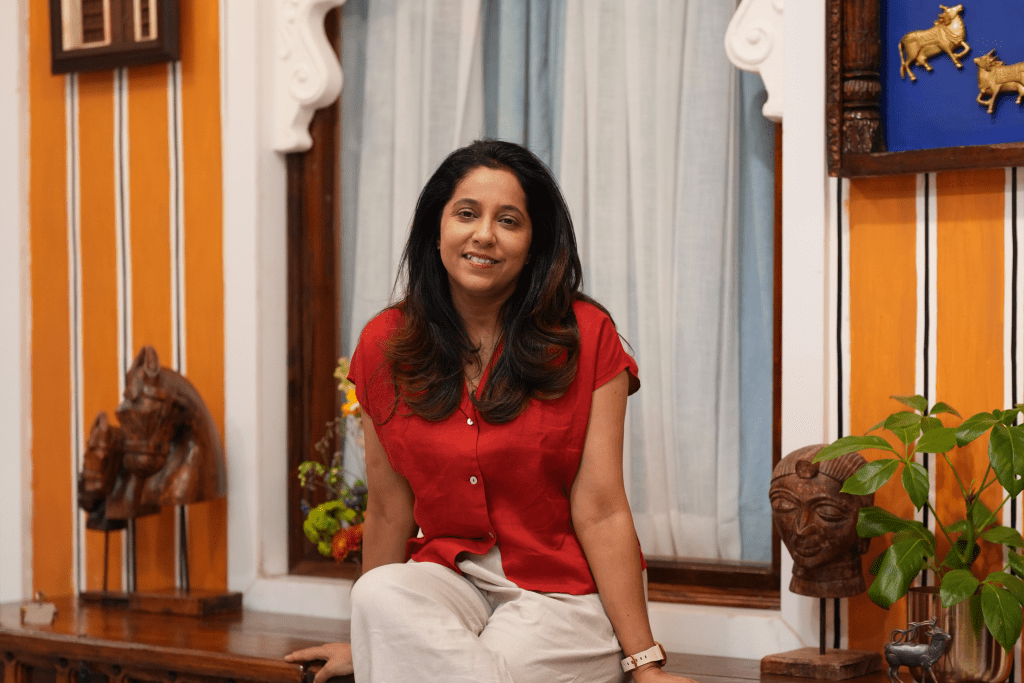
Rashmi did not train as an interior designer, an architect, or a hotelier. She spent her working years in banking before she began writing about food under the Instagram handle @kasoor_e_methi, building a loyal following for a voice that was unmistakably, unapologetically Rajasthani. When she first walked into what would become Rang Havelii, the building offered her nothing to work with in the conventional sense. “When I first found this place two years back, it was in complete shambles,” she says. “But in my heart I knew that this place had a lot of potential and I could turn this into something really special.”

She did not hire a design firm and hand over a mood board. She commissioned artisans directly, brief by brief, room by room. The dining table, made from ethically sourced camel bone carved and embedded into wood in an intricate technique local to Rajasthan, was built to a specification she gave craftspeople who work almost exclusively in this material. The mural above the breakfast nook, mapping Udaipur’s own skyline onto a stairwell wall, began as a scale drawing by her illustrator friend Monica, based in Mumbai, who plotted the City Palace, the ghats, and the lake against real dimensions before local artists reproduced it by hand. “I was just a little confused what to kind of make here,” Rashmi recalls of that particular wall. “So I took the help of my illustrator friend… I told her that I want something unique.”

The result reads less like a restoration and more like a personal statement rendered at the scale of a building, built from scratch in the visual language of a much older Rajasthan. “It’s just a representation of me,” she says of the finished haveli. “And when you come here, you will experience the same love and warmth that I grew up with and that Rajasthan has to offer.”

A Living Gallery: Eight Rooms, Eight Colours

Every one of Rang Havelii’s eight rooms is painted, furnished, and dressed in a single dominant colour, and every room showcases a distinct craft tradition. Guests do not simply sleep at a heritage-style property here. They sleep inside a specific, deliberately unrepeated art installation, then walk down a corridor into a completely different one.

Bagh Baradari carries the storytelling energy of Phad scroll painting, a tradition rooted in the Bhilwara belt of Mewar, its walls animated with the loose, narrative brushwork this folk art is known for. Panna Bagh, on the ground floor, goes the other way entirely: mint-green walls with hand-painted trees and birds, a quiet garden room that borrows its calm from the Rajput palace gardens of old. Maaru Mahal, one floor up, trades green for gold, taking its warmth from the sandstone palaces of Jaisalmer and the open Thar beyond them.

RoomColourCraft Focus / Inspiration
Bagh BaradariForest tonesPhad scroll painting (Bhilwara belt)
Panna BaghMint greenHand-painted garden motifs, Rajput palace gardens
Maaru MahalGold / sandstoneJaisalmer and Thar desert palette
Kamal TalaiSoft pink / lotusPichwai art, Nathdwara (17th century)
Surkh DarbarCrimsonMewar miniature painting
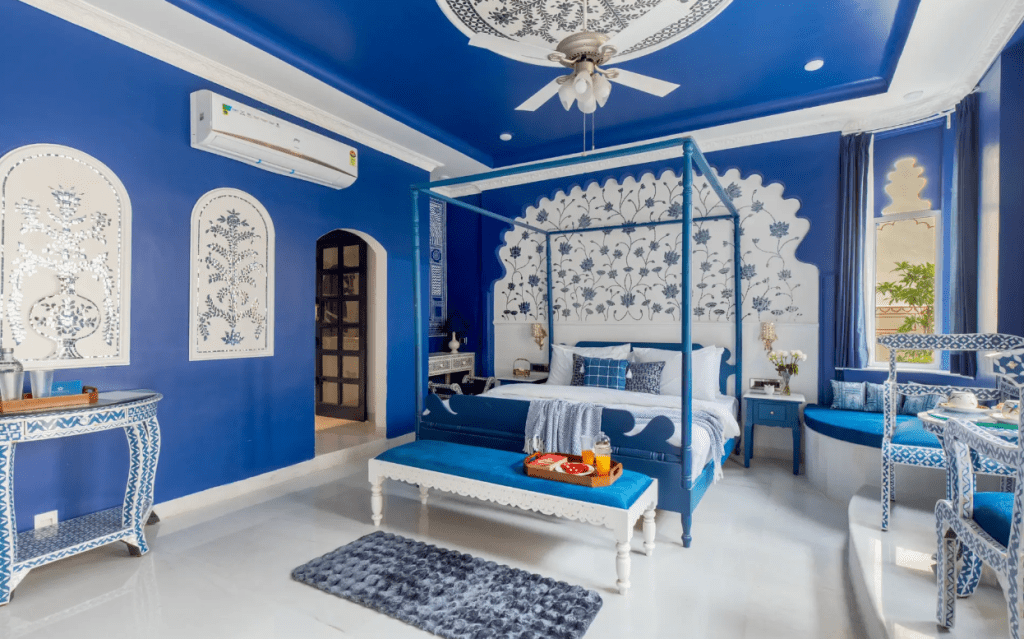
Neel JharokhaBlueJodhpur’s Blue City tradition
Rajwadi VatikaPinkJaipur palace garden aesthetic
Darpan DarbarMirror / white-goldThikri mirror-glass art, Udaipur
Thikri mirror art room Darpan Darbar at Rang Havelii Udaipur

Two rooms reward the closest attention. Darpan Darbar is built around Thikri, an inlaid mirror-glass craft specific to the Mewar region, in which small pieces of convex mirror and coloured glass are cut, polished, and set into plaster to catch and multiply light across a wall. By evening, a single lit candle in this room throws itself into dozens of reflected points across the ceiling and walls, an effect the room was clearly designed around. Surkh Darbar, by contrast, is quieter and more exacting: its walls carry Mewar miniature painting, worked in fine detail with squirrel-hair brushes and pigments traditionally drawn from minerals and plant matter, the same technique used for centuries in courtly manuscripts across this region.
The communal spaces do not let up either. The living room holds a hand-painted Pichwai mural, a collaboration between Rashmi’s sister and a local artist. The entrance is marked by a Toran, the ceremonial door hanging central to Rajasthani weddings, flanked by chairs shaped like elephants, a nod to the elephant rides up to Jaipur’s Amer Fort. A hand-carved Kavad, sourced from artisans in Bassi near Chittorgarh, sits nearby: a wooden shrine that opens like a series of folding doors, each panel painted with its own episode from a larger story of gods and goddesses, traditionally narrated aloud by the Kavadiya Brahmin families who carried these shrines door to door.

“Just as these days minimalism is trending, but as you know, Rajasthan is all about maximalism. So there will be a lot of colours and patterns and textures. Having been born in Rajasthan myself, I have this natural inclination towards colours and vibrance.”

— Rashmi, Founder, Rang Havelii

Seven Crafts, Under One Roof

What separates Rang Havelii from Udaipur’s many other heritage-styled stays is specificity. Almost anyone can call a property a living museum. Rang Havelii can name the village each craft came from.

Pichwai, the devotional cloth painting depicting Srinathji, traces to Nathdwara, near Udaipur, and dates to the seventeenth century. Thikri mirror-glass work is native to Udaipur and the wider Mewar region. Miniature painting here follows the Mewar school, distinguished from the more famous Mughal miniature tradition by its palette and its subject matter, closer to courtly and devotional life than imperial record-keeping. Phad, the scroll paintings that narrate the deeds of folk deities like Pabuji and Devnarayan, comes out of the Bhilwara belt, traditionally unrolled and sung by travelling bhopa performers rather than simply displayed. Bone inlay, seen throughout the property in furniture, uses ethically sourced camel bone carved and set into wood, then filled with resin. Kavad shrine-making is specific to Bassi, a small town near Chittorgarh. And Molela terracotta, added to the property’s craft roster after the press materials for this piece were written, comes from a single village of that name on the Banas river near Nathdwara, a GI-tagged tradition of flat terracotta plaques depicting local deities, made almost exclusively by the Kumhar potter families who have worked that clay for generations.

None of these crafts are displayed behind glass at Rang Havelii. They are load-bearing, in the most literal sense: walls, furniture, shrines, and tabletops that a guest touches, sits at, and sleeps beside rather than views from a rope barrier. The building itself is new. The hands that made everything inside it are not.

Food, Hosting, and Atithi Devo Bhava

“Rang Havelii for me was a perfect blend of the two things that I love: food and hosting,” Rashmi says, and the kitchen bears this out. It runs less like a hotel restaurant and more like the kitchen of someone who has spent years feeding people she cares about, which, as a food blogger for years before Rang Havelii existed, is exactly what Rashmi was already doing. The in-house chef prepares Rajasthani food with the kind of personal attention a restaurant kitchen rarely offers, and meals are available at an additional charge rather than folded into a flat room rate, closer in spirit to eating at someone’s home than paying for a fixed hotel menu.

That hosting philosophy has a name in Rajasthan: Atithi Devo Bhava, the guest as god. The Toran at the entrance is not purely decorative. It references a wedding-day ritual in which a groom touches the door hanging with his sword on reaching his bride’s threshold, a gesture of respect and welcome that predates the building by centuries, even where the building itself does not. Guests crossing into Rang Havelii cross the same threshold. On the ground, this translates into specific, remembered service: reviews on the live listing repeatedly single out staff members by name, and the property currently holds a 4.9-out-of-5 rating across more than fifty stays, with cleanliness, safety, and staff attentiveness scoring particularly high.

Rajasthani thali meal experience at Rang Havelii Udaipur

A Wall Away From the City Palace

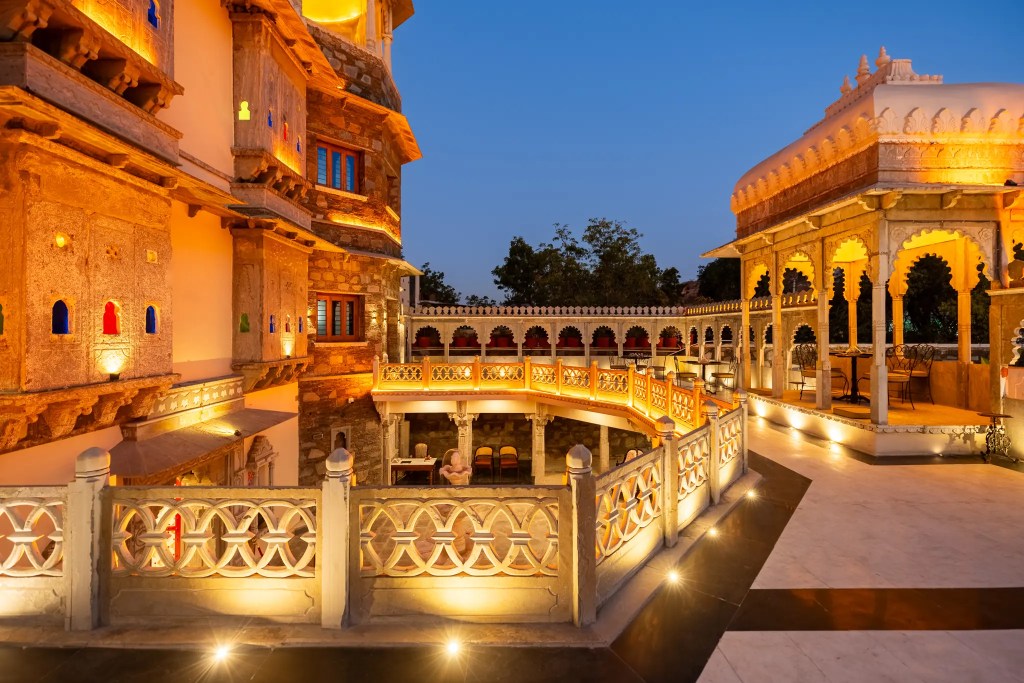
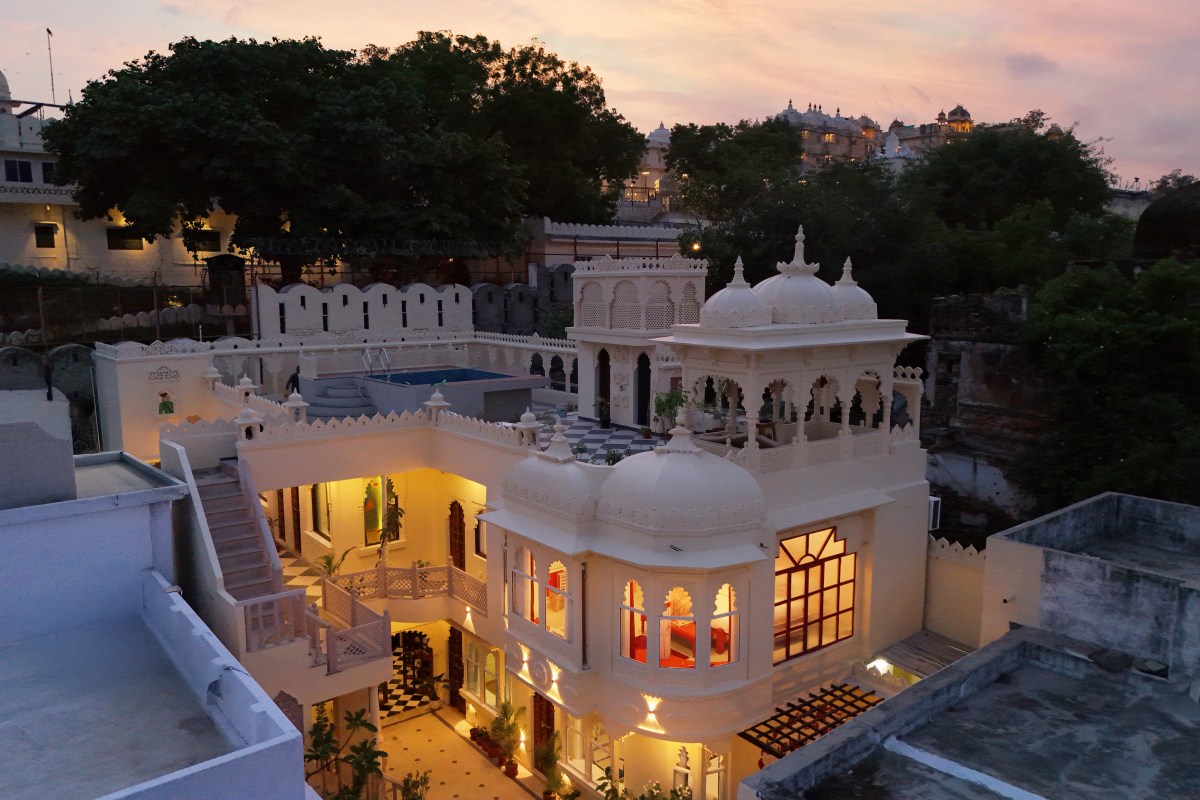
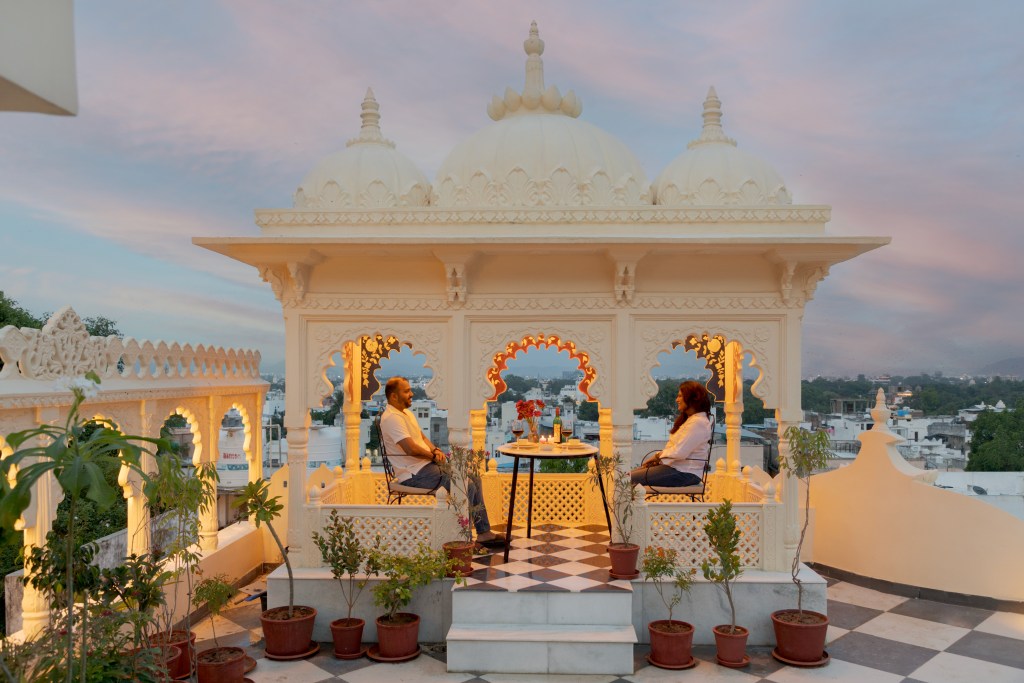
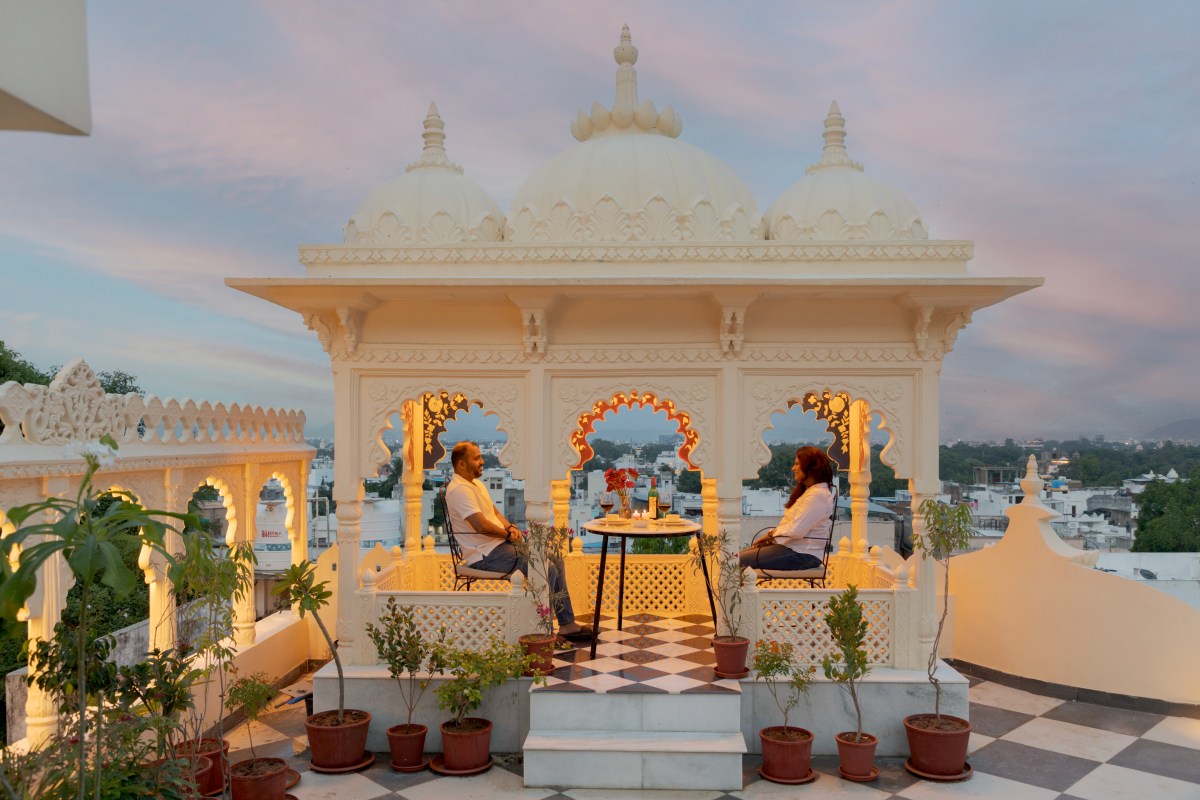
Location does most of the remaining work. Rang Havelii shares a boundary wall with the City Palace of Udaipur, one of the largest palace complexes in Rajasthan and, after dark, one of the most theatrically lit buildings in the city. From the rooftop chhatri and the private pool at Rang Havelii, guests watch that illumination directly, and during Diwali, the same terrace becomes a private viewing point for fireworks across the old city skyline. Jagdish Temple and Lake Pichola are each roughly a five-minute walk away. Fateh Sagar Lake is closer to fifteen minutes. The haveli sits inside Udaipur’s old city grid, within the kind of walkable radius that lets a stay double as a base for exploring rather than a destination requiring its own transport plan for every outing.

GOOD TO KNOW

Rang Havelii shares a boundary wall with the City Palace, Udaipur’s largest palace complex.

Jagdish Temple and Lake Pichola: approximately 5 minutes on foot.

Fateh Sagar Lake: approximately 15 minutes on foot.

Best light for the rooftop chhatri and pool: late afternoon into the evening, when the City Palace begins its nightly illumination.

Diwali is a particularly strong time to book this specific property, given the terrace’s direct sightline to the city’s fireworks.

Getting There, Including the Drive Every Gujarati Traveller Already Knows

Rang Havelii sits close enough to the centre of Udaipur that the wider question is less about reaching the haveli and more about reaching the city. Maharana Pratap Airport is roughly 24 kilometres away, a 30 to 40 minute drive depending on traffic. Udaipur City Railway Station and the main bus stand are both about 2 to 3 kilometres out, a 10 to 15 minute drive from the property, or a manageable one for anyone willing to walk part of the old city on arrival.

For travellers coming from Gujarat, this is a familiar route long before it is a search query. Ahmedabad to Udaipur runs roughly 260 kilometres via NH48, a drive of four to four and a half hours that has become one of the state’s most reliable weekend getaways, popular enough that Himmatnagar and the Shamlaji temple stop are landmarks in their own right for anyone who has made the drive before. Direct trains, including the ADI-UDZ Express, connect Ahmedabad’s Kalupur station to Udaipur City, and flights run the route as well, though most Gujarati travellers making a weekend of it still choose the highway for the flexibility it offers to detour toward Nathdwara, Eklingji, or Kumbhalgarh along the way. Travellers from Surat and Vadodara add roughly two and four hours respectively onto that same NH48 corridor, making Udaipur, and a stay inside its old city walls, a realistic two-night plan rather than a stretch.

From Mumbai, Pune, Delhi NCR, and Bangalore, Udaipur is well served by direct flights into Maharana Pratap Airport, putting Rang Havelii within a half-day’s travel from each of these cities door to door.

Rooftop pool and chhatri at dusk with the illuminated City Palace visible in the background.
Rooftop pool with City Palace view at Rang Havelii Udaipur
Stay Inside the Story

Book a room, a wing, or the entire eight-room haveli at Rang Havelii, Udaipur, through SaffronStays.
BOOK RANG HAVELII

Frequently Asked Questions

Where exactly is Rang Havelii located in Udaipur?

Rang Havelii is located in Bhatiyani Chohatta, in Udaipur’s old city, sharing a boundary wall with the City Palace. It sits within a five-minute walk of Jagdish Temple and Lake Pichola.

Is Rang Havelii an actual heritage building?

No. Rang Havelii is a heritage-style haveli, built two years ago from a collapsed shell of chambers and designed using traditional Rajasthani architecture, materials, and craft. It is not a centuries-old or protected heritage structure, and it shares a boundary wall with one that is: the City Palace.

How far is Rang Havelii from Udaipur’s airport and railway station?

Maharana Pratap Airport is approximately 24 kilometres away, a 30 to 40 minute drive. Udaipur City Railway Station and the main bus stand are both roughly 2 to 3 kilometres away, about 10 to 15 minutes by road.

What Rajasthani art forms can I see at Rang Havelii?

The property features seven craft traditions across its rooms and common areas: Pichwai painting from Nathdwara, Thikri mirror-glass art from Udaipur, Mewar miniature painting, Phad scroll painting from the Bhilwara belt, camel bone inlay furniture, hand-carved Kavad shrines from Bassi, and Molela terracotta from Rajsamand district.

Can I book just one or two rooms, or do I need to book the entire haveli?

Rang Havelii can be booked room by room, as a partial wing, or in its entirety for larger groups and celebrations. Room configurations and exact availability are confirmed at the time of booking on the SaffronStays listing.

Is Rang Havelii within walking distance of Lake Pichola and the City Palace?

Yes. The City Palace is directly adjacent, sharing a wall with the property, and Lake Pichola is approximately a five-minute walk away.

Is Udaipur a good weekend getaway from Ahmedabad and Gujarat?

Udaipur is one of Gujarat’s most popular weekend destinations, roughly 260 kilometres and four to four and a half hours from Ahmedabad via NH48. It is also well connected from Surat and Vadodara by the same highway, and by direct train and flight options.

Does Rang Havelii provide meals?

Yes, meals are available at an additional charge, prepared by an in-house chef, with vegetarian, non-vegetarian, and Jain options on the menu.

Udaipur in the Monsoon: A Complete Guide

Lake Pichola and the City Palace under monsoon cloud, water at full level, soft grey light.

What changes in the city, where to stay, and how to get there from Gujarat, Madhya Pradesh, Mumbai, Delhi and Pune

Udaipur looks like a different city once the monsoon arrives. For most of the year, it is a place people visit for clear skies and dry heat, its lakes and white marble palaces photographed under bright winter sun. Between July and September, that picture changes. The Aravalli hills around the city turn green. The lakes rise to levels they hold for only a few months a year, and the light softens into a grey that suits old sandstone and marble better than sharp sunlight usually does.

Most travel advice still treats Rajasthan as a winter destination and skips the monsoon question entirely. That misses what makes this particular season worth planning around. Udaipur was built around its lakes, quite literally, and monsoon is really the only time of year the city looks the way it was designed to look.

Table of Content:

What Changes in Udaipur During Monsoon

Lake Pichola existed before the city did, but Maharana Udai Singh II expanded it further when he founded Udaipur here in 1559. Every ruler after him added another lake, or another palace on an island in the middle of one, and the whole city grew up around water and reflection. For most of the year, Pichola and Fateh Sagar, the two main lakes, sit well below their full level. Monsoon changes that. Rain usually arrives through July, and by August both lakes are close to full, deep enough that the City Palace and its reflection blur into one another on a calm morning.

The weather itself is easier than most people expect. Rain tends to arrive in short bursts rather than settling in for the whole day, so mornings are often clear enough for sightseeing, with showers more likely in the afternoon or evening. Daytime temperatures run from the high 20s to low 30s in degrees Celsius, a real drop from the 40°C-plus the city sees in May and June. The crowds thin out too. Winter remains the busiest season for tourism in Udaipur, which makes monsoon the quietest and most affordable time to visit.

Monsoon shows Udaipur the way it was actually built to look.

Things to Do in Udaipur in Monsoon

The City Palace is worth visiting twice if there is time. Go once in the late morning, when the light is flat and even, and again closer to evening, when the marble catches whatever sun breaks through the clouds. A boat ride on Lake Pichola works better in monsoon than in any other season. The water sits high enough for the palace and surrounding hills to reflect clearly, instead of the muddy shallows visible for most of the year.

Sajjangarh Monsoon Palace seen through low cloud, hillside forest below.

Above the city, Sajjangarh, better known as the Monsoon Palace, was built in the 1880s by Maharana Sajjan Singh specifically to watch the clouds roll in over his kingdom. The drive up passes through a wildlife sanctuary that stays thick with mist through most of the season, and on a clear break in the weather, the view from the top stretches across the whole lake basin.

In the evenings, Bagore Ki Haveli, a restored eighteenth-century mansion on the Pichola waterfront, runs a nightly Dharohar dance show, a set of Rajasthani folk performances that ends with a dancer balancing seven brass pots on her head. During monsoon, the courtyard show has rain for a soundtrack, which makes it a good deal more atmospheric than the same performance in dry summer heat.

Food is worth building time around too. A Rajasthani thali, usually a dozen small dishes built around dal, gatte and kadhi, tastes better after a morning spent outdoors in cooler air. The cafés along the lake, half-empty for most of the year, fill up just enough in monsoon to feel lively, without a wait for a table. The old city rewards slow walking as well. Hathi Pol Bazaar, close to the City Palace, is where most of the miniature paintings and Pichwai art on sale in Udaipur are actually made, not just sold.

Where to Stay in Udaipur

Where a traveller stays in Udaipur changes the kind of trip it becomes. SaffronStays Rang Havelii sits close enough to the City Palace to share a version of the same rooftop views. The haveli took a year and a half to rebuild from near-ruin. Each of its eight rooms is designed around a different Rajasthani city’s craft tradition: Molela wall art from a village near Chittorgarh, marble from Makrana, sandstone floors from Dholpur. The rooftop pool looks out at the City Palace on one side and the Karni Mata hills on the other.

Villa feature, Udaipur SaffronStays Rang Havelii rooftop pool, City Palace visible across the water.

Pristine Manor takes a quieter approach. It sits between two lakes, a few hundred metres from Fateh Sagar, with a ten-thousand-square-foot garden that turns fully green by August, room enough for a large family or a pre-wedding function without feeling crowded. Kilakot, also near Fateh Sagar, is built around the same idea: slow mornings, open living, no fixed itinerary.

Between the three, most of what a traveller wants from Udaipur is covered: proximity to the palaces for anyone here to look at architecture, and enough distance from the noise for anyone here mainly to slow down. We have written a full lake-by-lake, café-by-café guide to Udaipur’s monsoon season separately, for anyone planning to spend a full week in the city rather than a long weekend.

Hariyali Teej Falls in August This Year

Within Teej section Women in green traditional attire celebrating Teej, decorated swings hung from a tree, henna-adorned hands visible.

August adds one more reason to plan around this season. Hariyali Teej, Rajasthan’s main monsoon festival, falls on 15 August this year. It marks the reunion of Shiva and Parvati, and the name roughly translates to green festival. For one day, women dress in green, apply fresh henna, and hang swings from trees and courtyard beams. Rajasthan calls it Shingara Teej locally, and it is celebrated more visibly here, with processions and decorated swings in courtyards and temples, than in most of the other states that also mark the day. It is not something a trip needs to be built around, but arriving during Teej week adds a genuine layer to a Udaipur visit that a dry-season trip does not offer.

Mount Abu: A Short Detour for Drivers

For anyone driving in from Gujarat, and often Madhya Pradesh too, Mount Abu makes a natural stop before or after Udaipur. It is Rajasthan’s only hill station, and the monsoon contrast is dramatic. While the rest of the state sits above 40°C in July, Mount Abu settles into the low twenties, with cloud low enough to touch the hills around Nakki Lake. The Dilwara Temples, a set of 11th and 13th century Jain temples known for their fine marble carving, are worth the climb in any season, but rain does nothing to them except clean the stone.

Rain does nothing to the temples except clean the stone.

SaffronStays Sylvan Farms sits on a hilltop above the town, its gardens and small working farms turning green through the season. Mount Abu to Udaipur is about 160 km, a three-hour drive through hills that turn from brown to green within a few weeks each year.

Getting to Udaipur

For Gujarat, Udaipur is close enough to be a proper weekend trip rather than a full holiday. Ahmedabad to Udaipur is about 260 km by road, a drive of 4.5 to 5 hours via NH48, and it is a route Ahmedabad already knows well, usually for weddings in the winter months. Vadodara and Surat add roughly one to two hours to the drive but follow largely the same road through Mehsana and Palanpur. Driving remains far more common than flying on this route, since the highway is faster door to door than the airport connections from Ahmedabad. Travellers routing through Mount Abu, Rajasthan’s only hill station and already a popular stop for Gujarat travellers, should plan for a full day of driving, with the hill station as a stop along the way rather than a separate detour.

From elsewhere in India, flying is usually the more practical option. Madhya Pradesh is the exception: Indore to Udaipur is about 390 km, roughly 5.5 to 6 hours by road, similar to the Gujarat drive, or under an hour and a half by direct flight. Delhi and Mumbai both have several direct flights to Udaipur a day, each taking around 1.5 hours, a shorter trip than the 10 to 13 hour drive from Delhi or the 750 km-plus drive from Mumbai. Pune has fewer direct options, with most flights connecting through Delhi, Mumbai or Ahmedabad and total travel time running 5.5 to 9 hours depending on the layover. Trains cover all of these routes too, but at 11 hours or more, they suit travellers who prefer an overnight journey over a short flight.

Planning the Trip

Monsoon runs July through September in Udaipur and the surrounding region. Rain tends to arrive in short spells rather than lasting all day, so most mornings stay clear enough for sightseeing. Daytime temperatures: high 20s to low 30s (°C) in Udaipur, low-to-mid 20s in Mount Abu, both a real break from the 40°C-plus both places see in peak summer. Ahmedabad to Udaipur: ~260 km, 4.5 to 5 hours by road. Indore to Udaipur: ~390 km, 5.5 to 6 hours by road. Delhi and Mumbai to Udaipur: ~1.5 hours by direct flight. Pack light layers for daytime humidity, something warmer for Mount Abu evenings if that is part of the trip, and a proper rain layer rather than a travel umbrella.

None of this needs much planning. A long weekend covers Udaipur comfortably on its own. Four or five days allow time for Mount Abu too, for anyone driving in from Gujarat or Madhya Pradesh. A private villa suits this season particularly well, since rain becomes part of a slow day rather than an interruption to a packed one. What changes most about a monsoon trip to Udaipur is not the itinerary but the season most people skip entirely. Winter shows the city at its clearest. Monsoon shows it the way it was actually built to look: lakes full, marble catching grey light instead of hard sun, and considerably fewer crowds in between.

Plan Your Monsoon Trip to Udaipur Explore SaffronStays villas in Udaipur and Mount Abu, from lakeside heritage havelis to hilltop farm retreats.

FAQ: Udaipur in Monsoon

Is Udaipur worth visiting in the monsoon, or is winter really the better season?

Winter remains the most comfortable season for sightseeing, but monsoon is when Udaipur’s lakes, Pichola and Fateh Sagar especially, fill closest to the level they were originally built for, and the city empties of winter crowds.

Is Udaipur a good weekend trip from Ahmedabad?

Yes. At around 260 km and 4.5 to 5 hours by road, Udaipur is one of the easiest weekend drives out of Ahmedabad, Vadodara or Surat, and it is a route Gujarat travellers already make often for weddings and family functions.

How do I reach Udaipur from Mumbai or Delhi?

Both cities have frequent direct flights to Udaipur, taking around 1.5 hours. Trains run too, but take 11 hours or more, so flying is the practical option for a short trip.

Is Indore a good starting point for a Udaipur trip?

Yes. Indore to Udaipur is about 390 km, roughly 5.5 to 6 hours by road, similar in length to the drive from Ahmedabad, and there are also direct flights under an hour and a half.

Can Mount Abu be combined with a Udaipur trip from Gujarat?

Yes, easily. Mount Abu and Udaipur are about 160 km and 3 hours apart, and it is a common route for Gujarat travellers driving in via Ahmedabad.

What is Hariyali Teej, and does it affect travel plans?

Hariyali Teej is Rajasthan’s main monsoon festival, marking the reunion of Shiva and Parvati with green clothing, henna, and decorated swings. In 2026 it falls on 15 August. It does not close attractions, but it brings extra colour and local celebration that week.

The Ultimate Udaipur Travel Guide: How to Plan the Perfect City of Lakes Escape

Let’s be honest: planning a trip to Rajasthan’s most romantic destination can feel like trying to solve a 1,000-piece puzzle where every piece is made of white marble. You want the sunset boat rides and the “Venice of the East” charm, but you’d rather skip the part where you’re stuck in a Tuk-Tuk traffic jam behind a very confused cow. 

Whether you are chasing the golden January sun or looking for a private pool to beat the summer heat, this comprehensive Udaipur travel guide is your shortcut. We have broken down the city into bite-sized categories, from the non-negotiable sightseeing spots in Udaipur to the best local street food secrets. Consider this your local companion to navigate the Mewar region like a royal, without the typical tourist stress.

Best time to visit Udaipur

The best time to visit Udaipur is undoubtedly between October and March, when the desert heat retreats and the “City of Lakes” is bathed in a soft, golden winter glow. During these months, the weather in Udaipur is so perfect; expect crisp, sunny days and nights that are just chilly enough to justify that expensive pashmina you’re going to buy. January is the absolute peak for a reason; the lakes sparkle, the palaces are cool to the touch, and the vibe is purely celebratory. If you are a fan of drama, the monsoon months (July to September) turn the Aravalli hills into a lush green paradise, though you may encounter some humidity.

View of a vibrant cityscape through an intricately designed arch, showcasing colourful buildings and distant hills under a clear blue sky.

Things to do in Udaipur & places to visit in Udaipur

Udaipur isn’t just a city; it’s a sprawling gallery of history and nature. To help you navigate, we have divided the top sightseeing spots in Udaipur by their unique local character.

  •  Palaces & Heritage Landmarks
    • City Palace: The largest palace complex in Rajasthan. It’s a labyrinth of mirror-work and hanging gardens. Pro-tip: Enter through the Badi Pol gate at 9:15 AM to beat the tour buses.
    • Jag Mandir: An island palace on Lake Pichola accessible by boat. It is so beautiful that it reportedly inspired the design of the Taj Mahal.
    • Sajjangarh (Monsoon Palace): Perched high on a hill, this 19th-century palace offers the best panoramic sunset views of the city.
    • Bagore Ki Haveli Show: Every evening at 7:00 PM, they host the “Dharohar” folk dance. It is intense, colorful, and genuinely impressive—a perfect way to see Rajasthan’s heritage in motion.
  •  Lakes & Waterfront Areas
    • Lake Pichola: The oldest and most iconic lake. A sunset boat ride to see the Lake Palace glowing on the water is a core memory you actually want.
    • Fateh Sagar Lake: This is where the locals hang out. It is great for a long evening walk or a quick “Kulhad Coffee” by the promenade.
    • Lake Badi (Bahubali Hills): Located on the outskirts, a short 20-minute hike leads to a view that looks like a scene from an epic fantasy movie.
  •  Temples & Spiritual Sites
    • Jagdish Temple: A stunning Indo-Aryan temple near the City Palace. The morning “Aarti” (prayer) is loud, rhythmic, and incredibly soulful.
    • Eklingji Temple: Located 22 km away, this complex of 108 temples is a masterpiece of stone carving dedicated to the Lord of Mewar.
    • Karni Mata Temple: Accessible via a ropeway, this hilltop shrine provides a breathtaking bird’s-eye view of the entire city.
  •  Old City & Markets
    • Hathi Pol Bazaar: The primary choice for authentic Pichwai paintings and traditional Rajasthani footwear (Juttis).
    • Bada Bazaar: The bustling heart of the city for silver jewelry, camel leather journals, and vibrant Bandhani fabrics.
A waterfront view showcasing historic buildings with ornate facades, illuminated by the golden light of sunset, reflecting in the calm water below.

Best Day Trips from Udaipur

If you have an extra day, these legendary locations are worth the drive.

  • Chittorgarh Fort: A must-do day trip located 2 hours away. This UNESCO giant is one of the largest forts in India, echoing stories of Jauhar and Rajput bravery.
  • Kumbhalgarh Fort: A UNESCO site located 85 km from the city. It features the second-longest wall in the world (after the Great Wall of China). It is a spectacular drive through the Aravalli hills.
  • Ranthambore National Park: While it is a longer journey (roughly 6-7 hours), many travelers include it as a “long day trip” or a next-stop destination. It is the premier place in Rajasthan to spot the Royal Bengal Tiger in its natural habitat.

Places to stay in Udaipur 

Deciding where to stay in Udaipur is all about deciding how much of the city’s energy you want to wake up to.

  • Stay near the City Palace or Lake Pichola: For those who want to be in the heart of the action and hear the temple bells from their balcony, this is the spot. In the evening, explore the lanes of Udaipur for local handicraft, art and antique shops.
  • Stay near Fateh Sagar Lake: If you prefer wider roads and a more relaxed evening vibe, look for stays in this area. The sunsets at Fateh Sagar lake are breathtaking and definitely don’t want to miss it. 
  • Moringa Valley Region: For a truly immersive nature experience, the Moringa Valley area on the outskirts offers a secluded retreat. It is the ideal location for a private villa in Udaipur where the only neighbors are the Aravalli hills and the occasional peacock.

Famous Delicacies and Cafes in Udaipur

Udaipur’s food scene is a wild ride of spice and scenery. You haven’t truly arrived until you’ve tried the legendary Laal Maas (fiery mutton curry) or a massive Dal Baati Churma thali. For a breakfast that hits different, hunt down Mirchi Wada, Pyaaz Kachori, and Dal Kachori near the Clock Tower.

  • Experience royal dining in u\Udaipur: Ambrai is a must for a romantic dinner with a view of the lit-up City Palace. For a royal experience, try Sheesh Mahal at the Leela Palace.
  • Iconic Eats: Harigarh Restaurant and Khamma Gani are the heavyweights for lakeside fine dining with authentic Rajasthani flavors.
  • Charming Cafes: For a modern break, head to Jheel’s Ginger Coffee Bar for the best view of the ghats, or Appetite Food Zone for local favorites. Upre by 1559 AD and Sun and Moon Rooftop are also excellent for those looking for a blend of contemporary and traditional fusion.

Don’t Let the Sun Set on Your Chance

Udaipur is the kind of city that ruins other vacations for you. It is a city you soak in. Once you have watched the Aravalli hills turn purple from your private terrace or felt the cool marble of a thousand-year-old temple under your feet, everything else feels a little too quiet, a little too ordinary. 

This is the year to stop saying “someday” and finally walk through the marble gates yourself. Once you’ve had a private breakfast overlooking the mountains, you’ll never want to stay in a “regular” hotel again.

Top Indian Destinations for New Year 2026: From Tourist Classics to Offbeat Escapes

December is when India truly feels like it is in travel mode. The beaches are calmer, the hills are cooler, wildlife activity increases along the coastline and travellers all over the country start planning where they will welcome 2026. It is one of those months where the weather works in your favour no matter which direction you head in. From dolphin sightings along the Konkan coast to soft winter sunlight in the hills and festive energy in cultural hubs, every region has something special to offer.

To help you pick a destination quickly, here is a conversational, easy to browse guide to the best places to travel for New Year 2026, divided into Tourist Favourites and Offbeat Escapes.

Aerial view of a large, beautifully designed villa surrounded by lush greenery and palm trees under a vibrant sunset sky.

SaffronStays The White Whale, Goa

I. Tourist Favourites and All Time Classics

These are India’s most dependable New Year destinations. Great winter weather, plenty of things to do and a holiday atmosphere that pulls travellers back every year.

Goa

Goa in December feels like a postcard. Sunny mornings, cool evenings and beaches that look their best after the monsoon. Markets are lively, shacks are buzzing, sunsets turn pink and the festive vibe is everywhere. From the nightlife of North Goa to the quieter, more picturesque corners of South Goa, it is a classic that never disappoints.

Bhimtal

If you want the beauty of Uttarakhand without the holiday crowds of Nainital, Bhimtal is perfect. The lake is serene, the mornings are crisp and the surrounding hills are ideal for quiet walks. December skies here are incredibly clear, making it a peaceful and scenic New Year retreat.

Mussoorie

Mussoorie brings out that nostalgic hill station charm. The air is cool, cafes are warm and the views from places like Landour make you want to slow down. December often brings misty mornings and glowing sunsets, creating the perfect setting to unwind.

Manali

Manali in winter has a magic of its own. Snow dusts the mountains, pine forests look dreamy and the whole town feels festive. Whether you stay in Old Manali or head toward Solang or Naggar, it is a great place to bring in the new year surrounded by nature.

Shimla

Colonial charm, snowy possibilities and that classic Himachal winter feel. Mall Road lights up beautifully in December, and the scenic drives around Shimla feel extra special when the weather is cold and crisp.

A scenic view of a mountain retreat house nestled among tall green pine trees, showcasing a red-roofed structure that blends harmoniously with the natural surroundings.

SaffronStays Ekam, Shimla

Dharamshala

This is where calm meets culture. Dharamshala and nearby McLeod Ganj offer a mix of mountains, monasteries, Tibetan cafes and peaceful winter landscapes. December is cool, quiet and perfect for travellers who like a slower pace.

Kasauli

Small, quiet and beautifully preserved. Kasauli is the kind of place where you take long walks, enjoy misty mornings and settle into a peaceful New Year holiday. It is simple and refreshing.

Jaipur

December is one of Jaipur’s best months. The days are sunny, evenings are cool and the city looks stunning with all its forts, palaces and festive decor. It is ideal for travellers who want culture, food, shopping and celebration all in one place.

Udaipur

Udaipur in winter feels like a dream. The lakes are calm, the palaces glow golden in the evening and the weather is pleasantly cool. It is a wonderful destination for couples and families who want a romantic or culturally rich New Year.

A modern villa with terraces and a swimming pool, set against a mountainous backdrop and clear blue sky.

SaffronStays Moringa Wishing Tree

Nashik and Igatpuri

Nashik turns into wine country in winter. Vineyards are lush, tasting rooms are buzzing and the sunsets feel cinematic. Igatpuri, on the other hand, offers foggy mornings, cool breezes and sweeping Sahyadri views. Both are perfect for quick drives from Mumbai.

Alibaug

Just a ferry ride away from Mumbai, Alibaug is ideal for beach lovers. December brings clear skies and clean shores, and if you are lucky, you may even spot dolphins early in the morning. Great beaches, good food and private villas make it a strong New Year option.

Mahabaleshwar

Strawberry season, crisp winds and endless valley views. December is one of Mahabaleshwar’s prettiest months, perfect for long drives, family trips and relaxing holidays.

A charming two-story brick cottage situated on a hillside, surrounded by greenery and colorful flowers, featuring a wooden boat on the rocky slope.

SaffronStays Crescent Bay, Palshet

Coorg

Coorg is at its prime in winter. Coffee plantations are lush, mornings are misty and the forests feel alive. It is a beautiful, slow and deeply refreshing New Year escape.

Ooty

Cool weather, tea gardens, lakes and cosy fireplaces. Ooty has a classic charm that makes it a perfect hill station getaway for New Year celebrations.

II. Less Crowd, More Vibes

These are the destinations for travellers who want quiet views, untouched nature and a celebration away from the noise. Ideal if you want space, privacy and a slower, calmer start to 2026.

Mukteshwar

A peaceful Kumaon town with apple orchards, panoramic views and cool December temperatures. Perfect for travellers who want silence, scenery and slow mornings.

Dapoli

This coastal stretch is known for dolphin spotting, clean beaches and seasonal turtle nesting. December is one of the best times to visit, especially for nature lovers who prefer quieter shores.

A modern villa surrounded by lush green hills under a colorful sky at dusk.

SaffronStays Nautica

Sindhudurg

One of India’s richest marine belts. Expect clear waters, untouched beaches, coral patches and frequent dolphin sightings. A serene, wildlife rich destination for those who love the ocean.

Udupi

Calm beaches, island explorations, great food and a relaxed coastal mood. Udupi is ideal if you want the ocean without Goa’s crowds.

Khopoli

Close to Mumbai and Pune but surprisingly peaceful. Surrounded by greenery, rivers and quiet pockets, Khopoli is perfect for private villa stays.

Chikmagalur

A hill station wrapped in coffee plantations. The air is cool, the views are green and December mornings feel fresh and crisp.

Hosur

A quiet countryside near Bangalore known for open landscapes and slow paced living. Great for travellers who want a short, restful escape.

A cozy brick villa situated on a green lawn, surrounded by trees and under a blue sky with scattered clouds.

SaffronStays Amodhini Farmstay, Hosur

Hejamady

A small coastal village near Udupi with golden shorelines, quiet beaches and postcard worthy sunsets.

Kannur

A beautiful blend of culture and coast. Kannur’s beaches are clean, the crowds are minimal and December brings the vibrant Theyyam season to life.

Kodaikanal

Lakes, forests, waterfalls and cool weather. Kodaikanal is peaceful in December, perfect for travellers who want a gentle New Year getaway.

Pawna

A serene lakeside retreat popular for its sunsets, quiet surroundings and open skies. Perfect for groups looking for a relaxing start to 2026.

Mulshi

Close to Pune yet incredibly tranquil. Mulshi is known for its misty hills, lakes and nature heavy villas that make for a soothing New Year holiday.

A group of friends enjoying a sunset by a poolside at a scenic villa in a mountainous region, with lush greenery and hills in the background.

SaffronStays Blue Infinitum, Pawna

Choosing the Right Destination for Your New Year 2026 Mood

If you prefer activity, sightseeing, good food and a holiday buzz, the Tourist Favourites are where you should be. They offer comfort, atmosphere and reliable winter weather.

If you want quiet views, wildlife moments, long walks, slow mornings and privacy, the Less Crowd, More Vibes list will feel like a breath of fresh air.

Either way, December is one of the best months to explore India. Every region has something unique to offer, and private villas across these destinations make celebrations even more special.

4 Mistakes to Avoid When Planning a Corporate Offsite

A corporate offsite isn’t just about getting away from work, it’s about coming together with purpose. The right environment for team building can inspire fresh ideas, rebuild trust, and strengthen teams in ways that boardrooms never could. Yet, even the most well-intention retreats often miss the mark because of a few easily avoidable mistakes.

Over the years, many teams across India from fast-growing startups to established corporations have discovered that the difference between a memorable offsite and an ordinary one lies in the details. Here are four mistakes to avoid when planning your next corporate getaway, and how the right SaffronStays villas can help you get it right.

1. Choosing Convenience Over Connection

Many companies still default to urban resorts or hotels for their offsites simply because they’re easy to access. But convenience often comes at the cost of authentic connection. A true offsite should help teams step away from their routine to think differently, talk openly, and recharge together.

Destinations like Karjat, Alibaug, Mulshi, Udaipur, and Rishikesh offer that perfect blend of proximity and perspective. Whether it’s a lakeside conversation at Satori, Mulshi, leadership sessions at Pristine Manor, Udaipur, or a relaxed brainstorming evening by the pool at Jashn, Alibaug, the right corporate retreat venue encourages creativity and openness. When the setting changes, so does the way people connect and that’s where real transformation begins.

2. Underestimating the Power of Space

A well-planned offsite retreat isn’t just about where you go it’s about how the space supports your purpose. Teams need breakout zones, open lawns, quiet corners, and activity spaces that make both collaboration and downtime effortless.

Many corporate teams have found that boutique villas like Eldora in Karjat or Laterite Grove offer the ideal layout for both strategic discussions and social bonding. With sprawling lawns, indoor games, and open lounges, these homes naturally create a rhythm between structured sessions and spontaneous conversations. When teams have the freedom to move, think, and interact, engagement follows effortlessly.

3. Treating Offsites as an Event Instead of an Experience

An offsite that feels like another meeting misses the point. The goal isn’t just to tick the “team bonding” box it’s to create shared experiences that outlast the trip itself.

The best offsites strike a balance between strategy and serenity. Teams find focus in settings like Satori, Mulshi, where the calm of the lake complements moments of reflection and collaboration. Others prefer the regal quiet of Sukh Saklana Haveli in Rishikesh or the contemporary elegance of Pristine Manor in Udaipur for leadership discussions and strategic planning. Whether it’s a spacious estate in Karjat or a coastal retreat like Jashn in Alibaug, every SaffronStays corporate villa is thoughtfully designed to encourage meaningful conversations and deeper team connections. These aren’t one-size-fits-all venues; they’re curated spaces that elevate an offsite into something truly purposeful.

4. Overlooking the Role of Intentional Planning

A successful offsite is built on clarity of intent. What’s the goal team alignment, leadership training, or creative brainstorming? Each purpose needs a different setup, from quiet reflection areas to high-energy outdoor zones. Large-capacity homes are ideal for full-team offsites that blend work with recreation. With professional meeting spaces, multiple breakout areas, and evening bonfire setups, these stays offer the infrastructure of a corporate venue with the warmth of a private retreat. The best plans also factor in local experiences farm-to-table dining, guided nature walks, or cultural evenings. These aren’t add-ons; they’re the threads that make an offsite memorable.

The Takeaway

When teams step away from offices, they should return not just refreshed, but reconnected with themselves, their colleagues, and the company’s larger vision. A well-planned corporate offsite in India creates that shift: from structured meetings to meaningful moments. From the tranquil corners of Satori, Mulshi to the royal charm of Sukh Saklana Haveli, Rishikesh, every SaffronStays corporate getaway is designed to help teams think freely and bond deeply. It’s not just about where you go it’s about what the place brings out in your people.

Explore SaffronStays’ handpicked collection of corporate getaway villas across India here and start planning an offsite your team will truly remember.

Udaipur City of Lakes: Palaces, Cruises & Cultural Evenings

Udaipur, affectionately known as the “City of Lakes”, is a destination where shimmering waters, marble palaces, and vibrant traditions create one of India’s most enchanting travel experiences. Beyond being a backdrop for films around the world, Udaipur is living history—an artistic city that continues to breathe in every courtyard, ghat, and palace.

An Iconic Showcase of Rajput Grandeur

Aerial view of Udaipur showcasing the City Palace along the shores of Lake Pichola, with mountains in the background and boats on the water.

The palaces of Udaipur are more than just architectural wonders. They were once the centers of power, symbols of Mewar pride, and today stand as global cultural icons. Blending Mughal and Rajasthani art with murals, mirror inlays, and stone carvings, these structures are pieces of history turned into works of art.

The City Palace Udaipur, the largest palace complex in Rajasthan, took more than 400 years to complete and still dominates the eastern banks of Lake Pichola. Within its marble courtyards and halls, treaties were signed, wars were planned, and royal ceremonies were held. Today, its museums preserve weapons, paintings, costumes, and treasures that narrate the resilience of the Mewar dynasty.

In the middle of Lake Pichola, the Lake Palace seems to float like a marble mirage. Built in the mid-18th century by Maharana Jagat Singh II as a summer retreat, it became a symbol of royal luxury and is now one of the most celebrated heritage hotels in Udaipur. It gained global fame after appearing in the James Bond movie Octopussy and remains one of the most photographed palaces in the world.

Nearby, Jag Mandir, the “Lake Garden Palace”, has its own legacy, having sheltered Prince Khurram (later known as Shah Jahan) during a rebellion. The palace’s marble pavilions are said to have inspired the Taj Mahal.

High above the city, the Monsoon Palace crowns a hilltop. Originally built by Maharana Sajjan Singh in 1884 to study the monsoon clouds, it later became a royal retreat. Although unfinished, it offers one of the best sunset views in Udaipur, especially beautiful during the rainy season when the Aravalli Hills turn lush and green.

The Lifeblood of Udaipur’s History

The lakes of Udaipur are more than scenic—they are the city’s very identity. Designed as reservoirs to sustain life in this dry region, they became cultural centers where devotion, festivals, and daily activities intertwined. Palaces and ghats along the water’s edge turned them into living canvases of grandeur.

Lake Pichola, built in 1362 CE, remains the most iconic. Taking a boat ride in Udaipur at night, when palaces glow with golden light, is among the most unforgettable experiences in the city. Fateh Sagar Lake, built in 1687, with its tranquil islands and backdrop of the Aravalli Hills, is equally charming, especially for families who can enjoy boating and picnics by the water.

Just beyond the city, Badi Lake (Badi Talab) offers an offbeat experience. Created to overcome a drought, it is now a favorite spot for swimming, cycling, and photography. Surrounded by the lush Bahubali Hills, it is one of the best places to visit in Udaipur during the monsoon and a perfect escape for travelers seeking quiet away from the crowds.

A scenic view of Lake Pichola in Udaipur, featuring ornate white marble architecture, flying birds, and the serene waters reflecting the sky.

Arts and Culture

Walking through Udaipur’s old city is like stepping into another time. Gangaur Ghat offers the most captivating views of the City Palace and Lake Pichola, making it a perfect starting point for exploration. Along the way, you’ll encounter the grand Jagdish Temple, intricately carved havelis, colorful bazaars, and gateways that open into lively streets.

Rajasthan’s artistic legacy thrives in Udaipur. The Mewar School of Miniature Painting, known for its fine detail and vibrant colors, continues to flourish. Local artisans keep alive traditions of marble carving, block-printed fabrics like Bandhani, silver jewelry, and handmade puppets. Shopping in Udaipur’s bazaars is as much a cultural experience as it is a souvenir hunt.

As night falls, the city offers unforgettable cultural evenings. The Bagore Ki Haveli Dharohar Dance Show is a family favorite, with folk performances of music, dance, and puppetry staged in an atmospheric courtyard on Lake Pichola. Festivals like Shilpgram in December bring rural and tribal traditions to life, blending music, crafts, and cuisine. Dining is also an experience here—whether enjoying Rajasthani thalis at Natraj Dining Hall or savoring fine dining at Ambrai Restaurant with views of the illuminated City Palace across the lake.

Beyond Udaipur

Many travelers extend their journey to explore places to visit near Udaipur. The hill station of Mount Abu, Rajasthan’s only hill station, offers a refreshing contrast with its cool climate, Nakki Lake, and the intricately carved Dilwara Temples. Other nearby treasures include Kumbhalgarh Fort, Ranakpur Jain Temples, and Chittorgarh Fort—all easy day trips that complement Udaipur’s cultural and natural splendor.

A City That Lives in Water and Light

Udaipur is beyond its lakes more than a tourist destination; it is a an of lakes, palaces, and traditions woven together by centuries of history. Whether you’re seeking things to do in Udaipur at night, planning a family trip, searching for offbeat experiences, or exploring the region in the monsoon season, Udaipur always reveals a new side of itself. 

In the end, Udaipur isn’t just a city you visit—it’s a place that lingers in your memory, shimmering like its lakes at twilight.

Udaipur City of Lakes: Palaces, Cruises & Cultural Evenings

Udaipur, affectionately known as the “City of Lakes”, is a destination where shimmering waters, marble palaces, and vibrant traditions create one of India’s most enchanting travel experiences. Beyond being a backdrop for films around the world, Udaipur is living history—an artistic city that continues to breathe in every courtyard, ghat, and palace.

An Iconic Showcase of Rajput Grandeur

The palaces of Udaipur are more than just architectural wonders. They were once the centers of power, symbols of Mewar pride, and today stand as global cultural icons. Blending Mughal and Rajasthani art with murals, mirror inlays, and stone carvings, these structures are pieces of history turned into works of art.

The City Palace Udaipur, the largest palace complex in Rajasthan, took more than 400 years to complete and still dominates the eastern banks of Lake Pichola. Within its marble courtyards and halls, treaties were signed, wars were planned, and royal ceremonies were held. Today, its museums preserve weapons, paintings, costumes, and treasures that narrate the resilience of the Mewar dynasty.

In the middle of Lake Pichola, the Lake Palace seems to float like a marble mirage. Built in the mid-18th century by Maharana Jagat Singh II as a summer retreat, it became a symbol of royal luxury and is now one of the most celebrated heritage hotels in Udaipur. It gained global fame after appearing in the James Bond movie Octopussy and remains one of the most photographed palaces in the world.

Nearby, Jag Mandir, the “Lake Garden Palace”, has its own legacy, having sheltered Prince Khurram (later known as Shah Jahan) during a rebellion. The palace’s marble pavilions are said to have inspired the Taj Mahal.

High above the city, the Monsoon Palace crowns a hilltop. Originally built by Maharana Sajjan Singh in 1884 to study the monsoon clouds, it later became a royal retreat. Although unfinished, it offers one of the best sunset views in Udaipur, especially beautiful during the rainy season when the Aravalli Hills turn lush and green.

The Lifeblood of Udaipur’s History

The lakes of Udaipur are more than scenic—they are the city’s very identity. Designed as reservoirs to sustain life in this dry region, they became cultural centers where devotion, festivals, and daily activities intertwined. Palaces and ghats along the water’s edge turned them into living canvases of grandeur.

Lake Pichola, built in 1362 CE, remains the most iconic. Taking a boat ride in Udaipur at night, when palaces glow with golden light, is among the most unforgettable experiences in the city. Fateh Sagar Lake, built in 1687, with its tranquil islands and backdrop of the Aravalli Hills, is equally charming, especially for families who can enjoy boating and picnics by the water.

Just beyond the city, Badi Lake (Badi Talab) offers an offbeat experience. Created to overcome a drought, it is now a favorite spot for swimming, cycling, and photography. Surrounded by the lush Bahubali Hills, it is one of the best places to visit in Udaipur during the monsoon and a perfect escape for travelers seeking quiet away from the crowds.

Arts and Culture

Walking through Udaipur’s old city is like stepping into another time. Gangaur Ghat offers the most captivating views of the City Palace and Lake Pichola, making it a perfect starting point for exploration. Along the way, you’ll encounter the grand Jagdish Temple, intricately carved havelis, colorful bazaars, and gateways that open into lively streets.

Rajasthan’s artistic legacy thrives in Udaipur. The Mewar School of Miniature Painting, known for its fine detail and vibrant colors, continues to flourish. Local artisans keep alive traditions of marble carving, block-printed fabrics like Bandhani, silver jewelry, and handmade puppets. Shopping in Udaipur’s bazaars is as much a cultural experience as it is a souvenir hunt.

As night falls, the city offers unforgettable cultural evenings. The Bagore Ki Haveli Dharohar Dance Show is a family favorite, with folk performances of music, dance, and puppetry staged in an atmospheric courtyard on Lake Pichola. Festivals like Shilpgram in December bring rural and tribal traditions to life, blending music, crafts, and cuisine. Dining is also an experience here—whether enjoying Rajasthani thalis at Natraj Dining Hall or savoring fine dining at Ambrai Restaurant with views of the illuminated City Palace across the lake.

City Palace Udaipur, a large complex showcasing Rajasthani and Mughal architecture, situated on the banks of Lake Pichola.

Beyond Udaipur

Many travelers extend their journey to explore places to visit near Udaipur. The hill station of Mount Abu, Rajasthan’s only hill station, offers a refreshing contrast with its cool climate, Nakki Lake, and the intricately carved Dilwara Temples. Other nearby treasures include Kumbhalgarh Fort, Ranakpur Jain Temples, and Chittorgarh Fort—all easy day trips that complement Udaipur’s cultural and natural splendor.

A City That Lives in Water and Light

Udaipur is beyond its lakes more than a tourist destination; it is a an of lakes, palaces, and traditions woven together by centuries of history. Whether you’re seeking things to do in Udaipur at night, planning a family trip, searching for offbeat experiences, or exploring the region in the monsoon season, Udaipur always reveals a new side of itself. 

In the end, Udaipur isn’t just a city you visit—it’s a place that lingers in your memory, shimmering like its lakes at twilight.

Discover Rang Havelii: Transforming Ruins into Art

From Ruins to Rang Havelii

When Rashmi Vaishnav stumbled upon a house in shambles a few steps away from the iconic Udaipur City Palace, she knew she had truly found a diamond in the rough. She had the idea that the property could become more than just a home, a place that truly celebrates where it is located. One and a half years later, the home was turned into a cozy exhibit of Rajasthani art and culture and came to be known as Rang Havelii, eponymously named after the kaleidoscopic rooms it hosts.

Unique art and persevering craftsmanship

In SaffronStays Rang Havelii, each bedroom is designed with an artistic eye—one that pays tribute to the major cultural cities of Rajasthan. Every detail, from architecture to décor, reflects this vision. The eight rooms have been meticulously designed around specific Rajasthani art forms and themes. From the deep royal blue room showcasing intricate Thikri (glass inlay) work referencing Jodhpur, crafted by master artisans over four months, to the green Pichwai room with storytelling murals of Krishna from Nathdwara, each space narrates its tale.

You’ll find regional arts like Phad, Molela, Mother-of-Pearl inlay, and more, woven into the very fabric of the Havelii. Even the furniture (chairs, almirahs, side tables) has been custom-made to complement each room’s character. Bathroom tiles and doors are also color-coordinated, with Rashmi sourcing precise shades over months of travel and even multiple visits to tile factories in Morbi, Gujarat. This was never just about renovating a house; it was about creating an immersive, authentic expression of Rajasthan’s artistic soul.

A stunning view of Rang Havelii in Udaipur during sunset, showcasing its intricate Rajasthani architecture with domes, ornamental details, and vibrant windows.

The artistic journey doesn’t stop in the bedrooms. The veranda features Molela wall art, crafted by artisans from a village near Chittorgarh, where 80% of the local community practices this age-old tradition. From Makrana marble seating to Dholpur stone flooring, every material used has been consciously sourced from within Rajasthan. One special wall in the veranda brings together Udaipur’s iconic landmarks—City Palace, Lake Palace, Jagmandir, Fateh Sagar, and more—designed as both a tribute and an idyllic photographic memory for guests.

Heart of the city

The rooftop terrace is where the magic culminates. Offering panoramic views—with the City Palace on one side, Karni Mata hills on the other, and the city skyline all around—it’s a breathtaking space to unwind. There’s a small swimming pool, loungers, and custom-built bajot-style floor seating, perfect for candlelit Rajasthani thali dinners under the stars. The terrace can be set up for special occasions or just soulful evenings, and it is also available for on-demand folk performances, from traditional Sarangi players to lively Kalbelia dancers.

Designed by hearts

Rang Havelii was not designed by an architect or decorated by an interior designer. It was entirely visualized and executed by the homeowners themselves. As proud locals of Rajasthan, they wanted to pour their love for the region into every detail. Except for technical consultation on the pool and staircase, every decision—every color, pattern, tile, and piece of furniture—was made with heart, vision, and intention. The goal was never to build just another boutique stay, but to revive endangered art forms, preserve tradition, and offer a soulful slice of Rajasthan.

Preserving culture

Many of the art forms showcased here, like Kavad storytelling boxes and Phad scrolls, are at risk of fading into history. Rashmi made it her mission to work with national-award-winning artisans, source rare artwork from limited-edition books, and give these traditions a new canvas within Rang Havelii. She hopes that guests leave not just rested, but inspired by the craftsmanship, touched by the stories, and deeply connected to the land.

If a guest says, “We didn’t want to leave,” she knows she has succeeded.

A true homecoming

Guests don’t just check into a room. They walk into a story and are welcomed like family. Whether it’s arranging transport, planning bonfires or projector nights, or surprising someone with a candlelight dinner, the caretakers go above and beyond to make every guest feel special.

As Rashmi says, it’s not about commercial gain. It’s about offering an experience that lingers—something that spoils guests with sincerity and soul.

A Living Canvas of Rajasthan

Aerial view of Udaipur showcasing the City Palace, Lake Pichola, and surrounding hills, under a cloudy sky.

SaffronStays Rang Havelii is a rare gem nestled in the heart of Udaipur’s white-marble cityscape. It is a tribute to the colors, craft, and cultural legacy of Rajasthan, designed to preserve, celebrate, and pass on. More than a place to stay, it’s a place to remember.

Rajasthan: 3 reasons to visit post August!

Its palaces and forts are reminders of the many great kingdoms; its people adore the colors of religious festivals and the first rains transform this land. Ever thought of visiting Rajasthan post July? Three reasons why you MUST visit here are Monsoons (yes, rains)festival of lights, i.e., Diwali and third reason being, its an ‘off-season’, so its the best time to beat the crowds.

India’s very own desert turns into a home to flora and fauna and abstract beauty in its own during rainfall. The fortresses, when lit up with lights, touch the sky with its beam, well almost. The fiesta of lights is nearing, and it’s  one of those festivals that ties people from almost every religion, caste and community together. These 11 places across Rajasthan will bring out the best of monsoons and the festival that follows.

UDAIPUR

The City of Lakes, has romance stretching away in every direction, from Lake Pichola which shimmers full of life during monsoons, to Aravalli Hills setting an unmatched location across India.  The boat rides on the lake, hustle of its age old bazaars, the tempting food shops, and ever so colorful clothes, do justice to its tag, ‘most romantic destination of India’.  This city is specifically very famous for its beautiful lakes and water bodies with all the greenery around, come alive in the rains! During monsoons, the sky remains dark and overcast, the temperature falls and long drives along the stretch of the lake city at Rani road or Badi lake will make you fall in love with it.

# 1 Detox yourself in the old city of Udaipur

Wondering where you could stay to experience all of the above? A two floor apartment with its own private roof terrace, located amid the old city of Udaipur is a retreat for anyone looking to spend time in a quiet place. Facing the Lake Pichola, the sunset gives an amazing view from the terrace.

Click here to know more about this lakeside apartment in Udaipur

# 2 Rediscover your love for Lakes in Udaipur

All your life you might think that you have had enough of beaches and lake views. Oh no! You are so mistaken till the time you spend at least a day at this place facing Pichola Lake. Imagine spending your time in an apartment that is located on the banks of this lake which provides an uninterrupted view of City Palace, Aravalli Hills and the Lake Palace.

Click here to know more about this lake facing rooms in Udaipur

# 3 Rejuvenate yourself at the Lakeside Villa

This lakeside Villa gives a simple yet beautiful view from your doorstep. The serene view makes this an ideal place to relax and spend your time sipping on your cup of tea, reading a book or conversing with your beloved or just sit there looking over the lake.

Click here to know more about this place

# 4 Experience a day in a Royal Palace in Udaipur

Surrounded by Aravalli ranges, you can spend hours by embracing the calmness of Fateh Sagar lake while sitting in your room or in the lush green lawns. In addition to the breath taking location of the Villa, it also has a private collection of vintage and classic cars which add up to the royal lifestyle.

Click here to know more about this Royal Villa in Udaipur

AJMER

A popular stop over on the Udaipur-Jaipur route, Ajmer is among the most important religious sites in India. Surrounded by tranquil lake of Ana Sagar, this is the 5th largest city of Rajasthan and the most important in terms of Islamic history. It is a home to the shrine of Khwaja Muin-ud-din Chishti, most important pilgrimage centres for Muslims.

# 5 Spend your time looking over Anna Sagar Lake in Ajmer

What feeling it did be like to sit in your balcony with a mug of hot chocolate and watch the running water at Anna Sagar Lake! If you are in a need for some solitude away from the hustle bustle of your daily routines, this place at Ajmer is a real rescue partner!

Click here to know more about this stay in Ajmer

# 6 Witness the warmth of a Rajasthani family in Ajmer

A British Colonial Bungalow with varied roof line which hints at cool, high-ceiling interiors protected from the hot desert air by thick walls and deep, shaded verandas, is a birdwatcher’s paradise with its small tranquil garden at the back of the lawn, while the house is approached across a large front lawn.

Click here to know more about this stay

JODHPUR

Jodhpur is famous for its architecture and the city shares a vibrant culture with its guests. The second largest city of Rajasthan has a beautiful past. The city that is known for its blue building actually has a historical reason behind it, meaning, the blue color years ago was chose to represent that the family belongs to Brahmin’s community.

# 7 Spend your Diwali like a Royal would do at Jodhpur!

This famously known as old city has to offer you a eighty year old residence located in a peaceful, well connected area. It stands as an oasis of hospitality and warm Rajput charm. Don’t be taken aback by its old world elegance for it comes with the modern comforts of a classic heritage property and the essence of being a guest of the family. Where else can you find a homestay that has a restaurant, swimming pool, a private lounge and a lush green lawn all under one roof? Now that’s a royal lifestyle!

Click here to know more about this place in Jodhpur

PUSHKAR

Besides Diwali, Pushkar is home to a very enchanting cultural festival, “Pushkar mela”, in the month of November where people come out of their houses, all decked up in beautiful clothes and ornaments, music in the air and lights everywhere.

# 8 Because at Pushkar brick houses are real!

Where we are surrounded by concrete jungle from every side, there is this holy place set in the arms of Rajasthan where you will find not one or two but majority of brick houses. Ever thought of spending your monsoon under a roof that smells so full of moist and mud? But wait until you spend one rainy day here and you might forever love the fragrance of rainfall.

Attending Pushkar Festival, November 2015? Click here to know where to stay!

JAIPUR

Rajasthan is popular for its festivals every year. Jaipur, specifically, boasts of the ‘Best Diwalis’ in the country. It paints the city red with red-topped turbans, painted Elephants, decked up Camels, candle lit balconies, and the sky filled with fire crackers! The famous monuments like City Palace, Jantar Mantar, Gopinathji Temple as well as Shopping areas are all lit up with colorful lights, lanterns and rangolis’.

# 9 Experience the ‘Best Diwali’ in the country in the Pink city

Spend your time at a Heritage Haveli situated in the Jaipur city, which gives you a glimpse and feel of the hustle and bustle of the people of this ancient city. The terrace offers an enthralling view of the famous Nahargarh Fort perched on the hilltop overlooking the Haveli.

Click here to know more about this place in Jaipur

# 10 Get drenched with locals in Jaipur

Rural people of Rajasthan would be more than honored to welcome you for a homestay. Given that it is pouring in Jaipur, the pink city, or a festive season, they are bound to be happy,  and would gladly invite you over for a family goath, i.e. family outing / dinner. Spend some quality time with the local family and get a taste of their regular life.

Click here to know more about this stay at Jaipur

JAISALMER

The desert city of Jaisalmer is known for its golden fort perched on top of a small hill. The city offers a lot of fairytale sights which could keep the photographer in you busy! This place is a desert mystery, it is sound and remote but very famous among the tourists. One can have a laid back stay at the sand dunes where camel rides is a famous mode of transport.

# 11 Camping in the interiors near Sand Dunes in Jaisalmer

This old-styled house located in Khuri village, 45 kms away from Jaisalmer, is a place which is in close proximity of Sand dunes, Desert National Park and Godawan Bird Sanctuary. If you are craving Rajasthani food, you could stay here, spending lazy time, laying on the ground, gazing at the sky, camping under the stars in Khuri village.

Click here to know more this place in Jaisalmer

There are enough places for you to pick your suitable desires and plan before the city runs out of festive enthusiasm! Plan your holiday at majestic Rajasthan, the King of lands, a must-see state of India!

Click here to check all stay options in Rajasthan

P.S. Cover Photo Credits: http://www.diwalidussehra.in


About the Author:

Keenjal Patel

A reader at mind, a writer at heart, a believer at soul and an achiever overall, is what she want to be. She loves to express through words. She’s a firm believer that imagination rules the world and the day this world absorbs the essence of her words, that would be a day of pride for her!

12 Homestays you must add to your 2015 Bucket list

By Sarita Santoshini

2014 has been a remarkable journey for us. We launched our website and travelled to different parts of the country to bring some beautiful properties to you. As the year draws to an end, we want to leave you with plenty more reasons to travel in 2015 through our curated platform – great adventures, friendly locals, delicious food, beautiful landscapes, and warm experiences irrespective of where you decide to go. Out of the 800, we’ve painstakingly chosen these 12 beautiful stay options across India that we think you should add to your bucket list – one destination for every month of 2015!


1. Surround yourself by luxury, nature and tens of spotted deer – Udaipur, Rajasthan

Udaipur Homestays
You’ll always be surrounded by nature in this luxury homestay.

 Amidst verdant and scenic hills of the Aravali mountain range in Udaipur is Shikarbadi. Once the chosen big game hunting area of the royalty of Mewar, Shikarbadi today is home to this beautiful, luxury property that allows you to experience an untouched side of the White City. The six themed suites of the homestay have been set around a manicured garden on a floor above the host’s rooms. Here, you can listen to the songs of the birds and often spot deer, porcupines and foxes trotting outside the fences of the house. Rest assured you can experience true Rajasthani hospitality here through the friendly service and delicious local food, recipes of some of which have come straight from the royal kitchen.

Click here to learn more and book. 


2. Getaway from Mumbai to a hilltop farm overlooking the valley – Chiplun, Coastal Maharashtra

Maharashtra Homestays
Plunge into this inviting pool and enjoy the view of the mountains and the valley.

If you’re looking for an offbeat getaway from Mumbai, this farm house in Chiplun, built on an 18 acre land, on a hilltop overlooking the valley, is just the place for you. The rooms are very simple, but you’ll have peacocks and friendly dogs here for company, an inviting open pool that you can plunge into, and home-cooked Maharashtrian fares, prepared on the traditional wood-fired stoves under a mango tree, to relish. During your stay, you can spend your day floating on a boat in the Vashisth estuary and your nights either watching a star studded sky from the terrace or driving through the jungle in a jeep. Not a dull moment here! (Also read: A Surprise Anniversary Getaway )

Click here to learn more and book. 


3. Escape to a royal Villa overlooking the Dal Lake – Srinagar, Jammu & Kashmir

This beautiful Villa in Srinagar is owned by the descendants of Maharaja Hari Singh.

Overlooking the Dal Lake and facing the Zabarwan range, this beautiful  Villa is home to the descendants of the last ruling Maharaja of the princely state of Jammu and Kashmir. Nestled amongst apple, cherry and plum orchards, it is a part of their larger private estate, one where they organise fortnightly farmers market and the annual Darah Shikoh Festival. With a 36 feet high central atrium, tastefully done rooms and a lounge that comes with a view, it makes for a perfect retreat when in Srinagar. During their stay, guests can enjoy strolls in the walking trail around the estate and the nearby pond that attracts a large number of migratory birds. If you are lucky you may even come across a Himalayan Black Bear!

Click here to learn more and book. 


4. Stay with one of India’s best birding guides – Kewzing, Sikkim

Enjoy the unspoilt beauty of Sikkim while you stay in this Log House.

If you’re a birding enthusiast, this is just the place for you. Mr. Bon, your host, and one of India’s most renowned Ornithologists, has been leading birding tours around Sikkim, Assam, Arunachal Pradesh, Bhutan and Nagaland since 2001. During your stay, you can take guided birding tours to Maenam Wildlife Sanctuary, Borong and on trails that lie close to Doling Monastery in Ravangla and Mambru Monastery that is perched on top of a hill. The homestay itself is located next to a monastery. You can choose to stay in the log houses, suites or the family rooms, and eat delicious organic meals with a view of the Kanchenjunga during your stay.

Click here to learn more and book. 


5. Stay in a charming cottage surrounded by apple orchards – Manali, Himachal

The homestay lies surrounded by apple orchards and green mountains

Located in Bipasha Valley near Manali, this charming cottage lies nestled by apple trees and offers a scenic escape from the chaos of city life. The bedroom comes with a number of windows and a small personal balcony overlooking the hill station of Manali. There is a small garden outside where you can spend time enjoying the view, writing or sipping a cup of hot tea. The friendly hosts also whip up a delicious meal using fresh organic produce from their garden. During your stay, you can go for short treks around the cottage, on a trail leading to the Some River and another to a beautiful waterfall.

Click here to learn more and book. 


6. Explore an exotic village while staying in the midst of a community forest – Mawlongbna, Meghalaya

Your cottage lies a walk away from this breathtaking spot.
Your cottage lies a walk away from this breathtakingly beautiful spot.

The beautiful village of Mawlongbna in Meghalaya, tucked away from local tourists, houses two cottages for the adventurous travellers. Reaching the village involves a walk through the community forest, with little streams, brooks and a waterfall en route. During your stay, you can set off with the locals to discover fossils of sea-creatures (remnants of an era when the entire area was covered by the expanse of the seas), go fishing or kayaking in a water reserve nearby, and visit the local markets. The best part? Dining on local Khasi cuisine with a view of the plains of Bangladesh! (Also read: The Bridges that Grow )

Click here to learn more and book.


7. Experience a lesser-known Ladakh by the cliff bank of River Indus – Uleytokpo, Ladakh

Set on the banks of the Indus river, these cottages let in a stunning view of Ladakh's landscape.
Set on the banks of the Indus river, these cottages let in a stunning view of Ladakh’s landscape.

Set at the cliff bank of river Indus, 70 Kilometers into Sham valley is the village of Uleytokpo. Here, set amidst apple and apricot orchards is a beautiful eco property that allows you to experience luxury, serenity as well as a lesser-known side of Ladakh. The rooms are large and spacious with a large number of windows where you can wake up to a view of the vast mountains. During your stay, you can pick from one of the many books in the cosy library, indulge yourself with a refloxolgy session in the in-house spa, or venture out for river rafting and hiking.

Click here to learn more and book. 


8. Spend the night star gazing from an attic room – Chimney, Darjeeling

The stunning bird's eye view from the village of Chimney
The stunning bird’s eye view from the village of Chimney

Located in a charming little village called Chimney that lies at an altitude of 6800 feet, this homestay is your window into a side of Darjeeling that not many know or talk about. The best part about the location is the bird’s eye view of Teesta River, Siliguri and neighbouring regions from its roads. On the other side is a beautiful misty juniper forest, and there are a few waterfalls and viewpoints that lie a short hike away. Stay in this cosy attic room, taste some delicious Nepalese food, and spend your night star gazing or watching lights flicker in the valley below. (Also read: Memories of a Dreamy Village )

Click here to learn more and book.


9. Experience the lavish plantation life in a Colonial Bungalow – Coorg, Karnataka

Experience the lavish plantation life in this Heritage Bungalow in Coorg

Surrounded by sweeping vistas of the ever picturesque Kodagu Hills, this Heritage Bungalow is fit for royalty. With large, spacious rooms, fireplaces, Victorian furniture and manicured lawn, the Bungalow takes you back to a bygone era with its old world charm. During your stay, you can eat scrumptious meals of Coorg delicacies like Pandhi (pork) or Koli (Chicken) Curry, Akki Roti (Rice Roti), Kadumbuttu (Rice Dumplings), Wild Mushroom and Mango Curry. While there, other than strolling through the coffee plantations, you can take a trip to Abbey Falls, Nagarhole National Park and the Namdroling Tibetan Monastery.

Click here to learn more and book.


10. Stay in a rustic cottage in the heart of a forest – Corbett, Uttarakhand

These rustic cottages allow you to be one with the forest.

These cottages make for a very special wilderness destination where you can be in, and one with the forest. Situated on the banks of the Ramganga River in Corbett National Park, and accessible on foot, it’s for true forest lovers and those that seek the wild in its original, pristine form, away from the crowds, the vehicles and heightened human activity. The cottages here are beautiful and have been constructed with locally sourced clay, savannah thatch and wood inspired by traditional Vangujjar tribal style. While here, soak up the wilderness from your verandas, enjoy some delicious meals, explore the forest on foot, enjoy birdwatching, butterfly spotting, or look for signs of the big ones.

Click here to learn more and book.


11. Watch the sun set over lush fields from a hill top Bungalow – Kottayam, Kerala

Enjoy a gorgeous sunset from your balcony in the hill top Bungalow.

Set in the hills of the beautiful town of Kottayam, this bungalow lets you soak up the rich natural surroundings of Kerala away from the tourists trails. The charming rooms open up to a view of lush green fields and backwaters, which can be enjoyed with multiple cups of tea from the veranda. Other than enjoying delicious Malayali meals, you can enjoy cycling by the hilly countryside, take long leisurely walks through the fields and go for backwater rides through sleepy villages.

Click here to learn more and book.


12. Stay in a Wooden Chalet on the banks of a river – Ribandar, Goa

Goa Homestays
The beautiful wooden chalet by the Mandovi river in Goa.

Situated on the banks of Goa’s largest River, Mandovi, is this beautiful wooden chalet that looks straight out of a Hollywood movie. Built in 1730, the property comes with three bedrooms, one of which opens up to a paved patio by the edge of the river, living rooms, dining hall, kitchen, sun decks and even a convenience store. The house is designed perfectly to allow the view of the river, the Salem Ali Bird Sanctuary and adjacent islands from every location in the house. During your stay, you can enjoy fishing or rent a bike to explore the town of Ribandar.

Click here to learn more and book.


Which one of these homestays would you add to your 2015 Bucket list? Tell us in the comments section. 

About the Author: Born and raised in Assam, Sarita Santoshini has been travelling around India and penning down her experiences over the past year. She currently works as the Content Editor for SaffronStays. You can read more of her travelogues on her blog-http://crumbsfromyourtale.wordpress.com.