Coorg in July 2026: Coffee, Rain, and the Particular Silence of a Misty Plantation

Rain falls on a coffee plantation differently than it falls anywhere else, settling into the leaves one at a time rather than crashing against them, until the whole estate holds a low steady hush that makes conversation start to feel unnecessary. This is Coorg in July, and it behaves nothing like the version of Coorg that shows up on postcards and winter itineraries.

Most travellers picture Coorg in its winter form, with clear skies, an organised weekend circuit between viewpoints, and a waterfall stop timed carefully against traffic on the way back to Bangalore. July asks for something slower and less scheduled than that, because the coffee plants are still holding the last of their berries before the October harvest, mist sits low in the valleys until well past mid-morning, and the whole district settles into a rhythm that rewards travellers willing to slow down and run on it too.

July does not interrupt Coorg. It is the month the plantation was built for.

Table of Contents

What July Actually Looks Like in Coorg

July sits at the centre of Coorg’s monsoon, with temperatures holding between 19°C and 25°C through most of the month and rain arriving in spells rather than a single continuous downpour, often clearing by afternoon before returning again by evening. Roads to Madikeri, Virajpet, and the main plantation belts generally stay open under normal conditions, though a handful of interior trekking trails close temporarily after the heavier spells pass through.

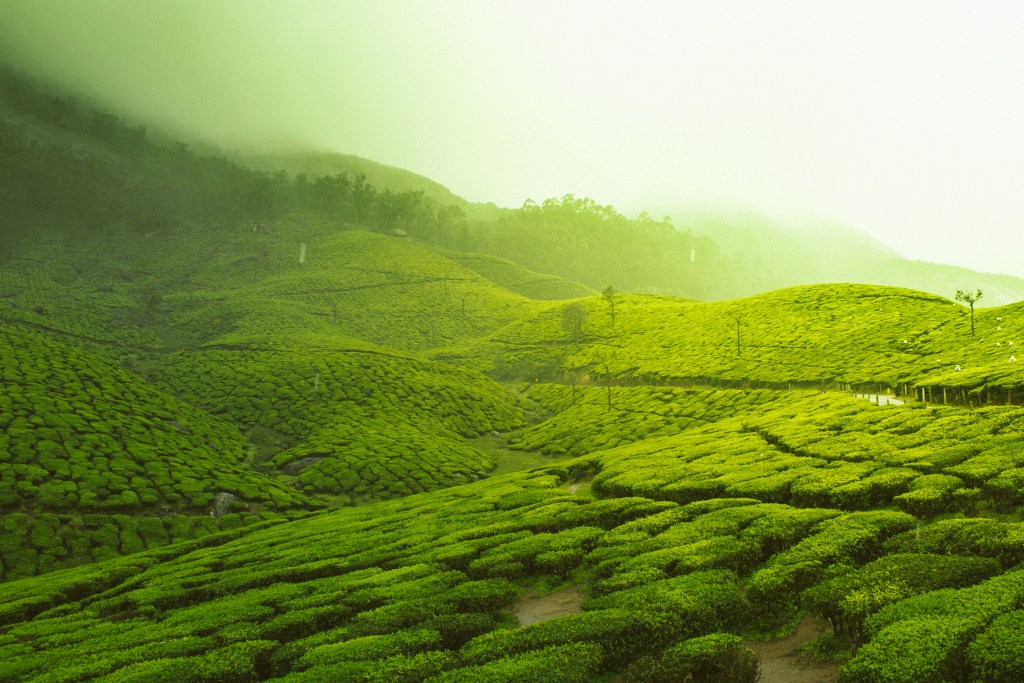
This is also the wettest stretch of the year, with July rainfall typically running between 900 and 1,200 millimetres, which means waterfalls across the district hit their strongest flow of the entire year. Coffee plants, still carrying the last of their cherries before the October harvest, turn a deep saturated green that photographs never quite manage to capture, no matter how good the camera.

None of this makes July a compromise season for anyone willing to plan around it. It makes it a different destination altogether, one built around slowness and atmosphere rather than a tightly packed sightseeing checklist.

The Particular Silence of a Working Plantation

Most travel writing about Coorg leads with waterfalls, but the real character of July here runs quieter than any single landmark can capture. It lives in the sound of rain on a tin roof at six in the morning, the smell of wet earth mixing with drying coffee cherries on a covered drying floor, and the mist that collects at the base of the hills and refuses to lift until well past mid-morning most days.

Staying inside a working plantation, rather than at a hotel on its edge, changes how the entire month feels, because mornings start with walks between coffee rows still dripping from the night before and evenings settle into sitting under a covered veranda with a filter coffee, watching rain move across the valley as though it has somewhere else to be. Nobody is rushing between attractions in a stay like this, since the plantation itself has quietly become the attraction.

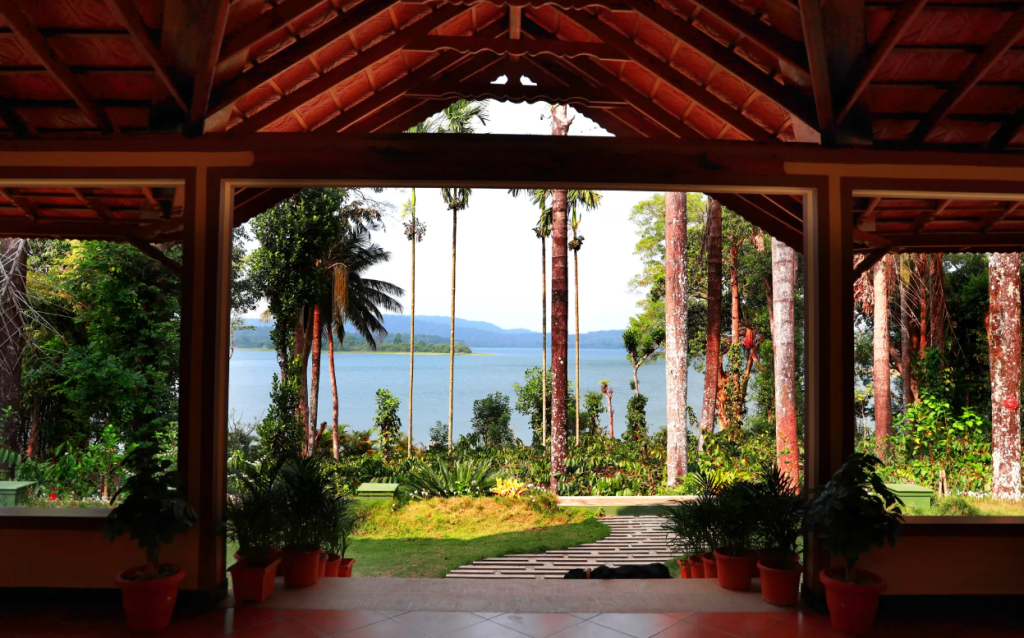
This is where a heritage bungalow earns its keep over a standard resort room, and SaffronStays’ Calamondinn Bungalow, a 130-year-old colonial home set inside a working coffee estate near Nagarhole, is built for exactly this kind of month. High ceilings and wide verandas were designed for tropical rain long before air conditioning existed, and in July that old design does genuinely useful work, letting guests wake to birdsong between showers, take guided walks through the plantation with the host, and sit down to meals cooked from what the estate itself produces just outside the kitchen door.

Most visitors think of a Coorg homestay as somewhere to sleep between waterfalls. In July, the plantation itself becomes the reason to stay.

Things to Do Between the Showers

Coorg in July rewards a flexible itinerary far more than a tightly packed one, and a handful of spots are genuinely worth building the day around rather than rushing past on the way to the next stop.

Abbey Falls runs at its most powerful this month, framed by coffee and spice plantations along the approach road, and the viewing platform stays open in most weather even though the walkway leading up to it can turn slippery after a heavy spell.

Dubare Elephant Camp, sitting on the banks of the Kaveri, continues operating through July, and the swollen monsoon river adds a real sense of drama to the whole setting that the dry season simply cannot match.

Raja’s Seat in Madikeri offers a different kind of view in the rain, with mist rolling through the valley below in slow waves while the garden empties out compared to peak season, which makes the whole spot feel almost private for anyone who visits early.

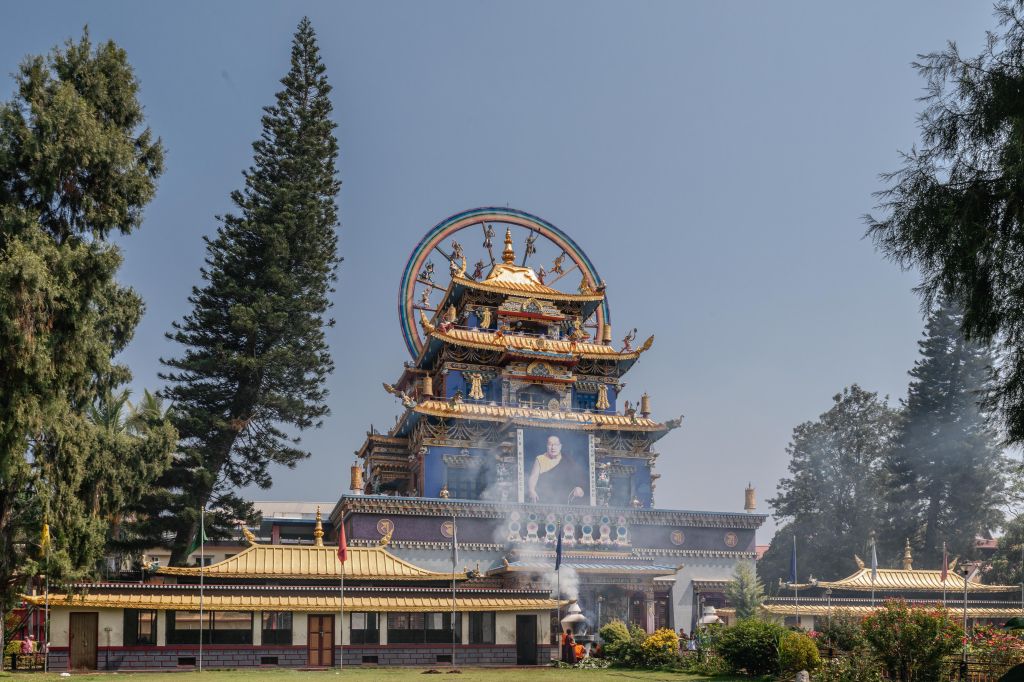
Namdroling Monastery, home to one of the largest Tibetan Buddhist settlements in India, works particularly well on a heavier rain day, since its gold statues and detailed murals hold their own against grey skies outside and give travellers somewhere absorbing to spend an hour indoors.

Monsoon travel note for Coorg, July 2026

Short treks around Tadiandamol or Brahmagiri are possible with a local guide, but trails get slick and leeches are a genuine consideration this month. Guided routes only, and carry high socks. Ghat sections on the Madikeri-Mangalore route can slow down after heavy rain. Check conditions before setting out, and build a buffer into any drive. Most main attractions, including Abbey Falls, Dubare and Madikeri Fort, stay open through normal monsoon spells. A raincoat and closed waterproof shoes matter more than an umbrella.

Where to Stay: Four Coorg Villas Built for the Rain

Coorg’s monsoon character comes through best in homes that were designed around the plantation rather than built apart from it, and a few SaffronStays properties do this particularly well, each in its own way.

Calamondinn Bungalow remains the standout choice for July. Set inside its own coffee estate near Nagarhole National Park, this five-bedroom colonial home combines antique furnishings with genuine estate life, from guided plantation walks and home-cooked Kodava meals to covered verandas that turn every rain shower into part of the stay rather than an interruption to it. SaffronStays has also been recognised at the MakeMyTrip Awards for India’s Favourite Villa, which is a fair marker of the hospitality standard guests can expect across the wider portfolio.

Tanjore Villa takes a completely different route. Guests enter through a 172-year-old temple door into a five-bedroom heritage home filled with rosewood furniture and gold-leaf Tanjore art, and a stream runs through the property and past several of the bedrooms, so that in July the constant sound of moving water becomes a calming presence running through the estate’s coffee and avocado plantations.

Coorg Toddy Farms, a traditional Mangalore-style villa set on the Harangi backwaters, sits inside its own coffee plantation and offers a quieter, more rustic take on estate living, with the nearby river adding an extra layer of monsoon atmosphere that suits travellers looking for something less polished and more immersive.

Jerdon’s Perch, sitting on the edge of the Coorg-Sakleshpur coffee belt, is a pet-friendly pool villa surrounded by plantations and paddy fields, and it tends to suit larger groups who want open lawns and shared spaces to go along with their estate walks.

The same rain that closes a beach opens up everything a coffee estate has to offer.

Getting There and Packing for July

Coorg sits roughly 250 to 260 kilometres from Bangalore, which typically works out to a drive of five to six hours depending on whether the route runs through Mysore or Kushalnagar. The nearest airport is Mangalore International, about three to four hours away by road, and the closest railhead is Mysore Junction, around 95 kilometres out, so weekend travellers coming from Bangalore should budget for slower ghat sections in heavy rain and build a genuine buffer into the schedule rather than planning it tight.

Packing for July means raincoats rather than umbrellas, closed waterproof footwear, quick-dry clothing, and insect repellent for leeches on any forest or plantation trail. Most plantation stays provide gumboots for guests heading out into the estate, which is worth confirming at the time of booking rather than assuming it is included.

 Misty coffee plantation road in Coorg during the July monsoon with the Western Ghats in the background
Stay Inside Coorg’s Coffee Country Private plantation villas across Coorg. Your caretaker, your veranda, your monsoon.

FAQ: Coorg in July

PUBLISHING NOTE These 5 Q&As appear in the visible body of the post. The schema code below goes into the WordPress Custom HTML block or RankMath Schema tab only. Never paste schema into the post body.

Is Coorg worth visiting in July?

Yes, for travellers who want lush landscapes, low crowds and lower rates rather than dry, clear-sky sightseeing. Waterfalls and coffee plantations are at their most dramatic this month.

What is the weather like in Coorg in July?

Expect temperatures between 19°C and 25°C, frequent rain spells through the day, and rainfall around 900 to 1,200 millimetres for the month, the wettest period of the year.

Are Coorg’s roads and attractions open during monsoon?

Main roads and popular attractions including Abbey Falls, Dubare Elephant Camp and Madikeri Fort generally stay accessible. Some interior trekking trails close temporarily after heavy rain.

What should I pack for Coorg in July?

A raincoat, waterproof closed shoes, quick-dry clothing and insect repellent. Gumboots are often provided at plantation stays for estate walks.

Which SaffronStays villa is best for a coffee estate stay in Coorg?

Calamondinn Bungalow offers the most immersive plantation stay, with guided estate walks and home-cooked meals inside a working coffee estate near Nagarhole.

Waking Up Above the Clouds: A Guide to Coorg and Chikmagalur Coffee Plantation Stays in June

There is a particular kind of morning that only coffee country can offer.

You wake up to the sound of rain tapping softly against tiled roofs. Wisps of cloud drift lazily through rows of coffee bushes. The air smells of wet earth, pepper vines, and freshly brewed filter coffee. Somewhere in the distance, a Malabar whistling thrush announces the start of another monsoon day.

This is June in Karnataka’s coffee heartland.

While much of the country is battling rising temperatures, the hills of Coorg and Chikmagalur begin their annual transformation. Coffee estates turn emerald green, waterfalls return to life, and the roads winding through the Western Ghats become some of the most scenic drives in South India.

Whether you are planning a family getaway, a slow monsoon escape, or simply want to spend a few days surrounded by coffee plantations and mountain views, Coorg and Chikmagalur offer two distinct yet equally memorable experiences.

Table of Content:

Why June Is the Sweet Spot for Karnataka’s Coffee Country

Most travellers associate hill stations with summer. Seasoned travellers know that coffee country comes into its own once the rains arrive.

June marks the beginning of the monsoon season across Coorg and Chikmagalur. The first showers wash away the dust of summer, streams begin flowing again, and entire valleys disappear beneath blankets of mist. The weather remains pleasantly cool, typically ranging between 18 and 25 degrees Celsius, making it ideal for long walks through plantations, leisurely breakfasts overlooking the hills, and afternoons spent listening to rain from a covered verandah.

Unlike peak holiday periods, June also brings a quieter atmosphere. Roads are less crowded, viewpoints feel more intimate, and plantation stays offer a sense of privacy that is increasingly difficult to find in popular destinations.

Practical note: early June (before the 15th) is the most rewarding window. The hills have already greened up and waterfalls started flowing, but the heaviest sustained rain has not yet arrived. Carry a waterproof layer, wear high socks on plantation walks (leeches appear in damp undergrowth), and build flexibility into your plans. Some trails close temporarily after heavy rain.
Emerald green coffee bushes shaded by silver oak trees on a Coorg estate in the June monsoon, Karnataka

Coorg: Where Families Find Space to Slow Down

Ask anyone in Karnataka about their favourite monsoon destination and chances are Coorg will feature near the top of the list.

Known as the Scotland of India, Kodagu district combines rolling coffee estates, forested hills, rivers, and charming plantation homes that have been welcoming guests for generations. For families looking for private villa stays in Coorg, the region offers a compelling alternative to conventional hotels. Private villas allow families to gather under one roof, share meals together, enjoy expansive gardens, and experience the slower rhythms of estate life.

A typical day in Coorg rarely needs an itinerary.

Mornings begin with steaming cups of locally grown coffee. Afternoons are spent exploring nearby waterfalls, driving through mist-covered roads, or simply watching clouds move across the hills. Evenings often end around a bonfire when weather permits, accompanied by local Kodava cuisine and stories that stretch long after dinner.

The emphasis here is not on rushing from one attraction to another. It is on allowing the landscape to set the pace.

Among the most rewarding ways to experience Coorg is by staying within a working plantation itself. SaffronStays operates private villas set amid acres of greenery, with views of the Harangi backwaters and the quiet rhythms of a working estate that many day visitors never see.

Chikmagalur: Living Among the Coffee Estates

If Coorg feels established and familiar, Chikmagalur feels wonderfully immersive.

Often regarded as the birthplace of coffee cultivation in India, Chikmagalur has a long association with sprawling estates, mountain landscapes, and plantation culture. The region’s elevation gives it a distinct character. The roads are steeper, the views broader, and the coffee estates stretch as far as the eye can see.

For travellers seeking a luxury plantation stay experience in Chikmagalur, the appeal lies in staying within these estates rather than merely visiting them.

A morning walk here might take you through rows of coffee bushes shaded by silver oak trees. You could spend an afternoon learning about the coffee-growing process from bean to brew, before returning to a verandah overlooking rolling hills wrapped in mist.

Unlike busier hill destinations, Chikmagalur rewards travellers who appreciate slower experiences. Time is measured not by sightseeing checklists but by cups of coffee, changing weather patterns, and conversations that unfold naturally.

SaffronStays properties in Chikmagalur place guests in the heart of plantation landscapes, allowing them to experience the region’s defining character from the moment they wake up. The result is not just a stay in Chikmagalur. It is an opportunity to live, however briefly, within the rhythms of a working coffee estate.

Sunrise over rolling coffee estates in Chikmagalur, Karnataka, with mist filling the valleys in June

Coorg or Chikmagalur: Which Makes the Better Drive from Bangalore?

One of the biggest advantages both destinations share is accessibility from Bangalore.

Coorg typically takes between five and six hours by road via the Mysore route. Chikmagalur is often a little closer, at four to five hours via NH75 through Hassan. Both are well within reach of a Bangalore weekend drive, making them natural choices for the city’s professionals and families looking to escape between Friday evening and Sunday night.

Choosing between the two ultimately depends on the experience you are seeking. Coorg tends to appeal more to families looking for spacious homes, heritage character, backwater views, and a broader range of activities. Chikmagalur is often preferred by travellers who want to immerse themselves in coffee culture, mountain landscapes, and plantation life with fewer distractions.

The good news is that there is no wrong answer. Both destinations deliver the sense of escape that city dwellers crave, particularly during the monsoon months.

Extending the Journey: Why Kabini Deserves a Place on Your Radar

For travellers planning a longer Karnataka getaway, Kabini offers a compelling addition to a coffee-country itinerary.

While it is better known for wildlife experiences than coffee plantations, the region’s water bodies, forests, and tranquil surroundings create a completely different atmosphere from the hills. Many travellers exploring Kabini waterfront resorts and stays are drawn by the opportunity to spend time near the backwaters, where mornings often begin with bird calls and mist rising over the water.

Combining Kabini with either Coorg or Chikmagalur creates a well-rounded itinerary that blends plantations, forests, and waterfront landscapes into a single journey through Karnataka’s most rewarding countryside.

Kabini backwaters at dawn with mist rising over the water and forest on the opposite bank, Karnataka

Why Private Villas Work So Well During the Monsoon

Rain has a way of encouraging people to slow down.

That is precisely why private villas often feel more rewarding than conventional hotels during this season. Instead of navigating crowded dining halls or busy common areas, guests have the freedom to enjoy the weather on their own terms. Breakfast can stretch into lunch. Conversations can continue uninterrupted. Children can explore open lawns while adults settle into a covered sit-out with a book and a fresh cup of coffee.

The experience feels personal rather than programmed.

In destinations built around nature and scenery, that difference matters. A hotel gives you a room with a view. A private estate puts you inside the view.

A Three-Day Coffee Country Escape

A long weekend is often all you need.

Leave Bangalore early on a Friday morning and arrive in Coorg or Chikmagalur by afternoon. Spend the evening settling into your villa and enjoying your first monsoon sunset. Reserve the second day for estate walks, coffee experiences, local cuisine, and nearby viewpoints. Allow room for spontaneity because some of the best moments in coffee country are unplanned.

On the final morning, wake up early, enjoy one last leisurely breakfast overlooking the hills, and begin the drive back with a few bags of freshly roasted coffee in the boot.

The journey home feels considerably shorter when you have spent a weekend above the clouds.

One Last Thought

June transforms Coorg and Chikmagalur into some of the most rewarding destinations in South India. The landscapes are greener, the air is cooler, and the experience feels more intimate than during peak holiday periods.

Whether you choose the spacious charm of a Coorg family villa or the immersive appeal of a Chikmagalur plantation stay, one thing is certain: few places make slowing down feel this effortless.

And sometimes, all it takes is a cup of coffee, a blanket of mist, and a home surrounded by the Western Ghats to remember how refreshing that can be.

Browse SaffronStays properties in Coorg and Chikmagalur at saffronstays.com/villas/villas-in-coorg.

Plan Your Monsoon Coffee Country Escape Private plantation villas in Coorg, Chikmagalur, and Kabini. Your caretaker, your kitchen, your estate. saffronstays.com/villas/villas-in-coorg

YOU MIGHT ALSO LIKE

  • Kerala in Monsoon 2026: Why June Is the Best-Kept Secret for a South India Villa Stay  (Published 4 June)
  • Escaping the Nilgiri Summer Rush: Private Estates in Coonoor and Kodaikanal  (Published 4 June)
  • Best Places to Visit in India in June 2026: SaffronStays Region-by-Region Guide  (Publishing 18 June)

FAQ: Coorg and Chikmagalur in June

Is Coorg good to visit in June?

Yes, with the right expectations. Early June is excellent: the estates are vivid green, waterfalls have started flowing, and the worst of the monsoon rain has not yet arrived. By mid to late June, expect sustained rainfall and some trail closures. Pack a waterproof layer, wear high socks on plantation walks, and build flexibility into your plans. For travellers who enjoy the atmosphere of rain and mist, June in Coorg is genuinely magical.

How far is Coorg from Bangalore?

Coorg (Madikeri) is roughly 240 to 260 kilometres from Bangalore, typically a five to six hour drive via the Mysore route (NH275). Traffic through Mysore and road conditions in the Ghats can affect the timing. Most travellers leave Bangalore by 5am or 6am on a Friday to arrive comfortably by early afternoon.

Which is better for a monsoon stay: Coorg or Chikmagalur?

Both are excellent but they offer different experiences. Coorg is better for families wanting spacious villas, heritage character, and a wider range of activities around the Harangi backwaters and nearby attractions. Chikmagalur is better for travellers who want pure plantation immersion: steeper terrain, broader views, and a stronger focus on coffee culture. If you have four or more days, combining both is very rewarding.

What is the drive time from Bangalore to Chikmagalur?

Chikmagalur is roughly 240 kilometres from Bangalore via NH75 through Hassan, typically four to five hours by road. The route passes through pleasant countryside and the drive itself is part of the experience. Start early to arrive before afternoon and make the most of your first evening at the estate.

What should I pack for a Coorg or Chikmagalur monsoon stay?

Waterproof jacket or poncho, waterproof shoes or sandals that can get wet, high socks for plantation walks (essential for leech protection in damp areas), a light fleece for evenings (temperatures drop to 16 to 18 degrees Celsius after dark), and a power bank since signal can be patchy on estates. Leave itinerary pressure at home. The best thing to pack for a monsoon coffee country stay is willingness to let the weather decide the day.

12 Homestays you must add to your 2015 Bucket list

By Sarita Santoshini

2014 has been a remarkable journey for us. We launched our website and travelled to different parts of the country to bring some beautiful properties to you. As the year draws to an end, we want to leave you with plenty more reasons to travel in 2015 through our curated platform – great adventures, friendly locals, delicious food, beautiful landscapes, and warm experiences irrespective of where you decide to go. Out of the 800, we’ve painstakingly chosen these 12 beautiful stay options across India that we think you should add to your bucket list – one destination for every month of 2015!


1. Surround yourself by luxury, nature and tens of spotted deer – Udaipur, Rajasthan

Udaipur Homestays
You’ll always be surrounded by nature in this luxury homestay.

 Amidst verdant and scenic hills of the Aravali mountain range in Udaipur is Shikarbadi. Once the chosen big game hunting area of the royalty of Mewar, Shikarbadi today is home to this beautiful, luxury property that allows you to experience an untouched side of the White City. The six themed suites of the homestay have been set around a manicured garden on a floor above the host’s rooms. Here, you can listen to the songs of the birds and often spot deer, porcupines and foxes trotting outside the fences of the house. Rest assured you can experience true Rajasthani hospitality here through the friendly service and delicious local food, recipes of some of which have come straight from the royal kitchen.

Click here to learn more and book. 


2. Getaway from Mumbai to a hilltop farm overlooking the valley – Chiplun, Coastal Maharashtra

Maharashtra Homestays
Plunge into this inviting pool and enjoy the view of the mountains and the valley.

If you’re looking for an offbeat getaway from Mumbai, this farm house in Chiplun, built on an 18 acre land, on a hilltop overlooking the valley, is just the place for you. The rooms are very simple, but you’ll have peacocks and friendly dogs here for company, an inviting open pool that you can plunge into, and home-cooked Maharashtrian fares, prepared on the traditional wood-fired stoves under a mango tree, to relish. During your stay, you can spend your day floating on a boat in the Vashisth estuary and your nights either watching a star studded sky from the terrace or driving through the jungle in a jeep. Not a dull moment here! (Also read: A Surprise Anniversary Getaway )

Click here to learn more and book. 


3. Escape to a royal Villa overlooking the Dal Lake – Srinagar, Jammu & Kashmir

This beautiful Villa in Srinagar is owned by the descendants of Maharaja Hari Singh.

Overlooking the Dal Lake and facing the Zabarwan range, this beautiful  Villa is home to the descendants of the last ruling Maharaja of the princely state of Jammu and Kashmir. Nestled amongst apple, cherry and plum orchards, it is a part of their larger private estate, one where they organise fortnightly farmers market and the annual Darah Shikoh Festival. With a 36 feet high central atrium, tastefully done rooms and a lounge that comes with a view, it makes for a perfect retreat when in Srinagar. During their stay, guests can enjoy strolls in the walking trail around the estate and the nearby pond that attracts a large number of migratory birds. If you are lucky you may even come across a Himalayan Black Bear!

Click here to learn more and book. 


4. Stay with one of India’s best birding guides – Kewzing, Sikkim

Enjoy the unspoilt beauty of Sikkim while you stay in this Log House.

If you’re a birding enthusiast, this is just the place for you. Mr. Bon, your host, and one of India’s most renowned Ornithologists, has been leading birding tours around Sikkim, Assam, Arunachal Pradesh, Bhutan and Nagaland since 2001. During your stay, you can take guided birding tours to Maenam Wildlife Sanctuary, Borong and on trails that lie close to Doling Monastery in Ravangla and Mambru Monastery that is perched on top of a hill. The homestay itself is located next to a monastery. You can choose to stay in the log houses, suites or the family rooms, and eat delicious organic meals with a view of the Kanchenjunga during your stay.

Click here to learn more and book. 


5. Stay in a charming cottage surrounded by apple orchards – Manali, Himachal

The homestay lies surrounded by apple orchards and green mountains

Located in Bipasha Valley near Manali, this charming cottage lies nestled by apple trees and offers a scenic escape from the chaos of city life. The bedroom comes with a number of windows and a small personal balcony overlooking the hill station of Manali. There is a small garden outside where you can spend time enjoying the view, writing or sipping a cup of hot tea. The friendly hosts also whip up a delicious meal using fresh organic produce from their garden. During your stay, you can go for short treks around the cottage, on a trail leading to the Some River and another to a beautiful waterfall.

Click here to learn more and book. 


6. Explore an exotic village while staying in the midst of a community forest – Mawlongbna, Meghalaya

Your cottage lies a walk away from this breathtaking spot.
Your cottage lies a walk away from this breathtakingly beautiful spot.

The beautiful village of Mawlongbna in Meghalaya, tucked away from local tourists, houses two cottages for the adventurous travellers. Reaching the village involves a walk through the community forest, with little streams, brooks and a waterfall en route. During your stay, you can set off with the locals to discover fossils of sea-creatures (remnants of an era when the entire area was covered by the expanse of the seas), go fishing or kayaking in a water reserve nearby, and visit the local markets. The best part? Dining on local Khasi cuisine with a view of the plains of Bangladesh! (Also read: The Bridges that Grow )

Click here to learn more and book.


7. Experience a lesser-known Ladakh by the cliff bank of River Indus – Uleytokpo, Ladakh

Set on the banks of the Indus river, these cottages let in a stunning view of Ladakh's landscape.
Set on the banks of the Indus river, these cottages let in a stunning view of Ladakh’s landscape.

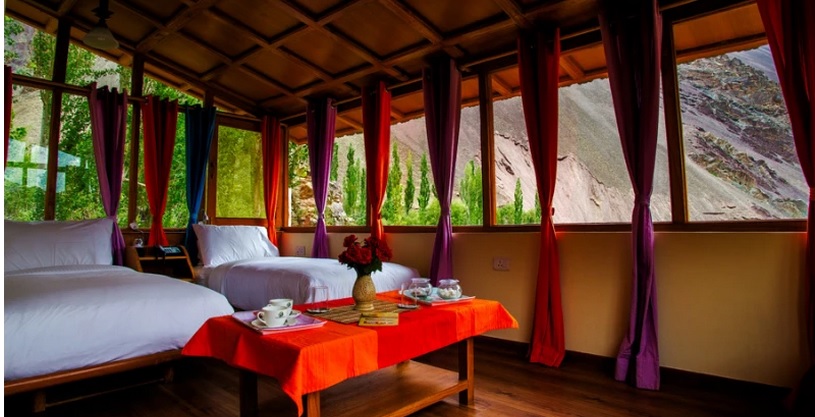
Set at the cliff bank of river Indus, 70 Kilometers into Sham valley is the village of Uleytokpo. Here, set amidst apple and apricot orchards is a beautiful eco property that allows you to experience luxury, serenity as well as a lesser-known side of Ladakh. The rooms are large and spacious with a large number of windows where you can wake up to a view of the vast mountains. During your stay, you can pick from one of the many books in the cosy library, indulge yourself with a refloxolgy session in the in-house spa, or venture out for river rafting and hiking.

Click here to learn more and book. 


8. Spend the night star gazing from an attic room – Chimney, Darjeeling

The stunning bird's eye view from the village of Chimney
The stunning bird’s eye view from the village of Chimney

Located in a charming little village called Chimney that lies at an altitude of 6800 feet, this homestay is your window into a side of Darjeeling that not many know or talk about. The best part about the location is the bird’s eye view of Teesta River, Siliguri and neighbouring regions from its roads. On the other side is a beautiful misty juniper forest, and there are a few waterfalls and viewpoints that lie a short hike away. Stay in this cosy attic room, taste some delicious Nepalese food, and spend your night star gazing or watching lights flicker in the valley below. (Also read: Memories of a Dreamy Village )

Click here to learn more and book.


9. Experience the lavish plantation life in a Colonial Bungalow – Coorg, Karnataka

Experience the lavish plantation life in this Heritage Bungalow in Coorg

Surrounded by sweeping vistas of the ever picturesque Kodagu Hills, this Heritage Bungalow is fit for royalty. With large, spacious rooms, fireplaces, Victorian furniture and manicured lawn, the Bungalow takes you back to a bygone era with its old world charm. During your stay, you can eat scrumptious meals of Coorg delicacies like Pandhi (pork) or Koli (Chicken) Curry, Akki Roti (Rice Roti), Kadumbuttu (Rice Dumplings), Wild Mushroom and Mango Curry. While there, other than strolling through the coffee plantations, you can take a trip to Abbey Falls, Nagarhole National Park and the Namdroling Tibetan Monastery.

Click here to learn more and book.


10. Stay in a rustic cottage in the heart of a forest – Corbett, Uttarakhand

These rustic cottages allow you to be one with the forest.

These cottages make for a very special wilderness destination where you can be in, and one with the forest. Situated on the banks of the Ramganga River in Corbett National Park, and accessible on foot, it’s for true forest lovers and those that seek the wild in its original, pristine form, away from the crowds, the vehicles and heightened human activity. The cottages here are beautiful and have been constructed with locally sourced clay, savannah thatch and wood inspired by traditional Vangujjar tribal style. While here, soak up the wilderness from your verandas, enjoy some delicious meals, explore the forest on foot, enjoy birdwatching, butterfly spotting, or look for signs of the big ones.

Click here to learn more and book.


11. Watch the sun set over lush fields from a hill top Bungalow – Kottayam, Kerala

Enjoy a gorgeous sunset from your balcony in the hill top Bungalow.

Set in the hills of the beautiful town of Kottayam, this bungalow lets you soak up the rich natural surroundings of Kerala away from the tourists trails. The charming rooms open up to a view of lush green fields and backwaters, which can be enjoyed with multiple cups of tea from the veranda. Other than enjoying delicious Malayali meals, you can enjoy cycling by the hilly countryside, take long leisurely walks through the fields and go for backwater rides through sleepy villages.

Click here to learn more and book.


12. Stay in a Wooden Chalet on the banks of a river – Ribandar, Goa

Goa Homestays
The beautiful wooden chalet by the Mandovi river in Goa.

Situated on the banks of Goa’s largest River, Mandovi, is this beautiful wooden chalet that looks straight out of a Hollywood movie. Built in 1730, the property comes with three bedrooms, one of which opens up to a paved patio by the edge of the river, living rooms, dining hall, kitchen, sun decks and even a convenience store. The house is designed perfectly to allow the view of the river, the Salem Ali Bird Sanctuary and adjacent islands from every location in the house. During your stay, you can enjoy fishing or rent a bike to explore the town of Ribandar.

Click here to learn more and book.


Which one of these homestays would you add to your 2015 Bucket list? Tell us in the comments section. 

About the Author: Born and raised in Assam, Sarita Santoshini has been travelling around India and penning down her experiences over the past year. She currently works as the Content Editor for SaffronStays. You can read more of her travelogues on her blog-http://crumbsfromyourtale.wordpress.com.