
Rain falls on a coffee plantation differently than it falls anywhere else, settling into the leaves one at a time rather than crashing against them, until the whole estate holds a low steady hush that makes conversation start to feel unnecessary. This is Coorg in July, and it behaves nothing like the version of Coorg that shows up on postcards and winter itineraries.
Most travellers picture Coorg in its winter form, with clear skies, an organised weekend circuit between viewpoints, and a waterfall stop timed carefully against traffic on the way back to Bangalore. July asks for something slower and less scheduled than that, because the coffee plants are still holding the last of their berries before the October harvest, mist sits low in the valleys until well past mid-morning, and the whole district settles into a rhythm that rewards travellers willing to slow down and run on it too.
| July does not interrupt Coorg. It is the month the plantation was built for. |
Table of Contents
What July Actually Looks Like in Coorg
July sits at the centre of Coorg’s monsoon, with temperatures holding between 19°C and 25°C through most of the month and rain arriving in spells rather than a single continuous downpour, often clearing by afternoon before returning again by evening. Roads to Madikeri, Virajpet, and the main plantation belts generally stay open under normal conditions, though a handful of interior trekking trails close temporarily after the heavier spells pass through.
This is also the wettest stretch of the year, with July rainfall typically running between 900 and 1,200 millimetres, which means waterfalls across the district hit their strongest flow of the entire year. Coffee plants, still carrying the last of their cherries before the October harvest, turn a deep saturated green that photographs never quite manage to capture, no matter how good the camera.
None of this makes July a compromise season for anyone willing to plan around it. It makes it a different destination altogether, one built around slowness and atmosphere rather than a tightly packed sightseeing checklist.
The Particular Silence of a Working Plantation
Most travel writing about Coorg leads with waterfalls, but the real character of July here runs quieter than any single landmark can capture. It lives in the sound of rain on a tin roof at six in the morning, the smell of wet earth mixing with drying coffee cherries on a covered drying floor, and the mist that collects at the base of the hills and refuses to lift until well past mid-morning most days.
Staying inside a working plantation, rather than at a hotel on its edge, changes how the entire month feels, because mornings start with walks between coffee rows still dripping from the night before and evenings settle into sitting under a covered veranda with a filter coffee, watching rain move across the valley as though it has somewhere else to be. Nobody is rushing between attractions in a stay like this, since the plantation itself has quietly become the attraction.
This is where a heritage bungalow earns its keep over a standard resort room, and SaffronStays’ Calamondinn Bungalow, a 130-year-old colonial home set inside a working coffee estate near Nagarhole, is built for exactly this kind of month. High ceilings and wide verandas were designed for tropical rain long before air conditioning existed, and in July that old design does genuinely useful work, letting guests wake to birdsong between showers, take guided walks through the plantation with the host, and sit down to meals cooked from what the estate itself produces just outside the kitchen door.

| Most visitors think of a Coorg homestay as somewhere to sleep between waterfalls. In July, the plantation itself becomes the reason to stay. |
Things to Do Between the Showers
Coorg in July rewards a flexible itinerary far more than a tightly packed one, and a handful of spots are genuinely worth building the day around rather than rushing past on the way to the next stop.
Abbey Falls runs at its most powerful this month, framed by coffee and spice plantations along the approach road, and the viewing platform stays open in most weather even though the walkway leading up to it can turn slippery after a heavy spell.
Dubare Elephant Camp, sitting on the banks of the Kaveri, continues operating through July, and the swollen monsoon river adds a real sense of drama to the whole setting that the dry season simply cannot match.
Raja’s Seat in Madikeri offers a different kind of view in the rain, with mist rolling through the valley below in slow waves while the garden empties out compared to peak season, which makes the whole spot feel almost private for anyone who visits early.
Namdroling Monastery, home to one of the largest Tibetan Buddhist settlements in India, works particularly well on a heavier rain day, since its gold statues and detailed murals hold their own against grey skies outside and give travellers somewhere absorbing to spend an hour indoors.
| Monsoon travel note for Coorg, July 2026 Short treks around Tadiandamol or Brahmagiri are possible with a local guide, but trails get slick and leeches are a genuine consideration this month. Guided routes only, and carry high socks. Ghat sections on the Madikeri-Mangalore route can slow down after heavy rain. Check conditions before setting out, and build a buffer into any drive. Most main attractions, including Abbey Falls, Dubare and Madikeri Fort, stay open through normal monsoon spells. A raincoat and closed waterproof shoes matter more than an umbrella. |
Where to Stay: Four Coorg Villas Built for the Rain
Coorg’s monsoon character comes through best in homes that were designed around the plantation rather than built apart from it, and a few SaffronStays properties do this particularly well, each in its own way.

Calamondinn Bungalow remains the standout choice for July. Set inside its own coffee estate near Nagarhole National Park, this five-bedroom colonial home combines antique furnishings with genuine estate life, from guided plantation walks and home-cooked Kodava meals to covered verandas that turn every rain shower into part of the stay rather than an interruption to it. SaffronStays has also been recognised at the MakeMyTrip Awards for India’s Favourite Villa, which is a fair marker of the hospitality standard guests can expect across the wider portfolio.

Tanjore Villa takes a completely different route. Guests enter through a 172-year-old temple door into a five-bedroom heritage home filled with rosewood furniture and gold-leaf Tanjore art, and a stream runs through the property and past several of the bedrooms, so that in July the constant sound of moving water becomes a calming presence running through the estate’s coffee and avocado plantations.
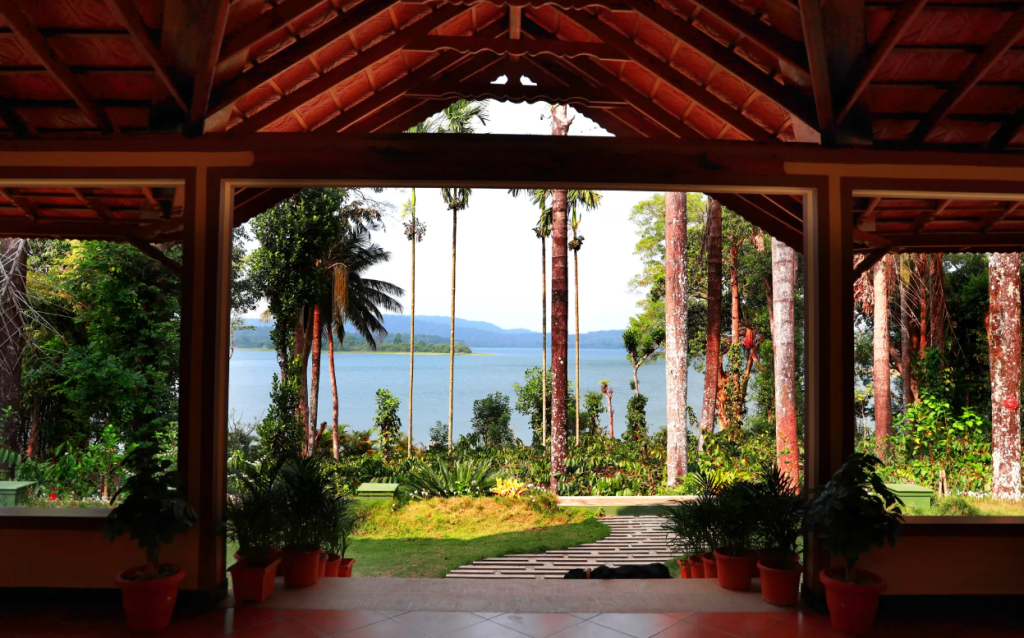
Coorg Toddy Farms, a traditional Mangalore-style villa set on the Harangi backwaters, sits inside its own coffee plantation and offers a quieter, more rustic take on estate living, with the nearby river adding an extra layer of monsoon atmosphere that suits travellers looking for something less polished and more immersive.

Jerdon’s Perch, sitting on the edge of the Coorg-Sakleshpur coffee belt, is a pet-friendly pool villa surrounded by plantations and paddy fields, and it tends to suit larger groups who want open lawns and shared spaces to go along with their estate walks.
| The same rain that closes a beach opens up everything a coffee estate has to offer. |
Getting There and Packing for July
Coorg sits roughly 250 to 260 kilometres from Bangalore, which typically works out to a drive of five to six hours depending on whether the route runs through Mysore or Kushalnagar. The nearest airport is Mangalore International, about three to four hours away by road, and the closest railhead is Mysore Junction, around 95 kilometres out, so weekend travellers coming from Bangalore should budget for slower ghat sections in heavy rain and build a genuine buffer into the schedule rather than planning it tight.
Packing for July means raincoats rather than umbrellas, closed waterproof footwear, quick-dry clothing, and insect repellent for leeches on any forest or plantation trail. Most plantation stays provide gumboots for guests heading out into the estate, which is worth confirming at the time of booking rather than assuming it is included.

| Stay Inside Coorg’s Coffee Country Private plantation villas across Coorg. Your caretaker, your veranda, your monsoon. |
FAQ: Coorg in July
| PUBLISHING NOTE These 5 Q&As appear in the visible body of the post. The schema code below goes into the WordPress Custom HTML block or RankMath Schema tab only. Never paste schema into the post body. |
Is Coorg worth visiting in July?
Yes, for travellers who want lush landscapes, low crowds and lower rates rather than dry, clear-sky sightseeing. Waterfalls and coffee plantations are at their most dramatic this month.
What is the weather like in Coorg in July?
Expect temperatures between 19°C and 25°C, frequent rain spells through the day, and rainfall around 900 to 1,200 millimetres for the month, the wettest period of the year.
Are Coorg’s roads and attractions open during monsoon?
Main roads and popular attractions including Abbey Falls, Dubare Elephant Camp and Madikeri Fort generally stay accessible. Some interior trekking trails close temporarily after heavy rain.
What should I pack for Coorg in July?
A raincoat, waterproof closed shoes, quick-dry clothing and insect repellent. Gumboots are often provided at plantation stays for estate walks.
Which SaffronStays villa is best for a coffee estate stay in Coorg?
Calamondinn Bungalow offers the most immersive plantation stay, with guided estate walks and home-cooked meals inside a working coffee estate near Nagarhole.