By SaffronStays • Malpe • Independence Day 2026 • Karnataka Coast • Weekend Getaways
Udupi carries its name into restaurants across the country, dosa and filter coffee travelling far beyond the coastal temple town where that tradition actually started. The town itself sits about seven hours from Bangalore, and August here means something different from a beach holiday: the temple at its most atmospheric, backwaters running full through the monsoon, and a coastline better suited to walking than swimming this particular month. Independence Day 2026 falls on a Saturday, and a Friday off turns this into a proper three-day trip instead of a rushed one.
Bangalore’s own Independence Day ceremony brings no-parking zones and road closures around Central Street, Cubbon Road and MG Road on August 15. Anyone driving through the city centre that morning should route around it rather than through it.
Getting There: A Real Long Weekend, Not a Quick Trip
Bangalore to Udupi is not a casual drive, and this piece will not pretend otherwise. The most direct route runs via NH75 through Hassan and the Charmadi Ghat, a scenic stretch through the Western Ghats that is also the part of the journey most affected by monsoon conditions; heavy rain can slow the ghat section considerably. An alternate route via Shimoga adds distance but avoids the steepest ghat driving, worth considering if the weather forecast looks unsettled on travel day.
Leave early. A 6 AM start from Bangalore makes the difference between arriving in daylight and finishing the ghat section after dark, which is worth avoiding regardless of season.
Hejamady Beach, Udupi
What August Actually Offers Here
Malpe Beach and the coast around Udupi are not swimming destinations this month. Tides run high through the monsoon, and SaffronStays’ own guidance on visiting Udupi is direct about it: the season is not ideal for beach activities. St Mary’s Island, the basalt rock formation a boat ride from Malpe, frequently suspends its ferry service in rough seas, so treat a visit there as weather-dependent rather than guaranteed.
What August does offer instead: a temple town at its quietest, and backwaters at their fullest.
What the season does hand over is different. The backwaters around Udupi run full and green, walking weather along the coast is pleasant between showers, and the town’s temple culture, which runs on its own calendar regardless of tide charts, is worth the trip on its own. Kapu Lighthouse, about 15 kilometres south of Udupi, is a better coastal stop than the beach itself this month: the walk up is short, the structure has stood since 1901, and the viewing point sits high enough to watch the monsoon surf from a safe distance rather than in it. Swimming is not advised here either; the sea runs just as rough as it does at Malpe.
Where to Stay in Udupi
Beachfront private pool villa, Blue Flag House, Udupi
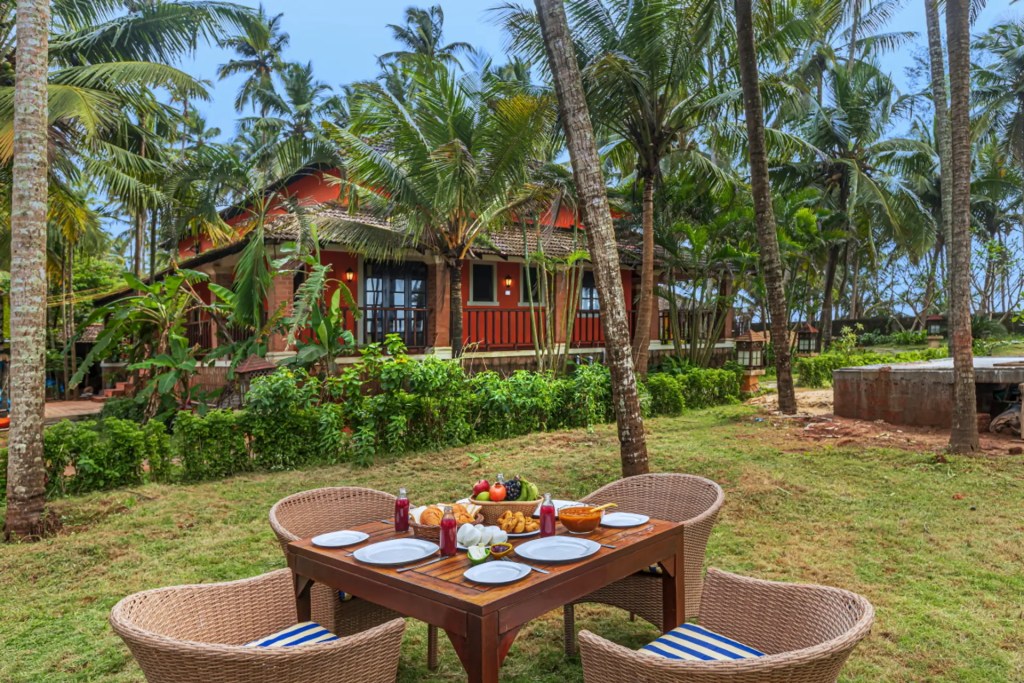
Two villas here cover different versions of this trip. SaffronStays Blue Flag House is a three-bedroom beachfront villa in Hejamady, close enough to the coast to make walking, not swimming, the plan, with a private pool that does the actual swimming work this month. It suits a group that wants the sea nearby without needing to enter it.
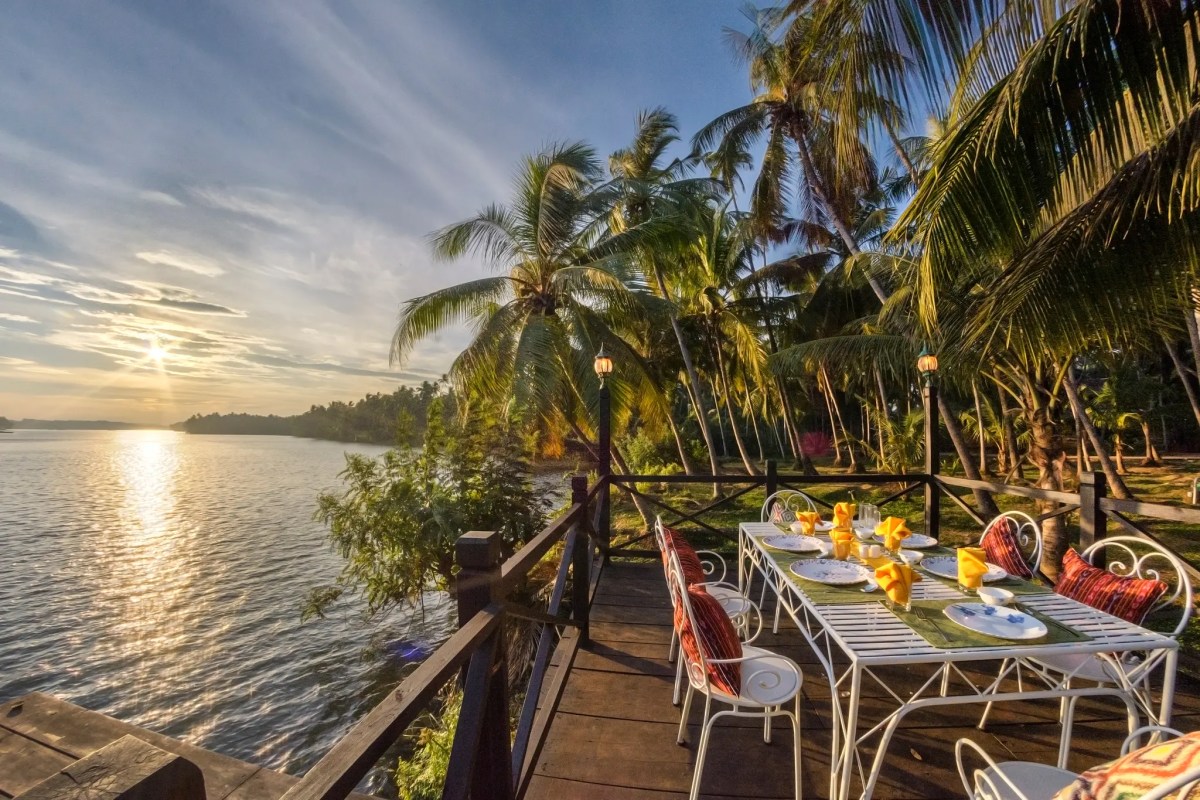
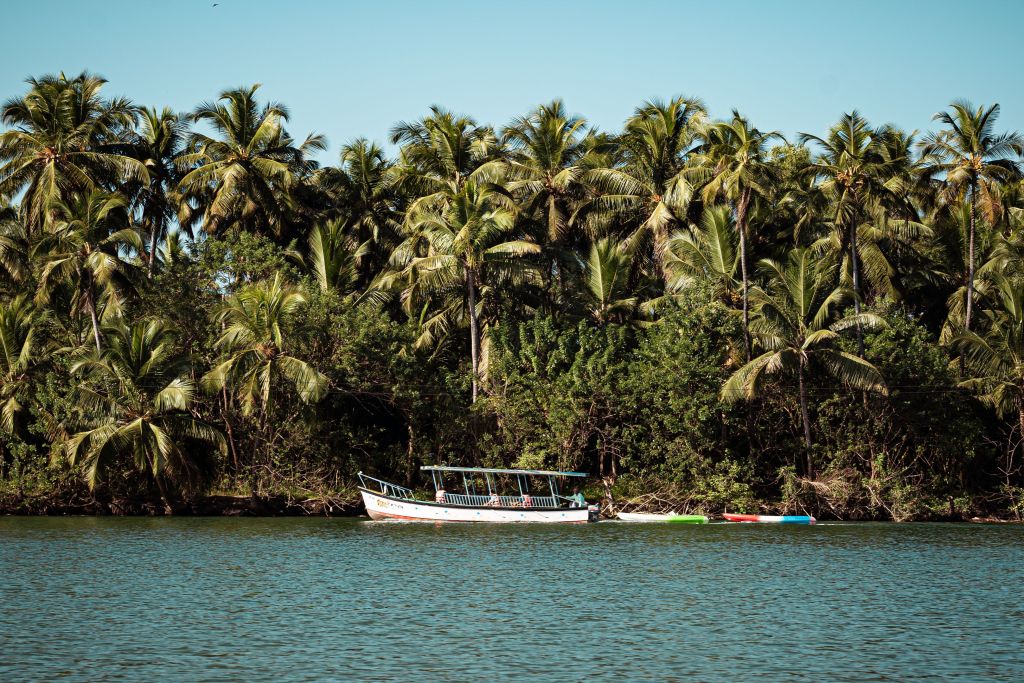
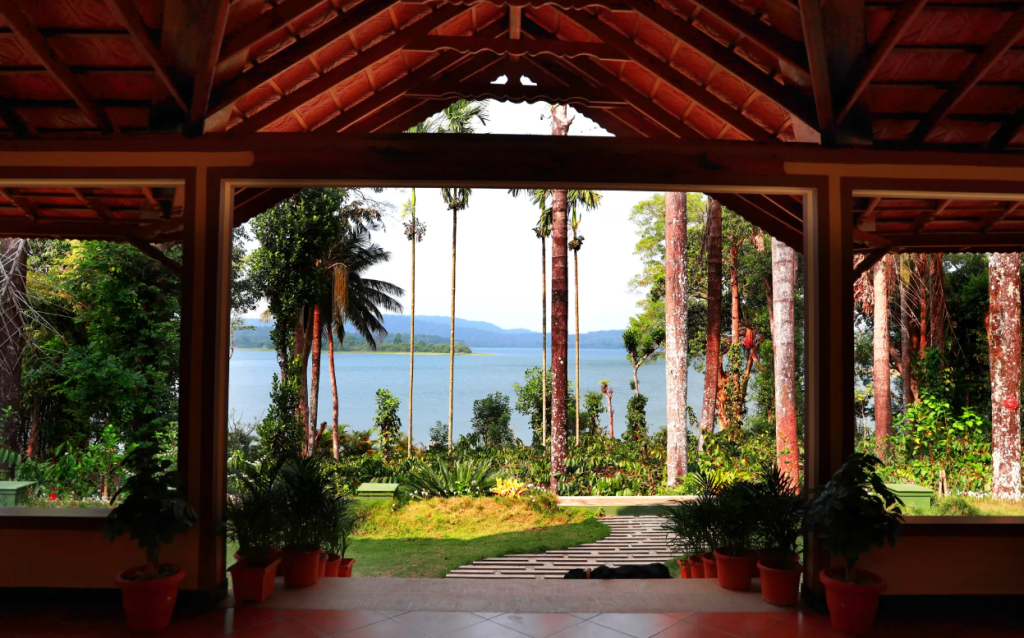
SaffronStays Suvarna Sangam Sharavathi takes the quieter, inland version instead: a one-bedroom riverfront villa built for a couple or small family, where the water views come from a backwater rather than the open coast. It suits a smaller, slower trip over a group getaway.
Krishna Matha and the Real Story Behind Udupi Food
Udupi cuisine, the dosa-and-filter-coffee tradition now found in restaurants across the country, started here, at the Krishna Matha temple founded by the philosopher Madhvacharya in the 13th century. The temple kitchens developed sattvic vegetarian cooking, no onion, no garlic, meant as offerings to Krishna, and those same principles still shape what gets served at the temple’s free dining hall today, where devotees are fed twice daily, seated on the floor and served off trolleys.
August carries a specific significance here beyond the monsoon itself: it falls within Chaturmasa, a four-month religious observance period with its own dietary restrictions in the temple kitchens. The temple stays fully open to visitors through this period, free meals continue as usual, and the restrictions affect the kitchen’s ingredients rather than anyone’s ability to visit. For anyone curious about where the dosa actually came from, this is the source, not a recreation of it.
Is This Weekend Worth the Drive
Nine hours each way is a real commitment, and this trip suits a proper three-day weekend more than a rushed two-day one. For anyone who can take Friday, August 14 off, the math works: a full day and two nights in Udupi still leaves real time to see the temple, walk the coast, and use the villa itself as much of the plan. Split the drive if nine hours straight feels like too much in one push; Chikmagalur, roughly three hours from Bangalore and two from Udupi on the route via Agumbe, works as a one-night stop for anyone willing to turn this into a four-day trip instead of three.
Skip it if the only free time is Saturday and Sunday alone; the drive would eat most of both days. Better to wait for a longer window than to spend a weekend mostly in the car.
Temple bells, sea air, and someone else cooking. Browse private-pool villas in Udupi on SaffronStays and lock your Independence Day long weekend.
Frequently Asked Questions
How far is Udupi from Bangalore?
About 400 to 440 kilometres depending on route, roughly 6 to 9 hours by road via the Charmadi Ghat. This is a genuine long-weekend distance rather than a quick day trip.
Is it safe to swim at Malpe Beach in August?
Not recommended. Malpe carries explicit monsoon advisories for high tides and strong currents. SaffronStays’ own guidance notes that monsoon is not ideal for beach activities in Udupi; a villa pool is the safer way to swim this month.
Is St Mary’s Island open in monsoon?
Boat service to the island is frequently suspended in heavy rain and rough sea conditions. Check locally on the day rather than assuming the crossing will run.
What causes Independence Day traffic in Bangalore?
The city’s own flag-hoisting ceremony brings no-parking zones and road closures around Central Street, Cubbon Road and MG Road on August 15. Confirm the current advisory closer to the date.
What is the best villa in Udupi?
SaffronStays Blue Flag House, a three-bedroom beachfront villa in Hejamady, suits a group that wants the coast close by. SaffronStays Suvarna Sangam Sharavathi, a one-bedroom riverfront villa, suits a couple or small family wanting quiet backwaters instead.
Can Krishna Matha be visited during Chaturmasa?
Yes. The temple remains open and the twice-daily free meals for devotees continue as usual; Chaturmasa affects the temple kitchen’s ingredient restrictions, not visiting hours.
Some places are best explored with a map. Coorg is best experienced with time.
The road begins to wind as you leave the city behind. The air turns cooler, the scent of coffee replaces the smell of traffic, and the landscape transforms into rolling hills draped in lush plantations. Known as the Scotland of India, Coorg (Kodagu) is one of Karnataka’s most loved hill destinations, but beyond its waterfalls and viewpoints lies a slower, richer experience shaped by coffee, heritage, and nature.
Whether you’re travelling from Bangalore for a long weekend or planning a leisurely family holiday, this 3-day Coorg itinerary brings together the region’s must-visit attractions, hidden gems, and local experiences. At the heart of the journey is a heritage bungalow that lets you experience Coorg not just as a visitor, but as someone living amidst its history.
Day 1: Arrive in Coorg and Settle Into Plantation Life
The journey to Coorg is part of the experience. A scenic drive from Bangalore takes around six hours, passing forests, countryside and charming roadside cafés. If you’re travelling from Mysore, the drive is shorter at approximately three hours.
Rather than rushing to tick off attractions, spend your first day slowing down.
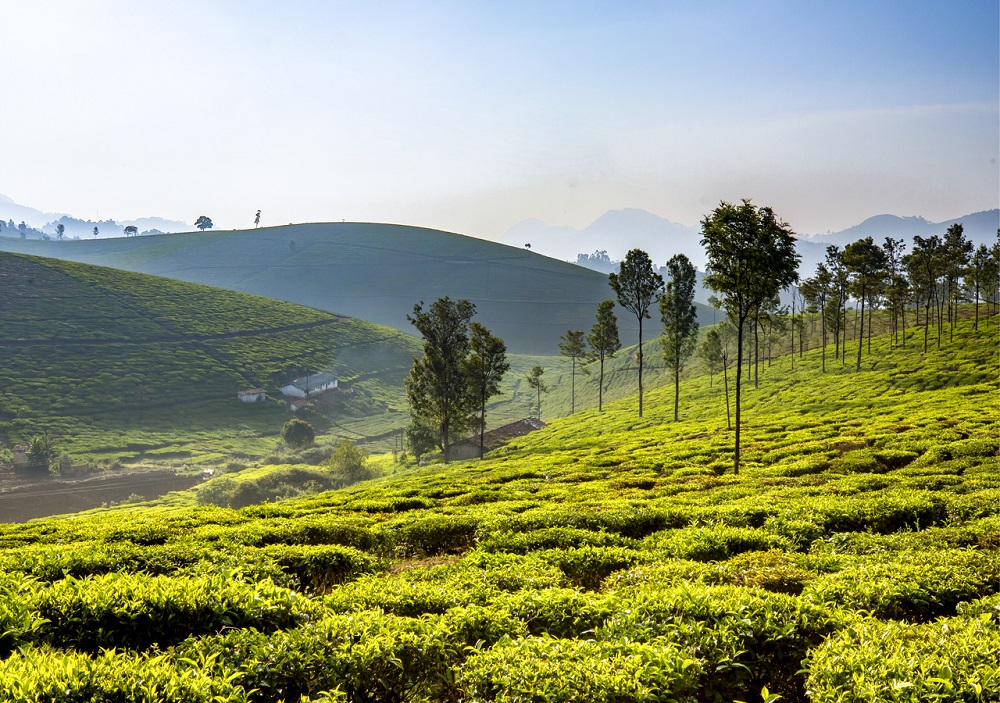
After checking into your stay, enjoy a leisurely lunch before taking a walk through Coorg’s famous coffee plantations. The district produces nearly a third of India’s coffee, and these sprawling estates have shaped its culture for generations. Depending on the season, you may see coffee cherries being harvested, pepper vines climbing silver oak trees, or the delicate white blossoms that perfume the air every spring.
The region is equally known for its spices. Cardamom, pepper, vanilla and cinnamon grow alongside coffee, making every plantation walk a sensory experience.
As evening approaches, unwind with a hot cup of locally brewed coffee while the hills fade into soft shades of green and gold. Dinner is best enjoyed at a relaxed pace, with authentic Kodava flavours and fresh local produce completing your introduction to Coorg.
Day 2: Explore Coorg’s Most Iconic Attractions
A full day of sightseeing allows you to experience the diversity that makes Coorg so special. From waterfalls and monasteries to rivers and viewpoints, every stop offers a different perspective of the region.
Abbey Falls
Begin your morning at Abbey Falls, one of Coorg’s most photographed attractions. Surrounded by dense coffee and spice plantations, the waterfall is especially dramatic during the monsoon and post-monsoon months. A short walk through the greenery leads to a viewing bridge where the cascading water creates an unforgettable sight.
Raja’s Seat
Just a short drive away lies Raja’s Seat, once the favourite leisure spot of Kodagu’s kings. The landscaped gardens overlook expansive valleys and mist-covered hills, making it one of the best viewpoints in Coorg. Visit during the late afternoon when the setting sun paints the hills in warm hues.
Madikeri Fort
History lovers should spend some time exploring Madikeri Fort, originally built in the 17th century and later modified under Tipu Sultan and the British. The fort offers insights into Coorg’s fascinating past and provides panoramic views of the surrounding town.
Omkareshwara Temple
Unlike traditional South Indian temples, Omkareshwara Temple features a unique blend of Islamic and Gothic architectural influences. Built in 1820, it remains one of Madikeri’s most significant landmarks and reflects the cultural influences that have shaped the region over centuries.
Evening Coffee at a Local Estate Café
Before returning for the day, stop at one of Coorg’s boutique cafés or plantation cafés for freshly roasted estate coffee. Pair it with homemade cakes or local snacks and enjoy the slower pace that defines the region.
Day 3: Beyond the Tourist Trail
The final day is all about discovering experiences that reveal Coorg’s quieter side.
Namdroling Monastery (Golden Temple)
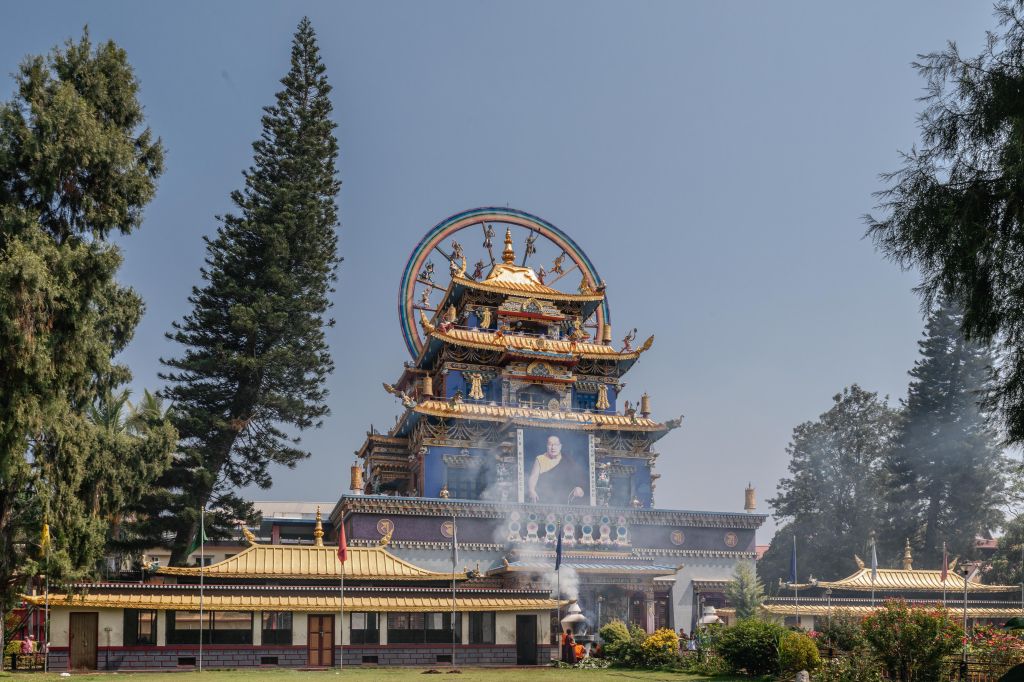
Located at Bylakuppe, around an hour from Madikeri, the Namdroling Monastery is among the largest Tibetan settlements in India. The towering golden Buddha statues, colourful prayer halls and peaceful atmosphere offer a striking contrast to Coorg’s plantation landscapes.
Spend time observing the monks, listening to the chants, and exploring the surrounding monastery complex.
Dubare Elephant Camp
Nature lovers can head to Dubare Elephant Camp, situated along the banks of the River Cauvery. Depending on the season and timings, visitors can learn about elephant conservation, interact with trained elephants, or simply enjoy the riverside surroundings.
Nisargadhama
A short drive away, Kaveri Nisargadhama is a tranquil island formed by the Cauvery River. Bamboo groves, hanging bridges and shaded walking trails make it an excellent stop for families and those looking to enjoy nature at a slower pace.
Shop for Coffee, Spices and Handmade Chocolates
No trip to Coorg is complete without taking a little of it home.
Local markets offer freshly roasted coffee, estate-grown pepper, cardamom, cinnamon, vanilla, homemade chocolates and artisanal honey. These make thoughtful souvenirs while supporting local growers and producers.
Best Time to Visit Coorg
Monsoon (June to September)
Coorg transforms into a lush green paradise. Waterfalls are at their fullest, forests come alive, and mist blankets the hills throughout the day. It’s perfect for travellers who enjoy dramatic landscapes and cosy indoor moments.
Winter (October to February)
Perhaps the most popular time to visit, winter brings cool weather, clear skies and coffee harvesting season. It’s ideal for sightseeing, plantation walks and outdoor activities.
Summer (March to May)
With temperatures remaining pleasant compared to many Indian cities, summer is a wonderful time for families and weekend travellers looking to escape the heat. Spring also marks the blooming of coffee flowers, filling the plantations with their distinctive fragrance.
A Few Experiences You Shouldn’t Miss
While Coorg’s landmarks are worth visiting, it’s often the quieter experiences that become lasting memories.
Wake up to birdsong instead of traffic.
Enjoy fresh estate coffee on a verandah overlooking plantations.
Walk through coffee and spice estates with local guides.
Watch mist roll over the Western Ghats at sunrise.
Taste authentic Kodava cuisine prepared with regional ingredients.
Spend evenings around meaningful conversations instead of crowded tourist hubs.
These moments capture the true essence of Coorg.
Stay Where Coorg’s Story Comes Alive
Most travellers choose a hotel close to town and spend their days driving from one attraction to another. But some homes allow you to experience Coorg long before you leave for sightseeing.
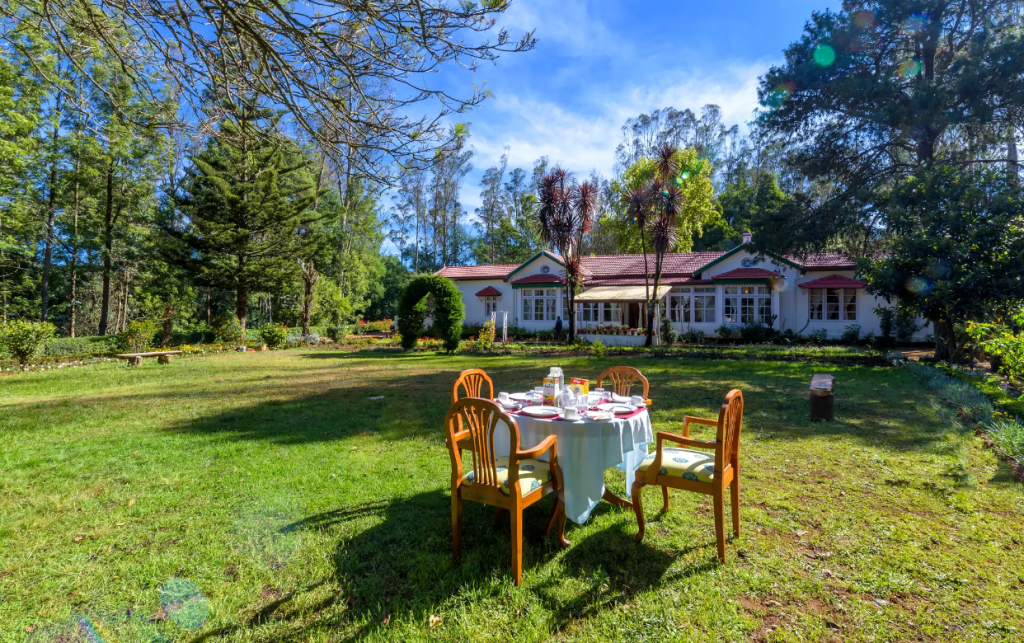
Set within a sprawling coffee estate, this beautifully restored heritage bungalow reflects the timeless character of old Coorg. With colonial-inspired architecture, expansive verandahs, vintage interiors and gardens shaded by towering trees, every corner carries a sense of history while offering modern comforts.
Its location makes it an ideal base for exploring the region. Madikeri’s attractions, scenic plantation roads, waterfalls and cultural landmarks are all within comfortable driving distance, allowing you to spend less time commuting and more time experiencing Coorg.
What truly sets Calamondinn apart, however, is the feeling of staying within the landscape rather than simply visiting it. Mornings begin with freshly brewed estate coffee, afternoons invite leisurely walks through the plantations, and evenings are best spent on the verandah listening to the sounds of nature.
Whether you’re planning a family holiday, a reunion with friends, or a quiet retreat surrounded by greenery, the home offers an experience that reflects Coorg’s heritage, warmth and slower pace of life.
Some destinations leave you with photographs.
Coorg leaves you with rituals you’ll want to return to.
Plan Your Stay at SaffronStays Calamondinn Bungalow
If you’re looking for a heritage coffee estate stay in Coorgthat combines history, comfort and easy access to the region’s best attractions, SaffronStays Calamondinn Bungalow offers the perfect setting.
Explore Coorg by day, return to the calm of a heritage estate by evening, and discover why the best memories are often made not just by the places you visit, but by the place you choose to stay.
Rain falls on a coffee plantation differently than it falls anywhere else, settling into the leaves one at a time rather than crashing against them, until the whole estate holds a low steady hush that makes conversation start to feel unnecessary. This is Coorg in July, and it behaves nothing like the version of Coorg that shows up on postcards and winter itineraries.
Most travellers picture Coorg in its winter form, with clear skies, an organised weekend circuit between viewpoints, and a waterfall stop timed carefully against traffic on the way back to Bangalore. July asks for something slower and less scheduled than that, because the coffee plants are still holding the last of their berries before the October harvest, mist sits low in the valleys until well past mid-morning, and the whole district settles into a rhythm that rewards travellers willing to slow down and run on it too.
July does not interrupt Coorg. It is the month the plantation was built for.
Table of Contents
What July Actually Looks Like in Coorg
July sits at the centre of Coorg’s monsoon, with temperatures holding between 19°C and 25°C through most of the month and rain arriving in spells rather than a single continuous downpour, often clearing by afternoon before returning again by evening. Roads to Madikeri, Virajpet, and the main plantation belts generally stay open under normal conditions, though a handful of interior trekking trails close temporarily after the heavier spells pass through.
This is also the wettest stretch of the year, with July rainfall typically running between 900 and 1,200 millimetres, which means waterfalls across the district hit their strongest flow of the entire year. Coffee plants, still carrying the last of their cherries before the October harvest, turn a deep saturated green that photographs never quite manage to capture, no matter how good the camera.
None of this makes July a compromise season for anyone willing to plan around it. It makes it a different destination altogether, one built around slowness and atmosphere rather than a tightly packed sightseeing checklist.
The Particular Silence of a Working Plantation
Most travel writing about Coorg leads with waterfalls, but the real character of July here runs quieter than any single landmark can capture. It lives in the sound of rain on a tin roof at six in the morning, the smell of wet earth mixing with drying coffee cherries on a covered drying floor, and the mist that collects at the base of the hills and refuses to lift until well past mid-morning most days.
Staying inside a working plantation, rather than at a hotel on its edge, changes how the entire month feels, because mornings start with walks between coffee rows still dripping from the night before and evenings settle into sitting under a covered veranda with a filter coffee, watching rain move across the valley as though it has somewhere else to be. Nobody is rushing between attractions in a stay like this, since the plantation itself has quietly become the attraction.
This is where a heritage bungalow earns its keep over a standard resort room, and SaffronStays’ Calamondinn Bungalow, a 130-year-old colonial home set inside a working coffee estate near Nagarhole, is built for exactly this kind of month. High ceilings and wide verandas were designed for tropical rain long before air conditioning existed, and in July that old design does genuinely useful work, letting guests wake to birdsong between showers, take guided walks through the plantation with the host, and sit down to meals cooked from what the estate itself produces just outside the kitchen door.
Most visitors think of a Coorg homestay as somewhere to sleep between waterfalls. In July, the plantation itself becomes the reason to stay.
Things to Do Between the Showers
Coorg in July rewards a flexible itinerary far more than a tightly packed one, and a handful of spots are genuinely worth building the day around rather than rushing past on the way to the next stop.
Abbey Falls runs at its most powerful this month, framed by coffee and spice plantations along the approach road, and the viewing platform stays open in most weather even though the walkway leading up to it can turn slippery after a heavy spell.
Dubare Elephant Camp, sitting on the banks of the Kaveri, continues operating through July, and the swollen monsoon river adds a real sense of drama to the whole setting that the dry season simply cannot match.
Raja’s Seat in Madikeri offers a different kind of view in the rain, with mist rolling through the valley below in slow waves while the garden empties out compared to peak season, which makes the whole spot feel almost private for anyone who visits early.
Namdroling Monastery, home to one of the largest Tibetan Buddhist settlements in India, works particularly well on a heavier rain day, since its gold statues and detailed murals hold their own against grey skies outside and give travellers somewhere absorbing to spend an hour indoors.
Monsoon travel note for Coorg, July 2026
Short treks around Tadiandamol or Brahmagiri are possible with a local guide, but trails get slick and leeches are a genuine consideration this month. Guided routes only, and carry high socks. Ghat sections on the Madikeri-Mangalore route can slow down after heavy rain. Check conditions before setting out, and build a buffer into any drive. Most main attractions, including Abbey Falls, Dubare and Madikeri Fort, stay open through normal monsoon spells. A raincoat and closed waterproof shoes matter more than an umbrella.
Where to Stay: Four Coorg Villas Built for the Rain
Coorg’s monsoon character comes through best in homes that were designed around the plantation rather than built apart from it, and a few SaffronStays properties do this particularly well, each in its own way.
Calamondinn Bungalow remains the standout choice for July. Set inside its own coffee estate near Nagarhole National Park, this five-bedroom colonial home combines antique furnishings with genuine estate life, from guided plantation walks and home-cooked Kodava meals to covered verandas that turn every rain shower into part of the stay rather than an interruption to it. SaffronStays has also been recognised at the MakeMyTrip Awards for India’s Favourite Villa, which is a fair marker of the hospitality standard guests can expect across the wider portfolio.
Tanjore Villa takes a completely different route. Guests enter through a 172-year-old temple door into a five-bedroom heritage home filled with rosewood furniture and gold-leaf Tanjore art, and a stream runs through the property and past several of the bedrooms, so that in July the constant sound of moving water becomes a calming presence running through the estate’s coffee and avocado plantations.
Coorg Toddy Farms, a traditional Mangalore-style villa set on the Harangi backwaters, sits inside its own coffee plantation and offers a quieter, more rustic take on estate living, with the nearby river adding an extra layer of monsoon atmosphere that suits travellers looking for something less polished and more immersive.
Jerdon’s Perch, sitting on the edge of the Coorg-Sakleshpur coffee belt, is a pet-friendly pool villa surrounded by plantations and paddy fields, and it tends to suit larger groups who want open lawns and shared spaces to go along with their estate walks.
The same rain that closes a beach opens up everything a coffee estate has to offer.
Getting There and Packing for July
Coorg sits roughly 250 to 260 kilometres from Bangalore, which typically works out to a drive of five to six hours depending on whether the route runs through Mysore or Kushalnagar. The nearest airport is Mangalore International, about three to four hours away by road, and the closest railhead is Mysore Junction, around 95 kilometres out, so weekend travellers coming from Bangalore should budget for slower ghat sections in heavy rain and build a genuine buffer into the schedule rather than planning it tight.
Packing for July means raincoats rather than umbrellas, closed waterproof footwear, quick-dry clothing, and insect repellent for leeches on any forest or plantation trail. Most plantation stays provide gumboots for guests heading out into the estate, which is worth confirming at the time of booking rather than assuming it is included.
PUBLISHING NOTE These 5 Q&As appear in the visible body of the post. The schema code below goes into the WordPress Custom HTML block or RankMath Schema tab only. Never paste schema into the post body.
Is Coorg worth visiting in July?
Yes, for travellers who want lush landscapes, low crowds and lower rates rather than dry, clear-sky sightseeing. Waterfalls and coffee plantations are at their most dramatic this month.
What is the weather like in Coorg in July?
Expect temperatures between 19°C and 25°C, frequent rain spells through the day, and rainfall around 900 to 1,200 millimetres for the month, the wettest period of the year.
Are Coorg’s roads and attractions open during monsoon?
Main roads and popular attractions including Abbey Falls, Dubare Elephant Camp and Madikeri Fort generally stay accessible. Some interior trekking trails close temporarily after heavy rain.
What should I pack for Coorg in July?
A raincoat, waterproof closed shoes, quick-dry clothing and insect repellent. Gumboots are often provided at plantation stays for estate walks.
Which SaffronStays villa is best for a coffee estate stay in Coorg?
Calamondinn Bungalow offers the most immersive plantation stay, with guided estate walks and home-cooked meals inside a working coffee estate near Nagarhole.
The sky over the Alleppey backwaters is the colour of pewter. The water in the canals reflects it perfectly. Rain falls in fine curtains that drift across the lagoons. The banks are so green they barely look real. And there is almost nobody else here.
This is what Kerala looks like when most of India has decided not to come.
Every year, travellers look at the June forecast, see rain, and pivot to the hills. Manali fills up. Shimla overflows. And Kerala, sitting at the other end of the country with its backwaters and its tea estates and its ancient Ayurveda retreats, gets quietly to itself.
Which is, of course, precisely the point.
The monsoon does not diminish Kerala. It reveals it. The tea estates in Munnar turn a green so saturated it looks painted. Waterfalls that were dry rock faces in March are now roaring. The Ayurveda retreats along the coast are at their most effective, because Ayurvedic physicians have recommended the humid monsoon air as the optimal season for deep treatments for centuries. And villa rates, flights, and resort prices across the state drop by 40 to 50 per cent the moment the rains arrive.
The version of Kerala that most visitors see is the polished, peak-season one. The monsoon version is the real one.
Table of Content:
A Landscape Built for Rain
Kerala is not a destination that merely tolerates the monsoon. It is a place that was designed for it.
The landscape here has been shaped by centuries of heavy annual rain. The backwater canal system exists because of it. The spice plantations, the paddy fields, the waterfall-threaded Western Ghats, and the entire tradition of Ayurveda all grew around the rhythm of a landscape that floods and drains and floods again every year without complaint. When the rains arrive, Kerala does not shut down. It opens up.
In 2026, the southwest monsoon reached Kerala on 24 May, the earliest arrival since 2009. By the time most travellers are reading this, the transformation is already complete: waterfalls at full volume, tea gardens gleaming, paddy fields flooded. The seasonal forecast is 92 per cent of the Long Period Average, which means a full, well-established monsoon without the exceptional flooding of unusual rainfall years. For a visitor, this is close to the ideal window.
Alleppey: The Backwaters Without the Tourists
If you have ever seen a photograph of the Kerala backwaters, it was probably taken in December or January. Blue sky, white clouds, a houseboat drifting between coconut palms. Beautiful, certainly. But it is the tourist version.
The backwaters in the monsoon are something else entirely. At night, with the rain on the roof and the water all around, the canals are as quiet as anywhere in India. The kind of quiet that a place surrounded by other tourists in high season simply cannot offer.
The practical question people ask about Alleppey in June is whether the houseboat experience is still good. The honest answer is yes, with some adjustments. Cooking on board continues. Canal cruises operate normally. The difference is that you spend more time on the covered deck watching the rain and less time sitting out in direct sun, which, to most people who have visited the backwaters in February and returned dehydrated and sunburned, turns out to be a significant improvement.
A private villa stay on the backwaters in June gives you something a houseboat cannot: a fixed point with a garden, a kitchen producing fresh Kerala meals, and the ability to wake up to the sound of rain on water without the slight motion sickness that some guests experience on houseboats during heavier rain.
Ayurveda: Why the Monsoon Is the Only Season That Matters
This is not a marketing angle. It is traditional medicine.
Kerala Ayurveda practitioners have recommended the monsoon months, specifically June through August, as the optimal window for Panchakarma and deep detoxification treatments for centuries. The reasoning is physiological: the humid air opens the pores, makes the skin more receptive to oil-based therapies, and the cooler temperatures reduce the body’s stress responses, allowing treatments to penetrate more effectively.
Kerala Tourism’s official programme actively promotes June to August as the peak Ayurveda season. Serious practitioners plan around it. The best clinics and retreat centres are busiest, not quietest, during these months.
Most visitors think of Ayurveda as a nice add-on to a Kerala trip. In June, it is the reason to come.
For a SaffronStays guest, this means that the private villa stays near the backwaters and hill estates are close to some of Kerala’s finest Ayurvedic centres. Treatments can be arranged on-site at several properties, including the WellBeingVilla in Wayanad, which is built specifically around Ayurvedic wellness in a five-bedroom ancestral home amid plantations.
Wayanad: When the Hills Finally Breathe
Wayanad in the monsoon is a different world from Wayanad in December.
The Vythiri forests turn dense and dark. Waterfalls that were dry tracks of rock in March are now roaring cascades. The tea estates around Kalpetta and Lakkidi glow in a way that photographers specifically travel for. Mornings begin in mist so thick you can barely see the valley below.
Important: Wayanad travel advisory for June 2026 The Chooralmala and Mundakkai areas in Meppadi panchayat (Vythiri taluk) remain restricted following the July 2024 landslides. These areas are not accessible to tourists. Check Kerala State Disaster Management Authority advisories before travel, particularly for any hill-station treks in the Vythiri area. The rest of Wayanad, including Kalpetta, the tea estates, Edakkal Caves, Soochipara Falls, and Pookode Lake, is open and welcoming visitors.
With that caveat clearly stated: Wayanad in June is genuinely magnificent for travellers who plan thoughtfully. The Cholamala waterfall, which gives its name to the SaffronStays six-bedroom waterfront pool villa on the hill, is at full volume. The private natural pond on the 12-acre property, fed by a stream, is full. The forests surrounding the estate are alive in a way that simply does not exist in the dry season.
Wayanad rewards travellers who want to be inside the landscape rather than photographing it from a viewpoint. In June, there is no better way to do that than from a private villa with a garden that has been waiting all year for the rain.
The Numbers That Make This an Easy Decision
Beyond the atmosphere and the Ayurveda, there is a straightforward financial argument for Kerala in June.
Flights to Kochi (COK), Trivandrum (TRV), and Calicut (CCJ) from Delhi, Mumbai, and Bangalore are 40 to 50 per cent cheaper in June than in December and January. Five-star resorts that charge Rs 15,000 or more per night in peak winter are available for Rs 4,000 to Rs 7,000 in June. SaffronStays villas across Alleppey and Wayanad reflect a similar pattern, with meaningfully better rates than the winter peak for the same properties.
The same private villa on the Alleppey backwaters that costs Rs 18,000 a night in December might cost Rs 11,000 in June. The backwaters look better in the rain. You do the maths.
This makes June particularly compelling for groups. A family of eight or ten sharing a private villa with a caretaker, backwater views, and in-villa Kerala meals gets a genuinely luxurious experience at a price that would have been impossible in peak season.
What You Are Walking Into: The Honest Version
There is no value in pretending the monsoon is entirely without inconvenience. It is worth being specific about what to expect so you can plan accordingly.
Rain is persistent, not constant. Most days have dry windows in the morning and heavier rain in the afternoon and evening. Plan outdoor activities for mornings.
Sea swimming is not advised. Tides are rough and beaches carry red flag advisories through most of June. The backwaters, lakes, and hill estates are the right focus.
Some treks and outdoor activities close temporarily during heavy rain. Rafting on certain rivers does not reopen until July. Build flexibility into your itinerary.
Leeches appear in forested and damp areas. Wear high socks and closed shoes for any plantation or forest walk. They are harmless but worth knowing about.
Power cuts can happen during heavy rain in more remote areas. Private villa caretakers typically have generators or inverters. Worth confirming at booking.
Roads in hill areas can be slower after heavy rain. Check the Kerala State Disaster Management Authority website before driving into highland zones.
The travellers who love Kerala in June are those who come for the rain, not despite it. If your trip is built around the backwaters, plantation stays, Ayurveda, and the atmosphere of a landscape fully alive, June rewards you. If it is built around beach days, boat rides on open sea, or a checklist of viewpoints, wait until October.
Getting There
Kerala has three major airports: Kochi (COK), Trivandrum (TRV), and Calicut (CCJ). For Alleppey and the backwaters, Kochi is the closest at roughly 80 kilometres or two hours by road. For Wayanad, Calicut is the more practical option at around 75 kilometres from most estate stays.
By train, the Rajdhani and express services from Mumbai and Delhi reach Ernakulam (Kochi) and Shoranur well. Trains are comfortable, scenic through the Ghats, and weather-independent, which makes them a solid choice over flying during heavy rain periods.
By road from Bangalore, Wayanad is around 280 kilometres, typically five to six hours. The drive through the Ghats is spectacular in the monsoon, with cloud cover rolling through the passes, though it requires careful driving and checking road conditions before departure.
The Right Kind of Stay Changes Everything
There is a version of a Kerala trip that involves a large resort, a shared dining hall, a pool that nobody uses because it is raining, and the general feeling of being in a building rather than in Kerala. Most chain hotels in the state, however pleasant, put a layer of hospitality infrastructure between you and the landscape.
A private villa removes that layer entirely.
On the backwaters, waking up in a SaffronStays heritage homestay in Alleppey means stepping onto a garden that touches the water. Your caretaker has already made the filter coffee. The rain is doing something interesting to the surface of the canal. There is nowhere you have to be. Breakfast can wait. The Kerala morning is doing its best work right now, and you are inside it.
In Wayanad, a private villa set in a tea estate or against a forest means the monsoon is not something happening outside your window. It is the entire environment: the smell of it, the sound of it, the way it changes the light every twenty minutes. A hotel room cannot give you that. A private estate can.
FAQ: Kerala in Monsoon
PUBLISHING NOTE These 6 Q&As appear in the visible body of the post. The schema code below goes into the WordPress Custom HTML block or RankMath Schema tab only. Never paste schema into the post body.
Is Kerala worth visiting in June?
Yes, for the right kind of traveller. June is Kerala’s monsoon peak: the landscapes are at their most vivid, Ayurveda retreats are at their most effective, prices are 40 to 50 per cent lower than peak winter, and the state is wonderfully uncrowded. The trade-off is persistent rain, rough sea conditions, and the need for flexibility in outdoor plans. Travellers who come for the backwaters, plantation stays, and Ayurveda find June transformative. Travellers who come for beach holidays are better off waiting until October.
When does the Kerala monsoon start in 2026?
The 2026 southwest monsoon made landfall over Kerala on 24 May, the earliest onset since 2009. By June 4, the monsoon is fully established across the state. Wayanad and Munnar received their first heavy rain within 48 hours of onset. Seasonal rainfall is forecast at 92 per cent of the Long Period Average, classified as normal.
Is Alleppey good to visit in June?
Yes. The backwaters are at their most atmospheric in June: rain-speckled, quiet, and impossibly green. Houseboat and canal cruise operations continue normally. Sea swimming is not advisable due to rough monsoon tides, but the backwater experience has nothing to do with the sea. A private villa stay on the backwaters in June is one of the most distinctive travel experiences in South India.
Is Wayanad safe to visit in June 2026?
Most of Wayanad is open and welcoming visitors. The Chooralmala and Mundakkai areas in Meppadi panchayat remain restricted following the July 2024 landslides. Before any hill-area trekking, check the Kerala State Disaster Management Authority advisories. The tea estates, Edakkal Caves, Soochipara Falls, Pookode Lake, and most estate stays are unaffected and accessible.
What is Ayurveda season in Kerala?
June to August is the traditional Karkidakam or Ayurveda season in Kerala. The monsoon humidity opens the pores and makes the body more receptive to oil-based Panchakarma therapies. Kerala Tourism and Ayurvedic physicians have promoted this period as the optimal window for deep treatments for decades. The best Ayurveda clinics and retreat centres in the state are at their most active during these months.
How much cheaper is Kerala in June vs December?
Flights to Kochi, Trivandrum, and Calicut are typically 40 to 50 per cent cheaper in June than in December and January. Five-star resorts that charge Rs 15,000 or more per night in peak winter are available for Rs 4,000 to Rs 7,000 in June. SaffronStays villa rates reflect a similar pattern, with significantly better rates for the same properties in the monsoon months compared to peak season.
Families from Bengaluru, Chennai, Hyderabad, and Coimbatore start looking for cooler weather, misty mornings, and a break from cities that have spent months baking under the sun. Naturally, the Nilgiris rise to the top of the list. Ooty, Coonoor, Kotagiri, and Kodaikanal see a surge of visitors chasing pleasant temperatures and mountain air.
But here is the irony.
The very reason people head to the hills in June often gets lost in the crowds. Long traffic queues, packed viewpoints, bustling hotel lobbies, and overcrowded dining halls can make a hill holiday feel surprisingly hectic.
The travellers who return home feeling truly refreshed are often the ones who make a different choice. Instead of booking a room in a busy resort, they choose a private estate, heritage bungalow, or plantation home that offers space, privacy, and a slower pace of life.
If you are planning a Nilgiri escape this June, here is why private estates in Coonoor and Kodaikanal may be the smartest decision you make.
Table Contents:
Why June Is Peak Season in the Nilgiris
There is a reason the Nilgiris become one of South India’s most sought-after destinations in summer.
While temperatures in many cities hover above 35 degrees Celsius, the hills remain pleasantly cool. The landscapes are lush, mornings arrive wrapped in mist, and afternoons are ideal for long walks, tea sessions, and scenic drives.
Families travelling during school vacations, professionals seeking a mid-year reset, and groups looking for a long-weekend getaway all converge on the region around the same time. Popular hubs such as Ooty town, Ooty Lake, Doddabetta Peak, Bryant Park, and Kodaikanal Lake often see their highest footfall of the year.
The challenge is not finding beautiful weather. It is finding enough breathing room to enjoy it.
Ooty Is the Headliner. Coonoor Is the Insider’s Choice.
Most first-time visitors make Ooty their base. Experienced travellers often choose Coonoor.
Located just a short drive away, Coonoor offers everything visitors love about the Nilgiris: rolling tea gardens, mountain views, heritage charm, and cool weather, but with a far more relaxed atmosphere. For travellers searching for places to visit near Ooty in June, Coonoor opens the door to some of the region’s most rewarding experiences.
Spend a morning at Dolphin’s Nose, where clouds drift across the valleys below. Walk through the tea estates around Lamb’s Rock. Visit Catherine Falls after the first showers begin to revive the landscape. Drive towards Kotagiri for quieter roads and sweeping viewpoints that feel a world away from the bustle of central Ooty.
The beauty of staying in Coonoor is that you can still access Ooty whenever you wish, without spending your entire holiday inside its crowds.
What to Expect: Coonoor Weather in Summer
One of the biggest reasons travellers gravitate towards Coonoor is its climate. Coonoor weather in summer remains remarkably pleasant compared to most South Indian cities. Daytime temperatures sit comfortably between 15 and 25 degrees Celsius, while mornings and evenings often call for a light jacket.
June also marks the beginning of the monsoon transition. The hills begin to take on richer shades of green, tea gardens look especially vibrant, and mist starts rolling across the valleys more frequently. Unlike the harsher winter months, summer in Coonoor allows visitors to spend entire days outdoors.
Early June (before the 15th) gives you the best of both worlds: the pre-monsoon green landscape without sustained heavy rain. By mid-June, Coonoor’s tea gardens are at their most vivid. If your trip falls in the second half of June, carry a light waterproof layer for afternoon walks and embrace the mist.
This is precisely why where you stay matters. When the weather is this good, you do not want to be confined to a hotel room.
Why Private Estates Beat Crowded Hill Resorts
Hill stations were never meant to be experienced from a crowded lobby.
The charm of the mountains lies in unhurried mornings, uninterrupted views, and the feeling of having space around you. Private estates deliver exactly that.
Imagine starting your day with breakfast overlooking tea gardens instead of waiting for a buffet table. Imagine children playing freely on lawns while grandparents relax on a verandah. Imagine gathering around a bonfire in the evening without competing for space with dozens of other guests.
Private stays also offer something that large resorts often struggle to provide: flexibility. Meals can be slower. Conversations can stretch longer. You do not have to plan your day around restaurant timings, crowded common areas, or the schedules of hundreds of other travellers.
For families, multi-generational groups, pet parents, and close-knit gatherings, this difference becomes even more noticeable. The destination remains the same. The experience feels entirely different.
A note on value: for groups of six or more, a private estate often works out to a similar cost per head as a mid-range resort, while giving you a private kitchen, dedicated caretaker, and a space that belongs entirely to your group.
Kodaikanal’s Best-Kept Secret Is Not the Lake. It Is the Estates Beyond It.
Much like Ooty, Kodaikanal attracts significant visitor traffic during June. The lakefront promenade, Coaker’s Walk, Bryant Park, and major viewpoints remain perennial favourites. But many travellers discover that the most memorable moments happen away from the town centre.
This is where Kodaikanal luxury villas and estate stays come into the picture. Instead of spending your holiday surrounded by traffic and tourist activity, you wake up amidst plantations, forests, and open landscapes.
The pace naturally slows. Mornings begin with birdsong rather than vehicle horns. Evenings become opportunities for long conversations under the stars rather than rushed dinners in crowded restaurants.
The appeal is not about exclusivity. It is about reconnecting with the very reason people travel to the hills in the first place.
The Rise of Private Homestays in the Nilgiris
Traveller preferences have evolved significantly over the last few years. People increasingly seek privacy, personalised experiences, and accommodations that feel connected to their surroundings.
This shift has fuelled growing interest in private homestays in the Nilgiris, particularly among families and groups who value space over standardised hotel experiences.
A heritage bungalow surrounded by gardens. A tea-estate home overlooking rolling hills. A plantation stay where the morning begins with a guided walk through coffee trails. These experiences allow travellers to engage with the landscape rather than simply observe it. The stay itself becomes part of the destination.
Where SaffronStays Fits In
For travellers looking to experience the Nilgiris beyond the typical hotel circuit, SaffronStays curates a collection of private villas, heritage bungalows, and plantation estates across Coonoor, Kotagiri, and Kodaikanal.
Each property is fully private: your own caretaker, your own kitchen, your own garden or estate. No shared corridors, no hotel lobbies, no fixed mealtimes. The experience is built around your group rather than around a property’s operational schedule.
In June specifically, these properties shine. Mist rolls across the valleys in the morning. Tea gardens glow a deep, saturated green. The cooler air makes every meal outdoors feel like an occasion.
Browse the full SaffronStays collection for the Nilgiris at saffronstays.com/villas/villas-in-coonoor.
Plan Your Nilgiris June Escape with SaffronStays Private estates, heritage bungalows, and plantation stays in Coonoor, Kotagiri, and Kodaikanal. saffronstays.com/villas/villas-in-coonoor
YOU MIGHT ALSO LIKE
Kerala in Monsoon 2026: Why June Is the Best-Kept Secret for a South India Villa Stay (Published 4 June)
Coorg in Monsoon 2026: A Coffee Estate Villa Guide for the Rain Lover (Publishing 16 June)
Best Places to Visit in India in June 2026: SaffronStays Region-by-Region Guide (Publishing 18 June)
FAQ: Private Stays in Coonoor and Kodaikanal
Is Coonoor worth visiting in June?
Yes. June is one of the most beautiful months in Coonoor. The pre-monsoon landscape is vivid green, temperatures stay between 15 and 22 degrees Celsius, and the tea gardens are at their most photogenic. The first showers usually arrive mid-June, adding mist to the valleys without sustained rain. For travellers who want pleasant weather and fewer crowds than peak April or May, June is an excellent window.
What is the weather like in Coonoor in summer?
Coonoor’s summer weather is mild and pleasant. Daytime temperatures range from 15 to 25 degrees Celsius, with cool evenings around 10 to 13 degrees Celsius. June marks the beginning of the monsoon transition, bringing more cloud cover, occasional short showers, and richer green landscapes. A light jacket for evenings and a waterproof layer for afternoon outings are recommended.
Are private estates better than hotels in Kodaikanal?
For families, groups, and travellers who value privacy, private estates offer a meaningfully different experience. You get the entire property to yourself, with a dedicated caretaker, customised meals, and the freedom to set your own pace. Hotels in Kodaikanal during June peak can be crowded and impersonal. A private estate often works out to a similar cost per head for groups of six or more, while delivering a far richer experience.
What are the best places to visit near Ooty in June?
Coonoor (20 km from Ooty) is the top recommendation: Dolphin’s Nose viewpoint, Lamb’s Rock, Catherine Falls, and the Nilgiri Mountain Railway toy train ride. Kotagiri (28 km) is quieter with beautiful tea estate walks and Kodanad viewpoint. Avalanche Lake and Upper Bhavani are worth the drive for nature lovers. All are easily accessible from Ooty as day trips, making Coonoor an ideal base.
How far in advance should I book a SaffronStays villa in Coonoor or Kodaikanal for June?
Three to four weeks in advance is recommended for June stays. The school summer vacation period makes June a high-demand month, and private estate inventory is limited by nature. Weekends and long weekends within June fill fastest. Booking early also gives you more choice on property type and group size.
December is when India truly feels like it is in travel mode. The beaches are calmer, the hills are cooler, wildlife activity increases along the coastline and travellers all over the country start planning where they will welcome 2026. It is one of those months where the weather works in your favour no matter which direction you head in. From dolphin sightings along the Konkan coast to soft winter sunlight in the hills and festive energy in cultural hubs, every region has something special to offer.
To help you pick a destination quickly, here is a conversational, easy to browse guide to the best places to travel for New Year 2026, divided into Tourist Favourites and Offbeat Escapes.
These are India’s most dependable New Year destinations. Great winter weather, plenty of things to do and a holiday atmosphere that pulls travellers back every year.
Goa in December feels like a postcard. Sunny mornings, cool evenings and beaches that look their best after the monsoon. Markets are lively, shacks are buzzing, sunsets turn pink and the festive vibe is everywhere. From the nightlife of North Goa to the quieter, more picturesque corners of South Goa, it is a classic that never disappoints.
If you want the beauty of Uttarakhand without the holiday crowds of Nainital, Bhimtal is perfect. The lake is serene, the mornings are crisp and the surrounding hills are ideal for quiet walks. December skies here are incredibly clear, making it a peaceful and scenic New Year retreat.
Mussoorie brings out that nostalgic hill station charm. The air is cool, cafes are warm and the views from places like Landour make you want to slow down. December often brings misty mornings and glowing sunsets, creating the perfect setting to unwind.
Manali in winter has a magic of its own. Snow dusts the mountains, pine forests look dreamy and the whole town feels festive. Whether you stay in Old Manali or head toward Solang or Naggar, it is a great place to bring in the new year surrounded by nature.
Colonial charm, snowy possibilities and that classic Himachal winter feel. Mall Road lights up beautifully in December, and the scenic drives around Shimla feel extra special when the weather is cold and crisp.
This is where calm meets culture. Dharamshala and nearby McLeod Ganj offer a mix of mountains, monasteries, Tibetan cafes and peaceful winter landscapes. December is cool, quiet and perfect for travellers who like a slower pace.
Small, quiet and beautifully preserved. Kasauli is the kind of place where you take long walks, enjoy misty mornings and settle into a peaceful New Year holiday. It is simple and refreshing.
December is one of Jaipur’s best months. The days are sunny, evenings are cool and the city looks stunning with all its forts, palaces and festive decor. It is ideal for travellers who want culture, food, shopping and celebration all in one place.
Udaipur in winter feels like a dream. The lakes are calm, the palaces glow golden in the evening and the weather is pleasantly cool. It is a wonderful destination for couples and families who want a romantic or culturally rich New Year.
Nashik turns into wine country in winter. Vineyards are lush, tasting rooms are buzzing and the sunsets feel cinematic. Igatpuri, on the other hand, offers foggy mornings, cool breezes and sweeping Sahyadri views. Both are perfect for quick drives from Mumbai.
Just a ferry ride away from Mumbai, Alibaug is ideal for beach lovers. December brings clear skies and clean shores, and if you are lucky, you may even spot dolphins early in the morning. Great beaches, good food and private villas make it a strong New Year option.
Strawberry season, crisp winds and endless valley views. December is one of Mahabaleshwar’s prettiest months, perfect for long drives, family trips and relaxing holidays.
Coorg is at its prime in winter. Coffee plantations are lush, mornings are misty and the forests feel alive. It is a beautiful, slow and deeply refreshing New Year escape.
Cool weather, tea gardens, lakes and cosy fireplaces. Ooty has a classic charm that makes it a perfect hill station getaway for New Year celebrations.
II. Less Crowd, More Vibes
These are the destinations for travellers who want quiet views, untouched nature and a celebration away from the noise. Ideal if you want space, privacy and a slower, calmer start to 2026.
A peaceful Kumaon town with apple orchards, panoramic views and cool December temperatures. Perfect for travellers who want silence, scenery and slow mornings.
This coastal stretch is known for dolphin spotting, clean beaches and seasonal turtle nesting. December is one of the best times to visit, especially for nature lovers who prefer quieter shores.
One of India’s richest marine belts. Expect clear waters, untouched beaches, coral patches and frequent dolphin sightings. A serene, wildlife rich destination for those who love the ocean.
Choosing the Right Destination for Your New Year 2026 Mood
If you prefer activity, sightseeing, good food and a holiday buzz, the Tourist Favourites are where you should be. They offer comfort, atmosphere and reliable winter weather.
If you want quiet views, wildlife moments, long walks, slow mornings and privacy, the Less Crowd, More Vibes list will feel like a breath of fresh air.
Either way, December is one of the best months to explore India. Every region has something unique to offer, and private villas across these destinations make celebrations even more special.
Tourism destinations in South India are bursting with the rich magnificence of nature, with stunning beaches, soothing backwaters, quiet tea and coffee plantations and lively street markets, making them one of the best places to visit in India. This region is replete with mysterious and beautiful eccentric spots that might provide the backdrop for your ideal vacation.
Coorg’s amazing natural beauty will charm you, while Mysore and Hampi’s beautiful architecture will capture your heart. Pondicherry’s gorgeous beaches are one draw, while Warangal and Mahabalipuram’s great history is another. The southern area of India is home to several unique tourist attractions open to visitors of all stripes. However, Mysore and Coorg make for the most alluring paradise for newlyweds, the Andaman Islands and Kollam serve as the ideal centre for adventurous travellers.
Here are some of the best places to visit in South India that you should not miss
1. Bangalore
Picture Source: GooglePicture Source: GooglePicture Source: Google
The verdant region surrounding Bangalore is dotted with waterfalls, animal sanctuaries and rivers awaiting exploration. The city’s image as the ‘Garden City of India’ stems from its abundance of parks, gardens, and rural areas. Amongst Bangalore’s tourist places are some famous ones that one must visit, such as Bugle Rock Park, Cubbon Park, Indira Gandhi Musical Fountain Park, Ulsoor Lake and Lumbini Garden.
There are multiple places to visit in Bangalore, offering a wide variety of heart-pounding pursuits. Exciting destinations for hikers and trekkers include Ramanagara, Savandurga, Narayanagiri and Nandi Hills. Camping and fishing are great ways to relax and recharge in this area. Moreover, adventure lovers can enjoy a road trip to scenic destinations such as Coorg and Mangalore from the city.
2. Coorg
Relaxing coffee aromas will greet you as you open your eyes, and the foggy hills and streams here are a sight to behold. Coorg, one of the best places to visit near Bangalore, is a destination that lives up to its nickname with an alluring blend of history, culture, elegance, adventure and delicious food. The breathtaking beauty and luxury of this hill town in the western ghats have made it famous as a centre for the coffee industry.
The foggy environment is home to the Kodavas, a distinct native clan famed for their martial arts expertise and warm hospitality; they are responsible for much of the region’s rich culture. Coorg will push you to the extremes of your emotions, from awe at the majesty of this exquisite place to a tough walk or profound insight at the Madikeri Fort to the fascinating adventure at Abbey falls to the fiery curries to the sweet, heart-melting, handcrafted chocolates. If you’re looking for a peaceful retreat in the middle of nature, go no further than SaffronStays Calamondinn Bungalow, Coorg and SaffronStays Coorg Toddy Farms, Coorg.
3. Wayanad
The list would be incomplete without Kerala: a famous hotspot for its calming backwaters, pristine beaches and boating experiences. While many seek for tourist destinations such as Alappuzha (or Alleppey), Kochi, Kozhikode etc, the discern travellers looking for something untouched and offbeat can head to the town we’re excited to tell you about! One of the best Kerala tourist places, Wayanad is a great place for adventure tourism thanks to its abundance of natural features such as towering mountains, thick forests and rushing rivers.
Banasura Dam, the biggest Earth Dam in India, is worth a visit, as is Wayanad’s highest summit, Chembra Peak, where you can watch the sun set behind the mountains. In addition, the Edakkal Caves, which may date back to the Neolithic period, are open for exploration. There are petroglyphs, which are ancient rock engravings that were employed as a kind of written language. Nestled in the luscious hills, SaffronStays The Periaheights, Wayanad and SaffronStays Cliff Haven, Wayanad offer breathtaking vistas of the region.
4. Ooty
Ooty or the Queen of the Hills is known for its delicate and beautiful nature. Because of its biological significance, a portion of the Western Ghats has been designated as a UNESCO World Heritage site, earning it the nickname “hotspot” in the field. To protect the reserve’s wildlife, much of its natural areas are off-limits to visitors. However, the town of Ooty has been built specifically to give visitors a taste of the place’s true character.
Ooty is known for its beautiful gardens, especially the botanical and rose gardens. Ooty’s tourism attractions are a must-see for anybody who doubts the existence of life’s many bounties. SaffronStays Milton Abbott Estate (Heritage Suites), Ooty is a haven from the hustle-bustle of the city thanks to its old-world charm.
5. Kodaikanal
Kodaikanal, dubbed the “princess of hill stations,” is one of the most popular locations in India for newlyweds to spend their special day. This one tops the list of vacation spots in southern India because of the breathtaking natural scenery that leaves people speechless. The area is characterised by a lush forest filled with great types of trees, stunning waterfalls, and towering boulders.
Featured by Architectural Digest as one of the best pet-friendly homestays in India, SaffronStays Nandanvan Estate, Kodaikanal, is an expansive coffee estate, perfect for a stay for everyone travelling through this southern part of the country.
6. Mysore
One of the most visited cities in all of South India is Mysore. Mysore was once the state capital of the popularly known ‘Kingdom of Mysore,’ today recognised as a part of Karnataka. The city’s dazzling imperial past and striking architecture have earned it widespread acclaim. The city’s palace, which is on the list of World Heritage Sites, may be the main draw for tourists.
Mysore is also a booming hub for manufacturing excellent-grade incense, sandalwood and silk. It is the greatest destination to practise Ashtanga yoga in India, and this reputation has brought in tourists from all over the world. SaffronStays Riverstone, Mysore, is one of the best choices to get an authentic taste of this city.
7. Udupi
Notably known as the temple town of Karnataka, Udupi is a quaint expanse one must visit, if looking for destinations with pilgrimage sites, architectural marvels and educational institutions. The city takes you for an unforgettable journey with its authentic delicacies, watersports and beautiful beaches. Visitors travelling to South India may get a glimpse of the local life and the region’s rich cultural and historical traditions by staying in homestays such as SaffronStays Suvarna Sangam (Sharavathi), Udupi and SaffronStays Ocean Pearl, Hejamady. It would be much simpler for you to learn about the distinct characteristics of South India if you reserve a stay at one of the locals’ houses.
South India. Simply two words and there’s a sudden rush of emotions (topped with tamarind!). If you have ever gone on a Southern India tour with your family, you must have witnessed the traditional decor of the homes, italicised coconut trees for company, a tour of the backwaters in Kerala and so on. Not to forget the scrumptious Chettinad-flavoured food and downing bowls of Rasam and authentic Sambhar for meals… If this makes you want to look for places to stay in South India already, we’ve got you covered.
With several weekend getaways near Bangalore and Puducherry, we offer a variety of options for those looking at spending time with their loved ones. From a tour of the coffee plantations to walking hand-in-hand with your partner on the beach and dining at a private deck, the experiences are unparalleled. So, if you’re looking at places to stay in South India, look no further…
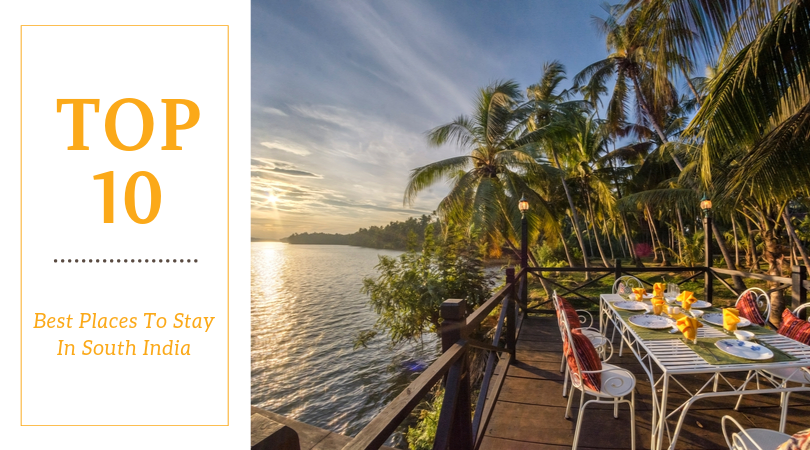
Looking for some time off with your bae? Head to this rustic-luxe romantic villa for rent near Bangalore. Located on a river island, this home has a private deck with panoramic views. Serene and silent with coconut trees dancing to the beats of nature, enjoy delicious seafood delicacies as you bond once again over some conversations. To know more about the villa, click here.
Kaapi = Coffee. Rightly named after the 45-acre coffee estate in its premises, this 5-bedroom farmhouse in Karnataka near Bhadra Wildlife Sanctuary has an authentic Carnatic vibe. With charming views, this nature retreat near Bangalore also has options for trekking and birdwatching around it. At this home to stay in South India, don’t forget to ask for the lip-smacking Malnad delicacies prepared by our in-home cook. To know more about the villa, click here.
What’s your take on ‘peppering’ your next weekend getaway near Bangalore with an assisted home tour? Well, at this home surrounded by 100-acre coffee and pepper plantations, guests can experience just that. The 125-year-old coffee estate in Karnataka, which was built by Col. Crawford, has two cottages that ensure privacy. At the clubhouse here, you can have your own wine-n-dine session. And if you’re in the mood for a bonfire party, you’ve got that too! To know more about the villa, click here.
This one’s a starry home, trust us. While on the one hand, the 2006 super-hit Kannada film Mungaru Male was extensively shot here, on the other, you can witness the sky studded with stars. Starry enough, right? This 2-bedroom villa in Sakleshpur is surrounded by coffee plantations, so, enjoy a freshly brewed cuppa while here. Savour delicious South Indian meals and relax in the cosy bedrooms at this home near Bisle View Point. Just the ideal place to stay in South India! To know more about the villa, click here.
How about picking your own veggies for lunch from a vegetable garden? At this 4-bedroom farmhouse near Bangalore, you could do that. With an organic vegetable garden, it also has coconut and mango plantations. This pet-friendly home near The Art of Living Headquarters also has plenty of outdoor space; so, unwind over a cup of coffee and vadas in the lawns here. For your next weekend getaway near Bangalore with friends, plan a barbecue and campfire night. To know more about the villa, click here.
Privacy, thy name is SaffronStays RiverSong. A 2-acre private island in Kollam, this waterfront villa is an ideal couple retreat in Kerala. Flanked by the Ashtamudi Lake on one side and the Kallada River on the other, everything about this home is unforgettable. One can also indulge in activities such as fishing, swimming, kayaking, village tour, sunset and sunrise cruise, canoe rides and crab hunting. To know more about the villa, click here.
What reminds you of Mysore? Mysore Pak? Mysore Palace? Mysuru Dasara? A quick weekend getaway to this waterfront villa near Mysuru will etch SaffronStays Riverstone’s name in your mind, too. The 3-bedroom massive brick home in Srirangapatna, a beachfront villa, is located near the banks of the River Kaveri. While you can indulge in some stargazing on the banks of the river, you can also snuggle up with your loved ones in the warmth of the bonfire. You can also go sightseeing as the villa is near Mysore Palace and Brindavan Garden. To know more about the villa, click here.
If you want to chance upon some elephants on your vacay without stepping out, then book SaffronStays Thenkani Organic Farms, where elephant spotting is common. Ideal for family getaways in Denkanikottai, this 2-bedroom pet-friendly wooden chalet near Bangalore is set within a forest reserve. Go adventurous as you camp on the hillock, have a bonfire night or opt for sleeping in tents. Relish home-cooked meals in the semi-outdoor dining area, and have a jungle-esque experience! To know more about the villa, click here.
What would define the term ‘best of both worlds’ for you? With the backwaters on one side and a beach on the other, for us, it would be SaffronStays Ocean Pearl. And so, if you’re looking for a family getaway near Bengaluru, this 3-bedroom villa on Hejamady Beach is just perfect. Tuck in coastal meals at this elderly-friendly villa near Mangalore. Pawsome news: The home has two resident dogs, too. So, if you’re scouring for the best beach places to stay in South India, this is it. To know more about the villa, click here.
Does it feel special to stay in a home that has won an award? If yes, then head to SaffronStays Southern Seascapes, a beachfront villa in Kerala. Winner of the Kerala State Tourism Award 2001-2002 for excellence in House Category, this homestay in South India is an ideal romantic getaway in Kerala for couples. Enjoy a candlelight dinner in the open-air dining area with a view of the beach. The exclusive chef here can also whip up an Ayurvedic meal. To know more about the villa, click here.
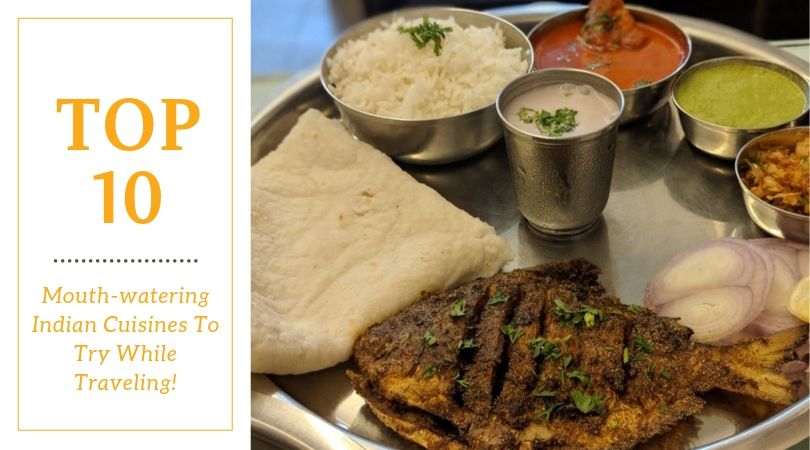
Indian cuisines are predominantly a mixture of a variety of spices and flavors. Apart from cultural diversity, the culinary style in India also varies from place to place. These Indian cuisines are so much more than the staple Punjabi dishes served at most Indian restaurants.
Each region has a certain flavor and taste of their own. So if you’re a foodie, what better than exploring these Indian cuisines at a private homestay? Imagine tasting lip-smacking “Ghar Ka Khaana” made specially for you! Here is what kind of Indian cuisines to expect as you travel through the different regions in India.
Behold the amazing, mouth-watering Indian cuisines from each region as we give you the top 10 homes of SaffronStays which serve you these.
A spacious 5 bedroom villa with the comforts and luxury of a home, SaffronStays Parnakuti is an exotic, farm stay. This home serves authentic Maharashtrian food to all it’s guests. Dishes like “Bharli Wangi, Jhunka Bhakri, Chicken Rassa” are to die for here. This is one of those Indian cuisines which will make you lick your fingers clean.
So come, luxuriate in the privacy of this exclusive villa, SaffronStays Parnakuti, with friends and family for a fun-filled holiday
Influenced largely by the homeowners’ time in Argentina and Spain, SaffronStays La Casa Maestro has a taste of Spanish architecture, with terraces and arches dominating the look.
A beachfront property, that serves authentic Malvani and Alibaug-style dishes like Fish curry, malvani chicken curry and more that’ll surely make your mouth water.
P.s our caretakers also prep up the barbeque! Don’t forget to inform in advance.
Just 15 minutes from Mandwa Jetty, SaffronStays Masaya, is set on a picturesque hill. You can spend quiet hours enjoying the clean fresh air or identifying the fruit-bearing trees that surround the home.
This Veg-Only home has one of the best cooks who serves soft Gulab Jamuns and delicious food, fresh from the kitchen. Ghar ka Khaana like this is our definition of ultimate luxury!
A 6-bedroom villa, SaffronStays Falcon Hill boasts of sleek interiors in muted tones. Your trip isn’t complete without tasting our Indian specialities made by our rockstar cook, Sukhchandji.
Right from authentic Indian to Desi Chinese to Royal Italian, you get all kinds of cuisines served up on your plate here. Doesn’t this want to make you visit this home all the more?
Refreshing coffee aroma, lush farmlands a well-manicured lawn and an earthy countryside villa awaits your presence at SaffronStays Nandanvan Estate near Kodaikanal.
Savor delicious South-Indian cuisines where most of the ingredients have been sourced from their own herb garden. South Indian cuisines can’t do without rice. It’s included in their staple diet. Watch out for Chettinad cuisine, perhaps one of the fieriest Indian Cuisines of all time! Also savor delicious South-Indian breakfast on the spacious porch, outfitted with cosy bamboo furniture.
Tucked away from the chaos of the main market, SaffronStays Kurinji Estate is an idyllic retreat for those looking to relax and unwind. Surrounded by lush greenery, this 9-acre estate features a gorgeous 6-bedroom heritage homestay built in the 1930s, landscaped gardens and a scenic pond complete with a rustic sit-out.
As one of the best Indian cuisines, the food here is known for its light, low-calorie appetizing dishes. This Indian cuisine is famous for its wonderful mixing of rice and lentils to prepare yummy lip smacking dosas, vadas, idlis, and uttapams.
SaffronStays Suvarna Sangam, a rustic-luxe homestay, rests upon a river island formed by the splitting, then merging, of the mighty Suvarna River. Untouched and unharmed, the raw pulsating beauty will leave you spellbound!
The Udupi region of Karnataka is renowned for its simple but vast vegetarian fare. However, if you’re at the deck at the right time, you may chance upon a fisherman, and ask for the catch of the day!
SaffronStays Jaipura Garh, a royal heritage home is an ideal destination for a quick yet enriching getaway, 40 km from Jaipur city. For those seeking to witness a melting pot of cultures, encounter fascinating anecdotes of history and take their taste-buds on a roller coaster ride, SaffronStays Jaipura Garh is your answer.
Known for its slight sweet touch, Rajasthani cuisine is one of the finest vegetarian cuisines in India. This home offers many exciting experiences like Dinner with the Royals and the joy of flavorsome Indian cuisines. While on their stay here one must savor the Rajasthani Thali with delicacies like Dal Bhaati Churma, Gevar, etc.
With a legacy of more than 100 years, SaffronStays Elgin Hall is a majestic 7 bedroom stone villa. As you enter the villa, you are sure to be carried back to a regal era with its charming vintage vibe. The wooden plank flooring gives the home a warm, cozy vibe while the chandeliers and the vintage artifacts lend an elegant touch.
Meat and Indian bread are the main features of North Indian food served here. This is one of the Indian cuisines which is hearty and commonly cooked in a tandoor. Also, north Indian curries have a usually thick, moderately spicy and creamy gravies.
A charming four bedroom homestay located 15 minutes from Gholvad beach, SaffronStays Master’s Courtyard is ideal for families looking to escape the city for a weekend.
Parsi cuisine is one of the Indian cuisines which has an eclectic mix of hot and sweet, nice and spice. It involved simple yet diverse ingredients. Don’t miss out on experiencing authentic Parsi food and Taari while on your stay here with us.
Indian Cuisines are different from the rest of the world. Not only in taste but also in our cooking methods. They reflect a perfect blend of various cultures and ages. So come, explore more cultures, more cuisines with us!
Have you not yet booked your stay with us? Well, what are you waiting for!
Your sister is your genetically gifted travel buddy. From her favourite playlist to her quirky morning habits, you think you might know her well. But when you get the chance to travel with her, you realize differently. It’s the familiarity of having a travel buddy you’ve known all your life, yet it’s also like getting to know a friend better.
As a child, you were forced to spend all your time in the company of your sister(s) – be it at home, at school or even on vacations. It feels like just yesterday you were yelling at her for invading your closet and stealing your favourite sweater. But as you grow older and each one goes their own way, you find yourself longing to spend more time together. Here are some fun ways to strengthen that sisterhood bond and catch up to the old times.
Shop until you drop
Plan an entire vacation around one of your favourite activities: shopping! Ooty is famous for its prime places to snag some stylish accessories, including Commercial street, Charring crossroad, and Pykara road. And when you’re not showing off your haggling skills, catch some shut-eye at SaffronStays Milton Abbott Estate or wander aimlessly in its scenic environs.
Girls, games, and gossip!
Remember when y’all use to play together as kids? Return to your youth with a fun-filled fling at TT, carrom, volleyball as well as several board games at SaffronStays Kurinji Estate. Offbeat treks and nature trails can also be arranged. If you’re looking for a low-key way to have fun, then talks around the cosy indoor fireplace are the best for meaningful conversations with her.
Toast to sisterhood.
Like fine wine, sisterhood only gets better with time! Sip a sangria under the gazebo by the pool at SaffronStays Venmani in Mahabalipuram.
Is adventure is in your blood? We have a range of activities from Kayaking, Jet Skiing, Snorkelling, Sailing and Fishing on the just-steps-away Pearl beach, you may never want to leave.
Should you venture out though, the nearby 7th century monuments of the temple city of Mahabalipuram are fit for perusing.
The long, long drive.
Long, winding drives are the perfect opportunity to put your feet up and catch up and that’s exactly what SaffronStays Calamondinn Bungalow, Coorg has to offer. Besides the road tripping, there’s plenty to do here, so let’s get you started with a few ideas: Embark on nature trails within the neighbouring woodlands and enjoy cool evenings under the shelter of Coorgi greens with your favourite drink and tasty meals. Bathe with the elephants at the Dubare Elephant Camp or experience a live apiculture demonstration. There’s no dearth to the plethora of activities at this place so just grab your sister and jump in the car for an experience of a lifetime.
Chow down by the riverside
Snuggled on the banks of the mighty Suvarna river in Udupi, SaffronStays Suvarna Sangam isa true retreat from the hustle and bustle of the cities. Feast on piping hot seafood in the open-air dining space and stay up late talking under the stars. Hop onto your private motorboat and explore the glorious backwaters of Karnataka, forgotten Udupi temples and geological wonders of St. Mary’s Island.
So pack your bags, laugh together and feel like little children again!