Manali in June 2026: The Complete Summer Guide for Families & Adventure Seekers

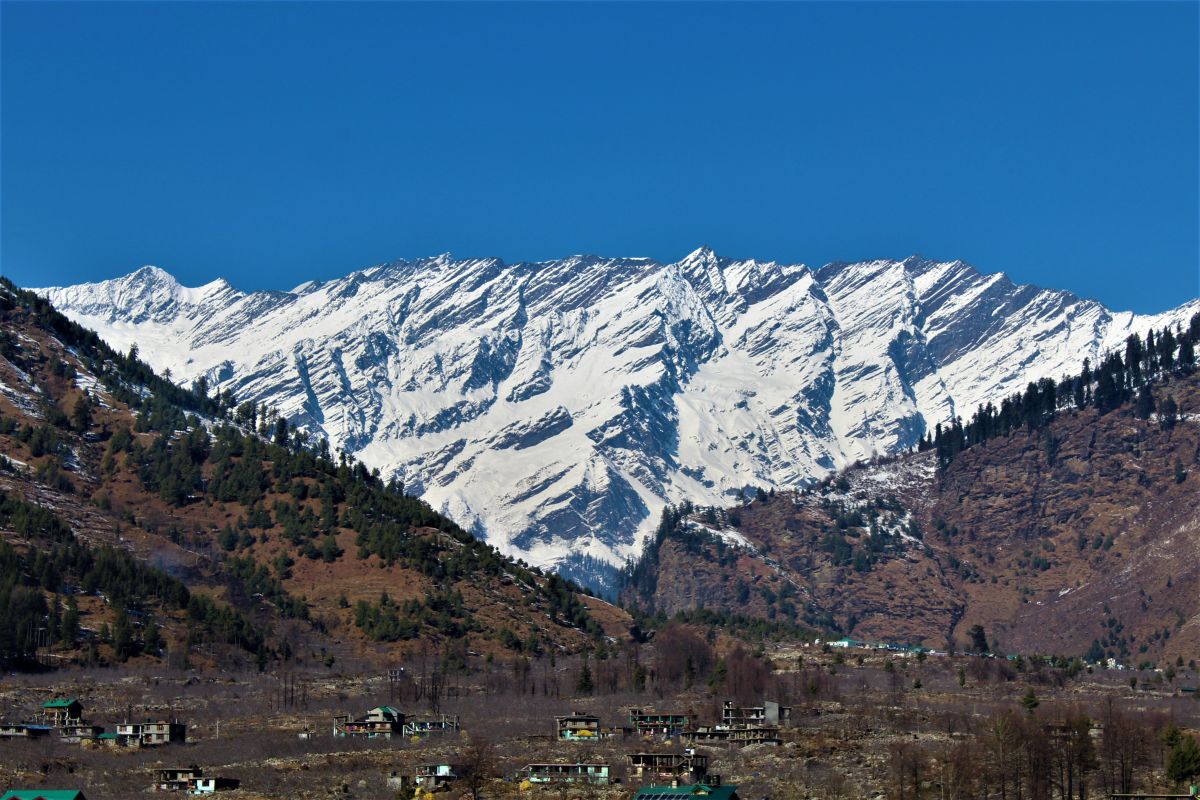
Panoramic view of snow-capped Himalayan mountain range above Kullu Valley near Manali in Himachal Pradesh

Here is a thought that surprises most people: June is arguably the best month to visit Manali. Not May, when the roads are still unpredictable. Not October, when half the town has packed up for winter. June, right in the thick of Indian summer, when the rest of the country is either melting or complaining about power cuts. That is when Manali quietly becomes one of the most beautiful places on earth.

The Beas River runs fat and loud with snowmelt. The pine forests above Old Manali glow a green so saturated it barely looks real. Rohtang Pass is open, the apple orchards are in full flush, and the temperature rarely climbs above 25°C. And because most people assume June is too hot, or too rainy, or too something. There is still a window before the full peak-season crowds of July descend. June is Manali’s open secret.

Whether you are planning a family summer trip, an adventure weekend, a romantic getaway, or a long overdue girls’ or boys’ trip. This guide covers everything you need to know: weather, things to do, how to get there, what to book in advance, and where to stay in a SaffronStays villa that actually feels like an escape rather than just another hotel room.

Table of Content

Why June Is the Best Time to Visit Manali

Most hill station travel advice operates on a simple logic: go before the crowds, go after the rains, go when the weather is perfect. Manali in June checks all three.

The temperature is ideal. Daytime highs sit between 15°C and 25°C in the town, dropping to a pleasant 8–12°C at night. After months of 40°C in Delhi, Mumbai, or Pune, that first breath of Kullu Valley air feels like a physical relief.

Rohtang Pass is open. The Border Roads Organisation typically clears the pass by late May or early June, making it accessible to tourists from June 1 onwards (weather permitting). This is the gateway to Lahaul and the wider Himalayan landscape, and it is only accessible for a few months each year.

The valley is at its greenest. Post-snowmelt, the Kullu Valley transforms into a wall of green. Wildflowers bloom across Solang and Beas Kund. The apple orchards around Naggar are in full leaf. And the Beas River, swollen with glacial melt, thunders alongside the highway in a way that genuinely impresses even seasoned Himalayan travellers.

It is still shoulder season. By mid-July, Manali becomes genuinely crowded, with traffic jams on the way to Rohtang, booked-out properties weeks in advance, inflated rates. June gives you the same landscapes with perhaps 40–50% fewer people, and rates that reflect that. For SaffronStays guests, this also means more flexibility on check-in times, meal customisation, and bonfire evenings without a queue.

LOCAL INSIGHT: Hotel occupancy in Manali reaches 80%+ by mid-July. June bookings, particularly for villa stays, should be secured at least 3–4 weeks in advance, but you will almost always find better rates and more caretaker attention than the peak-season rush.
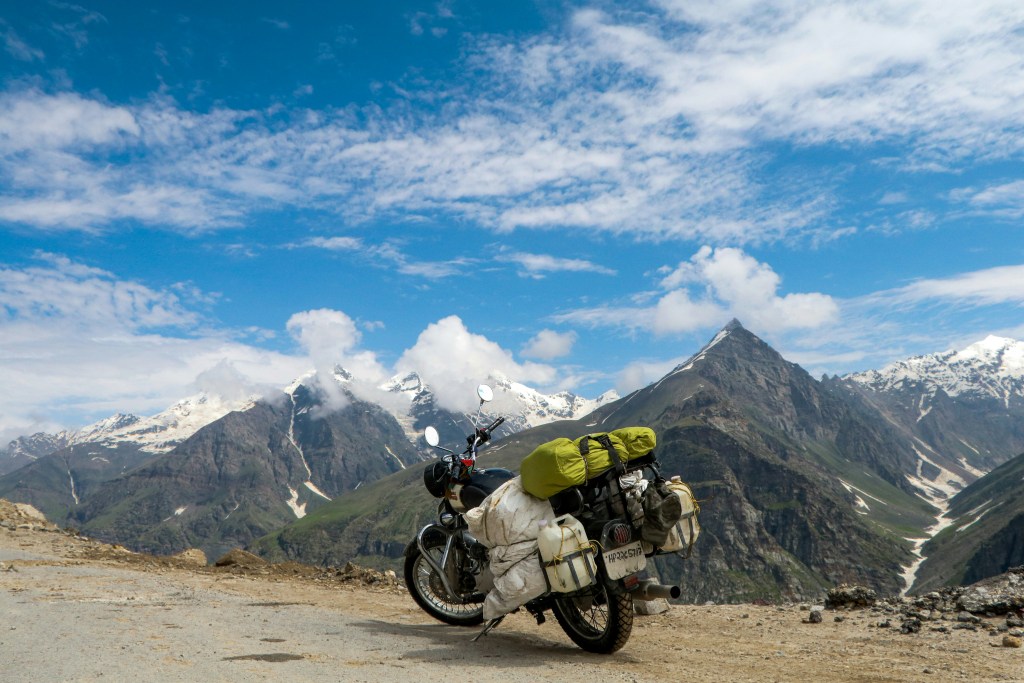
Loaded Royal Enfield motorcycle parked at Rohtang Pass near Manali with snow-capped Himalayan peaks and blue sky in the background

Manali in June: Weather & What to Expect

Understanding Manali’s June weather is not complicated, but it is worth being accurate about. The town sits at roughly 2,050 metres above sea level. Rohtang Pass, at 3,978 metres, operates in an entirely different climate on the same day.

ZoneAltitudeDay TempNight TempConditions
Manali Town / Mall Road2,050 m18–25°C10–14°CSunny, occasional afternoon showers
Old Manali / Vashisht2,100 m16–22°C9–12°CCool, forested, ideal for walks
Solang Valley2,480 m12–18°C5–8°CClear mornings, cloud builds by 2pm
Rohtang Pass3,978 m4–10°C0–5°CSnow patches, fog possible, permit required

A few practical weather notes for June specifically:

  • Pre-monsoon showers can arrive in late June, usually as short, sharp afternoon bursts. They clear quickly and rarely disrupt a full day’s plans.
  • Morning hours (6am–11am) are consistently clear and the best window for Rohtang Pass drives and high-altitude treks.
  • Pack a light fleece or jacket. Evenings at your villa will be cool enough to want one, especially at altitude.
  • Snowfall at Rohtang is possible in early June; by late June, snow is limited to patches at the highest points.

Things to do in Manali in June

June is Manali’s most activity-rich month. Rohtang is open, the rivers are high, the trails are clear, and the weather cooperates for most of the day. Here is how to spend your time well.

Rohtang Pass: The Drive Everyone Talks About

Fifty-one kilometres from Manali, Rohtang Pass sits at 3,978 metres above sea level and serves as the gateway to Lahaul and Spiti. In June, it has just reopened from winter closure, which means snow still dusts the higher ridges and the landscape feels almost impossibly dramatic.

Permit essential: All tourists require a permit, booked online at rohtangpermits.nic.in. Daily quotas apply: 800 petrol vehicles and 400 diesel vehicles. Book the night before your planned visit. Cost: ₹550.

Leave by 7am: Traffic builds rapidly. Early starters get clear roads, better light for photos, and more time at the pass before the afternoon clouds roll in.

Rohtang is closed on Tuesdays for road maintenance. Plan accordingly.
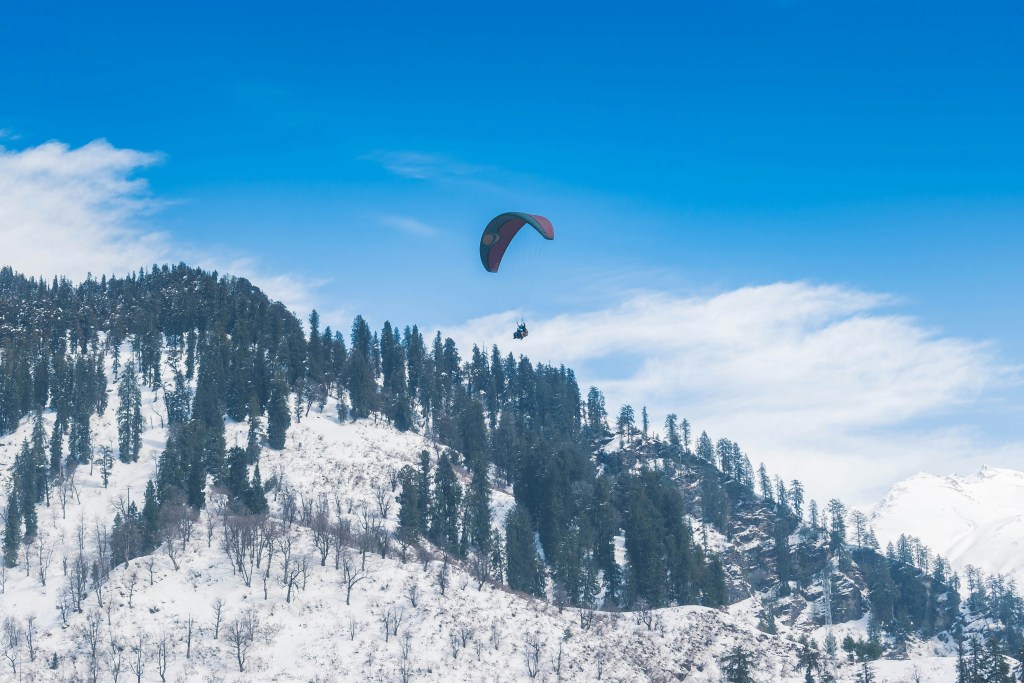
Tandem paraglider soaring over snow-covered Solang Valley near Manali in Himachal Pradesh against a clear blue sky

Solang Valley: Adventure Base Camp

Thirteen kilometres from Manali and sitting at 2,480 metres, Solang Valley is the adventure hub of the region. In June, with residual snow on the upper slopes and clear blue skies in the morning, it is at its most photogenic.

  • Paragliding: Tandem flights with experienced pilots. June offers excellent visibility and light winds. Approximately ₹1,000–3,000 depending on flight duration.
  • Zorbing: Rolling downhill in a transparent ball, chaotically good fun and completely safe. Great for kids.
  • ATV Rides: Quad bike trails through the valley floor. No licence required.
  • Beas Kund Trek: An 8km moderate trek from Solang to the glacial lake that is the source of the Beas River. One of the finest half-day hikes in Himachal Pradesh.
  • Ropeway: The gondola rises to Shitidhar peak at 2,960 metres, and worth it for the panoramic view alone.

Trekking: Best Trails for June

June is ideal for Manali’s classic treks. Snow has retreated from the mid-altitude trails, wildflowers are blooming, and the forest paths are dry underfoot.

TrekDistanceDifficultyDurationHighlight
Beas Kund16 km returnModerate1 dayGlacial lake, source of Beas River
Bhrigu Lake22 km returnModerate2 daysHigh-altitude lake at 4,300m, 360° Himalayan views
Hampta Pass35 kmModerate-Hard4–5 daysCrosses from Kullu Valley to Spiti; dramatic landscape shift
Chandrakhani Pass30 kmModerate3 daysPir Panjal views; enters Malana village
Sajla Waterfall Walk2 kmEasy1–2 hrsFamily-friendly forest walk; near SaffronStays villas

White Water Rafting on the Beas

Snowmelt in June means the Beas River is at its most powerful. Rafting stretches between Pirdi and Jhiri offer Grade II–III rapids, genuinely exciting without being reckless. Most operators run morning sessions. Cost: approximately ₹600–1,200 per person for a 14km stretch.
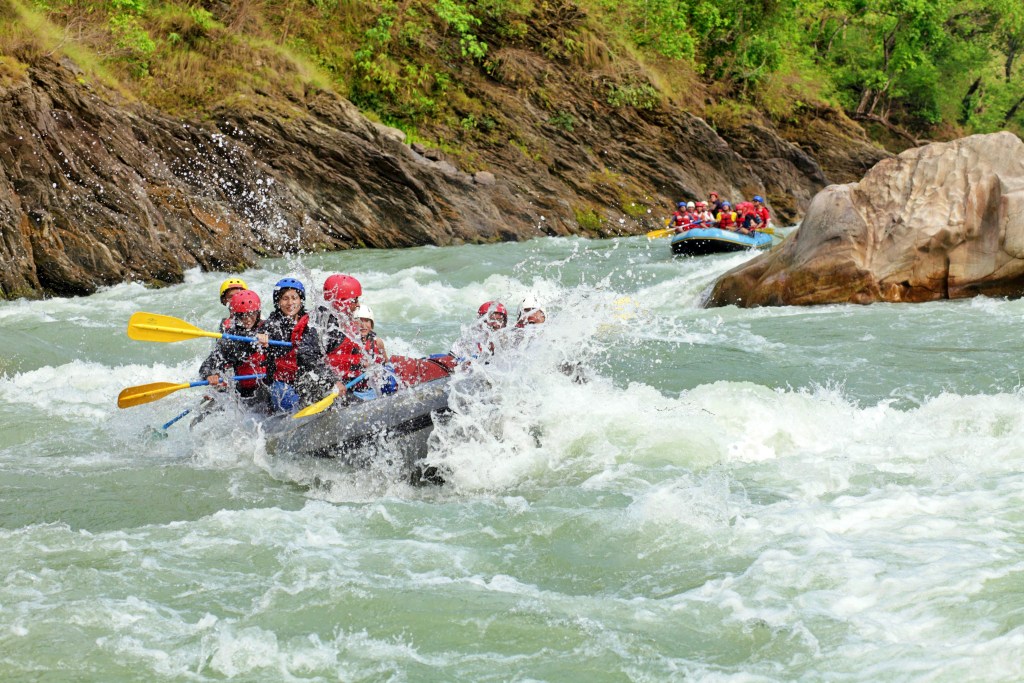
Group of tourists white water rafting on the Beas River near Manali in Himachal Pradesh with green forested riverbanks

Old Manali and Vashisht: The Slower Side

Not every hour of a Manali trip needs to be adrenaline-fuelled. Old Manali, a 20-minute walk from the main market, has a completely different character: narrow lanes, wooden guesthouses, cedar trees, and cafés with mountain views. It is the kind of place that invites a second coffee and a slow afternoon.

Vashisht village, just across the river, has natural hot springs, a welcome counter to the cold evenings, and the ancient Vashisht Mandir. The SaffronStays Amlyn villa is located here, minutes from both.

Hadimba Devi Temple

One of Manali’s most photographed landmarks, this 16th-century wooden pagoda sits inside a cedar forest and is dedicated to the goddess Hadimba. June’s clear mornings make for the best light, so arrive before 9am to beat the crowds and get the forest to yourself.
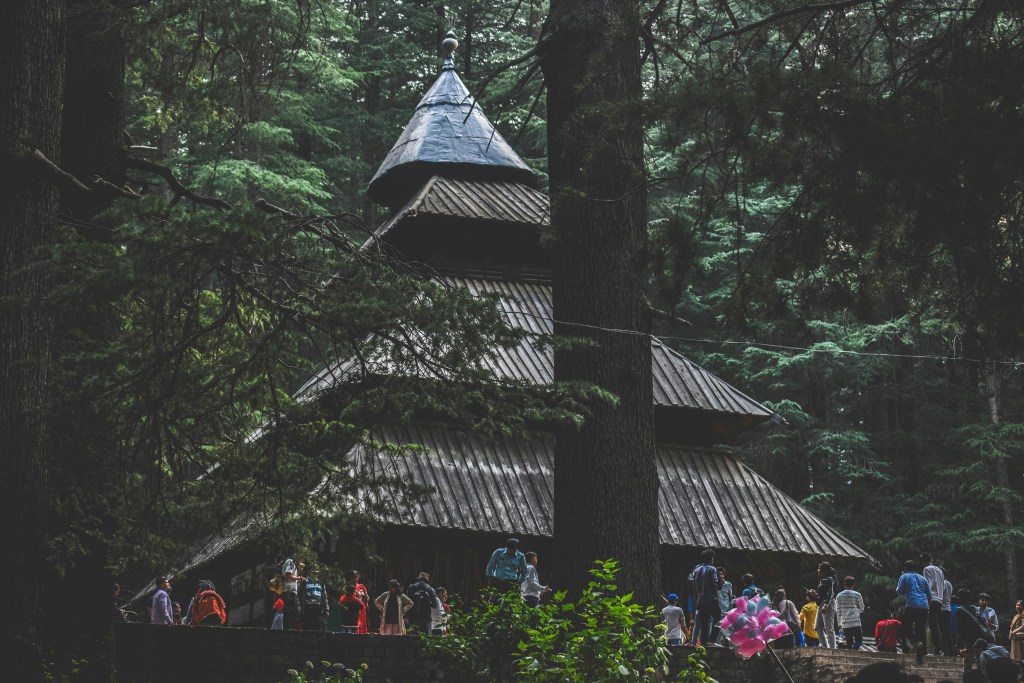
16th-century Hadimba Devi Temple pagoda surrounded by dense cedar forest in Manali, Himachal Pradesh

A 3-Day Manali Itinerary for June

This itinerary works for families, couples, and groups of friends. Adjust the activity intensity to match your group.

Day 1: Settle In, Slow Down, Acclimatise

  • Arrive in Manali by midday. Check into your SaffronStays villa, unpack, and let the altitude adjustment begin.
  • Afternoon: Walk through Old Manali. Browse the Tibetan market. Have chai at a café overlooking the valley. Resist the urge to overplan.
  • Late afternoon: Visit Hadimba Temple (30 minutes from most SaffronStays Manali properties). The cedar forest in the June afternoon light is genuinely lovely.
  • Evening: Bonfire at the villa (arrange with your SaffronStays caretaker). Pahadi dinner. The first night in Manali should feel like a proper arrival.

Day 2: Rohtang Pass & Solang Valley

  • 5:30am: Wake up. This is the most important early start of the trip.
  • 6am: Depart for Rohtang Pass. Your permit should be booked the previous evening (rohtangpermits.nic.in). The drive up is approximately 2 hours.
  • 8am–11am: Time at Rohtang. Snow activities, photos, the view into Lahaul. Do not rush: this is what the early alarm was for.
  • 12pm: Drive back, stop at Solang Valley for lunch and one activity (paragliding or zorbing recommended).
  • 3pm: Return to Manali. Hot shower, rest, Vashisht hot springs if legs permit.
  • Evening: Dinner in town or in-villa meal. Ask your caretaker to arrange local Himachali food. The Siddu (stuffed bread with ghee) at Monarch Manor is worth knowing about.

Day 3: Trekking or River Day

  • Option A (Active): Half-day Beas Kund trek from Solang. Start at 7am, return by 1pm. Wildflower season is at its peak in June.
  • Option B (Moderate): White water rafting on the Beas (morning session), followed by a visit to the Roerich Art Gallery in Naggar village, a beautiful 45-minute drive through the valley.
  • Option C (Families with younger children): Apple orchard walk near Naggar (SaffronStays Kesar Villa is set inside one), Naggar Castle visit, riverside picnic.
  • Afternoon: Mall Road shopping for Himachali shawls, local honey, and walnut products.
  • Evening: Pack up. If driving back overnight, depart by 7pm for Delhi.
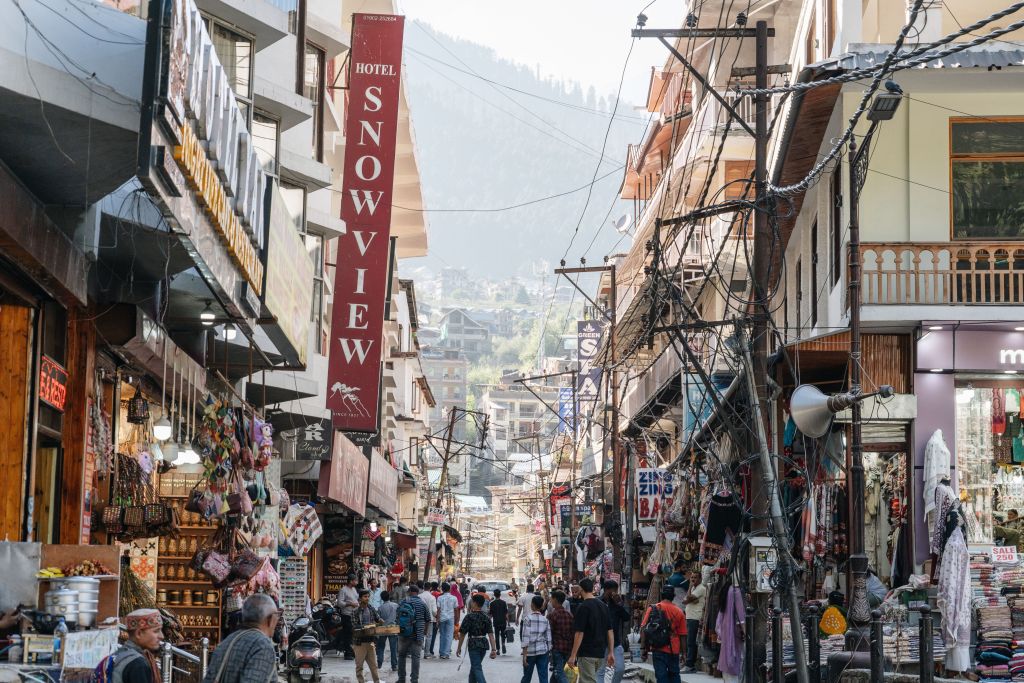
Mall Road Busy market street in Manali town with local shops, Tibetan handicrafts and pine-forested hills in the background

Getting There: How to Reach Manali in June

RouteFromDurationNotes
By Road (Drive / Taxi)Delhi12–14 hrsNH3 via Chandigarh → Mandi. Leave at 5am or take overnight. Book AC taxi ₹8,000–12,000 one way.
By Volvo BusDelhi (ISBT)12–15 hrsHRTC and private operators. Overnight buses depart 5–8pm. Comfortable, cost-effective (₹1,200–1,800).
By Flight + TaxiAny major city3–4 hrs totalFly to Bhuntar (Kullu-Manali Airport, 50km). Taxi ~₹2,500. Flights are limited and weather-sensitive.
By Train + TaxiAny major city14–18 hrsTrain to Chandigarh or Kalka. Taxi to Manali (₹7,000–8,000, 6–7 hrs).
SAFFRONSTAYS TIPS: In June, road conditions are generally excellent. The Atal Tunnel (opened 2020) has transformed travel times: it bypasses Rohtang entirely, cutting 1.5–2 hours off the Manali-Lahaul journey and making the route usable year-round. For guests driving from Delhi, the Manali-bound NH3 is well-maintained through summer. Do check for any IMD weather alerts before departure.

Where to Stay: SaffronStays Villas in Manali

There is a version of a Manali trip that most people have had: a hotel corridor, a front desk that does not quite remember your name, a breakfast buffet shared with forty strangers, and walls thin enough to hear the family next door debating what to order for dinner. A SaffronStays villa in Manali is the opposite of all of that.

When you stay in a private villa, the space is entirely yours. No shared lobbies, no queues for the hot water, no negotiating with hotel staff about whether you can have a bonfire. Your caretaker is on-site, knows your name, and has already arranged the firewood. The kitchen can prepare Pahadi meals to order: a proper Siddu with ghee and walnut chutney, a pot of local rajma, chai on the veranda whenever you want it. There is no fixed breakfast slot, no checkout pressure, no sense that you are one room among many. The villa operates around your trip, not the other way around.

In the mountains specifically, this matters more than anywhere else. After a long day at Rohtang Pass or a morning rafting on the Beas, returning to a private living room with a fireplace, a garden with Himalayan views, and a caretaker who has already figured out dinner is a categorically different experience to a hotel room. The evenings in Manali in June are cool enough to sit outside with a blanket and watch the sky go dark over the ranges. That is not something a hotel can give you. A villa can.
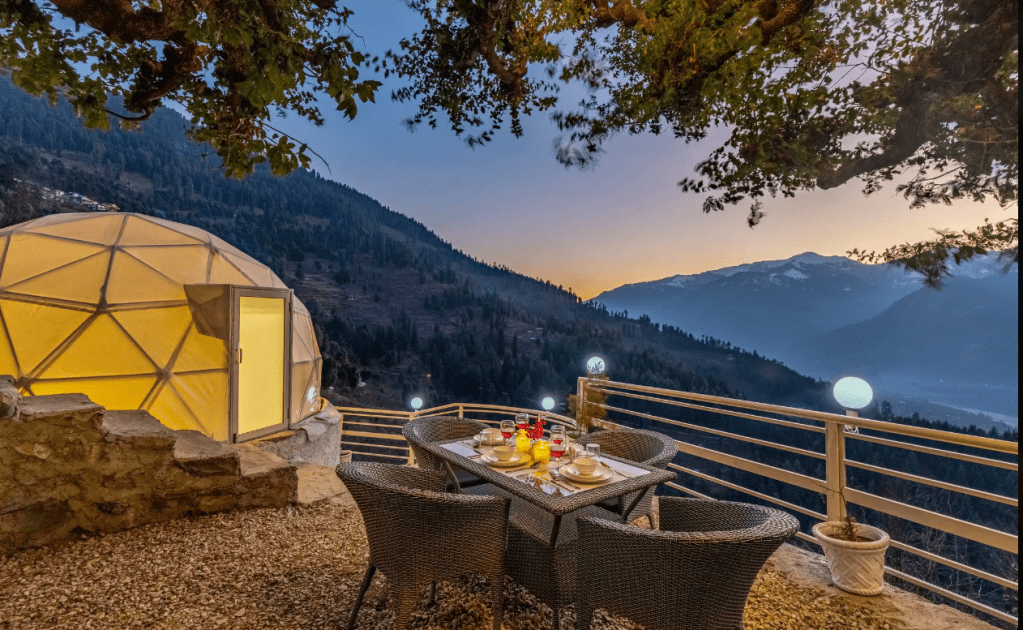
SaffronStays Interstellar in Manali. Private outdoor dining terrace with geodesic dome and panoramic Himalayan valley view at a SaffronStays villa in Manali

What to Sort Before You Go

Book 3–4 Weeks in Advance

June is not peak season but it is busy enough that the best SaffronStays villas fill up 3–4 weeks out. Villa stays in popular hill station destinations move faster than people expect, especially for groups and families travelling over weekends. Do not leave it to the last moment.

Rohtang Pass Permit

Book online at rohtangpermits.nic.in the evening before. 800 petrol and 400 diesel vehicle slots per day. Cost: ₹550. Closed every Tuesday.

What to Pack

  • Light fleece or zip-up jacket (essential for evenings and high altitude)
  • Waterproof layer (afternoon showers in late June are short but real)
  • Trekking shoes if you plan to hike (trail runners work for Beas Kund)
  • Sunscreen SPF 50+. UV intensity at altitude is much higher than at sea level
  • Warm socks and a thermal layer for the Rohtang Pass drive
  • Cash: ATMs at higher altitudes can be unreliable. Carry ₹10,000 in notes

Altitude Note

Manali town sits at 2,050 metres, so most healthy adults acclimatise in a few hours. Rohtang at 3,978 metres is a different matter. If you or anyone in your group has a history of altitude sickness, take it easy on Day 1 and consider carrying Diamox (consult a doctor before travel). Symptoms to watch for: headache, nausea, breathlessness at rest.
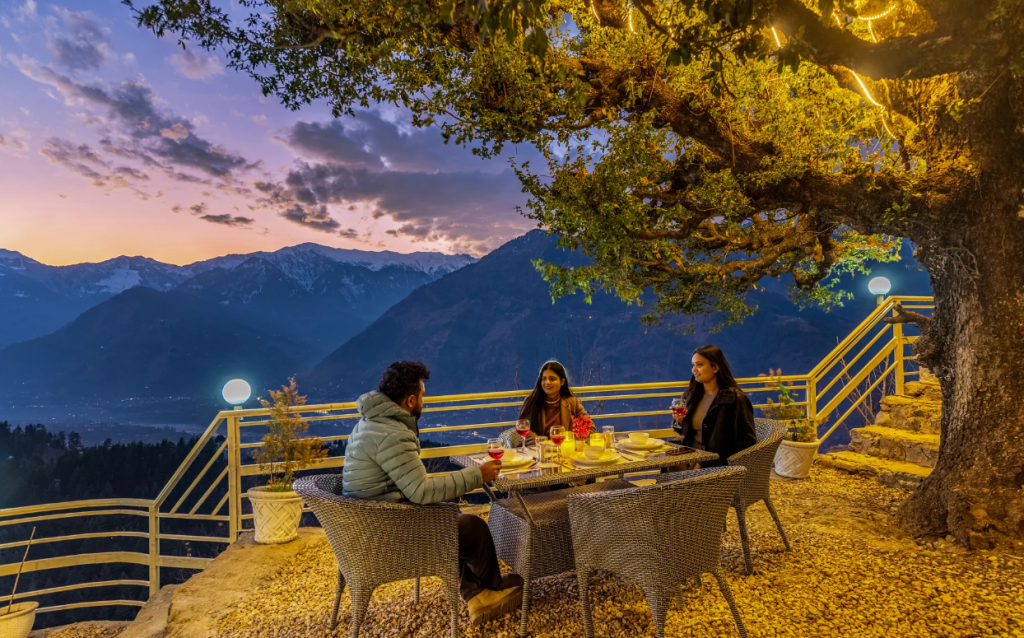
Guests enjoying an outdoor dinner under a tree at a SaffronStays Interstellar in Manali with snow-capped Himalayan peaks at sunset.

FAQs: Manali in June

Is Manali good to visit in June?

Yes. June is one of the best months to visit Manali. Temperatures range from 10–25°C, Rohtang Pass is open, the valley is at its greenest, and it is still shoulder season before the full July–August rush. For families travelling during school summer holidays, early June offers the best combination of good weather and manageable crowds.

Is there snow in Manali in June?

Snow remains at higher elevations in June, particularly at Rohtang Pass (3,978m) and Solang Valley. In Manali town itself (2,050m), there is no snow. Early June typically has more snow at altitude; by late June it is reduced to patches at the highest points.

Is Rohtang Pass open in June?

Yes. The BRO (Border Roads Organisation) typically opens Rohtang Pass in late May or early June. In 2026, the pass was open from June 1. Tourists require an online permit (rohtangpermits.nic.in, ₹550). The pass is closed every Tuesday for maintenance. Weather can cause temporary closures, so always check the day before you plan to go.

How many days in Manali are enough in June?

Three full days is the ideal minimum for a June visit. Day 1 for settling in and exploring the town, Day 2 for Rohtang Pass and Solang Valley, and Day 3 for trekking or the Kullu Valley. Five days gives you space to do all of this without rushing, plus a day trip to Naggar.

Is Manali safe for families in June?

Manali is a well-established, family-friendly destination and very safe in June. Road conditions are good, the town is calm, and altitude is manageable at 2,050 metres. For families with young children, stick to Manali town and Solang Valley on Day 2 rather than the Rohtang Pass drive, which can be strenuous for small children.

What is the best SaffronStays property in Manali for a family group?

For families and groups, Monarch Manor on Old Manali Road is the best choice: it sleeps up to 14 guests across 6 rooms, serves Pahadi meals on-site, and has the character of a genuine Himalayan heritage home rather than a serviced apartment. For smaller families or couples wanting a river view, The Amlyn in Vashisht is the pick.
Slow Travel in Uttarakhand: A 4-Day Itinerary Through Bhimtal and Mukteshwar

Two of Kumaon’s best-kept secrets. One unhurried circuit. Zero FOMO.

Most people spend three days in Uttarakhand trying to see five places. They rush Nainital, squeeze in Mukteshwar, and drive back wondering why the hills felt so stressful.

This itinerary is built differently. You’re going to two places: Bhimtal and Mukteshwar. And you’re going to stay long enough to actually feel them. A morning walk without a plan. Breakfast with a view. An afternoon that doesn’t involve rushing to a viewpoint before sunset.

That’s slow travel. And Kumaon is one of the best places in India to practise it.

Both destinations sit in the Nainital district of Uttarakhand, roughly 35 km apart. They’re easy to connect as a circuit. Together, they cover two very different moods. Bhimtal is lakeside and laid-back. Mukteshwar is elevated, forested, and big on Himalayan views. June is one of the best months to be here: the plains are cooking at 42°C, and you’re sitting at 7,500 feet watching clouds roll in over the deodar forest at a breezy 22°C.

Here’s how to do this trip properly: without rushing, without over-planning, and without regret.

WHY THIS PAIRING WORKS

Why Bhimtal and Mukteshwar, Not Just Nainital?

Nainital is beautiful. It’s also very crowded, especially in summer. Mall Road gets jammed. Lakeside parking turns into chaos. Hotels charge peak rates for views you can barely enjoy through the weekend traffic.

Bhimtal and Mukteshwar are 30 to 40 minutes away from Nainital. Close enough to access the Kumaon region, far enough to feel like you have the hills to yourself. These are not “dupe” destinations. They’re genuinely different in character, and many experienced Kumaon travellers prefer them to Nainital for exactly that reason.

Bhimtal sits at around 1,370 metres and is centred around the largest lake in Kumaon, a calm green expanse with a small island aquarium in the middle. The vibe here is quiet mornings by the water, lakeside cafés, and easy drives to nearby lakes like Sattal and Naukuchiatal.

Mukteshwar sits higher, at around 2,286 metres (7,500 feet), in the Kumaon hills above Bhimtal. It’s known for its fruit orchards, its deodar and oak forests, and one of the finest Himalayan panoramas in the region: Nanda Devi, Trishul, Panchachuli on a clear day. The town is small, the roads are quiet, and the pace is exactly what slow travel is supposed to feel like.

WEATHER & TIMING

Why June Is a Good Time to Visit

June sits in a sweet spot for this part of Uttarakhand. The monsoon typically arrives in the Kumaon hills around late June to early July, which means the first two to three weeks of June are pre-monsoon: lush, green from the previous year’s rains, pleasantly cool, and clear enough for those Himalayan views.

BHIMTAL 22–28°C daytime Evenings cool to 18°C. Light jacket at night.MUKTESHWAR 18–23°C daytime Noticeably cooler. Jacket essential after 6 PM.

Compared to Delhi, Mumbai, or Pune (where June means 40°C and humidity), this is another world entirely. The orchards in Mukteshwar are full of fruit. The forest is densely green. Early morning views of the Himalayas, before the clouds build up, are among the clearest of the year.

A HONEST NOTE ON JUNE WEATHER If you’re travelling in the second half of June, expect some afternoon showers. They’re usually brief, add to the atmosphere, and make evenings even better. Just carry a light rain jacket. Avoid booking if your dates fall after June 25, as the monsoon can arrive early some years.

THE ITINERARY

Your 4-Day Bhimtal and Mukteshwar Itinerary

DAY 1   Arrive in Bhimtal. Settle In. Don’t Rush.
GETTING THERE
If you’re coming from Delhi, the most common route is the overnight Kathgodam Shatabdi or a morning drive via Moradabad and Haldwani. From Kathgodam station, Bhimtal is about 30 km, a 45-minute cab ride. If driving, the Delhi-Bhimtal road distance is around 300 km, typically 7 to 8 hours depending on traffic out of Delhi. The drive from Haldwani to Bhimtal is the good part: you start climbing, the air changes, and the road cuts through small towns and tea stalls. Give yourself time for it.

THE EVENING
Check in, have lunch, and resist the urge to plan the afternoon like a checklist. Bhimtal’s lake is a 10-minute walk from most stays in the area. Go for a stroll around it. The lake is larger and quieter than Naini Lake. No paddle boat touts shouting at you, no jostling for space. Just a big green body of water with hills all around it.

→  Walk the Bhimtal Lake perimeter (about 2.5 km, flat and easy)
→  Boat ride to the island aquarium (small, quirky, fun for 30 minutes)
→  Evening chai at any lakeside stall. Ask for Kumaoni tea  

Dinner at your stay or at one of the small dhabas near the lake. Sleep well. The altitude and the quiet usually take care of that.
DAY 2   The Bhimtal Lakes Circuit
MORNING
The Bhimtal area is part of what locals call the Lake District of Kumaon. Within a 15-km radius, you have Bhimtal, Sattal, Naukuchiatal, and Khurpatal, all different in size, personality, and crowd levels. For Day 2, the plan is simple: pick one or two of the nearby lakes and spend your morning there. Sattal, a cluster of seven interconnected lakes, is the most unique and slightly more forested. Naukuchiatal (Nine Corners Lake) is larger and great for a quiet hour by the water. Both are under 20 km from Bhimtal.
→  Drive to Sattal (18 km) and walk the forest trail around the lakes
→  Or head to Naukuchiatal for kayaking or just a slow morning sit
→  Optional stop at Kainchi Dham on the way back, a peaceful Neem Karoli Baba ashram, significant in both Hindu tradition and, oddly, Silicon Valley lore

AFTERNOON
Back in Bhimtal for a late lunch. The Garh Parvat area near Bhimtal has a butterfly research centre that’s worth a quick visit if you’re curious about the region’s biodiversity. Otherwise, this is an excellent afternoon for doing absolutely nothing: sit in your room, read, nap, watch the lake from a café terrace.

In the evening, the Bhimeshwara Mahadev Temple on the lake bank is worth a visit. It’s ancient, calm, and gives you context for why this place has been significant long before it became a hill station.
DAY 3   Drive Up to Mukteshwar. Take the Slow Road.
THE DRIVE
Bhimtal to Mukteshwar is 35 km and takes around 1.5 hours. It’s one of those drives that is genuinely part of the trip. The road climbs steadily through pine and deodar forest, passing small villages, apple and plum orchards (in full fruit in June), and increasingly dramatic views as you gain elevation.

Don’t be in a hurry. Stop at a roadside stall for some local plums or a glass of Buransh (rhododendron) juice if you see it. Pull over somewhere between Dhanachuli and Mukteshwar; the valley views from these spots are stunning.

AFTERNOON IN MUKTESHWAR
Check in, have lunch, and then head to Mukteshwar Dham, the 350-year-old Shiva temple that the town is named after. It’s a short climb to the top, and the views from the temple compound are panoramic. On a clear June day, you can see a full sweep of the Himalayan range.
→  Mukteshwar Dham: the climb is easy, under 20 minutes. Worth every step.
→  From the temple, walk to Chauli ki Jali, a natural rock face viewpoint with a 180° view of the valley and the snowy peaks behind it
→  Chauli ki Jali is also famous for rock climbing and rappelling if you’re interested

EVENING
Mukteshwar at night is one of the better stargazing spots in the Kumaon region. There’s minimal light pollution, the altitude is good, and June nights are clear before the cloud cover builds. Some stays here offer telescope sessions; ask your host in advance. Dinner at your stay or at one of the small cafés in the market. The local Kumaoni thali, if you can find it, is the thing to eat.
DAY 4   One Last Morning. Then Head Home.
EARLY MORNING
Set your alarm for 5:30 AM. This is the only mandatory activity of the entire trip. Walk to any open viewpoint in Mukteshwar, or just step out of your room if your stay has a view, and watch the Himalayan peaks appear as the sky lightens. Nanda Devi (7,816 m), Trishul, Panchachuli: on a clear pre-monsoon June morning, they’re right there, close enough to feel improbable.

This is why people come to Mukteshwar. Everything else is bonus.

BEFORE YOU LEAVE
If you have time before hitting the road, the Bhalu Gaad Waterfall is a 3-km trail from the town that ends at a small but beautiful waterfall; it’s at its best in June when the streams are running full. It’s a 2-hour round trip, easy terrain, and a genuinely lovely way to spend a last morning.
→  Bhalu Gaad Waterfall trek: 3 km one way, easy, 2 hours return
→  Slow breakfast back at your stay
→  Pack up and drive down to Kathgodam or Haldwani for your train or onward road  

A NOTE ON LEAVING
Leave before you feel fully ready to. That’s usually the sign of a good slow travel trip: you’ve stayed long enough to feel settled, but not so long that the place becomes ordinary. Bhimtal and Mukteshwar tend to have that effect on people.

WHERE TO STAY

Choosing the Right Stay for a Slow Trip

The stay matters more on a slow travel trip than on a packed itinerary. When you’re not rushing between sights, you spend real time in your room, on your terrace, in the garden. It needs to be somewhere you actually want to be.

For Bhimtal, look for cottages or homestays with lake views or garden settings. The town is small enough that most good stays are within a short walk of the lake. Properties near Bhimtal Lake or the quieter Garur Tal area tend to offer the best balance of location and calm.

For Mukteshwar, prioritise elevation and views. The town sits at 7,500 feet, and the best stays have either Himalayan-facing rooms or outdoor sit-out areas that face the peaks. A terrace breakfast with a Nanda Devi view is not a small thing.

SaffronstStays has a curated selection of private villas and cottages across both destinations, properties we’ve vetted for comfort, views, and that particular quality of quiet that makes a hill station stay worth the drive.

Browse stays in Bhimtal: saffronstays.com/bhimtal

Browse stays in Mukteshwar: saffronstays.com/mukteshwar

BEFORE YOU GO

Practical Tips for This Trip

GETTING THERE

Nearest railhead is Kathgodam (60 km from Mukteshwar, 30 km from Bhimtal). Overnight trains from Delhi are convenient. Nearest airport is Pantnagar (90 km).
CAR OR CAB?

Hiring a cab for the full 4 days is the most flexible option: roughly ₹5,000–6,000/day. Self-drive works too, but the mountain stretches require comfort with hill roads.
WHAT TO PACK

Light clothes for the day, a fleece or light jacket for Mukteshwar evenings. Comfortable walking shoes. A rain jacket if you’re travelling mid-to-late June.
CONNECTIVITY

BSNL and Jio have the best coverage in these areas. Airtel works in Bhimtal but can be spotty in Mukteshwar. Plan for some offline time. It’s actually one of the perks.
CASH

Carry cash. ATMs exist in Bhimtal town and the Mukteshwar market, but smaller dhabas and local shops are cash-only.
ALTITUDE NOTE

Mukteshwar is at 7,500 ft. No serious altitude concerns, but some people feel slightly winded on the first day. Stay hydrated, take it slow on Day 3.

COMMON QUESTIONS

Frequently Asked Questions

Is June a good time to visit Mukteshwar?

Yes, especially the first two weeks of June. The weather is pleasant (18–23°C), the Himalayan views are clear in the mornings, and the orchards are in full bloom. The monsoon typically arrives in late June, so there may be some afternoon showers in the third and fourth week. Early June is ideal.

How far is Bhimtal from Mukteshwar?

About 35 km by road, which takes roughly 1.5 hours. The route climbs through forest and small villages and is a pleasant drive in its own right. A local cab can cover this easily.

Can I do this trip without a car?

It’s possible but limiting. Shared cabs run between Kathgodam, Bhimtal, and Mukteshwar, but the connections aren’t always timed conveniently. For a slow travel trip where you want flexibility (stopping for views, doing day trips to Sattal), a private cab is worth the cost.

Is Mukteshwar crowded in June?

Not particularly. Nainital sees the peak summer rush, but Mukteshwar stays relatively calm. You’ll find fellow travellers, but not the kind of crowds that make a hill station feel like a metro. Weekends can be slightly busier; travel on weekdays if you can.

How many days is enough for Bhimtal and Mukteshwar?

Four days covers both well for a slow travel trip. If you have an extra day, spend it in Bhimtal, where the lake district rewards unhurried exploration. Three days is the bare minimum; anything less and you’ll feel rushed.

What is the best base: Bhimtal or Mukteshwar?

This itinerary uses both: two nights in each, which is the ideal split. If you had to pick just one, Mukteshwar gives you the better views and more varied landscape, but Bhimtal is easier for families and anyone who prefers a less steep terrain.

Ready to Plan This Trip? Browse our hand-picked villas and cottages in Bhimtal and Mukteshwar, all vetted for views, quiet, and that very particular kind of comfort that makes the hills worth it.

Discover the Best Of Himachal Pradesh!

Summer in India has kicked off and if you’re looking for the best places in North India to take a break from the heat and hustle-bustle of Mumbai, then the cool, serene hills of Himachal Pradesh are calling your name! Explore the beautiful landscapes, culture, food, and tourist attractions while also staying at some of the most unique stays to discover the best of Himachal Pradesh with your family or friends.


Fly down to Chandigarh to start your northern adventure in Kasauli, Chail, and Shimla which are waiting to be explored. 

Nestled in the lap of the Himalayas, Kasauli, a 2-hour drive from the Chandigarh airport, is a quaint little town known for its stunning views, serene atmosphere, and refreshing climate. 

One of the must-visit attractions is the Kasauli Wildlife Sanctuary which is home to a variety of animals and birds, including leopards, barking deer, and Himalayan black bears. You can also go trekking in the nearby hills, explore the local markets, or simply relax and soak in the beauty of the place at authentic Himachal homestays like SaffronStays’ homes like SaffronStays Chalet Vie.


Located just a short distance from Kasauli is Chail, nestled amidst the serene pine and deodar forests,a charming town known for its scenic beauty, colonial architecture, and adventure activities. The best time to visit Chail is April to June. Among the things to do in Chail, you can discover the rich history of Chail with a visit to the  Chail Palace, a must-visit attraction in the town. Built-in the 19th century, this palace was once the summer retreat of the Maharaja of Patiala. The Maharaja of Patiala, Bhupinder Singh also established the Chail Cricket Ground in 1893, which is the world’s highest cricket ground located 2,444 meters above sea level. Additionally, with adventure activities like trekking, hiking, rope walking, and rock climbing, Chail is the perfect destination for thrill-seekers. Looking to spoil your loved ones, then head over to SaffronStays Ekam.


No trip to Himachal Pradesh is complete without a visit to Shimla, which is a 2-hour drive from Chail. Known as the “Queen of Hill Stations,” Shimla is known for its colonial architecture, picturesque views and pleasant climate. One of the most popular places to visit in Shimla is Mall Road which is a bustling street with shops, restaurants, and cafes and hence the perfect place to soak in the local culture. You can also visit the Christ Church, the Chadwick Falls, the Jakhu Temple, and the Shimla State Museum. After spending the day taking in the vibrant culture in Shimla, you can wind down and relax at SaffronStays’villas with home-cooked meals and plentiful board games at Jujurana House.

So, pack your bags, hit the road, and get ready to explore the beauty of Himachal Pradesh with SaffronStays!

12 Homestays you must add to your 2015 Bucket list

By Sarita Santoshini

2014 has been a remarkable journey for us. We launched our website and travelled to different parts of the country to bring some beautiful properties to you. As the year draws to an end, we want to leave you with plenty more reasons to travel in 2015 through our curated platform – great adventures, friendly locals, delicious food, beautiful landscapes, and warm experiences irrespective of where you decide to go. Out of the 800, we’ve painstakingly chosen these 12 beautiful stay options across India that we think you should add to your bucket list – one destination for every month of 2015!


1. Surround yourself by luxury, nature and tens of spotted deer – Udaipur, Rajasthan

Udaipur Homestays
You’ll always be surrounded by nature in this luxury homestay.

 Amidst verdant and scenic hills of the Aravali mountain range in Udaipur is Shikarbadi. Once the chosen big game hunting area of the royalty of Mewar, Shikarbadi today is home to this beautiful, luxury property that allows you to experience an untouched side of the White City. The six themed suites of the homestay have been set around a manicured garden on a floor above the host’s rooms. Here, you can listen to the songs of the birds and often spot deer, porcupines and foxes trotting outside the fences of the house. Rest assured you can experience true Rajasthani hospitality here through the friendly service and delicious local food, recipes of some of which have come straight from the royal kitchen.

Click here to learn more and book. 


2. Getaway from Mumbai to a hilltop farm overlooking the valley – Chiplun, Coastal Maharashtra

Maharashtra Homestays
Plunge into this inviting pool and enjoy the view of the mountains and the valley.

If you’re looking for an offbeat getaway from Mumbai, this farm house in Chiplun, built on an 18 acre land, on a hilltop overlooking the valley, is just the place for you. The rooms are very simple, but you’ll have peacocks and friendly dogs here for company, an inviting open pool that you can plunge into, and home-cooked Maharashtrian fares, prepared on the traditional wood-fired stoves under a mango tree, to relish. During your stay, you can spend your day floating on a boat in the Vashisth estuary and your nights either watching a star studded sky from the terrace or driving through the jungle in a jeep. Not a dull moment here! (Also read: A Surprise Anniversary Getaway )

Click here to learn more and book. 


3. Escape to a royal Villa overlooking the Dal Lake – Srinagar, Jammu & Kashmir

This beautiful Villa in Srinagar is owned by the descendants of Maharaja Hari Singh.

Overlooking the Dal Lake and facing the Zabarwan range, this beautiful  Villa is home to the descendants of the last ruling Maharaja of the princely state of Jammu and Kashmir. Nestled amongst apple, cherry and plum orchards, it is a part of their larger private estate, one where they organise fortnightly farmers market and the annual Darah Shikoh Festival. With a 36 feet high central atrium, tastefully done rooms and a lounge that comes with a view, it makes for a perfect retreat when in Srinagar. During their stay, guests can enjoy strolls in the walking trail around the estate and the nearby pond that attracts a large number of migratory birds. If you are lucky you may even come across a Himalayan Black Bear!

Click here to learn more and book. 


4. Stay with one of India’s best birding guides – Kewzing, Sikkim

Enjoy the unspoilt beauty of Sikkim while you stay in this Log House.

If you’re a birding enthusiast, this is just the place for you. Mr. Bon, your host, and one of India’s most renowned Ornithologists, has been leading birding tours around Sikkim, Assam, Arunachal Pradesh, Bhutan and Nagaland since 2001. During your stay, you can take guided birding tours to Maenam Wildlife Sanctuary, Borong and on trails that lie close to Doling Monastery in Ravangla and Mambru Monastery that is perched on top of a hill. The homestay itself is located next to a monastery. You can choose to stay in the log houses, suites or the family rooms, and eat delicious organic meals with a view of the Kanchenjunga during your stay.

Click here to learn more and book. 


5. Stay in a charming cottage surrounded by apple orchards – Manali, Himachal

The homestay lies surrounded by apple orchards and green mountains

Located in Bipasha Valley near Manali, this charming cottage lies nestled by apple trees and offers a scenic escape from the chaos of city life. The bedroom comes with a number of windows and a small personal balcony overlooking the hill station of Manali. There is a small garden outside where you can spend time enjoying the view, writing or sipping a cup of hot tea. The friendly hosts also whip up a delicious meal using fresh organic produce from their garden. During your stay, you can go for short treks around the cottage, on a trail leading to the Some River and another to a beautiful waterfall.

Click here to learn more and book. 


6. Explore an exotic village while staying in the midst of a community forest – Mawlongbna, Meghalaya

Your cottage lies a walk away from this breathtaking spot.
Your cottage lies a walk away from this breathtakingly beautiful spot.

The beautiful village of Mawlongbna in Meghalaya, tucked away from local tourists, houses two cottages for the adventurous travellers. Reaching the village involves a walk through the community forest, with little streams, brooks and a waterfall en route. During your stay, you can set off with the locals to discover fossils of sea-creatures (remnants of an era when the entire area was covered by the expanse of the seas), go fishing or kayaking in a water reserve nearby, and visit the local markets. The best part? Dining on local Khasi cuisine with a view of the plains of Bangladesh! (Also read: The Bridges that Grow )

Click here to learn more and book.


7. Experience a lesser-known Ladakh by the cliff bank of River Indus – Uleytokpo, Ladakh

Set on the banks of the Indus river, these cottages let in a stunning view of Ladakh's landscape.
Set on the banks of the Indus river, these cottages let in a stunning view of Ladakh’s landscape.

Set at the cliff bank of river Indus, 70 Kilometers into Sham valley is the village of Uleytokpo. Here, set amidst apple and apricot orchards is a beautiful eco property that allows you to experience luxury, serenity as well as a lesser-known side of Ladakh. The rooms are large and spacious with a large number of windows where you can wake up to a view of the vast mountains. During your stay, you can pick from one of the many books in the cosy library, indulge yourself with a refloxolgy session in the in-house spa, or venture out for river rafting and hiking.

Click here to learn more and book. 


8. Spend the night star gazing from an attic room – Chimney, Darjeeling

The stunning bird's eye view from the village of Chimney
The stunning bird’s eye view from the village of Chimney

Located in a charming little village called Chimney that lies at an altitude of 6800 feet, this homestay is your window into a side of Darjeeling that not many know or talk about. The best part about the location is the bird’s eye view of Teesta River, Siliguri and neighbouring regions from its roads. On the other side is a beautiful misty juniper forest, and there are a few waterfalls and viewpoints that lie a short hike away. Stay in this cosy attic room, taste some delicious Nepalese food, and spend your night star gazing or watching lights flicker in the valley below. (Also read: Memories of a Dreamy Village )

Click here to learn more and book.


9. Experience the lavish plantation life in a Colonial Bungalow – Coorg, Karnataka

Experience the lavish plantation life in this Heritage Bungalow in Coorg

Surrounded by sweeping vistas of the ever picturesque Kodagu Hills, this Heritage Bungalow is fit for royalty. With large, spacious rooms, fireplaces, Victorian furniture and manicured lawn, the Bungalow takes you back to a bygone era with its old world charm. During your stay, you can eat scrumptious meals of Coorg delicacies like Pandhi (pork) or Koli (Chicken) Curry, Akki Roti (Rice Roti), Kadumbuttu (Rice Dumplings), Wild Mushroom and Mango Curry. While there, other than strolling through the coffee plantations, you can take a trip to Abbey Falls, Nagarhole National Park and the Namdroling Tibetan Monastery.

Click here to learn more and book.


10. Stay in a rustic cottage in the heart of a forest – Corbett, Uttarakhand

These rustic cottages allow you to be one with the forest.

These cottages make for a very special wilderness destination where you can be in, and one with the forest. Situated on the banks of the Ramganga River in Corbett National Park, and accessible on foot, it’s for true forest lovers and those that seek the wild in its original, pristine form, away from the crowds, the vehicles and heightened human activity. The cottages here are beautiful and have been constructed with locally sourced clay, savannah thatch and wood inspired by traditional Vangujjar tribal style. While here, soak up the wilderness from your verandas, enjoy some delicious meals, explore the forest on foot, enjoy birdwatching, butterfly spotting, or look for signs of the big ones.

Click here to learn more and book.


11. Watch the sun set over lush fields from a hill top Bungalow – Kottayam, Kerala

Enjoy a gorgeous sunset from your balcony in the hill top Bungalow.

Set in the hills of the beautiful town of Kottayam, this bungalow lets you soak up the rich natural surroundings of Kerala away from the tourists trails. The charming rooms open up to a view of lush green fields and backwaters, which can be enjoyed with multiple cups of tea from the veranda. Other than enjoying delicious Malayali meals, you can enjoy cycling by the hilly countryside, take long leisurely walks through the fields and go for backwater rides through sleepy villages.

Click here to learn more and book.


12. Stay in a Wooden Chalet on the banks of a river – Ribandar, Goa

Goa Homestays
The beautiful wooden chalet by the Mandovi river in Goa.

Situated on the banks of Goa’s largest River, Mandovi, is this beautiful wooden chalet that looks straight out of a Hollywood movie. Built in 1730, the property comes with three bedrooms, one of which opens up to a paved patio by the edge of the river, living rooms, dining hall, kitchen, sun decks and even a convenience store. The house is designed perfectly to allow the view of the river, the Salem Ali Bird Sanctuary and adjacent islands from every location in the house. During your stay, you can enjoy fishing or rent a bike to explore the town of Ribandar.

Click here to learn more and book.


Which one of these homestays would you add to your 2015 Bucket list? Tell us in the comments section. 

About the Author: Born and raised in Assam, Sarita Santoshini has been travelling around India and penning down her experiences over the past year. She currently works as the Content Editor for SaffronStays. You can read more of her travelogues on her blog-http://crumbsfromyourtale.wordpress.com.

Stranded in the world’s worst road – Godsend and the Godlike

Spiti homestays

By Elita Almeida

The predicament:

What if, after a ten hour intense journey through the ‘world’s worst road’, your driver turns around and tells you, “We may be a little lost as it is my first time here. I suggest we halt. We’re very close to running out of fuel too. So we may as well try to call someone and arrange for both fuel and accurate directions”

That’s exactly what thirteen of us co-travellers heard on Day 1 whilst en route to Spiti.

The back story:

We’d departed from Manali earlier that morning in a Tempo Traveller with destination Kaza (in Spiti) on our mind. For anyone who’s familiar with the route, the road from Manali via the Rohtang and Kunzum Pass is not called the ‘worst road’ without reason; especially if you have the privilege of being seated right above the rear two wheels of the vehicle; and definitely more so if you have a driver who’s driving skills demand more than a fleeting mention.

En route Spiti
Rock, Stone, Gravel – all along the world’s worst road. Photo by Elita

 Now what?

Visualize the look on our faces moments after he (our driver i.e.) revealed to us the situation we were in.

It was close to 5 PM with no human life (or any life for that matter) in sight. The sky was blue with tufts of white clouds adorning it. The road was nothing but a dusty pathway. On the one side of the road there was a river. And on the other side of the river seemed a relatively populous village (read: human settlement that seemed to be comprised of about 50 houses from afar).

Stepping out of the vehicle tired, weary and hungry from the arduous journey we found that our driver seemed to have disappeared momentarily after his solemn announcement. Probably to locate some help is this barren deserted place, we reasoned amongst ourselves. With no mobile connectivity on our phones some of us decided to be brave and venture around in the hope of finding someone who could be of some help.

After a couple of minutes the driver did return letting us know that he had managed to establish contact with someone he knew and that fuel had been arranged for. We used his phone, as it was the only one that had connectivity, to reach out to our contact in Kaza (who also then assured us that she was on her way).

En route Spiti Valley
Lost – Kaza’s on the other side. Photo by Elita

 Light ‘before’ the end of the tunnel…

While we were assured of both, fuel and directions, we were still a bunch of hungry travellers. Amongst the brave who’d ventured out knocking every padlocked door, someone struck gold. In a seemingly deserted village there happened to be a home that welcomed a bunch of thirteen strangers. It seemed unlike anything I’d personally experienced before but there we were being warmly ushered in by this man who could only be heard saying, “Aap toh humare mehmaan ho. Aur mehmaan to devta sammaan hote hain.

“Guests are godlike and so I have the honour of welcoming god into my abode…”

Little did he realize that he was our godsend.

The house was quaint and warm; a sharp contrast to the crisp wind that blew outside. Besides our host who had busied himself into preparing some chai (also known as ‘tea’) for us was a little kid – probably his grandson who kept stealing glances at us from the hinges along the door.

Before we knew it there was hot piping tea for all of us along with a lot of ‘sattu’ for us to eat (that we would soon learn was more than just an acquired taste). We’d spent a good half an hour to forty-five minutes inside sipping our chai and uncramping our bones from the journey before we received a call that both fuel and our directions to Kaza had arrived and we could finally begin to make our way for the destination we’d set out for earlier that day.

To open your home to a group of completely unknown people so wholeheartedly and unassumingly, to provide them with whatever you have no matter how little and to wish them well as they departed without the slightest hint of any expectation but goodwill is reminiscent of a part of India I miss experiencing in the cities.

Spiti homestays
Spiti is home to some of the kindest, most hospitable locals. Photo by Kartik Mahajan


Want to experience the unmatched hospitality of Himachal? Visit our website to choose from the 114 Homestays.


About the author: Elita is Nondescript. Nonchalant. Observer. Witty. Sarcastic. Skinny. Nomadic Thunker. Square Peg. Sporadic Blogger. Solo Traveller. Blogs at nomadicthunker.blogspot.inskinnygenus.blogspot.com. Tweets @ellelogical.

10 tips to choose the right Homestay

In my last blog post (Read: 11 Reasons I choose a Homestay over a Hotel, everytime! ), I shared my insight about homestays and gave you reasons to choose one for your next vacation. Now, hoping I have tempted you enough, I arm you with 10 essentials for choosing the right homestay through our website.

Read on, get booking and keep your travel gears ready.


Tip # 1. Ask yourself what you want from your vacation

Keana home
Stay in this quaint cottage nesting in the Himalayas for a quiet vacation

Sikkim Homestays
Kewzing village in Sikkim is inhabited by the Bhutia community  and offers a unique cultural experience to travellers

The first and foremost step is to decide the kind of experience you are seeking from your vacation. You could be looking for a quick weekend getaway to one of Coastal Maharashtra‘s unexplored beaches from Mumbai or to a hill station in Uttarakhand from Delhi. Some of you might want to experience what staying in a Haveli in Rajasthan or a Colonial Bungalow in the coffee plantation feels like, while others might prefer to stay with the Bhutia community in Sikkim or a weavers’ village in Meghalaya. Options are plenty and you can choose your stay in heritage homes, colonial Bungalows, tree houses, boat houses and tents.


Tip # 2. Look for hosts who match your interests

Homestays in Alleppey
A host in Alleppey, Natasha, provides dance and meditation classes to guests.

Most hosts add great value to your vacation by going that extra mile. Some of our hosts are professionals in the fields of bird-watching, wildlife and trekking, and can conduct some great trips for you. There are others who are great cooks and conduct live cooking sessions for guests on request. Some hosts would be happy to include you in their daily activities like a puja in the family temple or Diwali and Onam celebrations. At the very least, hosts are a treasure trove of the history and culture of the location and take immense pride in sharing stories of their home state and culture. So make the most of this.


Tip # 3. Who are you travelling with?

Homestays India
Homestays are the best option when travelling with family.

The people that you are travelling with largely determine where you should stay and what facilities you should look for. If you’re travelling with your family and have kids or elders along with you, you might want to look at the finer details. Not all homestays have lifts, air conditioners or western-style bathrooms.  A few homestays, especially in remote regions, require a small trek that elders may find difficult to undertake. Many homestays allow you access to kitchen, so you can cook special meals for your parents and a simple suji kheer for your child.  Do you have a pet and it breaks your heart to leave him/her in a kennel when you travel?  Most hotels don’t allow dogs, but a lot of homestays do, so it’s advisable to check in advance. And if you’re travelling as an unmarried couple, check with the homestay if it’s okay with it.


Tip # 4. Make note of the amenities that your preferred homestay provides

Himachal homestays
If you’re staying in our host, Shezad’s homestay in Himachal, you definitely need a heater

Saffronstays Homestays
Click on the Filters tab to modify your search as per your exact requirements.

Depending on who you’re travelling with and when you’re travelling, check the amenities provided by the homestay. You might want to check for provision of air conditioners in a homestay in Rajasthan and for heaters in Srinagar. If you’re looking for city comforts, check the availability of laundry facilities, Cable TV, Wi-Fi and power backup.


Tip # 5. Check whether meals are available

Coorg Homestays
Pandi curry is a must try during your stay in a Coorg homestay.

Like we always say, the best part about staying in a homestay is undoubtedly the delicious home-cooked food. Most homestays have breakfast included in their tariff while others, especially the ones located in remote locations, with fewer eateries around, include all meals in their tariff. You might also want to check for the cuisines provided by the homestay and see if they’ll be happy to serve you local food.  If you’re a strict vegetarian, you could specifically look for the many homestays that serve only veg food.


Tip # 6. Look for places of interest, landmark and transport facilities around the homestay

Homestay in Ladakh
Stay in a homestay beside the Lamayuru Monastery in Ladakh

Homestays India
Use our extraordinary map search to look for a homestay in the right location

We’ve curated few select places with top things to do.  All you have to do is click on the “Map View” tab to enable the feature and watch the screen light up like a Christmas tree. It gives you a good idea of the distance from the nearest airport or train station and a perspective of whether you are in a shopping district or a party hub or some far flung suburb of Mumbai. If you know precisely what you want to do during your vacation, you might want to specifically search for homestays around the area.  For example, Goa Sunburn is held in Vagator beach and if you want to stay close by, all you have to do is zoom into the beach on the map and you can view homestays in that particular area.  It makes your search simpler, faster and easier!


Tip # 7Have a look at reviews and ratings

Homestays in India
Look for these icons on our website

Reputation is the currency of the online world“.  We realize that you’re looking for reviews and ratings that you expect the homestays to have painstakingly acquired over the years. Given that we have recently come to the party, we decided to personally verify every homestay and even gather the homestay experience ourselves. How did we do that? We selected some top photographers and travel writers and offered them a once-in-a-lifetime sabbatical opportunity, our TravelNinja program.  We gave them a circuit to follow, they researched for homestays and spoke to a hundred odd hosts there. In most cases, the homestay owners were warm enough to extend their hospitality to us and referred us to other hosts. A bit of luck and serendipity did the rest. We have taken the effort of curating content for the homestays and marked out a few as ‘Featured’ – these are homestays we believe are special, either in terms of the location, the host or the hospitality and facilities provided. We’d recommend you to rely on us, search within the featured homestays and enjoy your stay! Do not forget to come back and give us a review on our site. It will help the next traveller to make an informed decision.


Tip # 8. Talk to the host

Homestays in Udaipur
Our host in Udaipur, Shurveer, gladly answers guest queries and makes arrangement as per their requests

SaffronStays
Our chat feature “Talk to Host” allows guests to communicate directly with the host.

“I like your homestay and want to spend a weekend there with my partner. Could you arrange a special dinner for us?” “Do you have a caretaker who can cook special meals for my parents? Does my 6 year old kid need an extra bedding?” Have a number of such questions while booking and find yourself going in circles?

Through our new chat feature “Talk to Host” we now allow our guests to communicate with our hosts directly to have their queries answered.  Likewise, the Host may ask you a few questions too.  After all, you are going to be sharing the space in his/her personal home. It is important to be comfortable, accept each other and then make the booking.


Tip # 9. Use the Dreamstays feature to save and share your preferred homestays

SaffronStays DreamStays tab
Use the “DreamStays” tab to share your favourite homestays with loved ones

If you still aren’t sure about your choice and want a second opinion of your family (always helps to get the wife’s nod, right?), add your selections to the DreamStays tab and inbox them to your spouse/travel partner. It’s far easier than directing them with names, rows and columns on the site.


Tip # 10. Make easy payment and enjoy your stay.

Once you’ve made your decision, all you have to do is send a booking request and wait for the host to accept it. That done, you can easily make payment using your credit card, debit card, internet banking or Paypal.


All set to book a Homestay now? Visit our website.


About the author: Tejas Parulekar is a first generation entrepreneur who has (ad)ventured into a domain that is traditionally dominated by large hospitality chains and other travel portals. A Banker by experience and Chartered Accountant by training, she is aspiring to leave an imprint in the hospitality sector by bringing together the little fish (Homestays) to take on the mighty shark. Encourage her and her homestay hosts by booking your next stay on www.saffronstays.com.

Excellent host and fabulous stay in Spiti

I stayed here for 2 days. This is perfect place to halt on a 1st day when you are entering Spiti from Manali side. Lovely homestay managed by a rider from Delhi. Although it is located in a village, you will get all the luxurious facilities, much better than any other homestay or guesthouse or hotel in whole Spiti valley. Rooms are spacious and have all the amenities you need here. Perfect place for riders as well as tourists to stay. The property has a beautiful dining area with a typical Spitian sit-out. Food is prepared in local style & trust me you wont get such an amazing homemade food anywhere in Spiti valley. Property owner, Sahil, also organises treks to the beautiful ChandraTal lake and can help you plan your Spiti itinerary well.