
The sky over the Alleppey backwaters is the colour of pewter. The water in the canals reflects it perfectly. Rain falls in fine curtains that drift across the lagoons. The banks are so green they barely look real. And there is almost nobody else here.
This is what Kerala looks like when most of India has decided not to come.
Every year, travellers look at the June forecast, see rain, and pivot to the hills. Manali fills up. Shimla overflows. And Kerala, sitting at the other end of the country with its backwaters and its tea estates and its ancient Ayurveda retreats, gets quietly to itself.
Which is, of course, precisely the point.
The monsoon does not diminish Kerala. It reveals it. The tea estates in Munnar turn a green so saturated it looks painted. Waterfalls that were dry rock faces in March are now roaring. The Ayurveda retreats along the coast are at their most effective, because Ayurvedic physicians have recommended the humid monsoon air as the optimal season for deep treatments for centuries. And villa rates, flights, and resort prices across the state drop by 40 to 50 per cent the moment the rains arrive.
| The version of Kerala that most visitors see is the polished, peak-season one. The monsoon version is the real one. |
Table of Content:
A Landscape Built for Rain
Kerala is not a destination that merely tolerates the monsoon. It is a place that was designed for it.
The landscape here has been shaped by centuries of heavy annual rain. The backwater canal system exists because of it. The spice plantations, the paddy fields, the waterfall-threaded Western Ghats, and the entire tradition of Ayurveda all grew around the rhythm of a landscape that floods and drains and floods again every year without complaint. When the rains arrive, Kerala does not shut down. It opens up.
In 2026, the southwest monsoon reached Kerala on 24 May, the earliest arrival since 2009. By the time most travellers are reading this, the transformation is already complete: waterfalls at full volume, tea gardens gleaming, paddy fields flooded. The seasonal forecast is 92 per cent of the Long Period Average, which means a full, well-established monsoon without the exceptional flooding of unusual rainfall years. For a visitor, this is close to the ideal window.
Alleppey: The Backwaters Without the Tourists
If you have ever seen a photograph of the Kerala backwaters, it was probably taken in December or January. Blue sky, white clouds, a houseboat drifting between coconut palms. Beautiful, certainly. But it is the tourist version.
The backwaters in the monsoon are something else entirely. At night, with the rain on the roof and the water all around, the canals are as quiet as anywhere in India. The kind of quiet that a place surrounded by other tourists in high season simply cannot offer.
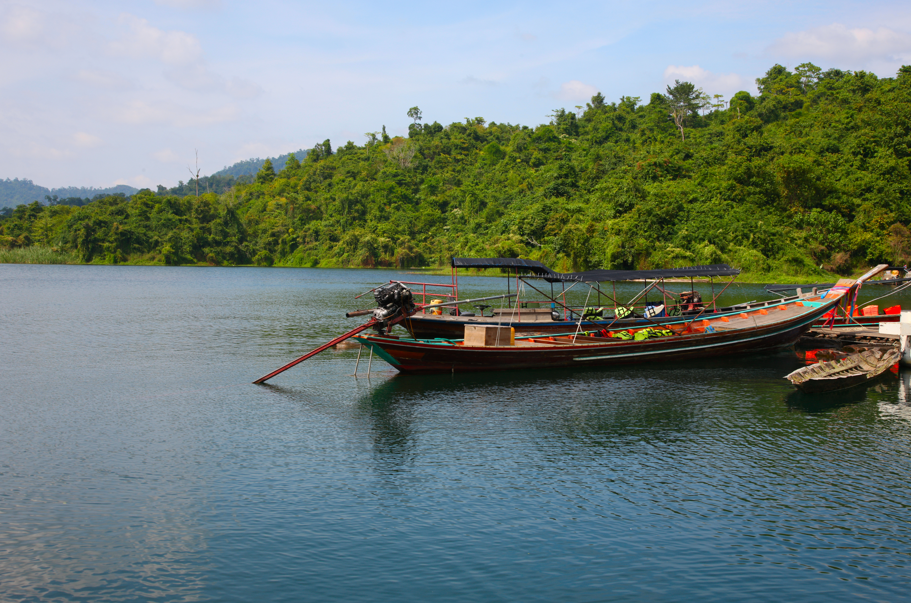
The practical question people ask about Alleppey in June is whether the houseboat experience is still good. The honest answer is yes, with some adjustments. Cooking on board continues. Canal cruises operate normally. The difference is that you spend more time on the covered deck watching the rain and less time sitting out in direct sun, which, to most people who have visited the backwaters in February and returned dehydrated and sunburned, turns out to be a significant improvement.
A private villa stay on the backwaters in June gives you something a houseboat cannot: a fixed point with a garden, a kitchen producing fresh Kerala meals, and the ability to wake up to the sound of rain on water without the slight motion sickness that some guests experience on houseboats during heavier rain.
Ayurveda: Why the Monsoon Is the Only Season That Matters
This is not a marketing angle. It is traditional medicine.
Kerala Ayurveda practitioners have recommended the monsoon months, specifically June through August, as the optimal window for Panchakarma and deep detoxification treatments for centuries. The reasoning is physiological: the humid air opens the pores, makes the skin more receptive to oil-based therapies, and the cooler temperatures reduce the body’s stress responses, allowing treatments to penetrate more effectively.
Kerala Tourism’s official programme actively promotes June to August as the peak Ayurveda season. Serious practitioners plan around it. The best clinics and retreat centres are busiest, not quietest, during these months.
| Most visitors think of Ayurveda as a nice add-on to a Kerala trip. In June, it is the reason to come. |
For a SaffronStays guest, this means that the private villa stays near the backwaters and hill estates are close to some of Kerala’s finest Ayurvedic centres. Treatments can be arranged on-site at several properties, including the WellBeingVilla in Wayanad, which is built specifically around Ayurvedic wellness in a five-bedroom ancestral home amid plantations.
Wayanad: When the Hills Finally Breathe
Wayanad in the monsoon is a different world from Wayanad in December.
The Vythiri forests turn dense and dark. Waterfalls that were dry tracks of rock in March are now roaring cascades. The tea estates around Kalpetta and Lakkidi glow in a way that photographers specifically travel for. Mornings begin in mist so thick you can barely see the valley below.

| Important: Wayanad travel advisory for June 2026 The Chooralmala and Mundakkai areas in Meppadi panchayat (Vythiri taluk) remain restricted following the July 2024 landslides. These areas are not accessible to tourists. Check Kerala State Disaster Management Authority advisories before travel, particularly for any hill-station treks in the Vythiri area. The rest of Wayanad, including Kalpetta, the tea estates, Edakkal Caves, Soochipara Falls, and Pookode Lake, is open and welcoming visitors. |
With that caveat clearly stated: Wayanad in June is genuinely magnificent for travellers who plan thoughtfully. The Cholamala waterfall, which gives its name to the SaffronStays six-bedroom waterfront pool villa on the hill, is at full volume. The private natural pond on the 12-acre property, fed by a stream, is full. The forests surrounding the estate are alive in a way that simply does not exist in the dry season.
Wayanad rewards travellers who want to be inside the landscape rather than photographing it from a viewpoint. In June, there is no better way to do that than from a private villa with a garden that has been waiting all year for the rain.
The Numbers That Make This an Easy Decision
Beyond the atmosphere and the Ayurveda, there is a straightforward financial argument for Kerala in June.
Flights to Kochi (COK), Trivandrum (TRV), and Calicut (CCJ) from Delhi, Mumbai, and Bangalore are 40 to 50 per cent cheaper in June than in December and January. Five-star resorts that charge Rs 15,000 or more per night in peak winter are available for Rs 4,000 to Rs 7,000 in June. SaffronStays villas across Alleppey and Wayanad reflect a similar pattern, with meaningfully better rates than the winter peak for the same properties.
| The same private villa on the Alleppey backwaters that costs Rs 18,000 a night in December might cost Rs 11,000 in June. The backwaters look better in the rain. You do the maths. |
This makes June particularly compelling for groups. A family of eight or ten sharing a private villa with a caretaker, backwater views, and in-villa Kerala meals gets a genuinely luxurious experience at a price that would have been impossible in peak season.
What You Are Walking Into: The Honest Version
There is no value in pretending the monsoon is entirely without inconvenience. It is worth being specific about what to expect so you can plan accordingly.
- Rain is persistent, not constant. Most days have dry windows in the morning and heavier rain in the afternoon and evening. Plan outdoor activities for mornings.
- Sea swimming is not advised. Tides are rough and beaches carry red flag advisories through most of June. The backwaters, lakes, and hill estates are the right focus.
- Some treks and outdoor activities close temporarily during heavy rain. Rafting on certain rivers does not reopen until July. Build flexibility into your itinerary.
- Leeches appear in forested and damp areas. Wear high socks and closed shoes for any plantation or forest walk. They are harmless but worth knowing about.
- Power cuts can happen during heavy rain in more remote areas. Private villa caretakers typically have generators or inverters. Worth confirming at booking.
- Roads in hill areas can be slower after heavy rain. Check the Kerala State Disaster Management Authority website before driving into highland zones.
| The travellers who love Kerala in June are those who come for the rain, not despite it. If your trip is built around the backwaters, plantation stays, Ayurveda, and the atmosphere of a landscape fully alive, June rewards you. If it is built around beach days, boat rides on open sea, or a checklist of viewpoints, wait until October. |
Getting There
Kerala has three major airports: Kochi (COK), Trivandrum (TRV), and Calicut (CCJ). For Alleppey and the backwaters, Kochi is the closest at roughly 80 kilometres or two hours by road. For Wayanad, Calicut is the more practical option at around 75 kilometres from most estate stays.
By train, the Rajdhani and express services from Mumbai and Delhi reach Ernakulam (Kochi) and Shoranur well. Trains are comfortable, scenic through the Ghats, and weather-independent, which makes them a solid choice over flying during heavy rain periods.
By road from Bangalore, Wayanad is around 280 kilometres, typically five to six hours. The drive through the Ghats is spectacular in the monsoon, with cloud cover rolling through the passes, though it requires careful driving and checking road conditions before departure.
The Right Kind of Stay Changes Everything
There is a version of a Kerala trip that involves a large resort, a shared dining hall, a pool that nobody uses because it is raining, and the general feeling of being in a building rather than in Kerala. Most chain hotels in the state, however pleasant, put a layer of hospitality infrastructure between you and the landscape.
A private villa removes that layer entirely.
On the backwaters, waking up in a SaffronStays heritage homestay in Alleppey means stepping onto a garden that touches the water. Your caretaker has already made the filter coffee. The rain is doing something interesting to the surface of the canal. There is nowhere you have to be. Breakfast can wait. The Kerala morning is doing its best work right now, and you are inside it.
In Wayanad, a private villa set in a tea estate or against a forest means the monsoon is not something happening outside your window. It is the entire environment: the smell of it, the sound of it, the way it changes the light every twenty minutes. A hotel room cannot give you that. A private estate can.

FAQ: Kerala in Monsoon
| PUBLISHING NOTE These 6 Q&As appear in the visible body of the post. The schema code below goes into the WordPress Custom HTML block or RankMath Schema tab only. Never paste schema into the post body. |
Is Kerala worth visiting in June?
Yes, for the right kind of traveller. June is Kerala’s monsoon peak: the landscapes are at their most vivid, Ayurveda retreats are at their most effective, prices are 40 to 50 per cent lower than peak winter, and the state is wonderfully uncrowded. The trade-off is persistent rain, rough sea conditions, and the need for flexibility in outdoor plans. Travellers who come for the backwaters, plantation stays, and Ayurveda find June transformative. Travellers who come for beach holidays are better off waiting until October.
When does the Kerala monsoon start in 2026?
The 2026 southwest monsoon made landfall over Kerala on 24 May, the earliest onset since 2009. By June 4, the monsoon is fully established across the state. Wayanad and Munnar received their first heavy rain within 48 hours of onset. Seasonal rainfall is forecast at 92 per cent of the Long Period Average, classified as normal.
Is Alleppey good to visit in June?
Yes. The backwaters are at their most atmospheric in June: rain-speckled, quiet, and impossibly green. Houseboat and canal cruise operations continue normally. Sea swimming is not advisable due to rough monsoon tides, but the backwater experience has nothing to do with the sea. A private villa stay on the backwaters in June is one of the most distinctive travel experiences in South India.
Is Wayanad safe to visit in June 2026?
Most of Wayanad is open and welcoming visitors. The Chooralmala and Mundakkai areas in Meppadi panchayat remain restricted following the July 2024 landslides. Before any hill-area trekking, check the Kerala State Disaster Management Authority advisories. The tea estates, Edakkal Caves, Soochipara Falls, Pookode Lake, and most estate stays are unaffected and accessible.
What is Ayurveda season in Kerala?
June to August is the traditional Karkidakam or Ayurveda season in Kerala. The monsoon humidity opens the pores and makes the body more receptive to oil-based Panchakarma therapies. Kerala Tourism and Ayurvedic physicians have promoted this period as the optimal window for deep treatments for decades. The best Ayurveda clinics and retreat centres in the state are at their most active during these months.
How much cheaper is Kerala in June vs December?
Flights to Kochi, Trivandrum, and Calicut are typically 40 to 50 per cent cheaper in June than in December and January. Five-star resorts that charge Rs 15,000 or more per night in peak winter are available for Rs 4,000 to Rs 7,000 in June. SaffronStays villa rates reflect a similar pattern, with significantly better rates for the same properties in the monsoon months compared to peak season.


