What changes in the city, where to stay, and how to get there from Gujarat, Madhya Pradesh, Mumbai, Delhi and Pune
Udaipur looks like a different city once the monsoon arrives. For most of the year, it is a place people visit for clear skies and dry heat, its lakes and white marble palaces photographed under bright winter sun. Between July and September, that picture changes. The Aravalli hills around the city turn green. The lakes rise to levels they hold for only a few months a year, and the light softens into a grey that suits old sandstone and marble better than sharp sunlight usually does.
Most travel advice still treats Rajasthan as a winter destination and skips the monsoon question entirely. That misses what makes this particular season worth planning around. Udaipur was built around its lakes, quite literally, and monsoon is really the only time of year the city looks the way it was designed to look.
Table of Content:
What Changes in Udaipur During Monsoon
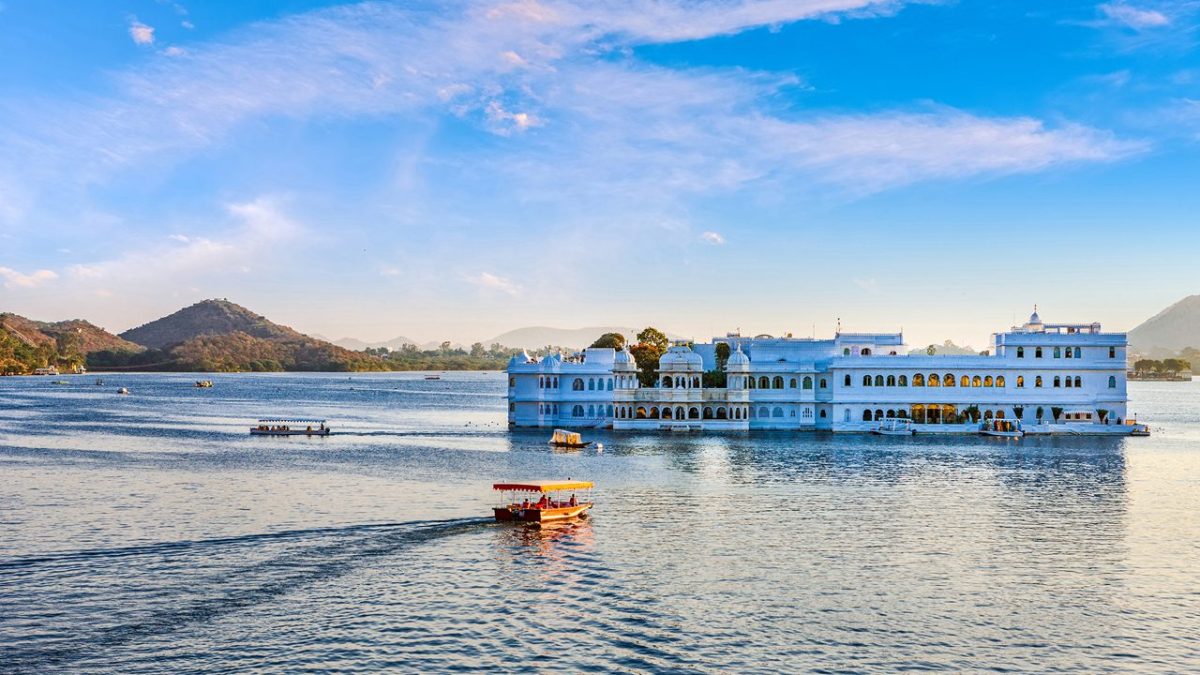
Lake Pichola existed before the city did, but Maharana Udai Singh II expanded it further when he founded Udaipur here in 1559. Every ruler after him added another lake, or another palace on an island in the middle of one, and the whole city grew up around water and reflection. For most of the year, Pichola and Fateh Sagar, the two main lakes, sit well below their full level. Monsoon changes that. Rain usually arrives through July, and by August both lakes are close to full, deep enough that the City Palace and its reflection blur into one another on a calm morning.
The weather itself is easier than most people expect. Rain tends to arrive in short bursts rather than settling in for the whole day, so mornings are often clear enough for sightseeing, with showers more likely in the afternoon or evening. Daytime temperatures run from the high 20s to low 30s in degrees Celsius, a real drop from the 40°C-plus the city sees in May and June. The crowds thin out too. Winter remains the busiest season for tourism in Udaipur, which makes monsoon the quietest and most affordable time to visit.
| Monsoon shows Udaipur the way it was actually built to look. |
Things to Do in Udaipur in Monsoon
The City Palace is worth visiting twice if there is time. Go once in the late morning, when the light is flat and even, and again closer to evening, when the marble catches whatever sun breaks through the clouds. A boat ride on Lake Pichola works better in monsoon than in any other season. The water sits high enough for the palace and surrounding hills to reflect clearly, instead of the muddy shallows visible for most of the year.

Above the city, Sajjangarh, better known as the Monsoon Palace, was built in the 1880s by Maharana Sajjan Singh specifically to watch the clouds roll in over his kingdom. The drive up passes through a wildlife sanctuary that stays thick with mist through most of the season, and on a clear break in the weather, the view from the top stretches across the whole lake basin.
In the evenings, Bagore Ki Haveli, a restored eighteenth-century mansion on the Pichola waterfront, runs a nightly Dharohar dance show, a set of Rajasthani folk performances that ends with a dancer balancing seven brass pots on her head. During monsoon, the courtyard show has rain for a soundtrack, which makes it a good deal more atmospheric than the same performance in dry summer heat.
Food is worth building time around too. A Rajasthani thali, usually a dozen small dishes built around dal, gatte and kadhi, tastes better after a morning spent outdoors in cooler air. The cafés along the lake, half-empty for most of the year, fill up just enough in monsoon to feel lively, without a wait for a table. The old city rewards slow walking as well. Hathi Pol Bazaar, close to the City Palace, is where most of the miniature paintings and Pichwai art on sale in Udaipur are actually made, not just sold.
Where to Stay in Udaipur
Where a traveller stays in Udaipur changes the kind of trip it becomes. SaffronStays Rang Havelii sits close enough to the City Palace to share a version of the same rooftop views. The haveli took a year and a half to rebuild from near-ruin. Each of its eight rooms is designed around a different Rajasthani city’s craft tradition: Molela wall art from a village near Chittorgarh, marble from Makrana, sandstone floors from Dholpur. The rooftop pool looks out at the City Palace on one side and the Karni Mata hills on the other.

Pristine Manor takes a quieter approach. It sits between two lakes, a few hundred metres from Fateh Sagar, with a ten-thousand-square-foot garden that turns fully green by August, room enough for a large family or a pre-wedding function without feeling crowded. Kilakot, also near Fateh Sagar, is built around the same idea: slow mornings, open living, no fixed itinerary.
Between the three, most of what a traveller wants from Udaipur is covered: proximity to the palaces for anyone here to look at architecture, and enough distance from the noise for anyone here mainly to slow down. We have written a full lake-by-lake, café-by-café guide to Udaipur’s monsoon season separately, for anyone planning to spend a full week in the city rather than a long weekend.
Hariyali Teej Falls in August This Year

August adds one more reason to plan around this season. Hariyali Teej, Rajasthan’s main monsoon festival, falls on 15 August this year. It marks the reunion of Shiva and Parvati, and the name roughly translates to green festival. For one day, women dress in green, apply fresh henna, and hang swings from trees and courtyard beams. Rajasthan calls it Shingara Teej locally, and it is celebrated more visibly here, with processions and decorated swings in courtyards and temples, than in most of the other states that also mark the day. It is not something a trip needs to be built around, but arriving during Teej week adds a genuine layer to a Udaipur visit that a dry-season trip does not offer.
Mount Abu: A Short Detour for Drivers
For anyone driving in from Gujarat, and often Madhya Pradesh too, Mount Abu makes a natural stop before or after Udaipur. It is Rajasthan’s only hill station, and the monsoon contrast is dramatic. While the rest of the state sits above 40°C in July, Mount Abu settles into the low twenties, with cloud low enough to touch the hills around Nakki Lake. The Dilwara Temples, a set of 11th and 13th century Jain temples known for their fine marble carving, are worth the climb in any season, but rain does nothing to them except clean the stone.
| Rain does nothing to the temples except clean the stone. |
SaffronStays Sylvan Farms sits on a hilltop above the town, its gardens and small working farms turning green through the season. Mount Abu to Udaipur is about 160 km, a three-hour drive through hills that turn from brown to green within a few weeks each year.
Getting to Udaipur
For Gujarat, Udaipur is close enough to be a proper weekend trip rather than a full holiday. Ahmedabad to Udaipur is about 260 km by road, a drive of 4.5 to 5 hours via NH48, and it is a route Ahmedabad already knows well, usually for weddings in the winter months. Vadodara and Surat add roughly one to two hours to the drive but follow largely the same road through Mehsana and Palanpur. Driving remains far more common than flying on this route, since the highway is faster door to door than the airport connections from Ahmedabad. Travellers routing through Mount Abu, Rajasthan’s only hill station and already a popular stop for Gujarat travellers, should plan for a full day of driving, with the hill station as a stop along the way rather than a separate detour.
From elsewhere in India, flying is usually the more practical option. Madhya Pradesh is the exception: Indore to Udaipur is about 390 km, roughly 5.5 to 6 hours by road, similar to the Gujarat drive, or under an hour and a half by direct flight. Delhi and Mumbai both have several direct flights to Udaipur a day, each taking around 1.5 hours, a shorter trip than the 10 to 13 hour drive from Delhi or the 750 km-plus drive from Mumbai. Pune has fewer direct options, with most flights connecting through Delhi, Mumbai or Ahmedabad and total travel time running 5.5 to 9 hours depending on the layover. Trains cover all of these routes too, but at 11 hours or more, they suit travellers who prefer an overnight journey over a short flight.
| Planning the Trip Monsoon runs July through September in Udaipur and the surrounding region. Rain tends to arrive in short spells rather than lasting all day, so most mornings stay clear enough for sightseeing. Daytime temperatures: high 20s to low 30s (°C) in Udaipur, low-to-mid 20s in Mount Abu, both a real break from the 40°C-plus both places see in peak summer. Ahmedabad to Udaipur: ~260 km, 4.5 to 5 hours by road. Indore to Udaipur: ~390 km, 5.5 to 6 hours by road. Delhi and Mumbai to Udaipur: ~1.5 hours by direct flight. Pack light layers for daytime humidity, something warmer for Mount Abu evenings if that is part of the trip, and a proper rain layer rather than a travel umbrella. |
None of this needs much planning. A long weekend covers Udaipur comfortably on its own. Four or five days allow time for Mount Abu too, for anyone driving in from Gujarat or Madhya Pradesh. A private villa suits this season particularly well, since rain becomes part of a slow day rather than an interruption to a packed one. What changes most about a monsoon trip to Udaipur is not the itinerary but the season most people skip entirely. Winter shows the city at its clearest. Monsoon shows it the way it was actually built to look: lakes full, marble catching grey light instead of hard sun, and considerably fewer crowds in between.
| Plan Your Monsoon Trip to Udaipur Explore SaffronStays villas in Udaipur and Mount Abu, from lakeside heritage havelis to hilltop farm retreats. |
FAQ: Udaipur in Monsoon
Is Udaipur worth visiting in the monsoon, or is winter really the better season?
Winter remains the most comfortable season for sightseeing, but monsoon is when Udaipur’s lakes, Pichola and Fateh Sagar especially, fill closest to the level they were originally built for, and the city empties of winter crowds.
Is Udaipur a good weekend trip from Ahmedabad?
Yes. At around 260 km and 4.5 to 5 hours by road, Udaipur is one of the easiest weekend drives out of Ahmedabad, Vadodara or Surat, and it is a route Gujarat travellers already make often for weddings and family functions.
How do I reach Udaipur from Mumbai or Delhi?
Both cities have frequent direct flights to Udaipur, taking around 1.5 hours. Trains run too, but take 11 hours or more, so flying is the practical option for a short trip.
Is Indore a good starting point for a Udaipur trip?
Yes. Indore to Udaipur is about 390 km, roughly 5.5 to 6 hours by road, similar in length to the drive from Ahmedabad, and there are also direct flights under an hour and a half.
Can Mount Abu be combined with a Udaipur trip from Gujarat?
Yes, easily. Mount Abu and Udaipur are about 160 km and 3 hours apart, and it is a common route for Gujarat travellers driving in via Ahmedabad.
What is Hariyali Teej, and does it affect travel plans?
Hariyali Teej is Rajasthan’s main monsoon festival, marking the reunion of Shiva and Parvati with green clothing, henna, and decorated swings. In 2026 it falls on 15 August. It does not close attractions, but it brings extra colour and local celebration that week.