5 Reasons Why Startups Should Invest in Offsite Retreats

Building a startup isn’t just about hitting product milestones or closing your next round of funding. It’s about people, a small, determined group solving problems together at breakneck speed. But when Slack messages replace real conversations and Zoom calls start to feel like a never-ending loop, even the sharpest teams lose their edge.

That’s where offsite retreats come in. Far from being a luxury, they’re becoming a strategic tool for ambitious companies. In fact, a Harvard Business Review survey found that teams that periodically meet in person report up to 30% higher productivity and stronger collaboration than those that don’t. For startups racing to scale, that edge is everything.

So why should your next leadership meet, strategy sprint, or team reset happen away from the office or a co-working space? Let’s break it down.

1. Step out of the noise to think clearly

A group of six people engaged in conversation and relaxation by a swimming pool at a villa, with lounge chairs and sunny outdoor setting.

Startups live in high-alert mode. New features, investor calls, hiring fires, it’s endless. Taking your team away from that cycle, even for two days, gives everyone room to breathe. In quiet spaces surrounded by nature, strategy conversations feel different. People stop reacting and start reflecting.

Picture this: a 10-member product team gathered in the courtyard of a heritage villa in Alibaug. Morning sunlight filters through old banyan trees. The phones are down, the coffee is hot, and for the first time in weeks, everyone is looking at the big picture, not just the Jira board.

Now imagine swapping the coast for the hills, a leadership team reviewing OKRs at a colonial estate in Mussoorie, with panoramic views of the Doon Valley. A change of scenery doesn’t just refresh minds, it sharpens decisions.

2. Build real connections, not just LinkedIn endorsements

A group of six people enjoying an outdoor gathering on a stone-walled terrace, surrounded by greenery, with a heritage villa in the background.

Culture isn’t built on “fun Fridays” or virtual ice-breakers. It’s built when people laugh over dinner, argue over ideas, and discover who’s secretly unbeatable at foosball. Offsites humanize colleagues, turning co-workers into allies.

At SaffronStays’ private villas, teams get exclusive spaces, no shared lobbies, no strangers at the next table. Whether it’s late-night brainstorming around a bonfire in Karjat, an impromptu jam session by the Ganga in Rishikesh, or early-morning hikes in Lonavala, these unplanned moments forge trust faster than any corporate workshop ever could.

3. Solve harder problems faster

A group of five individuals engaging in a friendly foosball game while two others play cards in a stylish, well-lit indoor space with large windows overlooking greenery.

A well-designed offsite isn’t a vacation. It’s a high-focus environment disguised as a getaway. Without the usual office distractions, decisions that drag for weeks can get made in hours.

Many startups host sprint sessions at SaffronStays villas: Wi-Fi strong enough for live demos, boardrooms that double as living rooms, and large open decks where ideas flow as freely as the evening chai.

Think about planning product roadmaps in a Jaipur haveli courtyard or debating market-entry strategies in a Dehradun forest villa. These spaces encourage sharper, more creative thinking because they pull teams out of routine environments.

4. Recharge to avoid burnout

A person practicing yoga in a serene outdoor setting near a lake, with mountains visible in the background and a peaceful sunset casting warm light.

Let’s be honest, no one does their best work running on four hours of sleep and instant noodles. Retreats give teams the mental reset they didn’t know they needed. Good sleep, fresh air, and unstructured time aren’t “nice to haves.” They’re what keep people from quitting.

Imagine your core team waking up to misty hills in Panchgani, or the crisp mountain air of Rishikesh, sharing breakfast on a long verandah, then diving into planning sessions refreshed instead of running on fumes. That renewed energy shows up in the work long after the trip ends.

5. Attract and retain top talent

A group of young adults engaged in a playful activity in a cozy living room, featuring a card game on a low table with colorful cushions and a ping pong table in the background.

For young companies, offsites are more than perks, they’re proof of culture. People talk about them. Candidates notice them. When your startup consistently invests in meaningful team experiences, it signals that you value people, not just productivity.

SaffronStays villas make these experiences effortless. Locations within driving distance of Mumbai, Pune, Bangalore, Jaipur, or Dehradun mean no wasted travel time. Homes come fully serviced, private chefs, housekeepers, etc ensure you focus on your agenda, not logistics. Whether it’s a sea-facing home in Alibaug, a heritage bungalow in Coonoor, or a hilltop villa near Mussoorie, each property gives your team privacy, comfort, and the “wow” factor that makes people say, “We belong here!”

Why SaffronStays is the go-to for startup offsites

Over the past year, dozens of early-stage and Series A startups have hosted corporate retreats at SaffronStays properties. They choose these villas because they combine work-friendly infrastructure with spaces that feel deeply personal:

  • Strong Wi-Fi and power backup for seamless working sessions
  • Large living areas and private decks for breakout meetings
  • Curated meals by in-house chefs that fuel long discussions
  • Locations within drivable distance from all major cities, saving precious time

Instead of bland hotel halls, you get an entire villa to yourself. Teams walk barefoot on grass between sessions, brainstorm on sunny terraces, and end the day around shared tables instead of room service trays.

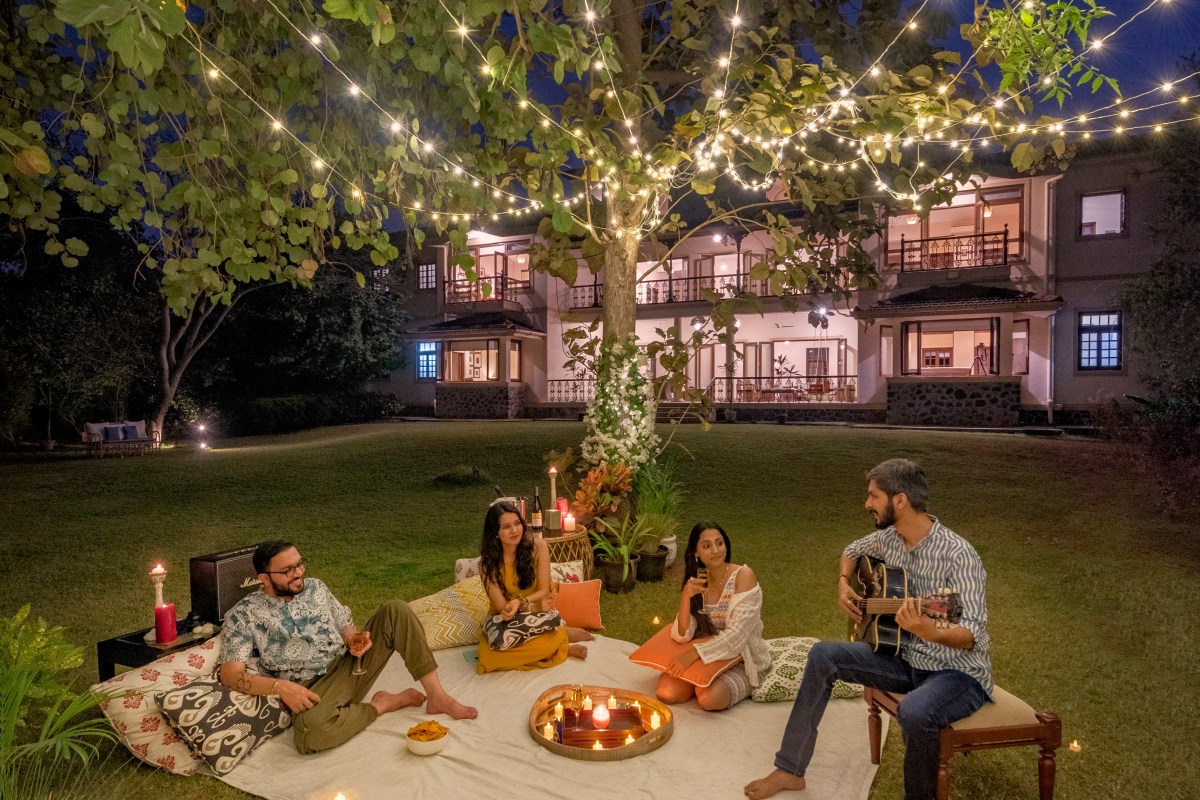
A group of four people enjoying a cozy evening in a garden, with soft lighting and a guitar, engaged in conversation and laughter.

The takeaway

Offsites are an investment in sharper thinking, stronger bonds, and a culture that can weather the chaos of startup life. When the setting itself helps your team focus, connect, and recharge, that’s when the magic happens.

Your next strategy sprint, leadership meet, or team reset deserves more than another conference room. It deserves a place that feels like your own, and that’s exactly what SaffronStays villas offer.
Swallow’s Nest: A Luxury Family Villa by Pawna Lake That Feels Like Home

Some places you find by planning. Others find you by chance. In 2007, while exploring the hills of Pawna, a family came across a piece of land framed by the Sahyadris and overlooking a serene lake. It wasn’t just scenic; it felt like somewhere they already belonged.

Years later, that feeling turned into something real. As a 70th birthday gift for the family’s patriarch, the dream became a home, built with care not to impress but to bring people together. They called it SaffronStays Swallow’s Nest, after the birds that return here each year, symbols of good luck and the warmth of coming home.

A beautiful view from a villa overlooking a serene lake and mountains, with a dining table set for breakfast, surrounded by lush greenery and a swimming pool.

A villa shaped by nature

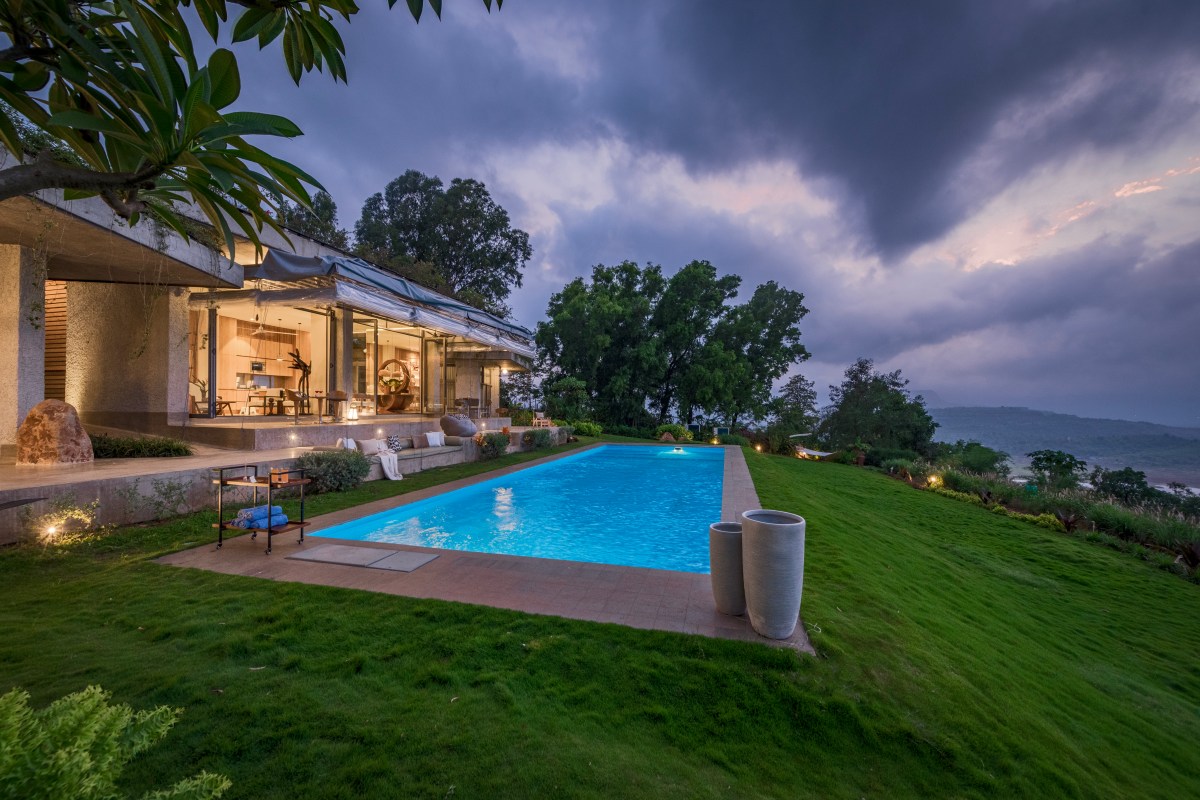
Just 2.5 hours from Mumbai, this five-bedroom family villa near Pawna Lake is designed to blend seamlessly with its surroundings. Rather than one big block of rooms, the villa is made up of four interconnected sections, each filled with natural light and fresh air. Built around a magnificent fig tree, the home feels open yet intimate, with plenty of space for family and friends to gather.

Two wings house the bedrooms, with one featuring playful trundle beds for children. The heart of the home is an open living, dining, and kitchen space that invites slow mornings and shared meals. Even in the height of summer, the design keeps the villa cool and airy.

A stunning view of Pawna Lake from the terrace of Swallow's Nest villa, featuring a lush green lawn, comfortable seating, and a serene backdrop of hills under a cloudy sky.

A retreat where simple pleasures shine

Swallow’s Nest is peaceful without being still. The outdoors are part of the experience, from planned barbecue evenings and bonfires to a unique slide that is just as fun for adults as it is for kids. In the monsoon, the property lights up with fireflies, turning evenings into something quietly magical.

Walk around and you will hear the swallows that gave the home its name. Sit still and you will notice how the lake and mountains change through the day. Stay long enough and you might forget how close you are to Mumbai.

A modern five-bedroom villa named Swallow's Nest, designed to blend with nature, featuring interconnected sections, a slide, and landscaped greenery near Pawna Lake.

More than a weekend away

SaffronStays Swallow’s Nest is not just a luxury villa near Pawna Lake. It is a home designed for families who want space, privacy, and a deeper connection with nature. Whether you are here for a quiet break, to explore nearby trekking trails, or simply to spend uninterrupted time together, it is the kind of place you will want to return to, just like the swallows do.

Inside SaffronStays The Divine Hima – A Himalayan Retreat in Dharamshala

Life shaped by Earth

With a life dedicated to exploring the planet’s hidden layers, it was only natural that pieces of it would come home with him. A geologist by trade, each stone, driftwood fragment, and photograph was chosen with reverence, gathered from years of exploration. More than data, he gathered meaning. Nature stirred something deeper within him: a penchant for words, for perfect frames, for flavor, all through which he rediscovered himself. Over time, his home became a museum of his evolving identity, consumed from floor to ceiling by his photographs, rocks, written poems, and recipes. But as the years passed, one question begged for an answer: what should he do with all these memories?

Born of the earth and shaped by memory, The Divine Hima is a Himalayan sanctuary built to honor the land it rests upon. Here, stone, wood, and story converge to create a space ingrained in terrain and tradition.

A cozy and decorative indoor space featuring natural elements, artwork, and plants, with comfortable seating and warm lighting.

An exhibition of stories

Built with intention and rooted in sustainability, The Divine Hima is more than an inn— it’s a vessel of memory and meaning, evoking a sense of deep peace and security, named for the Sanskrit word for snow. Local stone, reclaimed wood, and earthen tones ground the space in its Himalayan surroundings. Every room is made in an original, idealized design: furniture expertly crafted to his specifications, natural artifacts embedded into the design, and his photography displayed like visual poems along the walls, a love story to his career and the surrounding nature. 

The layout reflects logical flow. From cozy private rooms to open communal spaces, a restaurant and bar that invite connection, and a mezzanine library, the inn has a space for everyone. A private dining room hosts shared meals and deep conversations. Even the annex, styled after Swiss chalets, whispers of ambitious alpine adventures.

A cozy and inviting room at The Divine Hima featuring a wooden bed with an orange accent, surrounded by natural wood walls, large windows, and warm lighting. A chess set is on a wooden table alongside two coffee cups.

A Menu That Maps Terrain

A personally designed menu is yours for tasting, infused with memories and flavors of the forests of India. From wood-fired pizzas and pahadi (mountain) delicacies to barbecue, the food is both nourishing and nostalgic.

Even the pickles are homemade, exotic, sharp, and unforgettable, like preserved fragments of time, offered to guests who wish to taste the journey, accompanied by descriptions of their creations.

A pizza is placed on a metal peel, ready to be inserted into a wood-fired oven, with flames and smoke visible in the background.

A Himalayan Sanctuary

The Divine Hima is a spiritual sanctuary in Dharamshala, Sanskrit for shelter, where Tibetan society finds space to flourish, echoing whispers amongst cedar forests, and framed by Himalayan peaks. Mornings begin with soft light filtering through windows. The hum of sitar melodies dances through cozy library lounges while the fireplaces crackle to life with the first touch of chill.

Terraces open to mist-wrapped valleys and sunrise views. Vines crawl across walls and ceilings like nature reclaiming its canvas. By nightfall, gentle lights glow like fireflies, cool mist cloaks the landscape, and the sound of water flowing into a fishpond soothes the senses as stars glow above.

A serene garden pathway surrounded by lush greenery, potted plants, and wooden structures, creating a peaceful outdoor space at The Divine Hima.

A Lasting Memory

Peaceful, restorative, and deeply personal, SaffronStays The Divine Hima is more than a place to stay— it’s the embodiment of one man’s self-discovery through his career and his art. The property as a whole is an unspoken invitation to look closer and find your reflection in the stillness of nature.

Entrance to The Divine Hima, featuring illuminated signage, banners, and a cozy atmosphere at night.

Handloom Shopping in Himachal & Uttarakhand: A Traveller’s Guide + Stays Nearby

If you’re heading to the mountains for your next holiday, don’t just pack warm clothes, make space in your bag for treasures you’ll find along the way. Himachal Pradesh and Uttarakhand are handloom shopping paradises, offering woolens, shawls, and handicrafts that are as much a part of the landscape as the pine forests and snow peaks.

This isn’t just shopping;  it’s bringing home the mountains.

Why Buy Handlooms in the Himalayas?

Buying from local artisans keeps centuries-old weaving traditions alive, supports families in remote villages, and gives you a piece of the hills that lasts far beyond your trip. Whether it’s a Kullu shawl, a Bhotia carpet, or an Aipan-printed runner, every item carries a story.

Close-up of a person's hands weaving colorful threads on a loom, showcasing traditional craftsmanship.

What to Buy in Himachal Pradesh

Kullu Woollens – No trip to Himachal is complete without a Kullu shawl. Woven from fine merino or angora wool, these shawls are known for their earthy base colours and bright geometric borders. Head to Akhara Bazaar in Kullu town or visit Bhuttico outlets, a co-operative that ensures fair pay for weavers. For authenticity, look for the GI (Geographical Indication) tag stitched into the fabric..
Stay nearby: SaffronStays Monarch Manor, Shimla — a colonial estate with easy access to shopping streets.

Exterior view of a beautifully designed villa at dusk, surrounded by lush greenery and mountains, featuring warm lighting and landscaped gardens.

Kinnauri Shawls – If you’re travelling towards Reckong Peo or Sangla, keep an eye out for Kinnauri shawls. These are heavier and more intricate than Kullu shawls, often taking months to weave. Their elaborate borders are inspired by Buddhist symbols and local mythology. Best places to buy include local co-operatives in Kinnaur or craft shops in Shimla’s Lakkar Bazaar.

Chamba Rumals –These aren’t your typical embroidered cloths. Chamba rumals are hand-embroidered square fabrics once used in royal dowries. The double-sided stitch means the front and back look identical, a skill passed down for generations. You can find authentic pieces at Himachal Emporium in Chamba or Shimla.
 

Himachali Caps (Kullu & Kinnauri) = The Himachali cap is as much a part of the culture as the mountains themselves. In Kullu, you’ll see them in deep greens and maroons, while in Kinnaur, the caps have distinctive patterned bands. They make for easy-to-pack gifts, available widely in Mall Road, Manali and Kullu town markets.
Stay nearby: SaffronStays The Elements, Kullu, serene forest views after a day of exploring.

Scenic view of a house with a red triangular roof surrounded by greenery and mountains in the background.

What to Buy in Uttarakhand


From Pahadi woolens and warm blankets to intricate Ringaal bamboo crafts, explore markets in Dehradun, Almora, and Nainital that keep the region’s heritage alive through every weave and carve.

Pashulok & Ramnagar Woollens
Uttarakhand’s winters inspire some of the coziest hand-knitted sweaters, stoles, and socks. In Ramnagar and Pashulok (near Rishikesh), women’s self-help groups sell handwoven shawls and scarves made of sheep and angora wool. The designs are simple, but the quality is exceptional.
Stay nearby: SaffronStays Timber Quest, Dehradun,  a boutique wood cabin set in nature.

Cozy wooden interior of a circular bedroom with large windows and a view of greenery, featuring a bed with a light-colored quilt, a small table with drinks, and decorative curtains.

Kumaoni & Garhwali Weaves
Look for Pithoragarh and Bageshwar-made woollens, light but incredibly warm. Pashmina might not be native here, but you’ll find soft, pure wool wraps woven in traditional stripes and checks. The Pahadi Topi (local wool cap) is also a great buy from these regions.

Stay nearby: SaffronStays Timber Quest, Dehradun — greenery and artisan markets within minutes.

View of a charming villa with flower beds and potted plants in a well-maintained garden, set against a backdrop of lush greenery and a colorful sunset.

 SaffronStays The Woods, Dehradun— close to both lakes and local markets.

Aipan Work
Aipan is not a textile but a folk art form often seen on fabrics like stoles, cushion covers, and table runners. Originating from the Kumaon region, it uses red fabric and white patterns drawn with rice paste. You’ll find these in Almora markets and Dehradun’s Paltan Bazaar.

Bhotia Carpets & Rugs
In Munsiyari and Dharchula, the Bhotia tribe weaves thick wool carpets called dan in bold geometric patterns. These are made from pure sheep wool and dyed with natural colors. They’re warm, durable, and completely handwoven, a perfect keepsake for your home.

A modern villa with a swimming pool, surrounded by lush greenery and trees, illuminated at twilight.

Stay nearby: SaffronStays Varenya villa, Dehradun,  perfect for relaxing after market days.

Insider Tips for Buying Authentic Handlooms

  • Always check for a GI tag or artisan co-operative label.
  • Choose local co-operatives over tourist souvenir shops — they pay artisans fairly.
  • Bargain gently, but respect the craftsmanship and time involved.
  • Visit weaving centers where you can watch artisans at work — it makes the souvenir even more meaningful.

A close-up of a person's hand applying red dye to a decorative fabric featuring intricate patterns and designs.

Wrap Up Your Trip in Style

The best way to end a day of shopping in Himachal or Uttarakhand? Relaxing in a SaffronStays villa nearby. With handcrafted interiors, mountain views, and local flavours on your plate, it’s the perfect complement to the treasures in your shopping bag.

From a Kullu shawl that keeps you warm on snowy evenings to a Bhotia rug that brightens your home, each purchase carries the soul of the Himalayas. And when paired with a stay that’s just as rooted in the region, you’re not just travelling — you’re living the hills.

Malvani Cuisine Near Goa: A Flavour Trail for Foodies at Araqila

If you are planning a trip to Goa, you don’t have to limit yourself to beaches and shacks. Just 45 minutes from Goa’s Mopa Airport, the Sindhudurg coast offers a quieter, more authentic side of the Konkan region. It is here that you can experience Malvani cuisine in its most traditional form.

At the heart of this food journey is Araqila, a modern-day fortress overlooking the Arabian Sea. More than a place to stay, it is a destination for food lovers who want to taste and learn the flavours of Malvani food near Goa.

From Goa’s Mopa Airport to Araqila in Sindhudurg

Reaching Araqila is simple. From Mopa Airport, it’s a 33 km drive through scenic coastal roads. You will pass small villages, coconut groves, and glimpses of the Arabian Sea. The closer you get, the more you leave Goa’s busy tourist areas behind.

Araqila is ideally located for travellers who want to combine a Goa holiday with a Konkan food trail. Its setting in Aravali, Sindhudurg makes it a perfect base for exploring both Malvani cuisine and the region’s historic landmarks.

What is Malvani Cuisine?

Malvani cuisine comes from the Sindhudurg district and nearby parts of Goa and Karnataka. Known for its rich coconut-based gravies, tangy kokum, and a unique blend of spices called Malvani masala, it is one of India’s most distinctive coastal cuisines.

Popular Malvani dishes you can try include:

  • Kombdi Vade – spiced chicken curry with fluffy fried bread
  • Bombil Fry – Bombay duck fish coated with spices and semolina
  • Mutton Sukka – slow-cooked mutton with roasted spices
  • Fish Curry – fresh catch simmered in coconut and spices
  • Solkadhi – cooling kokum and coconut milk drink

Vegetarian favourites include Dhondas (sweet cucumber cake), Ghavan (rice pancakes), and Phanasachi Bhaji (jackfruit curry).

Dining on Malvani Food at Araqila

A beautifully presented dish featuring grilled Malvani-style fish, garnished with a slice of lime, green chutney, and fresh vegetables.

At Araqila, meals are made with seasonal, locally sourced ingredients. The menu changes daily based on the morning’s catch and what is fresh from local farms. Many dishes are prepared in earthen pots, and the Malvani masala is ground fresh each day.

Guests can enjoy:

  • Fresh seafood in authentic Malvani style
  • Bhakris made from rice or nachni flour
  • Local vegetables cooked with traditional techniques
  • Freshly prepared Solkadhi

Every meal reflects the flavours of the Sindhudurg coast and the slow, careful way of cooking that defines Malvani cuisine.

Learn Malvani Cooking in Sindhudurg

One of Araqila’s most popular experiences is its Malvani cooking class. Here, guests can learn how to prepare traditional dishes with guidance from a local chef.

A chef cooking in a modern kitchen, stirring a pan with flames rising from it.

The class covers:

  • Toasting and grinding Malvani masala
  • Cooking seafood and vegetarian dishes
  • Understanding traditional Konkan cooking techniques

It’s a hands-on way to connect with the region’s culture and take a piece of the Konkan home with you.

Things to Do Near Araqila in Sindhudurg

A visit to Araqila is about more than food. Nearby attractions include:

  • Sindhudurg Fort built by Chhatrapati Shivaji Maharaj
  • Vijaydurg Fort, one of the oldest forts in Konkan
  • Sawantwadi Palace for royal history and local crafts
  • Tarkarli Beach and Bhogwe Beach for peaceful coastal views
  • Malvan Marine Sanctuary for snorkeling and diving

Why Add Araqila to Your Goa Itinerary

If you are flying into Mopa Airport for a Goa trip, a short drive to Araqila gives you:

  • Authentic Malvani food near Goa
  • A chance to learn regional cooking
  • Access to quiet beaches and nature trails
  • Cultural and historical sightseeing in Sindhudurg

It is an easy addition to your Goa holiday that offers something different and memorable.

Malvani Cuisine Near Goa: A Flavour Trail for Foodies at Araqila

If you are planning a trip to Goa, you don’t have to limit yourself to beaches and shacks. Just 45 minutes from Goa’s Mopa Airport, the Sindhudurg coast offers a quieter, more authentic side of the Konkan region. It is here that you can experience Malvani cuisine in its most traditional form.

At the heart of this food journey is Araqila, a modern-day fortress overlooking the Arabian Sea. More than a place to stay, it is a destination for food lovers who want to taste and learn the flavours of Malvani food near Goa.

A beautiful outdoor dining setup at sunset, featuring a table with various dishes and drinks, overlooking the Arabian Sea.

From Goa’s Mopa Airport to Araqila in Sindhudurg

Reaching Araqila is simple. From Mopa Airport, it’s a 33 km drive through scenic coastal roads. You will pass small villages, coconut groves, and glimpses of the Arabian Sea. The closer you get, the more you leave Goa’s busy tourist areas behind.

Araqila is ideally located for travellers who want to combine a Goa holiday with a Konkan food trail. Its setting in Aravali, Sindhudurg makes it a perfect base for exploring both Malvani cuisine and the region’s historic landmarks.

What is Malvani Cuisine?

Malvani cuisine comes from the Sindhudurg district and nearby parts of Goa and Karnataka. Known for its rich coconut-based gravies, tangy kokum, and a unique blend of spices called Malvani masala, it is one of India’s most distinctive coastal cuisines.

Popular Malvani dishes you can try include:

  • Kombdi Vade – spiced chicken curry with fluffy fried bread
  • Bombil Fry – Bombay duck fish coated with spices and semolina
  • Mutton Sukka – slow-cooked mutton with roasted spices
  • Fish Curry – fresh catch simmered in coconut and spices
  • Solkadhi – cooling kokum and coconut milk drink

Vegetarian favourites include Dhondas (sweet cucumber cake), Ghavan (rice pancakes), and Phanasachi Bhaji (jackfruit curry).

A selection of beautifully arranged Malvani dishes displayed outdoors near the sea, featuring fresh seafood and traditional local ingredients, with vibrant colors and garnishes.

Dining on Malvani Food at Araqila

At Araqila, meals are made with seasonal, locally sourced ingredients. The menu changes daily based on the morning’s catch and what is fresh from local farms. Many dishes are prepared in earthen pots, and the Malvani masala is ground fresh each day.

Guests can enjoy:

  • Fresh seafood in authentic Malvani style
  • Bhakris made from rice or nachni flour
  • Local vegetables cooked with traditional techniques
  • Freshly prepared Solkadhi

Every meal reflects the flavours of the Sindhudurg coast and the slow, careful way of cooking that defines Malvani cuisine.

Learn Malvani Cooking in Sindhudurg

One of Araqila’s most popular experiences is its Malvani cooking class. Here, guests can learn how to prepare traditional dishes with guidance from a local chef.

The class covers:

  • Toasting and grinding Malvani masala
  • Cooking seafood and vegetarian dishes
  • Understanding traditional Konkan cooking techniques

It’s a hands-on way to connect with the region’s culture and take a piece of the Konkan home with you.

Things to Do Near Araqila in Sindhudurg

A visit to Araqila is about more than food. Nearby attractions include:

  • Sindhudurg Fort built by Chhatrapati Shivaji Maharaj
  • Vijaydurg Fort, one of the oldest forts in Konkan
  • Sawantwadi Palace for royal history and local crafts
  • Tarkarli Beach and Bhogwe Beach for peaceful coastal views
  • Malvan Marine Sanctuary for snorkeling and diving

Why Add Araqila to Your Goa Itinerary

If you are flying into Mopa Airport for a Goa trip, a short drive to Araqila gives you:

  • Authentic Malvani food near Goa
  • A chance to learn regional cooking
  • Access to quiet beaches and nature trails
  • Cultural and historical sightseeing in Sindhudurg

It is an easy addition to your Goa holiday that offers something different and memorable.

Discover Rang Havelii: Transforming Ruins into Art

From Ruins to Rang Havelii

When Rashmi Vaishnav stumbled upon a house in shambles a few steps away from the iconic Udaipur City Palace, she knew she had truly found a diamond in the rough. She had the idea that the property could become more than just a home, a place that truly celebrates where it is located. One and a half years later, the home was turned into a cozy exhibit of Rajasthani art and culture and came to be known as Rang Havelii, eponymously named after the kaleidoscopic rooms it hosts.

Unique art and persevering craftsmanship

In SaffronStays Rang Havelii, each bedroom is designed with an artistic eye—one that pays tribute to the major cultural cities of Rajasthan. Every detail, from architecture to décor, reflects this vision. The eight rooms have been meticulously designed around specific Rajasthani art forms and themes. From the deep royal blue room showcasing intricate Thikri (glass inlay) work referencing Jodhpur, crafted by master artisans over four months, to the green Pichwai room with storytelling murals of Krishna from Nathdwara, each space narrates its tale.

You’ll find regional arts like Phad, Molela, Mother-of-Pearl inlay, and more, woven into the very fabric of the Havelii. Even the furniture (chairs, almirahs, side tables) has been custom-made to complement each room’s character. Bathroom tiles and doors are also color-coordinated, with Rashmi sourcing precise shades over months of travel and even multiple visits to tile factories in Morbi, Gujarat. This was never just about renovating a house; it was about creating an immersive, authentic expression of Rajasthan’s artistic soul.

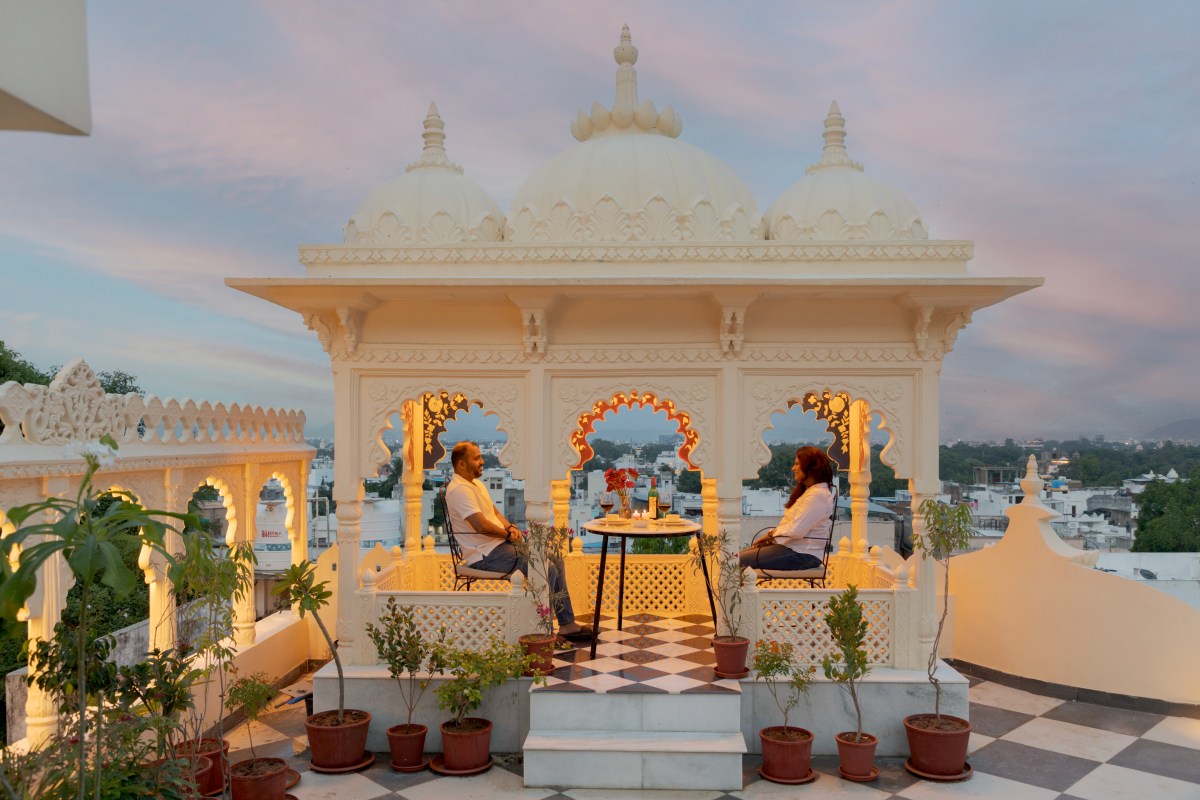
A stunning view of Rang Havelii in Udaipur during sunset, showcasing its intricate Rajasthani architecture with domes, ornamental details, and vibrant windows.

The artistic journey doesn’t stop in the bedrooms. The veranda features Molela wall art, crafted by artisans from a village near Chittorgarh, where 80% of the local community practices this age-old tradition. From Makrana marble seating to Dholpur stone flooring, every material used has been consciously sourced from within Rajasthan. One special wall in the veranda brings together Udaipur’s iconic landmarks—City Palace, Lake Palace, Jagmandir, Fateh Sagar, and more—designed as both a tribute and an idyllic photographic memory for guests.

Heart of the city

The rooftop terrace is where the magic culminates. Offering panoramic views—with the City Palace on one side, Karni Mata hills on the other, and the city skyline all around—it’s a breathtaking space to unwind. There’s a small swimming pool, loungers, and custom-built bajot-style floor seating, perfect for candlelit Rajasthani thali dinners under the stars. The terrace can be set up for special occasions or just soulful evenings, and it is also available for on-demand folk performances, from traditional Sarangi players to lively Kalbelia dancers.

Designed by hearts

Rang Havelii was not designed by an architect or decorated by an interior designer. It was entirely visualized and executed by the homeowners themselves. As proud locals of Rajasthan, they wanted to pour their love for the region into every detail. Except for technical consultation on the pool and staircase, every decision—every color, pattern, tile, and piece of furniture—was made with heart, vision, and intention. The goal was never to build just another boutique stay, but to revive endangered art forms, preserve tradition, and offer a soulful slice of Rajasthan.

Preserving culture

Many of the art forms showcased here, like Kavad storytelling boxes and Phad scrolls, are at risk of fading into history. Rashmi made it her mission to work with national-award-winning artisans, source rare artwork from limited-edition books, and give these traditions a new canvas within Rang Havelii. She hopes that guests leave not just rested, but inspired by the craftsmanship, touched by the stories, and deeply connected to the land.

If a guest says, “We didn’t want to leave,” she knows she has succeeded.

A true homecoming

Guests don’t just check into a room. They walk into a story and are welcomed like family. Whether it’s arranging transport, planning bonfires or projector nights, or surprising someone with a candlelight dinner, the caretakers go above and beyond to make every guest feel special.

As Rashmi says, it’s not about commercial gain. It’s about offering an experience that lingers—something that spoils guests with sincerity and soul.

A Living Canvas of Rajasthan

Aerial view of Udaipur showcasing the City Palace, Lake Pichola, and surrounding hills, under a cloudy sky.

SaffronStays Rang Havelii is a rare gem nestled in the heart of Udaipur’s white-marble cityscape. It is a tribute to the colors, craft, and cultural legacy of Rajasthan, designed to preserve, celebrate, and pass on. More than a place to stay, it’s a place to remember.

Religious Tourism in Uttarakhand: A Travel Guide to Temples and Peaceful Stays

Uttarakhand, also known as Devbhoomi, has always held a pull for those seeking a more meaningful way to travel. Its forest trails, hilltop shrines, and lesser-known sacred sites offer not just religious value but also a chance to slow down and reconnect. For travellers planning a temple circuit across Kumaon, here’s a practical guide that blends key temple visits with thoughtfully located private stays.

Hanuman Dham and Stay Options near Jim Corbett

Hanuman Dham, located near Ramnagar in the foothills of Kumaon, is one of the newer but increasingly popular temples in the region. Known for its well-maintained premises and peaceful setting, it offers a calm space for prayer and reflection, away from the crowds. The temple complex includes landscaped gardens, shrines, and access to the Kosi River nearby.

Travellers often combine this visit with a wildlife safari at Jim Corbett National Park, making it a great stop for those seeking both spiritual and nature-focused experiences.

A well-lit eco-friendly villa at dusk, featuring modern architecture, a private pool, and a fire pit area, surrounded by lush greenery and inviting outdoor spaces.

Just 15 to 20 minutes from Hanuman Dham and the Sitabani or Amdanda gates of the park, SaffronStays Sher Bagh provides a practical base. This 4-bedroom eco-friendly villa is built using sustainable materials and is well-suited for families or groups looking to explore both religious sites and natural surroundings. It features a private pool, farm-to-table meals, and guided jungle trails. For anyone searching where to stay near Hanuman Dham or temples near Jim Corbett, this location allows easy access to both.

Best time to visit: October to March, when the weather is pleasant and safaris are operational.
How to reach: The nearest railway station is Ramnagar (15 km). Pantnagar Airport is 80 km away.

Mukteshwar Mahadev Temple and Places to Stay Nearby

Perched on a quiet ridge in the Kumaon hills, Mukteshwar Mahadev Temple is over 350 years old and holds significance in local lore. The climb to the temple is short and scenic, and the site offers panoramic Himalayan views on clear days. A few minutes’ walk from here is Chauli ki Jali, a natural rock formation believed to be spiritually significant and popular among local devotees.

This temple visit can be easily paired with local sightseeing around Mukteshwar town or a short forest walk.

For those wanting to stay in close proximity, SaffronStays Plaksha is a forest-lined home surrounded by oak and pine. It’s ideal for small families or couples on a quiet retreat. Another option is SaffronStays Ridgeview Manor, which offers a slightly more spacious setting with mountain views and traditional wooden interiors. Both are well-suited for travellers mapping a temple itinerary in Mukteshwar or looking for a peaceful stay near Mukteshwar Mahadev Temple.

Best time to visit: March to June and October to December.
How to reach: The nearest railway station is Kathgodam (65 km). The road from Nainital to Mukteshwar offers scenic valley views.

Temples Around Almora: Katarmal Sun Temple and Kasar Devi

Located about 15 km from Almora town, the Katarmal Sun Temple is one of the few temples in India dedicated to Surya. Built in the 9th century, the complex is an architectural and spiritual gem, yet it remains under-visited. Its isolated setting adds to the experience, offering a rare opportunity for undisturbed exploration.

Nearby, Kasar Devi Temple sits on a ridge known not only for its spiritual importance but also for its unusual geomagnetic properties. The temple area has drawn global travellers for decades and offers peaceful trails and quiet lookouts over the valley. It’s a preferred location for those practising yoga, meditation, or simply seeking an alternative travel experience.

For accommodation close to both sites, SaffronStays Glasshouse Celeste is a modern retreat with panoramic windows, making the most of Almora’s forested surroundings. It’s a good option for those who want a minimalist space with easy access to local temples. Alternatively, SaffronStays Edelweiss Estate, built in traditional mountain style, offers warmth and comfort with proximity to both Katarmal and Kasar Devi.

Best time to visit: April to June and September to November.
How to reach: Almora is about 90 km from Kathgodam railway station. Local taxis or private vehicles are the best way to reach Katarmal and Kasar Devi.

Crafting a Temple Route Across Devbhoomi

For travellers mapping out a religious trip through Devbhoomi Uttarakhand, the combination of Hanuman Dham, Mukteshwar Mahadev, Katarmal, and Kasar Devi offers a varied but manageable itinerary. Each location offers something distinct, whether it’s river access, panoramic views, historical depth, or quiet energy.

Suggested route:
Start in Ramnagar → Visit Hanuman Dham → Drive to Mukteshwar → End in Almora or Kasar Devi
(Recommended trip duration: 5 to 7 days)

Travel tips:

  • Hire a private vehicle for greater flexibility between temple visits
  • Start temple visits early to avoid crowds and catch morning light
  • Carry appropriate clothing such as light layers in summer and warm jackets in winter
  • Pack your own reusable water bottles and bags to reduce plastic usage in eco-sensitive zones
A cozy eco-friendly villa with stone walls and a balcony overlooking misty mountains, surrounded by lush greenery in the Kumaon foothills.

As Uttarakhand continues to draw spiritual seekers and mindful travellers, these sacred sites offer more than just a moment of prayer… they provide a chance to pause, reflect and reconnect with something deeper. From the ancient sun temple of Katarmal to the peaceful Hanuman Dham and the mythic silence of Mukteshwar, every stop on this journey through Devbhoomi is a step into history, nature and inner stillness. And with thoughtfully located stays that honour the spirit of the land, your time here becomes even more meaningful.

Ready to chart your own temple trail through the hills of Uttarakhand? Plan your stay at these peaceful retreats and turn your spiritual journey into a soulful getaway.

Sylvan Farms: A Retreat for Sustainable Living in Mount Abu

In a time when the sounds of birdsong and the feeling of bare feet on earth are fading memories, there exists a place that gently reminds us of what truly matters.

Sylvan Farms and family dreams:

Tucked deep in the forests of Mount Abu, within the protected bounds of a wildlife sanctuary, SaffronStays Sylvan Farms is more than a homestay— it’s a living embodiment of a family’s values. Created by Shailesh Jain, a conservationist and advocate for sustainable living, the farm was never intended to be a luxury escape. Instead, it was envisioned as a home grounded in simplicity, intention, and ecology; It is a place where mornings began not with screens, but with medication, and where every meal could be traced back to the land it came from.

Originally built for the family to spend time together, to cook, to meditate, and to reconnect with one another and the land, the space actively resisted distractions of urban life. TVs were purposefully left out, and still today, guests are encouraged to disconnect digitally and reconnect spiritually.

A wooden table set outdoors at Sylvan Farms, surrounded by lush greenery, featuring a spread of breakfast items, beverages, and decorative flowers, creating a serene and inviting atmosphere.

The design reflects this philosophy: more than a villa, it’s an ecosystem of spaces that promote communal joy and personal stillness. Open balconies, shaded farm paths, and quiet corners for reflection are woven throughout the property, while common areas invite shared meals and conversation. It encourages a natural flow in harmony with light, air, and sound, all built on sustainable principles.

The pandemic and embarking on development:

During the COVID-19 pandemic, while the world halted, Sylvan Farms grew. At a time when employment in Mount Abu had nearly vanished, the family chose not to pause their plans, but to move forward with and for their community.

A picturesque sunrise over Sylvan Farms, showcasing lush greenery, palm trees, and a winding stone pathway leading through the landscape.

More than 650 local workers, many from tribal and under-resourced communities, were employed during the pandemic to help shape the land, plant trees, and develop the farm and garden. Families stayed on the property, working closely with the land and each other. The homeowners ensured they were supported with fresh produce from the farm, free medical dispensaries, and even legal aid. “We needed those people more than they needed us”, the current homeowner humbly reflects. 

This shared endeavour extends beyond labor. It’s a co-created vision. A family of locals who knew the owner’s family, understood the land, helped develop the gardens using indigenous methods. The family still lives at the farmhouse, tending to its garden and guests. Their wisdom lives in every plant, every vegetable as it is grown organically without the use of any pesticides or chemicals. 

From its inception, the goal was never to create a business, but to nurture a society where relationships and ties to the land are at the forefront. That ideal took form during the pandemic, turning hardship into opportunity and strangers into kin.

An outdoor dining area set under an expansive tree, featuring a round table with a pink tablecloth and turquoise chairs. Lanterns hang from the branches, and the table is prepared with dishes and cutlery, surrounded by lush greenery.

A farm-to-table philosophy and sustainable ecosystem:

The core of Sylvan farms is its deeply rooted farm-to-table philosophy. The land produces seasonal grains, fruits, vegetables, and spices, all grown using organic, chemical-free methods. Crop rotation maintains soil health and trade with neighboring farms (such as produce in exchange for cow dung) preserves a closed-loop, thus a sustainable farming system.

Milk is derived from nearby farms and meals are lovingly prepared with what’s grown on the land. Guests are invited to participate in harvesting, walk the farm, and even take home seeds tailored to their local soil. It’s not just a stay–– it’s education in slow living and ecological respect.

Sylvan Farms goes beyond sustainability; it’s energy positive. Solar panels generate more electricity than the property uses, powering everything from lighting to water systems. Water harvesting replenishes wells without drawing from external sources. Composting, plastic-free practices, and zero-pesticide use age further reduce environmental impact. Everything echoes how indigenous people once tended the land: with reverence, restraint, and responsibility. 

The nature, community, and Mount Abu:

A serene garden setting at Sylvan Farms featuring turquoise chairs arranged around a fire pit, surrounded by lush greenery and palm trees under a colorful sunset sky.

The garden now hosts over thirty varieties of fruit trees, thoughtfully arranged with stone pathways to guide guests through peaceful walks. Over 250 species of birds call the area home, including the elusive Green Munia, a rare delight for photographers and wildlife lovers alike. Birdwatching indexes and guided treks with local Bheel tribe members open doors to the region’s deep ecological and cultural knowledge.

At night, stargazing under India’s clearest skies connects guests with the cosmos—Mount Abu is also home to one of Asia’s highest-resolution telescopes. It’s a space for stillness and awe.

The property now supports seven families who live and work on the land. Their traditions infuse the space with meaning. A small temple on the property honors Veer Baba, a local deity. Rituals like weekly pujas and annual offerings, rooted in Rajasthani traditions of sacrifice and remembrance, preserve stories of ancestors whose names may be lost, but whose spirits are honored.

SaffronStays Sylvan Farms is not just a farm stay. It is a living, breathing example of what happens when land, people, and purpose come together in harmony.

From feeding guests from its own soil to building a sanctuary with the help of those who call this land home, from honoring local deities and traditions to healing the very ecosystem it sits within, in a world rushing forward, Sylvan Farms invites us to remember that our roots are not in concrete, but in soil. 

A serene view of Sylvan Farms in Mount Abu, featuring lush greenery, a small outdoor dining area with wooden tables, and a rustic building surrounded by trees and mountains in the background.

Come experience a way of life where the days flow with nature, not notifications. Where you wake up to birdsong, eat what’s grown on the land, and spend time with people, not screens.

This isn’t just a getaway. It’s a chance to slow down and live differently.

Monsoon Getaways in Ooty, Coorg, Wayanad & Kannur: Private Villas, Rainy Retreats & Local Flavours

There’s something wildly poetic about the monsoon across Tamil Nadu, Karnataka, and Kerala. The skies soften to a cool grey, the mountains breathe mist, and the scent of wet soil, eucalyptus, and filter coffee lingers in the air. If you’re craving a peaceful, soul-refreshing escape, this monsoon calls for a journey through the tea estates of Ooty, the rain-drenched plantations of Coorg, the sacred green folds of Wayanad, and the heritage-rich countryside of Kannur. Along the way, you’ll stay at some of SaffronStays’ most unique private villas, handpicked for their natural surroundings, culinary traditions, and comforting interiors built for rainy-day serenity.

Tea Estate Villa Stay in Ooty During Monsoon

Your journey begins in Ooty, where the rain turns every slope into a green velvet carpet and the air smells of pine and tea. SaffronStays Milton Abbott Estate is a colonial-style private bungalow near Ooty Golf Course, nestled within 4.5 acres of greenery. This heritage estate is perfect for guests seeking old-world charm, with its fireplace, antique decor, and signature homemade dishes served hot as you curl up indoors. Mist-covered trails invite morning walks, while the serene surroundings offer space to slow down and reconnect with nature.

Serene lakeside view at sunset with two chairs and a small table, surrounded by lush greenery.

Art-Lover’s Paradise in Coonoor for a Creative Monsoon Escape

A short drive away, SaffronStays Coonoor Canvas offers a different kind of inspiration. This art-themed private villa in Coonoor is filled with original paintings created by the homeowner’s son. Each artwork tells a story, and guests are welcome to create their own masterpiece at the in-house art corner. With panoramic valley views and the gentle hush of the monsoon, it’s an immersive retreat where nature and creativity meet.

As the rain breathes life into the Nilgiri hills, explore nearby lakes and hidden forest paths. Or take a temple trail down to Thanjavur, where monsoon showers add a mirror-like gleam to ancient granite temples. Between walks, warm up with peppery rasam, crispy kuzhi paniyaram, and vazhakkai bajji served with fresh coconut chutney. For a quiet monsoon retreat, consider Kurichi, an offbeat destination near Coimbatore, a peaceful escape into nature.

Plantation Homestay Near Nagarhole – Coorg and Udupi’s Monsoon Heart

Next, head to Gonikoppa in southern Coorg, where the monsoon transforms every trail into a lush green passage. Stay at SaffronStays Calamondinn Bungalow, a 130-year-old colonial homestay surrounded by coffee estates near Nagarhole Tiger Reserve. This 6000 sq. ft. home, often compared to the Scotland of India, offers a true monsoon plantation experience in Coorg. With birdsong in the air, flowering gardens, and mist rolling through coffee trees, each day is slow and meditative. The interiors are rustic and regal, adorned with antique furniture, paintings, and historical photographs that whisper stories of the past.

Wake up to the aroma of freshly brewed Coorg coffee, explore muddy plantation trails, and experience regional dishes like baimbale curry (bamboo shoots), kembu suli (colocasia leaves), and kummu mushrooms, served with fresh akki rottis that melt in your mouth.

If you crave more seclusion, try SaffronStays Biccode Woodside Heritage, a plantation villa in Belur, steeped in English colonial charm. Surrounded by coffee estates, it features a Coffee Brew Bar where you can experiment with Aeropress, French Press, Pour Over, and traditional South Indian filter coffee. Walk through plantations to pick ripe coffee cherries, watch birds in their natural habitat, and rejuvenate with nature all around you.

If rivers calm your soul, then SaffronStays Suvarna Sangam, in Udupi, a riverside villa near the river confluence in Karnataka, is your perfect spot. During monsoon, the rivers swell dramatically, the skies turn deep grey, and the view from this home becomes nothing short of cinematic. This is the kind of place where time stops, and silence speaks volumes.

A woman sitting on a hanging swing, interacting with a dog, surrounded by lush greenery and colorful flowers in a scenic landscape.

Treetop Heritage Homestay Near Kannur – Kerala’s Rain-Soaked Spiritual Retreat

In Kannur, Kerala, rain is more than weather. It’s part of the landscape’s rhythm. SaffronStays Amaya, a 300-year-old heritage homestay near Kannur International Airport, is a timeless retreat nestled within thick greenery. Meticulously restored, this 5-bedroom estate features a traditional Kerala-style spa, a stepped pond, and even a sacred Sarpa Kavu, the symbolic serpent grove. It’s also the only petting zoo within a private estate in South India, offering fresh organic eggs, milk, and vegetables grown onsite.

Located just 15 minutes from the airport, 3 hours from Kozhikode, and 4.5 hours from Mysore, this tropical villa near Kannur is perfect for a weekend monsoon retreat. Feast on banana-leaf meals with kadala curry, avial, fish moilee, and house-made pickles. Trek to Edakkal Caves, paddle through Pookode Lake, or visit Thirunelli Temple, all shimmering with the season’s rain-kissed magic.

View of a villa surrounded by lush gardens and tea estates in Ooty, India, highlighting the scenic landscape and colonial architecture.

Why These Villas Are Ideal for Monsoon Travel in the Western Ghats

Whether you choose a colonial estate in Ooty, a coffee homestay in Coorg, or a treetop retreat near Kannur, every SaffronStays home is curated for the perfect monsoon getaway. With homemade meals by caretakers, peaceful balconies to watch the rain, and direct access to regional highlights from waterfalls to spice trails, you experience more than a stay. You live the season.

Follow the Clouds to These Monsoon Villas

This isn’t just a vacation, when you choose SaffronStays, you choose experiences that celebrate monsoon magic. Let the rhythm of rain, the aroma of regional food, and the comfort of your villa lead the way.

Panchgani in the Rain: Best Cafes and Cosy Corners to Explore

When it rains in Panchgani, the red soil deepens in colour, the valleys go silent, and the town takes on a pace you don’t find in summer. This hill station isn’t loud during the monsoon; it’s gentle, slow, and full of flavour. Whether you’re here for the views or the vada pav, monsoon is the best time to discover Panchgani’s cafés, local eats, and scenic spots without the crowd. Here’s your complete Panchgani food guide, layered with warmth, spice, and a little drizzle.

Breakfast in the Mist: Warm Meals to Start the Day

The fog is still lifting over Table Land, and you’ve just stepped into Purohit Lunch Home. It’s not fancy, but the bhakri is warm, the varan is comforting, and the thecha adds that green chilli kick you didn’t know you needed. This is where locals go when it rains, and now you know why. Down the main road, the smell of strawberries leads you to Hilltop Ice Cream Café. Even in July, their strawberry cream is soft, fresh, and not overly sweet. Add a layer of whipped cream and it becomes less of a dessert and more of a memory.

Midday with Mulberries and Sandwiches

A beautifully arranged breakfast table featuring glasses of orange juice, slices of watermelon, a bowl of cereal, assorted pastries, and a tea set, set against a lush garden background.

The rain slows by noon. That’s your cue to head to Mapro Garden Panchgani. Known across Maharashtra, this spot isn’t just about syrups and jam jars. Their grilled sandwiches come loaded with veggies and cheese, and the mulberry milkshake is thick, tart, and ice-cold. Sit under the glass roof, listen to the rain, and take your time.

Café-Hopping Through the Fog

Looking for something stronger? Lucky Café near the Panchgani market serves a proper filter coffee in steel tumblers, along with crisp cheese toast. It’s a simple stop, but one you’ll think about on your way back. For a cosy, sit-down meal, head to Rainforest Restaurant. The mushroom soup is thick and earthy. Their wood-fired pizza arrives hot, with bubbling cheese and a crust that crackles just right. It’s the kind of place where rain becomes part of the experience, visible through tall windows and audible in the quiet.

Things to Do in Panchgani in Monsoon

Even with light drizzle, Panchgani gives you space to explore. Walk across Table Land wrapped in mist. It’s wide, silent, and surreal. Stop at Parsi Point and Sydney Point just after a shower. The views dip deep into the valley. Explore the lanes of the main market, where the smell of chikki and roasting corn fills the air. Visit Devrai Art Village, a peaceful artist commune where you can try clay work or shop for handmade decor.

Sweet Endings and What to Take Home

By evening, the town smells of caramel and ghee. Walk into Laxmi Chikki, where stacks of peanut brittle and chocolate fudge are being packed for the road. Just a few shops down, Elsie’s Bakery has fresh butter cakes and jam rolls still warm from the oven. These aren’t just souvenirs. They’re edible memories, small, sweet, and sealed with the scent of the hills.

A serene view of Panchgani hills from a balcony featuring two blue chairs and a table with snacks, overlooking lush valleys under a clear sky.

Why Monsoon is the Best Time for Panchgani

The best part of being in Panchgani in the monsoon isn’t just the weather. It’s how the food tastes warmer, the roads feel quieter, and the cafes welcome you like an old friend. If you’re planning a trip during the rains, bring a light jacket, an empty stomach, and enough room in your bag for chikki, jam, and stories to carry home.