Religious Tourism in Uttarakhand: A Travel Guide to Temples and Peaceful Stays

Uttarakhand, also known as Devbhoomi, has always held a pull for those seeking a more meaningful way to travel. Its forest trails, hilltop shrines, and lesser-known sacred sites offer not just religious value but also a chance to slow down and reconnect. For travellers planning a temple circuit across Kumaon, here’s a practical guide that blends key temple visits with thoughtfully located private stays.

Hanuman Dham and Stay Options near Jim Corbett

Hanuman Dham, located near Ramnagar in the foothills of Kumaon, is one of the newer but increasingly popular temples in the region. Known for its well-maintained premises and peaceful setting, it offers a calm space for prayer and reflection, away from the crowds. The temple complex includes landscaped gardens, shrines, and access to the Kosi River nearby.

Travellers often combine this visit with a wildlife safari at Jim Corbett National Park, making it a great stop for those seeking both spiritual and nature-focused experiences.

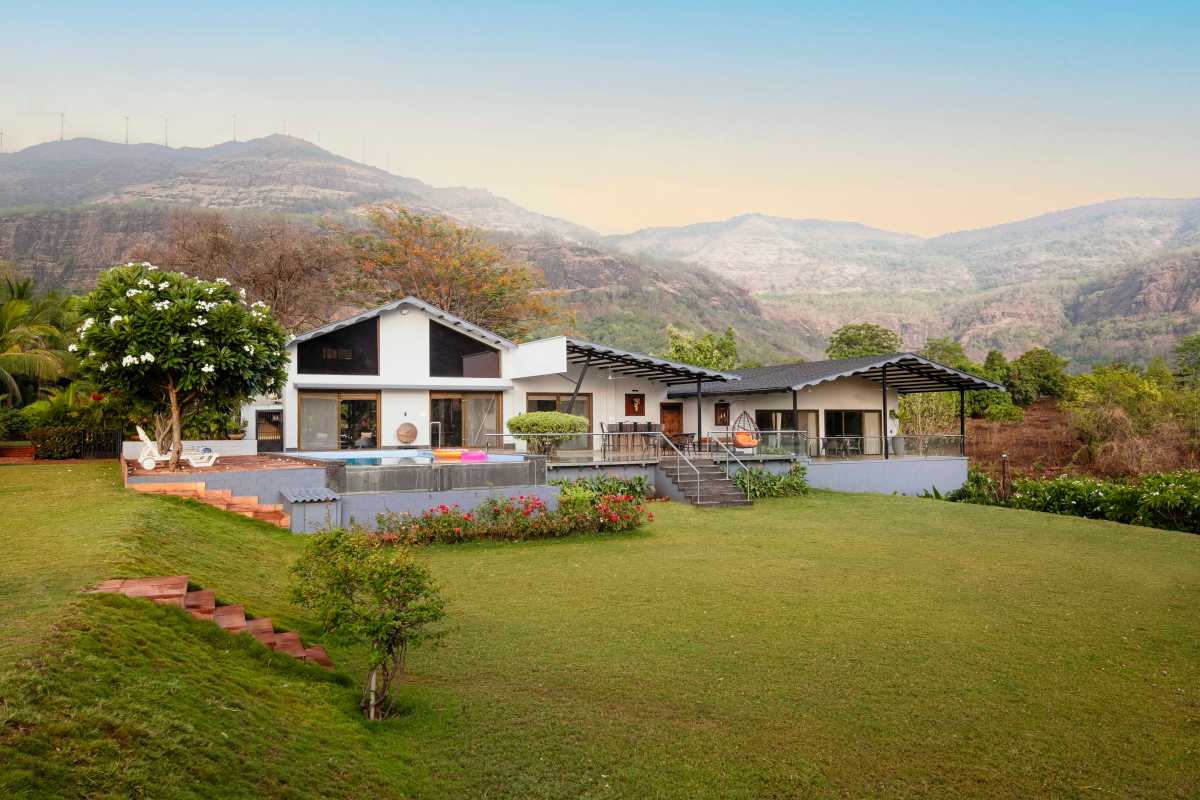
A well-lit eco-friendly villa at dusk, featuring modern architecture, a private pool, and a fire pit area, surrounded by lush greenery and inviting outdoor spaces.

Just 15 to 20 minutes from Hanuman Dham and the Sitabani or Amdanda gates of the park, SaffronStays Sher Bagh provides a practical base. This 4-bedroom eco-friendly villa is built using sustainable materials and is well-suited for families or groups looking to explore both religious sites and natural surroundings. It features a private pool, farm-to-table meals, and guided jungle trails. For anyone searching where to stay near Hanuman Dham or temples near Jim Corbett, this location allows easy access to both.

Best time to visit: October to March, when the weather is pleasant and safaris are operational.
How to reach: The nearest railway station is Ramnagar (15 km). Pantnagar Airport is 80 km away.

Mukteshwar Mahadev Temple and Places to Stay Nearby

Perched on a quiet ridge in the Kumaon hills, Mukteshwar Mahadev Temple is over 350 years old and holds significance in local lore. The climb to the temple is short and scenic, and the site offers panoramic Himalayan views on clear days. A few minutes’ walk from here is Chauli ki Jali, a natural rock formation believed to be spiritually significant and popular among local devotees.

This temple visit can be easily paired with local sightseeing around Mukteshwar town or a short forest walk.

For those wanting to stay in close proximity, SaffronStays Plaksha is a forest-lined home surrounded by oak and pine. It’s ideal for small families or couples on a quiet retreat. Another option is SaffronStays Ridgeview Manor, which offers a slightly more spacious setting with mountain views and traditional wooden interiors. Both are well-suited for travellers mapping a temple itinerary in Mukteshwar or looking for a peaceful stay near Mukteshwar Mahadev Temple.

Best time to visit: March to June and October to December.
How to reach: The nearest railway station is Kathgodam (65 km). The road from Nainital to Mukteshwar offers scenic valley views.

Temples Around Almora: Katarmal Sun Temple and Kasar Devi

Located about 15 km from Almora town, the Katarmal Sun Temple is one of the few temples in India dedicated to Surya. Built in the 9th century, the complex is an architectural and spiritual gem, yet it remains under-visited. Its isolated setting adds to the experience, offering a rare opportunity for undisturbed exploration.

Nearby, Kasar Devi Temple sits on a ridge known not only for its spiritual importance but also for its unusual geomagnetic properties. The temple area has drawn global travellers for decades and offers peaceful trails and quiet lookouts over the valley. It’s a preferred location for those practising yoga, meditation, or simply seeking an alternative travel experience.

For accommodation close to both sites, SaffronStays Glasshouse Celeste is a modern retreat with panoramic windows, making the most of Almora’s forested surroundings. It’s a good option for those who want a minimalist space with easy access to local temples. Alternatively, SaffronStays Edelweiss Estate, built in traditional mountain style, offers warmth and comfort with proximity to both Katarmal and Kasar Devi.

Best time to visit: April to June and September to November.
How to reach: Almora is about 90 km from Kathgodam railway station. Local taxis or private vehicles are the best way to reach Katarmal and Kasar Devi.

Crafting a Temple Route Across Devbhoomi

For travellers mapping out a religious trip through Devbhoomi Uttarakhand, the combination of Hanuman Dham, Mukteshwar Mahadev, Katarmal, and Kasar Devi offers a varied but manageable itinerary. Each location offers something distinct, whether it’s river access, panoramic views, historical depth, or quiet energy.

Suggested route:
Start in Ramnagar → Visit Hanuman Dham → Drive to Mukteshwar → End in Almora or Kasar Devi
(Recommended trip duration: 5 to 7 days)

Travel tips:

  • Hire a private vehicle for greater flexibility between temple visits
  • Start temple visits early to avoid crowds and catch morning light
  • Carry appropriate clothing such as light layers in summer and warm jackets in winter
  • Pack your own reusable water bottles and bags to reduce plastic usage in eco-sensitive zones
A cozy eco-friendly villa with stone walls and a balcony overlooking misty mountains, surrounded by lush greenery in the Kumaon foothills.

As Uttarakhand continues to draw spiritual seekers and mindful travellers, these sacred sites offer more than just a moment of prayer… they provide a chance to pause, reflect and reconnect with something deeper. From the ancient sun temple of Katarmal to the peaceful Hanuman Dham and the mythic silence of Mukteshwar, every stop on this journey through Devbhoomi is a step into history, nature and inner stillness. And with thoughtfully located stays that honour the spirit of the land, your time here becomes even more meaningful.

Ready to chart your own temple trail through the hills of Uttarakhand? Plan your stay at these peaceful retreats and turn your spiritual journey into a soulful getaway.

Sylvan Farms: A Retreat for Sustainable Living in Mount Abu

In a time when the sounds of birdsong and the feeling of bare feet on earth are fading memories, there exists a place that gently reminds us of what truly matters.

Sylvan Farms and family dreams:

Tucked deep in the forests of Mount Abu, within the protected bounds of a wildlife sanctuary, SaffronStays Sylvan Farms is more than a homestay— it’s a living embodiment of a family’s values. Created by Shailesh Jain, a conservationist and advocate for sustainable living, the farm was never intended to be a luxury escape. Instead, it was envisioned as a home grounded in simplicity, intention, and ecology; It is a place where mornings began not with screens, but with medication, and where every meal could be traced back to the land it came from.

Originally built for the family to spend time together, to cook, to meditate, and to reconnect with one another and the land, the space actively resisted distractions of urban life. TVs were purposefully left out, and still today, guests are encouraged to disconnect digitally and reconnect spiritually.

A wooden table set outdoors at Sylvan Farms, surrounded by lush greenery, featuring a spread of breakfast items, beverages, and decorative flowers, creating a serene and inviting atmosphere.

The design reflects this philosophy: more than a villa, it’s an ecosystem of spaces that promote communal joy and personal stillness. Open balconies, shaded farm paths, and quiet corners for reflection are woven throughout the property, while common areas invite shared meals and conversation. It encourages a natural flow in harmony with light, air, and sound, all built on sustainable principles.

The pandemic and embarking on development:

During the COVID-19 pandemic, while the world halted, Sylvan Farms grew. At a time when employment in Mount Abu had nearly vanished, the family chose not to pause their plans, but to move forward with and for their community.

A picturesque sunrise over Sylvan Farms, showcasing lush greenery, palm trees, and a winding stone pathway leading through the landscape.

More than 650 local workers, many from tribal and under-resourced communities, were employed during the pandemic to help shape the land, plant trees, and develop the farm and garden. Families stayed on the property, working closely with the land and each other. The homeowners ensured they were supported with fresh produce from the farm, free medical dispensaries, and even legal aid. “We needed those people more than they needed us”, the current homeowner humbly reflects. 

This shared endeavour extends beyond labor. It’s a co-created vision. A family of locals who knew the owner’s family, understood the land, helped develop the gardens using indigenous methods. The family still lives at the farmhouse, tending to its garden and guests. Their wisdom lives in every plant, every vegetable as it is grown organically without the use of any pesticides or chemicals. 

From its inception, the goal was never to create a business, but to nurture a society where relationships and ties to the land are at the forefront. That ideal took form during the pandemic, turning hardship into opportunity and strangers into kin.

An outdoor dining area set under an expansive tree, featuring a round table with a pink tablecloth and turquoise chairs. Lanterns hang from the branches, and the table is prepared with dishes and cutlery, surrounded by lush greenery.

A farm-to-table philosophy and sustainable ecosystem:

The core of Sylvan farms is its deeply rooted farm-to-table philosophy. The land produces seasonal grains, fruits, vegetables, and spices, all grown using organic, chemical-free methods. Crop rotation maintains soil health and trade with neighboring farms (such as produce in exchange for cow dung) preserves a closed-loop, thus a sustainable farming system.

Milk is derived from nearby farms and meals are lovingly prepared with what’s grown on the land. Guests are invited to participate in harvesting, walk the farm, and even take home seeds tailored to their local soil. It’s not just a stay–– it’s education in slow living and ecological respect.

Sylvan Farms goes beyond sustainability; it’s energy positive. Solar panels generate more electricity than the property uses, powering everything from lighting to water systems. Water harvesting replenishes wells without drawing from external sources. Composting, plastic-free practices, and zero-pesticide use age further reduce environmental impact. Everything echoes how indigenous people once tended the land: with reverence, restraint, and responsibility. 

The nature, community, and Mount Abu:

A serene garden setting at Sylvan Farms featuring turquoise chairs arranged around a fire pit, surrounded by lush greenery and palm trees under a colorful sunset sky.

The garden now hosts over thirty varieties of fruit trees, thoughtfully arranged with stone pathways to guide guests through peaceful walks. Over 250 species of birds call the area home, including the elusive Green Munia, a rare delight for photographers and wildlife lovers alike. Birdwatching indexes and guided treks with local Bheel tribe members open doors to the region’s deep ecological and cultural knowledge.

At night, stargazing under India’s clearest skies connects guests with the cosmos—Mount Abu is also home to one of Asia’s highest-resolution telescopes. It’s a space for stillness and awe.

The property now supports seven families who live and work on the land. Their traditions infuse the space with meaning. A small temple on the property honors Veer Baba, a local deity. Rituals like weekly pujas and annual offerings, rooted in Rajasthani traditions of sacrifice and remembrance, preserve stories of ancestors whose names may be lost, but whose spirits are honored.

SaffronStays Sylvan Farms is not just a farm stay. It is a living, breathing example of what happens when land, people, and purpose come together in harmony.

From feeding guests from its own soil to building a sanctuary with the help of those who call this land home, from honoring local deities and traditions to healing the very ecosystem it sits within, in a world rushing forward, Sylvan Farms invites us to remember that our roots are not in concrete, but in soil. 

A serene view of Sylvan Farms in Mount Abu, featuring lush greenery, a small outdoor dining area with wooden tables, and a rustic building surrounded by trees and mountains in the background.

Come experience a way of life where the days flow with nature, not notifications. Where you wake up to birdsong, eat what’s grown on the land, and spend time with people, not screens.

This isn’t just a getaway. It’s a chance to slow down and live differently.

Monsoon Getaways in Ooty, Coorg, Wayanad & Kannur: Private Villas, Rainy Retreats & Local Flavours

There’s something wildly poetic about the monsoon across Tamil Nadu, Karnataka, and Kerala. The skies soften to a cool grey, the mountains breathe mist, and the scent of wet soil, eucalyptus, and filter coffee lingers in the air. If you’re craving a peaceful, soul-refreshing escape, this monsoon calls for a journey through the tea estates of Ooty, the rain-drenched plantations of Coorg, the sacred green folds of Wayanad, and the heritage-rich countryside of Kannur. Along the way, you’ll stay at some of SaffronStays’ most unique private villas, handpicked for their natural surroundings, culinary traditions, and comforting interiors built for rainy-day serenity.

Tea Estate Villa Stay in Ooty During Monsoon

Your journey begins in Ooty, where the rain turns every slope into a green velvet carpet and the air smells of pine and tea. SaffronStays Milton Abbott Estate is a colonial-style private bungalow near Ooty Golf Course, nestled within 4.5 acres of greenery. This heritage estate is perfect for guests seeking old-world charm, with its fireplace, antique decor, and signature homemade dishes served hot as you curl up indoors. Mist-covered trails invite morning walks, while the serene surroundings offer space to slow down and reconnect with nature.

Serene lakeside view at sunset with two chairs and a small table, surrounded by lush greenery.

Art-Lover’s Paradise in Coonoor for a Creative Monsoon Escape

A short drive away, SaffronStays Coonoor Canvas offers a different kind of inspiration. This art-themed private villa in Coonoor is filled with original paintings created by the homeowner’s son. Each artwork tells a story, and guests are welcome to create their own masterpiece at the in-house art corner. With panoramic valley views and the gentle hush of the monsoon, it’s an immersive retreat where nature and creativity meet.

As the rain breathes life into the Nilgiri hills, explore nearby lakes and hidden forest paths. Or take a temple trail down to Thanjavur, where monsoon showers add a mirror-like gleam to ancient granite temples. Between walks, warm up with peppery rasam, crispy kuzhi paniyaram, and vazhakkai bajji served with fresh coconut chutney. For a quiet monsoon retreat, consider Kurichi, an offbeat destination near Coimbatore, a peaceful escape into nature.

Plantation Homestay Near Nagarhole – Coorg and Udupi’s Monsoon Heart

Next, head to Gonikoppa in southern Coorg, where the monsoon transforms every trail into a lush green passage. Stay at SaffronStays Calamondinn Bungalow, a 130-year-old colonial homestay surrounded by coffee estates near Nagarhole Tiger Reserve. This 6000 sq. ft. home, often compared to the Scotland of India, offers a true monsoon plantation experience in Coorg. With birdsong in the air, flowering gardens, and mist rolling through coffee trees, each day is slow and meditative. The interiors are rustic and regal, adorned with antique furniture, paintings, and historical photographs that whisper stories of the past.

Wake up to the aroma of freshly brewed Coorg coffee, explore muddy plantation trails, and experience regional dishes like baimbale curry (bamboo shoots), kembu suli (colocasia leaves), and kummu mushrooms, served with fresh akki rottis that melt in your mouth.

If you crave more seclusion, try SaffronStays Biccode Woodside Heritage, a plantation villa in Belur, steeped in English colonial charm. Surrounded by coffee estates, it features a Coffee Brew Bar where you can experiment with Aeropress, French Press, Pour Over, and traditional South Indian filter coffee. Walk through plantations to pick ripe coffee cherries, watch birds in their natural habitat, and rejuvenate with nature all around you.

If rivers calm your soul, then SaffronStays Suvarna Sangam, in Udupi, a riverside villa near the river confluence in Karnataka, is your perfect spot. During monsoon, the rivers swell dramatically, the skies turn deep grey, and the view from this home becomes nothing short of cinematic. This is the kind of place where time stops, and silence speaks volumes.

A woman sitting on a hanging swing, interacting with a dog, surrounded by lush greenery and colorful flowers in a scenic landscape.

Treetop Heritage Homestay Near Kannur – Kerala’s Rain-Soaked Spiritual Retreat

In Kannur, Kerala, rain is more than weather. It’s part of the landscape’s rhythm. SaffronStays Amaya, a 300-year-old heritage homestay near Kannur International Airport, is a timeless retreat nestled within thick greenery. Meticulously restored, this 5-bedroom estate features a traditional Kerala-style spa, a stepped pond, and even a sacred Sarpa Kavu, the symbolic serpent grove. It’s also the only petting zoo within a private estate in South India, offering fresh organic eggs, milk, and vegetables grown onsite.

Located just 15 minutes from the airport, 3 hours from Kozhikode, and 4.5 hours from Mysore, this tropical villa near Kannur is perfect for a weekend monsoon retreat. Feast on banana-leaf meals with kadala curry, avial, fish moilee, and house-made pickles. Trek to Edakkal Caves, paddle through Pookode Lake, or visit Thirunelli Temple, all shimmering with the season’s rain-kissed magic.

View of a villa surrounded by lush gardens and tea estates in Ooty, India, highlighting the scenic landscape and colonial architecture.

Why These Villas Are Ideal for Monsoon Travel in the Western Ghats

Whether you choose a colonial estate in Ooty, a coffee homestay in Coorg, or a treetop retreat near Kannur, every SaffronStays home is curated for the perfect monsoon getaway. With homemade meals by caretakers, peaceful balconies to watch the rain, and direct access to regional highlights from waterfalls to spice trails, you experience more than a stay. You live the season.

Follow the Clouds to These Monsoon Villas

This isn’t just a vacation, when you choose SaffronStays, you choose experiences that celebrate monsoon magic. Let the rhythm of rain, the aroma of regional food, and the comfort of your villa lead the way.

Exploring Konkan’s Sea Forts & How Araqila Reimagines Their Legacy

The Konkan coast, nestled between the Arabian Sea and the Western Ghats, is more than just a scenic stretch of land. While its food trails and beaches have begun finding their way into travel itineraries, the soul of this region lives elsewhere; in its ancient sea forts, cliffside temples, and quiet stretches of coastline that continue to tell stories shaped by salt, stone, and resilience.

Some of the most enduring symbols of this legacy are its forts.

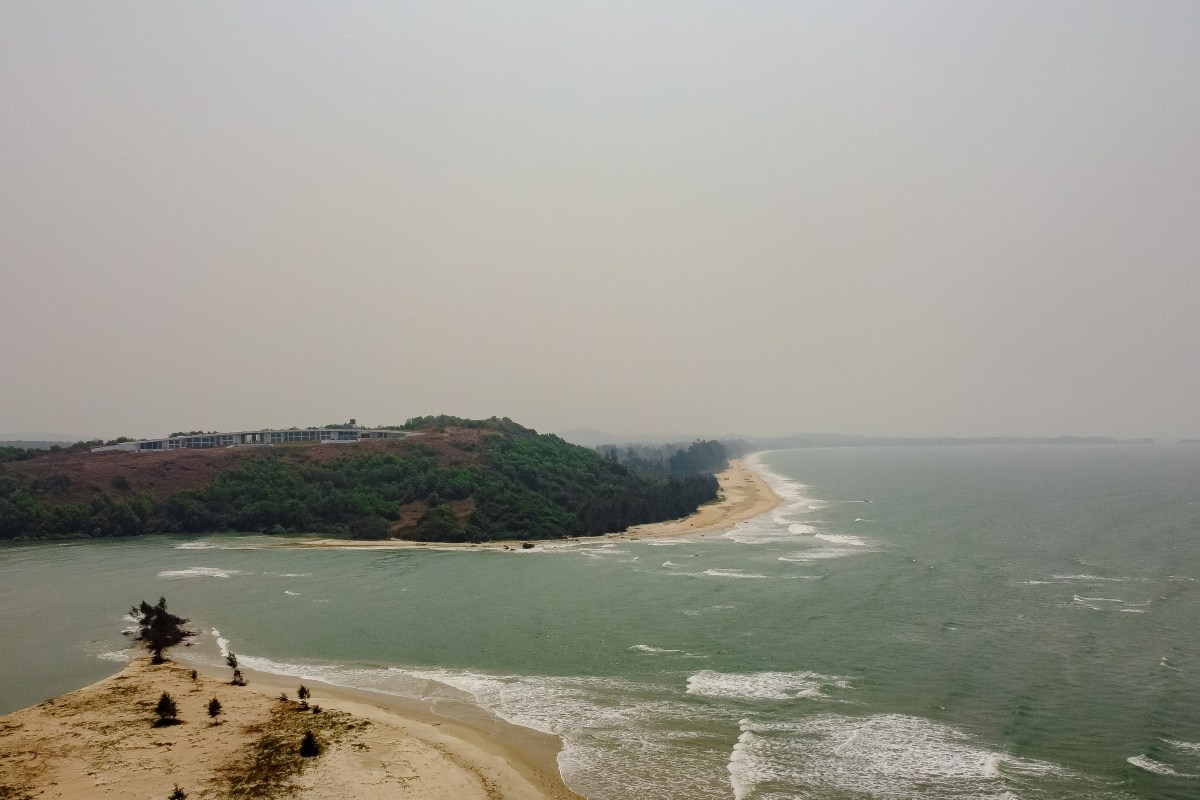
A scenic view of the Konkan coastline showcasing a sandy peninsula surrounded by the Arabian Sea, with gentle waves lapping at the shore and lush greenery on the hills in the background.

A Maritime Frontier, Crafted in Stone

Scattered along the coast, the sea forts of Konkan, Sindhudurg, Vijaydurg, Devgad, Jaigad and many more stand as a testament to a time when architecture served geography, not the other way around. These forts weren’t built to be admired from a distance. They were built to withstand, to respond, and to belong.

Constructed with laterite stone, lime plaster, and timber, they followed the natural slope of the land. Their walls aligned with wind patterns. Curved pathways followed the contours of the cliffs. Form never challenged function. Instead, the design made room for the realities of salt-laden air, monsoon winds, and the daily rhythm of coastal life.

Many of these structures still endure. Walk through Sindhudurg Fort and you’ll find the ocean peeking through archways. The silence speaks louder than any plaque. These forts were never about grandeur. They were about grounding. A different kind of strength, one that didn’t need to declare itself.

Why These Forts Still Matter

Today, when travellers search for places to visit in Sindhudurg or the best spots near Tarkarli and Malvan, they often come across these sea forts. But their value goes far beyond sightseeing. They are blueprints for building with integrity.

In an era of rapid development and globalised design, the forts of Konkan stand out because they were created with a clear understanding of where they stood. There was no attempt to impress. Just an instinct to adapt. The climate dictated the material. The coastline shaped the walls. The land led the way.

This is not just history. It is instruction. For architects. For planners. For those who believe that beauty begins with belonging.

How That Legacy Finds New Form

Close to the Sindhudurg Fort, where the sea meets the edge of forested hills, a new space has emerged. Not in imitation, but in conversation with the past.

Araqila Resort is a retreat that draws from the same principles that shaped the sea forts. Built along the coastline, it carries the same respect for silence, and for space. Floor-to-ceiling windows open to uninterrupted sea views. Interiors are thoughtfully sparse, allowing the natural elements to speak first.

Here, the past is not replicated. It is remembered through textures, through stillness, through a deep regard for the land. You may not realise it immediately, but the sense of grounding, of calm, of everything being exactly where it should be, comes from that legacy.

Araqila doesn’t ask for attention. It earns it.

Aerial view of a sea fort on the Konkan coast, surrounded by water, with greenery on the fort and fishing boats nearby.

Planning Your Journey Along the Fort Trail

If you’re exploring weekend getaways from Mumbai to Konkan, or searching for places to visit near Malvan and Vengurla, the fort trail is a journey worth taking. Visit Vijaydurg, once a shipbuilding centre, or Devgad, known for its views and its mangoes. Watch the tide cover the causeway at Sindhudurg. Let the sound of the sea guide you through these timeworn spaces.

Stay a little longer. Let the pace slow. And if you find yourself in a place that feels aligned with all this, not just in architecture but in intention, you’re likely closer to understanding what this coast has always offered.

A panoramic view of lush green hills, valleys, and a winding river under a cloudy sky, capturing the serene landscape of the Konkan coast.

Konkan, Remembered and Reimagined

The forts of Konkan were never meant to be spectacles. They were built with purpose, with humility, and with a deep sense of place. That spirit continues today, not just in heritage sites but in new spaces that know how to listen.

For those seeking heritage tourism in Maharashtra, or experiences that blend context, comfort, and cultural depth, the Konkan coast is an invitation. Not just to look back, but to move forward with care.

Panchgani in the Rain: Best Cafes and Cosy Corners to Explore

When it rains in Panchgani, the red soil deepens in colour, the valleys go silent, and the town takes on a pace you don’t find in summer. This hill station isn’t loud during the monsoon; it’s gentle, slow, and full of flavour. Whether you’re here for the views or the vada pav, monsoon is the best time to discover Panchgani’s cafés, local eats, and scenic spots without the crowd. Here’s your complete Panchgani food guide, layered with warmth, spice, and a little drizzle.

Breakfast in the Mist: Warm Meals to Start the Day

The fog is still lifting over Table Land, and you’ve just stepped into Purohit Lunch Home. It’s not fancy, but the bhakri is warm, the varan is comforting, and the thecha adds that green chilli kick you didn’t know you needed. This is where locals go when it rains, and now you know why. Down the main road, the smell of strawberries leads you to Hilltop Ice Cream Café. Even in July, their strawberry cream is soft, fresh, and not overly sweet. Add a layer of whipped cream and it becomes less of a dessert and more of a memory.

Midday with Mulberries and Sandwiches

A beautifully arranged breakfast table featuring glasses of orange juice, slices of watermelon, a bowl of cereal, assorted pastries, and a tea set, set against a lush garden background.

The rain slows by noon. That’s your cue to head to Mapro Garden Panchgani. Known across Maharashtra, this spot isn’t just about syrups and jam jars. Their grilled sandwiches come loaded with veggies and cheese, and the mulberry milkshake is thick, tart, and ice-cold. Sit under the glass roof, listen to the rain, and take your time.

Café-Hopping Through the Fog

Looking for something stronger? Lucky Café near the Panchgani market serves a proper filter coffee in steel tumblers, along with crisp cheese toast. It’s a simple stop, but one you’ll think about on your way back. For a cosy, sit-down meal, head to Rainforest Restaurant. The mushroom soup is thick and earthy. Their wood-fired pizza arrives hot, with bubbling cheese and a crust that crackles just right. It’s the kind of place where rain becomes part of the experience, visible through tall windows and audible in the quiet.

Things to Do in Panchgani in Monsoon

Even with light drizzle, Panchgani gives you space to explore. Walk across Table Land wrapped in mist. It’s wide, silent, and surreal. Stop at Parsi Point and Sydney Point just after a shower. The views dip deep into the valley. Explore the lanes of the main market, where the smell of chikki and roasting corn fills the air. Visit Devrai Art Village, a peaceful artist commune where you can try clay work or shop for handmade decor.

Sweet Endings and What to Take Home

By evening, the town smells of caramel and ghee. Walk into Laxmi Chikki, where stacks of peanut brittle and chocolate fudge are being packed for the road. Just a few shops down, Elsie’s Bakery has fresh butter cakes and jam rolls still warm from the oven. These aren’t just souvenirs. They’re edible memories, small, sweet, and sealed with the scent of the hills.

A serene view of Panchgani hills from a balcony featuring two blue chairs and a table with snacks, overlooking lush valleys under a clear sky.

Why Monsoon is the Best Time for Panchgani

The best part of being in Panchgani in the monsoon isn’t just the weather. It’s how the food tastes warmer, the roads feel quieter, and the cafes welcome you like an old friend. If you’re planning a trip during the rains, bring a light jacket, an empty stomach, and enough room in your bag for chikki, jam, and stories to carry home.

A Foodie’s Guide to Mahabaleshwar in the Monsoon

In Mahabaleshwar, the rains don’t just bring mist to the hills. They wake up the soil. The roads turn quiet, the trees deepen in colour, and everything smells a little sweeter. For those who love food, this is when the town reveals its true flavour.

The crowds thin out, but the kitchens stay busy. You’ll find hot corn bhajiyas served with green chutney, fresh mulberries still wet from the drizzle, and the kind of warm Maharashtrian meals that make you pause after every bite. This is your guide to eating your way through Mahabaleshwar in the monsoon.

Fresh, Local and Still Warm

Even in the off-season, the hills are generous. The monsoon months bring juicy mulberries, lush red carrots, and of course, the last of the strawberries. You may not get them in baskets anymore, but you’ll still find fresh fruit in local jams, syrups, and warm desserts.

One of the first things you’ll smell is roasted corn on the cob. Near Venna Lake, it’s grilled on open coals and served hot with chilli salt and lemon. Many vendors also sell thick, comforting bhutta soup in paper cups. Stop by roadside carts on the way to Wilson Point or Arthur’s Seat – no fixed menu, just fresh, homemade food you won’t find in restaurants.

The Sweet Tooth Has a Home Here

Strawberry cream might be the first thing people think of when it comes to Mahabaleshwar food, and with good reason. Even in the rain, Bagicha Corner serves it fresh, layered with whipped cream and just enough sugar to let the fruit shine. You’ll also find mulberry cream and raspberry syrups, often paired with sponge cake or milkshakes.

A few kilometres away is Mapro Garden, where you can sip warm berry squash while exploring counters of guava candy, jelly jars, and tasting spoons dipped in local honey. Part café, part factory, Mapro is less of a pitstop and more of a food experience. Kids dig into cheesy pizzas while parents shop for jars of jam to take home.

And then there’s Elsie’s Bakery, an old-fashioned spot tucked into the market. Their handmade fudge, butter cakes, and jam rolls are wrapped in parchment and nostalgia. It’s the kind of place you remember long after your trip ends.

A traditional Maharashtrian thali featuring roti, dal, spicy vegetable curry, salad, and sweets, served on a decorative tablecloth.

Warm Plates on a Cold Day

When the skies are grey and your shoes are wet, nothing compares to a proper Maharashtrian thali. Hirkani Garden Restaurant is a go-to for its homely offerings. Expect bhakri, bharli vangi, pithla, and varan bhaat served hot and without fuss. The food is simple, cooked fresh, and feels like it came from someone’s home kitchen.

Not far from the market is Hotel Dreamland, known for its vegetarian thali. The kadhi here is thick and tangy, the batata bhaji soft and spiced just right. Sit by the window and watch the rain while you finish every last bite.

And if you’re after misal pav, you’ll find plenty of versions, but Hotel Rajmahal and Aman Restaurant get it right. Spicy, fiery misal topped with crispy farsan, served with soft pav and a glass of buttermilk. These places fill up quickly during lunch, even on rainy weekdays.

A scenic view from a balcony overlooking lush green hills and a lake in Mahabaleshwar, with a rocking chair and a small table featuring a cup.

When It’s Pouring Outside, Try This

Some of the best cafes in Mahabaleshwar are the ones built for rainy days. The Grapevine, tucked just off the main road, is one of them. Known for its continental fare – pepper chicken, pasta, grilled trout it’s a favourite for slow meals in warm lighting.

Further down a quieter lane is Rustic Cafe, a small, wood-lined space that serves brownies, toasties, and thick hot chocolate. The staff don’t rush you, the playlists are soft, and the chairs invite you to stay longer than you planned.

Craving something heartier? Mad Smoke Café offers burgers, wood-fired pizzas, and strong filter coffee – simple, satisfying food to warm you up.

Don’t Leave Without Tasting This

As the rain begins to clear, the market lights come on and the smell of caramel fills the lanes. That’s when you head to Laxmi Chikki. Their walnut and sesame chikkis are crunchy and sweet, and their chocolate fudge is a favourite with locals.

Shops nearby sell everything from mulberry syrup and raspberry jelly to chilli guava candy, each one sealed in glass jars and wrapped in plastic for the road. You’ll also find small, handwritten signs that say “homemade jam” or “fresh honey.” Trust those.

A scenic view of a lush green landscape in Mahabaleshwar, featuring a wooden cottage with a green roof, surrounded by trees and overlooking a vast valley under a partly cloudy sky.

The Taste of Mahabaleshwar Lingers

In Mahabaleshwar, food isn’t dressed up. It’s simple, seasonal, and full of warmth. And during the rains, it’s not just the flavours that stand out, but the moments in between. A hot plate on a cold table. A steaming cup shared under a tin roof. A walk in the drizzle with a bag of chikki in hand.

You may come for the views, but it’s the food that stays with you.

Explore Sindhudurg: 10 Unique Experiences You Can’t Miss

Tired of tourist traps and overdone itineraries? Sindhudurg, nestled along Maharashtra’s Konkan coast, is one of those rare places that still feels untouched. The air smells of salt and earth, the food carries generations of tradition, and silence is more common than crowds.

If you’re looking for something immersive, rooted in culture and nature, and luxurious in its own quiet way, Sindhudurg may just surprise you.

Here are 10 offbeat experiences to explore when you’re in this stunning stretch of the coast.

1. Explore the Historic Sindhudurg Fort

Sindhudurg Fort coastline with ancient stone walls rising from the sea under a clear blue sky.

Rising from the sea like something out of history, the Sindhudurg Fort was built in the 17th century by Chhatrapati Shivaji Maharaj as a coastal defense fort. You reach it by boat from Malvan, and once you’re inside, you’ll find old wells, escape routes, and views that stretch far beyond the horizon.

Insider tip: Visit during golden hour for soft light and fewer people.

2. Go Dolphin Spotting in Tarkarli

Two dolphins swimming gracefully in clear turquoise waters.
(Representative image)

Just off the coast of Tarkarli and Devbagh, you can catch dolphins cutting through the waves at sunrise. Local boats leave early, often guided by fishermen who know exactly where to find them. It’s a quiet thrill, raw and unfiltered.

Insider tip: Book a private boat just after dawn for the best chance and least crowd.

3. Kayak Through Backwaters and Mangroves

A person kayaking in a colorful kayak on a calm, reflective water surface, surrounded by trees and foliage.
(Representative image)

Not far from Malvan, small inlets open into lush backwaters lined with dense mangroves. Here, you can kayak or canoe through channels so narrow you can almost touch the branches on either side. It’s peaceful, meditative, and far from anything commercial.

Insider tip: Choose late afternoon trips when the sun filters through the trees and the water reflects the orange sky.

4. Witness the Turtle Festival (Seasonal)

A group of Olive Ridley turtle hatchlings making their way to the sea along a sandy beach, with a misty coastline in the background.
(Representative image)

Between February and April, Olive Ridley turtles return to the shores near Vengurla to lay their eggs. If you time it right, you might witness the magical moment when hundreds of hatchlings make their way to the sea. It’s nature at its most moving.

Insider tip: Contact local conservation groups who organize guided, respectful visits.

5. Trek to Nivati and Bharatgad Forts

A couple enjoying a moment together near a waterfall, surrounded by rocky terrain and lush greenery.
(Representative image)

Hidden inland and less explored, these hilltop forts offer views over the Konkan coastline that most people never see. You’ll pass through forests, local villages, and finally, reach windswept ramparts that feel entirely yours.

Insider tip: Start your trek early in the morning to catch fog rolling over the hills and avoid the afternoon sun.

6. Chase Waterfalls in Amboli

A scenic waterfall cascading down a rocky cliff, surrounded by lush greenery and tea plantations.
(Representative image)

A short drive from the coast takes you to Amboli, a misty hill station known for its waterfalls, especially during monsoon. Here, the rainforest sings and everything is covered in green. It’s the perfect contrast to the beach.

Insider tip: Visit in late July or early August for the best water flow and thickest mist.

7. Experience Warli Art in Pinguli Village

A traditional Warli art painting depicting rural life, featuring a thatched house, figures carrying pots, cows, trees, and a cart, all set against a red background.
(Representative image)

For something cultural, visit Pinguli, a village famous for preserving the ancient Warli art form. You can watch artists at work, understand the symbolism in their paintings, and even try your hand at it. It’s intimate, not staged.

Insider tip: Buy directly from the artists. Their stories are as rich as their art.

8. Watch the Sunset at Chivla Beach

A serene beach at sunset with golden hues reflecting on the water and palm trees silhouetted against the sky.
(Representative image)

Skip the usual beach crowds. Chivla Beach is quiet, clean, and ideal for an evening walk. Locals come here to unwind, not party. The horizon is uninterrupted and the vibe, completely unfussy.

Insider tip: Pick a corner of the beach, bring your book, and stay until the stars show up.

9. Go Scuba Diving in the Konkan Reefs

A scuba diver underwater capturing images of marine life in clear blue waters, surrounded by vibrant coral reefs.
(Representative image)

The waters near Tarkarli are surprisingly clear and colourful. You’ll spot coral reefs, shoals of fish, and maybe even an octopus if you’re lucky. Local dive schools now offer small-group dives with certified instructors.

Insider tip: Plan your dive between October and March for the best visibility.

10. Savour an Authentic Malvani Meal

A grilled fish served on a blue plate, accompanied by sliced onions, a wedge of lemon, and a green chutney, with cutlery arranged beside it.
(Representative image)

You can’t leave without tasting the region. Malvani cuisine is all about slow cooking, bold spices, fresh seafood, and flavours that linger. Whether it’s kombdi vade, sol kadhi, or fresh-caught pomfret, the food is as much an experience as anything else.

Insider tip: Skip restaurants. Find a local home that cooks for guests. You’ll remember that meal for years.

Where to Stay

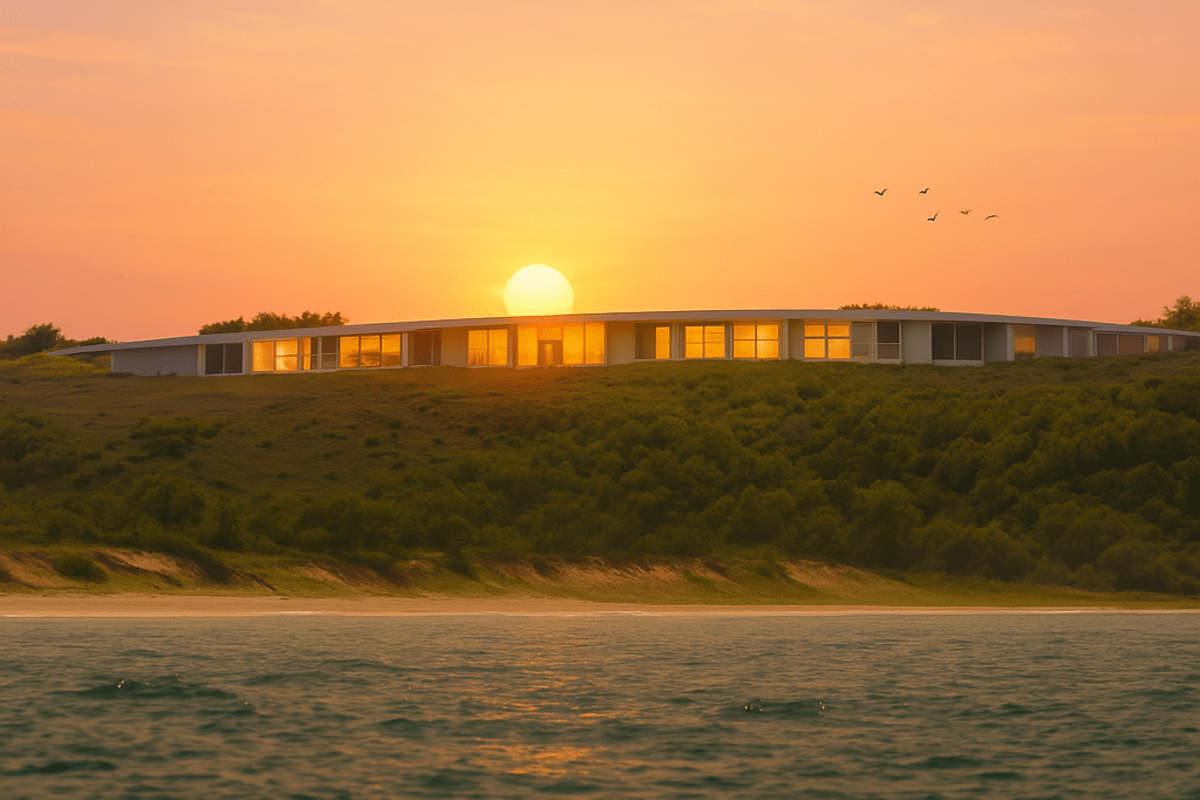
A serene sunset view over the sea, with a modern coastal property silhouetted on a hillside, surrounded by lush greenery.

Set along a quiet stretch of Sindhudurg’s coastline, Araqila by SaffronStays offers a thoughtful stay for those who appreciate design, detail, and a sense of place.

Every room opens to the sea. The structure draws from the architectural language of Konkan’s forts, with open courtyards, stone walls, and long verandahs that frame the horizon.

The interiors are minimal yet warm; local laterite stone, teakwood, linen, and light.
Meals are prepared using regional ingredients, with a focus on freshness and restraint. Slow-cooked curries, seasonal seafood, and home-style Malvani staples are at the heart of every meal.

There are no loud distractions here. No rush. Just space to gather, to retreat, or to do nothing at all.

Araqila isn’t just a stay. It’s a quiet return to the land you’ve been exploring.

Modern architectural view of Araqila by SaffronStays, featuring a clean white facade, a swimming pool with lounge chairs, and surrounding green landscaping.

Sindhudurg may not be on every map yet. But that’s part of its charm.
It gives you room to slow down, to discover, and to experience luxury that isn’t defined by excess, but by depth.

If you’re planning a trip that feels different from the usual, start here.

Let Sindhudurg unfold on its own terms and let Araqila be your portal to the soul of Sindhudurg.

Flavour Meets Freshness at SanvinaFarm

Hidden away in the heart of Karjat, SaffronStays SanvinaFarm is not your typical countryside escape. This is a luxury farmstay experience, where design meets nature, and comfort blends seamlessly with authenticity.

Surrounded by the mighty Sahyadris on three sides, and kissed by seasonal rivers and monsoon waterfalls, SanvinaFarm is where you wake up to mountain views, breathe in fresh air, and spend your day being wrapped in nature’s quiet luxury.

Wake Up Inside an Architectural Dream

As dawn breaks, sunlight pours in through large glass doors, dancing across interiors that could belong in the pages of Architectural Digest and in fact, they do. With handpicked antique artefacts, earthy textures, and thoughtfully styled living spaces, each corner of SanvinaFarm feels curated, soulful, and deeply personal.

Your morning tea tastes better when sipped on the verandah, overlooking panoramic mountain views that feel almost cinematic.

A luxurious swimming pool surrounded by lush greenery, featuring sun loungers and colorful pool floats, under a bright blue sky with fluffy clouds.

Mornings Are for Slow Living & Farm Trails

Step out for a guided farm tour through the estate’s organic orchards which has oranges, lemons, chikoos and vegetable patches. Learn about local crops, pluck fresh produce, and if you wish, plant your own sapling-a green imprint of your visit.

This is where you pause, breathe, and truly reconnect-with the land and with yourself.

Lunch: A Feast for the Senses

Food at SanvinaFarm isn’t just a meal, it’s an experience. Expect lavish, home-style thalis that celebrate India’s diverse culinary roots.

One day, it could be a flavour-packed Rajasthani thali, complete with gatte ki sabzi and ker sangri; the next day, a robust Bihari spread with litti chokha and chokha-style vegetables. Every dish is lovingly prepared, using farm-fresh ingredients and traditional recipes passed down through generations.

It’s soulful, it’s indulgent, and it’s straight from the heart.

Riverside High Tea: Monsoon Magic Unfolds

As the day softens and the skies turn a gentle grey, make your way down to the riverside for high tea. Picture this: the sound of flowing water, the earthy aroma of wet soil, and a curated spread of local snacks like bhajiyas, vadas, and masala chai, served under a simple canopy.

It’s rustic, real, and incredibly charming.

A person riding an ATV on a dirt path with a backdrop of mountains and a rustic farmhouse surrounded by greenery.
Guests enjoying a game of croquet on the lawn at SaffronStays SanvinaFarm, surrounded by lush greenery and mountains.
A woman riding a bicycle along a dirt path surrounded by lush greenery and mountains in the background.

Adventure Meets Leisure

For the restless soul, there’s ATV riding through forested trails, cycling amid monsoon mist, or even seasonal river rafting (chargeable). Those who prefer leisure over thrill can enjoy a slow game of croquet on the lawns, or spend the evening with a warm drink, soaking in the mountain views from the verandah.

Evenings of Togetherness

As twilight deepens, the estate glows under soft garden lights. Guests often gather at the verandah for laughter-filled conversations, impromptu music sessions, or simply to listen to the sounds of nature-crickets, rustling leaves, and the distant flow of the river.

And when night falls, the clear, unpolluted skies invite you for stargazing-a rare luxury in itself.

A serene outdoor dining area at SaffronStays SanvinaFarm, featuring a round table with tea and snacks, overlooking lush greenery and mountains at sunrise.

With 4 beautifully appointed bedrooms, we highly recommend booking the entire villa for a more exclusive, uninterrupted experience. This ensures privacy, personalized service, and the freedom to enjoy every inch of this luxury farm estate-just for yourself and your group.

Final Thought

SaffronStays SanvinaFarm isn’t just a getaway-it’s a mood, a memory, and a celebration of slow, meaningful living.
Come here for the mountains, stay for the food, and leave with stories you’ll tell for years.

Experience 48 Hours in Srinagar: A Journey Through Kashmir’s Heart

The first thing you notice in Srinagar isn’t the lake. It’s the stillness. A kind of hush that lingers in the air like early morning mist. Even the shikaras, those hand-carved wooden boats, seem to glide across Dal Lake without making a sound.

In July, the skies are mostly clear with a soft breeze that carries the scent of pine, fresh bread from a kandur’s oven, and the sharp warmth of saffron from a steaming cup of kahwa. This is a city that doesn’t ask to be rushed. You don’t come here to tick off a list. You come here to slow down.

This is your 48-hour journey through Srinagar. A place of water, light, and quiet moments that stay with you long after you’ve left.

Where Water Meets the Sky

The best way to begin is with a view of the lake. Not from the road, but from a wooden houseboat anchored quietly away from the crowds. Morning light spills across the water, and your first cup of kahwa arrives in a copper kettle, fragrant with cardamom and almonds.

A shikara ride is not just a way to see the city. It is the city. You float past lotus-covered patches, floating gardens, and houses built entirely on water. The boatman rows slowly. Occasionally, he stops to show you something. A heron nesting in reeds. A vendor selling tomatoes from his canoe. The perfect reflection of the sky in the lake’s still surface.

Around dawn, the floating vegetable market comes alive. Traders gather silently on their boats, exchanging goods with quiet efficiency. It’s a rhythm the lake has known for generations. You watch, silently, before drifting on.

Dal Lake isn’t just a postcard. It’s how Srinagar breathes.

Old Walls and Wooden Windows

As the morning lifts, the city reveals another side. Leave the lake behind and step into the old town around Zaina Kadal. Here, wooden homes with intricately carved balconies lean slightly forward, watching over narrow lanes where the smell of baking bread fills the air.

Pause at a local kandur’s shop for fresh girda: a traditional Kashmiri bread, still warm from the clay oven. Step inside the Shah-e-Hamdan shrine. Its papier-mâché interiors glow in the morning light, covered in floral patterns that feel like they belong to another century.

Not far from here stands the Jamia Masjid of Nowhatta. Built in the 14th century, it is spacious and solemn, with more than 350 deodar wood pillars holding up its roof. Even when the mosque is busy, there’s a quiet that never lifts. It’s the kind of place you enter slowly and leave even slower.

This part of Srinagar moves at its own pace. It is not polished for tourists. It is lived-in and layered with stories. The beauty lies in watching them unfold, one wooden doorway at a time.

Gardens That Bloom After the Rain

Srinagar’s gardens aren’t just beautiful. They are deliberate. The Mughal emperors built them as escapes. Terraced spaces with flowing water, framed by the Zabarwan Hills. In summer, they bloom. And after a drizzle, they come alive.

Nishat Bagh is larger, with wide lawns and long fountains. Shalimar Bagh is quieter, more structured. Both face the lake. Both make you pause. The Chinar trees here are older than memory. Their leaves shift colour in the breeze, even in July.

For a higher view, drive up to Pari Mahal. The old observatory sits above the city. From here, the lake looks like a sheet of glass and the sky feels close enough to touch. There is silence, even when it’s crowded. The kind that makes you listen without realising.

Flavours That Stay With You

Srinagar feeds you with warmth. Meals here are not rushed. They are layered, just like the city.

Start at Ahdoos. The wood-paneled dining room has seen decades of guests. The rogan josh is slow-cooked and full of spice, the yakhni is tangy and light, and the nadru yakhni — made from lotus stem — is unlike anything you’ll find elsewhere.

For something simpler, walk into Krishna Vaishno Dhaba. The food is vegetarian, comforting, and always served hot. Another stop worth making is Stream Restaurant near Boulevard Road. Known for its grilled trout, it balances local flavour with familiar comfort.

End a meal with phirni or just another cup of kahwa. Not because you’re cold, but because it feels right.

Things You’ll Want to Take Home

A man rows a colorful shikara on Dal Lake, with reflections of clouds in the still water and a backdrop of shops along the shoreline.

Leave time for Polo View Market. It’s where Srinagar’s craftsmanship gathers — handwoven pashmina shawls, walnut wood carvings, papier-mâché boxes painted with gold and cobalt blue. These aren’t souvenirs. They are keepsakes, made to last.

For spices, head to Zaina Kadal or Badshah Chowk. Saffron, dried morels, and noon chai leaves. You’ll find them neatly packed in small shops that smell of cardamom and pepper.

You won’t leave with just things. You’ll leave with the way this city moves. With the reflection of clouds on water. With the sound of rain on carved wood. With the slow warmth of a place that never really hurries.

Even with just 48 hours, Srinagar leaves a lasting imprint.

Not because of how much you saw, but because of how the city made you feel. Calm. Unhurried. Grounded. You may come here for the views, the food, or the cool July breeze, but you leave with something quieter. A memory stitched in still water and soft light, waiting to pull you back again.

Coorg Monsoon Magic: A Complete Travel Guide (2025)

Coorg isn’t a place that asks for attention. It lets the rain do the talking.

By late June, the coffee plantations start to darken with moisture, roads soften under the weight of the weather, and clouds settle low across the hills. The pace slows, the crowds thin, and what’s left is a version of Coorg that feels quiet, fresh, and deeply local.

If you’re planning a trip to Coorg during the monsoon, this guide offers exactly what you need — not a list of things to do, but a way to experience the region as it truly is this time of year.

What Makes Coorg Special During the Monsoon

The monsoon in Coorg begins around June and lasts until September. During this time, the region transforms into a green retreat. The air smells of wet earth and roasted coffee, the rivers rise, and waterfalls come alive.

It’s not the season for fast-paced travel. It’s for slow mornings, warm meals, and the sound of rain outside your window.

Things to Do (and Not Rush Through)

  • Walk through Coffee Plantations
    Every plantation looks greener in the rains. Guided estate walks near Madikeri or Virajpet let you soak in the sights and the scent of fresh beans and pepper vines.
  • Visit Abbey Falls
    At its most dramatic in July and August, Abbey Falls is loud, misty, and surrounded by dense forest. Mornings are the best time to visit before the fog rolls in.
  • Drive to Mandalpatti
    This viewpoint feels more remote during the monsoon. The off-road trail is bumpy but scenic, and if the mist clears, you’ll get sweeping views of the valley.
  • Dubare Elephant Camp
    The Cauvery river swells during this season, creating a beautiful setting near the elephant camp. Check ahead for access if the rains are heavy.
  • Stop by Raja’s Seat
    Evenings here are quiet. There may not be a sunset, but there’s mist, rain-drenched gardens, and a view that feels peaceful even in low light.

Where to Eat (Especially When It’s Raining)

  • Coorg Cuisine, Madikeri
    Known for authentic Kodava meals — order the pandi curry, kadambuttu, and noolputtu.
  • Taste of Coorg
    A small, local spot offering homemade-style meals. It’s a good stop for lunch after a visit to Abbey Falls.
  • Raintree Restaurant
    A heritage bungalow-turned-restaurant. Perfect for coffee, bamboo shoot curry, and an unhurried afternoon.
A scenic view of lush green coffee plantations in Coorg, with a cascading waterfall in the background surrounded by dense forest.
Beautiful Ramboda waterfall in Sri Lanka island

Tips for Travelling in the Rains

  • Wear sturdy footwear; paths can get muddy
  • Pack a light rain jacket and quick-dry clothes
  • Early mornings are clearer than afternoons
  • Some remote roads may be affected by heavy rain
  • Carry offline maps and basic medicines

Coorg during the monsoon is not for checking off a list. It’s for taking a second cup of coffee. For walks with no destination. For listening to the rain when everything else is still.

Come here expecting less — and you’ll leave with more.