8 Places in Maharashtra That Look Better in the Rain

places to visit in maharashtra during monsoon, monsoon getaways near pune, monsoon getaways near mumbai, maharashtra in the rain

Ask anyone who drives the Mumbai-Pune Expressway in July why they keep coming back, and they will rarely mention temperature. They will describe a specific moment instead: the windows fogging up somewhere past Khopoli, the land outside turning a green that does not exist for the other nine months of the year, the first waterfall showing up on a cliff face that was bone dry in May. Maharashtra spends most of the calendar being a reliably good state to visit. For about twelve weeks between June and September, it becomes something else entirely, and the places that look merely pleasant in winter start looking like they were built for exactly this weather.

The eight places on this list were not chosen because they are the only monsoon-worthy spots in the state. Maharashtra has dozens, from Amboli’s cloud forests to Bhandardara waterfalls, and a case could be made for nearly any corner of the Western Ghats in July. These eight were chosen because each one undergoes a genuine, visible transformation when the rain arrives, the kind that makes a photograph taken in August look like it belongs to a different location entirely from one taken in March. Most are within two to three hours of Mumbai or Pune. One is a city rather than a getaway, and earns its place on this list for reasons that have nothing to do with waterfalls at all.

Table of Content:

Pawna: The Lake That Everyone Photographs for a Reason
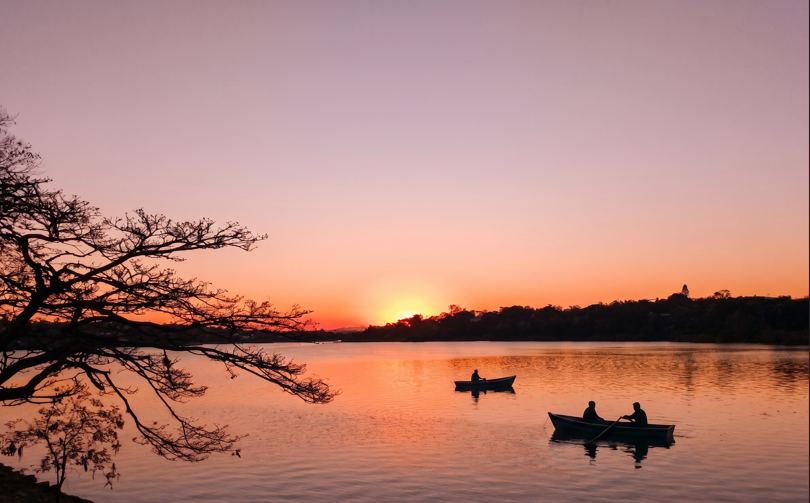
Wide shot of Pawna Lake at golden hour or under monsoon cloud cover, with Tikona or Lohagad fort visible in the background, tents or campsite silhouettes optional in the foreground.
Pawna Lake in monsoon with Tikona fort visible through low cloud in the Sahyadri hills

Pawna Lake spends the dry months as a modest, workmanlike reservoir hemmed in by two forts, Tikona and Lohagad, that most visitors only notice because they happen to be visible from the water. By July, the lake has filled out toward the edge of the surrounding hills, the forts sit half wrapped in low cloud, and the tented campsites that line the shore fill with people who have driven out from Pune and Mumbai specifically to watch weather happen. This is Maharashtra’s most photographed monsoon lake for a reason: the water itself barely changes shape, but everything around it does, hillsides shifting from scrubby brown to a green dense enough to look almost tropical.

What makes Pawna worth the drive in the rain rather than in October, when the campsites are just as active, is the light. Monsoon afternoons here tend to produce a flat, silver quality, broken by shafts of sun when the clouds thin, that turns the lake into a mirror for whatever is happening in the sky above it. Fishermen work the shallows in the early morning before the day-trippers arrive, and the fort ruins on Tikona are close to unrecognisable from their summer selves, greener, mistier, and considerably harder to photograph without a cloud drifting straight through the frame.

Pawna gets crowded on weekends regardless of season, so a Friday evening arrival, ahead of the Saturday rush, is worth the extra planning. SaffronStays has a small cluster of private villas scattered along the lake’s quieter edges, useful for anyone who wants the view without pitching a tent in a downpour.

Mulshi: The Quiet One
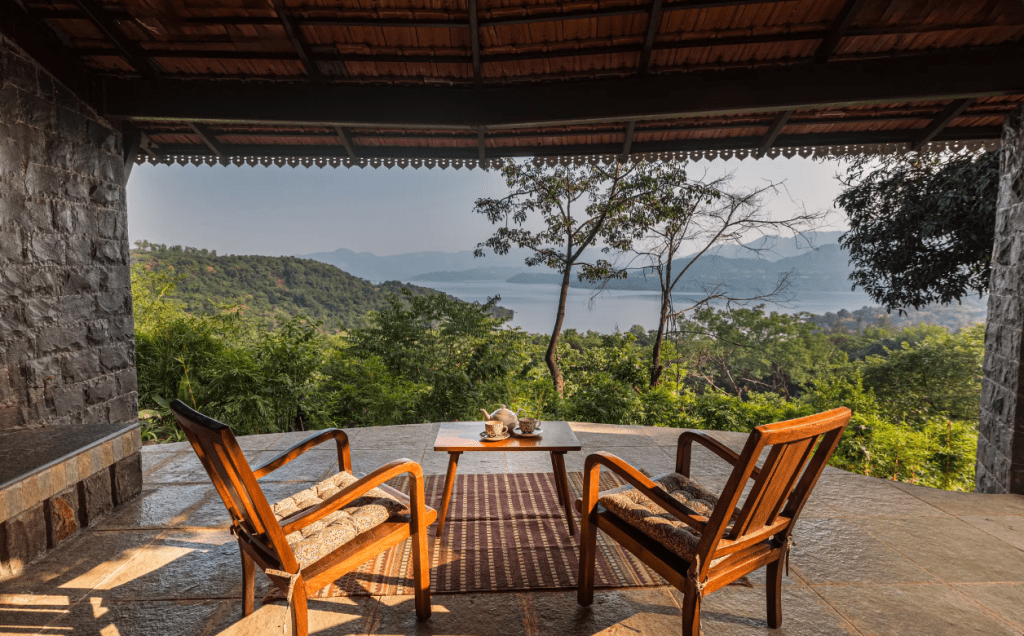
Mulshi backwaters shot from one of SaffronStays Sunkissed, grey monsoon sky, still water reflecting the hills, a couple or small group seated at an outdoor table optional for scale.
Mulshi Lake backwaters seen from SaffronStays Sunkissed during the Maharashtra monsoon

If Pawna is Maharashtra’s monsoon lake for groups and campsites, Mulshi is its version for two people who would rather not talk to anyone else for a weekend. The lake here, formed by the Mulshi Dam on the Mula River, sits further from the main Pune-Lonavala traffic and draws a noticeably quieter crowd, more couples and small families than college groups. The backwater views from the handful of cafes along its edge, several built specifically to look out at the reservoir, are at their best precisely when the weather is at its worst everywhere else: heavy grey sky, water the colour of pewter, hills across the lake fading in and out of visibility as the rain moves through.

Mulshi’s real monsoon asset is Tamhini Ghat, the mountain pass connecting it to the Konkan side of the Sahyadris. In one particularly wet month in 2025, Tamhini reportedly recorded more rainfall than Cherrapunji over the same period, a fact locals mention with some pride. The drive through it during monsoon, waterfalls appearing directly beside the road and cloud settling low enough that you drive through it rather than beneath it, is reason enough to make the trip even without stopping anywhere else.

The area has a fair spread of SaffronStays villas tucked into the lakeside villages around Mulshi, several with the kind of covered outdoor seating that makes watching a downpour from a dry armchair one of the better ways to spend a Sunday.

Lonavala: Everyone Already Knows, and It’s Still Worth It

Cloud-covered Sahyadri valley view from Tiger’s Point near Lonavala during monsoon

Lonavala earns its reputation the hard way: by being genuinely worth visiting even though everyone already knows about it. The twin hill station, paired with Khandala just three kilometres away, has been Mumbai and Pune’s default monsoon escape for so long that it risks sounding like a cliche in every travel list, this one included. What actually happens here in the rain justifies the reputation regardless. Bhushi Dam turns from a trickle into a genuine cascade that people queue up to sit under. Waterfalls that do not exist for nine months of the year appear on hillsides that were dry scrub in April. The valley views from Tiger’s Point and Rajmachi Point disappear and reappear every few minutes as cloud banks move through, which sounds like a minor detail until you are standing there watching an entire valley vanish and return in real time.

Lonavala’s caves, Bhaja and Karla, both carved more than two thousand years ago, take on a different character in the rain too: cooler, quieter, with moisture on the rock faces that makes the carvings look freshly cut rather than ancient. The town gets its fair share of tourist-trap chikki shops and crowded viewpoints, but a short drive out toward Rajmachi Fort, or an early morning at Tiger’s Point before the day-trip buses arrive, still delivers the version of Lonavala that made it famous in the first place. Duke’s Nose, the sharp cliff outcrop overlooking the valley, is worth the short trek for anyone who wants a viewpoint fewer people bother reaching.

SaffronStays runs a solid collection of villas in and around Lonavala, several positioned specifically for valley views, which is the one thing worth paying attention to when the entire point of the visit is watching weather move across a landscape.

The valley views from Tiger’s Point disappear and reappear every few minutes as cloud banks move through, until you are standing there watching an entire valley vanish and return in real time.

Kamshet: Grounded, and Better for It

Kamshet valley and Pawna Lake view from a hillside launch point, terraced green fields visible below, overcast sky, no paragliders in frame (out of season) featuring Moira By the Lake
Green terraced valley and Pawna Lake view from the Kamshet hills during monsoon featuring Moira By the Lake

Kamshet built its modern reputation on paragliding, and most of the year that reputation is well earned: this stretch of the Sahyadris, overlooking Pawna Lake, is one of the better paragliding sites in western India. Monsoon changes that equation completely. Flying pauses for safety reasons for the duration of the season, roughly June through September, and any trip planned around paragliding in the rain will be disappointed. What Kamshet trades paragliding for, though, is arguably a better reason to visit: the view that made it a launch site in the first place gets more dramatic once you stop looking at it from the air and start looking at it from a valley road instead.

Kamshet in the rain is a countryside experience more than an adventure-sports one. The Indrayani river runs fuller, the terraced fields around the villages turn a saturated green rarely seen outside monsoon, and the same ridgelines paragliders use as launch points become viewpoints for anyone willing to walk up with an umbrella. It is quieter than Lonavala, twenty minutes down the same highway, and gets a fraction of the weekend traffic, which makes it a reasonable choice for anyone who wants Sahyadri monsoon scenery without fighting for a parking spot.

A handful of SaffronStays villas sit in the hills around Kamshet, most with views straight down toward Pawna, which turns out to be a fairly good consolation for a grounded paraglider.

Panshet: The Adventurous Counterpoint

Panshet Dam backwaters at high water, water sports activity (kayaking or boating) visible in the middle distance, green hills surrounding the reservoir, overcast sky.
Panshet Dam backwaters full during monsoon with kayaking activity on the water

Panshet is where Pune goes for water sports, and the dam here, formally the Tanaji Sagar Dam on the Ambi River, is built for exactly that kind of energy: jet skiing, kayaking, banana boat rides, a small water park beside the main reservoir. In the dry months this can read as a fairly ordinary picnic spot fifty kilometres outside the city. Monsoon changes the arithmetic. The dam fills close to capacity, the backwaters expand visibly, and the waterfalls scattered around the area, rain-fed and essentially dry the rest of the year, start running properly. The Sahyadri hills surrounding the reservoir turn the same saturated green as everywhere else on this list, but Panshet’s specific character, adventure rather than contemplation, sets it apart from the quieter lakes nearby.

The drive out is part of the appeal. The road from Pune through Khadakwasla to Panshet passes small villages and roadside stalls selling misal pav and vada pav, reliable monsoon fuel for anyone making the trip. Varasgaon Dam, a short distance away, and the Neelkantheshwar temple nearby round out a day that works equally well as a quick outing or an overnight camping trip, tents sheltered under sheds when the rain gets heavy enough to need it.

SaffronStays has villas scattered through the Panshet-Mulshi belt for anyone who would rather swap the campsite tent for a proper bed after a day on the water.

Mahabaleshwar: The One Worth the Longer Drive
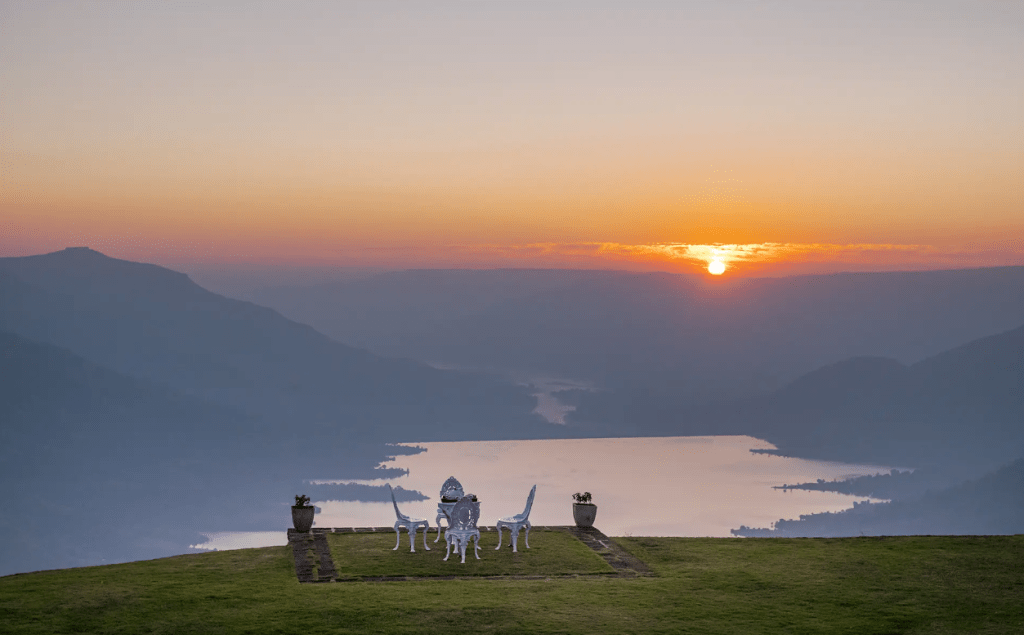
SaffronStays Gold Mist in Mahabaleshwar during monsoon, mist rolling through the valley below, boats on the lake if using the Venna Lake option.
Mist rolling over the valley at SaffronStays Gold Mist in Mahabaleshwar during monsoon

Mahabaleshwar earns the title ‘Queen of Hill Stations’ honestly, and the monsoon is when it collects on that reputation most fully. This is also the one destination on this list where distance genuinely matters to how you plan the trip. From Pune, it is a straightforward three-hour drive, well within weekend range. From Mumbai, it runs closer to five or six hours by road, which makes it less a quick escape and more a proper trip that deserves at least two nights to be worth the drive.

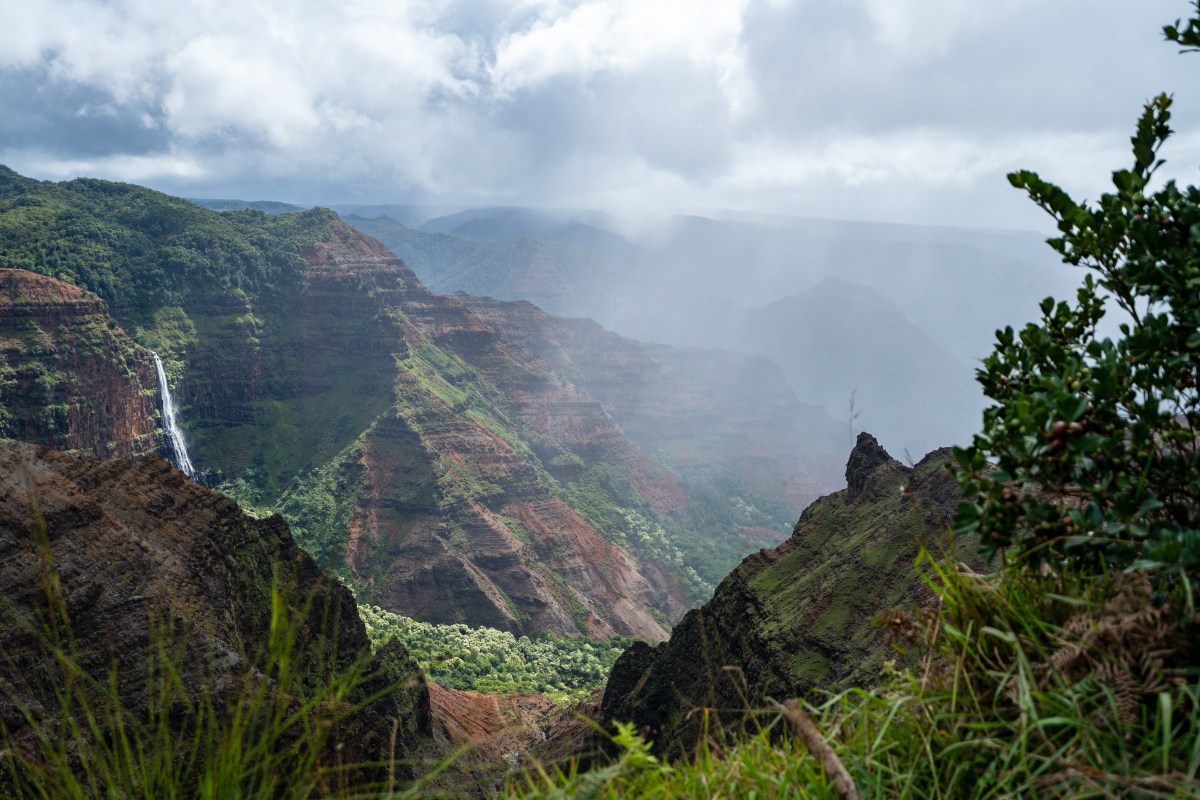
Once there, the payoff is considerable. Venna Lake, ordinarily a pleasant boating spot, turns genuinely dramatic in the rain, mist rolling off the water and the surrounding hills disappearing into cloud within minutes. Arthur’s Seat and the other viewpoints around town trade their usual wide Deccan views for something more atmospheric: valleys filling and emptying with fog, waterfalls like Chinaman’s Falls running at a fraction of their winter volume but visible from the road for the first time in months. Strawberry season overlaps with the early monsoon here too, an unlikely but genuinely pleasant combination of fresh berries and grey skies that the town leans into fully, with roadside stalls selling strawberries and cream through the wetter months.

The market town itself, lined with old colonial-era buildings and genuinely good food, holds up well even on days when the rain makes the viewpoints impractical. SaffronStays has a spread of villas around Mahabaleshwar, most set back from the main tourist strip with their own gardens, which matters more here than almost anywhere else on this list, given how much of the appeal is simply sitting somewhere quiet and watching the weather move.

Panchgani: Mahabaleshwar’s Quieter Sibling
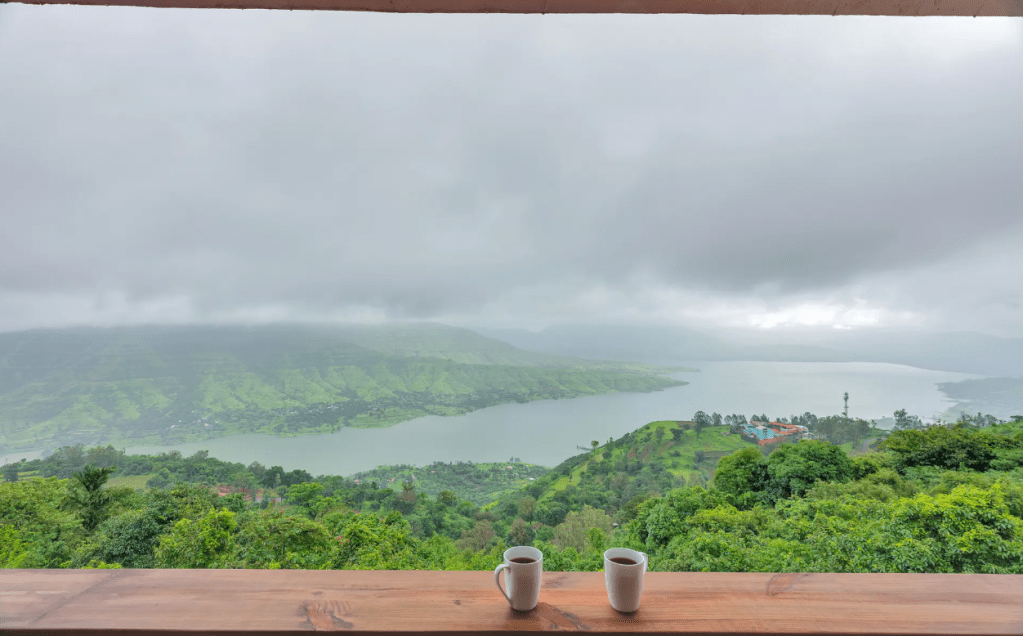
Table Land plateau in Panchgani, cloud drifting across the flat expanse at eye level, green grass covering what would be cracked brown earth in summer.
Table Land plateau in Panchgani covered in green grass with monsoon cloud drifting across

Panchgani sits twenty minutes from Mahabaleshwar and spends most of its existence in that town’s shadow, which is a shame, because the two places do genuinely different things in the rain. Where Mahabaleshwar is misty valleys and waterfalls, Panchgani’s signature is Table Land, Asia’s second-largest volcanic plateau, a vast flat expanse that turns from cracked brown earth in summer to a green table stretching to the horizon by August. Walking across it in a light drizzle, cloud drifting past at eye level rather than somewhere far below, is a genuinely different sensation from any of the valley or lake views elsewhere on this list.

The town itself carries a colonial-era, boarding-school quiet that suits overcast weather better than bright sun. Old cottages, Parsi-run bakeries, and a handful of viewpoints, Sydney Point and Parsi Point among them, look out over the same Krishna Valley that Mahabaleshwar does, just from a different and generally less crowded angle. Panchgani’s strawberry and mulberry farms run alongside Mahabaleshwar’s, so the two destinations pair naturally into a single trip for anyone willing to make the longer drive out from Pune or Mumbai.

SaffronStays’ villas in the area tend toward open lawns and older, more traditional architecture, well suited to the town’s general character, and offer a quieter base than staying directly in Mahabaleshwar’s more built-up centre.

Pune: The City That Actually Improves in the Rain
Rain-soaked tree-lined street in Pune, ideally Fergusson College Road or a Koregaon Park lane, wet pavement reflecting streetlights or overcast daylight, monsoon greenery on the trees.
Rain-soaked tree-lined street in Pune during monsoon with wet pavement and greenery

A city does not usually belong on a list like this, and Pune is here for reasons that have nothing to do with waterfalls or lakes. Monsoon changes Pune in a way that is easy to miss if you are only passing through on the way to Lonavala or Mahabaleshwar: the tree-lined stretches of Fergusson College Road and Koregaon Park turn a deep green, the Mula-Mutha riverfront fills out, and the city’s already substantial cafe culture becomes something closer to essential, since a rainy afternoon in Pune is genuinely best spent watching it from inside a window seat with something hot to drink.

Sinhagad Fort, a short drive from the city centre, is Pune’s own version of a monsoon fort trek: gentler than Torna or Rajmachi, accessible in a couple of hours, rewarding with valley views and Khadakwasla Lake below once the cloud cover thins enough to see it. History runs through the city regardless of weather. Shaniwar Wada and the Aga Khan Palace both hold up fine on a wet day, and Pune’s food scene, from roadside bhutta stalls to old Irani cafes, is arguably better suited to monsoon than to any other season.

Pune itself does not carry SaffronStays villas within the city, but it works well as the starting point for every other destination on this list, with the brand’s Lonavala, Mulshi and Karjat-area villas all within a two-hour drive, close enough for a spontaneous decision the moment the sky turns the right shade of grey.

BEFORE YOU GO: MONSOON TRAVEL NOTES

Roads to Panshet, Mulshi and Pawna can get rough in heavy rain. A higher-clearance vehicle helps but is not essential on the main routes.Paragliding at Kamshet pauses for the season. Do not plan a trip around it between June and September.Water sports at Panshet and swimming in most dam backwaters are restricted or discouraged during high water. Check locally before getting in.Weekday visits avoid the worst of the crowds at Pawna, Lonavala and Mahabaleshwar. All three get dense on weekends.Carry a basic rain layer and a dry bag for phones and cameras. Network coverage thins out around Panshet, Mulshi and the more remote parts of Kamshet.

None of these eight places require the rain to be worth visiting. What the monsoon adds is a kind of urgency, a sense that the landscape is doing something it will not be doing again until next June. Two nights in any one of them, or a longer loop connecting three or four, is enough to understand why so many people from Mumbai and Pune treat these three wet months as the real travel season rather than a compromise, and why the places that photograph as merely nice in December start looking like something else entirely once the rain sets in.

Ready to watch the rain from somewhere better than a bus window?

SaffronStays has private villas across Pawna, Mulshi, Lonavala, Kamshet, Mahabaleshwar and Panchgani, each within a few hours of Mumbai or Pune. Explore SaffronStays villas in Maharashtra →

Frequently Asked Questions

Which places in Maharashtra look best during monsoon?

Pawna, Mulshi, Lonavala, Kamshet, Panshet, Mahabaleshwar, Panchgani and Pune each undergo a visible transformation during the monsoon, from dry brown hillsides turning lush green to seasonal waterfalls appearing on cliffs that stay dry the rest of the year.

What is the best time to visit these places for monsoon views?

Late June through September is peak monsoon in Maharashtra. July and August generally bring the heaviest, most dramatic rainfall and the greenest landscapes, though roads and visibility can be more challenging during this window.

Is Kamshet paragliding open during monsoon?

No. Paragliding at Kamshet pauses for safety reasons for the duration of the monsoon season, typically June through September. Visitors during this period should plan around the valley and lake views instead.

How far is Mahabaleshwar from Mumbai and Pune?

Mahabaleshwar is about 260 km from Mumbai, roughly five to six hours by road, and about 120 km from Pune, around three hours. It suits a Pune weekend more easily than a Mumbai one.

Are these places accessible without a car?

Lonavala and Pune both have good rail connections from Mumbai and Pune. Pawna, Mulshi, Kamshet, Panshet, Mahabaleshwar and Panchgani are best reached by road, either self-drive or a hired cab, since local public transport is limited.

Which of these places suits a couple’s monsoon getaway best?

Mulshi and Panchgani tend to draw a quieter, more couple-oriented crowd, with lakeside cafes and valley viewpoints suited to slower days, compared to the larger weekend crowds at Pawna and Lonavala.

Ultimate Monsoon Road Trips from Mumbai & Pune

Maharashtra changes its mind about itself every June. The brown hills that shrugged through eight months of heat turn a green so total it looks retouched, waterfalls appear on slopes that carried no water the week before, and the Western Ghats stop being a backdrop and start being the entire point of the drive. For a state whose two biggest cities sit less than three hours apart by expressway, this is a rare kind of luck: Mumbai and Pune are both wedged against a mountain range that performs its best trick exactly when the rest of India is trying to stay dry.

Ask a Mumbaikar or a Punekar where the monsoon lives and the answers cluster fast. Lonavala, for the ones who want reliability and roadside chikki. Mulshi, for the ones chasing a lake that turns the colour of wet slate. Kamshet, for the ones who know the paragliders go home in June but the valley gets better anyway. Mahabaleshwar, for the ones willing to give up a whole day to the drive because the strawberries and the cold, at 1,353 metres, are worth it.

What follows are four complete itineraries, not four destinations. Each one names the actual roads to take, the fastest way to get there, the forts and lakes and caves worth the detour, and where to eat along the way, because on all four of these routes the road is doing at least half the work. Fill the tank, check the wipers, and treat the drive itself as the first stop.

Table of Contents:

Mumbai to Lonavala: The Reliable One

Lonavala earns its reputation the boring way: it always works. Every Mumbai household with a car has done this drive at least once, usually several times, and the appeal has never really been about discovering something new. It is about a two-hour window in which the city recedes, the Sahyadris rise up on both sides, and by the time you are past Khopoli the temperature has dropped enough to justify rolling the windows down.

How to Reach

•  Distance from Mumbai: 83 to 100 km, depending on your starting point

•  Travel time: Roughly 2 hours via the Mumbai-Pune Expressway

•  Best way to reach: Self-drive via the Eastern Express Highway or Sion-Panvel Highway to Kalamboli, then the Mumbai-Pune Expressway through Khalapur Toll and Khopoli. Past Khopoli, the expressway runs through the Missing Link, its new tunnel-and-bridge alignment that opened on 1 May 2026, ending at the Kusgaon interchange, which puts you directly into Lonavala

•  From Navi Mumbai: the Atal Setu (Mumbai Trans Harbour Link) feeds straight onto the expressway near Kalamboli and skips the Sion-Panvel crawl

•  Two-wheelers: barred from the expressway and the Missing Link; use the Old Mumbai-Pune Highway (NH48) instead, which still climbs the Khandala ghat the traditional way

•  Good to know: the Missing Link is new infrastructure going through its first full monsoon; a landslide briefly shut it on 6 July 2026, so check live traffic status before setting out

Things to Do

•  Bhushi Dam, for the classic view of water spilling over the steps

•  Tiger’s Point and Lion’s Point, for valley panoramas

•  Karla and Bhaja Caves, rock-cut Buddhist sites more than two thousand years old and near-empty on weekdays

•  Rajmachi Fort trek, for a longer day with a full Sahyadri panorama

•  Della Adventure Park, for go-karting, bungee and other high-energy activities

Food and Cafes

•  Maganlal Chikki on Bazaar Road and Cooper’s Fudge in Ryewood, for Lonavala’s signature sweets

•  German Bakery, for an open-air continental breakfast or evening coffee

•  Kinara Village Dhaba, for a full North Indian sit-down meal

•  Golden Vada Pav, for the street-food stop locals actually queue for

•  Hotel Rama Krishna on the Mumbai-Pune Highway, for a reliable thali between sightseeing stops

DON’T MISS

Time your first crossing of the Missing Link for daylight. The Tiger Valley Bridge, rising some 100 metres above the valley floor, is worth seeing and not just using to get through.

The monsoon does not visit Lonavala. It moves in for three months and redecorates.

Where to stay: SaffronStays’ collection of villas around Lonavala sits close enough to the main sights for a lazy morning at Bhushi Dam, but far enough into the hills that the evenings stay quiet. The cluster also includes Glasshouse Celeste, part of SaffronStays’ flagship Celeste Collection, voted India’s Favourite Villa at the MakeMyTrip Awards.

Monsoon-green Sahyadri hills flanking the Mumbai-Pune Expressway near Lonavala, mist visible in the valley below, ideally shot from an elevated viewpoint like Khandala or Tiger’s Point
Monsoon-green hills along the Mumbai-Pune Expressway near Lonavala

Pune to Mulshi: The Lake Drive

Mulshi does not announce itself the way Lonavala does. No chikki shop marks the entrance, no wax museum, no crowd waiting at a single dam. What Mulshi has instead is a reservoir that spends the monsoon looking like it was poured from wet slate, ringed by hills that hold cloud low enough to touch the water.

How to Reach

•  Distance from Pune: 35 to 45 km

•  Travel time: About an hour

•  Best way to reach: Self-drive from Kothrud via Karve Road to Chandni Chowk, the junction off the Mumbai-Bangalore Highway that marks the start of the Mulshi stretch, then the Pune-Paud Road through Pirangut and Bhugaon to Mulshi Dam

•  Scenic alternative: via Lavasa Road, roughly 15 to 20 km longer, continuing naturally toward Tamhini Ghat, the shortest route from Pune to the Konkan beaches at Shrivardhan and Harihareshwar for a longer weekend

•  Good to know: fuel up in Pirangut or Paud, the last reliable pumps before the network gets patchy; avoid lingering past 5 or 6 pm, since fog settles fast into the Mulshi-Tamhini corridor after dark

Things to Do

•  Mulshi Dam, the easiest stop on this entire list for children or older relatives, with moving water within a minute of the shoulder, no trek required

•  Valanewadi, roughly 6 km past the dam, for the best elevated view of the full lake

•  Dhangad and Korigad forts, visible on the ridgeline for anyone wanting a fort detour

•  Tamhini Ghat, a scenic extension of the drive past the dam

•  Andharban trek, starting from a village just off this road, a six-to-seven-hour commitment best kept as its own day rather than an add-on

Food and Cafes

•  Paradise Cafe, just past the Tata Dam turn, for a dam-and-lake view and its well-loved chicken menu

•  Hotel Garva in Bhugaon, for Maharashtrian thalis and kala masala chicken in a traditional wada-style courtyard

•  Dhaba-style restaurants directly opposite Mulshi Dam, for a lakeside thali

•  Roadside stalls past Pirangut, for hot corn and chai

DON’T MISS

The stretch of road right after the Tata Dam turn, where the lake first comes into view through the trees. It is easy to drive past without slowing down, and it is the best photo opportunity on this entire route.

Where to stay: SaffronStays has a cluster of villas near the Mulshi reservoir itself, built for exactly this kind of view: mornings on a veranda with the lake still wrapped in mist, well before the day-trippers arrive.

Mulshi Lake in monsoon, still slate-grey water reflecting green hills and low cloud, shot from the lakeside road or a jetty at soft morning or evening light
Mulshi Lake reflecting monsoon clouds and hills near Pune

Pune to Kamshet: The Quiet Adventure Belt

Kamshet spends most of the year known for one thing: paragliding. Between October and May, the valley fills with instructors and first-timers running off a launch site with the Sahyadris spread out below them. Come June, that entire industry goes quiet, and it is tempting to assume Kamshet has nothing left to offer once the gliders are grounded. The opposite is true: the same valley, minus the crowds, filled instead with the kind of green that makes the whole point of the flying redundant for a few months.

How to Reach

•  Distance from Pune: 45 to 50 km

•  Travel time: 1 to 1.5 hours

•  Best way to reach: Self-drive on the Old Mumbai-Pune Highway (NH48) via Dehu Road and Talegaon Dabhade to Kamshet town

•  For Pawna Lake: continue past Kamshet to Somatne Phata and turn off onto the Kamshet-Pawnanagar road

•  By train: Kamshet has its own station on the Pune-Lonavala local line, a useful fallback for hiring a shared jeep onward to Pawnanagar

Things to Do

•  Pawna Lake, one of the region’s best-known camping spots, ringed by hills that stay green from June through September

•  Lohagad Fort, manageable in under an hour, for a 360-degree view of the Maval region

•  Visapur Fort, higher and more demanding, for the more serious trekker

•  Tikona and Tung forts, further along the same ridgeline, for stringing two or three into one day

•  Bedse Caves, 1st-century-BC rock-cut Buddhist caves, usually near-empty even on a weekend

Food and Cafes

•  Dhaba-style restaurants directly on Pawna’s shore, for Maharashtrian thalis, gavran chicken with Indrayani rice, and tandoori barbecue

•  Small cafes overlooking the lake and the Lohagad-Tikona-Tung skyline, for a quick vada pav and chai between forts

DON’T MISS

Skip the flying season logic entirely and go for the migratory birds instead. Pawna Lake draws visiting species between June and August, right when the paragliders have packed up for the year.

Kamshet in July is what Kamshet in December is trying to be for the other nine months.

Where to stay: SaffronStays’ presence in Kamshet puts guests within easy reach of Pawna Lake and the Maval forts, without the crowds that build up around Lonavala on a monsoon weekend.

Pawna Lake with green hills and the silhouette of Lohagad Fort in the distance, monsoon clouds overhead, shot in late afternoon light
Pawna Lake and Lohagad Fort near Kamshet in the monsoon

Mumbai to Mahabaleshwar: The Real Road Trip

Everything else on this list can be done as a half-day loop. Mahabaleshwar cannot, and that is precisely why it belongs on it. At five to six hours each way, this is the one route where the destination and the drive genuinely compete for attention, and where the temptation to treat the journey as a means to an end needs to be resisted from the start.

How to Reach

•  Distance from Mumbai: 247 to 270 km, depending on route

•  Travel time: 5 to 6 hours

•  Best way to reach: Self-drive via the Mumbai-Pune Expressway (through the Missing Link past Khopoli) to Pune, then NH48 through Satara district to Surur, followed by the Surur-Wai Road, Wai-Panchgani Road and Panchgani-Mahabaleshwar Road

•  Alternate route: NH66 through Mahad and Poladpur, roughly 226 km, better suited to travellers already coming up from the Konkan coast than a straightforward day’s drive from Mumbai

•  By rail: no station in Mahabaleshwar itself; the nearest, Wathar, is about 60 km away, so nearly everyone arrives by road

Things to Do

•  Wai, a natural halfway stop with small eateries before the final climb

•  Table Land in Panchgani, Asia’s second-highest plateau, a flat green expanse in the monsoon

•  Parsi Point and Sydney Point on the way in, Kate’s Point and Elephant’s Head Point closer to town

•  Pratapgad Fort, the trek most visitors build a half-day around

•  Venna Lake, the easiest lakeside stop for families

•  Lingmala Falls, over 150 metres tall and at its fullest in August, and the quieter Dhobi Falls a half-hour further

•  Kaas Plateau, roughly 30 to 40 minutes further for travellers with an extra half-day, best just outside peak monsoon when the flowering season begins

Food and Cafes

•  Mapro Garden on the Panchgani-Mahabaleshwar Road, for strawberry milkshakes, wood-fired pizza and preserves to take home

•  Mapro Food Park on the Wai-Surur Road, the sibling property with a working factory tour attached

•  The Grapevine Restaurant in Mahabaleshwar’s main market, known for lamb burgers and a broad enough menu for vegetarians too

•  Elsie’s Bakery, for fresh local bakes

•  Abhiruchi Garden Restaurant in Wai, for a family-style lunch stop before the final climb

DON’T MISS

Push on to Dhobi Falls even though Lingmala gets all the attention. Fewer visitors make the trip, and the walk in feels like it belongs to you for the afternoon.

Six hours to Mahabaleshwar sounds like a lot until you remember the alternative: staying home.

Where to stay: SaffronStays’ Mahabaleshwar and Panchgani villas sit within twenty minutes of most of the region’s viewpoints and waterfalls, which matters on a route this long. The reward for six hours of driving should be a home, not another commute.

Winding ghat road near Panchgani or Mahabaleshwar, mist-covered valley below, a waterfall visible in the distance, shot from a viewpoint along the road
Misty ghat road on the Mumbai to Mahabaleshwar route

Before You Leave: Monsoon Driving Notes for All Four Routes

MONSOON DRIVING ADVISORY

•  Leave by 6 or 6:30 am. Every route on this list gets exponentially more crowded after 9 am on a weekend.
•  Check wipers, brakes and tyre tread before any of these drives, not only the long one to Mahabaleshwar.
•  Do not stand under or swim near waterfalls and dam spillovers. Local authorities issue seasonal restrictions on several of these spots during peak monsoon; treat them as viewpoints, not swimming holes.
•  Fuel up before entering low-network stretches, particularly past Paud toward Mulshi and past Panchgani toward Mahabaleshwar.
•  Avoid driving after dark on ghat sections. Fog thickens fast on the Mulshi-Tamhini corridor, the approach to Pawna near Kamshet, and the Panchgani-Mahabaleshwar stretch.
•  Download offline maps for all four routes before leaving. Connectivity drops in patches on every one of them.

Frequently Asked Questions

Which of these four monsoon road trips is best for a first-time driver?

Mumbai to Lonavala is the most forgiving option, a mostly expressway drive with reliable infrastructure and no serious ghat sections. Pune to Mulshi is a close second for the same reasons.

Is it safe to drive to Mahabaleshwar during the monsoon?

Yes, with caution. The ghat road past Panchgani narrows and fog can reduce visibility quickly, so drive at a sensible pace, avoid night travel, and give trucks room on the hairpins.

What is the best time to leave for a monsoon day trip from Mumbai or Pune?

Between 6 and 7 am. All four routes see traffic build up sharply after 9 am on weekends, particularly closer to the destination.

Which route is best for a family with young children or elderly travellers?

Pune to Mulshi. The spillover point at Mulshi Dam requires no trekking or walking, making it the easiest monsoon stop on this list to reach and enjoy.

Can Kamshet still be visited in monsoon if paragliding is paused?

Yes. Paragliding pauses for safety between June and September, but Pawna Lake, Lohagad and Visapur forts, and the Bedse Caves remain fully accessible and are arguably at their best during these months.

How far in advance should villa stays be booked for these routes in monsoon?

At least 2 to 3 weeks ahead for weekend dates in July and August, when demand across Lonavala, Mulshi, Kamshet and Mahabaleshwar peaks simultaneously.

A Foodie’s Guide to Mahabaleshwar in the Monsoon

In Mahabaleshwar, the rains don’t just bring mist to the hills. They wake up the soil. The roads turn quiet, the trees deepen in colour, and everything smells a little sweeter. For those who love food, this is when the town reveals its true flavour.

The crowds thin out, but the kitchens stay busy. You’ll find hot corn bhajiyas served with green chutney, fresh mulberries still wet from the drizzle, and the kind of warm Maharashtrian meals that make you pause after every bite. This is your guide to eating your way through Mahabaleshwar in the monsoon.

Fresh, Local and Still Warm

Even in the off-season, the hills are generous. The monsoon months bring juicy mulberries, lush red carrots, and of course, the last of the strawberries. You may not get them in baskets anymore, but you’ll still find fresh fruit in local jams, syrups, and warm desserts.

One of the first things you’ll smell is roasted corn on the cob. Near Venna Lake, it’s grilled on open coals and served hot with chilli salt and lemon. Many vendors also sell thick, comforting bhutta soup in paper cups. Stop by roadside carts on the way to Wilson Point or Arthur’s Seat – no fixed menu, just fresh, homemade food you won’t find in restaurants.

The Sweet Tooth Has a Home Here

Strawberry cream might be the first thing people think of when it comes to Mahabaleshwar food, and with good reason. Even in the rain, Bagicha Corner serves it fresh, layered with whipped cream and just enough sugar to let the fruit shine. You’ll also find mulberry cream and raspberry syrups, often paired with sponge cake or milkshakes.

A few kilometres away is Mapro Garden, where you can sip warm berry squash while exploring counters of guava candy, jelly jars, and tasting spoons dipped in local honey. Part café, part factory, Mapro is less of a pitstop and more of a food experience. Kids dig into cheesy pizzas while parents shop for jars of jam to take home.

And then there’s Elsie’s Bakery, an old-fashioned spot tucked into the market. Their handmade fudge, butter cakes, and jam rolls are wrapped in parchment and nostalgia. It’s the kind of place you remember long after your trip ends.

A traditional Maharashtrian thali featuring roti, dal, spicy vegetable curry, salad, and sweets, served on a decorative tablecloth.

Warm Plates on a Cold Day

When the skies are grey and your shoes are wet, nothing compares to a proper Maharashtrian thali. Hirkani Garden Restaurant is a go-to for its homely offerings. Expect bhakri, bharli vangi, pithla, and varan bhaat served hot and without fuss. The food is simple, cooked fresh, and feels like it came from someone’s home kitchen.

Not far from the market is Hotel Dreamland, known for its vegetarian thali. The kadhi here is thick and tangy, the batata bhaji soft and spiced just right. Sit by the window and watch the rain while you finish every last bite.

And if you’re after misal pav, you’ll find plenty of versions, but Hotel Rajmahal and Aman Restaurant get it right. Spicy, fiery misal topped with crispy farsan, served with soft pav and a glass of buttermilk. These places fill up quickly during lunch, even on rainy weekdays.

A scenic view from a balcony overlooking lush green hills and a lake in Mahabaleshwar, with a rocking chair and a small table featuring a cup.

When It’s Pouring Outside, Try This

Some of the best cafes in Mahabaleshwar are the ones built for rainy days. The Grapevine, tucked just off the main road, is one of them. Known for its continental fare – pepper chicken, pasta, grilled trout it’s a favourite for slow meals in warm lighting.

Further down a quieter lane is Rustic Cafe, a small, wood-lined space that serves brownies, toasties, and thick hot chocolate. The staff don’t rush you, the playlists are soft, and the chairs invite you to stay longer than you planned.

Craving something heartier? Mad Smoke Café offers burgers, wood-fired pizzas, and strong filter coffee – simple, satisfying food to warm you up.

Don’t Leave Without Tasting This

As the rain begins to clear, the market lights come on and the smell of caramel fills the lanes. That’s when you head to Laxmi Chikki. Their walnut and sesame chikkis are crunchy and sweet, and their chocolate fudge is a favourite with locals.

Shops nearby sell everything from mulberry syrup and raspberry jelly to chilli guava candy, each one sealed in glass jars and wrapped in plastic for the road. You’ll also find small, handwritten signs that say “homemade jam” or “fresh honey.” Trust those.

A scenic view of a lush green landscape in Mahabaleshwar, featuring a wooden cottage with a green roof, surrounded by trees and overlooking a vast valley under a partly cloudy sky.

The Taste of Mahabaleshwar Lingers

In Mahabaleshwar, food isn’t dressed up. It’s simple, seasonal, and full of warmth. And during the rains, it’s not just the flavours that stand out, but the moments in between. A hot plate on a cold table. A steaming cup shared under a tin roof. A walk in the drizzle with a bag of chikki in hand.

You may come for the views, but it’s the food that stays with you.

A Season of Strawberries: Finding Magic in Panchgani and Mahabaleshwar

There’s a stretch of land in Maharashtra where the air smells faintly of fruit and wood smoke, and where winter lingers gently into spring. Between February and April, the hills of Mahabaleshwar and Panchgani turn into a patchwork of green leaves and red fruit. This is strawberry country — and more than that, it’s a way of life.

Every year, families, couples, and travellers from across India find themselves drawn here for the Mahabaleshwar Strawberry Festival — a quiet, delicious celebration that marks the peak of the strawberry season in Panchgani and Mahabaleshwar. The festival isn’t loud or overly curated. It’s woven into the daily rhythms of farm life, and it’s that very simplicity that makes it so unforgettable.

April is one of the best times to visit Panchgani and Mahabaleshwar — and this year, it gets even better. From April 26-28, the Maharashtra Government’s Directorate of Tourism is hosting the Mahabaleshwar Tourism Festival, featuring cultural performances, strawberry and agri-tourism showcases, adventure activities, and a vibrant food and handicraft exhibition.

What to Expect at the Mahabaleshwar Strawberry Festival

The Strawberry Festival in Mahabaleshwar usually unfolds in March, right at the heart of the harvest. But it’s not just a one-day event — the whole strawberry picking season in Panchgani and Mahabaleshwar becomes a living celebration.

At local farms, visitors are welcomed for strawberry picking experiences. You’ll be handed a basket and pointed toward rows of fruit, free to pick your own. Some farms even host tastings, where you can try everything from warm strawberry jam to chocolate-dipped berries made right before your eyes.

And then there’s the food –  you’ll find the kind of indulgence that lingers in memory:

  • Fresh strawberry milkshakes with thick cream
  • Waffles and ice cream piled high with fruit
  • Homemade preserves you can carry home in glass jars

It’s not touristy. It’s warm, local, and made with the kind of care that only comes from communities that grow what they serve.

Harvesting delicious organic strawberries fruit.

Best Time to Visit Panchgani and Mahabaleshwar for Strawberries

If you’re planning a trip, aim for mid-February to early April. This is when the berries are at their juiciest, the skies are blue, and the roads are still quiet. Unlike the monsoon crowds or peak holiday weekends, strawberry season brings a slower kind of tourism — perfect for those who want to pause, eat well, and explore without rush.

Things to Do Beyond the Berries

While the strawberries are the star, the setting deserves equal applause. There’s plenty to do beyond the farms:

  • Take in panoramic views from Table Land in Panchgani, one of Asia’s largest volcanic plateaus
  • Stop at Kate’s Point or Elephant’s Head Point to watch the valleys unfold below
  • Visit Lingmala Falls in the early hours for a quiet moment of reflection
  • Explore Panchgani’s old-world market for locally-made cheese, fudge, and honey

If you’re feeling adventurous, short treks and forest walks abound — especially in the cooler morning hours. And when you’ve had your fill of movement, a cup of local strawberry tea on a verandah is often the perfect end to the day.

The Charm of Strawberry Picking for Families

There’s something timeless about teaching a child how to pick fruit. In these farms, strawberry picking in Panchgani with kids becomes a memory you’ll carry far longer than a souvenir. It’s sticky fingers, laughter in the sun, and the soft thud of ripe fruit dropping into a basket.

Even teenagers who are often unimpressed by travel find joy here — the kind that comes from doing, not just seeing. Family-friendly strawberry farms in Mahabaleshwar offer wide open spaces, clean air, and hands-on experiences that bring generations together.

Villas that Bring You Close to the Harvest

The best way to enjoy strawberry season is to stay close to the farms, in homes where morning tea is served on a patio, and dinner comes with stories from the staff. In our next section, we’ll guide you through the finest villas in Panchgani and Mahabaleshwar — handpicked for their views, charm, and proximity to all things berry!

Verandah by the Valley, Panchgani

Verandah by the Valley feels like a storybook retreat, where misty mornings and valley views greet you at breakfast. Just 200 metres from a working private farm, this villa invites guests to truly live amidst the rhythm of strawberry season. The wrap-around verandah and intimate corners make it perfect for quiet family moments or evening conversations over tea.

Blueberry, Panchgani

Tucked away in the folds of the Panchgani hills, Blueberry is where time slows down. Its location, just 2 km from the popular Krishna Farm, makes it ideal for families looking to wake up late, stroll through berry fields, and return with baskets of fresh fruit. The villa itself is understated and warm — a place where you can breathe easy.

Horizon 360°, Mahabaleshwar

Horizon 360° blends clean architecture with wide-open views, making it a favourite for those who appreciate a little modern polish in a rustic setting. Located 5 km from Alishan Farm and close to Venna Lake, this villa is perfect for travellers who want both nature and convenience. Evenings here often end with a bonfire and the scent of the hills in the air.

Garnet House, Mahabaleshwar

There’s a natural honesty to Garnet House– terracotta tones, forest views, and a layout that invites togetherness. Only 2 km from Patel Farm, this villa offers not just easy access to strawberry picking but a real sense of connection to the land. It’s the kind of place where meals are long, conversations linger, and mornings begin with birdsong.

Aurelia, Panchgani

Aurelia is graceful in every sense — high ceilings, flowing spaces, and an atmosphere of calm that’s hard to find. At just 2 km from Aranya Farm, it lets you dip in and out of the strawberry experience without ever straying far from comfort. Whether you’re travelling with kids or just a book and silence, this villa wraps around you like a warm shawl.

Mountain Rizz, Panchgani

With a name that hints at elevation, Mountain Rizz lives up to the promise. Sleek, airy, and just 1 km away from Mapro Gardens, it’s a front-row seat to the Mahabaleshwar Strawberry Festival. Wake up to a view, walk down for milkshakes and waffles, and return to a villa that feels both stylish and grounded.

To visit Panchgani and Mahabaleshwar during strawberry season is to experience the hills at their most generous — ripe with flavour, memory, and stillness. Between the scent of strawberries and the sound of leaves, a quiet tradition begins — one you’ll want to repeat, year after year. Make it yours with a stay in a villa where the season truly comes alive.

Browse handpicked stays now!

10 Villas in Mahabaleshwar For Your Next Road Trip With Friends

Pocket-friendly villas in Mahabaleshwar

Located in the picturesque Western Ghats, Mahabaleshwar is a lovely hill station known for its pleasant weather, lush-green valleys, and verdant hills. Because of its strawberry plantations, various rivers, gorgeous hills, and cascades, this magnificent hill station is nothing short of a paradise. It has also been a popular pilgrimage site due to the presence of various sacred temples as well as the fact that the Krishna river originates from here. With the pleasant atmosphere and scenic surrounding, SaffronStays offers you a selection of affordable villas in Mahabaleshwar that are ideal for staying and spending a memorable vacation with family and friends. Known for warm hospitality and top notch services, here are some of the best pocket-friendly villas in Mahabaleshwar and nearby places.


SaffronStays Horizon 360°, Mahabaleshwar

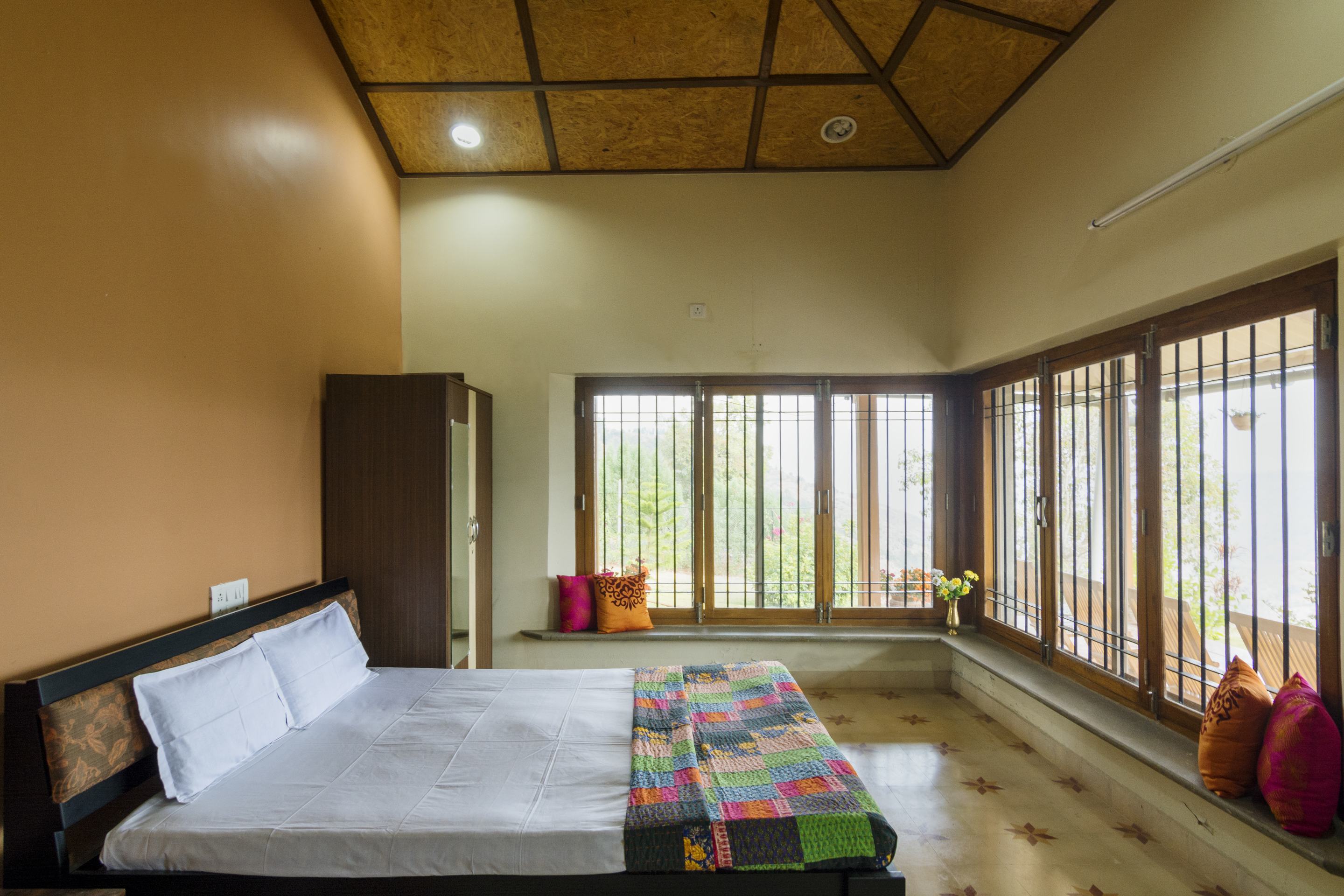
SaffronStays Horizon is a 5 bedroom pet-friendly villa located in Mahabaleshwar with an infinite view of the distant hills. This lovely private villa is surrounded by greenery making it a perfect place to relax while enjoying the cool breeze. It features a lovely garden filled with colorful flowers which is the best place to enjoy a meal with family and friends. Bedrooms are very well equipped with old Parsi style beds and finely carved wooden cupboards to ensure complete comfort of guests.


SaffronStays Verandah by the Valley, Panchgani

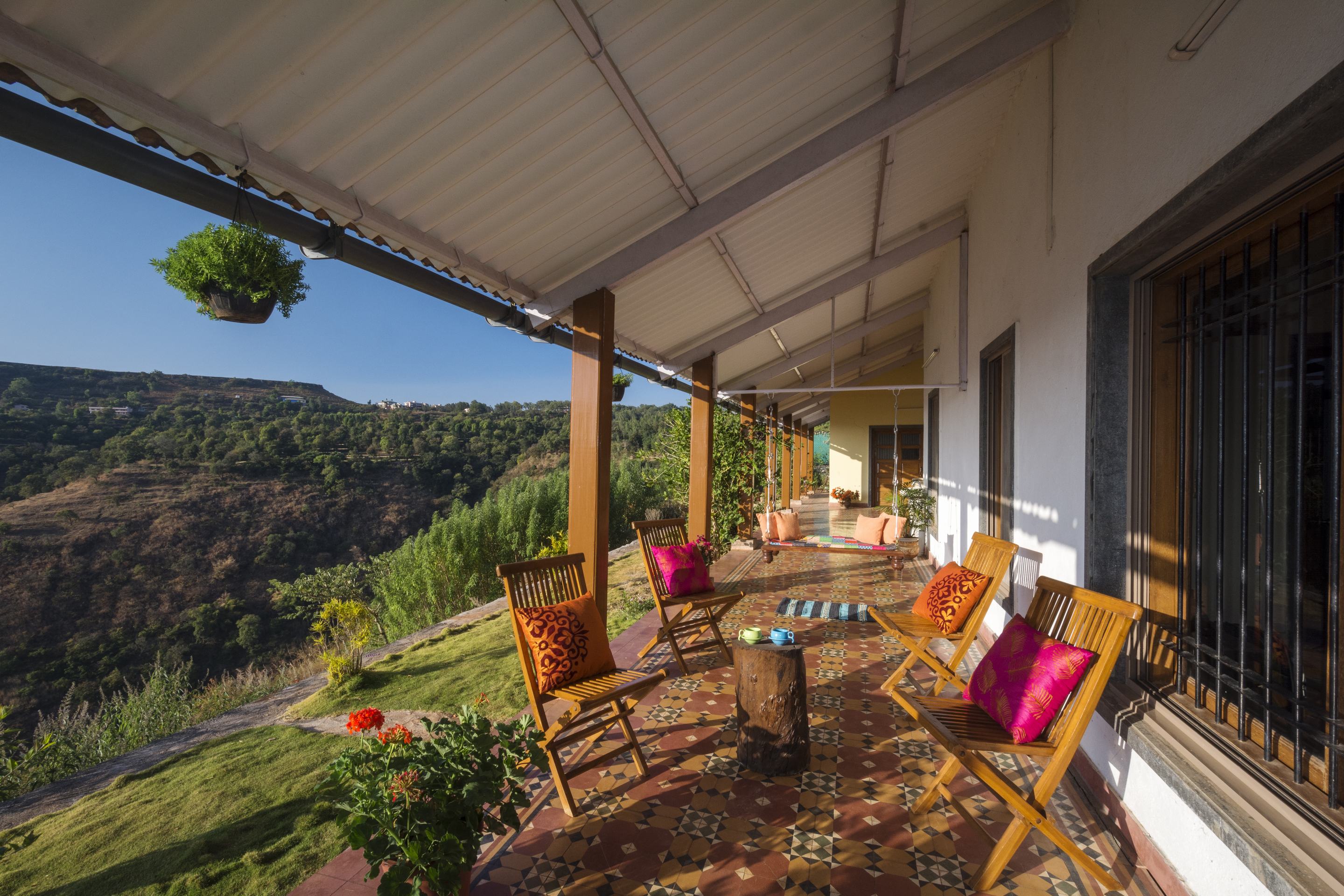
SaffronStays  Verandah by the valley is a lovely 3 bedroom private villa that overlooks the stunning Panchgani valley. The beautiful sunset in the evening and clouds rising from the verandah gives this place a cosy and relaxing vibe. The gorgeous rooms and inverlochy-tiled verandah are very well equipped and contain antique wooden furniture. The chef in the villa will prepare authentic Maharashtrian style meals from freshly picked vegetables. Enjoy these meals in the private gazebo while unobstructed views of the natural beauty all around keep you company.


SaffronStays Red Brick House, Panchgani

Lovely and gorgeous place for a holiday, SaffronStays Red Brick house is a perfect blend of old world charm and modern style facilities. This beautiful home is the perfect place to spend relaxing time with kids and old folks, while leaving behind the hustle and bustle of daily life. It has an orchard and a lovely spacious lawn making them the perfect places to enjoy the picnic. Equipped with indoor games, an outdoor swing and a spacious terrace, you’ll find plenty of spots to indulge in fun activities with family and friends.


SaffronStays Casa Tranquil, Panchgani

Surrounded by the pleasant valleys of Panchgani, SaffronStays Casa Tranquil is a 4 bedroom pet-friendly villa with a unique and lovely vibe. The veg-only villa features a swimming pool which gives the opportunity to indulge in pool games with family and friends. For the entertainment of kids, there is a play area having few swings, slides and see-saw. There is a large open area which is the best place to enjoy a bonfire along with some games and music. Venna lake and Panchgani market are just 15 minutes away from the pool villa.


SaffronStays Redfields By Venna River, Mahabaleshwar

SaffronStays Redfields By Venna River is a contemporary 3 bedroom villa that overlooks the stunning mountains and the strawberry farms. This private villa is beautifully designed  with natural wood and pleasant colour tones, and has a spacious verandah. Make some fantastic memories in the games area by playing carrom, chess, and other board games. Enjoy a farm-to-table experience with delicious meals and authentic Marathi thali prepared from freshly picked vegetables grown locally in the villa premises.


SaffronStays Niramay, Velhe

SaffronStays Niramay is a 3 bedroom pool villa which is an excellent place to spend a lovely holiday in the midst of nature. The villa has a lovely ambience due to the beautiful forest views on one side and stunning valley views on the other. Spread over 6 acres of land, this private villa near Pune has an influence of Wada style of architecture. It is equipped with top notch amenities to ensure a relaxing stay and a pleasant vacation. Try your hand at vegetable picking, relish farm-to-fork meals in the gazebo or simply enjoy your evenings in the spacious verandah…the home leaves you spoilt for choice!


SaffronStays Glasshouse, Panchgani

Situated on one of the finest hill stations, SaffronStays The Glasshouse is a charming couple-friendly villa equipped with cosy furnishing and French style windows. The cosy atmosphere of the villa makes it ideal for enjoying special intimate celebrations or occasions as well as spending relaxing time with your loved ones. It has a modern interior and exterior design, as well as great amenities. The large outdoor area is ideal for enjoying games with your partner!


SaffronStays Avabodha, Panchgani

SaffronStays Avabodha is a 3 bedroom eco-friendly villa perfect for spending a memorable holiday with your loved ones. It offers beautiful views of two rivers, which will calm you the moment you set your eyes on it. The chef on-site will pamper you with some of the best farm to table dishes by preparing some delicious Maharashtrian meals. If you love being outside under the open sky, the lawns are the best place to relax or simply huddle up over a bonfire!


SaffronStays Sky Abode, Panchgani 

Overlooking the breathtaking views of Panchgani valley, SaffronStays Sky Abode is a 7 bedroom party villa surrounded by lush greenery. The outdoor barbeque area and a large spacious lawn is perfect for having a memorable picnic with loved ones. Enjoy games like carrom and table tennis at the villa’s gaming area. It will definitely be worthwhile to visit the nearby attractions such as Parsi Point, Sydney Point, and the Bhilar Waterfall.


Panchgani is definitely one of the best places to visit and explore while admiring the lovely nature from up close. It is the perfect place to enjoy your holiday while leaving behind the hustle and bustle of daily life. If you are planning to visit the strawberry capital, book some of the best pocket friendly villas by SaffronStays, which will provide you with an unmatched service experience along with some of the best facilities.

Best Road Trips In India: Part 1

Travelling in India is a fascinating experience. Exploring the diversity of India through majestic mountain ranges, lush green plains, and golden sands of beaches can work like therapy; in fact, the best way to escape the hustle of city life and unwind.
And what better way to explore our beautiful country than hitting the roads! Road trips are ideal to explore the unknown. It allows you to customise your itinerary however you want and have the freedom to visit places you want to.
Here is a list of best road trips in India that you should take to take a break from your monotonous life and quench your thirst for travel.


Mumbai to Pune


For most people who live in Mumbai, a road trip to Pune is the fastest way to escape the maddening city life. Pune has many astonishing historical sites which are architecturally splendorous and fill us with nostalgia. The delicious food and the lively nightlife make it an ideal spot for those looking to chill after a long tiring day. Hill stations like Mahabaleshwar, Lonavala and Panchgani are nearby, where you can revel in the scenic locales. And if you wish to get a hill station-like experience, SaffronStays Happy Fields, Pune, is your one-stop destination. This sustainable private villa near Pune is located in the middle of farmland. Here you can enjoy a farm-to-table experience as the in-home chef uses the local dairy and vegetables from the farm to create delicious meals. You can give your children an experience of living alongside cows, hens, and goats and enjoy the harmony of rustic living in this comfortable villa.
Just 6 hours away from Mumbai, this villa is the best stay during your road trips from Mumbai.


Mumbai to Lonavala and Pawna


Lonavala is one of the popular travel destinations near Mumbai if road trips are on your mind. The drive to this town will take you through some of the best roads in the country, ensuring a pleasant driving experience.
Lonavala is a remarkable hill station barely a two-hour drive from Mumbai. You will often find yourself driving through the misty mountains, a feature unique to Lonavala. The mesmerising hill station lies in the lap of Sahyadri and is situated close to Mumbai and Pune.
Pawna Lake, around 20 km from Lonavala, is yet another beautiful destination that one could head to on a road trip to Lonavala. It is one of the most popular places for picnics and outdoor activities. Pawna is surrounded by picturesque mountains and is full of scenic beauty. En route, your home for the visit ought to be SaffronStays Kosha Villas, Pawna. Here, you will experience a homely atmosphere with all the modern amenities. This home with an infinity pool overlooking Pawna Lake is one with the closest lake view you will get.


Mumbai to Igatpuri, Nashik


The sheer beauty of nature on your drive from Mumbai to Igatpuri will mesmerise you. This weekend destination, located close to Nashik, lies in the beautiful Sahyadri mountain range and is surrounded by mist, dense forests and soothing valleys. You can immerse yourself in many sightseeing attractions in and around Igatpuri, a haven for nature lovers – from lush greenery to beautiful waterfalls and much more. You can enjoy several adventure activities like trekking, rock climbing and camping during your stay in Igatpuri. If you want to unwind and stay indoors, head straight to SaffronStays Jannat, Igatpuri or SaffronStays Onellaa, Nashik or SaffronStays Rosé Vineyard By The Lake, Nashik, all ideal weekend getaways from Mumbai.
While the Igatpuri villa is next to a serene lake, the latter two homes are next to vineyards. Guests get a complete insight into grape farming during their stay at the vineyard homes.


Mumbai to Alibaug and Dapoli


If you are falling short of vacation places in India, you haven’t thought about Maharashtra’s Mini-Goa, Alibaug. This small Konkan coastal town in Maharashtra is extremely popular among travellers who opt for quiet beach getaways. The beaches, forts, and boutique resorts have made this destination a perfect getaway for tourists. If you wish to drive further down, head to Dapoli, where you will be astonished by the views of the Arabian Sea. The drive through winding roads to this quaint little town with a green canopy of trees on one side and the coastline on the other is breathtaking. Looking for where to stay during your visit? The options are endless. We would suggest a visit to SaffronStays Casa Del Palms, Alibaug or SaffronStays Villa 270, Dapoli, where you will get a chance to experience the best local cuisine and access the modern amenities.


Mumbai to Mahabaleshwar and Panchgani


If you are up for a long drive from Mumbai, then there are no second thoughts about the destination you should choose! Mahabaleshwar and Panchgani are the obvious getaways you should pick. The drive through a scenic route with densely green areas in the Western Ghats of India is truly enchanting. Known for its pleasant weather, the small town is a land of undiscovered experiences and some renowned must-visit places like Pratapgad fort, Parsi Point, Elephant Head Point and Venna Lake. If you wish to retire for the night, then make sure you do so at SaffronStays Aatman, Mahabaleshwar or at SaffronStays Aurelia, Panchgani. You can enjoy freshly brewed coffee while enjoying the spellbinding valley views.


Click HERE To Read Part 2.

Liked this blog?

Join SaffronStays Club Infinitum — sign up to earn 750 Reward Points and redeem them on your next SaffronStays holiday.

Don’t worry, we won’t spam you…we’ll only give you exclusive first access to our new launches! Click HERE to know more about SaffronStays Club Infinitum.

5 Mahabaleshwar & Panchgani Villas That Are All About Luxury Living

Popular, touristy, great weather and panoramic views, Mahabaleshwar and Panchgani are beautiful towns to escape to when it comes to luxury living. The gorgeous scenery outside surrounded by hills, flowery gardens are beautifully complemented with well appointed, luxurious private villas complete with all kinds of amenities, staff at your service, large rooms, pools, lip-smacking food and so much more. Whether its a quiet weekend you’re looking to spend or an extended work vacation from home, our 5 luxury private villas fulfill all of your needs.

1. SaffronStays Aurelia, Panchgani

SaffronStays Aurelia is luxury redefined. The best part about living at this villa is that there’s so much to do – walks, cycling, trekking, outdoor sports – that at any moment you can take a break from work and lose yourself in views of Panchgani valley. The spacious home filled with beautiful Balinese furniture and artefacts, great for a large family or 2-3 small families. The verandah offers breathtaking views of the hills and you might just spot peacocks on the verandah. You get peace, quiet, and abundant natural beauty at SaffronStays Aurelia, which is only a couple of hours from Mumbai and Pune!

No.of guests: 6-9

Cost per night weekday/ weekend: INR 18k – 30k (approx.)

Plan your workcation: SaffronStays Aurelia


2. SaffronStays Aatman, Mahabaleshwar

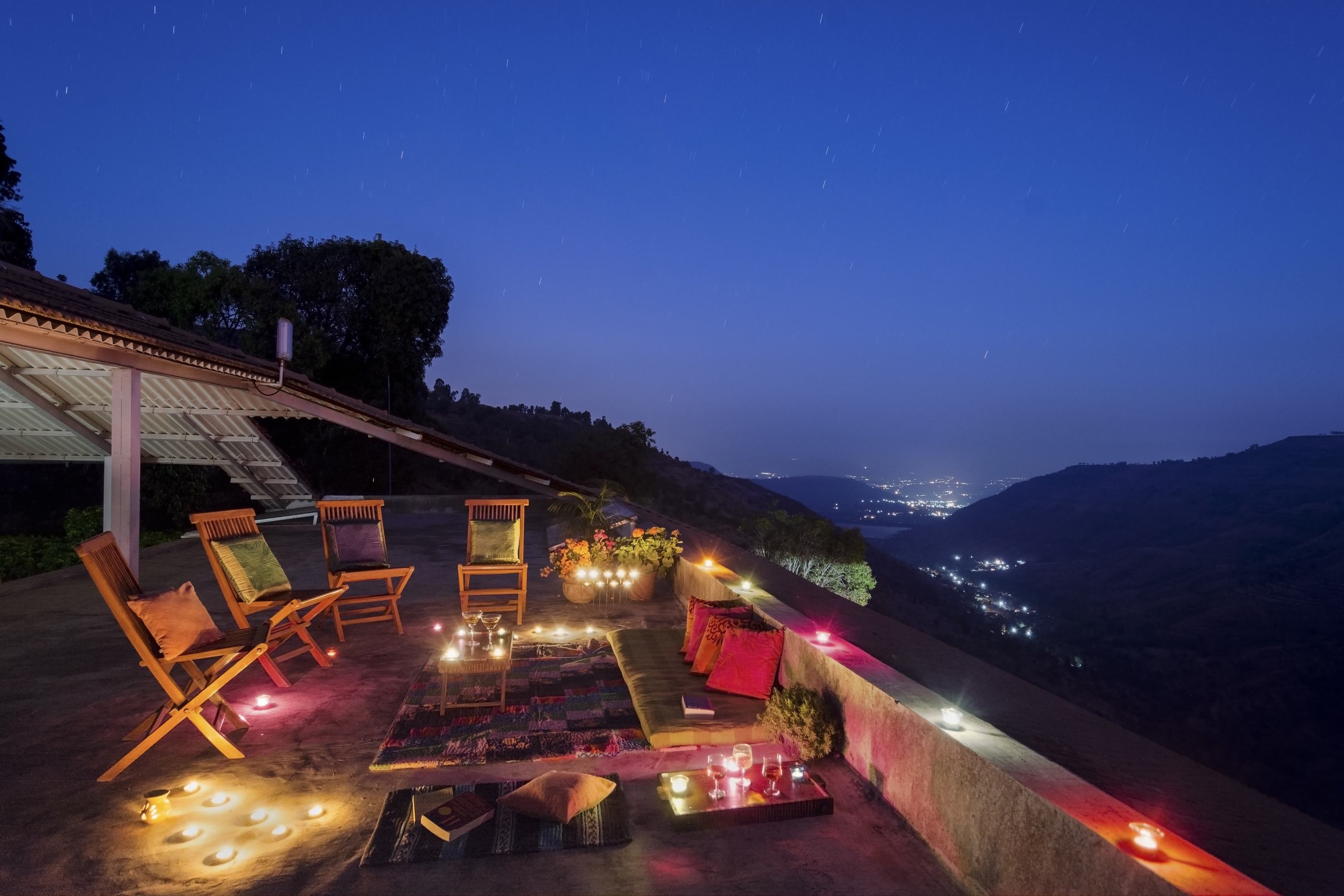
This stunning abode in Mahabaleshwar is a large private estate overlooking the valley, offers gorgeous views yet giving you much sought-after privacy. Plan your unforgettable occasions, get-togethers here with family as there’s space to do just so much. The home boasts of a sprawling lawn surrounded by a lush green farm and a little rooftop terrace to bask in the views of sunset and Pratapgad fort! There’s also lip-smacking, live-barbeque meals prepared in-house and comfortable furniture to sink into for a post-meal siesta. Or choose the vibrant outdoor seating where the chirping birds and bright sky keep you awake!

No.of guests: 8-15

Cost per night weekday/ weekend: INR 18k – 30k (approx.)

Plan your workcation: SaffronStays Aatman


3. SaffronStays Red Brick House, Panchgani

Another Panchgani holiday home, this 4-bedroom workcation villa has a rustic feel and an old-world charm that will make you feel transported to the days of the English. It is a beautiful blend of nostalgia and modern amenities and breaks away from the chaos and hustles with an easygoing, slow paced lifestyle surrounded by luxury. Fresh, home cooked food is served by the staff and you have the place and lawns all to yourself. Go on a fruit trail, practise yoga, play table tennis, enjoy a hot cuppa, and play cricket or badminton – there’s just so much one can do! The wide lawn, table tennis board and porch swing ensure that each one is entertained while you get the solitude you need!

No.of guests: 8 

Cost per night weekday/ weekend: INR 18k – 30k (approx.)

Plan your workcation: SaffronStays Red Brick House


4. SaffronStays RedFields By Venna River, Mahabaleshwar

This modern holiday home in Mahabaleshwar – the Strawberry capital of India – is one of the perfect villas to disconnect in! Woken up by plenty of sunlight, overlooking verdant mountains and strawberry farms, it elegantly combines quiet spaces with an exciting holiday vibe. Designed in natural wood, warm and welcoming, the bungalow boasts gorgeous views of the Venna River, lush green lawns and green as far as the eye can see. Enjoy delicious meals made from local, organic food, lounge amidst luxurious furnishings and spend the rest of the day in exciting activities — from strolling through the strawberry farm to visiting the nearby Lingmala Waterfall!

No.of guests: 6-12

Cost per night weekday/ weekend: INR 18k – 30k (approx.)

Plan your workcation: SaffronStays RedFields By Venna River


5. SaffronStays Tudor Rose, Panchgani

A lovely wooden chalet overlooking Panchgani valley, SaffronStays Tudor Rose is perched on top of a hill and nestled under tall eucalyptus trees. The wooden interiors with luxury furnishings are gorgeous giving out a Swiss Chalet vibe while the tempting waters of the sparkling pool is the perfect place to spend your days with the kids and family. Let your furry friends run freely in the open verandah as you take the much needed time off and lay back in the pool at this holiday home in Panchgani.

No.of guests: 10-12

Cost per night weekday/ weekend: INR 18k – 30k (approx.)

Plan your workcation: SaffronStays Tudor Rose


If you’ve been looking for luxury villas to holiday at, one of these amazing holiday homes is your best bet for a super productive vacation. All of these villas for rent are in quiet areas, with beautiful surroundings and a vibe that will keep your energy levels high! Ready to get the hustle going?

Want something more easy on the pocket? Then check these budget friendly rental villas in Mahabaleshwar & Panchgani for your next holiday.


Liked this blog?

Join SaffronStays Club Infinitum — Sign up to earn 750 Reward Points and redeem on your next SaffronStays holiday.

Don’t worry, we won’t spam you… we’ll only give you exclusive first access to our new launches!

Click HERE to know more about SaffronStays Club Infinitum.

Kaas Plateau: The most romantic destination this season!

Remember the last scene from Twilight Saga series where Edward and Bella are reminiscing their epic love story? Sitting amidst meadow, surrounded by beautiful purple, white & yellow flowers; and perhaps a sound of bubbling stream somewhere nearby. Remember?

No wonder why Kaas Plateau is known as Maharashtra's Valley of Flowers! (Picture Credit: Ganesh H. Shankar)
No wonder why Kaas Plateau is known as Maharashtra’s Valley of Flowers! (Picture Credit: Ganesh H. Shankar)

What if we told you that you could relive that very Hollywood moment at a destination very close to Mumbai & Pune?! The picture above is of Kaas Plateau, a destination that is a rare phenomenon. This volcanic plateau turns into a magical land just after monsoon and a little prior to winter, which is exactly the second week of September up to mid-October. A walk through this 1000 hectare plateau is remarkably pleasant because of the huge patches of wildflowers visible even from a distance! It has fencing on two sides and since it is a biodiversity site, a very limited section of green field is accessible to the visitors. Also, they do not allow more than 3000 visitors in a day, which is why pre-registration on their website is even more important.

So what makes this place so special?

Given that this region is blessed with good climatic conditions, just when the monsoon is about to subside, the plateau turns into a beautiful mosaic with an embroidery of wildflowers, covering the land as far as you can see. It is a magical sight that does not last for more than about two weeks every year. And now is the time to visit.

Kaas Plateau is about 5 hours’ drive from Mumbai and about 3.5 hours’ from Pune.

The nearby locations to Kaas is Kaas Lake (About 2kms), Mahabaleshwar and Panchgani which is about an hours’ drive from Kaas. Now if you are so close to these beautiful hill stations, then who wouldn’t want to extend their trip! But since there is no accommodation or camping sites at Kaas, one can always drive back to Panchgani/Mahabaleshwar and spend rest of their time lazing around. No we don’t intend to laze around just about anywhere, we are talking about spending quality time at Verandah by the Valley, a beautiful bungalow that is located literally on the edge of a valley!

Imagine waking up to a view like this in Panchgani!

Isn’t this place as romantic as Kaas Plateau? Visit the most trending destination in Maharashtra while this lovely season lasts! And if you’ve already been here, do share your pictures 🙂