A Complete IHPL Srinagar 2025 Guide: Tickets, Schedule, Best Stays & Travel Guide

Welcome to the valley where cricket meets Kashmir’s calm. The Indian Heaven Premier League (IHPL) in Srinagar is the region’s first-ever franchise T20 cricket tournament, taking place at the iconic Bakshi Stadium Srinagar. Having begun on 25 October 2025, this event isn’t just about boundaries and wickets, it’s about blending Kashmir’s scenic charm with world-class cricket. Whether you’re a die-hard fan looking for IHPL Srinagar 2025 tickets or a traveller seeking the best staycation near Bakshi Stadium, this guide will help you plan the ultimate itinerary—where to stay, what to see, and how to make your Kashmir trip unforgettable.

What is the Indian Heaven Premier League (IHPL)

The IHPL Srinagar 2025 is the first T20 cricket tournament of its kind in Jammu & Kashmir, held at Bakshi Stadium in the heart of Srinagar city. The season runs from 25 October to early November 2025, featuring eight teams competing across multiple match days.

It’s a unique initiative designed to merge local Kashmiri talent with national and international cricket stars, turning Srinagar into a new hub for sports and tourism. Fans can now enjoy Kashmir’s cricket tournament while exploring the region’s landscapes, cuisine, and culture.

Why You Should Visit as a Cricket and Travel Enthusiast

  • Watch live T20 cricket matches in Srinagar at a newly refurbished stadium surrounded by mountains.
  • Combine your match schedule with Srinagar sightseeing and Dal Lake experiences.
  • Stay at SaffronStays villas and houseboats near Bakshi Stadium for the perfect cricket travel experience.
  • Use this IHPL Srinagar travel guide to find the best villas, houseboats, and cottages for your stay.

IHPL Teams and International Players to Watch

The IHPL 2025 players list includes an exciting mix of stars:

  • Chris Gayle (West Indies) – Pulwama Titans
  • Martin Guptill (New Zealand) – Uri Panthers
  • Shaun Marsh, Richard Levi, Peter Trego, Owais Shah, Thisara Perera, Devon Smith, Malinda Pushpakumara, Chris Mpofu
  • Indian domestic pros: Rishi Dhawan, Saurabh Tiwary, Gurkeerat Singh Mann

Whether you’re searching for the IHPL international players list 2025 or the IHPL schedule and tickets, this guide links your passion for cricket with your love for travel.

Where to Stay Near Bakshi Stadium Srinagar

Looking for where to stay near Bakshi Stadium for IHPL matches? Here are the best villas, houseboats, and cottages, all mapped by drive time from the venue.

1. Badakshan Bliss – 16 mins away
Located in Rawalpora, Srinagar, this 5-bedroom villa blends modern comfort with traditional Kashmiri design. Just 10 minutes from the airport and 16 minutes from Bakshi Stadium, it’s perfect for cricket fans attending IHPL 2025 who want quick access and quiet luxury.

2. Awakening – 18 mins away
A heritage villa in Srinagar built in 1938, featuring Khattamband ceilings and cedarwood interiors. Enjoy tranquil mornings near the Jhelum River before heading to match day. Ideal for those seeking a Srinagar villa near Bakshi Stadium with cultural charm.

3. Prince Of Kashmir – 21 mins away
A luxury Dal Lake houseboat offering lake views, carved walnut interiors, and shikara rides from your doorstep. It’s the best choice for visitors searching for Dal Lake houseboat stays near cricket stadium Srinagar.

4. Kingori Houseboat – 22 mins away
Anchored at Ghat 14, Dal Lake, this houseboat offers peace and privacy for couples and small families. Ideal for travellers looking for a houseboat near IHPL Bakshi Stadium with premium comfort.

5. King Mahal – 32 mins away
A 7-bedroom luxury villa near Dal Lake Srinagar, known for being a shooting location for the series Pashminna – Dhaage Mohabbat Ke. Perfect for large groups and families combining IHPL matches with a longer Srinagar staycation.

6. Cheese Cottage, Tangmarg – 70 mins away
Located in Tangmarg, this boutique 2-bedroom cottage offers Himalayan views and riverside picnics. Perfect for fans wanting an offbeat Kashmir experience after attending IHPL matches in Srinagar.

3-Day Quick Itinerary: Match + Stay + Explore

Day 1

  • Arrive at Srinagar Airport and check in at Badakshan Bliss or SaffronStays Awakening.
  • Explore nearby cafés and take a calm evening walk by the Jhelum River.
  • Dinner and rest before your IHPL match day.

Day 2

  • Morning: Visit Shalimar Bagh or Chashme Shahi Mughal Gardens.
  • Afternoon: Reach Bakshi Stadium Srinagar one hour before match time.
  • Evening: Return to your villa or enjoy dinner at Ahdoos Restaurant for authentic Wazwan cuisine.

Day 3

  • Move to a Dal Lake houseboat stay (Prince of Kashmir or Kingori) for a relaxed morning.
  • Take a shikara ride at sunset, sip Kashmiri Kahwa, and plan the next leg of your Kashmir travel itinerary.

5-Day Powerplay Itinerary: Full Kashmir Experience

Day 1: Arrive and check-in to your SaffronStays villa in Srinagar
Day 2: Watch IHPL matches at Bakshi Stadium
Day 3: Second game or city exploration – Spend your day watching another match or explore the city
Day 4: Shift to a SaffronStays houseboat on Dal Lake for a relaxing stay
Day 5: Drive to Tangmarg and check-in to SaffronStays Cheese Cottage to experience offbeat Kashmir.
Day 6: Departure from Srinagar Airport

Stadium 101: Match-Day Tips for Visitors

  • Venue: Bakshi Stadium, Wazir Bagh Srinagar
  • Arrive 60 minutes early for easy entry
  • IHPL tickets available online (official booking portals)
  • Carry light bags and IDs
  • Use your villa’s driver or local taxi service for stadium transfer
  • Bring a light jacket for evening matches

5 Must-Visit Spots in Srinagar (Tour + Food Mix)

  1. Dal Lake and Shikara Ride – Ideal for sunrise or sunset.
  2. Mughal Gardens – Visit Shalimar Bagh, Chashme Shahi, and Pari Mahal.
  3. Shankaracharya Temple – Offers panoramic city and lake views.
  4. Hazratbal Mosque and Market – Perfect for Kashmiri handicrafts and local culture.
  5. Ahdoos Restaurant – Enjoy authentic Wazwan food in Srinagar.


Practical Travel Tips for IHPL Visitors

  • Best time to visit: Late October to early November (matches + fall scenery)
  • Airport: 10–20 minutes from most IHPL Srinagar villas
  • Payments: UPI and cards accepted; carry small cash
  • Clothing: Layer up, evenings are cool
  • Book early: IHPL hotels and houseboats fill fast during the league
  • Respect culture: Dress modestly, be courteous

FAQs: IHPL Srinagar 2025

1. What is IHPL?
The Indian Heaven Premier League is Kashmir’s first T20 cricket tournament, hosted at Bakshi Stadium Srinagar starting 25 October 2025.

2. Where is Bakshi Stadium?
In Wazir Bagh, near Iqbal Park Srinagar, surrounded by hotels and villas within 15–30 minutes.

3. How do I get IHPL tickets?
Buy IHPL Srinagar tickets online via the official league portal.

4. Which are the best stays near Bakshi Stadium?
Badakshan Bliss, SaffronStays Awakening, Prince of Kashmir Houseboat, and King Mahal are top-rated.

5. What else to do in Srinagar during IHPL?
Take a shikara ride on Dal Lake, visit Mughal Gardens, and explore Tangmarg Cheese Cottage post-match.

Your IHPL × Kashmir Travel Game Plan

The IHPL Srinagar 2025 is your ticket to explore Kashmir, experience Kashmiri hospitality, and stay at the best villas and houseboats near Bakshi Stadium. Whether you’re traveling for the IHPL schedule and matches or for Kashmir’s scenic beauty, plan your stay smart—villa for match days, houseboat for relaxation, and Tangmarg cottage for your grand finale.

Experience 48 Hours in Srinagar: A Journey Through Kashmir’s Heart

The first thing you notice in Srinagar isn’t the lake. It’s the stillness. A kind of hush that lingers in the air like early morning mist. Even the shikaras, those hand-carved wooden boats, seem to glide across Dal Lake without making a sound.

In July, the skies are mostly clear with a soft breeze that carries the scent of pine, fresh bread from a kandur’s oven, and the sharp warmth of saffron from a steaming cup of kahwa. This is a city that doesn’t ask to be rushed. You don’t come here to tick off a list. You come here to slow down.

This is your 48-hour journey through Srinagar. A place of water, light, and quiet moments that stay with you long after you’ve left.

Where Water Meets the Sky

The best way to begin is with a view of the lake. Not from the road, but from a wooden houseboat anchored quietly away from the crowds. Morning light spills across the water, and your first cup of kahwa arrives in a copper kettle, fragrant with cardamom and almonds.

A shikara ride is not just a way to see the city. It is the city. You float past lotus-covered patches, floating gardens, and houses built entirely on water. The boatman rows slowly. Occasionally, he stops to show you something. A heron nesting in reeds. A vendor selling tomatoes from his canoe. The perfect reflection of the sky in the lake’s still surface.

Around dawn, the floating vegetable market comes alive. Traders gather silently on their boats, exchanging goods with quiet efficiency. It’s a rhythm the lake has known for generations. You watch, silently, before drifting on.

Dal Lake isn’t just a postcard. It’s how Srinagar breathes.

Old Walls and Wooden Windows

As the morning lifts, the city reveals another side. Leave the lake behind and step into the old town around Zaina Kadal. Here, wooden homes with intricately carved balconies lean slightly forward, watching over narrow lanes where the smell of baking bread fills the air.

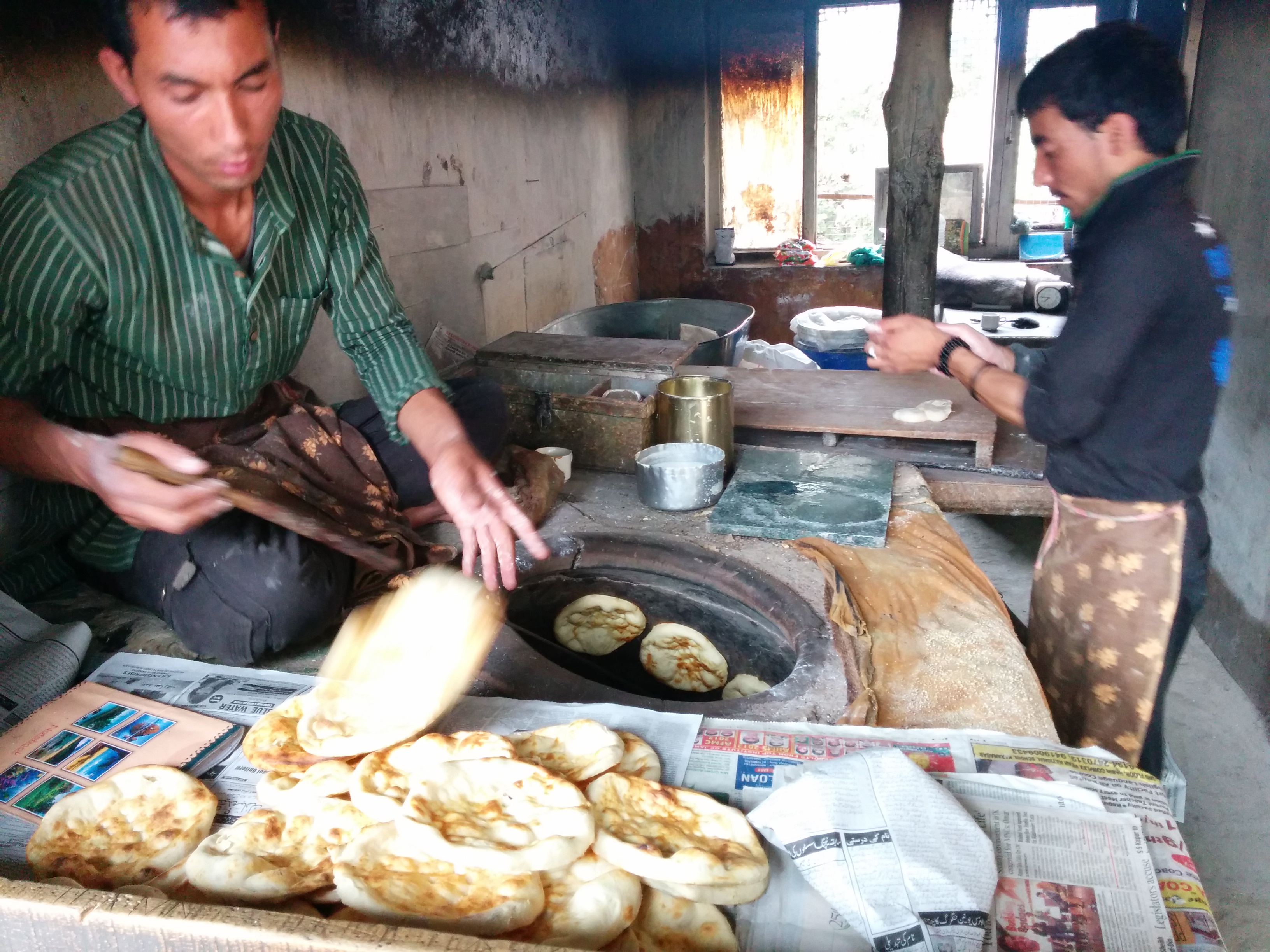
Pause at a local kandur’s shop for fresh girda: a traditional Kashmiri bread, still warm from the clay oven. Step inside the Shah-e-Hamdan shrine. Its papier-mâché interiors glow in the morning light, covered in floral patterns that feel like they belong to another century.

Not far from here stands the Jamia Masjid of Nowhatta. Built in the 14th century, it is spacious and solemn, with more than 350 deodar wood pillars holding up its roof. Even when the mosque is busy, there’s a quiet that never lifts. It’s the kind of place you enter slowly and leave even slower.

This part of Srinagar moves at its own pace. It is not polished for tourists. It is lived-in and layered with stories. The beauty lies in watching them unfold, one wooden doorway at a time.

Gardens That Bloom After the Rain

Srinagar’s gardens aren’t just beautiful. They are deliberate. The Mughal emperors built them as escapes. Terraced spaces with flowing water, framed by the Zabarwan Hills. In summer, they bloom. And after a drizzle, they come alive.

Nishat Bagh is larger, with wide lawns and long fountains. Shalimar Bagh is quieter, more structured. Both face the lake. Both make you pause. The Chinar trees here are older than memory. Their leaves shift colour in the breeze, even in July.

For a higher view, drive up to Pari Mahal. The old observatory sits above the city. From here, the lake looks like a sheet of glass and the sky feels close enough to touch. There is silence, even when it’s crowded. The kind that makes you listen without realising.

Flavours That Stay With You

Srinagar feeds you with warmth. Meals here are not rushed. They are layered, just like the city.

Start at Ahdoos. The wood-paneled dining room has seen decades of guests. The rogan josh is slow-cooked and full of spice, the yakhni is tangy and light, and the nadru yakhni — made from lotus stem — is unlike anything you’ll find elsewhere.

For something simpler, walk into Krishna Vaishno Dhaba. The food is vegetarian, comforting, and always served hot. Another stop worth making is Stream Restaurant near Boulevard Road. Known for its grilled trout, it balances local flavour with familiar comfort.

End a meal with phirni or just another cup of kahwa. Not because you’re cold, but because it feels right.

Things You’ll Want to Take Home

A man rows a colorful shikara on Dal Lake, with reflections of clouds in the still water and a backdrop of shops along the shoreline.

Leave time for Polo View Market. It’s where Srinagar’s craftsmanship gathers — handwoven pashmina shawls, walnut wood carvings, papier-mâché boxes painted with gold and cobalt blue. These aren’t souvenirs. They are keepsakes, made to last.

For spices, head to Zaina Kadal or Badshah Chowk. Saffron, dried morels, and noon chai leaves. You’ll find them neatly packed in small shops that smell of cardamom and pepper.

You won’t leave with just things. You’ll leave with the way this city moves. With the reflection of clouds on water. With the sound of rain on carved wood. With the slow warmth of a place that never really hurries.

Even with just 48 hours, Srinagar leaves a lasting imprint.

Not because of how much you saw, but because of how the city made you feel. Calm. Unhurried. Grounded. You may come here for the views, the food, or the cool July breeze, but you leave with something quieter. A memory stitched in still water and soft light, waiting to pull you back again.

Kargil – Of Breads and Apricots

Homestays in Ladakh

By Harsh Mehta

There is some serenity about a morning in the Himalayas. The might of the massifs seems humbled by a morning Sun, the cold a little less biting, more like an embrace to a new day and the freshness of the dew under one’s feet, a subtle reminder of age-old childhood memories. If the stay is longer, mornings in the mountains become a ritual. One grows to like the freshness of the air, the calm walks around and the breakfasts to soothe the pangs of hunger that beckon with the cold. I remember starting my volunteering stint in Ladakh with an utter dislike for the apricot jam & the local ‘khambir’ bread and ending it with an insatiable longing for both of them every morning.

And so, during a recent visit to Kargil, in spite of staying in a hotel, I couldn’t get myself to have the ‘English’ bread-butter-coffee breakfast that it so generously offered. A morning walk around the town was in order and off we headed, over the roads that surrounded a gurgling Suru river. Few shops seemed open at this early hour in the morning. Carcasses of lambs hung down from meat shops in the goriest of their forms. Not the best of sights to begin one’s day with. So I turned away, looking for a less overwhelming experience. A little girl waited in front of the window of a shop, her gaze fixed upon the simmering ‘tandoor’ on the other side of the window. The owner then took three breads from the tandoor, wrapped them in a newspaper, and handed over to the girl who scurried away in the same direction as us. As we walked further in the market, more and more such bakeries became visible. Full-fledged baking stores, smaller shops, sometimes merely an ignored corner between two adjacent stores, just wide enough to accommodate a round tandoor and the equally round belly of the man behind it, these bakeries rule the morning hours of Kargil. Men, women, kids, line outside these bakeries, grab a bread or two and head home, like any other morning chore. I was left wondering how different these were from the khambir I ate in Leh during my last stay.

Homestays in Ladakh
One of the local breads, Chachura, being sold in the markets of Kargil. Photo by Harsh Mehta

Nevertheless, in our hunt for a simple chai, we kept walking further, past more butcher shops and vegetable stores. The Suru was now way closer than earlier, its waters muddied by the rains, flowing ferociously beside the road. The market however, was far smaller than the expanse of the Suru. It ended earlier than anticipated. At the end, we noticed a ‘Darjeeling Hotel’ selling tea and a bakery right beside it. A desi’s delight would know no bounds at this sight. Chai and local bread. Just the way mornings in the mountains are supposed to be. While my friend occupied himself with the task of getting two cups of chai extra-sweetened, I cozied up to the bakery.

Two men worked in the bakery. One sat right behind the tandoor, his head constantly bowed in search of the latest bread to turn golden brown inside the oven. The other stood beside a table on the far side of the room, extracting the dough, leavening it, turning it into balls of even sizes and then pressing them into flat breads ready to be shoved and slapped inside the tandoor. The bakery was a version of the tandoor in itself, its walls blackened by the soot, its air warmed by the heat. One wall in particular sought attention. It was actually a notice on the wall which deserved a good read. As I went through the prices for the several items mentioned on the notice, I realised that it listed much more than a menu – it listed an entire tradition in baking in this part of the world. Girdeh, Lavasa, Chachura, Kulcha, most of these, names of breads I’d barely heard. When probed about them, our bakery men told that these were local breads and only girdeh and chachura were available in the morning and lavasa in the afternoon. We took our two pieces of girdeh and gulped them down with two cups of tea from ‘Darjeeling hotel’ (actually run by a Nepali). The men also pointed in another direction to the bakery on the other side of the road, which sold ‘chachura’, more importantly, this being one of the only two in Kargil that sold it. The chachura is a crisp, hard bread, actually more like a cross between a bread and a cookie. We took just two of these, they were bland, in desperate need of some accompaniment, and then watched a ministerial cavalcade pass by.


Homestays in Ladakh
The bakery selling hot and delicious Girdeh. Photo by Harsh Mehta

It was only after we began our journey back when we realised that the market had sort of changed from how we had left it. Several men and women now lined both sides of the road. Beautiful faces, accompanied by equally beautiful fruits, basketfuls of which they’d brought along to be sold here. Fresh apricots from farms and households,lay stored in aluminium and plastic containers to be evaluated by passers-by, held in their hands, smelled through their noses and the apricots’ reddish-orange velvety skin to be carefully inspected through their gaze. Nearby lay crates full of apples, but surprisingly smaller, the size of the apricots and green in colour, yet tasty enough to fill one’s morning with sweetness. On both the fruits, the sellers maintained that they were the best in India – those from Kashmir would fade in comparison to the ones in Kargil. Now that was a big claim to make but I could not agree more with the apricot seller. On apples, given that I have a soft corner for the Kashmiri ones somewhere in my mouth, I decided not to argue.

Homestays in Ladakh
Fresh Apricots for sale. Photo by Harsh Mehta

Homestays in Ladakh
Green apples filling the morning with sweetness. Photo by Harsh Mehta

We turned back to the hotel as a life size poster of the Ayatollah watched upon us. The market was even livelier now, this being a Sunday. Several carts with vegetables, fruits and even clothes dotted the street now. Reaching the hotel, I glanced at its restaurant. Portions of generous butter cubes and jam extracts peeped at me through its windows. I smiled and headed back to the room. Had I stayed back for these, I’d never have known what a Chachura or a Girdeh was!


Visit our website to book from 21 homestays in Srinagar & 141 homestays in Ladakh

About the author: Harsh Mehta is your typical 20-something traveller who roams around from Krakow to Kerala and Hungary to the Himalayas in his quest to unravel the gems of the world. Having successively lost his heart to the mountains of Kashmir, the sweet traditions of the Ottoman cuisine and the old town squares of Europe, he now fancies anything that travels, from food and culture to music & languages and their linkages across the world. And so, even as he spends dreamy days at his 9-5 job, he derives inspiration from the messy streets of Mumbai to pen down the best of his travels and believes that the best destinations are not the ones that you go to with a wishlist but those that you return from with one. He shares his experiences on his personal blog – Travelbyts, tweets at @harshm09 and can be shown some love at Facebook- TravelByts. He’s also reachable at travelbyts@gmail.com.