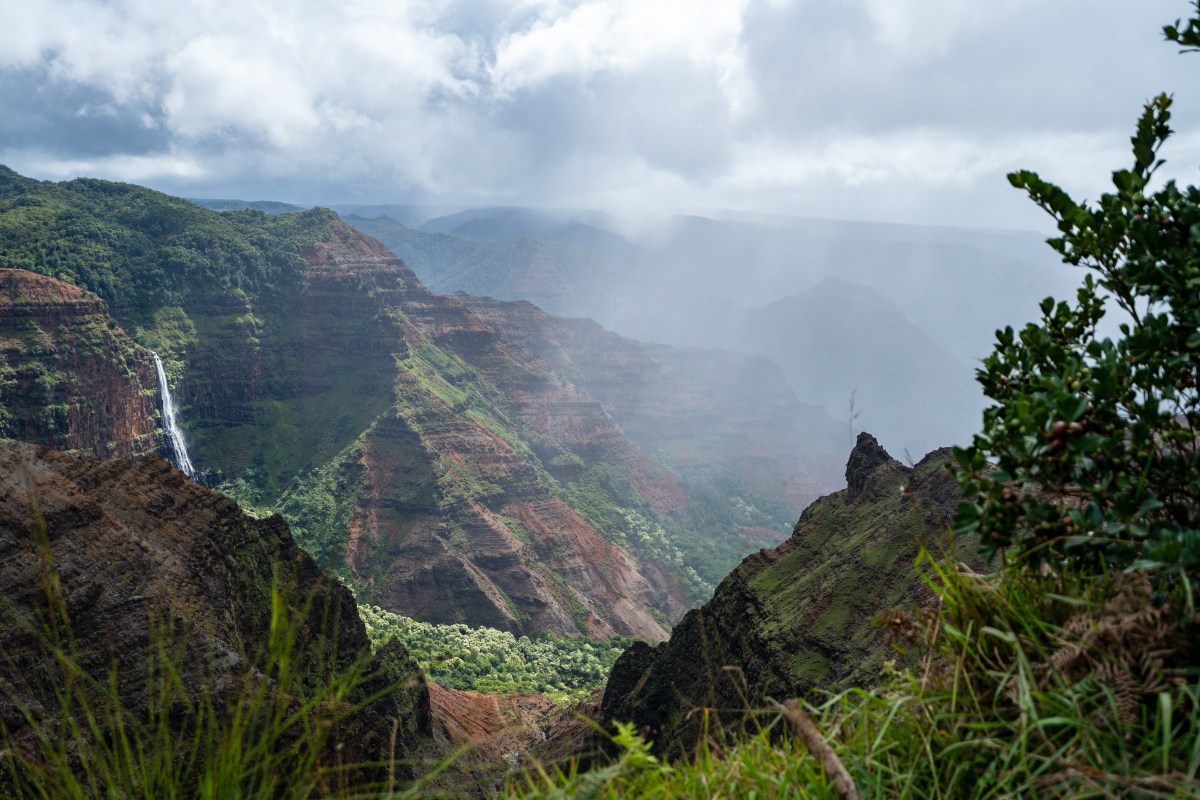
Ask anyone who drives the Mumbai-Pune Expressway in July why they keep coming back, and they will rarely mention temperature. They will describe a specific moment instead: the windows fogging up somewhere past Khopoli, the land outside turning a green that does not exist for the other nine months of the year, the first waterfall showing up on a cliff face that was bone dry in May. Maharashtra spends most of the calendar being a reliably good state to visit. For about twelve weeks between June and September, it becomes something else entirely, and the places that look merely pleasant in winter start looking like they were built for exactly this weather.
The eight places on this list were not chosen because they are the only monsoon-worthy spots in the state. Maharashtra has dozens, from Amboli’s cloud forests to Bhandardara waterfalls, and a case could be made for nearly any corner of the Western Ghats in July. These eight were chosen because each one undergoes a genuine, visible transformation when the rain arrives, the kind that makes a photograph taken in August look like it belongs to a different location entirely from one taken in March. Most are within two to three hours of Mumbai or Pune. One is a city rather than a getaway, and earns its place on this list for reasons that have nothing to do with waterfalls at all.
Table of Content:
Pawna: The Lake That Everyone Photographs for a Reason
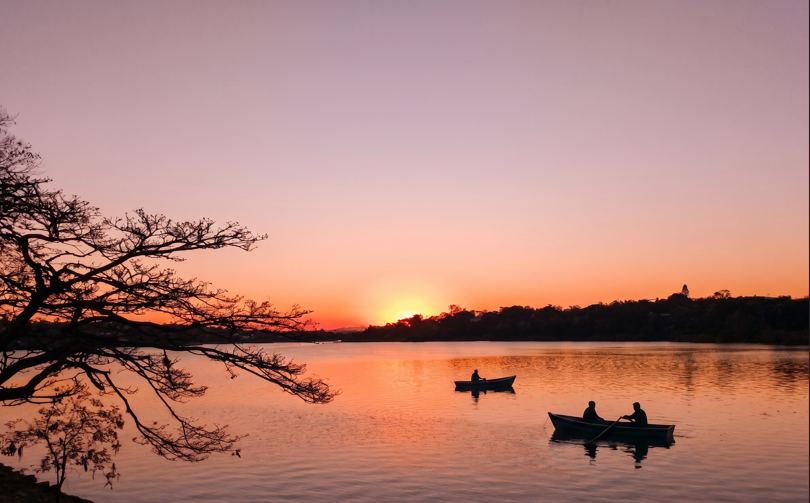
Pawna Lake spends the dry months as a modest, workmanlike reservoir hemmed in by two forts, Tikona and Lohagad, that most visitors only notice because they happen to be visible from the water. By July, the lake has filled out toward the edge of the surrounding hills, the forts sit half wrapped in low cloud, and the tented campsites that line the shore fill with people who have driven out from Pune and Mumbai specifically to watch weather happen. This is Maharashtra’s most photographed monsoon lake for a reason: the water itself barely changes shape, but everything around it does, hillsides shifting from scrubby brown to a green dense enough to look almost tropical.
What makes Pawna worth the drive in the rain rather than in October, when the campsites are just as active, is the light. Monsoon afternoons here tend to produce a flat, silver quality, broken by shafts of sun when the clouds thin, that turns the lake into a mirror for whatever is happening in the sky above it. Fishermen work the shallows in the early morning before the day-trippers arrive, and the fort ruins on Tikona are close to unrecognisable from their summer selves, greener, mistier, and considerably harder to photograph without a cloud drifting straight through the frame.
Pawna gets crowded on weekends regardless of season, so a Friday evening arrival, ahead of the Saturday rush, is worth the extra planning. SaffronStays has a small cluster of private villas scattered along the lake’s quieter edges, useful for anyone who wants the view without pitching a tent in a downpour.
Mulshi: The Quiet One
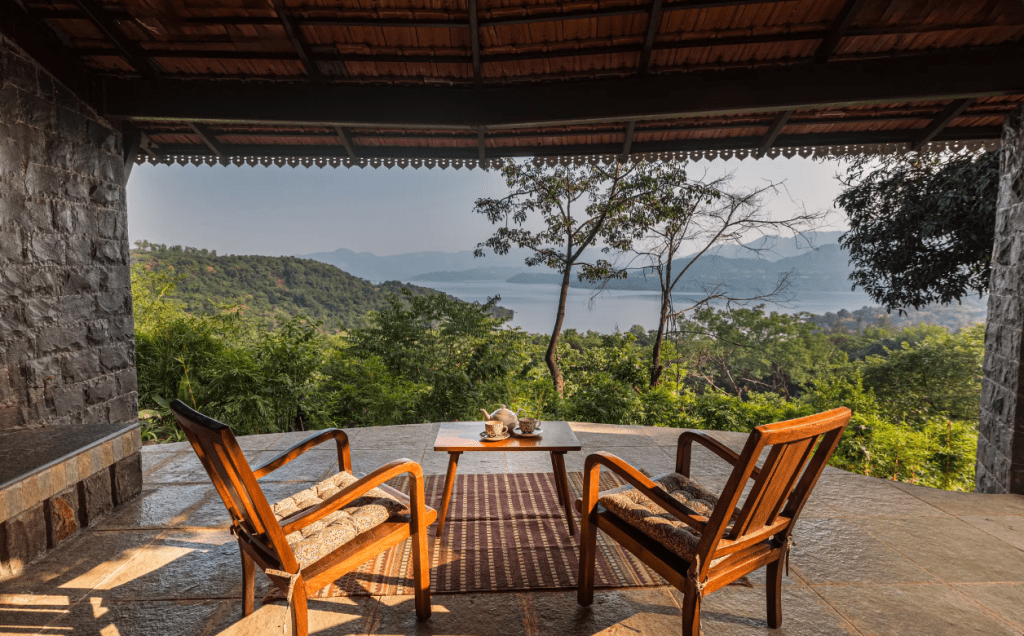
If Pawna is Maharashtra’s monsoon lake for groups and campsites, Mulshi is its version for two people who would rather not talk to anyone else for a weekend. The lake here, formed by the Mulshi Dam on the Mula River, sits further from the main Pune-Lonavala traffic and draws a noticeably quieter crowd, more couples and small families than college groups. The backwater views from the handful of cafes along its edge, several built specifically to look out at the reservoir, are at their best precisely when the weather is at its worst everywhere else: heavy grey sky, water the colour of pewter, hills across the lake fading in and out of visibility as the rain moves through.
Mulshi’s real monsoon asset is Tamhini Ghat, the mountain pass connecting it to the Konkan side of the Sahyadris. In one particularly wet month in 2025, Tamhini reportedly recorded more rainfall than Cherrapunji over the same period, a fact locals mention with some pride. The drive through it during monsoon, waterfalls appearing directly beside the road and cloud settling low enough that you drive through it rather than beneath it, is reason enough to make the trip even without stopping anywhere else.
The area has a fair spread of SaffronStays villas tucked into the lakeside villages around Mulshi, several with the kind of covered outdoor seating that makes watching a downpour from a dry armchair one of the better ways to spend a Sunday.
Lonavala: Everyone Already Knows, and It’s Still Worth It

Lonavala earns its reputation the hard way: by being genuinely worth visiting even though everyone already knows about it. The twin hill station, paired with Khandala just three kilometres away, has been Mumbai and Pune’s default monsoon escape for so long that it risks sounding like a cliche in every travel list, this one included. What actually happens here in the rain justifies the reputation regardless. Bhushi Dam turns from a trickle into a genuine cascade that people queue up to sit under. Waterfalls that do not exist for nine months of the year appear on hillsides that were dry scrub in April. The valley views from Tiger’s Point and Rajmachi Point disappear and reappear every few minutes as cloud banks move through, which sounds like a minor detail until you are standing there watching an entire valley vanish and return in real time.
Lonavala’s caves, Bhaja and Karla, both carved more than two thousand years ago, take on a different character in the rain too: cooler, quieter, with moisture on the rock faces that makes the carvings look freshly cut rather than ancient. The town gets its fair share of tourist-trap chikki shops and crowded viewpoints, but a short drive out toward Rajmachi Fort, or an early morning at Tiger’s Point before the day-trip buses arrive, still delivers the version of Lonavala that made it famous in the first place. Duke’s Nose, the sharp cliff outcrop overlooking the valley, is worth the short trek for anyone who wants a viewpoint fewer people bother reaching.
SaffronStays runs a solid collection of villas in and around Lonavala, several positioned specifically for valley views, which is the one thing worth paying attention to when the entire point of the visit is watching weather move across a landscape.
| The valley views from Tiger’s Point disappear and reappear every few minutes as cloud banks move through, until you are standing there watching an entire valley vanish and return in real time. |
Kamshet: Grounded, and Better for It

Kamshet built its modern reputation on paragliding, and most of the year that reputation is well earned: this stretch of the Sahyadris, overlooking Pawna Lake, is one of the better paragliding sites in western India. Monsoon changes that equation completely. Flying pauses for safety reasons for the duration of the season, roughly June through September, and any trip planned around paragliding in the rain will be disappointed. What Kamshet trades paragliding for, though, is arguably a better reason to visit: the view that made it a launch site in the first place gets more dramatic once you stop looking at it from the air and start looking at it from a valley road instead.
Kamshet in the rain is a countryside experience more than an adventure-sports one. The Indrayani river runs fuller, the terraced fields around the villages turn a saturated green rarely seen outside monsoon, and the same ridgelines paragliders use as launch points become viewpoints for anyone willing to walk up with an umbrella. It is quieter than Lonavala, twenty minutes down the same highway, and gets a fraction of the weekend traffic, which makes it a reasonable choice for anyone who wants Sahyadri monsoon scenery without fighting for a parking spot.
A handful of SaffronStays villas sit in the hills around Kamshet, most with views straight down toward Pawna, which turns out to be a fairly good consolation for a grounded paraglider.
Panshet: The Adventurous Counterpoint
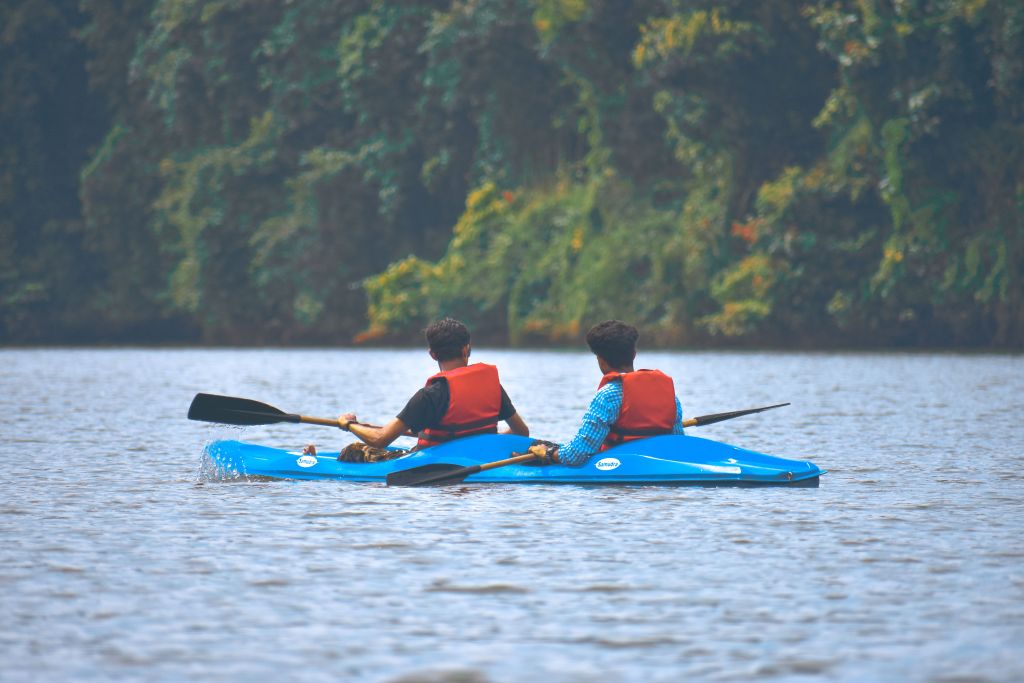
Panshet is where Pune goes for water sports, and the dam here, formally the Tanaji Sagar Dam on the Ambi River, is built for exactly that kind of energy: jet skiing, kayaking, banana boat rides, a small water park beside the main reservoir. In the dry months this can read as a fairly ordinary picnic spot fifty kilometres outside the city. Monsoon changes the arithmetic. The dam fills close to capacity, the backwaters expand visibly, and the waterfalls scattered around the area, rain-fed and essentially dry the rest of the year, start running properly. The Sahyadri hills surrounding the reservoir turn the same saturated green as everywhere else on this list, but Panshet’s specific character, adventure rather than contemplation, sets it apart from the quieter lakes nearby.
The drive out is part of the appeal. The road from Pune through Khadakwasla to Panshet passes small villages and roadside stalls selling misal pav and vada pav, reliable monsoon fuel for anyone making the trip. Varasgaon Dam, a short distance away, and the Neelkantheshwar temple nearby round out a day that works equally well as a quick outing or an overnight camping trip, tents sheltered under sheds when the rain gets heavy enough to need it.
SaffronStays has villas scattered through the Panshet-Mulshi belt for anyone who would rather swap the campsite tent for a proper bed after a day on the water.
Mahabaleshwar: The One Worth the Longer Drive
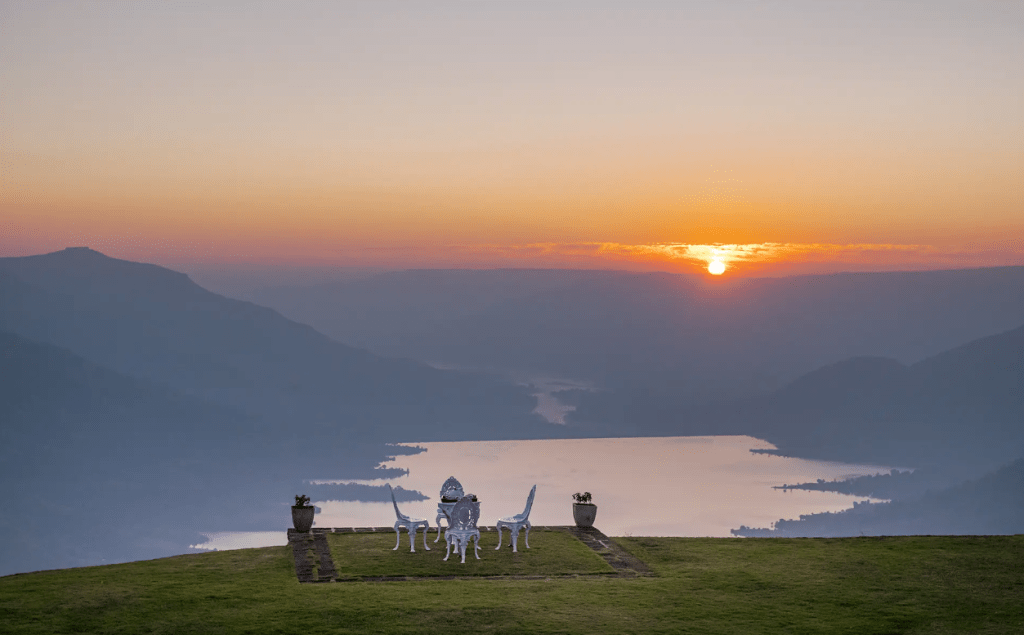
Mahabaleshwar earns the title ‘Queen of Hill Stations’ honestly, and the monsoon is when it collects on that reputation most fully. This is also the one destination on this list where distance genuinely matters to how you plan the trip. From Pune, it is a straightforward three-hour drive, well within weekend range. From Mumbai, it runs closer to five or six hours by road, which makes it less a quick escape and more a proper trip that deserves at least two nights to be worth the drive.
Once there, the payoff is considerable. Venna Lake, ordinarily a pleasant boating spot, turns genuinely dramatic in the rain, mist rolling off the water and the surrounding hills disappearing into cloud within minutes. Arthur’s Seat and the other viewpoints around town trade their usual wide Deccan views for something more atmospheric: valleys filling and emptying with fog, waterfalls like Chinaman’s Falls running at a fraction of their winter volume but visible from the road for the first time in months. Strawberry season overlaps with the early monsoon here too, an unlikely but genuinely pleasant combination of fresh berries and grey skies that the town leans into fully, with roadside stalls selling strawberries and cream through the wetter months.
The market town itself, lined with old colonial-era buildings and genuinely good food, holds up well even on days when the rain makes the viewpoints impractical. SaffronStays has a spread of villas around Mahabaleshwar, most set back from the main tourist strip with their own gardens, which matters more here than almost anywhere else on this list, given how much of the appeal is simply sitting somewhere quiet and watching the weather move.
Panchgani: Mahabaleshwar’s Quieter Sibling
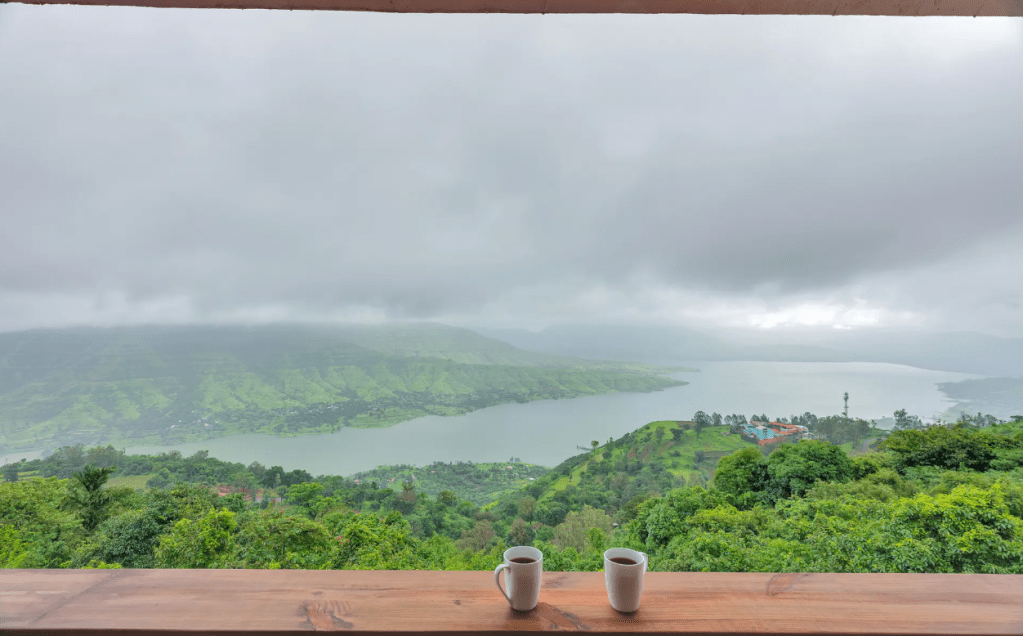
Panchgani sits twenty minutes from Mahabaleshwar and spends most of its existence in that town’s shadow, which is a shame, because the two places do genuinely different things in the rain. Where Mahabaleshwar is misty valleys and waterfalls, Panchgani’s signature is Table Land, Asia’s second-largest volcanic plateau, a vast flat expanse that turns from cracked brown earth in summer to a green table stretching to the horizon by August. Walking across it in a light drizzle, cloud drifting past at eye level rather than somewhere far below, is a genuinely different sensation from any of the valley or lake views elsewhere on this list.
The town itself carries a colonial-era, boarding-school quiet that suits overcast weather better than bright sun. Old cottages, Parsi-run bakeries, and a handful of viewpoints, Sydney Point and Parsi Point among them, look out over the same Krishna Valley that Mahabaleshwar does, just from a different and generally less crowded angle. Panchgani’s strawberry and mulberry farms run alongside Mahabaleshwar’s, so the two destinations pair naturally into a single trip for anyone willing to make the longer drive out from Pune or Mumbai.
SaffronStays’ villas in the area tend toward open lawns and older, more traditional architecture, well suited to the town’s general character, and offer a quieter base than staying directly in Mahabaleshwar’s more built-up centre.
Pune: The City That Actually Improves in the Rain
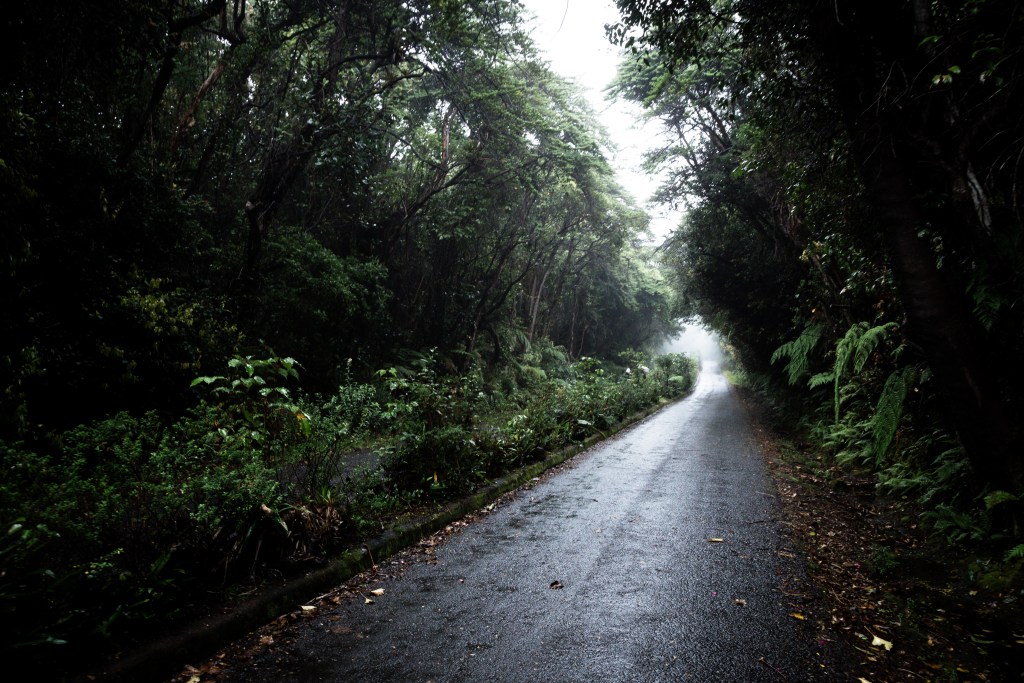
A city does not usually belong on a list like this, and Pune is here for reasons that have nothing to do with waterfalls or lakes. Monsoon changes Pune in a way that is easy to miss if you are only passing through on the way to Lonavala or Mahabaleshwar: the tree-lined stretches of Fergusson College Road and Koregaon Park turn a deep green, the Mula-Mutha riverfront fills out, and the city’s already substantial cafe culture becomes something closer to essential, since a rainy afternoon in Pune is genuinely best spent watching it from inside a window seat with something hot to drink.
Sinhagad Fort, a short drive from the city centre, is Pune’s own version of a monsoon fort trek: gentler than Torna or Rajmachi, accessible in a couple of hours, rewarding with valley views and Khadakwasla Lake below once the cloud cover thins enough to see it. History runs through the city regardless of weather. Shaniwar Wada and the Aga Khan Palace both hold up fine on a wet day, and Pune’s food scene, from roadside bhutta stalls to old Irani cafes, is arguably better suited to monsoon than to any other season.
Pune itself does not carry SaffronStays villas within the city, but it works well as the starting point for every other destination on this list, with the brand’s Lonavala, Mulshi and Karjat-area villas all within a two-hour drive, close enough for a spontaneous decision the moment the sky turns the right shade of grey.
| BEFORE YOU GO: MONSOON TRAVEL NOTES Roads to Panshet, Mulshi and Pawna can get rough in heavy rain. A higher-clearance vehicle helps but is not essential on the main routes.Paragliding at Kamshet pauses for the season. Do not plan a trip around it between June and September.Water sports at Panshet and swimming in most dam backwaters are restricted or discouraged during high water. Check locally before getting in.Weekday visits avoid the worst of the crowds at Pawna, Lonavala and Mahabaleshwar. All three get dense on weekends.Carry a basic rain layer and a dry bag for phones and cameras. Network coverage thins out around Panshet, Mulshi and the more remote parts of Kamshet. |
None of these eight places require the rain to be worth visiting. What the monsoon adds is a kind of urgency, a sense that the landscape is doing something it will not be doing again until next June. Two nights in any one of them, or a longer loop connecting three or four, is enough to understand why so many people from Mumbai and Pune treat these three wet months as the real travel season rather than a compromise, and why the places that photograph as merely nice in December start looking like something else entirely once the rain sets in.
| Ready to watch the rain from somewhere better than a bus window? SaffronStays has private villas across Pawna, Mulshi, Lonavala, Kamshet, Mahabaleshwar and Panchgani, each within a few hours of Mumbai or Pune. Explore SaffronStays villas in Maharashtra → |
Frequently Asked Questions
Which places in Maharashtra look best during monsoon?
Pawna, Mulshi, Lonavala, Kamshet, Panshet, Mahabaleshwar, Panchgani and Pune each undergo a visible transformation during the monsoon, from dry brown hillsides turning lush green to seasonal waterfalls appearing on cliffs that stay dry the rest of the year.
What is the best time to visit these places for monsoon views?
Late June through September is peak monsoon in Maharashtra. July and August generally bring the heaviest, most dramatic rainfall and the greenest landscapes, though roads and visibility can be more challenging during this window.
Is Kamshet paragliding open during monsoon?
No. Paragliding at Kamshet pauses for safety reasons for the duration of the monsoon season, typically June through September. Visitors during this period should plan around the valley and lake views instead.
How far is Mahabaleshwar from Mumbai and Pune?
Mahabaleshwar is about 260 km from Mumbai, roughly five to six hours by road, and about 120 km from Pune, around three hours. It suits a Pune weekend more easily than a Mumbai one.
Are these places accessible without a car?
Lonavala and Pune both have good rail connections from Mumbai and Pune. Pawna, Mulshi, Kamshet, Panshet, Mahabaleshwar and Panchgani are best reached by road, either self-drive or a hired cab, since local public transport is limited.
Which of these places suits a couple’s monsoon getaway best?
Mulshi and Panchgani tend to draw a quieter, more couple-oriented crowd, with lakeside cafes and valley viewpoints suited to slower days, compared to the larger weekend crowds at Pawna and Lonavala.