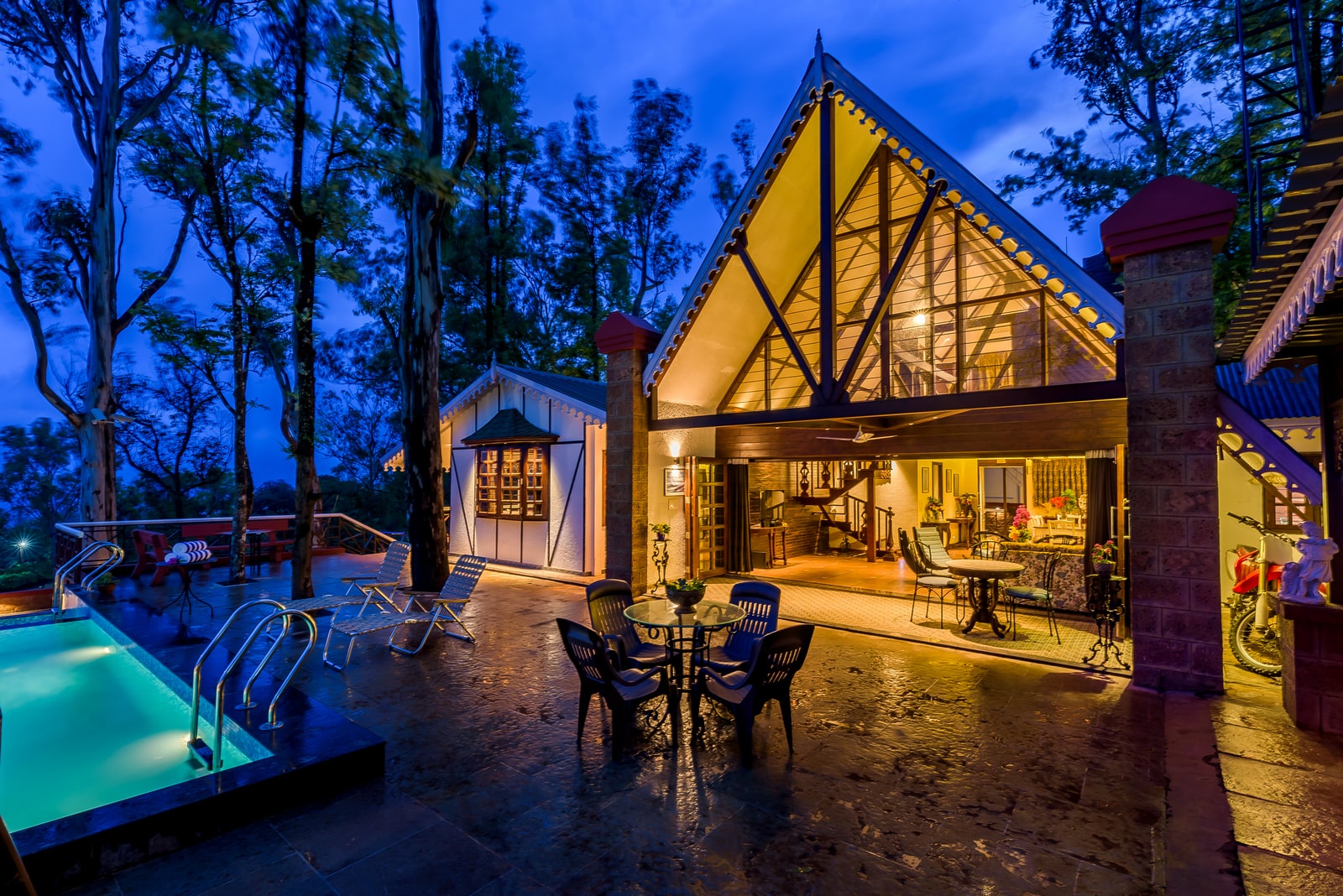
Everyone assumes real estate investments are just transactional, but that cannot be any further from the truth. When someone picks a property to invest in, they consider many factors and only invest if they can see themselves using it one day.
In India, the trend of investing in vacation homes is slowly picking up, not just for personal use but for investment too. People are finally coming around to the fact that long-term vacation rentals are here to stay and you can make a good ROI from this industry. But most of them also want to preserve the property well to enjoy it for personal use again.
So how do you ensure that your vacation home fetches a good return over the years while being in good enough shape for you to enjoy it later? By picking the best vacation rental partner possible.
It is definitely harder than it sounds, and that is why the SaffronStays team brings you their insights on picking the right vacation rental partner.
3 things to consider when you choose your vacation rental partner
The right vacation rental partner can help you skyrocket the earnings from your investment and also ensure your home gets the love it deserves. Property management and being a Home Owner can usually be a challenging job, but not if you have the right partner.
So how do you pick the right one?
1. Compatibility with your goals
Yes, this is the first step. When you choose a vacation rental partner, the pros and cons can be overwhelming. Every major operator has their own strength and expertise, so how do you pick one?
As a Home Owner, you have to put yourself first and understand what you want your property to be in the vacation rental business? Is it a property for teenagers to bunk in, or are you looking for exclusive luxury clientele?
Does the vacation rental partner have expertise with the kind of clients you want to attract? Do they know how to maintain homes similar to yours? And finally, are they the kind of brand you want to associate your home with?
Compatibility is important. Only if you have the same goals in mind, can the partnership be successful.
2. Location specific services
Usually, vacation homes succeed because they are in the right place at the right time. The industry has a popular saying that real estate sometimes is just about location, location, and location.
Now we trust you are a smart Home Owner and have invested in the best location to get a good ROI. To make the best of this, you need a vacation rental partner who knows how to sell in that location.
The company should ideally know the best seasons, the best agents, and how to market for that particular location. That makes it easier to find customers and maintain a steady-state of revenue.
So, analyze if the rental partner knows this location by checking their past records in a particular geographical location.
3. Established brand
Small businesses are great, but in the vacation rental business, experience is good. This is an industry where you need people who know what to do and get it done. Protect your investment, so looking for established brands to partner with is a good idea.
But what to look for in a brand to know if they are the right fit?
Check social proof on online platforms to see what guests and other Home Owners have to say about them. Check social media groups and forums to dig deep. Guest experience counts too because it shows the brand’s capabilities.
Understand from them what their marketing strategies are. Do they have a dedicated team in place to bring in leads and convert them? Will they take care of listings too? Pick a team that has a plan in place for end-to-end services.
Most importantly, what are their property maintenance credentials? You need someone interested in property upkeep too and has an in-house team for accountability.
What are their financial commitments in case of payment defaults, damages, and so on? A transparent term will tell you all this upfront.
You will be handing over your home to this vacation rental partner, so take the time for a thorough check.
Looking for a trusted and transparent vacation rental partner? Connect with us at partner@saffronstays.com, and our team will be happy to assist you ahead.
Do you have a holiday home that you want to monetize? Are you looking to enter the holiday rental business but not sure what the right approach is to improve your returns? Well if you truly want to stand out in the crowd, then all paths to that destination are in the luxury holiday rental business.
Did you know that according to some studies, 48% of families would rather spend a higher amount on nicer and luxurious accommodations, than pick something mainstream? In fact, as the holiday rental segment started focusing on recovery, it was “unique stays” that led from the front.
So now you know what customers want from a holiday rental, but how do you achieve that? Terms like “unique” and “bespoke” can feel very subjective. But one thing’s for sure. The current travelling industry has more customers seeking luxury than ever before.
To become their choice, you must transform your holiday rental into a luxury rental without a doubt.
And to make that process easier on Home Owners, SaffronStays brings you a guide on “must-haves’ for an uber-luxury rental.
Let’s dive right in.
Must-Haves for a Luxury Rental Home
So how do you ensure that your holiday rental is booked throughout the year? Considering travellers truly want to choose longer stays in non-hotel properties, this is the time to make it happen. Having these amenities and features amp up your chances even more.
So what are they?
1. Luxurious Comfort
You can only think of luxury when you have the comfort handled. And in a luxury rental, your guests will expect the comfort to also come with a layer of luxury. So this means every small and big decision you take must be from this lens :
Choose super soft and sturdy mattresses that can rival any 5-star hotel with uber-luxurious bedding with a higher thread count of the most comfortable yarn.
Ensure you have a well-equipped kitchen with an espresso machine, microwave oven, toasters, and a sophisticated cooktop in the least. A barbecue equipment will be the cherry on top for someone looking to enjoy the stay with a large group.
Speaking of large groups, guests travelling with teams, friend groups, and families would want to host movie nights or game nights, so stock up the entertainment centre.
Acoustics, comfortable seating, mood lighting, and state of the art TV equipment are something you need even if you don’t splurge on gaming consoles. Do not forget that high connectivity Wi-Fi is important for anyone to enjoy these.
2. Water Features
When someone steps into a luxury rental, they expect you to wow them. Guests are looking for features and perks that they otherwise would be hard-pressed to find at their homes or even the best hotels.
Water features like Jacuzzi, hot tubs and an infinity swimming pool fit nicely into that bill. A night-time pool party, secluded dips in the morning, and a fun time in the water with your family are things that sell out your home throughout the year. Add a fountain if it suits the architecture and your budget.
Everyone wants the luxury of nature without having to step out of the confines of their amazing luxury rental. Give them that with exotic water features.
3. Stylized Interior
Do you love going to be a themed restaurant where the decor and the cuisine match? Would you agree that it significantly improves the experiences? Take that yes and double them up to know what can step up the guest experience at a luxury rental.
People like to be a part of something special, play a role in a story, and indulge in something they believe is one of a kind. And a stylized themed interior makes them believe that your luxury rental home can do that for them.
So pick a theme for your interior design and ensure the home has consistent decor throughout.
Use statement designer pieces to accent the spaces
Pick luxury paint and wall cladding finishes
Do not forget to transform the outdoors to match the interior decor’s theme as well.
Now that you have what it takes to create a luxury rental home, you are ready to make it happen and join the market. Want help in making the most of your luxury rental home? Talk to our team today!
Drop a line at partner@saffronstays, and we will take it from there!
The Indian real estate industry is perplexing for Home Owners right now. On paper, it looks like a seller’s market with property management firms, high-paying renters, and hospitality firms knocking on their door all day, literally! But, no one seems to be becoming any richer, new companies are going belly up, and the market is just not stabilizing.
So what is a Home Owner to do? What are their options in making the best choice for their property – in the long term and short term?
We know the turmoil you are in, and that is why SaffronStays is happy to step in and bust some myths about the market – that taking minimum guarantees is the best choice you can make in a fluctuating real estate market.
If you are a Home Owner and looking to rent out your property, you may have heard the term ‘Minimum Guarantee’ crop up in various discussions. What does it really mean, and why are we suggesting that is not the best road to take?
What does Minimum Guarantee mean in the long-term vacation rental business?
Before we tell you why you should not opt for it, let us understand this term. When an operator or a property management firm comes to secure your property to sublet, they assure you a minimum guarantee. Usually, it is just one part of the whole financial deal.
This means that no matter what happens in the market, you will get an assured sum. Usually, they offer this for the first few years claiming that the property needs to stabilise and they are protecting your interests.
“Minimum guarantee became the norm when large venture capitalists started pouring their money in hospitality startups to create supply. They hoped to build large brands with a large supply that will eventually generate enough demand to cater to the minimum guarantee requirements,” says Deven Parulekar, Founder, SaffronStays.
Since most Home Owners are apprehensive of market fluctuations and seasonal demand in the long-term vacation rental business, they take this deal.
This seems like a huge win: the property is in the hands of a seasoned team, you do not have to worry about demand generation, and there is money in the bank.
But is it really practical? What is the hidden text causing so much turmoil and uncertainty in the hospitality sector?
Pitfalls of Minimum Guarantee deals
While minimum guarantee deals look great on paper and like the ROI you deserve, there are a few issues with this proposition.
It creates a tussle between the operator’s welfare and the Home Owner’s interests
When hospitality startups or even property management firms want to expand aggressively with multiple minimum guarantee deals in their kitty, it makes them a little desperate. The brands scramble to ensure that they can meet their financial commitments instead of working for your welfare.
For example, brands that have too many properties in a particular area distribute the demand in a way to fulfil their minimum guarantee commitments. So, this means that the minimum guarantee becomes the most you will ever earn because the operator is not even working on filling your property.
It exploits the property
Minimum guarantee is a deal characteristic of the hotel industry. And it makes sense there because a good operator can host corporate events, marriages, and offer bulk corporate deals to make ends meet.
But a home deserves a little more nuanced approach to maintain its charm and keep it running for longer. When you enter a minimum guarantee deal like a hotel, you open your home to exploitation, damages, and reducing valuation rates.
Minimum guarantee deals do not fit the luxury segment
When you want your home to be a luxurious long term vacation home, you need a team that worries about its long-term upkeep, the clientele they bring in, and their ability to treat it well. If you have a minimum guarantee deal in place, the operator is most likely to care about quantity rather than quality.
This means your home will not be the luxury vacation rental you want it to be catering to a discerning clientele. And you are most likely to be lost in the crowd and not survive long term either.
Minimum guarantee is not sustainable
The luxury vacation rental business is seasonal but pays well if you position it right and work on it during the peak season. But what happens in minimum guarantee deals is that the operator is under pressure to deliver throughout the year. This makes it an unsustainable business and may even drive the operator into losses. You want an operator who can stick with you for the long term, not someone who makes promises they can’t fulfil.
So, all in all, minimum guarantee deals have to be seen as the lose-lose deals they are. Neither can the operator work on delivering quality, nor does the home get the attention and love it deserves.
What can you do instead?
Now comes the question – what can Home Owners do instead? What is a good way to lease their luxury properties for long-term vacation rentals?
We strongly recommend entering into a lease agreement with the operators instead of working on minimum guarantees. Even though this will be less than the touted minimum guarantee, it delivers on your ROI expectations fairly and lets them focus on quality instead of running behind quantity.
This way, you have an assured income, a strong lease agreement, a team to maintain the home, and the guarantee that your home is protected against exploitation.
And if you are looking for a team to work with you on this, reach out to partner@saffronstays.com. We would be happy to assist you.
The travel industry has been evolving for a few years now. What used to be unreliable hotels or expensive stays with basic facilities has undergone a major transformation. And this applies to the hotelier and client as well.
Travellers are opting for offbeat destinations and experience stays over the mainstream options. Property owners are also creating exclusive experiences for their customers to stand out from the competition.
Out of all options, short term vacation rentals seem to be winning from both ends. Travellers love them as they offer many benefits over traditional hotels, and this means they are a better investment option for Home Owners too.
But what about running and managing the property?
While many Home Owners like to manage the stay themselves, some choose to go down the managed stays option by hiring rental operators.
Are you considering letting your second home out for managed stays? What do you think will be the most suitable option for you and why?
Let’s tackle this dilemma methodically.
DIY Vacation Rentals vs Rental Operators
In a previous piece, we spoke of how the vacation rental industry is entering a new era, especially in India. The pandemic has given birth to a new generation of guests who value customer service above anything. And in this industry, how you manage your properties forms a major part of the customer’s impression of your service.
So, which way do you go? Should you do it yourself, or is it better to hand it over to a management firm?
Let’s take a look.
DIY Vacation Rentals
What is in store for you if you choose to manage your vacation rental property yourself? We spoke to some Home Owners from our trusted circle and found out. Let’s take a look.
Pros of DIY Vacation Rental
Flexible business model – If you choose to take over the management of a vacation rental, there is no one you are accountable to. You can choose the rates based on your convenience, choose when you keep it operational and even use it for personal/family uses. If you want this flexibility, it is better to do this yourself unless you find a management firm that is flexible as well.
Control over guests – This is a very important criterion for many Home Owners. Many want complete control of who uses their property, and that is a fair ask as well. You have picked out a property and furnished it with care, you would not want that to get damaged at any cost. If you are managing the property, then you can be assured that you only allow people you are comfortable with. Enforcing this with a rental operator may be a little tough and would need constant micromanagement.
Work in hospitality and be your boss – As we mentioned, some people love to work in the hospitality industry. But they also may not want to work under someone. In such circumstances, operating their vacation rental home is the best-case scenario.
If you live nearby, understand the basics of running and managing a property, and are willing to put in the time and effort, we say go for it!
Cons of DIY Vacation Rental
Unexpected expenses – Managing a home is no easy task, especially when it comes to a vacation rental home. If you are new to the industry, you may not anticipate many expenses that crop up. You can account for regular maintenance works. But still, unexpected expenses can move your bottom line further away than you expected it to.
Time-consuming – Even if you love the work and have no other jobs lined up, this work is extremely time-consuming. Your guests will need round the clock service, maintenance, and troubleshooting. Even when the guests are not around, the property needs seasonal maintenance. Admin tasks crop up too. Most Home Owners end up hiring individual servicemen or teams that may prove expensive.
Fluctuating income – We assume that you expect a steady income from your vacation rental home since you are diving headfirst into it. But when you start, you run the risk of experiencing fluctuating income. In fact, for the first few years of a DIY vacation rental home, you may have to work with low rentals because of low marketing skills, higher operating expenses, and so on until you get the hang of it.
If you don’t want to contend with a long learning curve, we recommend working with a rental operator to optimise your income levels.
PROPERTY RENTAL OPERATORS
Pros of Property Rental Operators
Steady Rental Income – When you work with a rental operator for your vacation rental home, you have a better chance of steady rental income. These operators have been in the game for a long time and have extensive knowledge of customer acquisition, pricing, and guest turnaround as well.
Better upkeep of the property – The valuation of your property and long term gains from your vacation rental home depend on the upkeep of your asset. If the quality of the property deteriorates, then the valuation goes down too. Property rental operators understand maintenance in and out, and have specialised teams with industry know-how. So, instead of learning 10-12 disciplines, you can access these services via an experienced player.
Higher ROI – We covered long term gains in the previous point, but even on a monthly or quarterly basis, property rental operators optimise your ROI numbers. Since they work systemically in bringing guests and minimising operating expenses including, maintenance and salaries, your ROI improves.
You can choose to partner with them or get a fixed rental from them per month/year and enjoy the benefits.
Hassle-free management – Managing guests, handling the various statutory departments, working with brokers, and carrying the upkeep of the property is extremely strenuous. Why go through that when you can rope in the experts and employ a property rental operator?
Cons of Property Rental Operators
Lack of control – This is a pain point for many Home Owners. As we discussed, a little earlier, people prefer having control over guests approval and even the day to day operations. Many rental operators choose to have autonomy over the properties they manage for efficiency. But, you can always set some ground rules so that both parties are happy.
Lose the charm of a rental home – The vacation rental industry is booming because customers are foregoing the hotel experience and looking for a more personalised option. When you employ a rental operator, you run the risk of losing that charm and turning the home into a hotel. In such cases, we recommend vetting the operator beforehand and understanding their model of operation in detail. Most importantly choosing a rental operator who is constantly in touch, empathetic to your needs, interactive in communication and will only have the best in mind for your home.
Do you think you need a professional team to manage your vacation rental property? Reach out to us at partner@saffronstays.com, and our team will take it ahead.
Travelling and local tourism is easily the backbone of our country’s economy. And, why would it not be when every other town is scenic and worth visiting over and over? Our unique terrain and rich heritage make exploring India a delight for everyone.
But there was a minor hiccup in this process. The state of accommodations and the lack of managed stays had been preventing people from exploring all the remote corners of India. However, these are now problems of the past, with short-term vacation rental homes and managed stays becoming more accessible than ever.
Tourists and travellers do not have to settle for any substandard hotel room, when they have an abundant choice of stays.
Add the apprehension of staying in random hotel rooms with concerns of cleanliness and sanitation, managed stays for private and entertaining holidays are becoming the norm.
The changing Era of Vacation Rentals
Before we dive into what changed in vacation rentals, we have to understand the transformation in the mindset of an average traveller since the COVID-19 pandemic.
It has become about spending quality time with friends, family, colleagues, or indulging in alone time. In the last two years, we have people investing more in relationship building during vacations than chasing a milestone or travel checklist.
Staycations to get away from the boredom of WFH life and reconnect with colleagues they have not seen in a while, are fast becoming the norm too.
So it is no surprise that the billion dollar Indian vacation rental industry is growing faster in the homestays, cottages, private homes, and managed stays sector than the hotel sector.
What can a Home Owner expect from this new era?
When India’s hospitality sector boomed a few years ago with managed stays and private residences going as short term vacation rentals, investment in this sector went up as well. Many Home Owners invested in properties in offbeat and tourist-friendly locations that can work as vacation rentals.
Yes, the COVID-19 pandemic did impact this sector quite a bit. But, as the SaffronStays’ homeowners will tell you, the recovery for managed stays has been quite quicker and stronger than the typical hotel industry.
But we can’t deny that the times are changing and the new era of vacation rentals is here.
So what can homeowners look to invest or expect from this industry?
Well, for starters, as the apprehension around travel during the COVID-19 pandemic settles down, you can expect a revival in demand. We are already seeing the signs for it.
You can expect that the travelers will flock to easily accessible, well-maintained, and modern homes to spend their vacation days in, instead of a hotel room. This means that this time calls for strategic investments in these homes right about now.
The plug and play model will also evolve into the managed stays model where travelers expect the vibe of a homestay but the convenience of a hotel. Rustic homes with a cook and WiFi basically. So, investments here are also in order.
What does a guest look for in vacation rentals?
You can only manage the supply side the right way when you know what the demand is for.
So let us take a look at what will a guest or traveller’s priority be in the new era of vacation rentals?
Obviously, as per the trends we just discussed, the needs now go beyond just a place to stay and some decent facilities. They are looking for places that are safe and allow them to experience a blissful vacation, if not more.
For starters, the property’s location is very important. While offbeat getaways are becoming popular, connectivity is an important factor as well. Secluded properties that offer privacy, but also offer basic connectivity will work the best. If there are accessibility issues, guests expect the property owner or managing firm to assist.
When we speak of experience, we do not mean just the rooms. Everything about the property matters. In the era of Instagram and consistent travel vlogging, you have to work on some vanity metrics too. Well maintained property, beautiful grounds, gardens, and a view can boost the value of the vacation rental.
Last but definitely not least, the properties must be clean to a fault. The pandemic has heightened everyone’s views on cleanliness and contamination, so ensure you have this down to a pat.
Are you interested in being a part of the new era of vacation rentals, but are not sure how to begin? Connect with the Saffronstays team, and we would be happy to help you.
From a 17th Century Hunting Lodge to a Netflix Show – vacation rentals have had the most promising coming-of-age character arc.
Remember going to your father’s friend’s farmhouse in Khopoli during your summer vacations? Or using a relative’s home as a pitstop before you head to the hills or the beaches? I remember my parents hosting many such relatives in our tiny Mumbai apartment where we were the hosts, the travel guides, and the entertainers, too.
Vacations in the good ol’ days meant making the most of pre-existing assets. But as travel evolved and people started exploring more, so did the concept of accommodation. So how did vacation rentals really begin?
Old wine in a new bottle, vacation rentals were always around us. We just never realised their true potential or formalised them the way they have been now. We also didn’t know them by the same name. Almost a 400+-year-old segment, it has aged well, and how!
Heard of the famous Treaty of Versailles?
Palace De Versailles as shot in June 2010 (From Wikipedia: By King of Hearts – Own work, CC BY-SA 4.0)
Most of us may have,in our history textbooks. But have you heard of Palais De Versailles? Built by Henry the XIII, it was used as a hunting lodge in 1623-24, and is touted to have started the trend of vacation rentals. In 1631, they replaced the lodge with a small château. Simple times.
Oh! Where the Pope retires…
Ever wondered where the Pope would unwind centuries ago? Acquired by the Vatican in 1596, the Palace of Castel Gandolfo, which was of great significance during World War II, served as a summer residence and a vacation retreat for The Pope since the 1600s.
(We knew you were only thinking about YOUR next retreat.)
How about snail mail as your vacay planner?
Phone a friend toh bahut sunaa hai. But have you heard of ‘snail mail a friend’? In the 1800s, when you wanted to get away from the city, you’d snail mail your friends with vacation homes, asking if you could use it. This long, awkward silence got better in 1837 with the advent of the telegraph making it faster and easier for one to respond to such ‘friendly requests’.
As they ALL say, sharing is caring
Post World War II, folks in Europe drifted towards the concept of sharing vacation homes. They would jointly buy a vacation villa and use it exclusively for one of the 4 seasons. Each family got to enjoy a particular season to its fullest. However, only a few families would end up vacationing for the whole season so they thought of monetising it for the vacant periods. This was just the start of timeshare and vacation rental markets, the way we know them today. Similarly, in the 1950s, people in the USA started giving out their homes as vacation rentals by placing newspaper listings as they saw some value in capitalising on it.
Own a ‘piece’ of a home
Barnsdale Hall Hotel (UK), which function on the concept of timeshare Credit: By Steve F, CC BY-SA 2.0, Wikimedia
A little later – in the 1960s – the concept of timeshares or fractional ownership was introduced by a developer named Hapimag and his partner Dr. Guido Renggli who constructed a 13-unit resort in Switzerland. It not only brought the costs down but also ensured the space’s wear and tear was shared equally among all owners. Interestingly, the first timeshares strategy involved convincing travellers that buying a room in a resort was far cheaper than renting one out. The concept furthered and people started doing the same for condos.
The more popular the concept got, the more convenient it was for the developers to expand geographically. Since it was unregulated, it got easier to replicate the model. But owing to the quality of lodging, cheating, misleading promises and other dishonest activities, it became important to put some order to it. So, councils were formed, licensing was put into place, newer amenities were added and partnerships were forged. By 1985, The USA founded the Vacation Rental Management Association to put things in order. (37 years later, in India, a policy exclusively reserved for vacation rentals is in the process of being drafted.)
New-age short-term rentals
With the advent of the internet, Vacation Rentals By Owner (VRBO) was launched in 1995 for short-term rental bookings. Similar to the online booking platforms today, it allowed people to choose from a variety of homes that were managed by home owners. Booking.com, a Netherlands-based travel fare aggregator that provided a list of hotels and lodging options in 1996 followed suit. It was also the first in the business to advertise vacation rentals.
Around the same time, Craigslist, which started off as an email distribution list that featured local events, expanded into a classified ad website for jobs, housing, community services, and other such services. Soon, it started taking requests for sublets, short and long-term rentals.
Surfing but on the couch!
Couch Surfing – a social networking service and hospitality exchange service started in 2003
No, we aren’t talking about surfing the internet. As the travel industry evolved, people felt the need to connect with like-minded individuals and travel solo. This gave birth to couch surfing – a social networking service and hospitality exchange service that started in 2003. Hosts here do not charge for the stay; operating on the ‘paying after yourself’ concept, the guests volunteer in exchange for stay, and usually end these trips by gifting a memoir to their hosts. While some countries charge a subscription fee for security and verification, this turned out to be a starting point for experiential stays.
HomeAway from home…
In 2005, five different rental sites got together to develop a vacation rental marketplace – HomeAway. It operated via 50+ websites in several languages and gave customers an option to choose from cabins, condos, castles, villas, barns and farmhouses. After raising funds and expanding globally, it acquired VRBO.
Your BnB’s here – in formal attire.
While the market for vacation rentals was still niche in 2008, Airbnb, a San Francisco start-up, launched as an online marketplace for people to rent out rooms in their homes – probably one of the first companies to do so. Beautiful glasshouses, cosy dens, hillside chalets introduced people to never-lived-before experiences. Earlier meant for the experimental lot, this DIY concept was cost-effective and unique. It further enhanced the customers’ stay with Airbnb Experiences, where guests could participate in city tours, events, and classes to get up, close and personal with the destination and the locals.
Your alternatives are here!
By 2013, the above category widened, and people became more experimental. People started looking at these more affordable options with experiences different from a regular hotel. BnBs gave rise to alternative accommodation start-ups that offered exclusive, fully staffed, and serviced private spaces. For the longest time, many thought it would be hard to match the hotel standards. But as concern about villas and private bungalows being white elephants increased, the need for having regulated operators rose, too.
A well-travelled individual who wanted to have a do-nothing vacation with only their loved ones for company started getting pulled towards alternate accommodation. These places had professional property managers and companies looking into every little aspect of running it – the professionalism of a hotel combined with the charm and comforts of a beloved second home. Purpose-driven, they started offering flexible accommodation, home-cooked meals, and certainty and privacy to you and your group. Someone Do It For Me (DIFM), ya!
By 2019, of the four vacations a person/family took every year, 1 or 2 were spent at a holiday home. This could be because of the hesitation and untrusting outlook towards them compared to a hotel. A lot of it was basis word of mouth. However, COVID-19 was a watershed moment in the history of this industry. They entered as disruptors and turned mainstream. The luxury of owning the space in the comforts of your people and accessing all amenities away from our apartments – sounds good! This had many traditional resort-goers switch gears, and they now recognise, acknowledge and consume private vacation homes in the same manner.
Professional vacation home management companies worldwide have put some method to the madness with a zing and brand value of their own. Responsibilities are offered from reservations to operations, staffing and managing the place, marketing it, and accounting, among other services. Many also partner with Online Travel Aggregators (OTAs) as distribution channels, help in guest relationship management, and have account managers for consistent communication and long-lasting relationships. They all fit the bill from castles, heritage homes, palaces to houseboats, treehouses, villas, container homes, and more. And they are not just limited to a quick getaway or a home away from home. You can have an intimate celebration, a workation, a team outing, your pet’s birthday, and so much more! The rage is so huge that even leading hotel chains have started venturing into this category as a natural extension of their services.
Your uncle’s farmhouse is no longer only reserved (just) for you!
Real estate in India has seen several resets in the past couple of years, and the pandemic has only served to accelerate it further. Second homes which were hitherto very aspirational and a means to invest a surplus of funds, have now become the norm for a majority of Indian buyers. With cities getting increasingly chaotic, second homes serve the purpose of an alternative abode, a place to go to over the weekends with family, somewhere where nature and calm surrounds you.
Every one of us dreams of a home to run off to every once in a while. Sea-facing, close to hills or mountains, or surrounded by orchards and rivers are just some of the expectations we design them around. While many of us grew up with just dreaming this dream, so many today have been able to make this a reality. Vacation homes for a majority of us, especially those well settled, having lived and worked in bustling cities, is a dream that resonates with our true selves.
Owning a second home versus making do with one
Whether it is an investment choice or just the need to escape to another abode, building or purchasing a second home is a wise move. It does involve the usual hassle of building construction, doing up the interiors, taking care of amenities and sprucing up the surroundings and ensuring it is well looked after all the year through. But when the effort culminates in a place you can call your own, it is well worth the effort. However there can be thoughts crossing your mind about whether all the effort is worth it?
White Elephant or Earning Family Member
Second homes can be both a blessing and a curse, the latter if you’re not happy with your decision or the costs far exceed the investment (both tangibles and intangibles). What then are the decisions to be taken about the second home and how does one go about it?
Second homes are an added expense as you probably know by now. If you’re making use of it between you and your family, benefitting from its shelter and place to escape, it is already giving you returns. Figure out how often you use it through the year, and match it against spends for caretaking and general upkeep.
Second homes are almost always a culmination of a dream, deeply personal and emotional. It is where you’ve done what you wanted, put together decor and interiors you always imagined, designed it the way you’ve always envisioned. Figuring out whether it is really worth the effort to keep can be a biased decision but one necessary to take.
Second homes can be a mental preoccupation. Constantly worrying about paying bills, checking on the home, maintenance and care can take their toil over time and a home that should actually bring happiness can seem like a white elephant you are grudgingly carrying around.
Despite all of these thoughts, second homes can be a blessing as shared by homeowners who have made theirs a valuable earning member.
Businessman Raja Varma whose second homes – Villa 270° in Dapoli, and Suvarna Sangam in Udupi – are exclusively managed by SaffronStays, shares his experience.
Way back in 2013, before I retired from my corporate life, I decided I need to have my own second homes. In 2015, I acquired 3 such properties. While my family was enjoying them, maintaining them turned out to be a big challenge in terms of the fixed costs. As luck would have it, I met the company’s founders through a common friend. They explained the company’s business model to me. Initially, I was reluctant but reached out to them after a couple of weeks.
As a homeowner it is natural for thoughts like this to cross your mind. Here’s a way to make your second home a valuable earning member.
Partner with a trusted vacation rental partner who takes care of things for you.
Keep it with you but rent it out whenever you wish to get income that offsets the cost.
Let someone else manage your risks, help your space get occupied and make it earn for you
Let your second home give you a sense of joy, instead of becoming burdensome and a financial weight.
Give someone else the joy of experiencing it as much as you.
Haven’t we all headed out of the city at some point in our lives and thought of owning a home somewhere beyond the mundane metros… one that you could call your own and escape to, at the drop of a hat? To transform that thought into reality, however, requires extensive research and meticulous planning – one wrong move and your dream of a leisure home could come crashing down.
We’ve had several guests tell us, “I wish I owned a place like this!” when they’ve visited our homes. What is it that makes all these unique homes so special? A straightforward response is: overruling every little touchpoint that could have turned into an obstacle. But not all home owners invest in copious amounts of research before investing their money. We list down a few mistakes home owners often commit and could avoid while buying a second home.
Buy V/S Build
In most cases, the point of a getaway home is to have a place that is an extension of your personality. So, rather than opting for cookie-cutter apartments, designing a space from scratch has a personal touch that will make you feel at home the moment you step into it. Sure, it will come with its own set of unique problems and a whole lot of effort, but at the end of the day, it’ll be your own unique creation.
Desiree Gonsalves, Home Owner, SaffronStays Elfreda and SaffronStays Kenwoods,both in Vikramgad, says, “If you have no idea about construction, design and handling manpower (especially if you stay in the metro, away from your home), my suggestion would be to buy rather than build. If you do have an idea about all of the above, it can be the most satisfying journey!” However, if you want to start from scratch, she shares, “Do a thorough check on the contractor, check out his past construction jobs and speak with his client, if possible. Don’t go blindly by his designs. Look at your requirements in terms of space usage, family and friends who will be using it, and work on those lines. Most importantly, fix a budget (with a plus for overshooting it – you definitely will) and a time schedule.”
Capital Appropriation
To say that second homes double up as a hefty investment would not be news. Buying a property, building a home and maintaining it requires home owners to dig deep into their pockets. Utilities, permissions, taxes and mortgages can add up to a sizable amount, and owners should be aware of what they are getting into. Buying a piece of land you’ve set your heart on, and then falling short of money to maintain the home, or curate it as per your wishes is a criminal waste of effort. Site audits, inspections and regular check-ups can help keep a tab on expenditure, but if the initial investments are not backed, owners can be drawn into an endless pay cycle that beats the purpose of a ‘relaxing and calming getaway’.
Insurance
Like investing in insurance schemes for homes, your weekend getaways too will need a flurry of insurances: for theft, mishap, fire, and the shebang. Keeping indemnity in mind while valuing the property and proposal should be of utmost importance. Ever so often, missing out on the fine print can lead to extravagant losses and increase the home owner’s spends. It goes without saying that volumes of research for the best insurance policy would only benefit the home owner in case of any damage.
Willingness to Travel
The catch in buying a weekend home lies in the distance from your current address. If you are investing in a home that you plan to visit twice or thrice a year, by all means, purchase one in the opposite corner of the country. But if you wish to slink away and catch a lazy night every weekend, scout for properties closer to your home. No one wants to spend 14 hours of a weekend getting from one place to another, irrespective of how lovely the drive is.
Namrata Sharma, Home Owner,SaffronStays Kamal Farms By The River, Karjat, says, “This plays a significant role when one plans on getting a second home. If it takes me half a day to reach my second home and I’m not going to stay there long enough, it’s futile to make that trip. We had seen absolutely stunning places in Matheran and Coonoor but it was difficult to visit them often. On the other hand, when it comes to Karjat, it only takes us two hours to be there.”
Access Route
They say the journey matters more than the destination, and it could not be truer. Imagine crawling your way through a kachcha raasta every weekend or being denied access to your second home because the route was washed away? Not ideal for a place you and your loved ones want to head out to, right? The possibility of improving the current road system, and the probability of it degrading over time should be an added factor in purchasing a house or piece of land as a retirement stay option, given that age and health issues can make travelling to far off locations extremely cumbersome.
Hiring Manpower
Buying a second home, maintaining it and ensuring its functioning requires capital and manpower. If the former has been addressed, the latter is the next obstacle. Hiring help from help you get acquainted with the locals, make for a thought-through hiring andlocal villages around the property would be ergonomically and ethically viable. To make your retirement home truly a home away from home, you must put in your resources wisely – quantitative and qualitative hiring.
Adds Desiree, “Hiring manpower and handling local labour can be a big hassle. Most contractors operating out of Mumbai hire local labour. When working on your home(s), use the time as an opportunity to genuinely get to know the locals. This will help you get acquainted with the locals, make an informed hiring decision and a better welcome in a new territory.”
On-Site Presence
It may not always be possible to run away to your second home every other weekend. Will you have to keep checking your calendar and make last-minute changes before you make that trip? If the answer is a resounding yes, it is probably not the right time to invest in a home that you may not have the ability to visit yourself. While building a home, an owner must be actively involved along every step, as their absence may not yield the desired results.
Before purchasing a property or setting out to create a home, an owner must decide the voice of the space, and in effect, the budget they would want to allocate into creating this vision. From modern chic to regal traditional, and subtle luxe to obnoxious wonder, the ‘vibe’ of a home and the elements invested in the same go hand in hand. It is advisable to chart out the end game, before setting out onto the field.
If you would like to see your vacation home in a trusted pair of hands, SaffronStays is the place to go. Write to us at partner@saffronstays.com and we will call you back. Or just click here.