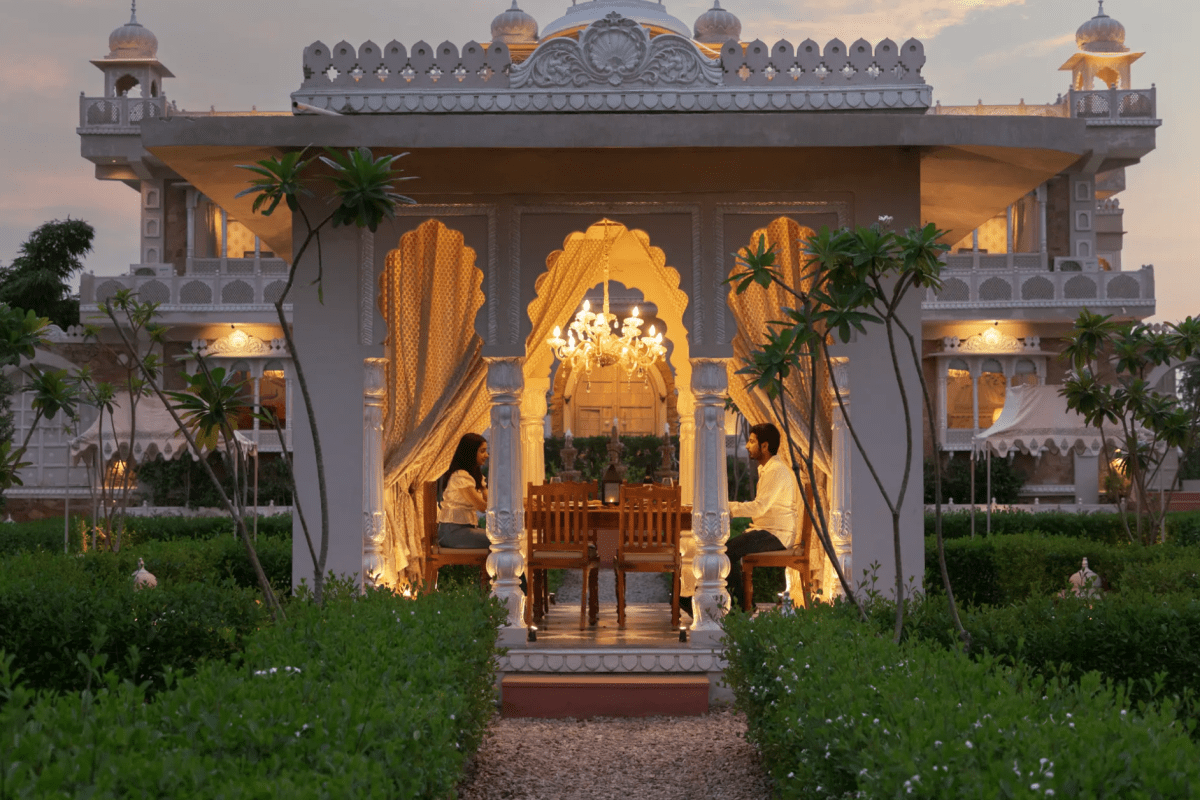
Everyone thinks Jaipur goes to sleep early.
The forts close. The bazaars start winding down. And by 7 pm, the version of Jaipur you see on postcards, all pink sandstone and heritage charm, quietly fades out. But that’s only half the story. Walk past the City Palace walls after dark and you’ll find a completely different city waking up. Cocktail rooms hidden behind unmarked doors in C-Scheme. Dinner spots loud enough to double as a party. Bazaars still buzzing under strings of lantern light. Folk dancers performing under an open sky.
Jaipur‘s nightlife has quietly become one of the most interesting in the country. Here’s what’s actually going on after dark in the Pink City, and why it’s worth planning around.
Table of Contents-
The City Is Outgrowing Its Own Postcard
Ask anyone what Jaipur means to them and you’ll get the same three answers. Amber Fort. Hawa Mahal. The bazaars. Fair enough, they’re stunning. But that heritage-first reputation has boxed the city in a bit, especially once the sun sets, when most people assume there’s nothing left to do at night in Jaipur but head back to the hotel.
That’s just not true anymore. A newer crowd of hospitality owners, many of them Jaipur natives who trained abroad or grew up around the family business, are building spaces that actually use the city’s culture instead of just decorating with it. What’s come out of that is a nightlife scene that feels like it could only exist here, spread across neighbourhoods like C-Scheme, Malviya Nagar, MI Road, Vaishali Nagar, and Tonk Road. Cocktail rooms. Cultural evenings. Night markets. High energy dining. All running at once, none of them competing.
Cocktail Rooms and High Energy Dining Are Pulling In a Younger Crowd
This is where the shift is most obvious. Jaipur‘s cocktail rooms and its new wave of high energy dining spots aren’t built for a quiet dinner and an early exit. They’re built for groups, for celebrations, for nights that start with a reservation and end somewhere on a dance floor. C-Scheme and Malviya Nagar have become the two areas to know for this, dense with rooftop cocktail rooms and design-led restaurants that stay full well past midnight, while MI Road and Tonk Road hold a bigger share of the city’s high energy dining spots.
Some of the newer cocktail rooms are hidden almost on purpose, tucked behind unmarked doors or secret passages inside old havelis. One space sits behind a hidden passage in a heritage haveli, styled like a jazz-era hideaway with live music and cocktails built around things like roasted bell pepper and cumin, or gin layered with chilli and Asian hydrosol. Another has gone all in on Rajasthani heritage liqueurs, herb-based spirits that royal families once distilled using recipes they never wrote down, complete with tasting sessions built around them. A few rooftop spots keep it lighter, turning their whole menu into a tour of India. Orange vodka with Cointreau. Coffee whiskey and bitters. Kesar vodka with salted caramel, sipped under a hand-painted ceiling as the sky goes pink.
Right alongside them, the city’s high energy dining scene has taken off, and it’s just as young. Some places have taken the concept literally, with drink prices that move in real time based on demand, basically a trading floor with a live band and a dance floor attached. Others mash cuisines together without apology, Italian technique with Indian ingredients in a garden built around a royal’s old travels abroad, or Punjabi thalis served with the kind of noise you’d expect at a wedding. These spaces fill up fast on weekends, especially around C-Scheme and Vaishali Nagar. Nobody’s going for a quiet conversation.
What’s happening across the city is a genuine move away from heritage cocktails and palace-style lounges toward something newer, driven by sharper mixology, better design, and global influences. And it shows in who’s showing up. This is the part of Jaipur’s nightlife that’s actually pulling in a younger crowd, both from the city and from outside it, and it’s becoming a real reason to stay out late here.
Folk Dancers, Puppeteers, and an Evening That Feels Like a Village Fair
If you’d rather skip the drinks and go straight for tradition, Jaipur‘s cultural resorts still do it best. From early evening, these recreated Rajasthani villages fill up with folk dancers, puppeteers, camel rides, fortune tellers, and live music, all building up to a thali dinner served the old way, on the floor. It’s touristy, sure. It’s also genuinely fun, and one of the only places where you can catch a Kalbeliya performance or a live folk set under the open sky, all in one evening.

For something quieter, Amber Fort’s light and sound show is still one of the best after-dark experiences in the city. It projects Jaipur‘s own history back onto its walls as the sun disappears behind them.
The Markets Don’t Actually Close
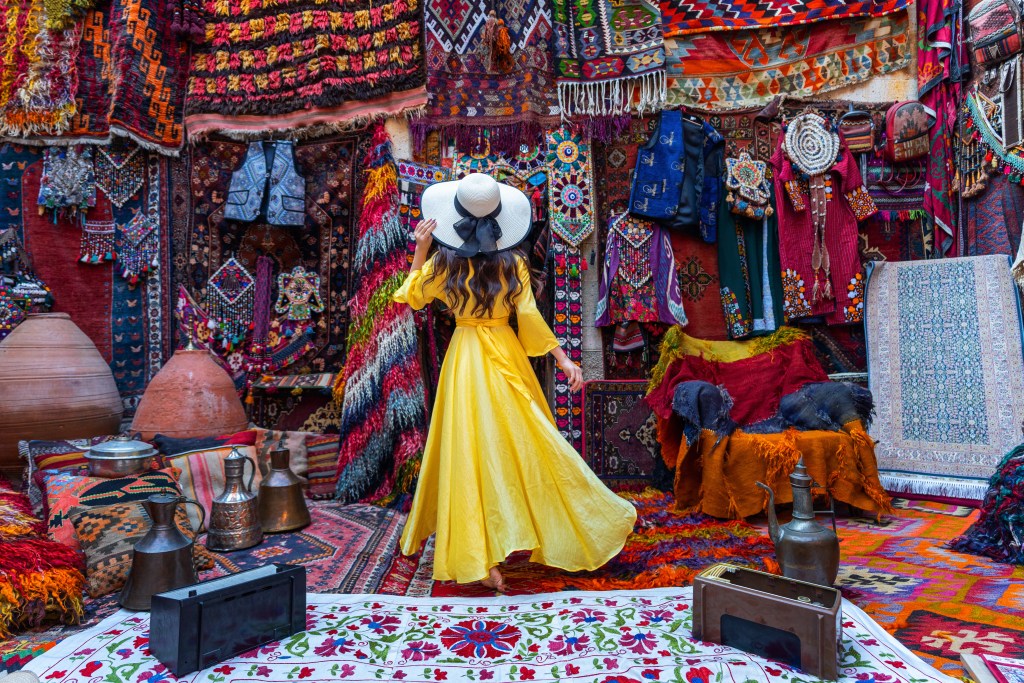
People assume Jaipur‘s bazaars shut down with the sun. They don’t. Markets like Bapu Bazaar and Tripolia Bazaar stay lively well into the night, still trading in handicrafts, jewelry, and souvenirs under lantern light. Johari Bazaar, the jewellery district, is worth a walk through even if you have zero intention of buying anything. The stonework alone is worth the trip. Add in textiles, block prints, leather juttis, brassware, and the bargaining that comes with all of it, and you’ve got an evening that doesn’t need a reservation.
Walk the market in the old city, then head to a rooftop in C-Scheme or Malviya Nagar for dinner. That’s really all it takes to turn a plain evening into a good one.
Why This Actually Matters If You’re Planning a Trip
If your last Jaipur trip ended with dinner at 8 and lights out by 10, it might be time to rethink the itinerary. The city now has a real spread of things to do at night, cocktail rooms and high energy dining pulling in a younger crowd across C-Scheme, Malviya Nagar, and MI Road, folk performances that go back generations, and markets that only get better once the lanterns come on. None of it competes with Jaipur’s heritage side. It just adds another layer to it.
If you’re staying somewhere private, like a villa, this is the part of the city most people never get around to. And honestly, it’s the part worth building an evening around.