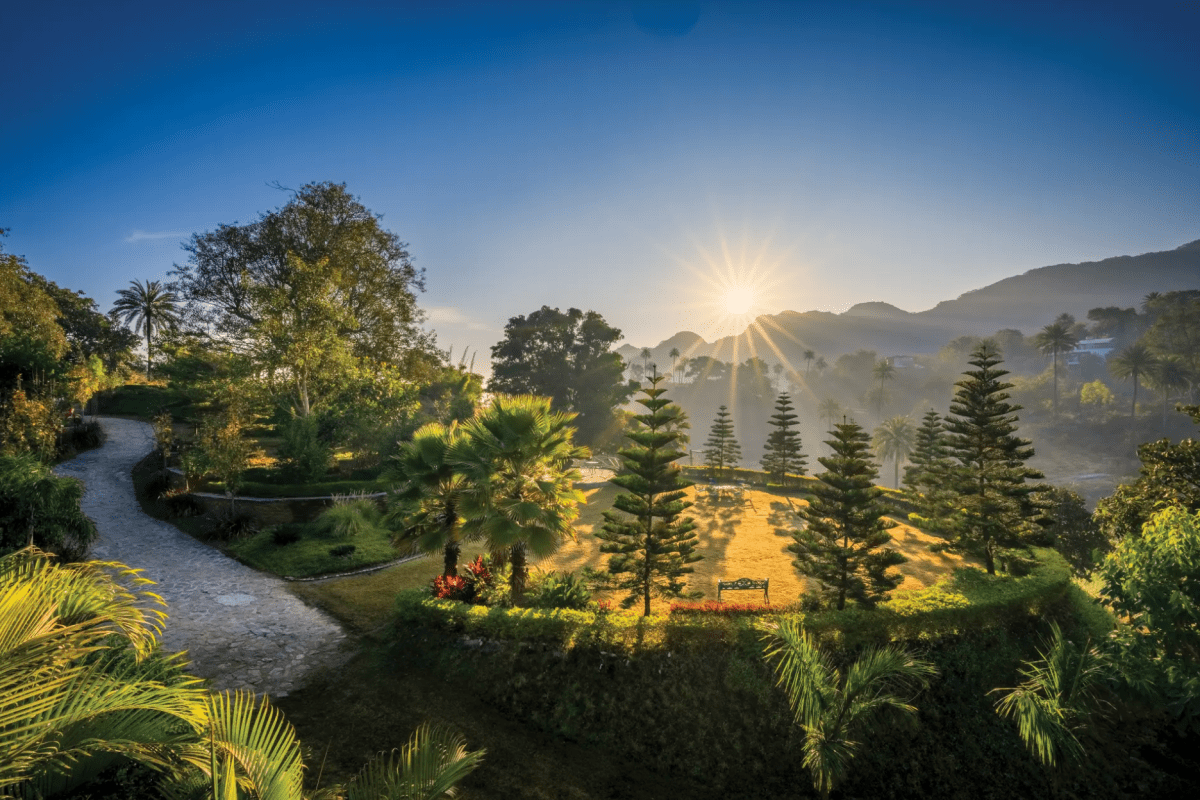
Most people didn’t start thinking about sustainable travel because of a headline. They started because a monsoon didn’t behave the way it used to, or a summer felt wrong in a way that was hard to name. A 2026 Booking.com survey found that 96% of Indian travellers now call sustainable travel important, and nearly two in three have changed or cancelled a trip because of weather disruption.
Long before “eco-friendly” appeared on a listing page, a few families were already building homes that took as little as possible from the ground they stood on. Three SaffronStays villas carry that instinct in three different, verifiable forms: passive architecture, locally sourced material, and generational land stewardship.
| QUICK ANSWER A villa is actually sustainable when its energy, water, material and waste systems are designed together from the start, not added on afterward. Three verified examples in India: SaffronStays Maativan (Wada, Maharashtra) uses mud-and-bamboo passive cooling with greywater recycling and composting. SaffronStays Terra Soul (Pali, Maharashtra) is built from bamboo, wood and marble dust with an energy-efficient Mangalorean-tiled roof. SaffronStays Ayati (Mysore, Karnataka) is a multi-generational fruit farm using repurposed, handmade material. |
Table of Contents-
Maativan, Wada: A Sustainable Villa Near Mumbai Built From Mud, Stone and Bamboo
SaffronStays Maativan sits on the edge of a reserved forest in Wada, Palghar district, a four-bedroom home built from mud, stone and bamboo using construction techniques that predate concrete by centuries. This is passive cooling in practice: the walls hold their own coolness through mass and layout, not air conditioning working overtime against the climate outside. Greywater from the kitchen and bathrooms is redirected into the gardens instead of a drain, and kitchen waste goes into composting pits that feed the herb and vegetable patches guests wander through before dinner.
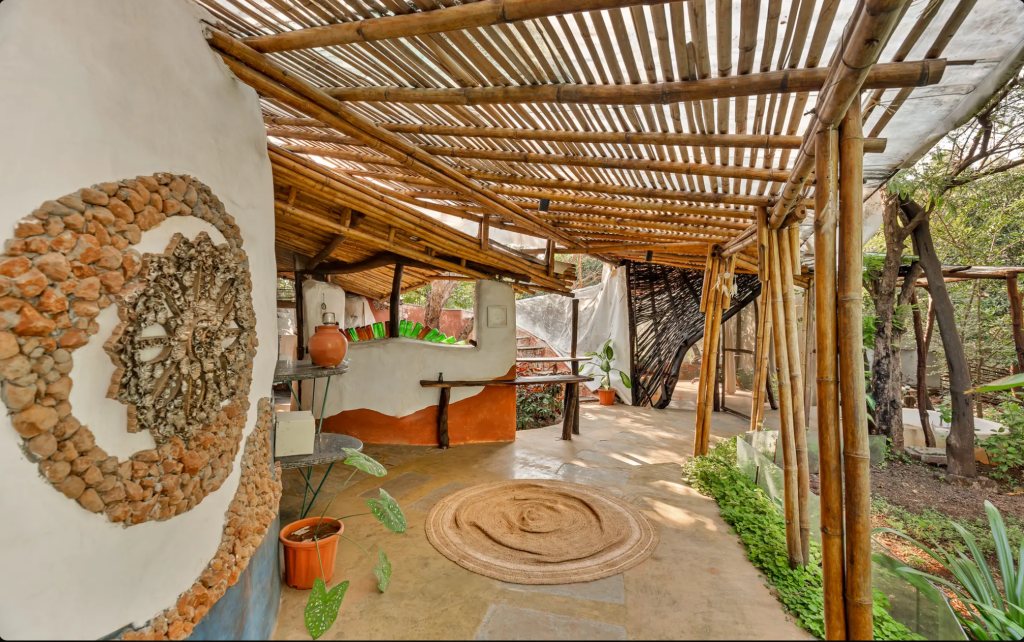
None of it reads as a retrofit. The home was drawn this way from the first sketch, by a family who wanted a place where children could learn what a permaculture farm actually looks like, not just hear the word. Guests are invited into that system rather than kept at a distance from it: a complimentary nature trail through the forest, a farm tour, and a planting experience where visitors put something back into the same soil their meals came from.
Terra Soul, Pali: An Eco-Luxury Villa Built From Locally Sourced Material
On a seven-acre estate near Pali, a popular weekend destination from Mumbai, SaffronStays Terra Soul is built almost entirely from what the region already had: bamboo, wood, and marble dust, finished with a Mangalorean-tiled roof designed specifically to reduce the home’s energy load. None of it was trucked in for convenience. Sourcing bamboo and marble dust locally takes longer than placing a standard material order, and it shows in the details: a stone bar, a pond with its own gazebo, and courtyards built to catch cross-breezes instead of relying on machines to move air.
“The home wasn’t designed to look sustainable. It was designed to need less resistance than a modern build assumes is normal.”

Terra Soul is 100% pet-friendly and built for small groups. The home has been recognised for its material discipline, and guest reviews consistently point to the same detail: how well the space is designed once you’re inside it, not just how it photographs.
Ayati, Mysore: A Multi-Generational Sustainable Farm Stay in Karnataka
SaffronStays Ayati, on a 4.5-acre fruit farm on the outskirts of Mysore, is built on a different sustainability principle from the other two: time. What began as one family’s gathering space became, across three generations, a working farm finished in handmade Athangudi tiles, using repurposed material wherever the family could manage it. Guests can book an independent cottage, the three-room main villa, or the entire estate, and the fruit trees and slow rhythm of the property stay the same regardless of how many rooms are booked.

Nobody set out to make Ayati a case study in sustainable building. It became one because three generations kept choosing the slower way to build. The farm sets the pace of a stay more than any amenity list could: mornings tend to follow whatever the trees are producing that week, and the option to book one cottage or the whole estate lets the property scale from a couple’s weekend to a full family reunion.
What Makes These Sustainable Villas in India Different
These three properties are a small sample of a larger pattern. SaffronStays Sylvan Farms in Mount Abu, built around a closed-loop farm-to-table system by a conservationist family, is a fourth example, and its full history is covered in a separate post. Together, the four homes share one design principle more than one feature list: each family asked how little a home could take from the land before asking how much comfort it could add on top.
None of these homes were built to anticipate a Booking.com survey or a heatwave that would make headlines. Indian travellers actively searching for real sustainability today aren’t creating that instinct. They’re catching up to homes that had it first.
| Stay in a home built this way from the start Explore SaffronStays Maativan, Terra Soul and Ayati, and the families behind them. |
Frequently Asked Questions
What makes a villa actually sustainable, rather than just eco-branded?
A truly sustainable villa is designed around energy, water, material and waste systems from its first sketch, not fitted with add-ons afterward. Look for specifics: what the walls are made from, where wastewater goes, whether composting or farming happens on-site, rather than general terms like “green” or “eco” alone.
Are eco-friendly villas in India more expensive than conventional ones?
Not inherently. Sustainable construction can cost more upfront because sourcing local, natural materials takes longer than a standard supply order, but it isn’t a luxury surcharge on top of an otherwise ordinary home. Pricing at Maativan, Terra Soul and Ayati is comparable to other SaffronStays villas in the same regions.
Where are SaffronStays’ most sustainable properties located?
Maativan is in Wada, Palghar district, a popular weekend escape from Mumbai. Terra Soul is on a seven-acre estate near Pali, Maharashtra. Ayati is on a fruit farm on the outskirts of Mysore, Karnataka. SaffronStays Sylvan Farms, a fourth sustainably built home, is in Mount Abu, Rajasthan.
Can I book just one cottage at Ayati, or do I need the whole estate?
Ayati offers three booking options: an independent cottage for smaller groups, the three-room main villa, or the entire estate for larger gatherings.
What is passive cooling in sustainable villa architecture?
Passive cooling uses a building’s mass, layout and material, thick mud or stone walls, cross-ventilation, shaded courtyards, to regulate indoor temperature without mechanical air conditioning. SaffronStays Maativan is a working example: its mud-and-bamboo walls stay cool through structure alone.
Is Maativan or Terra Soul pet-friendly?
Yes. Maativan is pet-friendly, and Terra Soul is 100% pet-friendly with no restrictions on pet size or number.