COMPARISON GUIDE | NATIONAL | MONSOON SEASON
Villa or Resort: Which Is Better in the Monsoon?
What actually changes when you book a private pool villa instead of a resort stay
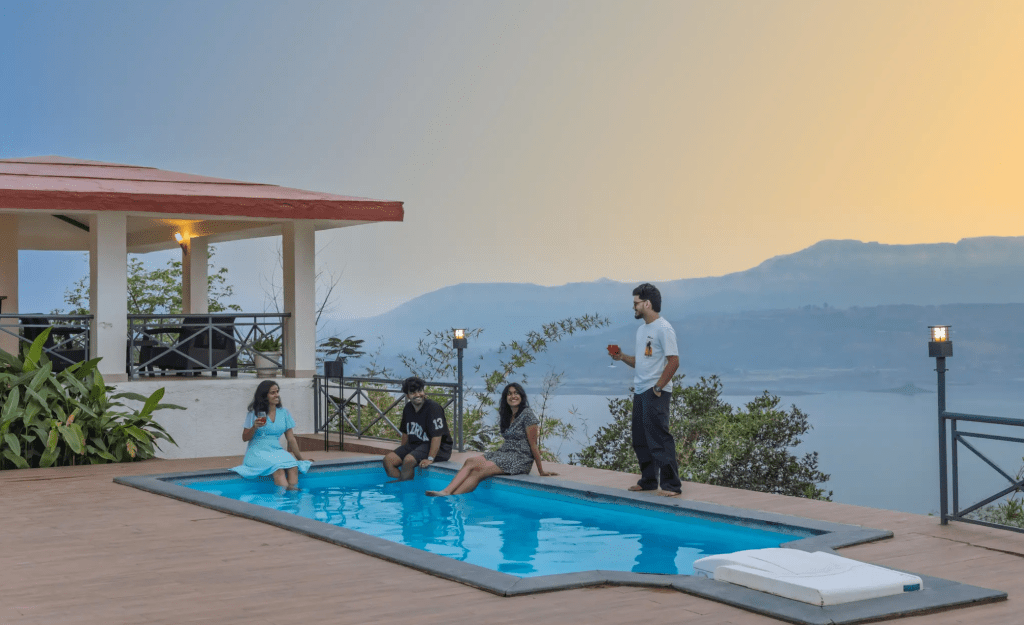
Rain makes a particular sound on still water, one that no brochure photo has ever managed to capture. It is why half of India starts checking weekend availability the moment the first real monsoon front rolls in, not for a list of amenities, but for that slower, greener feeling that only wet hills and grey afternoons seem to hold.
Somewhere between booking that weekend and actually living it, though, the property decides how much of that feeling survives the trip. A shared pool that shuts for the weather. A cancellation policy with fine print nobody read closely enough. A buffet timed to everyone except your group. This is the real substance behind the villa vs resort question in monsoon India: not star ratings, not square footage, but who controls the small decisions once the sky opens up.
A private pool villa is built to win that argument on every count that matters in the rains. It guarantees the pool, protects the booking, times the meals to the group, and keeps every shared space private. A resort, run well or otherwise, is structurally exposed to all four. Here is exactly what changes, point by point, and why it holds up even against a reader who has had a genuinely good resort stay.
| QUICK ANSWER: VILLA OR RESORT, WHICH WINS IN THE MONSOON? A private pool villa is the better choice over a resort for most monsoon trips. It guarantees pool access when a resort’s shared pool may be crowded or closed, tends to offer more genuine cancellation flexibility than a resort’s standard non-refundable terms, times meals to the group instead of a fixed buffet schedule, and removes the shared common-area crowding a rainy day creates at a resort. A resort can still suit travellers who want daily housekeeping variety, an on-site restaurant menu, or organised activities. October to February suits travellers who want dry, clear hill views. June to September suits travellers chasing the rain itself, provided the property is genuinely built to handle it. |
Table of Contents-
The Pool: Yours Alone, or Shared With Forty Other Rooms
Picture the drive in. Three hours of winding, rain-slicked road, past waterfalls that did not exist a month ago, just to reach the property. You check in, drop your bags, and walk straight to the pool, only to find a laminated sign: closed due to weather. Or open, but shared with forty other rooms that had exactly the same idea the moment the rain paused.
This is the ordinary reality of a shared resort pool in the monsoon. It is a common resource, subject to weather calls, maintenance windows, and other guests’ timing, not yours to claim whenever the sky briefly clears.
A private pool changes this outright, and not as a luxury flourish. It is a guarantee. The pool is yours from the moment you arrive to the moment you leave. When the clouds part for twenty unplanned minutes of sun, nobody needs to check with the front desk or queue for a lounger. You just walk out. In a season built on unpredictability, one certain thing waiting for you is worth more than it sounds on paper.

Cancellation Policies: Where Trust Actually Gets Tested
Monsoon travel runs on a kind of faith. Roads flood without warning. Trains run late. A weather advisory appears two days before departure and the whole plan suddenly feels breakable. This is exactly the moment a booking’s fine print stops being fine print and starts being real money.
Many resorts, particularly larger ones running discounted monsoon rates, default to standard non-refundable terms, the kind most guests skim past at checkout because they are excited, not because they have read the clause carefully. Villas, especially those built around private, relationship-led stays, tend to offer something closer to genuine flexibility, because the business depends on a guest’s trust returning next season rather than on locking in one transaction today.
Read the cancellation terms before falling for the photos, on either kind of property. It is the difference between “we will adjust the dates” and “the deposit is gone because of a storm nobody caused.”
Meals: Cooked for You, Not for a Buffet Clock
There is something quietly comforting about hot food arriving exactly when it is needed, not when a buffet card says breakfast has ended. A resort kitchen runs on fixed hours because it has to. It is feeding hundreds of rooms on one shared timetable. If a monsoon morning turns into a slow, blanket-and-chai kind of morning that drifts past ten thirty, most guests are either out of luck or paying extra for the delay.
A private pool villa usually comes with a cook who works around the group’s actual day rather than a printed schedule. Breakfast can wait if everyone is watching the rain. Dinner can move earlier if the trek back took longer than planned. The food adjusts to the group’s rhythm instead of asking the group to adjust to it, and in a season where very little goes exactly to plan, that flexibility becomes its own quiet luxury.

Shared Spaces: The One Thing You Do Not Have to Split
Here is the part most monsoon travel advice skips. A rainy day pushes every guest at a resort indoors, into the same lounge, the same games room, the same corner of the restaurant, all at once. A property that felt spacious in the sun suddenly feels crowded, because the outdoor space that usually absorbs people has stopped being usable.
A villa does not have this problem, for the simple reason that there is no other group’s holiday happening under the same roof. The living room stays the living room. The veranda, the dining table, the quiet corner with a book, none of it turns into a shared resource the moment it starts raining. For families and groups who already expect to spend more time indoors than planned, this single difference tends to matter more than any amenity listed on a website.
| A resort asks you to share the monsoon with everyone else who booked the same weekend. A villa hands the whole season back to you. |
Keeping This Comparison Honest
It would be easy to write this as a takedown of resorts, and it would not be fair or accurate. Some resorts run excellent monsoon packages. Some manage crowding and cancellations with real care, even at peak rain season. The point here is not that resorts fail. It is that a private pool villa is structurally built to remove the specific frictions monsoon travel creates, while a resort’s shared-service model leaves guests more exposed to them by design.
| QUICK NOTES FOR MONSOON TRAVELLERS Is the pool guaranteed and private, or shared and weather-dependent? What actually happens to the money if the weather turns bad partway through the stay? Are meals on a fixed schedule, or built around the group’s own timing? Will there be a quiet space of your own if everyone ends up indoors for the day? Ask these of any property, villa or resort, before booking a monsoon weekend. |
Where This Plays Out Across the Country
This is not a pitch for one destination. It is a pattern that repeats wherever the rains are worth chasing.
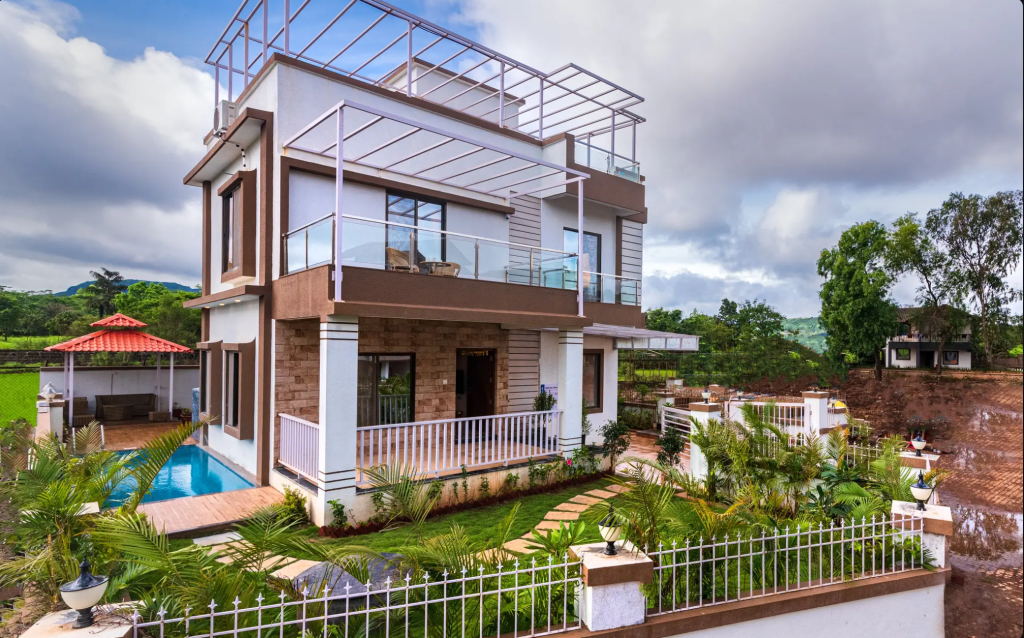
Near Mumbai and Pune, the Sahyadri belt around Lonavala turns a deep, dramatic green through the season. SaffronStays Urja, a three-bedroom villa with two plunge pools and a private spa, and SaffronStays Aster, a four-bedroom, elderly-friendly home overlooking the Sahyadris, both make the case plainly: a private pool here is the clearest possible contrast to a crowded hill-resort pool. Near Bangalore, Jerdon’s Perch, a pet-friendly pool villa at the edge of Sakleshpur amid coffee estates and Western Ghats views, lets the rain feel restorative rather than restrictive, without the common-area crowding of a shared resort stay. Near Delhi, SaffronStays Timber Aqua Quest in Dehradun pairs private pools and jacuzzi-equipped rooms with valley views, offering the kind of flexibility a season with unreliable hill roads actually calls for.
Across all three regions, the underlying logic stays the same. A private pool villa is built to hold up against monsoon uncertainty in a way a shared resort model structurally cannot.
The Real Difference
So, villa or resort, which is better? For a monsoon trip, the honest answer is a private pool villa, on every point that actually matters once the rain starts: the pool, the money, the meals, the quiet. The monsoon does not change why people travel. The rain, the smell of wet earth, the green that was not there a month ago will always be the draw, resort or villa. What changes is how much control a traveller gets to keep once they arrive. A private pool villa hands that control back. A resort, however well run, asks guests to share it, with the weather, and with everyone else who booked the very same weekend.
| FIND YOUR MONSOON STAY Browse SaffronStays Urja and SaffronStays Aster in Lonavala, Jerdon’s Perch near Coorg, SaffronStays Timber Aqua Quest in Dehradun , and more private pool villas across India. Your pool, your kitchen, your monsoon. saffronstays.com/villas |
YOU MIGHT ALSO LIKE
Monsoon Staycation Checklist: What to Pack and What to Skip
SaffronStays Urja and Aster: Two Ways to Do a Lonavala Monsoon Weekend
Jerdon’s Perch: A Private Pool Villa on the Edge of the Western Ghats
SaffronStays Timber Aqua Quest: A Monsoon Base in the Dehradun Hills
FAQ: Villa vs Resort in the Monsoon
Which is better, a villa or a resort, in the monsoon?
A private pool villa is better than a resort for most monsoon trips, because it guarantees pool access, tends to offer more genuine cancellation flexibility, times meals around the group, and removes shared common-area crowding. A resort can still be the better choice for guests who want daily housekeeping variety, an on-site restaurant menu, or activity staff on hand.
Do resorts really close their pools in the monsoon?
Many do, for safety and maintenance reasons during heavy rain, and even open pools often see reduced capacity or shared timing when the property is at monsoon occupancy. A private pool at a villa is not subject to either constraint.
Are villa cancellation policies actually more flexible than resort policies?
Generally yes, particularly against resorts running discounted, non-refundable monsoon rates. It is still worth reading the specific policy on any property before booking, since terms vary by owner and management company.
What is the best time to book a monsoon villa in India?
June through September for full monsoon greenery and waterfalls, with extra caution around road conditions in the heaviest rain weeks, typically July to mid-August. October brings clearer skies for travellers who prefer the tail end of the season without heavy rain risk.
Which regions in India work best for a monsoon villa stay?
The Sahyadri belt near Mumbai and Pune, home to SaffronStays Urja and SaffronStays Aster in Lonavala, the coffee hill country near Bangalore, where Jerdon’s Perch sits at the edge of Sakleshpur, and the lower Himalayan foothills near Delhi, where SaffronStays Timber Aqua Quest based in Dehradun , are three of the most reliable monsoon villa regions in the country.