By SaffronStays • Malpe • Independence Day 2026 • Karnataka Coast • Weekend Getaways
Udupi carries its name into restaurants across the country, dosa and filter coffee travelling far beyond the coastal temple town where that tradition actually started. The town itself sits about seven hours from Bangalore, and August here means something different from a beach holiday: the temple at its most atmospheric, backwaters running full through the monsoon, and a coastline better suited to walking than swimming this particular month. Independence Day 2026 falls on a Saturday, and a Friday off turns this into a proper three-day trip instead of a rushed one.
Bangalore’s own Independence Day ceremony brings no-parking zones and road closures around Central Street, Cubbon Road and MG Road on August 15. Anyone driving through the city centre that morning should route around it rather than through it.
Getting There: A Real Long Weekend, Not a Quick Trip
Bangalore to Udupi is not a casual drive, and this piece will not pretend otherwise. The most direct route runs via NH75 through Hassan and the Charmadi Ghat, a scenic stretch through the Western Ghats that is also the part of the journey most affected by monsoon conditions; heavy rain can slow the ghat section considerably. An alternate route via Shimoga adds distance but avoids the steepest ghat driving, worth considering if the weather forecast looks unsettled on travel day.
Leave early. A 6 AM start from Bangalore makes the difference between arriving in daylight and finishing the ghat section after dark, which is worth avoiding regardless of season.
Hejamady Beach, Udupi
What August Actually Offers Here
Malpe Beach and the coast around Udupi are not swimming destinations this month. Tides run high through the monsoon, and SaffronStays’ own guidance on visiting Udupi is direct about it: the season is not ideal for beach activities. St Mary’s Island, the basalt rock formation a boat ride from Malpe, frequently suspends its ferry service in rough seas, so treat a visit there as weather-dependent rather than guaranteed.
What August does offer instead: a temple town at its quietest, and backwaters at their fullest.
What the season does hand over is different. The backwaters around Udupi run full and green, walking weather along the coast is pleasant between showers, and the town’s temple culture, which runs on its own calendar regardless of tide charts, is worth the trip on its own. Kapu Lighthouse, about 15 kilometres south of Udupi, is a better coastal stop than the beach itself this month: the walk up is short, the structure has stood since 1901, and the viewing point sits high enough to watch the monsoon surf from a safe distance rather than in it. Swimming is not advised here either; the sea runs just as rough as it does at Malpe.
Where to Stay in Udupi
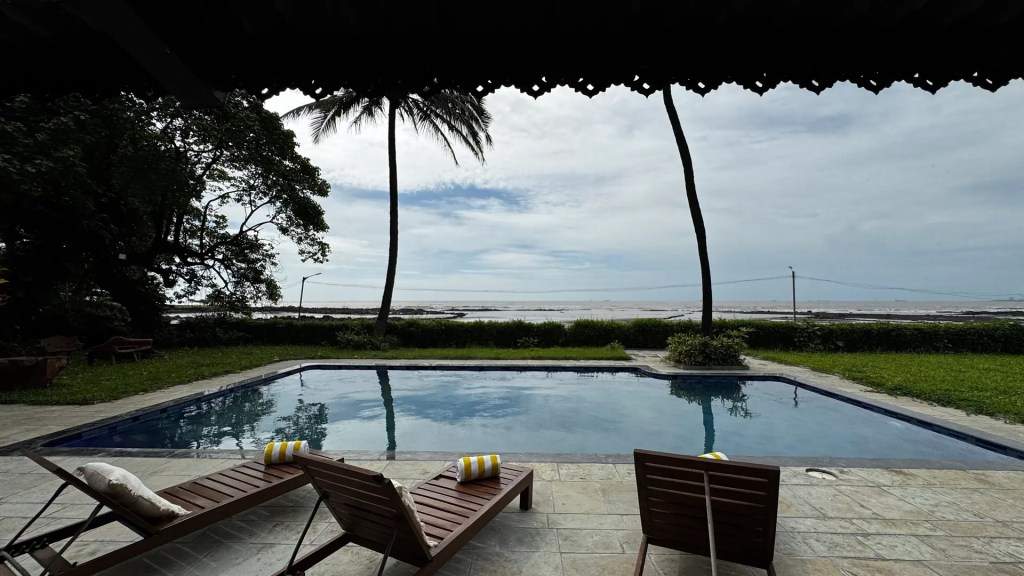
Beachfront private pool villa, Blue Flag House, Udupi
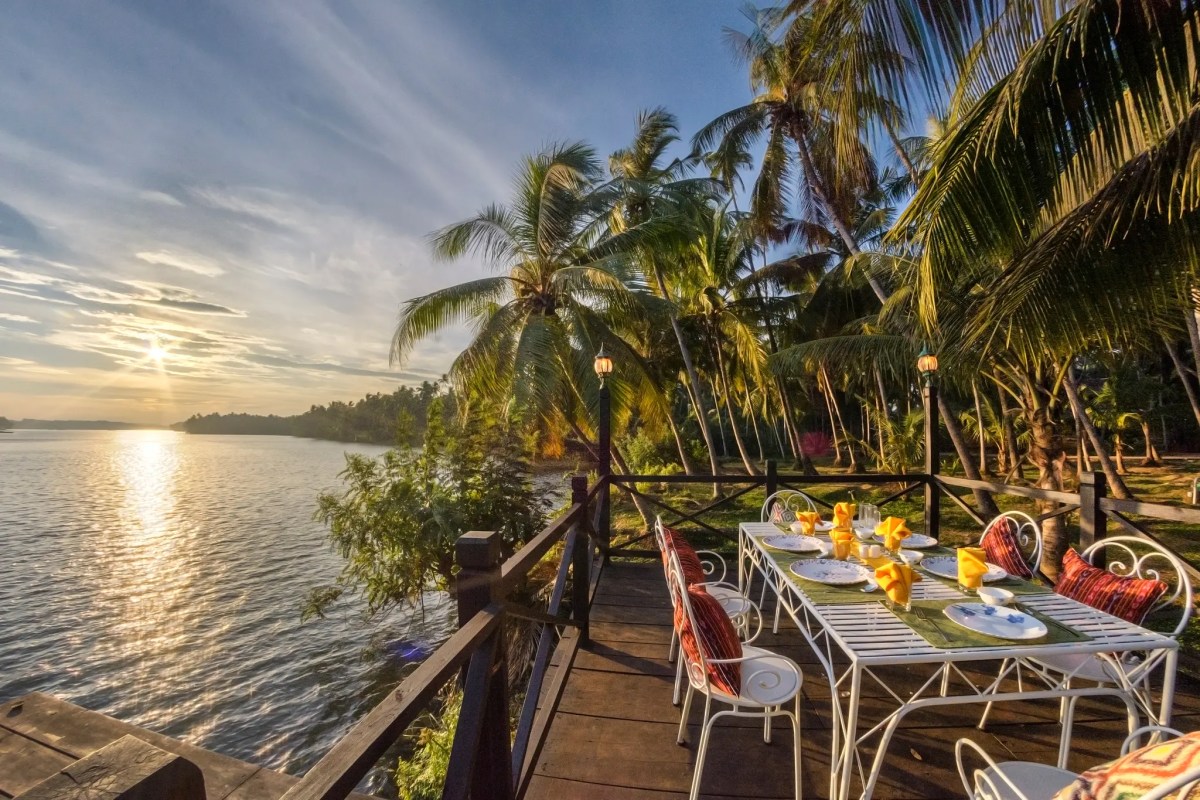
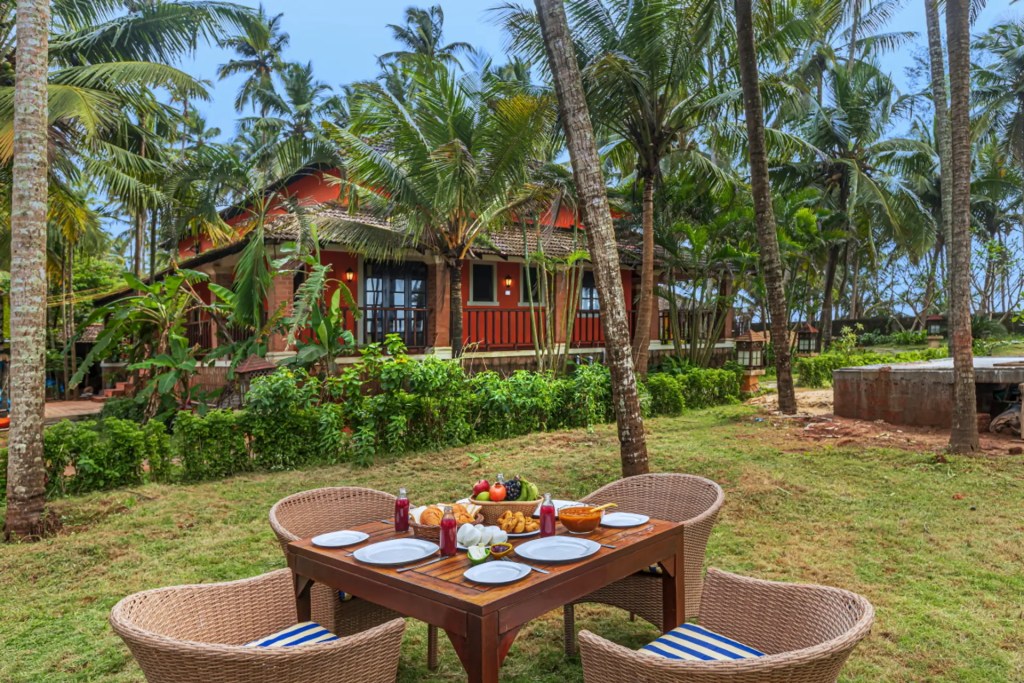
Two villas here cover different versions of this trip. SaffronStays Blue Flag House is a three-bedroom beachfront villa in Hejamady, close enough to the coast to make walking, not swimming, the plan, with a private pool that does the actual swimming work this month. It suits a group that wants the sea nearby without needing to enter it.
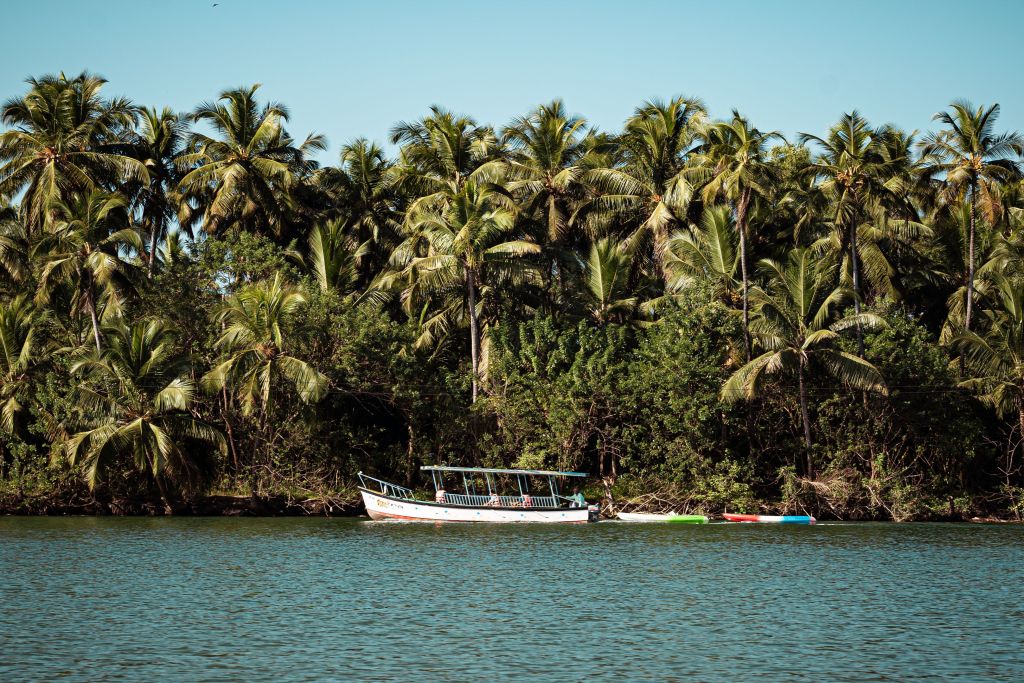
SaffronStays Suvarna Sangam Sharavathi takes the quieter, inland version instead: a one-bedroom riverfront villa built for a couple or small family, where the water views come from a backwater rather than the open coast. It suits a smaller, slower trip over a group getaway.
Krishna Matha and the Real Story Behind Udupi Food
Udupi cuisine, the dosa-and-filter-coffee tradition now found in restaurants across the country, started here, at the Krishna Matha temple founded by the philosopher Madhvacharya in the 13th century. The temple kitchens developed sattvic vegetarian cooking, no onion, no garlic, meant as offerings to Krishna, and those same principles still shape what gets served at the temple’s free dining hall today, where devotees are fed twice daily, seated on the floor and served off trolleys.
August carries a specific significance here beyond the monsoon itself: it falls within Chaturmasa, a four-month religious observance period with its own dietary restrictions in the temple kitchens. The temple stays fully open to visitors through this period, free meals continue as usual, and the restrictions affect the kitchen’s ingredients rather than anyone’s ability to visit. For anyone curious about where the dosa actually came from, this is the source, not a recreation of it.
Is This Weekend Worth the Drive
Nine hours each way is a real commitment, and this trip suits a proper three-day weekend more than a rushed two-day one. For anyone who can take Friday, August 14 off, the math works: a full day and two nights in Udupi still leaves real time to see the temple, walk the coast, and use the villa itself as much of the plan. Split the drive if nine hours straight feels like too much in one push; Chikmagalur, roughly three hours from Bangalore and two from Udupi on the route via Agumbe, works as a one-night stop for anyone willing to turn this into a four-day trip instead of three.
Skip it if the only free time is Saturday and Sunday alone; the drive would eat most of both days. Better to wait for a longer window than to spend a weekend mostly in the car.
Temple bells, sea air, and someone else cooking. Browse private-pool villas in Udupi on SaffronStays and lock your Independence Day long weekend.
Frequently Asked Questions
How far is Udupi from Bangalore?
About 400 to 440 kilometres depending on route, roughly 6 to 9 hours by road via the Charmadi Ghat. This is a genuine long-weekend distance rather than a quick day trip.
Is it safe to swim at Malpe Beach in August?
Not recommended. Malpe carries explicit monsoon advisories for high tides and strong currents. SaffronStays’ own guidance notes that monsoon is not ideal for beach activities in Udupi; a villa pool is the safer way to swim this month.
Is St Mary’s Island open in monsoon?
Boat service to the island is frequently suspended in heavy rain and rough sea conditions. Check locally on the day rather than assuming the crossing will run.
What causes Independence Day traffic in Bangalore?
The city’s own flag-hoisting ceremony brings no-parking zones and road closures around Central Street, Cubbon Road and MG Road on August 15. Confirm the current advisory closer to the date.
What is the best villa in Udupi?
SaffronStays Blue Flag House, a three-bedroom beachfront villa in Hejamady, suits a group that wants the coast close by. SaffronStays Suvarna Sangam Sharavathi, a one-bedroom riverfront villa, suits a couple or small family wanting quiet backwaters instead.
Can Krishna Matha be visited during Chaturmasa?
Yes. The temple remains open and the twice-daily free meals for devotees continue as usual; Chaturmasa affects the temple kitchen’s ingredient restrictions, not visiting hours.
The Arabian Sea along this stretch of coast is not swimmable right now, and that fact should shape the whole trip. Lifeguards at Alibaug, Murud and Kashid are turning swimmers back for good reason: monsoon currents and unpredictable tides make the water genuinely dangerous through August. Building a getaway around a beach day that cannot happen is how people end up either hurt or disappointed. What the coast offers instead: forts rising out of grey water, long stretches of sand built for walking rather than wading, and a private pool back at the villa for the swim everyone still wants.
A Saturday Independence Day changes who actually gets a long weekend out of this. Take Friday, August 14, and the coast opens into three unhurried days. Skip it, and the Konkan is still close enough that one day works, provided the drive out is planned rather than improvised.
Table Of Contents:
How to Actually Get There This Weekend
Two ways in, and this particular week the choice matters more than usual.
Road takes you from Sewri across the Atal Setu sea bridge to Chirle, then onto NH66 toward Alibaug. Budget two to two and a half hours door to door, plus a toll of roughly two hundred fifty rupees each way. The bridge does not care what the sea is doing, which counts for something in a month when a ferry crossing might not run at all.
Water takes you across on the M2M RoRo ferry from Bhaucha Dhakka to Mandwa, and it still makes sense for anyone bringing a car who would rather skip the drive around the bay. The crossing itself runs about an hour, with another 30 to 40 minutes by road from Mandwa into Alibaug town. This is the larger vehicle-carrying ferry, not the passenger catamaran from Gateway of India, and the distinction is worth knowing in August: the catamaran gets pulled off the water in heavy rain far more often than the RoRo does, though a same-morning call to confirm is still worth the two minutes it takes.
Pune’s route runs through Khopoli and Pen regardless of the final stop; the difference is how far you stay on it. The Mumbai-Pune Expressway to Khopoli, then onto NH66 via Pen toward Alibaug, covers roughly 140 to 150 kilometres and takes about two and a half to three hours. Continuing past Alibaug through Kashid to Murud on that same road adds another 45 minutes to an hour, putting Murud at roughly three to three and a half hours from Pune door to door. The Mulshi and Tamhini Ghat routes look shorter on a map and are more scenic, but real-world road reports consistently flag long stretches of poor surface, and this is not the year to test that in the rain.
LOGISTICS NOTE
Mumbai’s own flag-hoisting ceremony closes roads around Mantralaya and South Mumbai from 6 AM to 11 AM on August 15 itself, exactly when a lot of Saturday getaways try to leave the city. Anyone routing through South Mumbai should leave the evening of Friday, August 14 instead, which avoids both that restriction and the usual weekend build-up at Vadkhal Naka further down the highway.
What This Coast Actually Needs You to Pack
A monsoon coastal weekend has a different packing list than a sunny one, and most of it comes down to keeping feet dry and gear working. Quick-dry clothing matters more than waterproof clothing here, since staying dry all day is unrealistic once the drive itself involves stepping through puddled parking areas. Rubber-soled sandals or trekking shoes with grip beat regular sandals for fort visits; the stone steps at Kolaba and Korlai turn slick fast, and Phansad’s forest paths are worse.
A dry bag or two large zip-lock bags for phones and cameras earns their weight, particularly on the Kashid surf-watching walk where spray reaches further up the beach than it looks like it should. Basic mosquito repellent is worth packing for the Phansad detour specifically, since the sanctuary’s density of greenery in August comes with a proportional insect population. None of this is complicated, but it is the difference between a comfortable weekend and one spent managing wet shoes.
Alibaug: The One Where Everything Is Close
Alibaug is the easiest sell in this trio, and not because it tries hardest. It simply has more to do that has nothing to do with the sea. Kolaba Fort sits just offshore, usually reached on foot at low tide, but this is exactly the kind of walk to skip in August: locals describe monsoon low tide here as behaving more like half of a high tide, which means wading through waist-deep water rather than the ankle-deep crossing it is the rest of the year. Viewing it from Alibaug Beach instead works just as well. Under a monsoon sky, the fort’s silhouette against churning cloud cover makes a better photograph than the close-up ever would. Korlai Fort, a Portuguese-era structure about 40 minutes south, rewards the slightly longer detour with sea-and-creek views from higher ground, well clear of any tidal risk.
Treat the coastline itself as walking territory this month. Alibaug Beach, Kihim and Awas all work better as long, unhurried walks than as swimming spots right now. Kihim earns the extra detour for its casuarina groves alone, which keep the shoreline shaded and walkable even at midday.
Under a monsoon sky, the fort’s silhouette against churning cloud cover makes a better photograph than the close-up ever would.
Where to Stay in Alibaug
Two villas here, two different versions of the same weekend. SaffronStays Lighthouse by the Sea sits directly on Sasawane Beach, a three-bedroom pool villa built for exactly this kind of trip: a private pool for the swimming that actually happens, sea views from every room, and a short walk to sand worth walking. It is pet-friendly too, which counts on a long weekend when the dog is coming along.
SaffronStays Aura takes a different shape entirely. A four-bedroom villa about 25 minutes from Mandwa Jetty, closer to Awas and Kihim than to Sasawane, it comes with an onsite gym and table tennis that earn their keep on a weekend when the sea itself is off the table. This one suits a larger, more restless group, the kind that wants somewhere to burn energy between meals rather than just a view.
Either way, the kitchen does more work than usual on a trip like this. Alibaug’s Konkani cooking leans hard into monsoon produce, and a villa with an in-house chef turns a rained-out afternoon into the best part of the stay instead of the part everyone just tolerates.
Private pool at SaffronStays Lighthouse by the Sea, Alibaug
Murud: The Fort Worth the Extra Hour
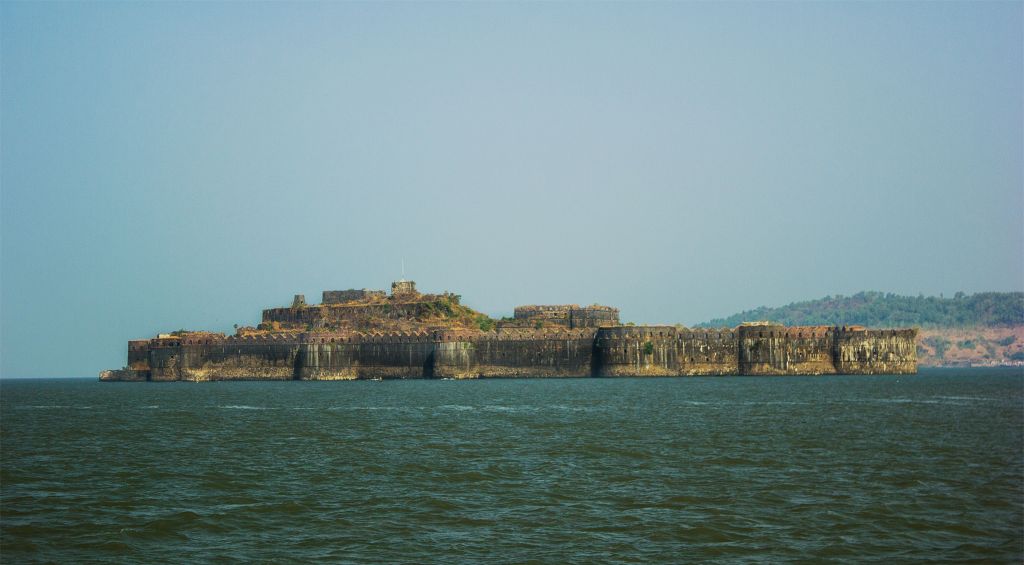
Murud is Alibaug’s quieter cousin, an hour further south, and it earns every extra minute almost entirely because of one fort. Murud-Janjira, built on a rock island just offshore, repelled every direct assault against it for over three hundred years, including repeated attempts by the Portuguese, the Marathas, and later the British navy. It remained under the rule of its Siddi Nawabs until it formally acceded to India in 1947, never taken by force. Even from a boat circling its walls rather than standing on the ramparts, that history lands. Boat access depends on tide and weather, so this is a morning plan, not an afternoon one. Check conditions locally the day before rather than showing up and hoping the crossing runs.
Murud Beach itself stretches long and stays largely uncrowded even on a holiday weekend, which makes it the better walking beach of the two towns. The advisory holds everywhere on this coast in August: ankle-to-knee depth only, and even that only with someone watching from the sand.
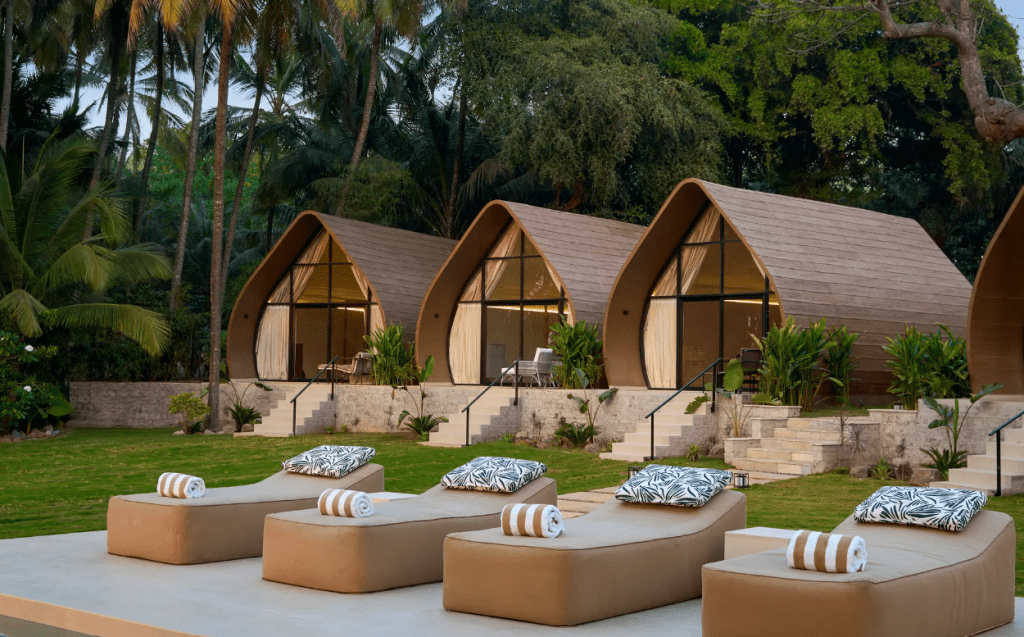
SaffronStays Ovates By The Sea makes the most of this stretch of coast. Built as independent sea-facing cabins, each with its own private plunge pool, alongside a larger common pool that handles group swimming, the six-bedroom property leans into the sea-view promise from every angle instead of tucking the water behind one shared pool. It suits a trip built around watching the Arabian Sea rather than fighting to get into it.
For a smaller, quieter version of the same weekend, SaffronStays Adora Woods And Hills, is a villa built for couples or a small family, with the same access to Murud’s fort circuit and coastline, minus the scale of a larger group stay.
Murud is a fishing town first, and it shows in the food. A villa stay with a dedicated chef is the easiest way to actually eat that catch the way locals do, rather than off a stall menu written for day-trippers.
Murud-Janjira Fort surrounded by the Arabian Sea
Kashid: The One Town Where the Sea Is Still the Point
Kashid sits between Alibaug and Murud, and it is the one town on this stretch where the sea itself, not a fort or a walk, is the reason to come, even with swimming off the table. Kashid’s waves run six feet high or more nearly year-round, monsoon or not, which makes it a genuine surf-watching beach rather than a swimming one. Come for the swells breaking against pale sand and the sound of it from a safe distance, not for a dip.
Phansad Wildlife Sanctuary, a short drive inland, is the other half of a Kashid trip and the part most itineraries skip entirely. This is a real forest, not a manicured park, home to the Malabar giant squirrel alongside leopard and barking deer, though the squirrel is by far the likelier sighting; the other two are shy and mostly nocturnal. A monsoon visit means the canopy is at its thickest and greenest, and the squirrels themselves are the realistic reward for anyone who goes early, stays quiet, and keeps to the marked trails rather than expecting a wildlife documentary.
Come for the swells breaking against pale sand and the sound of it from a safe distance, not for a dip.
Kashid Beach in August
Where to Stay in Kashid
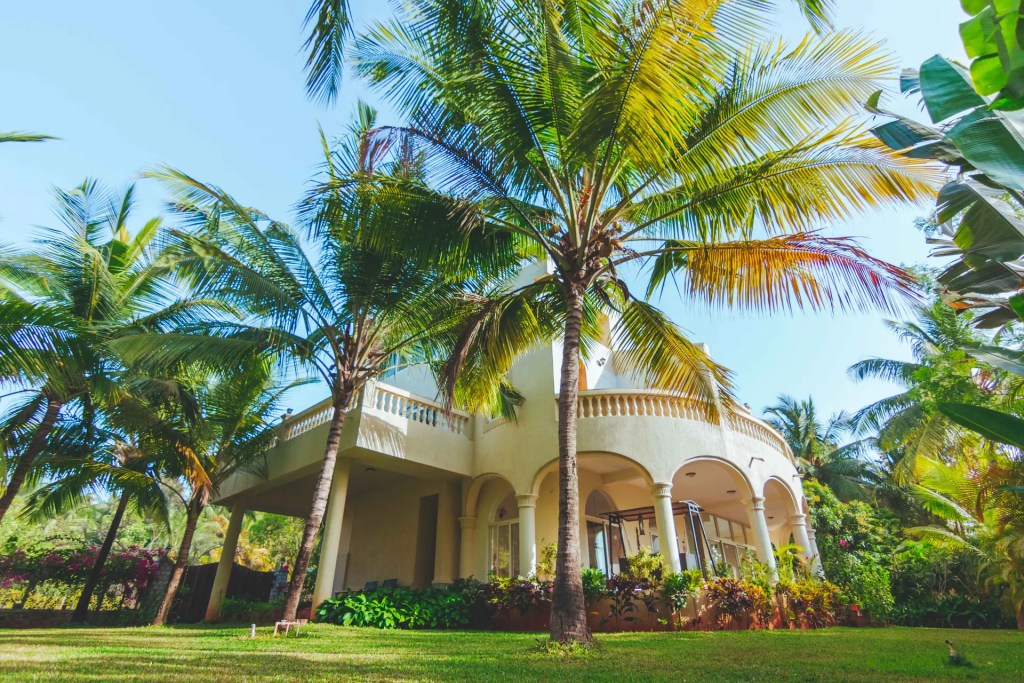
SaffronStays La Casa Maestro sits up in the Kashid hills rather than directly on the beach, a four-bedroom Spanish-style villa with a rooftop plunge pool and lawns bordered by coconut and mango groves. That slightly inland position works in the destination’s favour this month: it sits above the flood-prone low ground near the beach road, while keeping Kashid’s sand a short drive away for the walking and surf-watching that actually work in August.
Between the three towns, the drive itself earns its place as one of the better parts of the trip. The coastal road from Alibaug through Kashid to Murud runs about 50 kilometres, threading past paddy fields turned fluorescent green by the monsoon and fishing villages with hand-painted boats pulled up on the sand. Set aside a full day for it if the itinerary allows, and build slack into the return leg rather than the outward one; low-lying stretches of this road can flood after the heaviest showers, and it is easier to wait one out on the way back than on the way in.
SaffronStays La Casa Maestro, Kashid
Three Towns, One Coastline
Three towns, one coastline, three different reasons to visit. Here is how they compare for a quick decision.
Destination
Distance
Drive Time
Best For
Featured Villa
Alibaug
~95-105 km
2-2.5 hrs (road)
Forts, easy reach
Lighthouse by the Sea, Aura
Murud
~165 km
3.5-4 hrs
History, quiet beaches
Ovates By The Sea, Little Paradise
Kashid
~125 km
3-3.5 hrs
Surf-watching, Phansad
La Casa Maestro
So, Which One
Whichever town wins, the shape of the trip stays the same: forts and walks in the morning, the villa pool in the afternoon, a Konkani or fresh-catch dinner cooked by someone else, and rain on the roof after dark. That is arguably a better August weekend than a sunny beach day would have been anyway, since none of it depends on the weather cooperating.
If August 15 falling on a Saturday means only the one day is free for this Independence Day weekend, Alibaug wins on drive time alone. If Friday, August 14 is actually free, Murud and Kashid both reward the extra distance, and pairing them on one loop puts the fort circuit and the surf-watching into a single trip.
Group size and pets change the calculus more than the destination itself does. A larger group scattering across a rained-out afternoon needs a villa with more than one common area, which points toward Aura in Alibaug or Ovates By The Sea in Murud, both built with enough separate spaces that a wet day does not mean everyone stuck in one room. A couple or small family gets more out of the quieter properties, Little Paradise in Murud or Lighthouse by the Sea in Alibaug, where the private pool and the sea view do most of the work without needing organised activities to fill the day. Anyone travelling with a dog should confirm pet-friendly status directly with the villa before booking, since it varies by property even within the same town.
None of it needs the sun to show up. That is the actual case for going.
Ready for the coast?
Browse private-pool villas in Alibaug, Murud and Kashid on SaffronStays and lock your Independence Day weekend before the good ones go.
Frequently Asked Questions
Is it safe to swim at Alibaug, Murud or Kashid beaches in August?
No. Strong currents and high tides through the monsoon make swimming unsafe at all three beaches this month. Villas here typically include a private pool for swimming, and the safest way to be near the sea is to walk the shore rather than enter it.
How long does it take to reach Alibaug from Mumbai by road?
About two to two and a half hours via the Atal Setu bridge and NH66, including a toll of roughly two hundred fifty rupees each way.
Is the M2M RoRo ferry running in August?
Generally yes, though heavy-rain cancellations happen occasionally. Confirm the morning of travel. The passenger catamaran from Gateway of India is more likely to be suspended during peak monsoon than the larger RoRo car ferry.
Should I leave Mumbai on the morning of August 15?
It is better to leave the evening of Friday, August 14. Mumbai’s own flag-hoisting ceremony closes roads around Mantralaya from 6 AM to 11 AM on August 15, adding to the usual weekend traffic.
Which of the three towns is best for a group with kids?
Alibaug generally offers the most villa variety for larger groups, and a property like SaffronStays Aura, with its onsite gym and table tennis, gives kids something to do beyond the pool.
Can Murud-Janjira Fort be visited in the monsoon?
Boat access depends on tide and sea conditions, so treat it as a morning plan and check conditions locally the day before rather than assuming the crossing will run.
A chunk of Parsi Population is found within and outside Maharashtra. Beginning from northern stretch of Mumbai i.e. Kelwa, traces of Parsi culture, Parsi homes and food is found in Dahanu – Gholvad – Bordi – Umargaon – Sanjan and all the way till Udvada. The Parsi stretch is absolutely famous and spoken about for the Parsi Cuisine in these locations. Gholvad which literally means ’round tree’ has been around for a long time. The old fire temple, Jain dharamshala, and Parsi-Irani homes are also proof that this village-town has been inhabited for very long. It is situated just 155kms North of Mumbai, in an ecologically fragile zone and only tourism is encouraged as an industry here. This discouragement for industrial development has enhanced the beauty and value of Gholvad. When in Gholvad, one can find chikoo orchards, a serene beach and ancient Parsi-Irani bungalows.
How the place derived its name:
Famously known as the ‘Chikoo Bowl’ of Maharashtra, the history states that it is here where the first sapling of chikoo was planted by an Irani family in 1901. And thus the name Gholvad which literally means a ‘round tree’. The nature lover Ardeshir Irani cut a few chikoo saplings from a garden in Bombay’s Dinshaw Petit Lane to plant them in his village about 114 years ago. It is their love for trees, that Gholvad is today known as leading producers for its chikoo plantations.
Growth & survival of Parsi Community in India:
Parsis are a people who uprooted themselves from the province of Parsis in Iran and moved to a different part of the world to save their religion and culture. The followers of Zoroastrianism left their country forever by sailboats, to seek refuge and freedom to practice their religion in the far off land of India over one thousand two hundred years ago. They landed at the port of Diu in Kathiawar (Gujarat) in the year 716 AD. However, the soil and climate was unsuitable for the form of agriculture that they practiced, and so after about 19 years they once again set sail southwards when a great storm arose and few sailboats were washed ashore some 25 miles south of Daman on the west coast of India. Liberal Hindu king, Jadi Rana, ruled the area that time & he on request granted the Persian refugees a stretch of land that had not been cultivated. With a lot of hard work and toil they were able to convert the land into farms of fruit trees and vegetables.
Before moving northwards and into the interiors of Gujarat, due to their increase in numbers, the Parsis remained at or near the village of Sanjan for nearly 300 years. The landing of Parsis at Sanjan has been commemorated by a pillar erected in 1903. As they prospered they acquired more land, and with the help of the locals, developed these into orchards, fruit farms, fields of cotton, sugarcane, and various species of millets.
How Gholvad became the Chikoo Bowl of Maharashtra:
Gholvad is just 2 kms away from the scenic Bordi beach and therefore serves as a chief link between village-town. The road from station up to the beach is lined with chikoo orchards & so this region is known as the ‘Chikoo Bowl’ of Maharashtra. Elsewhere in the world, the chikoo is known as sapodilla, and the drab oval fruit traces its origin to Central America. But in India it is said to have got the fruit from Spain. If the sources are to be believed, in 2014, the state-run MTDC conducted a festival in Gholvad & Dahanu to promote tourism centred on the fruit. An all-season fruit, grown over 1,100 acres of land in and around Dahanu, the fruit has spawned an industry, giving livelihood to thousands in this region. At one time, the economy of Dahanu and Gholvad survived on the chikoo. Now the scene is dismal and alarming. Earlier, the Gholvad and Dahanu chikoo farmers had three crops of the fruit every year. In November, April and September. Now, with environmental changes, which they blame upon the BSES’ thermal plant on the Dahanu coastline, the chikoo season is unpredictable. Many of the Parsi-Irani chikoo farmers have migrated to other cities and different professions. And now there must exist not more than 50 of them in the coastal belt who continue farming chikoos. Incredibly, despite the environmental changes, the proximity of the sea and mountains, still favour the growth of chikoos in Dahanu and Gholvad.
Not just the environmental changes but also the political communists about 30 years ago targeted Parsis in this region and the tribal population came to the rescue of this migrated community. They learned the art of cultivating chikoos and thereby protected & sustained the fruit’s popularity. Chikoo is the main crop plant within and around Gholvad but litchi and mango trees are also well grown by the Parsi/Irani community. Banana and other crops are grown as intercrops because a chikoo plant takes five years for good fruits and during the first year chikoo requires shade for plant growth. Thus intercropping helps the chikoo trees in their early stage of development.
About food & drinks in Gholvad:
Taari, or toddy, is an all-time favorite drink of the Parsis and Iranis living in the coastal areas of southern Gujarat. It is a drink they would dearly like to have everywhere they go or settle down. The date needs the climate of a coastal area, the sandy soil, and brackish water, for it to blossom and fruit and in towns of Dahanu, Gholvad, Nargol, and Sanjan, on the west coast of India the conditions are perfect. And almost every Parsi family used to own a wadi or farm where the date palm tree grows. From these trees, the families tap the toddy juice and harvest it before dawn every day. If anyone visits them for breakfast, they are more likely to offer a glass of neera (i.e., toddy before it ferments) rather than a cup of tea!
The Parsis and Iranis believe that their taari has great medicinal values as well. They make ‘ooni keedheli taari’, which is a mixture of warm toddy with ginger and jaggery aid to be an excellent cure for stomach upset. Some Parsis are also known to prepare a drumstick dish in toddy. The drumsticks are heated in a pan with ghee and ground spices and then simmered with toddy for a while. Parsi bakers use toddy in the doughnuts called bhakhra. Some Parsis use toddy like Gujaratis use yogurt, to make a curry served with khichdi and papad.
More about this region:
If you are an art admirer, you’d want to visit at least one Warli Artist’s home in Bordi. The tribals of this area traditionally decorate the walls of their homes with an art form unique to coastal Maharashtra-Gujarat. Warli paintings are dominated by squares, triangles and circles. If you would like to experience the peak chikoo season, visit towards the end of May.
Reasons to visit Gholvad:
Quaint bordi beach in close proximity
Weekly haat, an assortment of stalls selling art & craft, vessels & groceries
Go cycling amid the chikoo orchards
Sip on the cup of a tea by the dam gazing at the sunset
Stay at an old parsi bungalow & enjoy the yummy Parsi food from local eateries in the town
Nearby landmarks:
Bordi beach where you will be alone wandering with your thoughts.
Walk around the chikoo orchards, admiring the old Parsi houses with tiled roofs and shaded verandahs.
Zai pronounced as Jhai, is 3kms from Bordi. This northernmost village of Maharashtra’s coast is a home to hundreds of fishing boats.
Asvali Dam, about 6kms from Bordi is a lovely spot to visit. Photography is prohibited here, but given the beautiful location of naturally formed green lake at the backdrop of 1,160-foot-long dam, nobody returns without clicking a picture or two.
Umergaon, about 10kms from Bordi is famous for its Kalpataru Botanical Gardens and Vrindavan Studios where the bulk of the TV epic Ramayana was shot.
About the Author: Keenjal Patel, a reader at mind, a writer at heart, a believer at soul and an achiever overall, is what she want to be. She loves to express through words. She’s a firm believer that imagination rules the world and the day this world absorbs the essence of her words, that would be a day of pride for her!