Pen, Maharashtra: The Konkan Town That Builds India’s Ganesh Idols by Hand

On the Mumbai-Goa Highway, about eighty kilometres past Panvel, a green signboard announces Pen, and most cars do not slow down. The town sits between two better-known names, with Karnala’s forests to its north and Alibaug’s beaches to its south, and for decades that in-between position has worked against it. Drivers headed to the coast tend to treat Pen as a fuel stop or a place to beat traffic through, rarely as a destination in its own right.

That’s worth reconsidering, because Pen is where a large share of India’s Ganesh idols are made by hand, where a Jewish cemetery sits quietly beside paddy fields, and where Raigad district’s next major transformation, a satellite city the state government has started calling the Third Mumbai, is about to begin. A town this easy to drive past turns out to hold an unusual amount once you actually stop.

Table of Contents

Artisan hand-painting a Ganesh idol in a workshop lane in Pen, Maharashtra
An artisan hand-finishes a Ganesh idol in one of Pen’s workshop lanes.

Where Pen Sits, and Why the Location Matters

Pen falls within Raigad district, on the banks of the Bhogavati creek, roughly eighty kilometres southeast of Mumbai. The Mumbai-Goa Highway (NH66) runs directly through the region, and the Konkan Railway keeps a station here too, which means Pen works equally well as a weekend drive or a train-and-cab trip for anyone without a car. From Pune, the drive is a little different: expect just over 100 kilometres and closer to two and a half to three hours on the road via Khopoli or Panvel, longer than the Mumbai run despite the shorter straight-line distance.

Historically, this location mattered for trade rather than tourism. Pen grew as a port town on the Antora creek, with links stretching as far as Egypt, and later became what the freedom fighter Lokmanya Tilak is said to have called “the Pune of the Konkan,” a nod to its schools and its scholars, who once copied rare manuscripts by hand for pundits travelling in from across the region. Little of that scholarly reputation survives in guidebooks today, but it explains why a town this size built the kind of infrastructure, workshops and trade routes that later let it become something else entirely.

The Town That Builds Bappa by Hand

Pen’s real claim to fame is idol-making, an industry that turned a modest market town into what many now call the Ganesh idol capital of India. The connection is just over a century old. Ganesh Chaturthi had been a private, household ritual until the 1890s, when Lokmanya Tilak transformed it into a public festival to help unite communities against British rule. Demand for idols that could be paraded, worshipped collectively and immersed with fanfare grew quickly, and artisans in Pen, already skilled through generations of craft work, answered it.

One family’s story captures how deliberate that shift was. Bhikaji Krishna Deodhar, whose traditional trade of making the Maharashtrian pagdi headgear had slowed, moved into idol-making and effectively founded the industry that defines the town today. His great-grandson, Srikant Deodhar, still works in the trade, four generations on.

“For roughly four months a year, Pen doesn’t slow down for anyone. Every lane becomes a workshop, and every workshop is racing the same deadline: Ganesh Chaturthi.”

Walk through Pen’s older lanes, locally called alis, anytime between roughly June and the run-up to Ganesh Chaturthi, and entire streets function as open-air workshops. Half-finished idols dry in courtyards, artisans layer paint by hand in narrow karkhanas, and families that have worked in nothing but idol-making for generations race a quiet, practiced deadline. Thousands of these workshops collectively produce several lakh idols a year, ranging from small figures for home shrines to towering ones destined for public pandals in Mumbai and Pune. A meaningful number now travel further still: idols shipped out to Marathi communities in the United States and elsewhere carry Pen’s craftsmanship well beyond Maharashtra.

A Quieter Kind of Prosperity

Idol-making dominates the headlines, but Pen runs on more than one seasonal industry. The Aagri and Koli communities have cultivated salt along the creek for generations, work that continues quietly outside the festival calendar. Equally distinctive, and rarely mentioned in travel writing, is Pen’s papad business, run almost entirely by women’s cooperatives; close to seventy varieties are rolled and sun-dried by hand here, in a trade where the workforce, and the ownership, is overwhelmingly female.

Pen also holds an unexpected thread of Jewish history. A synagogue and a Jewish cemetery near Antora Phata, just outside town, are remnants of a Bene Israel community with old roots on this stretch of the Konkan coast. Neither is a major stop on any tourist itinerary, but their presence says something about how many layers a town like this can hold once you stop treating it as a drive-through.
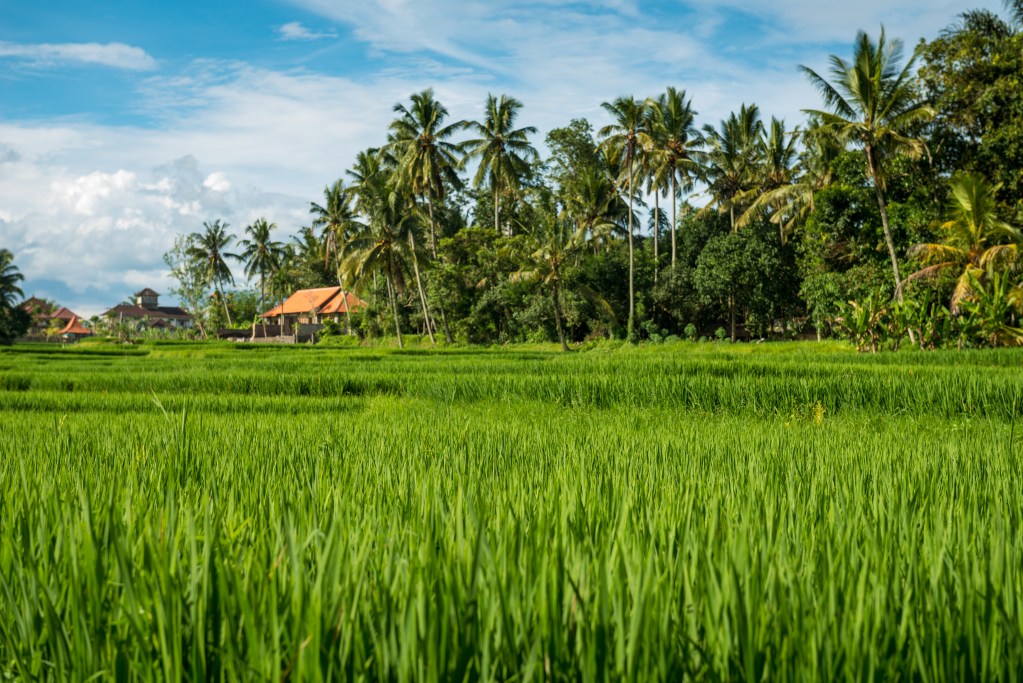
Monsoon-green paddy fields surrounding Pen in Raigad district, Maharashtra
Monsoon turns the paddy fields around Pen a deep, saturated green.

The Next Big Change: Pen and the “Third Mumbai” Plan

Pen’s next chapter is already being written, and it has nothing to do with tourism. In 2026, the Maharashtra government announced the Raigad-Pen Growth Centre, a smart-city and business-district project popularly referred to as the Third Mumbai, designed by CIDCO to help decongest Mumbai and Navi Mumbai. The plan spans some 124 villages across the Pen, Panvel and Uran talukas, carries an outlay reported in the range of ₹8.73 lakh crore, and positions the region as a new business hub roughly 15 to 20 kilometres from the upcoming Navi Mumbai International Airport, with a commercial district planned along the lines of Bandra-Kurla Complex.

For a visitor today, none of this is visible yet beyond local news coverage and a string of signed memoranda of understanding. But it does mean the sleepy, pass-through quality that currently defines Pen has an expiry date attached to it. Residents and heritage commentators have already started asking whether the town’s identity, built on paddy fields, idol workshops and an unhurried pace of life, can survive large-scale development intact. That tension between what Pen currently is and what it’s about to become is, if anything, a good reason to visit sooner rather than later.

Konkan on a Plate

No visit to this stretch of the Konkan coast is complete without eating the way the region does. Sol kadhi, the tangy, coconut-and-kokum drink, shows up as an appetiser and a digestive in equal measure. Bombil fry (Bombay duck, batter-fried until crisp), prawns cooked in a thin, fiery coconut-based curry, and kombdi vade (spiced chicken curry served with fried puris) are staples on most local menus. Through the monsoon and around Ganesh Chaturthi, ukadiche modak, steamed rice-flour dumplings filled with jaggery and coconut, appear everywhere, and summer kitchens turn instead to mangoes for aamras and other seasonal desserts.

Villas and homestays around Pen typically build at least one meal around this repertoire, often using a cook who lives locally, which means the sol kadhi and bombil fry taste the way they would in a Konkani home rather than adapted for a wider audience.

Konkani thali with sol kadhi, bombil fry and prawn curry, a Raigad district specialty
A Konkani spread built around sol kadhi, bombil fry and a coconut-based prawn curry.

Beyond Pen: Where to Go From Here

Pen’s location makes it a workable base for several very different day trips, from birdwatching to sea forts, and it’s worth planning around the season rather than assuming everything is open year-round.

Karnala Bird Sanctuary and Fort

Roughly 30 to 45 kilometres away depending on the route through Panvel, this is the easiest add-on from Pen. The trek to Karnala Fort’s ruins is graded easy to moderate, takes under two hours each way, and the sanctuary is home to over 150 resident bird species with dozens more arriving as winter migrants. Monsoon turns the whole reserve a deep, saturated green and is the most popular season to visit, though the trail gets slippery; winter mornings are better for actually spotting birds.

Alibaug

About 45 kilometres and just over an hour away, Alibaug remains the region’s best-known beach town. Nagaon and Varsoli make for an easy half-day out if a proper beach fix is what’s missing from a Pen itinerary.

Kolad

A short drive south, Kolad is the region’s white-water rafting hub on the Kundalika river, at its best when dam-release timings align with the monsoon season, roughly June through September.

Murud-Janjira Fort

Widely described as a fort that was never conquered despite centuries of attempts by the Marathas, Mughals, Portuguese and British, Murud-Janjira is a worthwhile detour but not a casual one from Pen. It sits closer to 90 to 100 kilometres south, and the boat service from Rajapuri jetty that ferries visitors out to the fort is typically suspended during the monsoon because of rough seas. If a Pen trip falls between June and September, it’s worth treating Murud-Janjira as a separate winter plan rather than a same-trip detour.

Revdanda

A quieter coastal stretch with the ruins of a Portuguese-era fort, Revdanda makes a reasonable stop for travellers heading toward Alibaug who want a slower, less crowded coastline.
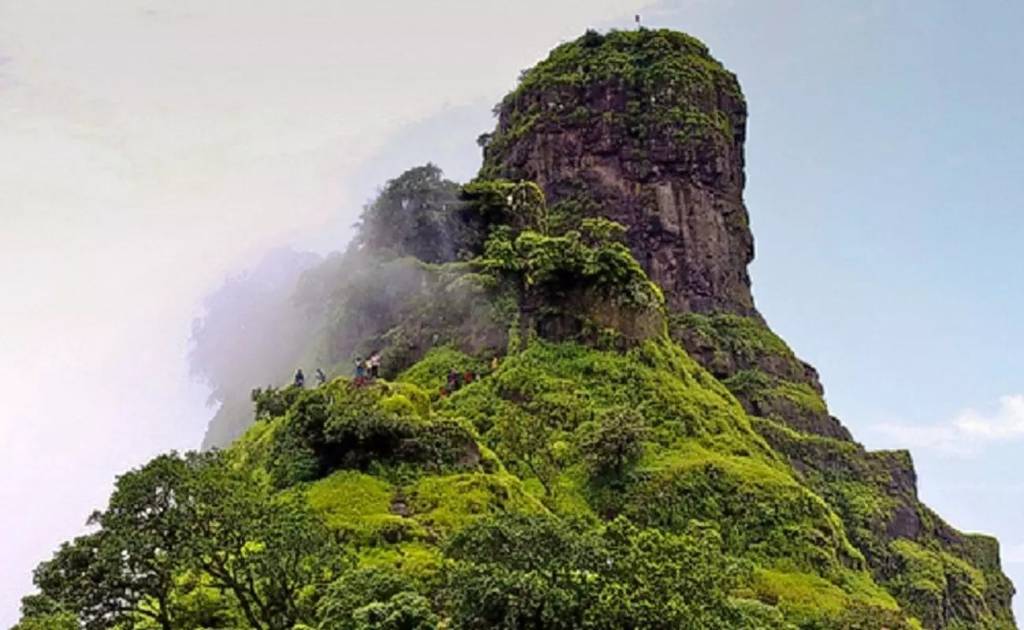
Karnala Fort's basalt pinnacle rising above Karnala Bird Sanctuary near Pen, Maharashtra
Karnala Fort’s pinnacle rises above the bird sanctuary’s forest canopy, a short drive from Pen.

Murud-Janjira sea fort rising from the Arabian Sea in Raigad district, Maharashtra
Murud-Janjira’s fortified walls rise directly out of the Arabian Sea near Raigad district.

Best Time to Visit Pen

Pen doesn’t really have a single best season so much as three distinct reasons to visit.

  • Monsoon (June to September): turns the countryside a saturated green, fills the Kundalika river for rafting at Kolad, and coincides with the town’s busiest and most visually striking idol-making months, as workshops race toward Ganesh Chaturthi. This is also when Karnala’s trails are at their most scenic, if muddiest.
  • Winter (October to February): brings the most comfortable weather for sightseeing, trekking and boat rides, and it’s the only realistic window for a Murud-Janjira visit.
  • Late August into early September: is the narrow window built specifically around the idol trade. Workshops are at their most frantic, finished idols line the lanes awaiting transport, and the town’s economic identity is on full display in a way it isn’t for the rest of the year. Ganesh Chaturthi itself falls in mid-September in 2026.

Where to Stay Near Pen

Pen’s surrounding villages hold a genuine range of private stays, from restored Konkani farmhouses to larger hillside villas built for group celebrations, and the right one depends mostly on group size and how rustic a stay you’re after.

Ivory Mansion sits on a hillock in Belavde Budruk village, spread across ten acres of largely unspoiled, undulating land, with four bedrooms, a private pool, a cricket turf and expansive lawns that suit large family gatherings, corporate offsites or milestone celebrations equally well. Its elevated position gives most rooms a clear view over the surrounding hills, and the property sits close enough to Kharghar and Pune to work as a base for exploring the wider region, not just Pen itself.
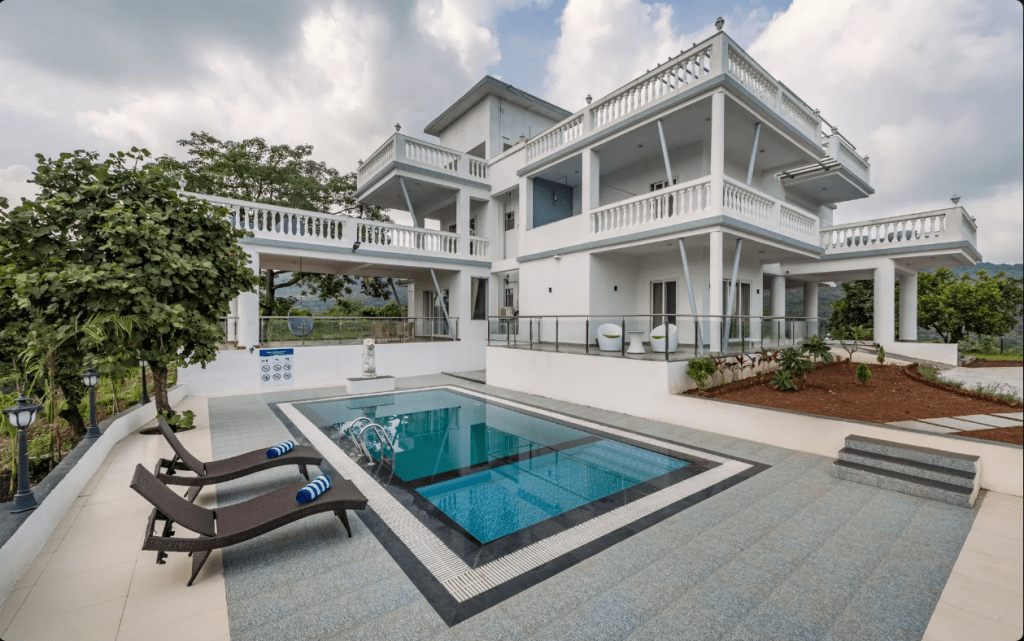
Private pool and hillside lawns at Ivory Mansion, a SaffronStays villa near Pen, Maharashtra
Ivory Mansion’s private pool and lawns look out over the hills around Pen.

For a smaller, quieter group, Sattva takes a different approach entirely. It’s a two-bedroom Konkani-style farmhouse with a red-oxide floor and a traditional kaula-tiled roof, built to feel like a family home rather than a curated getaway. The organic farm on the property, short hikes to nearby waterfalls and to Hetavane dam, and the general absence of anything resembling a schedule make it suited to travellers after a genuine slowdown rather than an activity-packed weekend.

Red-oxide floors and kaula-tiled roof at Sattva, a Konkani-style farmhouse in Pen, Raigad
Sattva’s red-oxide floors and kaula-tiled roof echo a traditional Konkani home.

Both properties are pet-friendly, both work reasonably well as either a Mumbai or a Pune weekend trip, and both put you a short drive from everything covered above, from Karnala’s trails to Pen’s own idol lanes.

Final Thoughts

Pen was never built to be a weekend destination, and that’s part of why it works as one. It grew as a trading port, then as a scholarly town, then almost by accident as the place that hand-builds a good portion of India’s Ganesh idols every year, and it’s now on the edge of becoming the site of one of Maharashtra’s largest urban development projects. None of that history was designed for a traveller’s convenience, which is exactly what makes walking through it feel unscripted.

Whether the draw is a morning at Karnala, an afternoon watching an artisan paint an idol’s eyes in an ali workshop, or two quiet nights at a hillside villa with nowhere in particular to be, Pen rewards the kind of visitor willing to get off the highway a little earlier than the map suggests.

Ready to Trade the Highway for a Hillside Villa?
Browse SaffronStays’ private pool villas in and around Pen, from Ivory Mansion’s hilltop lawns to Sattva’s Konkani farmhouse calm.
Explore Villas in Pen ->

Frequently Asked Questions

How far is Pen from Mumbai and how long does the drive take?

Pen is around 80 km from Mumbai via the Mumbai-Goa Highway (NH66), and the drive typically takes about two hours depending on traffic through Panvel.

What is Pen, Maharashtra famous for?

Pen is best known as one of India’s largest hubs for handcrafted Ganesh idols, a tradition running over a century, alongside its salt cultivation, papad-making cooperatives, and a quieter history as a Konkan trading port.

What is the best time to visit Pen, Maharashtra?

Monsoon (June to September) brings the greenest scenery and peak idol-making activity; winter (October to February) is best for comfortable sightseeing and the only season Murud-Janjira’s boat crossing reliably runs. Late August into early September is ideal specifically for watching idol workshops ahead of Ganesh Chaturthi.

Can visitors see the Ganesh idol workshops in Pen?

Yes. Many artisan workshops, locally called alis, welcome visitors, especially from around June through early September, when the lanes are busiest with idols in every stage of completion.

Is Murud-Janjira Fort an easy day trip from Pen?

Not as a quick add-on. Murud-Janjira sits roughly 90 to 100 km south of Pen, and the boat service to the fort is generally suspended during the monsoon. It’s best planned as a separate winter trip rather than combined with a Pen visit made between June and September.

What is the “Third Mumbai” project near Pen?

It’s the Raigad-Pen Growth Centre, a large CIDCO-led smart city and business district development announced in 2026, spanning villages across the Pen, Panvel and Uran talukas, positioned near the upcoming Navi Mumbai International Airport.

RoRo to Sindhudurg (2025): The Complete Travel Guide

On 1st September 2025, the long-awaited RoRo (Roll-on/Roll-off) ferry service between Mumbai and Sindhudurg set sail. For the first time in decades, travelers can take themselves and their vehicles directly to the Konkan coast by sea.

This service has already changed how people plan Konkan holidays. What used to be a tiring 10–12 hour drive on NH66 can now be covered in about 5–5.5 hours by ferry. The response so far has been strong, with families, weekend travelers, and festive commuters welcoming the convenience.

This blog is your complete guide to the RoRo to Sindhudurg: how it works, what it costs, and how you can plan your trip around it to explore the region’s history, food, and culture.

How the RoRo to Sindhudurg Works

  • Operator: M2M Ferries
  • Route: Mumbai (Bhaucha Dhakka) → Jaigad (Ratnagiri) → Vijaydurg (Sindhudurg)
  • Travel Time: ~3 hours (Jaigad), ~5–5.5 hours (Vijaydurg)
  • Frequency: Once daily each way (expected to increase during festivals and holiday season)
  • Vessel: M2M Princess (capacity: 656 passengers, 50 cars, 30 two-wheelers)

Boarding: Vehicles and passengers check in separately at Bhaucha Dhakka. Cars and bikes drive directly onto the deck, while foot passengers board via dedicated gates.

Arrival: Disembark at either Jaigad or Vijaydurg. From there, you are well-placed to explore Ratnagiri or Sindhudurg.

Fares and Booking (Indicative as of September 2025)

CategoryFare (One-way)Notes
Economy Seat₹2,500 onwardsStandard seating
Premium / Business / First Class₹4,500 – ₹9,000AC lounges, wider seats
Two-Wheeler~₹1,500Rider pays separately
Car~₹6,000Driver fare separate

Booking Options:

  • Online: Through the M2M Ferries website
  • Offline: At Bhaucha Dhakka counters
  • Check-in: 90 minutes prior to departure if traveling with a vehicle

Why Choose the Ferry Over Road or Rail?

FactorFerryRoad (NH66)Train
Travel Time5–5.5 hrs10–12 hrs8–9 hrs + transfers
ComfortLounges, decks, sea journeyLong drive, trafficVariable, delays possible
Vehicle OptionYes (cars, bikes)YesNo
Cost (2 adults + car)~₹11,000~₹8,000 (fuel/tolls)~₹4,000 + cabs

Sindhudurg: What to See and Do

The ferry makes weekend or short trips realistic. Here’s why Sindhudurg is worth exploring:

1. History & Heritage

  • Sindhudurg Fort: Built by Chhatrapati Shivaji Maharaj in the 17th century, this sea fort remains one of the region’s biggest draws.
  • Vijaydurg Fort: Another coastal stronghold, known for its triple-line fortifications and historic naval battles.
  • Sawantwadi Palace: A blend of colonial and Maratha architecture, still home to Sawantwadi’s royal family.

2. Beaches & Adventure

  • Tarkarli Beach: Famous for scuba diving, snorkeling, and water sports.
  • Malvan Beach: Livelier, with seafood stalls and boating.
  • Devbag Beach: Quieter, perfect for relaxation and dolphin spotting.

3. Food: Malvani Cuisine

Sindhudurg is synonymous with Malvani food, a cuisine known for bold spices, coconut-based curries, and fresh seafood.

  • Seafood Thalis: Pomfret, surmai, crab, prawns, and shellfish dominate menus.
  • Vegetarian Specialties: Solkadhi (kokum and coconut drink), bharli vangi (stuffed brinjal), and rice bhakris.
  • Local Touch: Meals are often served on banana leaves.

4. Culture & Crafts

  • Sawantwadi Ganjifa Cards: Hand-painted playing cards with centuries-old traditions.
  • Wooden Toys & Lacquerware: Sawantwadi artisans are known for their craftwork.
  • Dasavatar Folk Performances: Traditional theatre showcasing mythological stories.

How to Plan Your Trip with the Ferry

Day 1 – Board morning ferry at Mumbai, reach Vijaydurg by afternoon. Explore Vijaydurg Fort, check in at your stay.
Day 2 – Visit Sindhudurg Fort, Tarkarli for water sports, enjoy Malvani cuisine.
Day 3 – Shop for Sawantwadi crafts, return by ferry in the evening.

Tip: Festival seasons (Ganeshotsav, Diwali) are busy, so book tickets well in advance.

Speaking about the launch, Devendra Parulekar, Founder of SaffronStays, said:
“The RoRo service is a milestone for the Konkan region. It not only makes Sindhudurg more accessible but also encourages travelers to look beyond familiar weekend spots and discover the rich history, food, and culture of the coast. For us, it means more guests can experience our homes in Sindhudurg with ease and comfort.”

FAQs

Is the RoRo to Sindhudurg running now?
Yes, it launched on 1st September 2025 and is operational.

Can I take my car or bike?
Yes. Cars, two-wheelers, and larger vehicles are permitted.

How do I book?
Tickets are available online (M2M Ferries) and at Bhaucha Dhakka counters.

What if the weather is rough?
Sailings may be canceled or delayed. Always check operator updates before travel.

Is Sindhudurg good for a weekend trip?
Yes. The ferry makes 3-day trips from Mumbai practical.

The RoRo to Sindhudurg is more than just a transport link. It is a gateway to history, beaches, food, and culture. With this service, Sindhudurg has never been closer to Mumbai.

From exploring forts and palaces, enjoying Malvani cuisine, diving at Tarkarli, to experiencing folk arts and crafts, the ferry makes it all accessible in one seamless journey. For anyone planning a Konkan holiday, the RoRo is now the smartest way to start the Sindhudurg experience.

 Mumbai to Goa RoRo Ferry: A New Way to Travel in Style & Comfort

Travel between Mumbai and Goa is about to become smoother, quicker, and more convenient with the much-awaited launch of M2M Ferries’ Mumbai-Goa RoRo (Roll-on/Roll-off Passenger) Ferry Service, set to begin operations on August 26, 2025. And with Ganesh Chaturthi around the corner, this new service offers an exciting way to kick off your festive season.

Why This Ferry Service is a Game Changer

Until now, travelers had to choose between a long road trip, a quick but expensive flight, or a more leisurely Mumbai to Goa cruise. The new RoRo ferry service bridges the gap, offering the comfort of sea travel with the convenience of bringing your own vehicle. Imagine driving onto the ferry in Mumbai and disembarking in Goa, ready to explore without needing to rely on local rentals.

Key Features of the Mumbai-Goa RoPAX Ferry

  • Passenger and Vehicle Capacity: Up to 620 passengers and 60 vehicles per trip.
  • Reduced Travel Time: Just 6.5 hours, compared to the typical 10–12 hours by road.
  • Departure & Arrival: From Ferry Wharf in Mazgaon, Mumbai, to Mormugao Port in Goa. Plans are underway to include a docking point at Panaji Jetty.
  • Flexible & Frequent: Multiple weekly departures catering to weekend getaways and extended holidays.

RoRo Ferry vs Traditional Mumbai-Goa Cruise

While the Mumbai-Goa cruise is built for leisure with onboard entertainment and dining, the RoRo Ferry focuses on efficiency and convenience—perfect for those who want to reach their destination quickly while keeping their personal vehicle on hand.

Picture this: Arriving in Goa with your own car or bike, bypassing long rental queues, and heading straight to your vacation destination with ease. It’s a new way to travel, combining comfort with practicality.

Cost, Booking, and Travel Convenience

Ticket prices are still being finalized, but M2M Ferries is working to secure government subsidies to make this an affordable alternative to flights or road travel. So, if you’ve been eyeing those Mumbai-to-Goa cruise tickets, it’s worth checking this RoRo ferry first—especially if you’re traveling in a group or wish to drive your own car in Goa.

Why It’s Ideal for Group Travel

Planning a group trip to Goa? This new ferry option is tailor-made for you:

  • Shared Vehicle = Shared Fun: Travel together, from the moment you board to the moment you disembark.
  • Ample Space Onboard: Relax, socialize, and enjoy the journey.
  • Cost-Effective: Split the fuel and ferry costs, making it a budget-friendly option for family and friends.

Your Goan Getaway: Luxury Villas in Nerul, North Goa

With the Mumbai-Goa RoRo ferry making the journey so much easier, the excitement doesn’t stop there. Once you arrive in Goa, why not step into the next level of comfort? Located in the heart of North Goa, just minutes from popular beaches like Candolim, SaffronStays’ newly launched cluster of luxury villas in Nerul offers an unparalleled vacation experience, whether you’re traveling with family, friends, or planning a group getaway.

SaffronStays Villas: The Perfect Place to Unwind

This newly launched cluster of four stunning 4-bedroom, pet-friendly villas promises everything you need for an unforgettable stay in Goa. From rooftop party decks to private pools and a prime location, these villas are an ideal choice for those looking to enjoy both relaxation and adventure.

Miami Villa

A chic, modern escape with a glass-bottom pool that seamlessly flows into the living room, offering a unique and visually striking experience. It’s designed for comfort and sophistication—ideal for both intimate family vacations and lively group stays. SaffronStays Miami

Ibiza Villa

Embrace the vibrant spirit of Ibiza in Goa. This villa features spacious living areas, a private pool, and a prime location near Coco Beach, making it the perfect base for exploring the buzzing nightlife and beaches of North Goa. SaffronStays Ibiza

Vegas Villa

Step into a world of luxury with Vegas—where the high-energy glamour of the city meets Goan tranquility. The villa boasts expansive interiors, a private pool, and ample space for hosting unforgettable gatherings. SaffronStays Vegas

Rio Villa

Inspired by the lively atmosphere of Rio de Janeiro, this villa combines colorful design with ultimate comfort. Perfect for a relaxed holiday, it features a private pool and is ideally located for easy access to North Goa’s hotspots. SaffronStays Rio

Key Features of the Nerul Villa Cluster:

  • Rooftop Party Deck: Perfect for sunset views, evening gatherings, or simply relaxing with a drink in hand.
  • Private Pools: Dive into your own oasis, just steps from your door.
  • Prime Location: A short 10-minute drive to Candolim Beach and just 500 meters from LPK Club, the villa cluster is right in the heart of North Goa’s action.

Ideal for Group Stays and Celebrations

Whether it’s a reunion with friends, a family getaway, or a celebration, this cluster of villas in Nerul is tailored for larger groups. Each villa offers the perfect blend of privacy and shared space, making it easy to gather together, yet also retreat to your own private sanctuary when needed.

From Ferry to Villa: Effortless Travel

With the new RoRo ferry service, your journey to Goa becomes part of the adventure. You can drive your car directly onto the ferry, cruise the seas in comfort, and upon arrival, head straight to one of SaffronStays’ luxurious villas in Nerul. No need for rentals or taxis—just a smooth transition from the ferry to your personal paradise.

Start Your Vacation the Moment You Board

The Mumbai-Goa RoRo ferry and the exclusive SaffronStays villas in Nerul offer a whole new way to experience Goa. It’s not just about reaching your destination—it’s about enjoying the journey, every step of the way. So why wait? Plan your escape today, and let the RoRo ferry and SaffronStays take you on an unforgettable journey to Goa.

World Tourism Day 2019: Explore with SaffronStays

What are your fondest vacay memories with your family? It could be so many things, right? Visiting your grandparents during summer vacations, going on a road trip to an unheard place or going to a nearby hill station. The beauty of travelling, however, remains the same. It’s all about coming across people and culture that are not the same as yours.

The definition of travel and tourism has changed over the years. The industry is not only limited to traveling for pleasure but also includes the business of attracting, accommodating, and entertaining tourists.

September being the Tourism Month, the United Nations’ (UN) celebrates World Tourism Day on September 27 every year. This day aims to increase the social, cultural, political and economic tourism awareness among the international community

The United Nations World Tourism Organization (UNWTO) is responsible for the promotion of responsible, sustainable and universally accessible tourism. This year, the UNWTO chose India as the host country to celebrate World Tourism Day and its theme is ‘Tourism and Jobs: A Better Future For All’. In the last few years, offbeat vacationing has taken a front seat. So, newer business modules, job opportunities and different style of vacationing have become common.

With its focus on renting out private vacation homes, SaffronStays is one such leader in this category. With 130+ private and hassle-free stays around India, it caters to the 5 A’s of tourism. Let’s take a look…


1. Accommodation:

From 2 to 20, there’s something for everyone at a he SaffronStays home. Much like the aim of World Tourism Day, we want our guests to explore and grow through means of travel. If you want a home for couples, we have SaffronStays Un Bel Di, SaffronStays Beyond and others. For larger groups, SaffronStays Raanwaara and Aranya Vilaas, SaffronStays Dhyana, Nithyam and Ekaant are also suitable. If your pet is your extended family, there are several pet-friendly villas too, SaffronStays Villa 270° being a case in point.


2. Accessibility: 

So talking about the aim of world tourism day, SaffronStays started off with a few villas in the home state, Maharashtra- SaffronStays Parsi Manor, SaffronStays 9 Palms, SaffronStays Little Paradise and a few more to now expanding to the hills with SaffronStays Tridiva, SaffronStays Amayaah Tara and Palash plus a few more and the backwaters of our country with SaffronStays Kurinji Estate, SaffronStays Southern Seascapes and others. We want to cater to the needs and requirements of all our guests in India. Being a part of the digital world, we are trying to get to a fully digitalised system. One can book a home via our website or through the different Online Travel Agents.

3. Activities:

While on a vacation, most of us want to relax and rejuvenate. And so we have villas with enough and more amenities. SaffronStays Casa Manga and SaffronStays Alohomora for instance are just right for your next pool vacay. If you are looking at beach homes near Mumbai, there’s SaffronStays Salt Rim and SaffronStays Chirebandi. If the hills and valleys are calling you, head to SaffronStays Hillside Chalet and SaffronStays Verandah by the Valley In addition to the scenic views and the many-things-to-do, our homes have indoor games, too. Not just this, there are several out-of-the-box activities, too. For instance, did you know that At SaffronStays Calamondinn Bungalow, the owner himself organises baking master classes? Or that you could get a beekeeping demonstration there? Sounds fun, no? Several villas also offer treks and trails within their premises.


4. Amenities:

Talking about Amenities, SaffronStays includes a variety of them that’s in line with the motto of World Tourism Day. Not only do we have elderly friendly homes with elevators – SaffronStays Constellations Aquila, Orion and Cassiopeia – but also homes that have fireplaces: SaffronStays Jagheri Bagh and SaffronStays Kaapi Cottage besides others. If you love what you cook, you can cook for yourself in a few self-catered villas namely SaffronStays Ivory Cottagesand Saffronstays Calvin and Hobbes. But of course, one of our specialties is home-cooked food. Relish authentic meals at SaffronStays Parnakuti, SaffronStays Vedanta and others. Each home is unique with its own characteristics. And we are open to exploring and adding to our set of amenities. Do you have any suggestions to share with us this World Tourism Day?


5. Attractions:

Vacation homes must have an inbuilt vibe as well as a sense of aesthetics. We have homes with unique characteristics like the traditional Maharashtrian style decor at Saffronstays Bungalow 2259 and Goan architecture at SaffronStays Casa Eventor. Not to forget the traditional South Indian home, SaffronStays Coconut Grove or Spanish-style built of SaffronStays La Casa Maestro. We also strive to unearth homes that are surrounded by nature. These include activities like apple picking in the north India at SaffronStays Thanedhar Estate, visiting coffee plantations in the south at SaffronStays Kaapi Cottage or SaffronStays Nandanvan Estate or the treks and trails in Maharashtra around SaffronStays Avabodha and others.
With a sense of exploring more to witness the 5 A’s this World Tourism Day, let’s head for a quick weekend getaway already?


Visit our website https://www.saffronstays.com/ to know more. Call  ( +91) 22 6811 0811 for reservation and inquiries. You can also write to us at book@saffronstays.com.