
On the Mumbai-Goa Highway, about eighty kilometres past Panvel, a green signboard announces Pen, and most cars do not slow down. The town sits between two better-known names, with Karnala’s forests to its north and Alibaug’s beaches to its south, and for decades that in-between position has worked against it. Drivers headed to the coast tend to treat Pen as a fuel stop or a place to beat traffic through, rarely as a destination in its own right.
That’s worth reconsidering, because Pen is where a large share of India’s Ganesh idols are made by hand, where a Jewish cemetery sits quietly beside paddy fields, and where Raigad district’s next major transformation, a satellite city the state government has started calling the Third Mumbai, is about to begin. A town this easy to drive past turns out to hold an unusual amount once you actually stop.
Table of Contents

Where Pen Sits, and Why the Location Matters
Pen falls within Raigad district, on the banks of the Bhogavati creek, roughly eighty kilometres southeast of Mumbai. The Mumbai-Goa Highway (NH66) runs directly through the region, and the Konkan Railway keeps a station here too, which means Pen works equally well as a weekend drive or a train-and-cab trip for anyone without a car. From Pune, the drive is a little different: expect just over 100 kilometres and closer to two and a half to three hours on the road via Khopoli or Panvel, longer than the Mumbai run despite the shorter straight-line distance.
Historically, this location mattered for trade rather than tourism. Pen grew as a port town on the Antora creek, with links stretching as far as Egypt, and later became what the freedom fighter Lokmanya Tilak is said to have called “the Pune of the Konkan,” a nod to its schools and its scholars, who once copied rare manuscripts by hand for pundits travelling in from across the region. Little of that scholarly reputation survives in guidebooks today, but it explains why a town this size built the kind of infrastructure, workshops and trade routes that later let it become something else entirely.
The Town That Builds Bappa by Hand
Pen’s real claim to fame is idol-making, an industry that turned a modest market town into what many now call the Ganesh idol capital of India. The connection is just over a century old. Ganesh Chaturthi had been a private, household ritual until the 1890s, when Lokmanya Tilak transformed it into a public festival to help unite communities against British rule. Demand for idols that could be paraded, worshipped collectively and immersed with fanfare grew quickly, and artisans in Pen, already skilled through generations of craft work, answered it.
One family’s story captures how deliberate that shift was. Bhikaji Krishna Deodhar, whose traditional trade of making the Maharashtrian pagdi headgear had slowed, moved into idol-making and effectively founded the industry that defines the town today. His great-grandson, Srikant Deodhar, still works in the trade, four generations on.
| “For roughly four months a year, Pen doesn’t slow down for anyone. Every lane becomes a workshop, and every workshop is racing the same deadline: Ganesh Chaturthi.” |
Walk through Pen’s older lanes, locally called alis, anytime between roughly June and the run-up to Ganesh Chaturthi, and entire streets function as open-air workshops. Half-finished idols dry in courtyards, artisans layer paint by hand in narrow karkhanas, and families that have worked in nothing but idol-making for generations race a quiet, practiced deadline. Thousands of these workshops collectively produce several lakh idols a year, ranging from small figures for home shrines to towering ones destined for public pandals in Mumbai and Pune. A meaningful number now travel further still: idols shipped out to Marathi communities in the United States and elsewhere carry Pen’s craftsmanship well beyond Maharashtra.
A Quieter Kind of Prosperity
Idol-making dominates the headlines, but Pen runs on more than one seasonal industry. The Aagri and Koli communities have cultivated salt along the creek for generations, work that continues quietly outside the festival calendar. Equally distinctive, and rarely mentioned in travel writing, is Pen’s papad business, run almost entirely by women’s cooperatives; close to seventy varieties are rolled and sun-dried by hand here, in a trade where the workforce, and the ownership, is overwhelmingly female.
Pen also holds an unexpected thread of Jewish history. A synagogue and a Jewish cemetery near Antora Phata, just outside town, are remnants of a Bene Israel community with old roots on this stretch of the Konkan coast. Neither is a major stop on any tourist itinerary, but their presence says something about how many layers a town like this can hold once you stop treating it as a drive-through.
The Next Big Change: Pen and the “Third Mumbai” Plan
Pen’s next chapter is already being written, and it has nothing to do with tourism. In 2026, the Maharashtra government announced the Raigad-Pen Growth Centre, a smart-city and business-district project popularly referred to as the Third Mumbai, designed by CIDCO to help decongest Mumbai and Navi Mumbai. The plan spans some 124 villages across the Pen, Panvel and Uran talukas, carries an outlay reported in the range of ₹8.73 lakh crore, and positions the region as a new business hub roughly 15 to 20 kilometres from the upcoming Navi Mumbai International Airport, with a commercial district planned along the lines of Bandra-Kurla Complex.
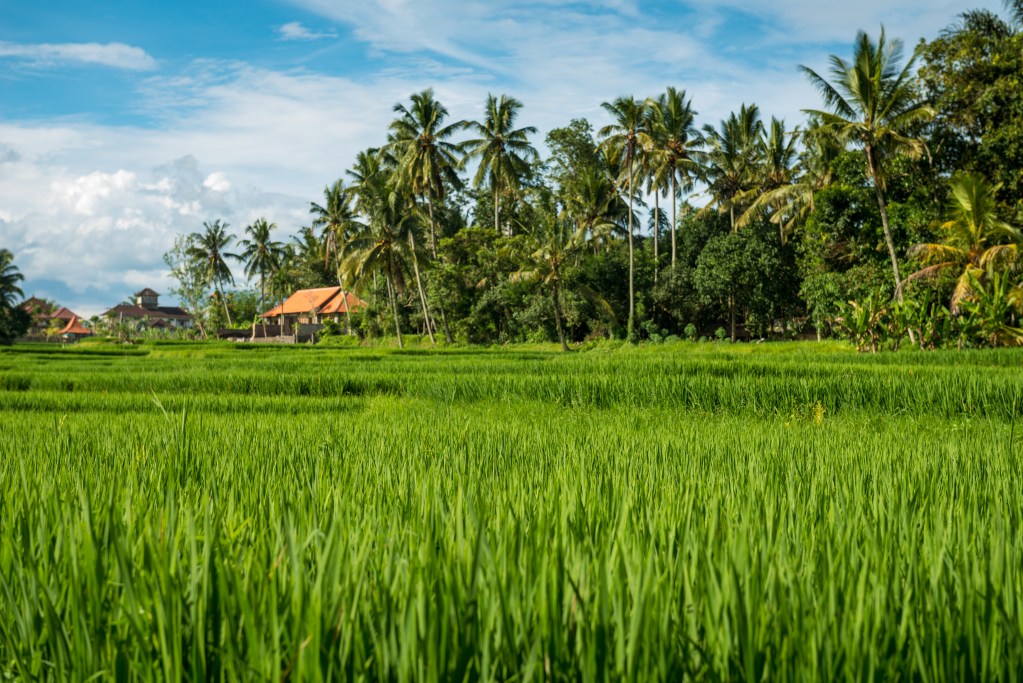
For a visitor today, none of this is visible yet beyond local news coverage and a string of signed memoranda of understanding. But it does mean the sleepy, pass-through quality that currently defines Pen has an expiry date attached to it. Residents and heritage commentators have already started asking whether the town’s identity, built on paddy fields, idol workshops and an unhurried pace of life, can survive large-scale development intact. That tension between what Pen currently is and what it’s about to become is, if anything, a good reason to visit sooner rather than later.
Konkan on a Plate
No visit to this stretch of the Konkan coast is complete without eating the way the region does. Sol kadhi, the tangy, coconut-and-kokum drink, shows up as an appetiser and a digestive in equal measure. Bombil fry (Bombay duck, batter-fried until crisp), prawns cooked in a thin, fiery coconut-based curry, and kombdi vade (spiced chicken curry served with fried puris) are staples on most local menus. Through the monsoon and around Ganesh Chaturthi, ukadiche modak, steamed rice-flour dumplings filled with jaggery and coconut, appear everywhere, and summer kitchens turn instead to mangoes for aamras and other seasonal desserts.
Villas and homestays around Pen typically build at least one meal around this repertoire, often using a cook who lives locally, which means the sol kadhi and bombil fry taste the way they would in a Konkani home rather than adapted for a wider audience.

Beyond Pen: Where to Go From Here
Pen’s location makes it a workable base for several very different day trips, from birdwatching to sea forts, and it’s worth planning around the season rather than assuming everything is open year-round.
Karnala Bird Sanctuary and Fort
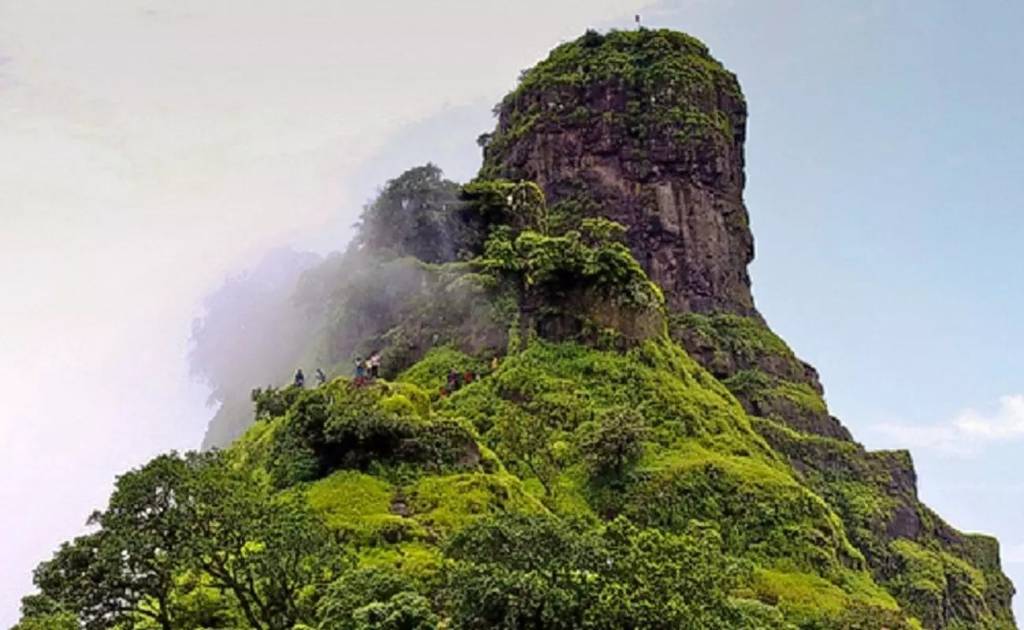
Roughly 30 to 45 kilometres away depending on the route through Panvel, this is the easiest add-on from Pen. The trek to Karnala Fort’s ruins is graded easy to moderate, takes under two hours each way, and the sanctuary is home to over 150 resident bird species with dozens more arriving as winter migrants. Monsoon turns the whole reserve a deep, saturated green and is the most popular season to visit, though the trail gets slippery; winter mornings are better for actually spotting birds.
Alibaug
About 45 kilometres and just over an hour away, Alibaug remains the region’s best-known beach town. Nagaon and Varsoli make for an easy half-day out if a proper beach fix is what’s missing from a Pen itinerary.
Kolad
A short drive south, Kolad is the region’s white-water rafting hub on the Kundalika river, at its best when dam-release timings align with the monsoon season, roughly June through September.
Murud-Janjira Fort
Widely described as a fort that was never conquered despite centuries of attempts by the Marathas, Mughals, Portuguese and British, Murud-Janjira is a worthwhile detour but not a casual one from Pen. It sits closer to 90 to 100 kilometres south, and the boat service from Rajapuri jetty that ferries visitors out to the fort is typically suspended during the monsoon because of rough seas. If a Pen trip falls between June and September, it’s worth treating Murud-Janjira as a separate winter plan rather than a same-trip detour.
Revdanda
A quieter coastal stretch with the ruins of a Portuguese-era fort, Revdanda makes a reasonable stop for travellers heading toward Alibaug who want a slower, less crowded coastline.

Best Time to Visit Pen
Pen doesn’t really have a single best season so much as three distinct reasons to visit.
- Monsoon (June to September): turns the countryside a saturated green, fills the Kundalika river for rafting at Kolad, and coincides with the town’s busiest and most visually striking idol-making months, as workshops race toward Ganesh Chaturthi. This is also when Karnala’s trails are at their most scenic, if muddiest.
- Winter (October to February): brings the most comfortable weather for sightseeing, trekking and boat rides, and it’s the only realistic window for a Murud-Janjira visit.
- Late August into early September: is the narrow window built specifically around the idol trade. Workshops are at their most frantic, finished idols line the lanes awaiting transport, and the town’s economic identity is on full display in a way it isn’t for the rest of the year. Ganesh Chaturthi itself falls in mid-September in 2026.
Where to Stay Near Pen
Pen’s surrounding villages hold a genuine range of private stays, from restored Konkani farmhouses to larger hillside villas built for group celebrations, and the right one depends mostly on group size and how rustic a stay you’re after.
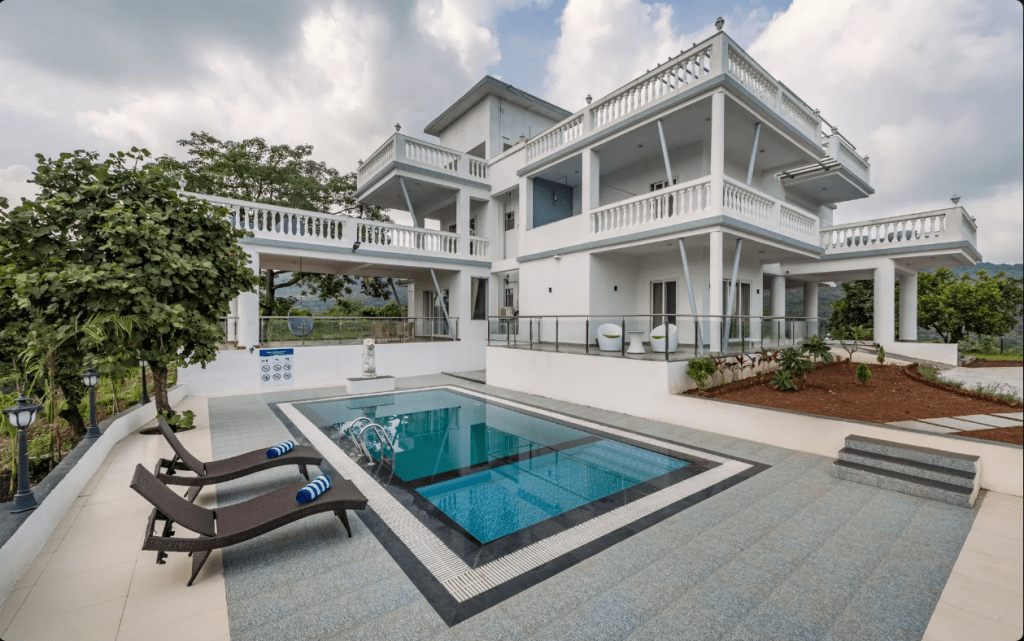
Ivory Mansion sits on a hillock in Belavde Budruk village, spread across ten acres of largely unspoiled, undulating land, with four bedrooms, a private pool, a cricket turf and expansive lawns that suit large family gatherings, corporate offsites or milestone celebrations equally well. Its elevated position gives most rooms a clear view over the surrounding hills, and the property sits close enough to Kharghar and Pune to work as a base for exploring the wider region, not just Pen itself.
For a smaller, quieter group, Sattva takes a different approach entirely. It’s a two-bedroom Konkani-style farmhouse with a red-oxide floor and a traditional kaula-tiled roof, built to feel like a family home rather than a curated getaway. The organic farm on the property, short hikes to nearby waterfalls and to Hetavane dam, and the general absence of anything resembling a schedule make it suited to travellers after a genuine slowdown rather than an activity-packed weekend.

Both properties are pet-friendly, both work reasonably well as either a Mumbai or a Pune weekend trip, and both put you a short drive from everything covered above, from Karnala’s trails to Pen’s own idol lanes.
Final Thoughts
Pen was never built to be a weekend destination, and that’s part of why it works as one. It grew as a trading port, then as a scholarly town, then almost by accident as the place that hand-builds a good portion of India’s Ganesh idols every year, and it’s now on the edge of becoming the site of one of Maharashtra’s largest urban development projects. None of that history was designed for a traveller’s convenience, which is exactly what makes walking through it feel unscripted.
Whether the draw is a morning at Karnala, an afternoon watching an artisan paint an idol’s eyes in an ali workshop, or two quiet nights at a hillside villa with nowhere in particular to be, Pen rewards the kind of visitor willing to get off the highway a little earlier than the map suggests.
| Ready to Trade the Highway for a Hillside Villa? Browse SaffronStays’ private pool villas in and around Pen, from Ivory Mansion’s hilltop lawns to Sattva’s Konkani farmhouse calm. Explore Villas in Pen -> |
Frequently Asked Questions
How far is Pen from Mumbai and how long does the drive take?
Pen is around 80 km from Mumbai via the Mumbai-Goa Highway (NH66), and the drive typically takes about two hours depending on traffic through Panvel.
What is Pen, Maharashtra famous for?
Pen is best known as one of India’s largest hubs for handcrafted Ganesh idols, a tradition running over a century, alongside its salt cultivation, papad-making cooperatives, and a quieter history as a Konkan trading port.
What is the best time to visit Pen, Maharashtra?
Monsoon (June to September) brings the greenest scenery and peak idol-making activity; winter (October to February) is best for comfortable sightseeing and the only season Murud-Janjira’s boat crossing reliably runs. Late August into early September is ideal specifically for watching idol workshops ahead of Ganesh Chaturthi.
Can visitors see the Ganesh idol workshops in Pen?
Yes. Many artisan workshops, locally called alis, welcome visitors, especially from around June through early September, when the lanes are busiest with idols in every stage of completion.
Is Murud-Janjira Fort an easy day trip from Pen?
Not as a quick add-on. Murud-Janjira sits roughly 90 to 100 km south of Pen, and the boat service to the fort is generally suspended during the monsoon. It’s best planned as a separate winter trip rather than combined with a Pen visit made between June and September.
What is the “Third Mumbai” project near Pen?
It’s the Raigad-Pen Growth Centre, a large CIDCO-led smart city and business district development announced in 2026, spanning villages across the Pen, Panvel and Uran talukas, positioned near the upcoming Navi Mumbai International Airport.