Holi in Mathura & Vrindavan: A Complete Guide to Braj Holi Celebrations

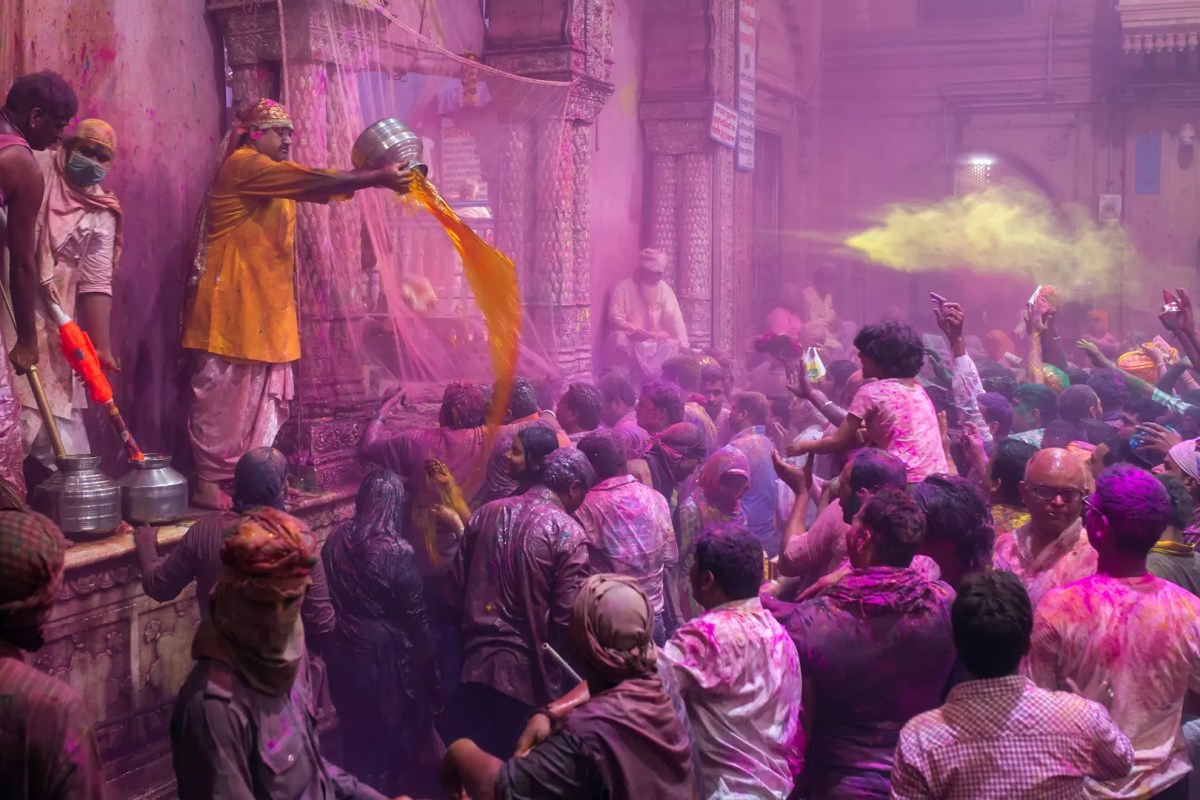
Holi in mathura and vrindavan, people enjoying the festival of colours

Holi in Mathura and Vrindavan is not a one-day burst of colour it is a week-long cultural and spiritual journey that unfolds across the Braj region. Rooted in the legends of Lord Krishna and Radha, Braj Holi blends devotion, folklore, music, food, and community into one of India’s most immersive festival experiences.

Unlike typical Holi celebrations, Holi in Vrindavan and Mathura follows a sacred rhythm, with each day marked by a distinct ritual, location, and emotion. This guide covers when to visit, what to expect, crowd dynamics, food experiences, and where to stay so even a first-time visitor can navigate Braj Holi with ease.

A vibrant festival scene with a large crowd celebrating, covered in colorful powders, surrounded by traditional architecture and decorations.

Quick Guide: Holi in Mathura & Vrindavan

  • Region: Braj (Mathura, Vrindavan, Barsana, Nandgaon)
  • Festival Duration: 7–9 days
  • Best Time to Visit: 4–6 days before main Holi
  • Famous Celebrations: Lathmar Holi, Phoolwali Holi, Widow’s Holi
  • Ideal Trip Length: 3–5 days
  • Best For: Cultural travellers, spiritual seekers, photographers

What Is Braj Holi?

Braj Holi refers to the traditional Holi celebrations across towns connected to Lord Krishna’s life. Each destination contributes a different layer to the festival, Vrindavan focuses on devotion, Barsana on folklore, Nandgaon on playful rivalry, and Mathura on community rituals.

Together, these celebrations create a multi-day Holi experience that is deeply spiritual, theatrical, and participatory.

Best Time to Experience Holi in Mathura & Vrindavan

Season & Weather

Holi typically falls between late February and March, making it one of the best times to visit the region.

  • Day temperatures: 22°C–30°C
  • Evenings: Mild and comfortable
  • Mornings: Ideal for temple rituals

The pleasant weather allows long outdoor celebrations without the fatigue of peak summer heat.

Crowd Levels During Holi in Mathura & Vrindavan

Crowd levels during Holi in Mathura and Vrindavan vary greatly depending on the day, location, and timing. Temple-based events such as Phoolwali Holi and Rangbharni Ekadashi draw dense crowds, especially in narrow temple lanes, while village celebrations like Lathmar Holi attract large but more spread-out gatherings. Early mornings are generally calmer and better suited for families and first-time visitors, while afternoons see peak energy and crowd density. Staying slightly away from temple centres allows travellers to experience the festivities without being overwhelmed, while still remaining well-connected to key Holi events.

Braj Holi: Day-by-Day Celebration Timeline

Day 1–2: Laddu Holi & Opening Rituals (Mathura)

Braj Holi begins quietly in Mathura with Laddu Holi, where priests throw sweets and flowers at devotees inside temples. The atmosphere is devotional and welcoming, marked by bhajans, drums, and gentle colour play. These early days are ideal for understanding the spiritual roots of Holi in Mathura before the celebrations intensify.

A vibrant scene of people celebrating Holi, covered in colorful powders and enjoying the festival. Many are dressed in traditional attire, joyfully throwing colors and displaying festive expressions.

Day 3: Phoolwali Holi (Vrindavan)

Phoolwali Holi at the Banke Bihari Temple is one of the most visually enchanting celebrations of Holi in Vrindavan. Instead of colours, priests shower devotees with fragrant flower petals, filling the temple with devotion and joy. The celebration is short but intense, with heavy crowds gathering early in the morning. This ritual symbolises purity and love, reflecting Krishna’s gentler, more devotional side.

A vibrant scene from a festival with people covered in colorful powders and flower petals, celebrating joy and unity. In the background, an audience watches from a balcony, capturing the moment.

Day 4: Widow’s Holi (Vrindavan)

Widow’s Holi in Vrindavan is among the most emotionally powerful moments of Braj Holi. Held at ashrams such as Pagal Baba Ashram, this celebration marks a historic shift from exclusion to inclusion. Widows celebrate Holi with gulal, devotional songs, and shared meals in a calm, respectful environment. The crowd here is moderate and composed, making it an ideal experience for travellers seeking the spiritual and social essence of Holi in Vrindavan rather than high-energy colour play.

A group of women in traditional attire celebrating with colorful flower petals during a festival, surrounded by a vibrant mix of pink and yellow petals in the air.

Day 5: Lathmar Holi (Barsana)

Lathmar Holi in Barsana is the most iconic and high-energy celebration of Braj Holi. Men from Nandgaon visit Barsana, where women playfully hit them with sticks in a ritual reenactment of Krishna teasing Radha. The atmosphere is theatrical, filled with folk songs, colour throwing, and laughter. Crowd levels are high but organised through barricades and viewing zones, attracting cultural travellers and photographers from across the world.

Day 6: Lathmar Holi (Nandgaon)

The celebration continues in Nandgaon the following day, with roles reversed. Compared to Barsana, the crowds here are slightly less intense, making it easier for visitors to engage with the festivities. This day offers a more balanced blend of tradition, colour play, and accessibility.

A vibrant festival scene depicting people in colorful garments, celebrating with the use of colored powders. A central figure, kneeling, is surrounded by others holding sticks, capturing the lively and cultural essence of the event.

Day 7: Rangbharni Ekadashi (Vrindavan & Mathura)

Rangbharni Ekadashi marks the symbolic beginning of colour play in temples across Vrindavan and Mathura. Deities are ceremonially offered gulal, and devotees participate in structured colour celebrations. While crowds are dense, the focus remains devotional, and most events conclude by midday. Many travellers prefer this day for its spiritual tone and relative predictability compared to main Holi.

Day 8: Main Holi (Dhulandi)

Main Holi, also known as Dhulandi, is the most vibrant and chaotic day of Holi in Mathura and Vrindavan. Streets overflow with colour, music, water, and dancing, especially around temple areas. Crowd levels peak on this day, creating an atmosphere that is joyful yet overwhelming for some. This is best suited for travellers who want to fully immerse themselves in the exuberant spirit of Braj Holi.

A vibrant celebration scene with a crowd of people throwing colorful powders during a festival, surrounded by trees under a clear blue sky.

Day 9: Holika Dahan (Mathura)

Holika Dahan is observed on the eve of main Holi and brings the festival to a reflective close. Bonfires are lit across Mathura to symbolise the victory of good over evil, drawing families and communities together. Compared to other Holi events, crowds are manageable and the mood is ritual-driven, offering a calm counterpoint to the colour-filled celebrations that follow.

A large bonfire surrounded by a crowd of people at night, with flames rising high and streetlights illuminating the scene.

Food Experiences During Braj Holi

Holi in Mathura and Vrindavan is incomplete without its festive food traditions. From gujiya and thandai to makhan mishri and Mathura peda, the region comes alive with flavours during Holi week. Street stalls, temple kitchens, and community bhandaras offer free meals, adding a strong sense of togetherness to the celebrations.

Where to Stay During Holi in Mathura & Vrindavan

Holi in Braj can be intense, making the choice of stay especially important. Travellers who opt for private villas or serene retreats near Mathura and Vrindavan enjoy a more balanced experience immersing themselves in festivities by day and retreating to calm, comfortable spaces by night.

A person sitting in a hanging chair on a balcony surrounded by lush greenery and colorful flowers, reading a book.

SaffronStays Aaramya Dham, Vrindavan

Those attending Lathmar Holi can benefit from staying near Barsana or Nandgaon, while travellers focusing on temple rituals may prefer quieter stays near Vrindavan. SaffronStays villas near Mathura, Vrindavan offer privacy, space, and proximity allowing guests to experience Braj Holi at their own pace.

Frequently Asked Questions

When should I plan my Holi trip to Mathura & Vrindavan?
Plan your visit 4–6 days before main Holi to experience multiple rituals.

Is Holi in Vrindavan suitable for families?
Yes, temple-based events and Widow’s Holi are family-friendly.

What time do Holi celebrations usually start?
Most rituals begin early morning and conclude by noon.

Experience Braj Holi the SaffronStays Way

Braj Holi is vibrant, emotional, and unforgettable but it’s also physically demanding. Returning to a quiet, private space after a day of colours and crowds makes the experience more meaningful.

SaffronStays’ curated villas and heritage homes near Mathura, Vrindavan, and Barsana offer a refined way to experience Holi—where culture meets comfort, and celebration meets calm.Because some festivals are not just celebrated. They are lived, felt, and remembered.
Holi in India: Best Places to Celebrate, Traditions, Dates and Travel Guide

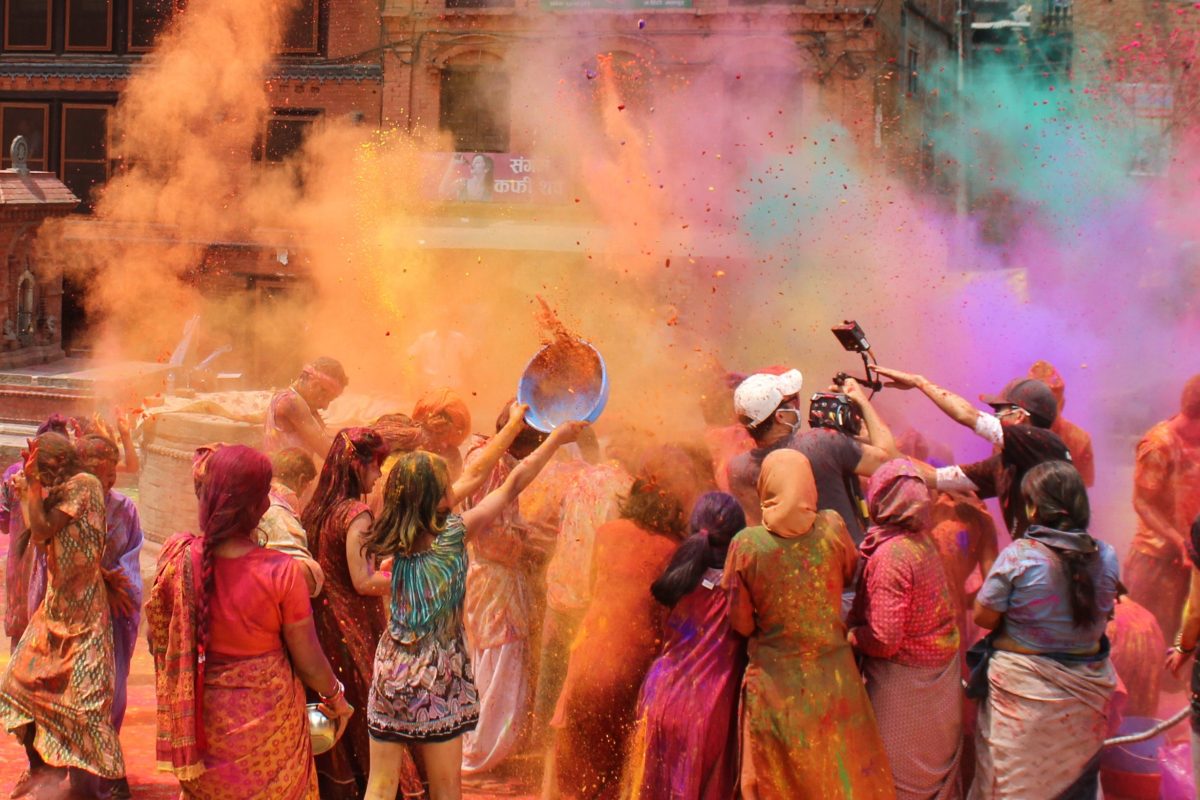
people playing holi, enjoying holi, big group

Holi in India is not a single celebration. It is a collection of traditions shaped by geography, history, faith, and local culture. While Holi is often perceived as one day of colour and festivity, the reality is far more layered. Across the country, Holi unfolds in different ways, from temple rituals and royal ceremonies to musical gatherings and cultural festivals.

For travellers, this diversity makes Holi one of the most fascinating times to explore India, provided you choose the right destination. This guide is created for those researching where to travel during Holi in India, looking for the best places to celebrate Holi, or planning a Holi holiday based on experience, comfort, and travel style.

This is the first pillar of the Holi in India: Traditions, Places & Experiences series and serves as the foundation for destination-specific Holi guides.

Five women celebrating with colorful powder during a festival, smiling and wearing floral hair accessories.

What Is Holi and Why Is It Celebrated in India

Holi marks the arrival of spring and symbolises renewal, joy, and the triumph of good over evil. The festival is closely associated with Hindu mythology, including the story of Prahlad and Holika, as well as the playful legends of Lord Krishna in the Braj region.

While the meaning of Holi remains consistent, the way Holi is celebrated across India varies significantly, influenced by regional customs, dynasties, music traditions, and community practices. This variation is what makes Holi such a compelling festival for travellers.

When Is Holi Celebrated in India

Holi follows the Hindu lunar calendar and is usually celebrated in March.

  • Holika Dahan takes place the night before Holi, marked by ceremonial bonfires.
  • Rangwali Holi is the main day when people play with colours, music fills public spaces, and communities gather.

In destinations such as Mathura, Vrindavan, and parts of Uttarakhand, Holi celebrations begin days or even weeks before the main date, making advance planning essential for travellers.

A large bonfire surrounded by a crowd of people celebrating at night.

Best Places to Celebrate Holi in India at a Glance

This overview helps travellers quickly identify the right destination based on experience, crowd levels, and travel preferences.

DestinationType of HoliCrowd LevelBest ForDuration
Mathura & VrindavanSpiritual, temple-ledVery highCultural immersion, tradition seekers7–10 days
JaipurRoyal, culturalMediumHeritage-focused travellers2–3 days
UdaipurCeremonial, royalMediumElegant, structured celebrations2 days
PushkarBohemian, youth-drivenHighSocial, high-energy travellers1–2 days
Himachal PradeshCultural festival-styleLow to mediumScenic, balanced Holi2–3 days
Uttarakhand (Kumaon)Musical, community-ledLowPeaceful, cultural travelMultiple weeks

How to Choose the Right Holi Experience in India

Before deciding where to go, it helps to understand the different ways Holi is celebrated across the country.

  • Spiritual and temple-centred Holi focuses on devotion, rituals, and religious significance.
  • Royal and heritage Holi follows ceremonial traditions shaped by palace culture.
  • Cultural and music-led Holi highlights poetry, classical music, and community gatherings.
  • Bohemian Holi is lively, social, and crowd-driven.

Choosing the right style ensures your Holi experience matches your expectations.

Best Places to Celebrate Holi in India

Mathura and Vrindavan, Uttar Pradesh

Best for: Spiritual travellers and immersive cultural experiences
Keywords: Holi in Mathura Vrindavan, Braj Holi, Phoolwali Holi, Lathmar Holi

Mathura and Vrindavan are considered the most iconic destinations for Holi in India. As the land of Lord Krishna, the region celebrates Braj Holi, a multi-day festival that includes temple rituals, devotional music, and unique traditions such as Phoolwali Holi at Banke Bihari Temple and Lathmar Holi in Barsana and Nandgaon.

Expect intense crowds and deeply religious energy. This destination is ideal for travellers seeking authenticity and cultural immersion.

A vibrant festival scene with people dressed in colorful traditional clothing, celebrating and participating in a lively gathering filled with music and dance.

Jaipur, Rajasthan

Best for: Heritage-led and culturally structured Holi
Keywords: Holi in Jaipur, Royal Holi in Rajasthan

Holi in Jaipur reflects Rajasthan’s royal heritage. Celebrations traditionally feature cultural performances, folk music, and palace-led events near the City Palace. Historically, royal families hosted ceremonial gatherings that shaped how Holi evolved in the city.

Jaipur is well suited for travellers who want a celebratory yet organised Holi experience rooted in culture.

A group of seven people celebrating Holi, covered in vibrant colored powders, posing happily in traditional clothing in front of intricately designed architecture.

Udaipur, Rajasthan

Best for: Elegant and ceremonial Holi celebrations
Keywords: Holi in Udaipur, Holika Dahan City Palace

Udaipur’s Holi centres around the Holika Dahan ceremony at the City Palace, marked by a royal procession, ceremonial bonfire, and traditional performances. Colour celebrations follow in select areas and private courtyards.

This destination suits travellers looking for a refined Holi experience with manageable crowds.

A beautifully illuminated historical palace in Udaipur at dusk, featuring a decorated area with a floral arrangement and a ceremonial setup, surrounded by people in traditional attire.

Pushkar, Rajasthan

Best for: Social, high-energy celebrations
Keywords: Holi in Pushkar, Pushkar Holi celebration

Pushkar hosts one of the most energetic Holi celebrations in India. The town square becomes the focal point for colour play, music, and large crowds, attracting young travellers and international visitors.

Pushkar is best suited for those comfortable with dense crowds and spontaneous celebrations.

An aerial view of a vibrant street festival with a large fire blazing in the center, surrounded by a crowd of people celebrating, adorned with colorful decorations and banners.

Himachal Pradesh (Palampur and Sujanpur Tira)

Best for: Cultural festivals in scenic settings
Keywords: Holi in Himachal Pradesh, Palampur Holi, Sujanpur Holi Fair

Holi in Himachal Pradesh is celebrated through organised cultural events rather than only street colour play. Palampur hosts a Holi Mahotsav, while Sujanpur Tira is known for its historic Holi fair at the Chaugan ground, rooted in the region’s royal past.

These celebrations combine folk performances, community gatherings, and scenic surroundings, making them ideal for travellers seeking balance and cultural depth.

A vibrant outdoor fair scene featuring a large ferris wheel surrounded by colorful stalls, a crowd of people enjoying festivities, and mountainous greenery in the background.

Uttarakhand (Kumaon Region)

Best for: Peaceful, music-led Holi
Keywords: Kumaoni Holi, Holi in Uttarakhand, Baithki Holi

Kumaoni Holi is distinct for its emphasis on classical music, poetry, and group singing rather than colour play. Celebrated in towns such as Almora, Nainital, and Ranikhet, it includes traditions like Baithki Holi and Khadi Holi, beginning weeks before the main festival.

This is one of the best destinations for travellers seeking a calm, culturally rich Holi experience.

A group of people in colorful traditional attire participating in a dance, forming a circle outdoors. Surrounding green hills and buildings are visible in the background.

Which Holi Destination Is Ideal for You

Choosing the right place to celebrate Holi in India depends on what kind of traveller you are and what you expect from the experience.

For first-time visitors to India
Jaipur and Udaipur are ideal due to their structured, culturally rich celebrations that are easier to navigate.

For spiritual and culture-focused travellers
Mathura and Vrindavan offer the most immersive and traditional Holi experience.

For travellers seeking calm and cultural depth
Uttarakhand’s Kumaon region and parts of Himachal Pradesh provide peaceful, music-led, and community-focused celebrations.

For social and high-energy travellers
Pushkar delivers a lively, crowd-driven Holi atmosphere popular with younger travellers.

For families and multi-generational travel
Udaipur, Jaipur, and select hill destinations offer space, safety, and flexibility.

Is Holi Safe for Tourists in India

Holi is generally safe for travellers when celebrated thoughtfully. Participating in organised or community-led events, respecting personal boundaries, and avoiding overcrowded lanes when uncomfortable can significantly improve the experience.

Three young men celebrating Holi, covered in colorful powders, smiling and showing their hands painted in pink, with vibrant trees in the background.

What to Wear and Carry During Holi

  • Old, comfortable clothing
  • Sunglasses for eye protection
  • Moisturiser or oil for skin and hair
  • Waterproof covers for phones and cameras

Holi Travel Tips for First-Time Visitors

  • Arrive at least one day before the main celebration
  • Avoid tight travel schedules on Holi day
  • Stay informed about local customs
  • Choose destinations aligned with your comfort level

Frequently Asked Questions About Holi in India

Which is the best place to celebrate Holi in India?
Mathura and Vrindavan are the most traditional, while Jaipur and Udaipur offer heritage-led celebrations.

Is it safe to travel during Holi in India?
Yes, especially when travellers plan accommodation carefully and participate in organised celebrations.

Where can tourists experience a peaceful Holi in India?
Uttarakhand and parts of Himachal Pradesh are known for calm, culturally focused Holi celebrations.

What is the best Holi destination for first-time visitors?
Jaipur and Udaipur are ideal due to their structured and accessible celebrations.

Planning Your Holi Travel in India

Holi offers a rare opportunity to experience India through its regional traditions. Whether you choose spiritual temples, royal ceremonies, cultural gatherings, or lively town celebrations, thoughtful planning ensures the experience feels rewarding rather than overwhelming.

This guide forms the foundation of the Holi in India: Traditions, Places & Experiences series, with detailed destination guides helping you plan every step of your Holi journey.