How a Homestay Host enriched my Ladakh experience

Homestays in Ladakh

By Elita Almeida

The air was crisp and clean. Even at an altitude of 14000 feet above sea level with reduced oxygen levels, I could bet my lungs were happier than they would ever be in my urban smog-ridden existence back home. I was happy here. This felt like home too. May be it was, from another time in another life.

His eyes shone like the full moon in a salt desert. And as he held our gaze he said, “There’s a reason why we’ve met. You and I. There’s a reason why I had the honour of welcoming you into my home. You could have stayed the night with any other family in this village; but it happened to be mine…”

His words met a lump in my throat. They were certainly having an effect. I averted my gaze and met another’s; we’d both felt it. Somewhere prayer-flags were fluttering in the air.


So who was this man?

“I prefer walking. That way we take in the landscape in a more intimate and connected way. In a manner which we couldn’t while whizzing past it in a car”, said Vinod our group facilitator. That’s how a trek starting from Likir via Yangthang to Hemishukpachen was integrated into our experience of Ladakh. And that’s how I met Mr. Namgyal and his wife as one of our homestay hosts in Hemishukpachen, a village about 70 km from Leh.

Homestays in Ladakh
Staying connected with the landscape. Photo by Elita
Homestays in Ladakh
Starting off the trek at Likir. Photo by Elita

This was my second time in Ladakh but a first with a group of travellers – and rather coincidentally, solo travellers. We were a group of 11 who were received very warmly by Namgyalji and his wife – literally and figuratively as this included a hot bowl of soup just moments after we’d entered their humble abode. We’d trekked for about 20 kilometers that day alone and were famished – but not so famished that a soupy meal of Maggi couldn’t fix! Their home was a quaint weathered 2-storeyed structure that told a story of simplicity unmarred by the lures of present day’s advancement and of harsh winters endured from the yesterday’s gone by.

Homestays in Ladakh
Completing the trek at the outskirts of Hemishukpachen. Photo by Elita

Community Living

The next morning Namgyalji took us around the village and explained the concept of community farming. “We cultivate over the same land in rotation by alternating between plots that nearer to a source of water supply and those that are not. So during some periods my family has to toil more to bring water to the plot that we are cultivating, and during the next cycle of cultivation, another family will do the same”, he said. “Families here have been doing this for generations. I remember my father and my grandfather following these practices.”

A remote village in distant Ladakh had so much to teach us about living in harmony!

He further deepened our understanding of the Ladakhi culture, “A person is considered rich if they have enough produce from their farm to last them nine years, and middle-class if they have enough to last them six years… the poor have enough to help them survive three years!” He clarified that this meant that the family had enough without having to move a muscle for a given number of years!

I was left with the question: Could you and I with our educational qualifications and ‘jobs’ ever dare to claim to have enough – let alone for how long the duration?

Homestays in Ladakh
Putting the ‘co’ in community the Ladakhi way. Photo by Elita

The Sacred Groves

Later Namgyalji took us to the sacred grove of junipers that were on the outskirts of the village. Amongst it there was a 2500 year old juniper tree that is revered as the mother goddess. Sacred groves are synonymous with nature worship and traditions. We were asked not to pluck or take anything outside the sacred grove with us, not even leaves that had fallen to the ground. This grove is protected and maintained by the local community and forest department. I later read up on scared groves and learnt that there weren’t too many juniper trees in Ladakh – so a grove of junipers at Hemishukpachen was indeed magical. At the sacred grove, stillness spoke many a volume.

Homestays in Ladakh
Namgyalji at the sacred grove. Photo by Elita
Homestays in Ladakh
The 2500 year old juniper. Photo by Elita
Homestays in Ladakh
The Sacred Groves in Ladakh. Photo by Elita

As I reflected back at my time thus far in Ladakh I realised that it was this same stillness that was my staff as we’d trekked, but not before I’d stumbled over my own feet. The trick I gradually learnt was in synchronising the rhythm of my breath with the rhythm of my step. There was something comforting, calm and quiet about Ladakh – the barren hills, simple pastures, the flowing rivulets, the breeze…like some strange magic – the kind that reassures and doesn’t alarm or disturb

The ‘Little Tibet of India’, I realised, definitely had a lot to teach me on the Ladakhi ways of reasoning than I’d seemed to have come prepared for!

—————–

Want to make the most of your Ladakh trip? Visit our website to book your stay in one or more of the 141 verified Homestays in Ladakh. 


About the author: Elita is Nondescript. Nonchalant. Observer. Witty. Sarcastic. Skinny. Nomadic Thunker. Square Peg. Sporadic Blogger. Solo Traveller. Blogs at nomadicthunker.blogspot.inskinnygenus.blogspot.com. Tweets @NomadicThunker.
Kargil – Of Breads and Apricots

Homestays in Ladakh

By Harsh Mehta

There is some serenity about a morning in the Himalayas. The might of the massifs seems humbled by a morning Sun, the cold a little less biting, more like an embrace to a new day and the freshness of the dew under one’s feet, a subtle reminder of age-old childhood memories. If the stay is longer, mornings in the mountains become a ritual. One grows to like the freshness of the air, the calm walks around and the breakfasts to soothe the pangs of hunger that beckon with the cold. I remember starting my volunteering stint in Ladakh with an utter dislike for the apricot jam & the local ‘khambir’ bread and ending it with an insatiable longing for both of them every morning.

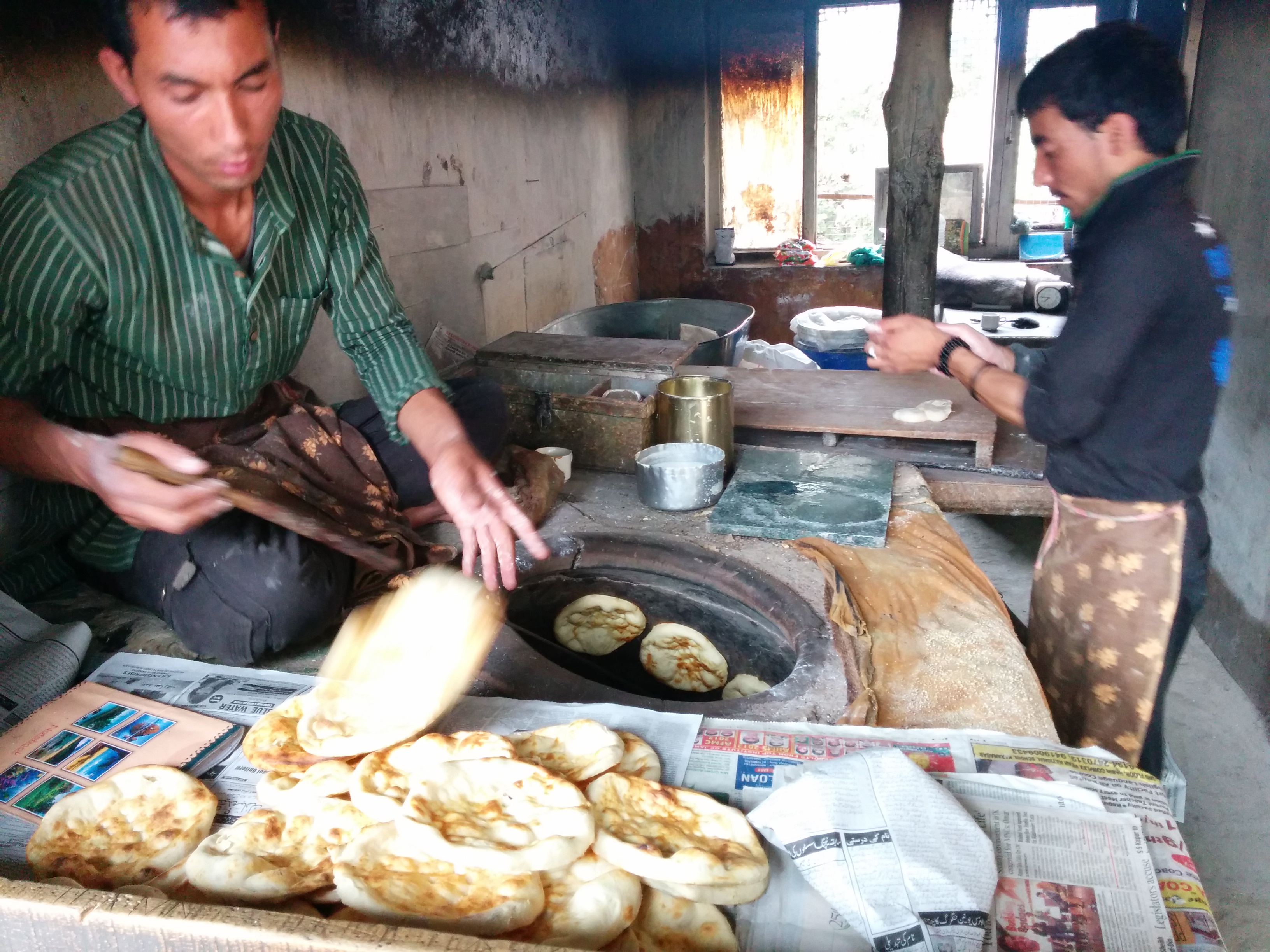
And so, during a recent visit to Kargil, in spite of staying in a hotel, I couldn’t get myself to have the ‘English’ bread-butter-coffee breakfast that it so generously offered. A morning walk around the town was in order and off we headed, over the roads that surrounded a gurgling Suru river. Few shops seemed open at this early hour in the morning. Carcasses of lambs hung down from meat shops in the goriest of their forms. Not the best of sights to begin one’s day with. So I turned away, looking for a less overwhelming experience. A little girl waited in front of the window of a shop, her gaze fixed upon the simmering ‘tandoor’ on the other side of the window. The owner then took three breads from the tandoor, wrapped them in a newspaper, and handed over to the girl who scurried away in the same direction as us. As we walked further in the market, more and more such bakeries became visible. Full-fledged baking stores, smaller shops, sometimes merely an ignored corner between two adjacent stores, just wide enough to accommodate a round tandoor and the equally round belly of the man behind it, these bakeries rule the morning hours of Kargil. Men, women, kids, line outside these bakeries, grab a bread or two and head home, like any other morning chore. I was left wondering how different these were from the khambir I ate in Leh during my last stay.

Homestays in Ladakh
One of the local breads, Chachura, being sold in the markets of Kargil. Photo by Harsh Mehta

Nevertheless, in our hunt for a simple chai, we kept walking further, past more butcher shops and vegetable stores. The Suru was now way closer than earlier, its waters muddied by the rains, flowing ferociously beside the road. The market however, was far smaller than the expanse of the Suru. It ended earlier than anticipated. At the end, we noticed a ‘Darjeeling Hotel’ selling tea and a bakery right beside it. A desi’s delight would know no bounds at this sight. Chai and local bread. Just the way mornings in the mountains are supposed to be. While my friend occupied himself with the task of getting two cups of chai extra-sweetened, I cozied up to the bakery.

Two men worked in the bakery. One sat right behind the tandoor, his head constantly bowed in search of the latest bread to turn golden brown inside the oven. The other stood beside a table on the far side of the room, extracting the dough, leavening it, turning it into balls of even sizes and then pressing them into flat breads ready to be shoved and slapped inside the tandoor. The bakery was a version of the tandoor in itself, its walls blackened by the soot, its air warmed by the heat. One wall in particular sought attention. It was actually a notice on the wall which deserved a good read. As I went through the prices for the several items mentioned on the notice, I realised that it listed much more than a menu – it listed an entire tradition in baking in this part of the world. Girdeh, Lavasa, Chachura, Kulcha, most of these, names of breads I’d barely heard. When probed about them, our bakery men told that these were local breads and only girdeh and chachura were available in the morning and lavasa in the afternoon. We took our two pieces of girdeh and gulped them down with two cups of tea from ‘Darjeeling hotel’ (actually run by a Nepali). The men also pointed in another direction to the bakery on the other side of the road, which sold ‘chachura’, more importantly, this being one of the only two in Kargil that sold it. The chachura is a crisp, hard bread, actually more like a cross between a bread and a cookie. We took just two of these, they were bland, in desperate need of some accompaniment, and then watched a ministerial cavalcade pass by.


Homestays in Ladakh
The bakery selling hot and delicious Girdeh. Photo by Harsh Mehta

It was only after we began our journey back when we realised that the market had sort of changed from how we had left it. Several men and women now lined both sides of the road. Beautiful faces, accompanied by equally beautiful fruits, basketfuls of which they’d brought along to be sold here. Fresh apricots from farms and households,lay stored in aluminium and plastic containers to be evaluated by passers-by, held in their hands, smelled through their noses and the apricots’ reddish-orange velvety skin to be carefully inspected through their gaze. Nearby lay crates full of apples, but surprisingly smaller, the size of the apricots and green in colour, yet tasty enough to fill one’s morning with sweetness. On both the fruits, the sellers maintained that they were the best in India – those from Kashmir would fade in comparison to the ones in Kargil. Now that was a big claim to make but I could not agree more with the apricot seller. On apples, given that I have a soft corner for the Kashmiri ones somewhere in my mouth, I decided not to argue.

Homestays in Ladakh
Fresh Apricots for sale. Photo by Harsh Mehta
Homestays in Ladakh
Green apples filling the morning with sweetness. Photo by Harsh Mehta

We turned back to the hotel as a life size poster of the Ayatollah watched upon us. The market was even livelier now, this being a Sunday. Several carts with vegetables, fruits and even clothes dotted the street now. Reaching the hotel, I glanced at its restaurant. Portions of generous butter cubes and jam extracts peeped at me through its windows. I smiled and headed back to the room. Had I stayed back for these, I’d never have known what a Chachura or a Girdeh was!


Visit our website to book from 21 homestays in Srinagar & 141 homestays in Ladakh

About the author: Harsh Mehta is your typical 20-something traveller who roams around from Krakow to Kerala and Hungary to the Himalayas in his quest to unravel the gems of the world. Having successively lost his heart to the mountains of Kashmir, the sweet traditions of the Ottoman cuisine and the old town squares of Europe, he now fancies anything that travels, from food and culture to music & languages and their linkages across the world. And so, even as he spends dreamy days at his 9-5 job, he derives inspiration from the messy streets of Mumbai to pen down the best of his travels and believes that the best destinations are not the ones that you go to with a wishlist but those that you return from with one. He shares his experiences on his personal blog – Travelbyts, tweets at @harshm09 and can be shown some love at Facebook- TravelByts. He’s also reachable at travelbyts@gmail.com.

Photo essay: A soulful journey through Ladakh

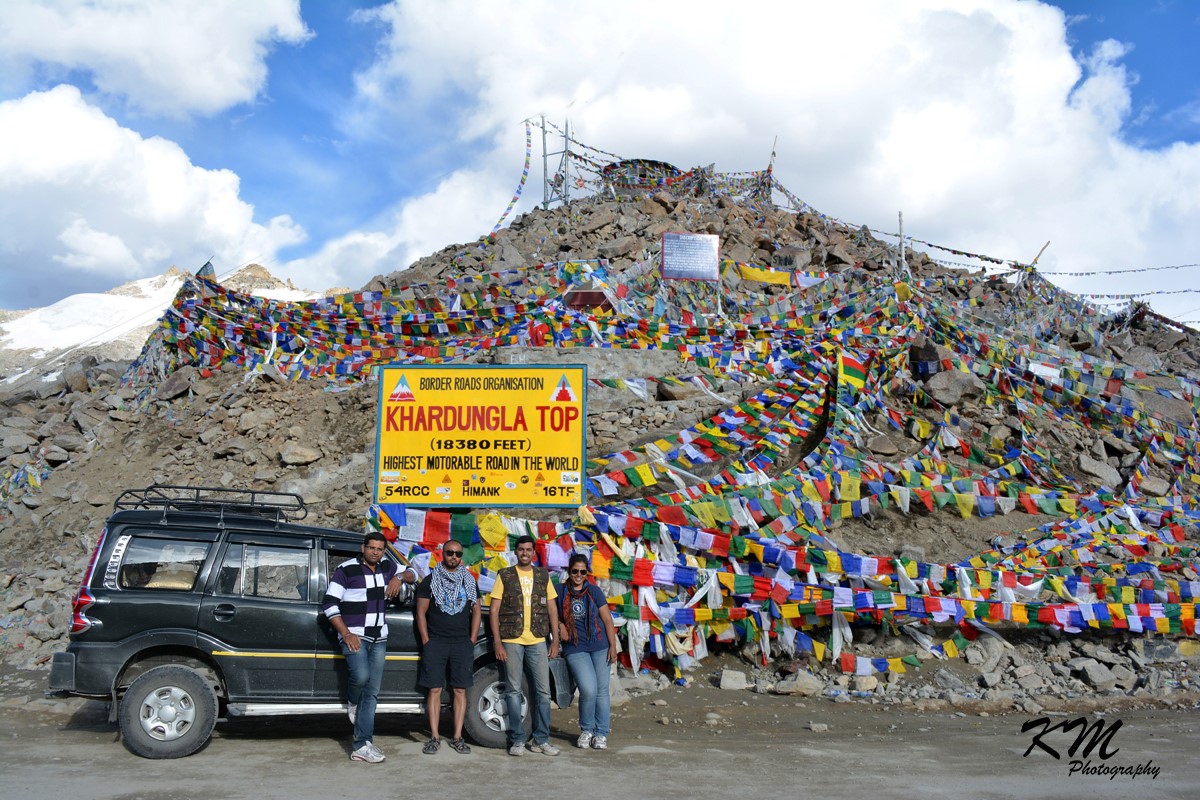
Khardung la Top

“Leh – 1 km away” – As soon as I saw the milestone, my face immediately broke into a wide smile. I was in Ladakh again, and this time for 20 days as part of an assignment for SaffronStays.

We’d taken the 434 km long Leh-Srinagar Highway to get there and the journey, though long and tiring, kept us staring out of our window in delight. I had seen it all before – the barren land dotted with colorful striking monasteries, steep curvy roads, high mountain passes, snow capped peaks, sand dunes, and unbelievably colorful lakes – but Ladakh had me spellbound and soulful again. Here is our journey in pictures –


The striking landscape of Ladakh that greeted us as we drove from Srinagar to Leh.

Ladakh

*************

Leh is one place that really lets you soak up Buddhism. Every street corner gives way to a set of Buddhist Prayer wheels, which you can gently push, watch it spin and send across your quick message to God, and walk past.

Prayer Wheel Leh


****************

During my trip, I was very excited about interacting with Ladakhi families. Living with them, observing their culture, and learning so much from them was a heartfelt experience. Their beautiful match-box like Ladakhi houses, with organic gardens, cosy rooms, hundreds of copper utensils, and the warm families living there, left a great impression on me.

P.S. Whenever you come across any Ladakhi, say ‘Juley’ and experience its magic.

Ladakhi House


  *****************

I had always wanted to visit the Shanti Stupa at sunrise. We shook ourselves awake before dawn and made it there by 5:30 am. We were the only visitors, and watching the sky slowly turn blue and bright at the Stupa’s backdrop was quite a sight.

Shanti Stupa


*****************

Another place where I wanted to watch the sun’s magic is Thiksey Monastery.  Being the largest monastery in central Ladakh, it is spread over 12 stories on a hill top, and houses shops, hotel, restaurant, school, museum, temples and even a nunnery. A 49 feet high statue of Maitreya Buddha is also erected here. Spellbinding isn’t it?

Thiksey Monastery

Thiksey Monastery


 ***************

Our journey onwards to Nubra Valley took us through Khardung La – the highest motorable road in the world.

When we reached the highest point of the Pass, I felt like I had reached the top of the world – it was a surreal feeling. There was a small cafeteria run by the Indian Military serving tea and coffee to travellers. Hats off to these soldiers!

Khardung la Top


*****************

In Nubra Valley, we were welcomed by a beautiful statue of Maitreya Buddha. The view of the valley from the statue is breathtaking.  The smallest village in the valley, Hunder gives you a chance to experience camel safari at a height of 10,000 feet!  This is the only place where you see a river flowing right next to you, sand dunes, barren land and snow-capped mountains – all at the same time.

Nubra Valley


*******************

 The last region of Ladakh that we explored was the magical Pangong Tso – situated at a height of 14,500 feet.

We crossed Chang la, believed to be the world’s third highest motorable road, to get there. We spent a night by the lake. I perched myself with hot bowls of soup and watched the sun rise and set and the colors of the lake change magically in sync.

Not like I had forgotten, but after this long and fulfilling trip, I am only assured of how much I love Ladakh and how no place can ever be as beautiful and  surreal as this.

Chang La

Pangong Lake


All photographs were taken by Kartik Mahajan

                                                                                                              *********************


We have 141 Homestays in some stunning locations of Ladakh. Click here to book one today.

About the authors: Greeshma Soley is an avid traveller, biker and adventure enthusiast and Kartik Mahajan is a professional Photographer and Videographer. They travelled together to Ladakh, Srinagar and Himachal Pradesh as part of the Travel Ninja programme of SaffronStays in July-August 2014.