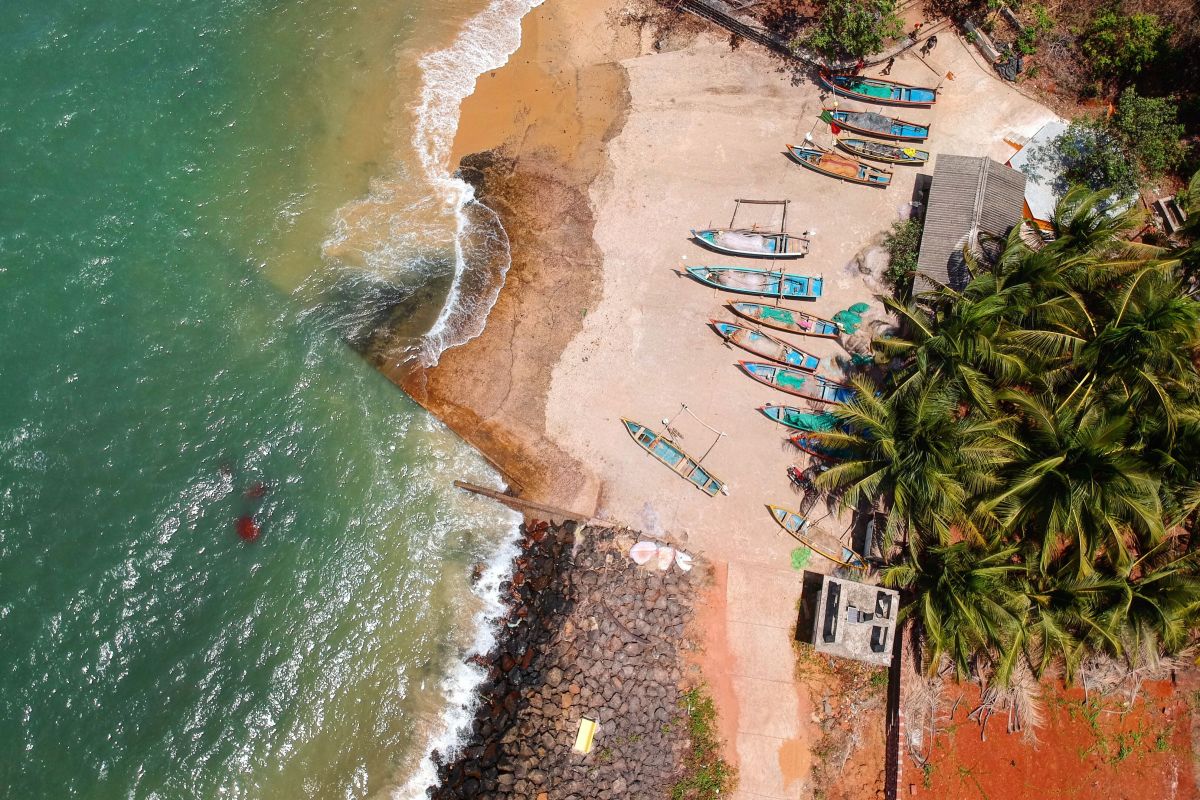
| QUICK ANSWER The most authentic way to experience Goa in 2026 is to base yourself in a village such as Assagao, Moira, Siolim or Britona, eat fish curry rice for lunch at a family-run restaurant, drink cashew feni at a traditional tavern such as Joseph Bar in Panjim’s Fontainhas, and plan around Goa’s own festival calendar: Makharotsav in the temples of Ponda during Navratri (11 to 19 October 2026) and Narakasur night, when giant effigies burn before dawn on 8 November 2026. October and November bring green paddy fields, reopened beach shacks and quieter roads than December. |
If you are planning a Goa trip, your list probably already has a beach, a sunset, a shack and a plate of fish curry on it. That list gets you to Goa. This guide takes you further, into the Goa that Goans live in: the village bakeries, the tavern counters, the temple festivals and the family kitchens that sit a few lanes back from the beach strips.
Goans have a word for the pace of that life: susegad, the contented unhurriedness inherited from the Portuguese sossegado. You see it in the poder who cycles through the village at dawn with a basket of warm pão, in the long lunch of fish curry rice, and in the evening peg of cashew feni at the tavern, poured for men who have known each other since school.
Consider this your Goa travel guide 2026, built for anyone planning an October or November trip. It covers the taverns still pouring feni, the local spirits worth tasting, the dishes to order and the family kitchens that cook them best, the festivals that belong to the villages, the cafés that earn their photographs, the best sunset spots, the offbeat hinterland, the state’s new tourist rules, and five SaffronStays homes that place you inside village life rather than beside it.
Table of Contents-
Understanding Susegad: How a Goan Day Unfolds
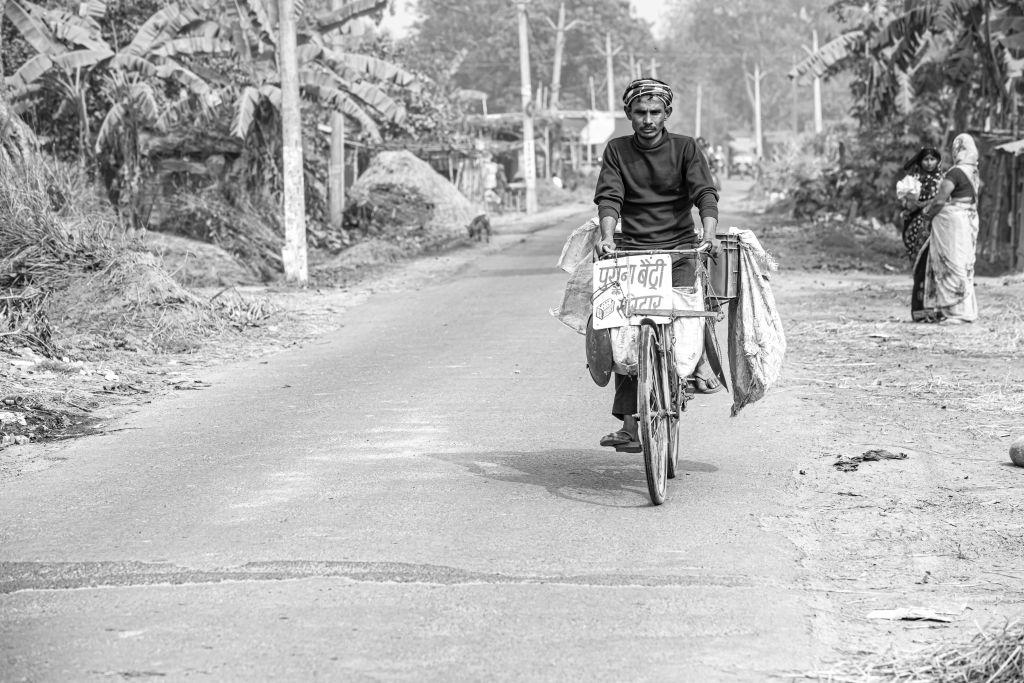
A Goan day starts early and slows down on purpose. Bakeries and fish markets are busiest at first light. Lunch is the main meal, usually rice with fish curry, and in the villages and market towns many shops still pull their shutters down through the afternoon. Evenings belong to people: a conversation on the balcão, the built-in verandah seat of the old Goan house; a walk to the chapel; a drink at the tavern.
Matching that pace changes a trip more than any itinerary. Plan sightseeing for the mornings, keep afternoons for a long lunch and the pool, and save evenings for Panjim’s lanes or a village bar. A few words of Konkani, Goa’s official language, go a long way.
| Konkani | Meaning | When to use it |
| Dev borem korum | Thank you (literally, may God do you good) | After a meal, a favour or a purchase |
| Kitlem? | How much? | At the market or the fish seller |
| Borem | Good | The simplest compliment for a cook |
| Susegad | Relaxed, unhurried | How Goans describe a well-spent day |
| Balcão | Verandah seat at the front of a Goan home | Where evening conversations happen |
North, Central, South or Hinterland: Choosing Your Goa
Goa is small enough to cross in a day and varied enough to feel like four places. Choosing a base by character rather than by beach saves hours on the road and shapes every evening of the trip.
| Region | Character | Village bases | Best for |
| North Goa (Bardez, Pernem) | Café villages, taverns, livelier beaches, the Friday market at Mapusa | Assagao, Siolim, Moira, Parra, Aldona | First-timers, food lovers, groups |
| Central Goa (Tiswadi) | Panjim and Fontainhas, Old Goa’s churches, river islands | Panjim, Britona, Ribandar | Heritage, taverns, IFFI |
| South Goa (Salcete, Canacona) | Wide beaches, Portuguese-era mansions, quieter nights | Benaulim, Betalbatim, Cavelossim, Agonda | Families, slow travel |
| Hinterland (Ponda, Sanguem, Quepem) | Temples, spice farms, forests and waterfalls | Day trips from any base | Culture, nature, Navratri |
For a Goan-style trip, the sweet spot is North or Central Goa, where villages sit within a short drive of Panjim’s taverns and the northern beaches at the same time.
Why October and November Suit a Goan-Style Trip
October and November catch Goa at its most Goan. The monsoon has just left the paddy fields green and the rivers full, the harvest is under way in the villages, and licensed beach shacks rebuild and reopen through the season’s first weeks. Crowds and room rates climb steadily into December, so these two months offer the best balance of open doors and quiet roads.
October still carries humidity and the odd evening shower, and the sea can run rough early in the month. Swim only at beaches with lifeguard towers, stay between the flags and treat a red flag as final. November settles into dry, warm days and cooler nights, some of the most comfortable weather of the year for walking Panjim or driving into the hinterland.
October and November Festivals in Goa, 2026
Goa’s autumn calendar belongs to its temples and villages, and visitors are welcome guests at most of it. The dates below follow the 2026 Hindu calendar and official announcements. Lunar dates can shift by a day locally, so confirm with the temple or village before planning around a particular night.
| Festival | 2026 dates | Where | What to expect |
| Navratri and Makharotsav | 11 to 19 October | Temples of Ponda and across Goa | The goddess rides a decorated swing, the makhar, each evening to traditional temple music |
| Dussehra | 20 October | Statewide | The close of Navratri, with temple celebrations and family puja |
| Narakasur night | Night of 7 November into dawn on 8 November | Mapusa, Margao, Panjim, Bicholim | Towering paper effigies paraded and burnt before sunrise |
| Diwali | 8 November | Statewide | Akash kandil lanterns, oil lamps and a breakfast of fov (beaten rice) |
| Zatra season opens | After Diwali, through the season | Temple villages | Palanquin processions and village fairs |
| IFFI, 57th International Film Festival of India | 20 to 28 November | Panjim | Screenings, masterclasses and the public IFFI Mela |
| Novena at the Basilica of Bom Jesus | Last week of November | Old Goa | Nine days of prayers and Masses at the World Heritage church |
Narakasur: Goa’s Own Diwali Eve
Narakasur is Goa‘s prelude to Diwali, and the night many Goans wait for all year. Through October, groups of young men in wards across the state build effigies of the demon Narakasura from paper, bamboo and paint, some taller than a house and each fiercer than the last. On the night before Diwali they parade them through the streets, often as part of a local competition, and in the hours before dawn the effigies are set alight to mark Krishna’s victory over the demon. Families then crush a bitter wild berry, the kareet, underfoot as a symbol of the same victory, and sit down to a festive breakfast.
Mapusa, Margao, Panjim and Bicholim draw the biggest crowds. Stay up late or set an early alarm: the burning happens in the small hours, well after the evening parades.

Makharotsav: Navratri the Goan Way
Navratri in Goa centres on the makhar, a decorated swing that holds the goddess in temples across Ponda for nine evenings. Each night she is dressed in new ornaments and gently swung while musicians play the ranvadya, the traditional temple ensemble. The ritual recalls the 16th century, when devotees carried temple idols from the coastal talukas to the safety of Ponda, and it has continued for more than five hundred years. The Shri Laxmi Narasimha temple at Velinga, with its palm-lined water tank, is one of the most atmospheric places to watch.
Visitors can watch from the temple hall. Dress modestly, leave footwear at the entrance and ask before photographing.

IFFI 2026 in Panjim
The 57th International Film Festival of India runs in Panjim from 20 to 28 November 2026, with the theme Stories Without Borders. Most screenings require festival registration, while the public IFFI Mela brings exhibitions and cultural programmes into the city. For nine days, Panjim’s bars and restaurants fill with filmmakers and film lovers, which makes the capital an easy, sociable base.
Goa’s Taverns: Where Goans Actually Drink
Goa‘s tavern culture is centuries older than its nightclubs. Under Portuguese rule, feni was sold from shopfronts and front rooms, and farm workers, fishermen and sailors gathered there at the end of the day. Victor Hugo of the Goa Chitra Museum describes the tavern as a place for a quick shot of feni on the way home from work: a pause, not a night out.
Many village taverns have closed in recent decades, which makes the survivors and the revivals the most Goan evenings on offer. The classic tavern is small, bright and plain: a few tables, a cabinet of bottles, a plate of fried fish or chicken cutlets. Order a peg of cashew feni, ask how the regulars take theirs, and expect to leave with a lunch recommendation.
Joseph Bar, Fontainhas, Panjim
A one-room tavern from the 1970s in Panjim’s Latin Quarter, Joseph Bar was close to shutting when Atish Antonio Fernandes took it over in 2017 and revived it as a traditional Goan tavern. It seats about ten people inside, spills onto the lane after dark and runs on the charm of Gundu, a bartender Goa’s hospitality circle knows well. Order the Tambde Rosa, a feni drink made with kokum and rose, or a Goan craft beer, with snacks made by women from the neighbourhood.
For The Record, Fontainhas, Panjim
Billed as India’s first vinyl bar, For The Record occupies a Portuguese-era house in Fontainhas, with a handcrafted valve sound system, walls of records and a record shop next door. Request a track, take a seat on the balcão and order a feni-based cocktail built on house-made bitters. It closes on Wednesdays.
Boilermaker, Siolim
From a co-founder of the award-winning Bar Tesouro, Boilermaker is a beach-shack-styled bar in Siolim that regulars have nicknamed the five-star dive bar. Beer on tap and spirit-forward cocktails anchor the menu, and reservations are essential.
Bar Tesouro, Colva and Benaulim
An award-winning neighbourhood taverna near the beaches of Colva and Benaulim, Tesouro pairs seasonal cocktails with local beer and feni, occasional live jazz and a quieter mezzanine for conversation. It makes a natural end to a South Goa beach day.
Darling’s Bar, Chapora
On Chapora’s main street, Darling’s is where locals shoot pool, eat pizza and drink beer before the Vagator crowd arrives. It works well as a first stop after watching the sunset from Chapora Fort.
Finding Your Own Village Tavern
The best tavern is often the one with a name you have never read online. Look for a small Bar and Restaurant sign on a village road, a few tables on a verandah and a counter lined with feni bottles. Bars of Goa, an Instagram account run by tavern enthusiasts, maps many of these. Carry cash, go early in the evening and keep your voice at village volume.
| A Goan tavern is a pause, not a night out: one peg, one plate, one conversation, and then home. |

Feni, Urrak and the Drinks That Belong to Goa
Feni is Goa in a glass. Distilled from the fermented juice of cashew apples or from the sap of the coconut palm, it has been made in Goan villages for generations, and cashew feni received a Geographical Indication tag in 2009, so only Goa can produce it. The cashew tree arrived with the Portuguese in the 16th century; the distilling craft, carried out in copper pot stills by artisans called battkars, became entirely Goan.
Its strength surprises first-timers. Finished feni sits at around 40 to 45 per cent alcohol, with a bold, fruity nose and a flavour that rewards a slow first sip.
| Drink | What it is | How Goans drink it | Season |
| Cashew feni | Double-distilled spirit from fermented cashew apple juice, GI-tagged | Neat with a splash of water, or long with Limca and kokum | All year |
| Coconut feni | Distilled from toddy, the sap of the coconut palm; smoother and milder | Neat or with soda | All year |
| Urrak | The first, lighter distillation of cashew juice; fruity and lower in alcohol | With Limca, lime and a pinch of salt | March to May |
| Cazulo | The middle distillation, stronger than urrak and lighter than feni | Neat, in small measures | Mostly in cashew season |
| Café Conserva | Coffee feni, once served as a dessert liqueur after Goan weddings | After dinner | Rare; ask specialist producers |
| Goan craft beer and gin | Small-batch beers and gins made in Goa | At taverns such as Joseph Bar | All year |
Urrak is a spring drink, distilled fresh during cashew season from March to May, so October and November visitors meet feni at its matured best. Ask a tavern for its house feni from a nearby village; many still source from family stills.
Feni Tastings and Distillery Visits
Fazenda Cazulo, the craft distillery led by Hansel Vaz, whose research helped cashew feni secure its GI tag, hosts guided tastings among cashew trees, with fermentation pots in use for close to a century and feni served neat beside Goan sweets. Goa Heritage Distillery offers a farm-to-bottle walk through its cashew grove and spice garden, bookable on WhatsApp. Fruit stomping and distilling happen in cashew season, so October and November visits focus on tasting; confirm the format when you book.
Buying and Carrying Feni
Buy sealed bottles from licensed wine shops rather than roadside sellers. Limits on carrying alcohol differ from state to state, so check the excise rules of the state you are travelling into before packing bottles. Feni’s strength also sets its one firm rule: after a peg, the scooter stays parked.

What Goans Eat: The Dishes to Order
Goan food holds two kitchens in one. Catholic Goan cooking absorbed Portuguese vinegar, pork and baking; Hindu Goan cooking, especially the Saraswat tradition, built its flavour on coconut, kokum, fish and seasonal vegetables. Both share the region’s red chillies and a love of sour notes, and both taste best at home or in a family-run restaurant.
| Dish | What it is | Order it with |
| Xitt kodi (fish curry rice) | Coconut fish curry soured with kokum or tamarind, over boiled rice | A fried fish on the side; the everyday lunch |
| Ambot tik | A sharp, sour and hot fish curry | Rice |
| Recheado | Mackerel or pomfret stuffed with red masala and pan-fried | A cold beer |
| Cafreal | Chicken marinated in coriander, green chilli and lime, then fried | Poi bread or potato wedges |
| Xacuti | Curry of roasted coconut, poppy seeds and whole spices, with chicken or mutton | Pão or rice |
| Vindalho | Pork in vinegar and garlic, from the Portuguese carne de vinha d’alhos | Rice or sannas |
| Sorpotel | Pork and offal in a spiced vinegar gravy, better on the second day | Sannas, steamed rice cakes fermented with toddy |
| Prawn balchão | Prawns in a fiery, tangy, pickle-style masala | Rice |
| Chouriço pão | Goan pork sausage stuffed into bread | An afternoon snack |
| Ros omelette | Omelette served in a pool of xacuti gravy | Late-night street food |
| Bhaji pão | Spiced potato or pea bhaji with bakery bread | Breakfast with chai |
| Khatkhate | Hindu Goan mixed-vegetable stew with coconut and tirphal | Festival meals |
| Sol kadhi | Pink kokum and coconut milk digestive | The end of any seafood meal |
| Bebinca | Layered coconut and egg pudding, baked one layer at a time | Coffee |
| Dodol, perad, serradura | Jaggery and coconut fudge, guava cheese, biscuit-and-cream pudding | Take-home sweets from Panjim bakeries |
Goa for Vegetarians
Vegetarian travellers eat well once they step off the beach menus. Hindu Goan kitchens serve khatkhate, varan and seasonal vegetable bhajis with rice and sol kadhi, and Panjim’s long-running breakfast rooms serve bhaji pão and puri from early morning. In Ponda, temple towns and Udupi-style restaurants round out a fully vegetarian day.

Where to Eat Authentic Goan Food in 2026
Lunch is the meal to plan around, and the rule of thumb is simple: follow the office crowds in Panjim and the families in the villages. The places below are long-running favourites with locals as well as travellers. Many close one day a week, so check before you set out.
Panjim and Miramar
- Ritz Classic: A second-floor dining room off Panjim’s main lane that has served its seafood thali since the 1960s, with fish curry, fried fish, prawns, sol kadhi and rice. Expect a queue at lunch; it moves quickly.
- Mum’s Kitchen, Miramar: Owners Suzette and Rony built the menu from recipes collected in Goan households, and the result is the closest a restaurant comes to a Goan family table. Ask about the day’s heritage dishes.
- Viva Panjim and Venite, Fontainhas: Two Latin Quarter institutions for Goan-Portuguese home cooking. At Venite, ask for a window table above the street.
- Cháfé Braz, Panjim: A 2026 opening on the balcony of a 200-year-old Goan home overlooking the Mandovi, named after the jazz saxophonist Braz Gonsalves. Order the vindalho, rissóis de chouriço and gelado goês.
- D’Silva Caterers and Fast Food, Miramar: A small, much-loved counter near Miramar beach for cutlet pão, the beef-cutlet sandwich Goans grew up on.
North Goa
- Vinayak Family Restaurant, Assagao: A locals’ lunch room for Goan thalis and seafood at village prices, and the easiest place in North Goa to eat fish curry rice the way Goans do.
- Mapusa Friday market: Buy chouriço, recheado masala, kokum and bebinca to take home, and eat ros omelette or chouriço pão from the market stalls.
South Goa
- Martin’s Corner, Betalbatim: A South Goa landmark for Goan staples and seafood, with a lively open-air pavilion in the evenings.
- The Fisherman’s Wharf, Cavelossim: Riverside seafood in a setting that suits a long, slow dinner.
- Zeebop by the Sea, Utorda: Fresh catch of the day, served with your toes almost in the sand.
Goa’s Cafés: Good Food Behind the Good Looks
Goa’s café scene has moved inland, into the heritage lanes of Panjim and the villages of Assagao and Siolim, where old houses now hold bakeries and coffee rooms. These five back their looks with the plate.
- Café Central, Panjim: Founded in 1932 near the municipal garden, it is one of Panjim’s oldest bakeries. Come for patties and pastries and a taste of how the city has snacked for generations.
- Cháfé Braz, Panjim: The same riverside balcony for a slow morning coffee, with Goan-Portuguese small plates later in the day.
- Affo, Santa Inez, Panjim: A gelato and coffee spot that makes everything in-house, down to the paneer and khoa. The jamun sorbet and lemon pepper paneer tart are the orders.
- Larder + Folk, Panjim: Chef Priyanka Sardessai’s kitchen has mastered the sandwich, built on good bread and Goan produce.
- Vera’s Patisserie, Siolim: A minimalist European-style patisserie behind a bright blue board, known for its eight-layer medovik honey cake, specialty coffee and vegan and gluten-free options.

Where to Watch the Sun Go Down in Goa
Goa faces west, so every beach has a sunset. The best ones add a fort, a cliff or a quiet bar.
- Chapora Fort, above Vagator: Climb the laterite ramparts in the late afternoon for views over the Chapora river mouth and the sea. Head down to Chapora village for a drink afterwards.
- Amber Cocktail Bar, Ashwem: A golden-hour bar above one of North Goa’s calmer beaches, built for a slow sundowner.
- Thalassa, Siolim: A long-running Greek taverna where sunset tables are the prize; book ahead in season.
- Cabo de Rama, South Goa: Fort ruins on high sea cliffs, with the Arabian Sea on three sides and very few people.
- Agonda and Palolem: Crescent bays in Canacona where licensed shacks set tables on the sand as the sun drops.
- Dona Paula, Panjim: The bay-side promenade where Panjim families take their evening walk.
Drink at a licensed shack or bar rather than on the open sand; public drinking on beaches is prohibited under Goa’s tourist rules.
Nights Out: From Tavern Evenings to the Dance Floor
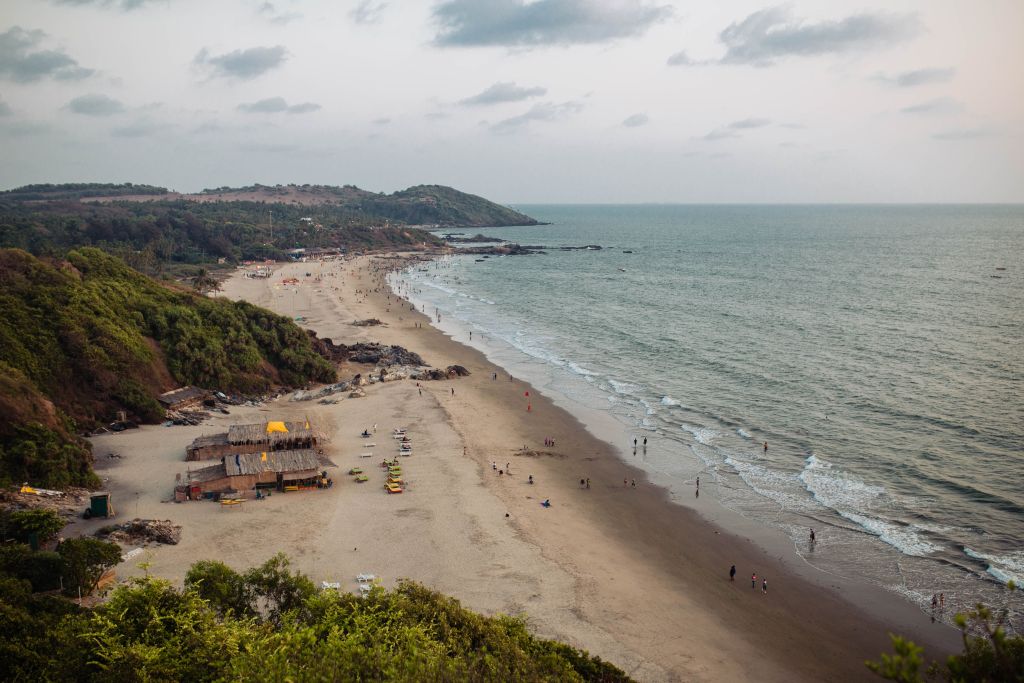
Goa’s nightlife runs on two tracks, and a good trip makes room for both. The first is the tavern and cocktail-bar circuit above. The second is the club and live-music scene, concentrated in a handful of belts, each with its own crowd.
| Area | The scene | Suits |
| Baga and Calangute | Club crawls along Tito’s Lane, crowded and late | First-timers and big groups |
| Anjuna and Vagator | Electronic music, hilltop and cliffside venues, busiest at weekends | Music-focused travellers |
| Morjim and Ashwem | Beach lounges and a slower pace | Couples and sundowner seekers |
| Panjim riverfront | Offshore casinos on the Mandovi, boarded from the waterfront | A one-off night out |
| Siolim and Assagao | Cocktail bars and restaurants that stay lively late | Food-first groups |
| ADVISORY: CHOOSING A SAFE VENUE IN 2026 In December 2025, a fire at the Birch by Romeo Lane nightclub in Arpora killed 25 people. Authorities have since audited nightlife venues, and several were sealed over fire-safety and licensing lapses. Before committing to a night out:Pick a licensed venue with more than one clear exit, and note where the exits are when you arrive. Skip packed rooms decorated with thatch or dry palm leaves, and any venue using indoor fireworks.Pre-book your ride home on GoaMiles or Goa Taxi App. Expect amplified music outdoors to stop at 10 pm, in line with Goa Police rules. |
Offbeat Goa: Islands, Mansions and the Hinterland
Goa’s quieter half sits inland and across its rivers, in villages that run on ferries, feasts and farming. These are the places Goans take visiting family.
Fontainhas at First Light
Walk the Latin Quarter before the day-trippers arrive, when the ochre, indigo and lime-green houses glow in the low sun and the bakeries are open. End at the Maruti temple at Mala, up the steps at the edge of Fontainhas, for a view across the rooftops of old Panjim.
Divar Island by Ferry
The government ferry from Old Goa or Ribandar crosses the Mandovi to Divar, an island of paddy fields, old houses and slow afternoons. Climb to the hilltop church of Our Lady of Piety for views back across the river to the spires of Old Goa. The ferry ride is a Goan commute in itself and costs next to nothing.

Chorao and the Dr Salim Ali Bird Sanctuary
A short ferry hop from Ribandar, Chorao holds Goa’s best-known mangrove sanctuary, named after India’s pioneering ornithologist. Go early, when kingfishers, herons and egrets work the channels.
Aldona and Moira
These old Catholic villages along the Mapusa river keep baroque churches, ancestral homes and the unhurried lanes that define Bardez away from the coast. Cycle or drive slowly and stop wherever a chapel or a bakery catches your eye.
Chandor and Loutolim
South Goa’s grand Portuguese-era mansions sit in these two villages. In Chandor, the Braganza House opens parts of its family wings to visitors; in Loutolim, ancestral homes and the Ancestral Goa museum recreate village life of a century ago. Visits are usually by donation or ticket; call ahead for timings.
Palácio do Deão, Quepem
The restored 18th-century home of Quepem’s founding dean looks over a formal garden and the Kushavati river. Lunch is served by reservation, and the house tour is one of the most personal heritage visits in Goa.
Tambdi Surla and Netravali
Deep in the forests of the Western Ghats, Tambdi Surla’s 12th-century Mahadev temple is carved from black basalt and survives from the Kadamba era. Further south, Netravali’s temple tank is known for the bubbles that rise through its water when you clap at the edge. Pair the two with a spice-farm lunch in the hinterland.
Cabo de Rama and the Harvalem Caves
Cabo de Rama’s fort ruins crown a southern headland, and the rock-cut caves and waterfall at Harvalem, near Sanquelim, run full in October after the rains. Both reward an early start.
Ponda’s Temples and Spice Farms
The Mangueshi, Shantadurga and Laxmi Narasimha temples show the distinctive Goan temple style, with lamp towers, tiled roofs and water tanks. Several spice farms nearby offer guided walks and a Goan lunch on a banana leaf.
Markets Goans Shop At
Mapusa’s Friday market is the one Goans use, with chouriço strung in ropes, dried fish, masalas, clay pots and bebinca by the slab. Margao’s covered market and Panjim’s municipal market run daily. Go early, carry cash in small notes and ask Kitlem? before you bargain. The Anjuna Wednesday flea market and the Saturday night market at Arpora cater mainly to visitors and run seasonally, so check they are operating before you plan an evening around them.
A Five-Day Goa Itinerary, the Goan Way
This plan assumes a village base in North or Central Goa and keeps one region per day, so more time goes to eating and less to driving. Swap days to catch Makharotsav evenings in October or Narakasur night in November.
| Day | Morning | Afternoon | Evening |
| 1: Panjim | Fontainhas walk, coffee at Café Central | Seafood thali at Ritz Classic, then a siesta | Joseph Bar, then For The Record |
| 2: Old Goa and Divar | Basilica of Bom Jesus and Se Cathedral | Ferry to Divar, village lanes | Makharotsav in Ponda during Navratri, or dinner at Mum’s Kitchen |
| 3: North villages | Mapusa market (Fridays), Assagao lanes | Lunch at Vinayak, pool time | Sunset at Chapora Fort, drinks at Darling’s or Boilermaker |
| 4: South Goa | Braganza House in Chandor, Loutolim | Lunch at Martin’s Corner | Sunset at Cabo de Rama, Bar Tesouro |
| 5: Hinterland | Tambdi Surla or a spice farm | Feni tasting at a distillery | A Goan dinner cooked at your villa |
Getting to Goa and Getting Around Like a Local
Goa has two airports. Manohar International Airport at Mopa serves North Goa and suits Pernem and Bardez bases; Dabolim, near Vasco da Gama, sits closer to Panjim and South Goa. Both handle domestic and international flights, including seasonal charters from the UK, Poland, Russia, Kazakhstan and the Gulf.
The Konkan Railway runs along the coast, with Thivim for North Goa, Karmali for Panjim and Old Goa, and Madgaon for the south. Travellers from Mumbai and Pune can drive the coastal highway through the Konkan or cross the Sahyadris via Kolhapur, while Bengaluru travellers usually come through Belagavi or Hubballi.
Once in Goa, local app-based taxis run on GoaMiles and Goa Taxi App; the state government has said outside aggregators such as Uber and Ola will not be permitted. Rent scooters and cars only from licensed operators, wear a helmet and carry your licence. Kadamba buses and the government river ferries connect the villages, and for longer days, a taxi hired through your villa is the easiest option.
Goa’s 2026 Tourist Rules, in Plain Terms
A Tourism Department order dated 21 July 2026 and published in the Official Gazette on 30 July lists 19 prohibited nuisance activities at notified tourist spots, with fines of up to ₹1 lakh. The headline points for visitors:
| ADVISORY: WHAT CAN BE FINED IN 2026 Drinking in places where it is not permitted, including open beaches.Breaking glass bottles, littering and dumping waste.Cooking in open spaces outside designated areas.Driving vehicles on the sand.Holding unlicensed beach parties or events.Hiring unregistered guides or masseurs, or buying cruise and water-sports tickets from unofficial counters.Goa Police also prohibit loud music in open areas after 10 pm and smoking outside designated zones. |
Travelling Respectfully in Goan Villages
Goan villages welcome visitors who move at village pace. A few habits make the difference:
- Cover shoulders and knees in churches and temples, and remove footwear at temple entrances.
- Ask before photographing people, especially during Mass, processions and inside homes.
- Keep music inside your villa and low after 10 pm; village homes keep quiet hours.
- Drive slowly on village roads, which carry cyclists, cattle, schoolchildren and the poder.
- Buy feni, cashews, kokum and pottery from producers and markets, so your spending stays in the village.
Where to Stay: Five SaffronStays Homes in Goan Villages
Staying in a village rather than on a beach strip is the single biggest step towards experiencing Goa like a Goan. You wake to chapel bells and the poder’s horn, shop where the neighbours shop and come home to a quiet lane after the tavern. Each of these five SaffronStays homes sits in a different corner of North and Central Goa, so choose by the Goa you want outside the gate.
RiverSong Britona: The Mandovi at Your Door
A restored four-bedroom Goan-Portuguese villa on the banks of the Mandovi, RiverSong Britona looks across the water from every bedroom, with balconies for the morning light and a private pool and bar for the evenings. Britona sits across the river from Panjim, which makes it the natural base for Fontainhas taverns, IFFI screenings and Narakasur night in the capital. It sleeps eight to twelve.

Magnolias by River Moira: Village Hours, Family Pace
A three-bedroom pool villa in Moira, one of Bardez’s old riverside villages, Magnolias has a private pool, a lawn and a board-games room, and suits families of six to nine. Breakfast is included, and a private chef can be arranged for a Goan dinner at home. The house keeps village hours, with music permitted until 10 pm, which suits the susegad rhythm this guide recommends.
Amarah, Assagao: Heritage With a Spanish Accent
A five-bedroom estate in Assagao that has featured in ELLE Décor, Amarah blends Goan aesthetics with Spanish flair in a building that was once a science museum. It is pet-friendly, sleeps ten to fifteen and sits within easy reach of Assagao’s cafés and the bars of Siolim.
Oslo, Vagator: For Goa’s Nights as Much as Its Mornings
Oslo is a four-bedroom tropical-style villa close to Vagator Beach and Chapora Fort, with sunken seating, a projector and bathtubs in three of its bedrooms. Sunset on the fort ramparts, a first drink in Chapora village and a short ride home make it the right base for groups who want the evenings to run long. It sleeps eight to twelve.
Tudor San Ann, Candolim: Room for the Whole Clan
A five-bedroom home in Candolim for groups of ten to fifteen, Tudor San Ann puts the Candolim and Sinquerim shoreline, Fort Aguada and Reis Magos within a short drive, with Panjim’s taverns just across the river.
| Home | Village | Bedrooms | Guests | Best for |
| RiverSong Britona | Britona, on the Mandovi | 4 | 8 to 12 | Panjim taverns, IFFI, Narakasur |
| Magnolias by River Moira | Moira | 3 | 6 to 9 | Families, slow village stays |
| Amarah | Assagao | 5 | 10 to 15 | Multigenerational groups, travellers with pets |
| Oslo | Vagator | 4 | 8 to 12 | Friends’ trips, sunsets and nights out |
| Tudor San Ann | Candolim | 5 | 10 to 15 | Large family gatherings near the beach |
| Wake Up in a Goan Village This Season Private villas with pools, caretakers and Goan home cooking, from the Mandovi to Vagator. Explore SaffronStays villas in Goa saffronstays.com/villas/villas-in-goa |
Frequently Asked Questions About Goa in 2026
What is the best way to experience Goa like a local?
Stay in a village such as Assagao, Moira, Siolim or Britona, eat fish curry rice at lunch, drink cashew feni at a traditional tavern such as Joseph Bar in Panjim’s Fontainhas, shop at Mapusa’s Friday market, and time your trip to Goan festivals such as Makharotsav (11 to 19 October 2026) or Narakasur night (7 to 8 November 2026).
Where can I drink feni in Goa?
Traditional taverns are the best places, led by Joseph Bar in Fontainhas, Panjim, known for its Tambde Rosa made with feni, kokum and rose. For The Record in Fontainhas and Bar Tesouro near Colva serve feni cocktails, and distilleries such as Fazenda Cazulo and Goa Heritage Distillery run guided tastings.
What is the difference between feni and urrak?
Urrak is the first, lighter distillation of fermented cashew juice. It is fruity, lower in alcohol and made only in cashew season, from March to May. Feni is distilled again to around 40 to 45 per cent alcohol and is available all year.
Is urrak available in October and November?
Urrak is a spring drink distilled fresh between March and May, so autumn visitors should plan on cashew or coconut feni instead. A few taverns keep small stocks, but urrak is rare outside its season.
What are the must-try Goan dishes?
Fish curry rice (xitt kodi), recheado mackerel, chicken cafreal, xacuti, pork vindalho, sorpotel with sannas, prawn balchão, ros omelette, bhaji pão, khatkhate, sol kadhi and bebinca.
Where can I eat authentic Goan food in Panjim?
Ritz Classic for its seafood thali, Mum’s Kitchen in Miramar for recipes collected from Goan households, Viva Panjim and Venite in Fontainhas, and Cháfé Braz for Goan-Portuguese plates on a balcony above the Mandovi.
When is Narakasur in Goa in 2026?
Narakasur night falls on 7 November 2026. Effigies are paraded late in the evening and burnt in the pre-dawn hours of 8 November, the day of Diwali. Mapusa, Margao, Panjim and Bicholim host the largest celebrations.
What festivals are there in Goa in October and November 2026?
Navratri with Makharotsav in Ponda’s temples (11 to 19 October), Dussehra (20 October), Narakasur night (7 to 8 November), Diwali (8 November), the opening of the temple zatra season after Diwali, IFFI in Panjim (20 to 28 November) and the novena at Old Goa’s Basilica of Bom Jesus in the last week of November.
Is drinking allowed on Goa beaches?
Drinking is permitted at licensed shacks, bars and restaurants. Drinking on open beaches and in other public places where it is not permitted is prohibited, and under a July 2026 order, fines for nuisance offences at tourist spots can reach ₹1 lakh.
Can you use Uber or Ola in Goa?
Goa’s app-based taxis run on local platforms, GoaMiles and Goa Taxi App. The state government has said external aggregators such as Uber and Ola will not be allowed to operate, so download a local app or ask your villa to arrange transfers.
Is October a good time to visit Goa?
October suits a Goan-style trip: the countryside is green after the monsoon, beach shacks reopen through the month and crowds are lighter than in December. Expect humidity and occasional showers early in the month, and swim only at lifeguarded beaches, between the flags.
Is North Goa or South Goa better for an authentic Goan experience?
North and Central Goa offer the richest mix, with village bases such as Assagao, Moira and Britona close to Panjim’s taverns, Mapusa market and Chapora Fort. South Goa suits slower trips built around the Portuguese-era mansions of Chandor and Loutolim and wider, quieter beaches.