| Quick Answer The best offbeat villas in Himachal sit in four places: Naggar above the Kullu valley, Tirthan Valley beside its river, the forest country around Theog and Shimla, and the apple ridge near Kufri. Snow reaches Kufri first, usually in the second or third week of December. Shimla town, Naggar and Tirthan follow later or lighter, and none of it is guaranteed. Late October to early December is the quiet window: clear air, cold mornings, empty lanes. |
Table of Contents-
Every Himachal hill town grows around one street. Manali has its Mall Road, Shimla has its own, and the crowd moves along both like water along a channel. Follow any lane uphill and the channel gives out. Deodar gives way to apple, tarmac narrows to a single lane between stone walls, and somewhere below a stream does all the talking.
This guide follows that narrowing road to four places that repay a slow stay: Naggar, above the Kullu valley; Tirthan Valley, built around a river and a national park; the forest country near Theog and Shimla; and an orchard ridge close to Kufri. Each sits inside the Himachal that Delhi and Chandigarh drive toward every winter, and each feels like a different state from the town beside it.
A word on snow first, since it shapes most winter plans. November in these hills is the season of clear air and long shadows, not of snowfall. The first real snow belongs to December, reaches the higher ridges before the towns, and arrives in spells rather than on schedule. What the weeks before it offer is something rarer: bare orchards, woodsmoke, and lanes with no queue.
Naggar: The Offbeat Side of Manali
Naggar was once the capital of the Kullu kingdom, and it still carries the manner of a capital that has stopped hurrying. Its castle, raised in 1460, now works as a heritage hotel and still opens for guided visits. The Nicholas Roerich art gallery keeps the canvases of the Russian painter who made the village his home. Lanes of carved wooden houses run between cafes that look out over the valley, and Jana waterfall and the monastery at Kais make natural half-day outings.

The trade-off is honest and worth knowing. Naggar sits below Manali‘s snow belt, so the village itself usually sees light snow, while the Kullu range above it turns white from late November. Solang, Gulaba and the far side of the Atal Tunnel carry the depth, and Sethan, in the Hampta valley, holds snow earlier still. Naggar is the base; the snow is a day’s outing away. For anyone weighing offbeat Manali villas against a room on the Mall Road, that is the bargain: the valley without the traffic.
For a Naggar villa stay, SaffronStays Interstellar is the one home in the Manali area, in the village of Chachogi beside Naggar. It is a pair of space-themed cottages, each with a private heated pool under a geodesic dome, angled toward the Kullu range. The stay sleeps four to six across two bedrooms, with a caretaker on site. The climb to it rewards a four-wheel-drive or an SUV, as the listing itself advises.

Tirthan Valley: A River, a Forest and a National Park
Tirthan Valley starts where the Great Himalayan National Park ends its long descent. The river takes its name from Tirth inside the park, runs clear and cold past deodar and apple and apricot orchards, and meets the Beas at Larji. Trout is the local passion, and fishing is as much a part of the day as tea. Gushaini is the valley’s base village; above it, Jibhi and Shoja climb into forest and, in winter, into snow.
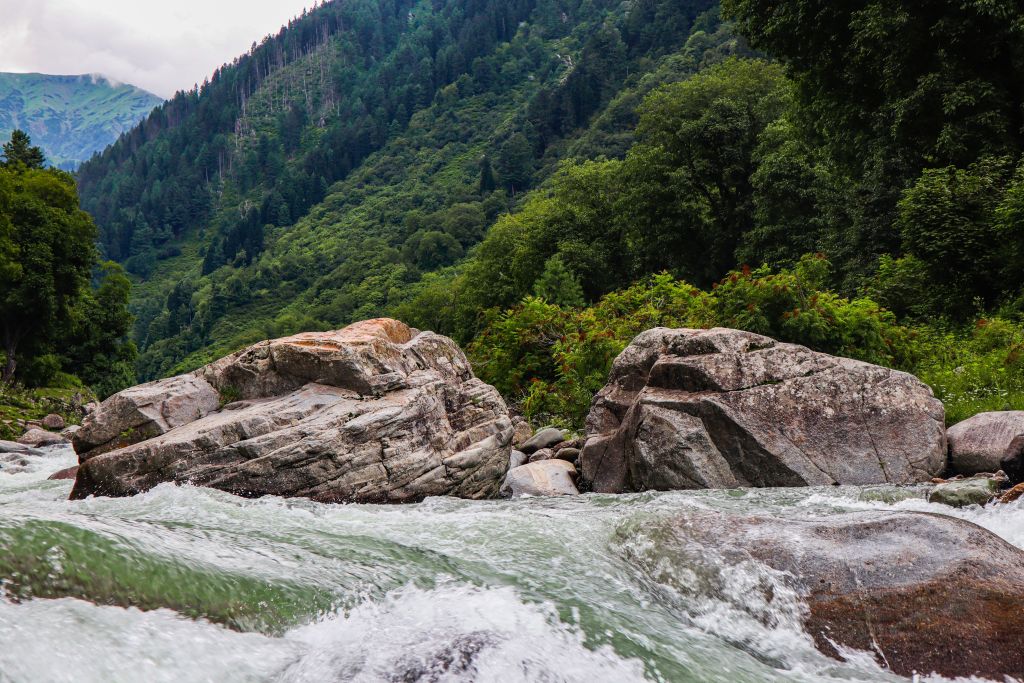
The valley suits people who want a trip to do very little. Mornings belong to the river and afternoons to a terrace. Tirthan Valley snowfall comes late, and it favours the heights: Jibhi and Shoja usually turn white after 20 to 25 December, Shoja more thickly, while Jalori Pass, higher still, can close to vehicles in heavy snowfall. The lower valley around Gushaini tends to see less. The best time to visit Tirthan Valley for quiet is the cold, clear stretch before the snow; for snow, aim for January.
Among villas in Tirthan Valley, SaffronStays Tirthan House sits in the quieter stretch, with the river a short walk away among forested hills. The three-bedroom Balcony View home sleeps six to nine, with open balconies, terrace sit-outs, apple orchard walks nearby, and bonfire and barbecue areas for the evenings.
SaffronStays Hillstation Over Tirthan Valley, in Gushaini, takes the forest side of the valley: a three-bedroom home for six guests with views across the valley, a cook on site, and the national park close by. It suits a smaller party that wants quiet and a table set for them.
Theog and Shimla: The Forest Behind the Ridge
Shimla was the summer capital of British India, and the Mall, the Ridge and Christ Church still hold that grand, slightly formal air. The Kalka-Shimla railway, a UNESCO World Heritage line, carries the old story up the hill. The holiday crowd gathers around all of it in the last weeks of December.
The offbeat places near Shimla begin beyond the Ridge. Theog, the apple town on the road north of the capital, opens onto Mashada Lake, the Kanag valley and forest trails that few visitors reach. Deodar and oak close in, birdsong replaces horns, and orchards climb every slope. Among villas in Shimla, the calmest sit on this side of the hill.
Snow here keeps its own calendar. Shimla town sees one to three snowfall events in December in a typical year, but its first snow can arrive in the last week of December or wait until January, and snow in November is uncommon and rarely settles. Higher ground such as Kufri gets there first.
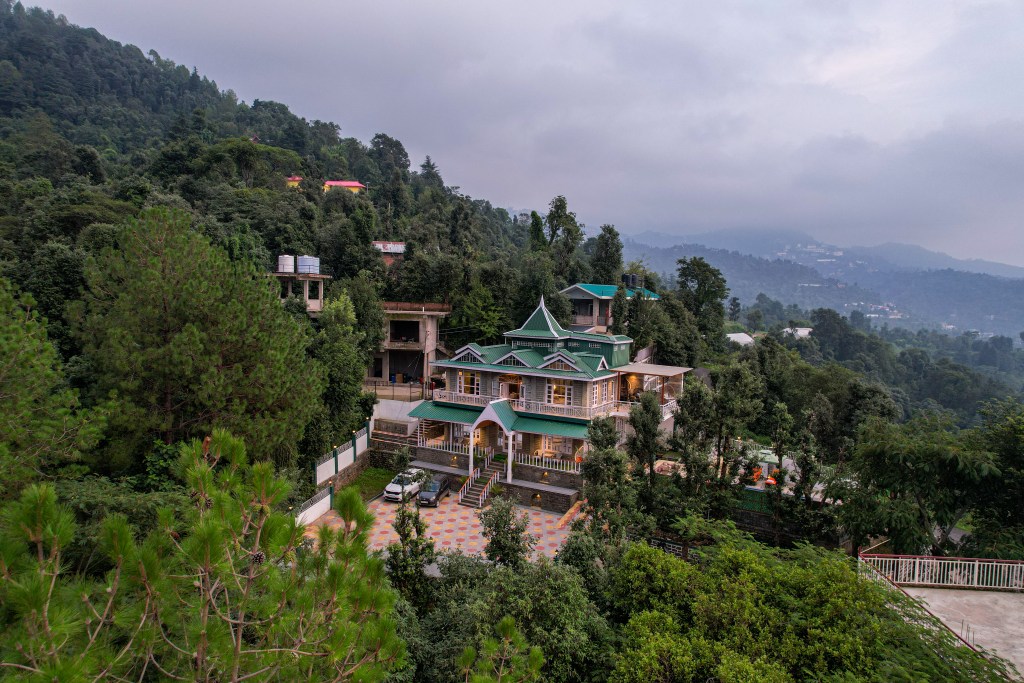
SaffronStays Alpine Blue, in Theog, is the house for a gathering. British-influenced lines meet modern European interiors across six bedrooms, three below and three on the first floor, each with a private balcony opening to orchards and valley. It sleeps twelve to eighteen, with a bonfire, barbecue evenings, indoor and outdoor games, and a projector for movie nights.
SaffronStays StoneVilla is the opposite temperament. Three king bedrooms for six to nine guests sit inside dense forest close to Shimla, in a house built over two decades from stones gathered across North India. A private pool, a jacuzzi and a courtyard anchor the days, complimentary village treks and projector movie nights fill the evenings, and birdsong does the rest. It is a quiet house: no loud music after ten at night, and no stag groups.
Kufri: Above the Snow Point
Kufri is the name most Delhi travellers already know, and most of them meet it at the snow point, the busy heart of the Kufri circuit. The quieter Kufri lies beyond that circuit: apple terraces and deodar rising toward Mahasu Peak, where the snow, when it comes, settles on a verandah instead of a queue.
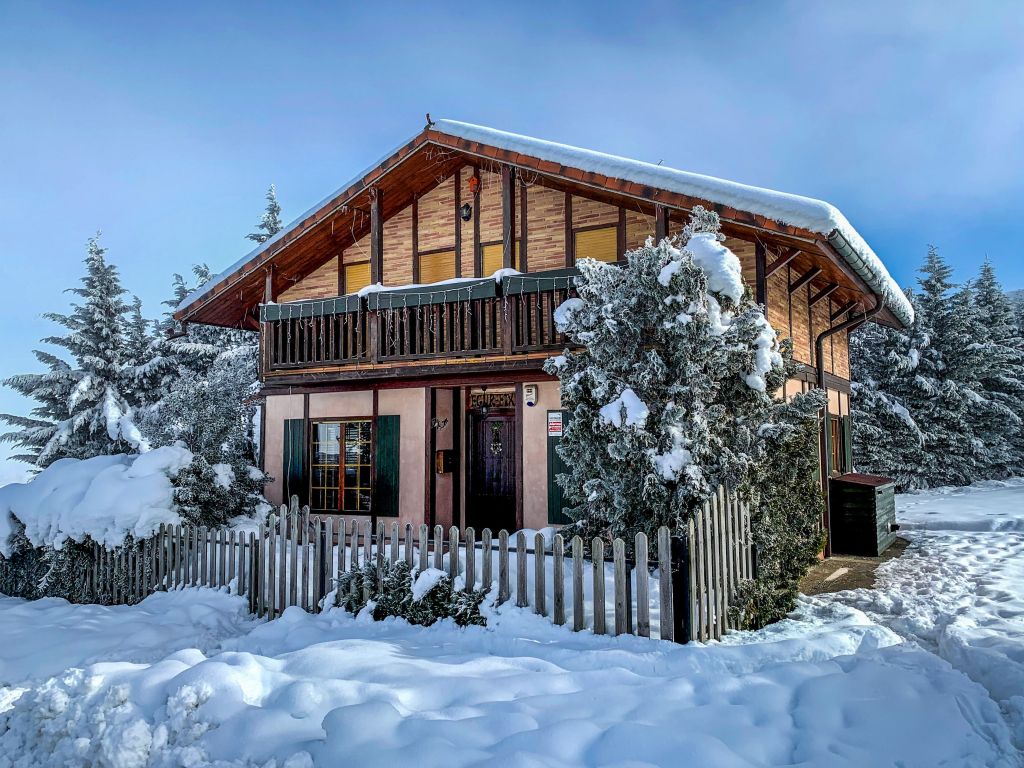
Kufri snowfall in December comes earlier and more reliably than in Shimla town. The first fall typically arrives in the second or third week, and the days around Christmas carry a moderate to high chance in most years. Even so, spells come and go. Check the forecast a few days out rather than a few weeks, and remember that snow lying on a ridge after the clouds clear is a different trip from snow falling on your balcony.
Snow lying on a ridge and snow falling on your balcony are two different trips.
Villas in Kufri tend toward the chalet, and SaffronStays Whispering Alps is a pet-friendly, wooden chalet-style estate of seven bedrooms across quiet hills and apple orchards, with wide valley views and snow-dusted peaks. It divides into a three-bedroom home on the first floor, for six to nine guests, and a four-bedroom home across the second and third floors, for eight to twelve. Each can be booked on its own, or the whole estate together for a large family or a reunion, dogs included.
When the Snow Actually Arrives
Snow tables are guides, not promises. These windows come from typical winters, and January is the strongest month everywhere.
| Base | Before the snow | Typical first snow | What to expect |
| Naggar and the Kullu valley | Clear and cold, with the range whitening above | Late November on the high ground; mid-December and after lower down | Light snow in the village; depth at Solang, Gulaba, Sethan and beyond the Atal Tunnel |
| Tirthan Valley | Cold, clear and very quiet | After 20 to 25 December at Jibhi and Shoja | Thicker snow at Shoja; the lower valley sees less; Jalori Pass can close |
| Theog and Shimla | Crisp, dry, empty lanes | Last week of December in some years, January in others | Snow in November is uncommon and rarely settles |
| Kufri | Cold mornings; a light dusting is possible in late November | Second or third week of December | Moderate to high odds around Christmas; spells, not a season |
| Before you go Check the forecast a few days ahead, not a few weeks. Carry snow chains, and prefer a four-wheel-drive or an SUV on village roads.Main highways stay open through winter but can close for a day or two after heavy snow. Check road status with HRTC or the Border Roads Organisation before setting out.Start early. Daylight is short, and hill roads ice over after dark. The last stretch to Tirthan and to Chachogi is steeper and bumpier than the highway. Allow for it. |
Which Base Suits Which Trip
| The trip | Best base | Why |
| Two people who want river, forest and silence | Tirthan Valley | Built around the river and the national park, with the fewest crowds |
| Old villages, a castle, art and slow cafes | Naggar | The old Kullu capital, with Manali’s snow a day’s outing away |
| A big group or a celebration | Theog | Houses here sleep large parties, and the orchards give them room |
| The best chance of snow near your door | Kufri | Snow arrives here before it reaches Shimla town |
| Forest privacy close to a city | Shimla forest country | Deep forest and birdsong within reach of the state capital |
Getting There from Delhi NCR and Chandigarh
Chandigarh is the hinge for both halves of this guide. From Delhi NCR the road divides there: up through Parwanoo and Solan for Shimla, Theog and Kufri, or north through Kiratpur and Mandi for Naggar and Tirthan. Overnight buses from Delhi serve both Shimla and Manali, and self-drive families treat Chandigarh as the natural pause.
The Mandi to Kullu stretch has just improved. The new Diyod and Hanogi tunnels opened to traffic on 11 September 2026 as part of the Kiratpur-Manali four-lane project, easing one of the highway’s most persistent bottlenecks, one that Naggar and Tirthan travellers both pass through. One carriageway of each twin-tube tunnel is open for now, so expect the full benefit to build.
By air, Bhuntar, the Kullu-Manali airport, serves Naggar and Tirthan, and Shimla has its own airport at Jubbarhatti with flights from Delhi and Chandigarh. The Kalka-Shimla toy train is the slower and more scenic way onto the Shimla side.
| Ready to stay beyond the Mall Road?Browse private villas across Himachal: Manali, Tirthan Valley, Shimla and Kufri. Villas in Manali | Villas in Tirthan Valley | Villas in Shimla |
Frequently Asked Questions
What are the best offbeat places near Manali to stay?
Naggar and the villages beside it, such as Chachogi, are the calmest base in the Kullu valley, with a 15th-century castle, the Roerich art gallery and old wooden houses close by. Sethan and the Hampta valley suit a day trip for early snow. Both keep the valley views without the Mall Road traffic.
Is Naggar worth staying in instead of Manali?
Yes, if the aim is quiet and character rather than nightlife. Naggar was the old capital of the Kullu kingdom, and its castle and art gallery give it a sense of place that a busy town strip rarely offers. Manali‘s snow points stay within a day’s outing while the evenings stay calm.
When does it first snow in Kufri and Shimla?
Kufri usually sees its first snowfall in the second or third week of December, earlier and more reliably than Shimla town. In some years Shimla town gets its first snow in the last week of December, and in others it waits until January. Snowfall in November is uncommon and rarely settles.
When does it snow in Tirthan Valley and Jibhi?
Snow reaches Jibhi and Shoja after 20 to 25 December, with Shoja likely to hold thicker snow. The lower valley around Gushaini sits below them and tends to see less. Jalori Pass can close to vehicles during heavy snowfall.
Which is better for a quiet trip, Tirthan Valley or Manali?
Tirthan Valley is the quieter of the two, built around a river, orchards and the Great Himalayan National Park rather than a town. Manali offers more to do in a day, including snow sports at Solang. Choose Tirthan for stillness, and Naggar for a balance of quiet and sights.
Is a private villa better than a hotel in offbeat Himachal?
For groups and families, usually yes. A villa gives private space, a cook on site, and bonfire and barbecue evenings without a shared lobby. A hotel makes more sense for a traveller who wants a restaurant, a spa or daily services on the premises.
Is it safe to drive in Himachal in winter?
The main highways are kept open through winter but can close for a day or two after heavy snow. Carry snow chains, prefer a four-wheel-drive or an SUV on village roads, start early, and check road status with HRTC or the Border Roads Organisation before setting out.
What is the best time to visit offbeat Himachal before the crowds arrive?
Late October to early December is the quiet window, with clear air, cold mornings and thin crowds. Snow is possible in December but never promised, so treat it as a bonus rather than the plan.