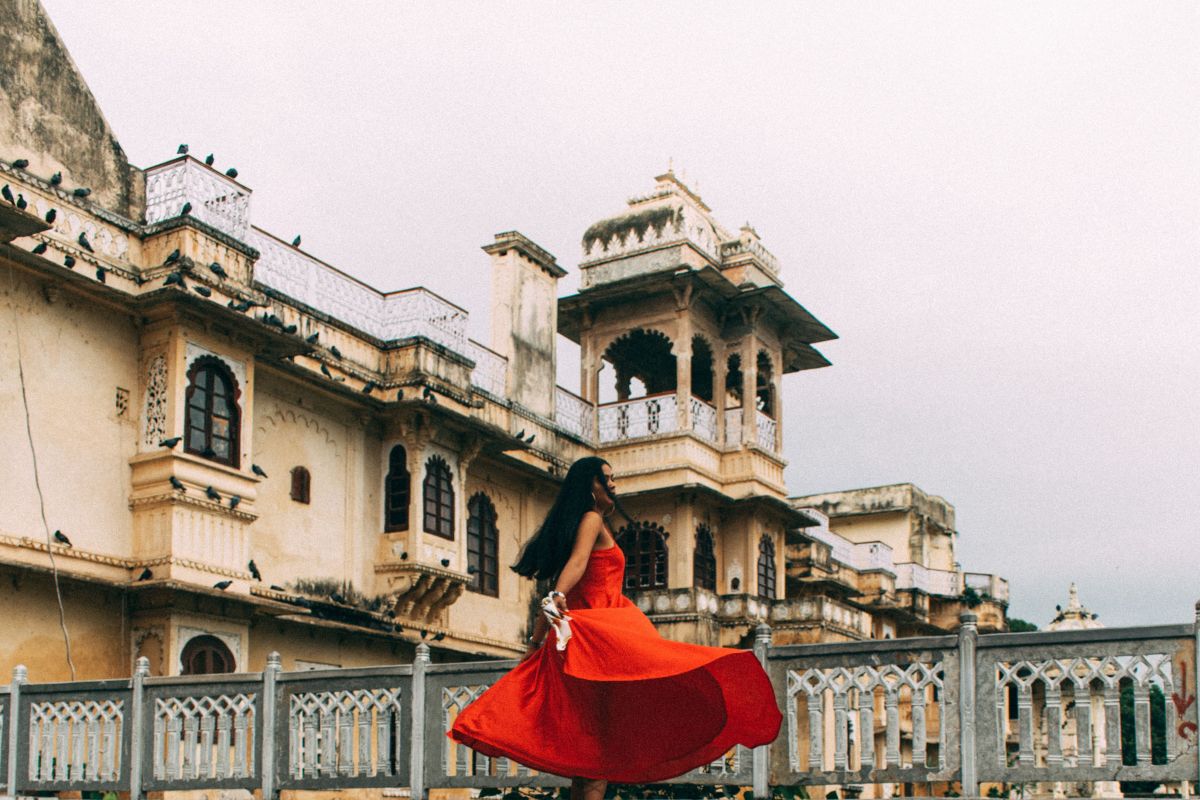
Udaipur was designed as a fortress city: a lake dug by hand, hills on three sides, a walled old town built so an army could never get a straight run at the palace. Four and a half centuries later, that same instinct for containment solves an entirely different problem. How does a woman arrive alone in an unfamiliar Indian city and feel she can walk to dinner without checking her phone every few minutes? Udaipur‘s old quarter packs nearly everything worth seeing into a compact, walkable core, framed by water on one side and hills on the other. That accident of geography, two years of deliberate policing decisions, and a food culture built substantially on women-run kitchens are turning Udaipur into the closest thing India has to a city built for women travelling on their own terms.
This is not a story about a difficult country finally producing one safe exception. Udaipur was never the wary headline city. It is a story about where a fast-growing group of travellers, Indian women choosing their own itineraries without waiting on a partner, a parent or a tour operator, are actually converging, and why the reasons hold up to scrutiny rather than dissolve into vibes.
| Quick answer Udaipur ranks among India’s most consistently recommended cities for women travelling alone, for reasons that are structural rather than reputational. Its old city is compact enough to cross on foot in a short walk, keeping most sightseeing, cafés and evening plans within reach of each other without needing transport after dark. Rajasthan Police has run a dedicated women-led patrol unit in Udaipur since late 2024, on top of an all-women police squad the city has operated since 2015. Its food scene runs substantially through home kitchens and cooking classes hosted by local women, giving travellers a way into the city’s culture that does not depend on going out alone at night. It works equally well solo, in pairs, or as a small women-only group. |
A Segment That Outgrew Its Own Statistics
Indian women are not a niche travel segment anymore. They are one of the fastest-growing ones in the country’s tourism industry. Thomas Cook India’s Women’s Travel Trend Report recorded 35 percent growth in travel demand from women in the year leading into 2025, with solo travel alone climbing 17 percent.
That growth has been building for over a decade. Outbound tour operators were already clocking annual growth of eight to ten percent in women-only travel by the mid-2020s, and the base has since widened well past Mumbai, Delhi and Bengaluru into tier-two cities such as Ahmedabad, Chandigarh and Kochi.
Udaipur shows up on nearly every list of where this growing segment is actually going, not because a marketing team decided to put it there, but because the fundamentals hold up once a woman is standing in the old city with nowhere in particular she has to be.

What Actually Changed on the Ground
Safety in a specific city is not a feeling. It is a list of decisions someone in government made and then funded. Udaipur has run an all-women police patrol on its streets since 2015, an early and unusual step for the state, focused on the kind of low-grade harassment that rarely reaches a police report but shapes whether a woman feels comfortable walking alone in the evening.
In December 2024, Rajasthan Police went further, launching the Kalika Patrolling Units: all-women teams on scooters, in a distinct blue uniform, dispatched specifically to markets, tourist sites and other public spaces where harassment complaints tend to cluster. Udaipur was named among the first cities to receive a full deployment of these units, alongside Jaipur, Kota and Jodhpur.
None of this makes Udaipur immune to the ordinary caution any traveller, anywhere, should carry. It does mean the city has put resources behind the specific worry solo women travellers raise most often, rather than leaving the answer to luck or to a brochure’s word for it.
| Practical safety notes for Udaipur The old city core, roughly Jagdish Chowk to Gangaur Ghat, stays walkable and well-lit into the evening, and most travellers keep late-night solo walking to this stretch. The statewide women’s helpline is 1091; police can be reached on 100. App-based cabs and autos are the norm after dark; agree on a fare or confirm the meter before starting. Clothing that covers shoulders and knees draws less attention inside temples and the old city’s narrower lanes, though it is a courtesy rather than a citywide requirement. Where a woman stays in Udaipur affects how much of the evening she can reach on foot, which is why lake-facing havelis inside the old city tend to work better for solo trips than stays on the city’s outer edges. |
The Places Worth Crossing the Country For
Udaipur‘s pull as a tourist destination has never needed a women’s-travel angle to justify it. The city holds one of Rajasthan’s largest palace complexes, a lake studded with island palaces, and an old quarter where a Rajput-era garden or haveli waits around most corners. What makes it worth naming specific places, rather than pointing at ‘the old city’ as a whole, is that several of Udaipur‘s best-known sites were built with women specifically in mind, which gives this destination a depth most heritage cities don’t offer a female traveller.
City Palace. Rajasthan’s largest palace complex, built up over nearly four centuries by successive Maharanas of Mewar. The mirror-work halls, courtyards and hanging gardens open onto views of Lake Pichola from the upper terraces, and the complex includes a museum of royal artifacts and costumes that gives context to everything else in the city.
Lake Pichola and Jag Mandir. The lake that gives Udaipur its nickname, with two island palaces rising out of the water. A short boat ride reaches Jag Mandir, built as a garden retreat, its sandstone elephants and pavilions best seen from the water rather than a shoreline photograph.
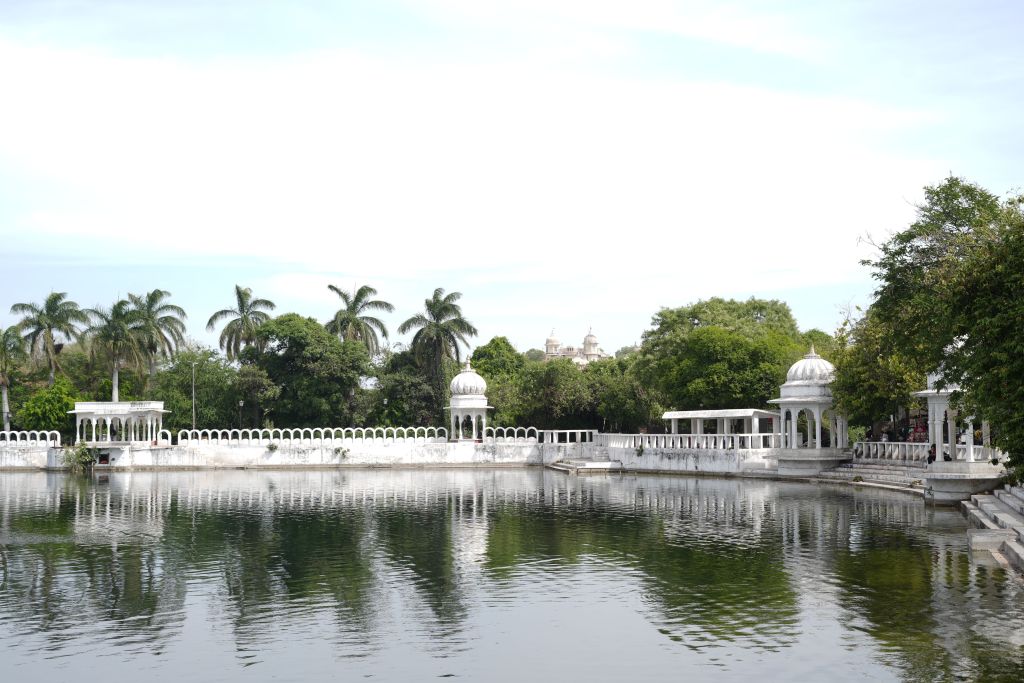
Saheliyon ki Bari. The Garden of the Maidens, built in the eighteenth century by Maharana Sangram Singh II expressly for the queen and her ladies-in-waiting. Fountains, lotus pools and marble elephants sit inside a garden that remains, unusually for a heritage site of its age, a space designed around women rather than a footnote about them.
Bagore ki Haveli. A restored haveli on the Lake Pichola waterfront, with a costume and puppet museum by day and the Dharohar folk dance performance most evenings, an easy way to spend a structured evening in company without needing to arrange it.
Fateh Sagar Lake and Nehru Park. Quieter than Pichola and ringed by the Aravalli hills, with a short boat ride out to Nehru Park’s island garden. It works well as an unhurried afternoon between more structured stops.
Bada Bazaar and Hathi Pol. The old city’s main market lanes, worth visiting for bandhani textiles, miniature paintings and silver jewellery sold by shopkeepers used to travellers who want to browse rather than be talked into a purchase.
Shilpgram. A crafts village on the city’s edge where artisans from Rajasthan, Gujarat, Maharashtra and Goa work and sell directly, liveliest during its December crafts fair but open and worthwhile year-round.
Sajjangarh, the Monsoon Palace. A hilltop fort above the city built as a monsoon retreat, and now Udaipur’s best vantage point, with a panoramic sweep of both lakes and the old city that makes sense of the rest of the city’s geography.
The Kitchens Run by Women, Literally
Udaipur‘s food scene gives solo women travellers something rarer than a good restaurant list: a way to spend an afternoon inside someone’s home. A cluster of cooking classes across the old city, several of them run for well over a decade by local women out of their own kitchens, teach Rajasthani staples such as dal baati churma, gatte ki sabzi and ker sangri hands-on, with flour on the fingers rather than a demonstration watched from a stool.
One of the city’s most recommended instructors built her classes from nothing after being widowed young, turning home cooking first taught to a single curious guest from Ireland into a business now visited by travellers from across the world.
Beyond the formal classes, Udaipur‘s street food does not require a group to make sense of it. Jagdish Chowk and the lanes leading off it serve moong dal pakoda, kachori and malpua from stalls that have held the same spot for years, all of it inside the same walkable stretch that makes the rest of the city work for a woman travelling on her own.
In Udaipur, the surest way into the city’s culture is not a guided tour. It is someone’s kitchen.

Where a Woman Stays Decides How Much of the Evening She Gets
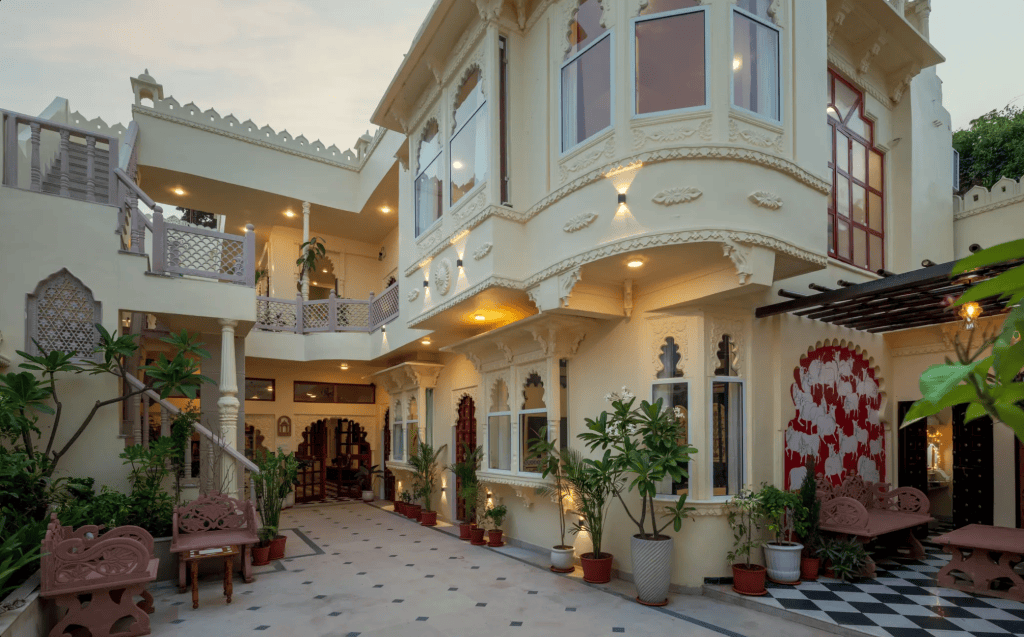
Where a traveller stays in Udaipur decides how much of the old city’s evening is actually usable. A stay away from the old quarter means arranging transport for every dinner and every sunset; a stay inside the walkable core means the evening is simply available. Rang Havelii sits a few doors from the City Palace, in a haveli its founder, Rashmi, rebuilt herself from a shell of collapsed rooms rather than handing the project to a design firm. Each of its eight rooms was built around a different Rajasthani craft tradition, worked out directly with the artisans who practise it, from Molela wall art to camel-bone inlay. It is the kind of stay that puts a woman inside the old city rather than adjacent to it, which for anyone travelling without a group is close to the entire point.
| Plan your Udaipur trip inside the old city’s walkable core Browse SaffronStays’ villas and havelis in Udaipur, all within reach of the lakes, the old quarter’s lanes and its rooftop cafés. Explore Udaipur stays on SaffronStays |
Frequently Asked Questions
Is Udaipur safe for solo female travellers?
Yes. Udaipur is consistently ranked among India’s safer cities for women travelling alone, supported by a compact, walkable old city and a dedicated women’s police patrol unit active since late 2024. Ordinary travel caution still applies, as it would in any unfamiliar city.
What is the best area to stay in Udaipur as a woman travelling alone?
The old city core, close to Lake Pichola and the City Palace, is the most practical base. It keeps sightseeing, cafés and evening plans within walking distance, which reduces how often a solo traveller needs transport after dark.
Is Udaipur safe for women at night?
The old city’s main lanes, from Jagdish Chowk toward the ghats, remain busy and well-lit into the evening, and most solo travellers restrict night-time walking to this stretch. App-based cabs and autos are widely available for anything further.
What should a solo woman do in Udaipur in two to three days?
A workable pace covers the City Palace and old city lanes on the first morning, a Lake Pichola boat ride to Jag Mandir the same afternoon, a cooking class or the Bagore ki Haveli evening performance on day two, and the Sajjangarh sunset view and old city cafés on day three.
Are there women-run cooking classes in Udaipur?
Yes. Several long-running cooking classes across the old city are hosted by local women directly out of their own kitchens, teaching Rajasthani dishes such as dal baati churma and gatte ki sabzi in small, hands-on sessions.
What is the women’s helpline number in Rajasthan?
The statewide women’s helpline is 1091. The general police helpline is 100. Both are active in Udaipur.
Is Udaipur good for a women-only group trip?
Yes. Its walkable old city, cluster of heritage stays, and activities suited to small groups, including cooking classes, boat rides and evening performances, make it a practical base for a women-only trip rather than only a solo one.