
Table of Contents-
- How Pets Became the Third Decision-Maker in Indian Family Travel
- The Trip Planning Conversation Has Changed
- What This Looks Like Inside an Indian Family
- Why the Home Matters More Than the Itinerary
- Planning a Family Trip with a Pet: What Actually Matters
- The Shift That’s Still Unfolding
- FAQ
How Pets Became the Third Decision-Maker in Indian Family Travel
Every family trip has always had two conversations running underneath it. Where does everyone want to go, and where can everyone actually agree to stay. For a long time, those two questions were answered by the same people: the parents planning the trip, perhaps a grandparent weighing in on how much walking is involved, children negotiating for a pool.
There is a third voice in that conversation now, and it does not speak, but its preferences are shaping the plan all the same.
Across urban India, the family pet has moved from being a logistical complication that trips work around, to a factor that shapes the trip itself. Not because pet owners have become more sentimental. Because the trip is no longer being planned without them.
The Trip Planning Conversation Has Changed
Five years ago, a family with a dog typically had two options before a vacation. Leave the dog with a relative, or leave the dog at a boarding facility, and plan the trip as though the dog were not part of the household for those few days. The dog’s comfort was not part of the destination decision. It was a separate arrangement, handled quietly before the actual planning began.
That sequencing has reversed for a meaningful share of Indian families. Booking.com’s global travel data shows nearly 15 million searches for pet-friendly accommodation in 2025, making it one of the platform’s most-used filters, and the report notes this pattern is particularly pronounced among Indian travellers, with a strong preference for road trips over flights when a pet is coming along. When the search for a stay starts with a pet-friendly filter rather than a destination name, the pet has stopped being an afterthought in the plan. It has become one of the inputs that decides the plan.
This is not a small shift in behaviour. It is a shift in who gets a vote.
What This Looks Like Inside an Indian Family
The particular shape this takes in India is worth sitting with, because it does not look quite like the trend elsewhere.
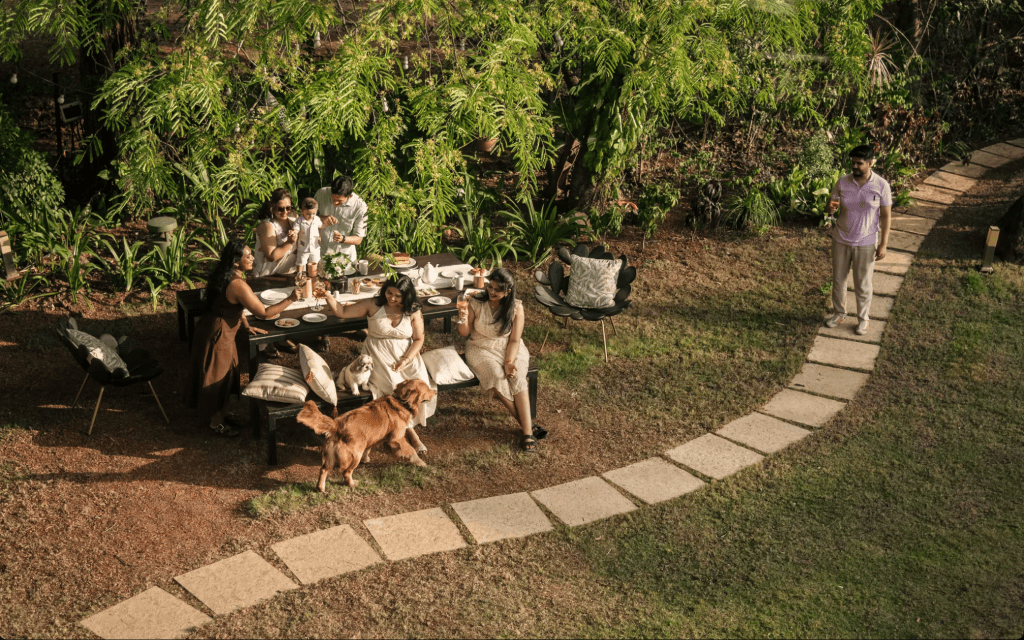
Indian family travel has always tended to be multi-generational. A trip is rarely just parents and children, it is often three generations travelling together, with a spread of needs that already has to be reconciled: a grandparent who needs a ground floor room, teenagers who want independence, toddlers who need a flexible schedule. The pet has entered that same negotiation, not as a separate issue, but as one more consideration sitting alongside the others.
What that means in practice is that the destination conversation is no longer just about what everyone in the family wants to do. It is about what kind of home can hold everyone comfortably, including the one member of the family who cannot ask for what they need out loud. A hotel room with strict pet policies and shared corridors solves for the human members of the trip. It does not solve for a nervous dog navigating a lobby full of strangers, or an elderly cat that needs a quiet corner away from a group of unfamiliar guests.
A private home with a garden, a gate, and no other party sharing the property at the same time solves for both conversations at once. That is very likely why the shift toward pet-inclusive trip planning in India has moved in step with a broader shift toward whole-home stays for family travel generally. The two decisions were never really separate to begin with.
Why the Home Matters More Than the Itinerary
There is a pattern worth naming here, because it changes how families are choosing to plan.
When a pet is part of the trip, the itinerary tends to loosen. Families travelling with a dog are less likely to pack a schedule with back-to-back sightseeing, because someone needs to be around to let the dog out, walk it, settle it into an unfamiliar space. The trip becomes less about moving through a destination and more about settling into one place for longer.
This is a quiet but real change in what families are optimising for. A few years ago, the family holiday brief was often about covering ground, how many places, how much sightseeing, how full the itinerary looked when it was over. A pet in the group changes that calculation. The question stops being how much can we see, and becomes how comfortable can everyone, including the dog, actually be here.
That is a different kind of holiday. It rewards a spacious home over a packed schedule, a private lawn over a checklist of attractions, a slower few days over a rushed few. For families choosing where to stay, this has meant weighing not just how many bedrooms a property has, but whether it has outdoor space, how private the grounds are, and whether the people running the property understand that a nervous dog needs a few hours to settle in before anyone expects it to be comfortable.

Planning a Family Trip with a Pet: What Actually Matters
For families navigating this for the first time, a few things consistently make the difference between a stressful trip and a genuinely restful one.
- Private outdoor space matters more than proximity to attractions – A dog or cat that can move between an indoor room and an enclosed garden without a leash and without passing other guests settles in far faster than one confined to a single hotel room.
- Fewer transitions mean less stress for the animal – A single home for the length of a stay, rather than multiple stops on a circuit, gives a pet time to actually relax rather than repeatedly readjusting to a new space.
- Ask about the property before you ask about the itinerary – Whether the grounds are fenced, whether other guests share the property at the same time, and whether someone on-site is used to having animals around, all matter more to how the trip actually feels than how many places are on the plan.
- Build in slower days, not just pet-friendly ones – A pet-inclusive trip works best when the schedule itself has room for a pet’s pace, not just a policy that allows one along.
- Documentation is still worth carrying, even for a domestic trip. A current vaccination record is a small thing to pack and a genuinely useful one to have on hand.
The Shift That’s Still Unfolding
None of this suggests every family trip in India now revolves around a pet. It suggests something narrower and, in a way, more interesting: that the presence of a pet has become one of the handful of factors, alongside a grandparent’s needs or a child’s school calendar, that genuinely shapes where and how a family chooses to spend its time together.
That is a meaningful change from five years ago, when the question was simply whether the dog could come at all. Today, for a growing number of Indian families, the question has moved further upstream, into the actual decision of where to go and what kind of home to spend those days in.
The trip has not changed shape because pets suddenly matter more. It has changed shape because families have started planning as though they always did.
FAQ
Are pet-friendly villas better than pet-friendly hotels for a family trip?
For families travelling with pets, whole-home stays tend to work better because they offer private outdoor space and remove the need to navigate shared hotel corridors, lobbies, and other guests. This usually means less stress for the pet and a more relaxed trip for the family.
What documents do I need to travel domestically in India with a pet?
A current rabies vaccination certificate is commonly asked for at interstate checkpoints, and a general vaccination record is worth carrying regardless of how you’re travelling. Requirements can vary by mode of transport, so it’s worth checking specifics if you’re flying rather than driving.
How far in advance should a pet see the new home before the family settles in?
There’s no fixed rule, but giving a pet a few quiet hours to explore an unfamiliar home before the rest of the trip’s activities begin tends to make the following days noticeably calmer for both the animal and the family.
Do multi-generational family trips work well with a pet along?
Often, yes, particularly in a private home setting. A pet’s needs, like a grandparent’s need for a ground-floor room or a child’s nap schedule, tend to fold into the same planning conversation rather than working against it, especially when the property itself has room for everyone.
What should families look for when choosing a pet-friendly home for a vacation?
Private, enclosed outdoor space, minimal transitions between arrival and settling in, and a caretaker or host familiar with animals tend to matter more to how the trip actually feels than the number of nearby attractions.