A Walk to Remember

Sacred Grove

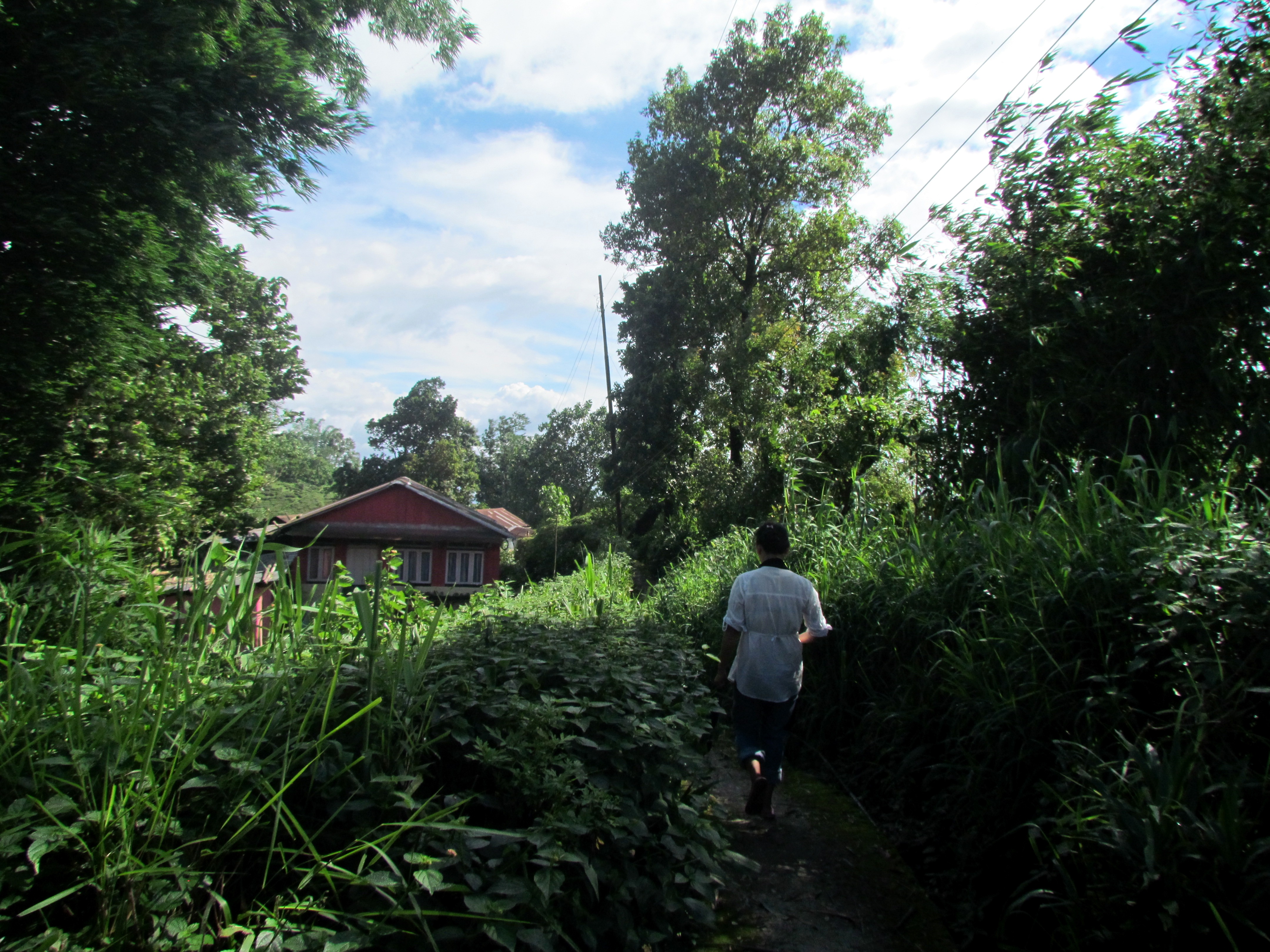
It was a pleasant, overcast day. We’d taken hints from the slightly clueless locals and driven off road down a beautiful valley. We soon found the wind mills we were looking for but there was no visible road in sight to get there. Getting off the car, we leisurely walked through a field and across a steady flowing stream before we reached an entrance of sorts. The wind mill now loomed right over us and a beautiful farm house stretched in front.

We were in Mawphlang, a  village in Meghalaya that lies at a distance of about 26 kilometre from the capital city, Shillong. We had heard enough great things about James Perry’s property  to make our way there ourselves. Built from scratch by the host Mr. James himself, with wind mills and a solar grid to generate power, it is a perfect hideout from the hustle bustle of the city. There are rolling fields and farms surrounding it, while a serene forest and the hills lie only a short trek away. If you’re not distracted by the stunning natural surroundings, you could spend your time snuggled up with a book in the loft of their wooden cabins or indulge in their home cooked delicacies.

Mawphlang
The farm house lies around distractingly beautiful natural surroundings

Tearing ourselves away from the property, we made our way to the Sacred Grove next. Spread across an area of 78.6 hectares , with 400 species of trees and a number of monoliths, the forest holds cultural relevance and serves as a religious symbol to the local Khasi tribe. As we began our walk, our guide, Sanborlang,  informed us of the sarcifices that are offered at regular intervals to seek divine blessings for victory, good harvest season and the betterment of society. A chief is elected from the Lyngdoh community and the four communities -Blah, Kharsiang, Khaunai and Sohliya – serve and protect the grove by electing a minister each.

Walking through the still forest – its stillness interrupted only by our hushed conversations with Sanborlang and the occsaional chirruping of birds from a distance – is a surreal experience. Since you can’t pluck, break or take anything out of the forest, fallen timber trees have taken beautiful moss-laden forms on the ground, and other than the narrow concrete pathway, the rest of the forest floor is beautiful shades of orange-brown-green.


Sacred Grove
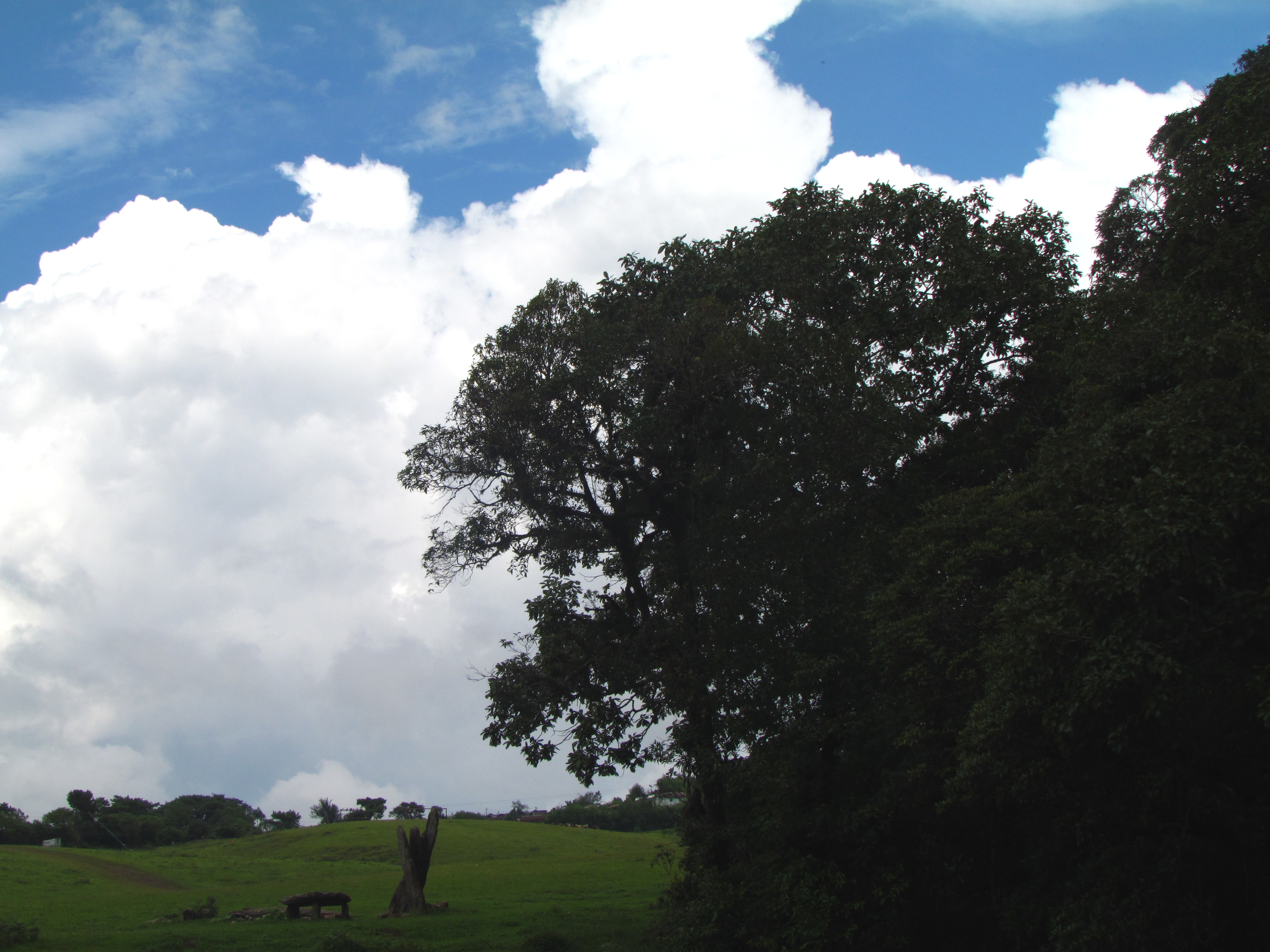
The beautiful canopy of the Sacred Grove
Scared Forest
These monoliths, serving as places of sacrifice, lie scattered through the forest
Sacred Grove
A visit to the Sacred Grove is a beautiful and surreal experience

It began to rain while we were there and we had to retire back sooner than we’d liked, but somehow, the experience left us tranquil for the rest of the day. Nature tends to have astounding effects on us, and sometimes, it leaves me at a loss for words.


Find more about James’ Listing:

View details of the Home

View Host Profile


About the Traveller: Born and raised in Assam, Sarita Santoshini has been travelling around India and penning down her experiences over the past year. You can read more of her travelogues in her blog- http://crumbsfromyourtale.wordpress.com .


The Bridges that Grow

Meghalaya trekking

By Bhavani

A couple of years ago, three of us went on an all-girls trip to Meghalaya . Deciding against popular tourist haunts, we skipped the main Cherrapunji town and made our way to a hotel 15 km in the outskirts instead. The Cherrapunjee Holiday Resort, contrary to the name, is a family run guesthouse perched on top of a hill that boasts better views than Cherrapunji itself. It definitely lived upto every bit of the promise! The host told us about a range of the activities we  could engage in and one caught our fancy—the root bridges. How could there be roots that were directed to grow across the rivers? Root bridges that could bear 50 people at one time? There were four bridges close by and we decided to do the easiest trek down to the one that lay in Umunoi. A determined trio went to bed but the less sleepy duo set out the next morning with some fruit, water, and a backpack stuffed with gumption.

Meghalaya trekking
Locals run down the slopes as we crawl. Photo by Bhavani

Our guide, a local from the village, was wearing flip-flops! I looked at our expensive ‘trekking’ shoes designed to navigate this terrain and asked, ‘Will you manage?’ He smiled and shook his head with that all-over nod that probably meant ‘Yes I will’. At the beginning, the trek seemed simple, but soon the road turned into a steep descent over rough stone steps covered in  moss. Moss in May? I wondered to myself. Doesn’t it grow in monsoons or maybe it’s… WHAM! My friend had fallen flat on her behind. And that set the tone for the rest of the trek. Two falls and one ‘sole-less’ shoe later we reached the base of the hill with zero pride. That ‘easy’ trek moved to difficult in our dictionary, but all pain vanished when we saw the root bridges in front of us.

Intertwined roots ran from one bank to the other forming a bridge of comfortable width to carry two abreast. It had a side railing for support, formed by yet another root. The bridge was dynamic and growing in strength with every passing day. Our guide told us about his Khasi ancestors, the masterminds behind these bridges. The roots of the rubber tree are directed to grow horizontally through hollowed betel nut trunks. These bridges take over 10 to 15 years to grow and can extend over 50 to 100 feet. They are believed to last over 500 years with little ‘maintenance work’. In a place that once received the highest amount of rainfall in the world , other wooden bridges might rot and decay, but these, thrive.

Living Root Bridge
The roots grow thick and strong across the river; you can hardly imagine a stream rushing below. Photo by Bhavani.

‘Living bridges’ our guide called them—I rolled those words over my tongue, liking the sound of it and the sheer ingenuity on display! I removed my shoes and walked across barefoot, feeling the firm roots, the soft mud and the stones all forming a carpet for me.. Below me, the river went by rapidly, as I lingered above, secure. Nature goes out of its way, literally, to help man. Do we reciprocate?

A little time later, rested and content we turned to go back to our hotel. We reached the base of the path and it hit us—a steep descent meant a steep ascent! We stood there staring up at the path in front of us with our mouths open and eyes round like saucers.Would we ever reach the top?

P.S. We were at our lowest levels of fitness then; others completed the entire trek in  4 hours with little difficulty. Today, we might too!

 To explore stunning homestay options in Meghalaya : Homestays in Meghalaya

About the traveller: Bhavani is a traveller by choice, photographer by interest and writer by desire. She has crafted 12 heritage walking tours for Audio Compass and her articles have been published in Indian Express, Lonely Planet India, The Alternative and Unboxed Writers. She is in a dedicated relationship with chocolate, her husband and lower case – though confused about the order of preference! She blogs at  merry to go around and tweets @bhavan1.

Memories of a dreamy village

We stood there gaping at the bird’s-eye view of the rivers Teesta and Mahananda , patches of inhabited land that was Siliguri and its neighbouring towns, and a clear strip of land that we were told was Bagdogra airport. The wind continued to blow us over but we were too adamant to take pictures which could come close to replicating what we were observing with our naked eye.

Tejas and I had just about managed to get ourselves into the Darjeeling Himalayan Railway for Kurseong that morning. After what had been an extremely slow and scenic ride, with the sight outside our window never falling short of pine and juniper trees, we’d reached the small hill town of Kurseong. There on, we’d taken a shared taxi to reach Chimney, a village that lay a rugged drive away. Other than the half-baked information about the village deriving its name from a 23-foot tall abandoned Chimney that dated back to the British era, there was little else we knew about the place. We weren’t expecting much, until our cab screeched to a halt outside a beautiful house with yellow washed walls and a blue roof, and the driver called out for Amal, our host.


Bird's-eye view from Chimney
The stunning bird’s-eye view from Chimney
Chimney
The Chimney that the village is peculiarly named after


Hugging ourselves against the strong wind and the biting cold, we made our way into the cosy house that had the prettiest attic room I’ve ever seen. Old classics and a few travel magazines lay scattered about the living room and guest room, both made partially of wood, and there was a certain old-world charm to the place. We spent the next few hours taking short walks around the village, gazing at the bird’s-eye view and watching the sky burst into shades of pink and orange during sunset. A short walk downhill from the home stay, kids ran about in the make-shift football field that stretched in front of the juniper forest, while uphill, the chimney lay hidden by tall wild grass in a small patch of land.


Attic room, Chimney
The pretty attic room in the home stay
Victoria on her way to school on a rainy morning
Victoria smiles her way to school on a rainy morning


Later that night, we accompanied Amal’s daughter, Victoria, as she made drawings of little princesses on her notebook, a talent she’s picked from her painter dad whose framed religious and landscape paintings adorned the walls. Minutes later, over a delicious dinner of chicken curry and rice, Mr. Amal Rai also modestly showed us a copy of a travel magazine dating back to 2010 where the writer wrote fondly about the very same home stay and their excellent hospitality.

I particularly remember the lines about their terrace. It made us tip toe up the stairs ourselves. It was cold and windy and a few stray clouds obstructed our view. But it was clear enough for us to spend a while watching the night sky flicker with a million bright stars and in the distance, the urban lights flickered in unison. I have been recalling that moment every now and then. In my head, I retire to the night in that beautiful village, and for the moment, it’s all okay.


Chimney
Tejas captured this beautiful view from the terrace.

Find more about Mr. Amal’s listing:

https://www.saffronstays.com/view/romantic-getaway-in-a-hill-top-home-stay-OaZGrf294H482ICK


About the Traveller: Born and raised in Assam, Sarita Santoshini has been travelling around India and penning down her experiences over the past year. You can read more of her travelogues in her blog- http://crumbsfromyourtale.wordpress.com .

Empowered in a beautiful tea estate

Makaibari home stay

Born and raised in the tea gardens of Assam, I’ve always related home to the sight of dark green leaves glistening in the sun, the sound of large dryers whirring in the factory, and the smell of garden fresh tea lingering in the house. Habituated to the flat plains though, this was the first time that I was laying eyes on tea plantations that stretched across vast slopes of hills with greener mountains at their backdrops. In Darjeeling, the tea gardens provided a more dramatic and stunning sight than I was used to and I definitely wasn’t complaining.


Makaibari
The beautiful expanse of Makaibari Tea Estate

On a rainy morning, Tejas and I reached Makaibari Tea Estate, our last destination in Darjeeling. Famed for producing the finest quality of organic tea and also the most expensive Silver tips tea, Makaibari hosts travellers and tea enthusiasts from across the globe every year. Seven villages and a dense forest cover characterise the tea estate.

As we zigzagged our way through narrow lanes of the villages that day, visiting the houses of the tea pluckers on our way, we noticed a pattern more striking than that of multiple cups of flavorful tea. The tea estate, through its various little policies over the years, had given rise to an empowered women population. Other than encouraging women to set up responsible home stays so they could generate extra income for their household, Makaibari had also begun the trend of electing female garden supervisors. In fact, our host, Mrs. Maya Devi was a garden supervisor herself, with a sizable number of tea pluckers under her, whose work she inspected and managed on a daily basis.  We met Mrs. Bhumika, who actively took part in garbage management in the area, and Mrs. Verbina who encouraged her children to improve their English and learn about different regions and their cultures from her guests.

The most inspiring person we met, however, was Mrs. Ranju. Guiding us to her village of Phoolbari that lay a scenic walk way, she introduced us to home stay owners there. She constantly asked us for our suggestions and feedback, and advised families on ways to improve their service and hospitality. We learnt how passionate she was about propagating her culture to people from different parts of the world. In fact, she had been organising and taking part in local cultural shows out of the same passion. It was evident how the position of power, the ability to be entrepreneurs and contribute to the family income, had encouraged these women to be fearless and confident.


Makaibari home stay
Mrs. Maya Devi with her grandson
Makaibari home stay
Following Mrs. Ranju to her scenic village

Before we said said goodbye, Mrs. Ranju left us with a beautiful Nepalese song and told us how much these interactions with working women encouraged her. I hope she realises that women like her inspire us way more.


About the Traveller: Born and raised in Assam, Sarita Santoshini has been travelling around India and penning down her experiences over the past year. You can read more of her travelogues in her blog- http://crumbsfromyourtale.wordpress.com .