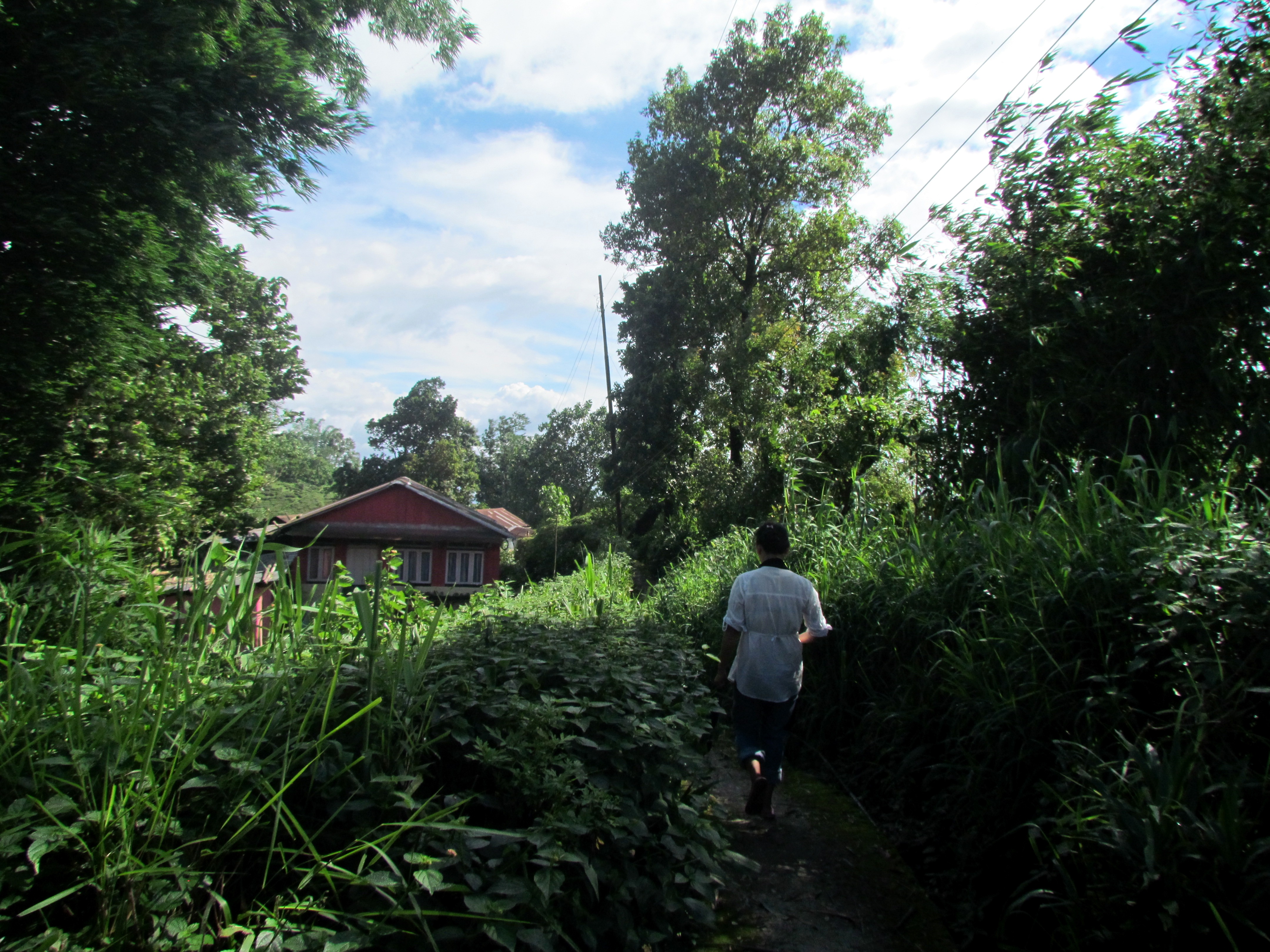
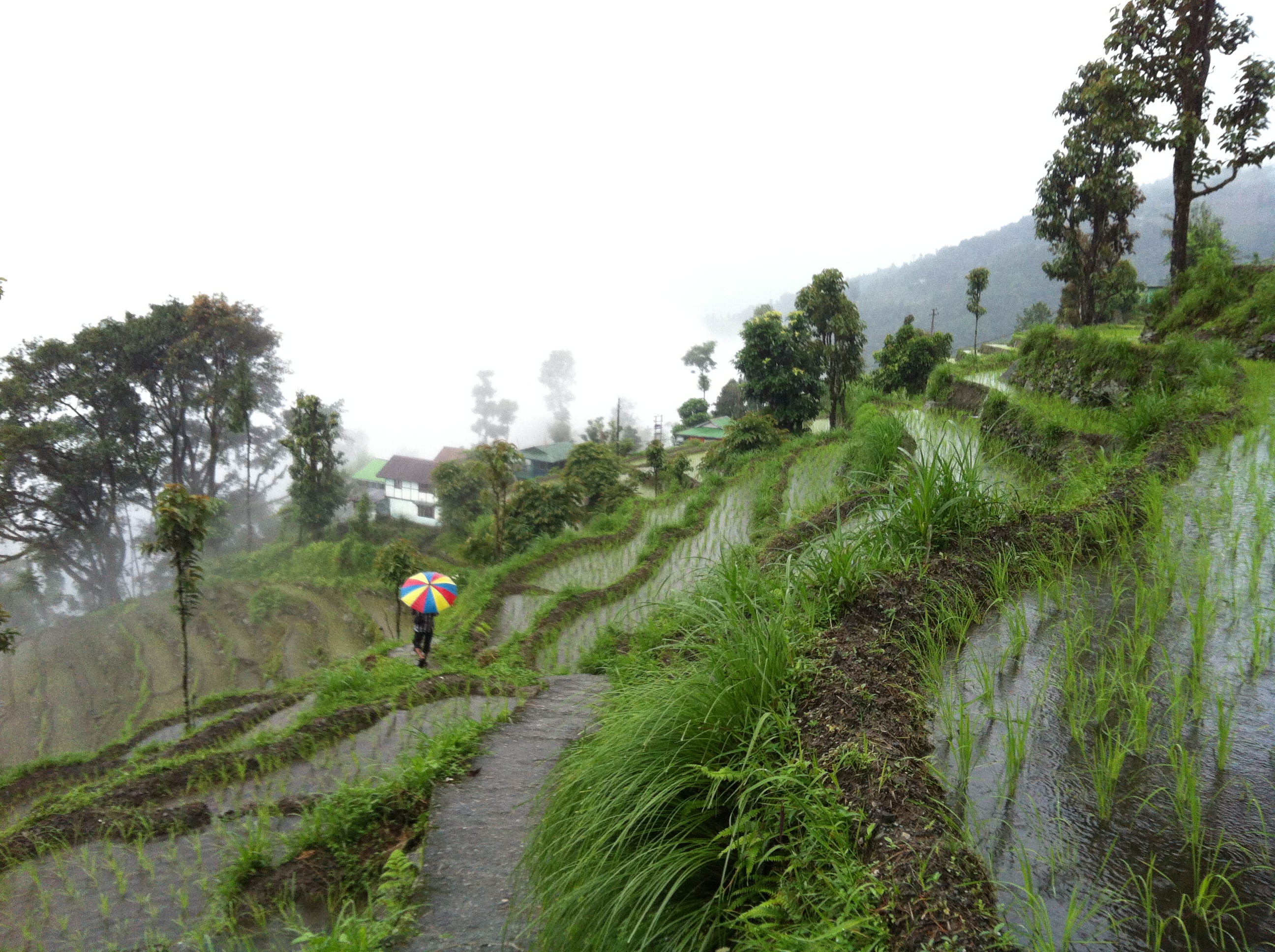
How a Homestay Host enriched my Ladakh experience

Homestays in Ladakh

By Elita Almeida

The air was crisp and clean. Even at an altitude of 14000 feet above sea level with reduced oxygen levels, I could bet my lungs were happier than they would ever be in my urban smog-ridden existence back home. I was happy here. This felt like home too. May be it was, from another time in another life.

His eyes shone like the full moon in a salt desert. And as he held our gaze he said, “There’s a reason why we’ve met. You and I. There’s a reason why I had the honour of welcoming you into my home. You could have stayed the night with any other family in this village; but it happened to be mine…”

His words met a lump in my throat. They were certainly having an effect. I averted my gaze and met another’s; we’d both felt it. Somewhere prayer-flags were fluttering in the air.


So who was this man?

“I prefer walking. That way we take in the landscape in a more intimate and connected way. In a manner which we couldn’t while whizzing past it in a car”, said Vinod our group facilitator. That’s how a trek starting from Likir via Yangthang to Hemishukpachen was integrated into our experience of Ladakh. And that’s how I met Mr. Namgyal and his wife as one of our homestay hosts in Hemishukpachen, a village about 70 km from Leh.

Homestays in Ladakh
Staying connected with the landscape. Photo by Elita
Homestays in Ladakh
Starting off the trek at Likir. Photo by Elita

This was my second time in Ladakh but a first with a group of travellers – and rather coincidentally, solo travellers. We were a group of 11 who were received very warmly by Namgyalji and his wife – literally and figuratively as this included a hot bowl of soup just moments after we’d entered their humble abode. We’d trekked for about 20 kilometers that day alone and were famished – but not so famished that a soupy meal of Maggi couldn’t fix! Their home was a quaint weathered 2-storeyed structure that told a story of simplicity unmarred by the lures of present day’s advancement and of harsh winters endured from the yesterday’s gone by.

Homestays in Ladakh
Completing the trek at the outskirts of Hemishukpachen. Photo by Elita

Community Living

The next morning Namgyalji took us around the village and explained the concept of community farming. “We cultivate over the same land in rotation by alternating between plots that nearer to a source of water supply and those that are not. So during some periods my family has to toil more to bring water to the plot that we are cultivating, and during the next cycle of cultivation, another family will do the same”, he said. “Families here have been doing this for generations. I remember my father and my grandfather following these practices.”

A remote village in distant Ladakh had so much to teach us about living in harmony!

He further deepened our understanding of the Ladakhi culture, “A person is considered rich if they have enough produce from their farm to last them nine years, and middle-class if they have enough to last them six years… the poor have enough to help them survive three years!” He clarified that this meant that the family had enough without having to move a muscle for a given number of years!

I was left with the question: Could you and I with our educational qualifications and ‘jobs’ ever dare to claim to have enough – let alone for how long the duration?

Homestays in Ladakh
Putting the ‘co’ in community the Ladakhi way. Photo by Elita

The Sacred Groves

Later Namgyalji took us to the sacred grove of junipers that were on the outskirts of the village. Amongst it there was a 2500 year old juniper tree that is revered as the mother goddess. Sacred groves are synonymous with nature worship and traditions. We were asked not to pluck or take anything outside the sacred grove with us, not even leaves that had fallen to the ground. This grove is protected and maintained by the local community and forest department. I later read up on scared groves and learnt that there weren’t too many juniper trees in Ladakh – so a grove of junipers at Hemishukpachen was indeed magical. At the sacred grove, stillness spoke many a volume.

Homestays in Ladakh
Namgyalji at the sacred grove. Photo by Elita
Homestays in Ladakh
The 2500 year old juniper. Photo by Elita
Homestays in Ladakh
The Sacred Groves in Ladakh. Photo by Elita

As I reflected back at my time thus far in Ladakh I realised that it was this same stillness that was my staff as we’d trekked, but not before I’d stumbled over my own feet. The trick I gradually learnt was in synchronising the rhythm of my breath with the rhythm of my step. There was something comforting, calm and quiet about Ladakh – the barren hills, simple pastures, the flowing rivulets, the breeze…like some strange magic – the kind that reassures and doesn’t alarm or disturb

The ‘Little Tibet of India’, I realised, definitely had a lot to teach me on the Ladakhi ways of reasoning than I’d seemed to have come prepared for!

—————–

Want to make the most of your Ladakh trip? Visit our website to book your stay in one or more of the 141 verified Homestays in Ladakh. 


About the author: Elita is Nondescript. Nonchalant. Observer. Witty. Sarcastic. Skinny. Nomadic Thunker. Square Peg. Sporadic Blogger. Solo Traveller. Blogs at nomadicthunker.blogspot.inskinnygenus.blogspot.com. Tweets @NomadicThunker.
A Glimpse of Rural Rajasthan

Homestays in Bishnoi

Having spent ten days in four beautiful, vibrant cities of Rajasthan, I wanted to experience its rural life before heading to Udaipur, my last destination of the trip. That is when I met Dhanraj, an enterprising and friendly local who organises safaris to a few villages in the Marwar region of Rajasthan. He welcomed me to his sprawling Farm house in Jhalamand, a Bishnoi village that lies a 20 min drive away from Jodhpur. The house stood there surrounded by farms, a garage lined with exquisite Jeeps and a shed that was home to two beautiful Marwari horses. His family shared that space with that of his brother’s and they all warmed up to me at the very instant.  A brief chat and a hearty breakfast of hot aloo parathas and a glass of Lassi later, I started my village safari.

Here is a glimpse of the day that followed:


Homestays in Bishnoi

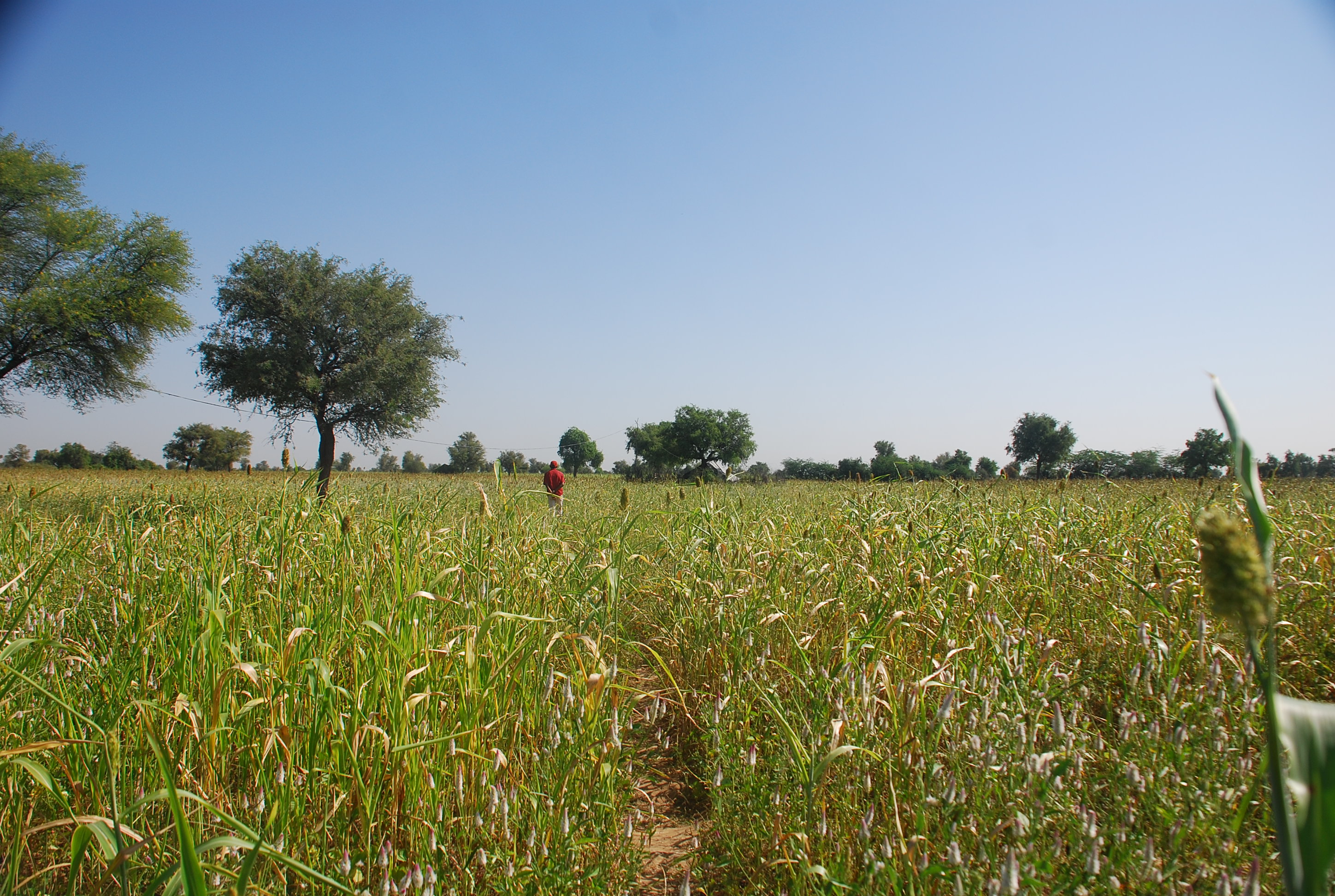
I followed Dhanraj as he took me for a walk through the vast millet fields of Guda Bishnoi village. The community is known to worship nature and for its beliefs in the conservation and protection of all forms of life.

As we parked our vehicle and walked our way to one of the farmers’ houses, it lay empty as the entire family was busy in the fields. It was harvest season and the family had moved to a make-shift tent under the shade of a tree. As I sat down with them, they offered me a cup of hot sugary tea, and even though neither of us understood the language the other spoke, there was a warmth in their company. The youngest bride then offered to show me another make-shift tent that lay at a distance. To my surprise, it was complete with a Cable TV, refrigerator, table fan and cupboard! She then pulled out a large photo album from a steel suitcase – her wedding album – and smiled as she handed it to me.


DSC_4342

DSC_4336

The village of Chota Guda is home to the Raika or Shepherd community of Rajasthan. The community is known to lead a semi-nomadic life and for their ability to handle large herds of animals in the harsh environment. While they traditionally bred and managed camels for the Maharajas for hundreds of years, they now manage herds of sheep and goats as well. While I was there, the children were very enthusiastic about showing me around their houses, most of which were simple one room establishments with a small fenced space for the sheep outside. These kids, used to tourists visiting their homes time and again, were more camera friendly than I had expected!


DSC_4366

Singhasni village is one of the places where some of Rajasthan’s finest pottery comes from. In a display workshop set up for tourists, I met Nizammudin, who created some beautiful clay elephants, puppets and vessels with such ease.


DSC_4371

In the same workshop space, I met Nathu Khan, a young man of the Chippa community which is know for its block painting skills. I heard him explain the way vegetable dyes are used to turn simple handloom cotton into works of art. He spread out colorful bedsheets in front of me, each more beautiful than the other, and showed me the casts that were used to create imprints on them.  The international tourists buy his bedsheets in bulk, he said, and I could see why.  Interestingly, he also turned out to be a Harry Potter fan!


Homestays in Bishnoi

The last village that I visited was Salawas – home to the weavers community that makes carpets and wall hangings using cotton, silk and camel hair among other things. Leela Dhar sat there with a radio and hummed to himself as he worked on a carpet that he said would take another week to finish. He dejectedly spoke of juggling between farming and weaving owing to the work being too slow and tiresome, but immediately lit up as Dhanraj spoke of the time he’d made a carpet that was 150 feet long, ordered to be used for the staircase in Buckingham Palace!


Homestays in Bishnoi

While I travelled before the Siberian cranes perched themselves in Guda Bishnoi Lake, one of my colleagues, Tejaswinee, was there recently and was lucky enough to enjoy this sight with her family.


Bishnoi homestay

photo 1 (2)

After my safari, I went back to Dhanraj’s farm house and spent the rest of the evening sitting on a Charpai and  discussing everything from pets to adventure sports to education with his little kids. The day went by too soon but it is one that I most fondly remember from my trip.

Oh, and if you’re a fan of good looking automobiles, the picture above is that of a Russian UAZ, a jeep once used by the Soviet Army and acquired by Dhanraj owing to the vast reliable network of jeep enthusiasts that he is friends with.


My safari was arranged by Mr. Dhanraj of Bishnoi Village Safari Private Tours. You can book your safari by reaching him at +91 9829126398 or by visiting their website www.bishnoivillagesafari.com.


About the Traveller: Born and raised in Assam, Sarita Santoshini has been travelling around India and penning down her experiences over the past year. She currently works as the Content Editor for SaffronStays. You can read more of her travelogues on her blog- http://crumbsfromyourtale.wordpress.com.

Empowered in a beautiful tea estate

Makaibari home stay

Born and raised in the tea gardens of Assam, I’ve always related home to the sight of dark green leaves glistening in the sun, the sound of large dryers whirring in the factory, and the smell of garden fresh tea lingering in the house. Habituated to the flat plains though, this was the first time that I was laying eyes on tea plantations that stretched across vast slopes of hills with greener mountains at their backdrops. In Darjeeling, the tea gardens provided a more dramatic and stunning sight than I was used to and I definitely wasn’t complaining.


Makaibari
The beautiful expanse of Makaibari Tea Estate

On a rainy morning, Tejas and I reached Makaibari Tea Estate, our last destination in Darjeeling. Famed for producing the finest quality of organic tea and also the most expensive Silver tips tea, Makaibari hosts travellers and tea enthusiasts from across the globe every year. Seven villages and a dense forest cover characterise the tea estate.

As we zigzagged our way through narrow lanes of the villages that day, visiting the houses of the tea pluckers on our way, we noticed a pattern more striking than that of multiple cups of flavorful tea. The tea estate, through its various little policies over the years, had given rise to an empowered women population. Other than encouraging women to set up responsible home stays so they could generate extra income for their household, Makaibari had also begun the trend of electing female garden supervisors. In fact, our host, Mrs. Maya Devi was a garden supervisor herself, with a sizable number of tea pluckers under her, whose work she inspected and managed on a daily basis.  We met Mrs. Bhumika, who actively took part in garbage management in the area, and Mrs. Verbina who encouraged her children to improve their English and learn about different regions and their cultures from her guests.

The most inspiring person we met, however, was Mrs. Ranju. Guiding us to her village of Phoolbari that lay a scenic walk way, she introduced us to home stay owners there. She constantly asked us for our suggestions and feedback, and advised families on ways to improve their service and hospitality. We learnt how passionate she was about propagating her culture to people from different parts of the world. In fact, she had been organising and taking part in local cultural shows out of the same passion. It was evident how the position of power, the ability to be entrepreneurs and contribute to the family income, had encouraged these women to be fearless and confident.


Makaibari home stay
Mrs. Maya Devi with her grandson
Makaibari home stay
Following Mrs. Ranju to her scenic village

Before we said said goodbye, Mrs. Ranju left us with a beautiful Nepalese song and told us how much these interactions with working women encouraged her. I hope she realises that women like her inspire us way more.


About the Traveller: Born and raised in Assam, Sarita Santoshini has been travelling around India and penning down her experiences over the past year. You can read more of her travelogues in her blog- http://crumbsfromyourtale.wordpress.com .


Going off the grid in Sikkim

Terraced farms Payong

It was 5:30 pm and the quiet forest seemed to have suddenly come alive. A downpour later, the howling wind violently rustled the trees. The kids in the house were running about, singing songs in Nepalese. My host was out plucking pears for all of us while his wife stood stirring curry in a steel saucer in the kitchen. For a moment, it seemed like a regular day in a Sikkimese household, until I looked out.

There was neither another person nor another house in sight. The view from my small two-bedded room, done in green and red, was mostly shrouded in mist. The clouds had enveloped the mountains and I had been watching them shift and change shapes for a while. There were trees as far as I could see, in shades of green that I did not even know existed.

I was in Lingee Payong, a remote twin village in South-east Sikkim that lies at the base of Maenam Wildlife Sanctuary. Untraceable on the map and with very little information about it available on the internet, the village was undoubtedly the most beautiful discovery during my ten-day long Sikkim trip.

lingee payong view
The breath-taking view from the window


A week before I was to leave for my assignment for SaffronStays, I had gotten in touch with Mr. Gitanath Koirala, the General Secretary of Comprehensive Tourism Development Committee Payong, who patiently helped me plan the trip over countless phone and email conversations. Once in East Sikkim, three nights in Gangtok and half a day in Assam Lingzey later, I finally met him in the transit town of Singtam. We were to travel to his village together. I shared a packed cab with his wife and two little kids for an hour until it dropped us on a deserted road. There on, with our bags carefully strapped to our shoulders, we were to trek up to Mr. Gitanath’s house, which, like all other houses in Payong, was built on a solitary slope. The 500 meter uphill trek, through dense forests at one point and through narrow trails by the edge of the hill at another, was enough to exhaust a non-trekker like me.  Panting and slipping, I managed to reach Mr. Gitanath’s house after about forty-five long minutes, his two kids trotting much ahead of me. As I finally put the heavy bag down, caught my breath and looked around, I was instantly convinced that the struggle had been worth it. Away from all forms of civilization, the family lived there in a small house amidst acres of self-grown vegetable farm, orange orchards and fodder trees. The distant mountains stood at the backdrop like a protective shield.

Almost all houses in Payong were built the same way and lay scattered at considerable distance from each other across the slope of a hill. This made access to outsiders very difficult, unless guided by a villager himself. The locals here enjoyed their space and solitude. Lingee, the other half of the twin-village, was quite different. It lay above Payong and could be reached by driving through a scenic forest road. All its houses, however, were located by the motorable road.

Lingee Payong trek
Mr. Gitanath hiking with his little daughter
Lingee Payong trek
Hiking through dense forests in the rain


Until a few years ago, Lingee Payong was a prosperous village owing to the growth and sale of large cardamom in huge quantities. Mr. Gitanath himself recalls producing 1200 kilos of it in one season.  In the year 2000, however, a viral disease attacked the crop, drastically reducing its growth by 90 percent. To make up for the sudden loss of income, the locals took to cutting and selling timber – a highly unsustainable alternative. Soon, alarmed by their own desperate measures, the village gathered and formed a committee that decided to use tourism to generate income. With no knowledge as to how to do so, the committee took the first step by sending two people to North Sikkim for tourist guide training. The young guides returned, having witnessed some form of village tourism and discussed its feasibility with the rest of the locals. The Ecotourism and Conservation Society of Sikkim, a non-governmental organization, helped promote the twin-village and provided tourism  related training to locals. A hall was built for tourism related group activities a few months later and a number of home stays have opened their doors to guests ever since.

Considering the remoteness of the location, I was amazed by how ambitious the locals had been and how much they’ve achieved over the years. Mr. Gitanath went on to show me an extremely detailed five year tourism plan for the area that was mapped by a German traveler a few months ago and one that they want to implement to the minutest detail. He told me about their collaboration with Shankara Institute of Technology in Rajasthan whose students visit the village every year for one of their papers. And finally, before we sat down for a hot meal made of organic vegetables, he showed me architectural sketches, made with the help of international travellers, for home stays that will be built using the grant sanctioned by Sikkim Tourism Department in the future.

Terraced farms Payong
Hiking through beautiful terraced farms to reach the home stays in Payong.
Terraced farms Payong
This little kid gives me company while I try to catch up with Mr. Gitanath.


He doesn’t own a home stay himself, but as we hiked through the village the next morning, he introduced me to hosts and their homes with such zeal that I was often lost for words. Located in perfectly unspoilt locations, by the terraced farms, forests and sacred trees, these homes radiated warmth and hospitality like no other. Locals spoke to me in half-baked Hindi, offering hot tea and steamed corn cobs to keep away the cold. It wasn’t long before I stopped complaining about the pouring rain and my aching feet. It was all worth it, I reminded myself.

After spending a fulfilling morning with the locals, I hesitantly sat in the car to proceed with the rest of my journey around Sikkim. But before I could leave, Mr. Gitanath let me in on a few secrets about the place. He told me about the hanging bamboo bridge at a height of 200 feet that allowed you a glimpse of a beautiful waterfall only after you had walked a certain distance. He also told me about the sacred cave that lay at a depth of about 120 feet and villagers visited it every Shivratri, with ropes and lamps, to offer prayers. He recalled the scenic camp site that he had spent chilling days in and the nights when fireflies lit up the forest around his house. His daily life was an extraordinary treat for us travellers and he was visibly excited to show it to the world.

Lingee Payong bridge
This suspended bridge in the midst of a beautiful forest lies on the way from Payong to Lingee


As I write this, it’s almost been a month since I spent those 24 hours in the beautiful twin village of Lingee Payong. I am counting on the lingering warmth, and the many stories, secrets and memories to take me back there again.


Sikkim driver
My driver, Mr. Bhim, driving me to darjeeling at the end of my Sikkim trip

Note: From Lingee Payong, I travelled to the rest of South and West Sikkim with Bhim. He is an excellent driver, reliable and has a good knowledge about the roads and the regions around the state. He is also very friendly and made great company during the trip. You can avail his services by calling him at  +91 9733220703.

Continue reading “Going off the grid in Sikkim”