
| QUICK ANSWER Pushkar Fair 2026 runs from Tuesday 17 to Tuesday 24 November, according to the Incredible India events calendar. The fair ends on Kartik Purnima, Tuesday 24 November, when pilgrims take the holy dip in Pushkar Lake at dawn and float lamps on the water at dusk. The same day is Guru Nanak Jayanti, a gazetted holiday, so Saturday 21 to Tuesday 24 November makes a four-day break with one day of leave. Entry to the fairground is free. Rooms in Pushkar sell out at several times their usual rate in fair week, so many travellers stay in Jaipur and drive in for the fair days. |
The Pushkar Fair opened on 17 November. For eight days, a small temple town on the edge of the Thar fills with camels in beaded harnesses, men competing for the longest moustache and pilgrims who believe its holy lake was born from a lotus.
Here is the twist. Many of the camels will be gone before the full moon on 24 November, and the fair you see depends on the day you arrive.
Come in these first days and the dunes belong to herders and their camels, bargaining over glasses of chai. Come at the weekend and the Mela Ground fills with camel races and moustache contests. Come on the full moon and the whole town turns to its lake, where pilgrims bathe at dawn and float lamps on the water at dusk.
November is one of our favourite months in Rajasthan, and the Pushkar Fair is a big part of why. At SaffronStays we look after private homes around Jaipur, and every year our guests ask us the same thing. How do we see the fair without fighting for a room in Pushkar?
This is our answer. We will show you which day suits your family, why a holy town hosts a camel fair at all, and which hill a goddess climbed in anger and never left. We will point you to the sweets worth the queue, and plan the Guru Nanak Jayanti long weekend around a villa in Jaipur, when every room in Pushkar is taken.
Table of Contents-
Pushkar Fair 2026 Dates, and Why the Day You Arrive Matters
The Pushkar Fair runs on the moon. It follows the Hindu lunar calendar and always ends on Kartik Purnima, the full moon of the month of Kartik, which is why its dates shift by weeks from one year to the next. Incredible India lists Pushkar Mela 2026 from 17 to 24 November. The detailed programme of events is usually released close to the fair, so we always suggest checking the day’s schedule with Rajasthan Tourism before you set out each morning.
| Date | What happens | Best for |
| Tuesday 17 to Thursday 19 November | Livestock trading at its busiest, with herders camped on the dunes | Photographers and anyone who wants to see the working fair |
| Around Friday 20 November | Prabodhini Ekadashi opens the holy bathing days | Pilgrims |
| Saturday 21 and Sunday 22 November | Cultural programme and competitions on the Mela Ground | Families and first-time visitors |
| Monday 23 November | Pilgrims pour in ahead of the full moon | Travellers arriving for the snan |
| Tuesday 24 November | Kartik Purnima snan at dawn and deep daan at dusk, also Guru Nanak Jayanti | Pilgrims and festival watchers |
Why a Holy Town Hosts a Camel Fair
Pushkar is one of the holiest towns in India, often called Tirth Raj, the king of pilgrimage sites. So why does it fill with camels every November?
The answer is the calendar. Herders from across Rajasthan walk their camels, horses and cattle in from the desert in the same week that pilgrims arrive for the lake, and the two crowds have shared the town for generations. The herders camp on the sand west of town and trade for days. Around them has grown the cultural fair most visitors come for, with races, contests and folk music on the Mela Ground.
The pilgrimage is the older story. Hindu tradition holds that Brahma performed a great yajna at Pushkar between Kartik Ekadashi and Kartik Purnima, which makes a dip in the lake during these days especially meritorious. Pilgrims arrive in their thousands for the final days, and the 52 ghats around the lake fill from before sunrise.
The herds themselves have changed. Camel numbers at the fair fell from around 10,000 a little over a decade ago to about 3,000 in 2024, as grazing land shrank and a ban on moving camels out of Rajasthan dried up the trade. The state eased that ban in October 2025, and traders are hoping for busier fairs ahead. Horses now take up much of the trading ground. Many herders who sell early head home before the final weekend. If the camels are what your family most wants to see, our advice is simple. Come early in the week.
Pushkar holds two festivals in one week. The traders come for the camels and the pilgrims come for the lake.
| OUR FAVOURITE PUSHKAR FACTS Pushkar means blue lotus– Legend says the lake formed where a lotus fell from Brahma’s hand. Red turbans mean Raika– The Raika, Rajasthan’s traditional camel herders, are known by their red turbans and white clothes. |
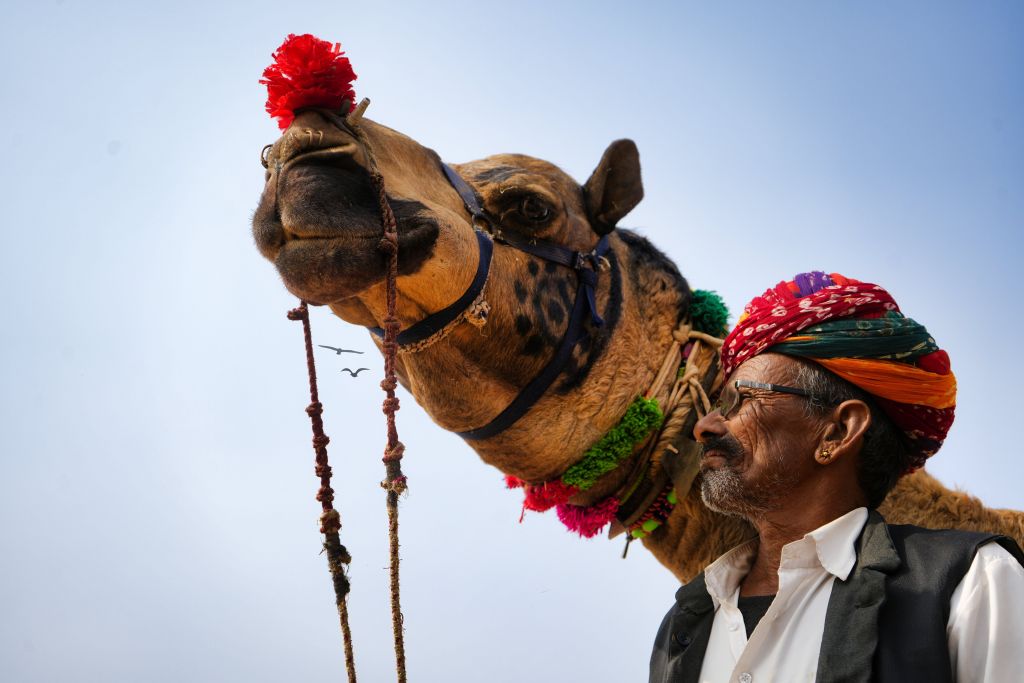
What to See at the Pushkar Mela
The Pushkar Mela takes its contests seriously, and some of them are wonderfully unusual. Here is where we would want you to be, and when.
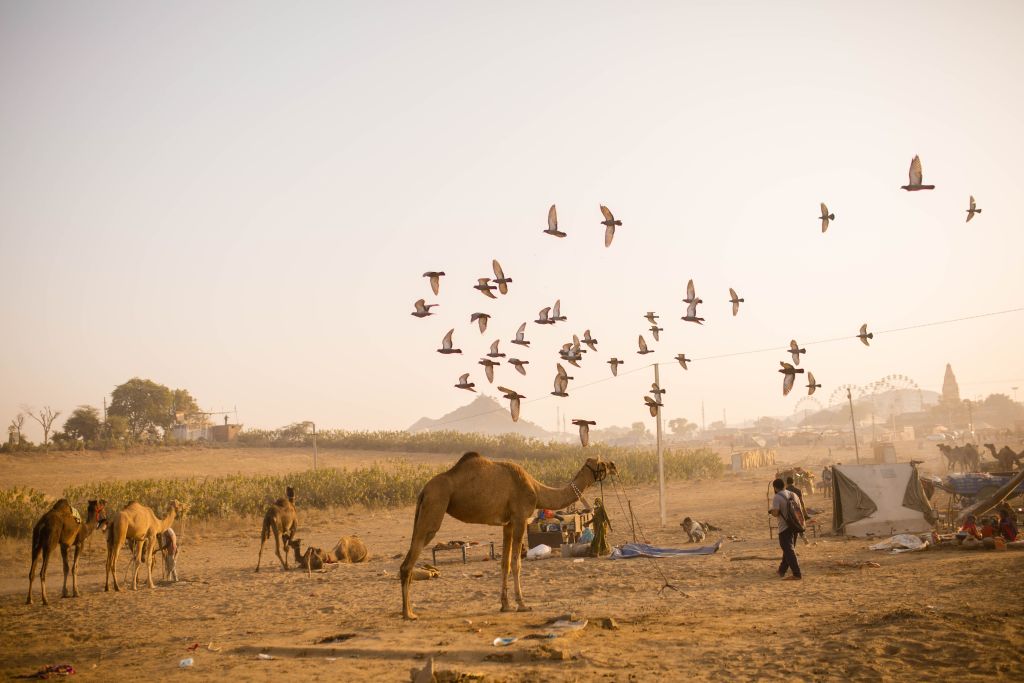
The Camel Camps at Sunrise
Reach the dunes beyond the Mela Ground before first light. Herders brew tea over small fires, camels in tasselled harnesses wake in long rows and the light turns gold within minutes. This is the hour photographers wait all year for, and the one our guests talk about most when they come back. Look for the red turbans of the Raika herders, and for camels whose coats have been sheared into patterns. Ask before you photograph people up close and keep a respectful distance from the animals.
Competitions on the Mela Ground
Through the week the Mela Ground hosts the events that made the fair famous. Look out for camel races and camel decoration contests, the longest moustache and turban tying competitions, tug of war and matka phod, where teams race to break a clay pot hung high in the air. In past years visitors have been invited to join a friendly cricket match against a local team. Kalbeliya dancers and folk musicians perform through the afternoons and evenings.
Hot Air Balloons at Dawn
In recent years hot air balloons have risen over the fairground at sunrise, drifting above the camel camps and the lake. Flights are limited in fair week, so book with an operator you trust before you arrive.
Sadar Bazaar
Sadar Bazaar winds from the lake through the old town. In fair week its stalls fill with silver jewellery, mirrorwork textiles, leather goods and colourful bangles, and the lanes stay busy well after dark.
Kartik Purnima Snan: The Morning Pushkar Turns to Its Lake
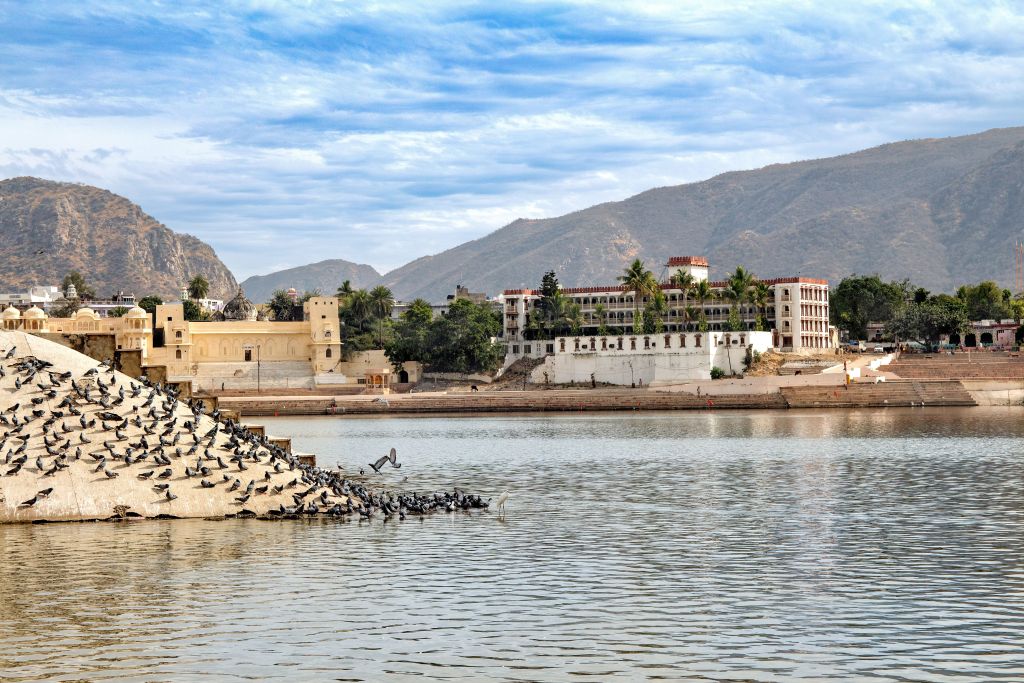
On the last morning of the fair, the crowd changes direction. The dunes go quiet and the lanes fill with pilgrims walking down to the water. Kartik Purnima falls on Tuesday 24 November 2026, and it is the spiritual peak of the fair. Pilgrims rise before dawn and walk down the ghats for the holy dip, then queue for darshan at the Brahma Temple. Brahma Ghat, Varaha Ghat and Gau Ghat are among the most revered of the 52 ghats around Pushkar Lake. Gau Ghat also holds a piece of national history. Some of Mahatma Gandhi’s ashes were immersed there, and it has been known as Gandhi Ghat ever since.
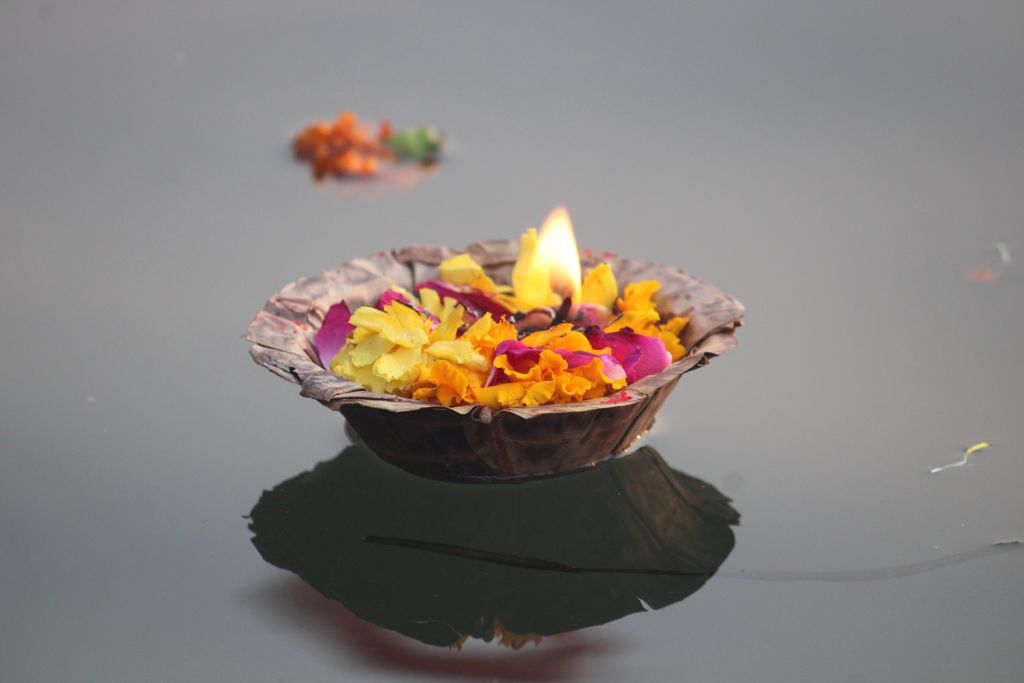
As evening falls, families float small clay lamps filled with ghee and marigolds on the water. This is deep daan, and it turns the lake into a field of small flames. Arrive early for a place on the steps, as the ghats are at their most crowded on the full moon. It is the quietest, most moving hour of the whole fair, and the one we urge every family to stay for. In past years the fair has closed with a maha aarti at the lake and fireworks over the water.
| GHAT ETIQUETTE AT PUSHKAR LAKE Leave your shoes at the top– Footwear stays off on the ghats and near the water. Dress modestly– Cover shoulders and knees, and carry a scarf. Ask before you photograph– Bathing is a private act of faith, so ask first and lower the camera during the aarti. Agree on any offering first– Priests may offer flowers for a puja and then ask for a donation. Settle the amount before you accept, or decline politely. Carry a change of clothes– Bring a towel and dry clothes if you plan to take the dip. |
Beyond the Fairground: Pushkar’s Temples and a Famous Curse
Pushkar’s temples come with one of the great family dramas of Hindu legend, and it is the story we love telling guests on the drive in. Hear it first and the town’s hills start to make sense.
Brahma Temple
Brahma was ready to begin his great yajna at Pushkar, the story goes, but his wife Savitri was late. The ritual needed his consort, so Brahma married Gayatri and went ahead. When Savitri arrived and found another woman in her place, she cursed Brahma to be worshipped almost nowhere on earth. Gayatri softened the curse, and Pushkar kept its temple.
That is why temples to Brahma are so rare in India, and why so many pilgrims travel here for this one darshan. Step inside the red-spired Jagatpita Brahma Temple and you will find the four-faced Brahma with Gayatri beside him. Go early in the morning for a calmer visit.
Savitri Mata Temple on Ratnagiri Hill
Savitri, says the legend, walked up Ratnagiri Hill and stayed there. Her temple now crowns the hill above town, reached by a steep climb of several hundred steps or by ropeway. Gayatri’s temple stands on a smaller hill at the other end of the lake, so the two goddesses still face each other across the water.
Go at sunrise or sunset, when you can see the lake on one side and the fair’s dunes on the other. Expect queues for the ropeway in fair week and check its hours on the day.
Old Rangji Temple and Varaha Temple
When the Brahma Temple is crowded, slip into Old Rangji Temple or the ancient Varaha Temple near the lake. Both make a quieter stop between the fairground and the ghats.
What to Eat in Pushkar, a Pilgrim Town With a Sweet Tooth
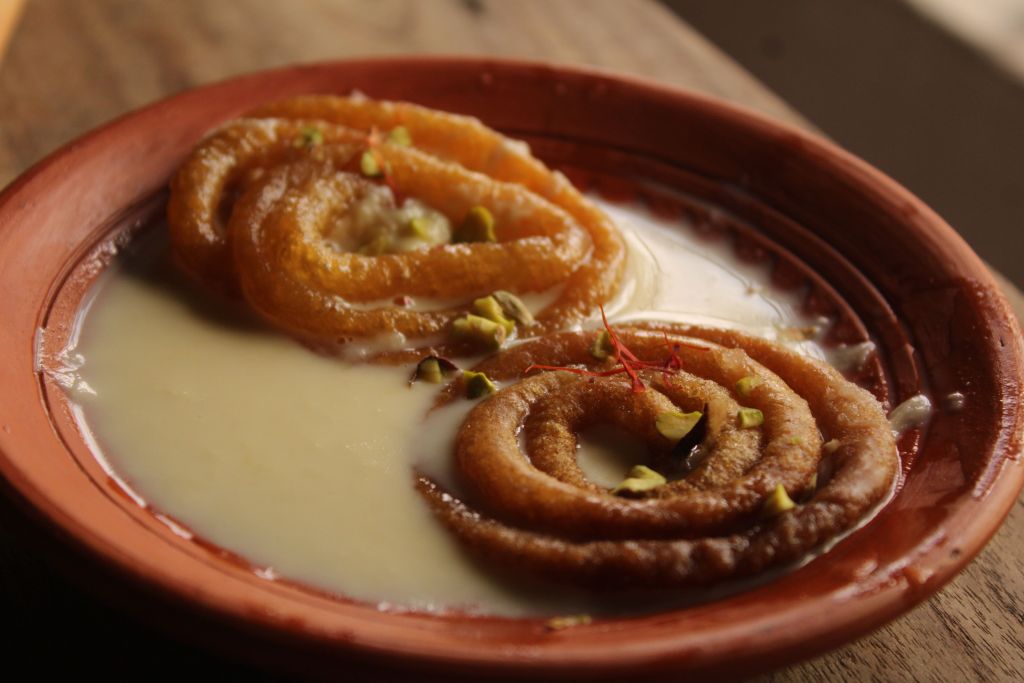
Pushkar is a pilgrim town, so its kitchens are vegetarian and the town keeps alcohol, meat and eggs off its menus. Go hungry anyway. When our guests ask what to eat, we start with the sweets. Start the morning with poha and jalebi in Sadar Bazaar, then order kadhi kachori, a crisp kachori in tangy yoghurt kadhi, for a late breakfast.
In Halwai Gali, the lane of sweet makers, eat malpua with rabri hot from the pan. Cool down with a gulkand lassi sweetened with rose petal jam, and keep dal baati churma for a long lunch on a fair day.
Pushkar or Jaipur: Where to Stay for Pushkar Fair 2026
Every Pushkar Fair plan comes down to one question, and it is the one we hear most often. Pay fair-week prices to sleep in Pushkar, or stay somewhere calmer and drive in?
Staying in Pushkar puts you a short walk from the ghats at dawn. In fair week, though, rooms and tent camps fill months ahead and rates climb to several times their usual level. Jaipur gives you more choice and more space, with forts and bazaars for the days between. The trade-off is the drive, which means early starts on fair mornings. We would rather be honest about that, so here is how the two compare.
| Pushkar | Jaipur | |
| Reaching the ghats at dawn | A short walk | An early start by road |
| Rooms in fair week | Very limited and priced high | Wide choice |
| Space for a family or group | Small rooms and tents | Private villas with pools and lawns |
| Food and drink | Vegetarian and alcohol-free town | Pure-veg kitchens or full menus at your villa |
| Days between fair visits | A small town, quickly seen | Amer Fort, City Palace and the old bazaars |
| Best for | Pilgrims staying close to the lake for the snan | Families and groups on the long weekend |
How to Reach Pushkar From Jaipur
Doing the Pushkar Fair from Jaipur comes down to an early start and the right route. This is the one we recommend to our guests.
- By road. NH48 runs from Jaipur towards Ajmer past Kishangarh, the marble town. Take the bypass towards Pushkar rather than driving through central Ajmer, which slows right down during the fair. Traffic near the Mela Ground is controlled in fair week, so ask your driver where to park and walk the last stretch.
- By train. Ajmer Junction is the main railhead for Pushkar, with trains from Jaipur, Delhi, Ahmedabad and Mumbai. Taxis run over the hill from Ajmer to Pushkar.
- By air. Jaipur International Airport has the widest choice of flights. Kishangarh Airport sits closer to Pushkar, though its schedule is limited.
Driving from Delhi or Gurugram, NH48 brings you to Jaipur first, so a villa there breaks the journey before the fair. From Ahmedabad and the rest of Gujarat, the same highway reaches Ajmer before Jaipur, so see Pushkar on the way in and rest in Jaipur after. Travellers from Mumbai, Pune and Bengaluru can fly into Jaipur and drive out from there.
Planning more of Rajasthan this winter? Our Jodhpur RIFF guide maps the road between Jodhpur, Udaipur and Jaipur.
A Four-Day Pushkar Fair Plan for the Guru Nanak Jayanti Long Weekend
Tuesday 24 November is both Kartik Purnima and Guru Nanak Jayanti, a gazetted holiday. Take Monday off and you have four days, from Saturday 21 to Tuesday 24 November. Here is how we would spend them.
Day 1, Saturday 21 November: Arrive in Jaipur
Drive or fly in, settle into your SaffronStays home and spend the evening by the pool or around a bonfire in the garden. If you have energy left, head into the walled city for an evening walk past Hawa Mahal and through Johari Bazaar.
Day 2, Sunday 22 November: A Full Day at the Fair
Leave before dawn to reach the dunes for sunrise among the camel camps. Spend the late morning at the Mela Ground competitions, eat your way through Sadar Bazaar at lunch and take the ropeway up to Savitri Mata Temple for sunset. Drive back to Jaipur for a late dinner.
Day 3, Monday 23 November: Jaipur at an Easy Pace
Sleep in after the long fair day. See Amer Fort in the late morning and keep the afternoon free at the villa. If you plan to take the dawn snan, turn in early.
Day 4, Tuesday 24 November: Kartik Purnima
Pilgrims set out in the small hours for the dawn snan at Pushkar Lake and darshan at the Brahma Temple, then head home from Pushkar. If you prefer a quieter morning, join the Gurpurab celebrations at a Jaipur gurdwara, where kirtan and langar run through the day, before the drive home.
| OUR TIPS FOR THE FAIR Book the extras early– Balloon flights, guides and taxis for fair mornings fill fast. Carry cash– Small stalls, ropeway counters and parking attendants often prefer it. Dress in layers– Late November mornings and evenings are cool and afternoons are warm. Wear closed shoes– You will walk on sand, dung and crowded steps. Keep valuables close– The Mela Ground and the ghats get packed on the final days. Choose rides with care– Pick camel and horse rides whose animals look well fed and rested. |
Where to Stay: Our Private Villas in Jaipur for the Pushkar Fair
Fair days in Pushkar are long, dusty and wonderful. At the end of one, what you want is space, quiet and a hot shower with no queue outside the door. That is the feeling we build every SaffronStays home around.
As India’s largest managed private villa brand, we have three homes around Jaipur that we would happily send any family to for the fair. Two of them run pure vegetarian kitchens, so pilgrim families can carry the spirit of Pushkar to the dinner table. Once you book, our Care Team helps you plan meals and experiences around your fair days.
SaffronStays Villa Serreno
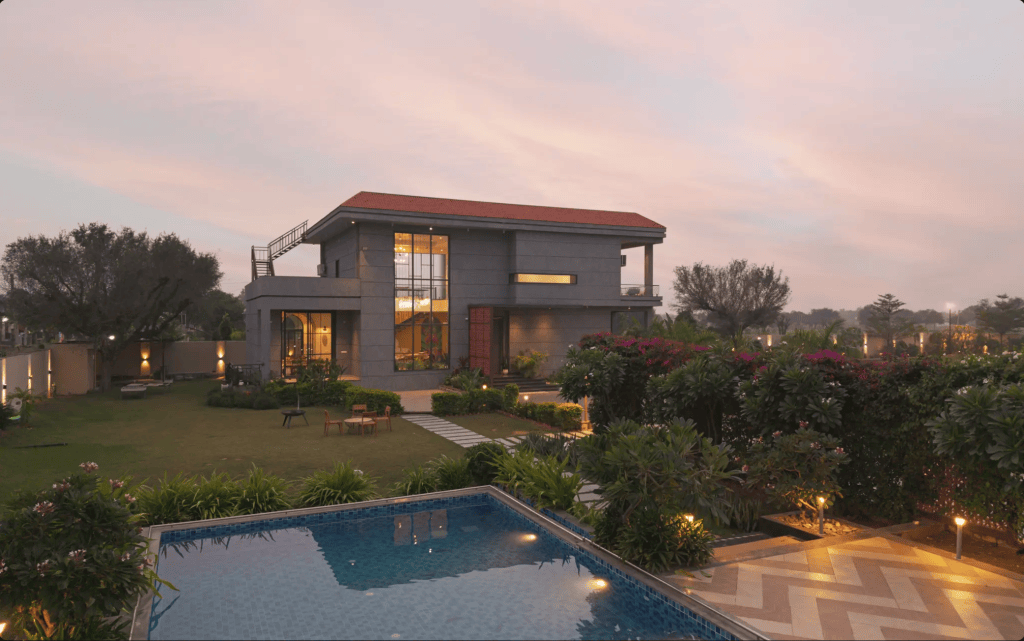
Villa Serreno brings a little of Bali to the edge of the desert. The five-bedroom home is built around calm, minimal spaces, with a private pool, wide lawns and a breezy verandah for slow mornings. It sits on the south-western edge of Jaipur, the side of the city that faces Ajmer and Pushkar, which makes those pre-dawn starts a little easier. The kitchen serves only vegetarian and Jain meals, and three of the five bedrooms are on the ground floor for older members of the family. On the rest day, the cricket, badminton and football kit keeps the lawn busy.
Best for: larger families of up to 13 and pilgrim groups who want a vegetarian kitchen. View SaffronStays Villa Serreno
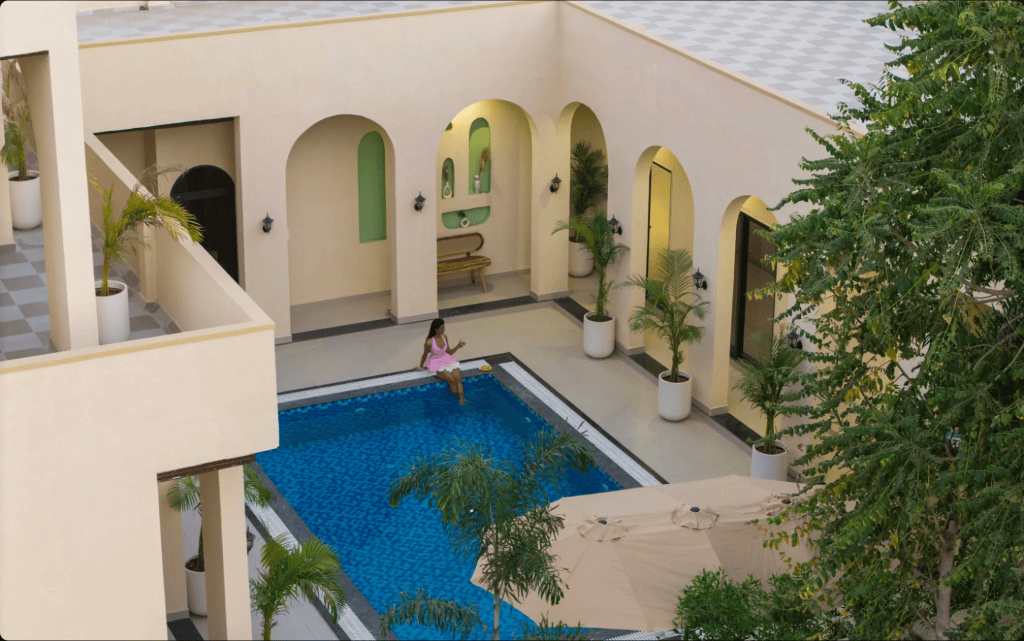
SaffronStays Ambika Farms
Ambika Farms is a four-bedroom villa with a private pool on the edge of Jaipur, where the ground-floor bedrooms open onto private sit-outs over the garden. After a day on the dunes, the garden gazebo is where everyone gathers to swap photographs, and a bonfire or a movie night under the open sky can be arranged on request. A games room with a pool table keeps the younger crowd busy on the rest day. For your Jaipur evening, book the vintage car ride and arrive in the old city the way its royals once did.
Best for: families and friends of up to 12 who want games, a full menu and a royal night out. View SaffronStays Ambika Farms
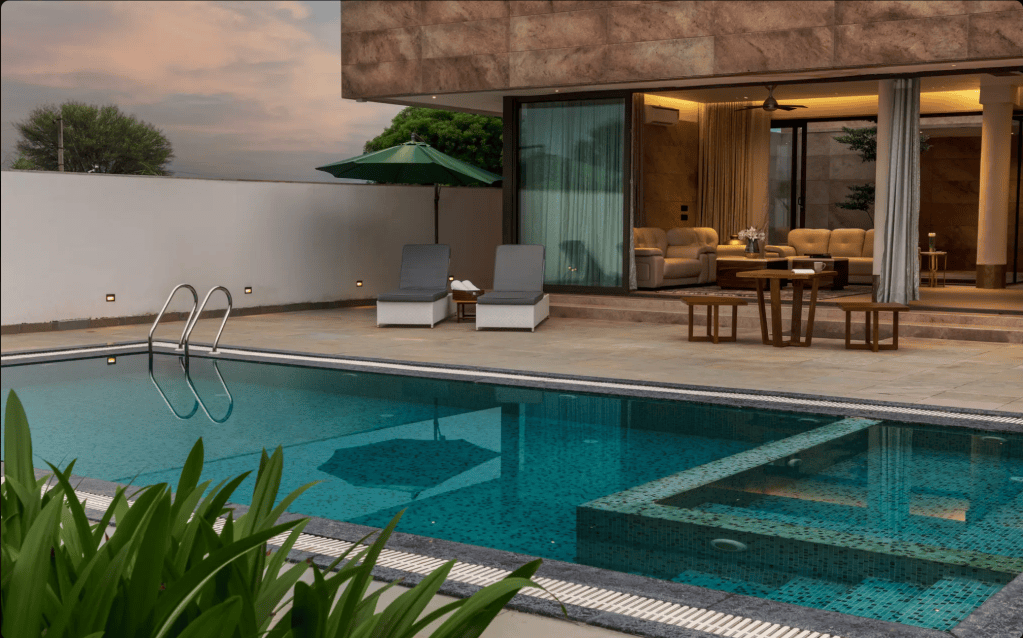
SaffronStays The Rustic Nest
The Rustic Nest was created by an artist, and it shows. Original paintings, handcrafted wooden furniture and natural stone floors fill a four-bedroom farm villa set on acres of private farmland outside Jaipur. Every bedroom has its own balcony or sit-out over the fields. The private pool, a sunken seating pit and two large lawns give the group room to unwind after the fair, and an in-house cook prepares pure vegetarian, dhaba-style meals. A first-floor lounge with a reading corner and table tennis suits a slow Monday.
Best for: friends and families of up to 12 who want a quiet farm stay and a vegetarian kitchen. View SaffronStays The Rustic Nest
Our Jaipur Villas for the Pushkar Fair at a Glance
| Villa | Bedrooms | Guests | Kitchen | Why it suits the fair |
| Villa Serreno | 5 | Up to 13 | Vegetarian and Jain | On the Ajmer side of Jaipur, with ground-floor bedrooms for elders |
| Ambika Farms | 4 | Up to 12 | Veg and non-veg | Games room and a vintage car ride for the Jaipur days |
| The Rustic Nest | 4 | Up to 12 | Pure vegetarian | Farmland quiet and an artist’s home for the rest day |
The Pushkar Fair comes around once a year and stays only a week. Catch the camels at dawn and the lamps at dusk, and come home to a SaffronStays villa in between, where the whole family gathers at one table. That, for us, is what Where Families Bond means.
| Stay With Us for Pushkar Fair 2026 Our private villas in Jaipur come with a pool, lawns and room for the whole family, a drive from the camels and the holy lake. Explore SaffronStays villas in Jaipur |
Pushkar Fair 2026: Frequently Asked Questions
When is Pushkar Fair 2026?
Pushkar Fair 2026 runs from Tuesday 17 to Tuesday 24 November 2026, according to the Incredible India events calendar. The fair ends on Kartik Purnima, Tuesday 24 November, with the holy dip in Pushkar Lake.
When is the Kartik Purnima snan in Pushkar in 2026?
The Kartik Purnima snan in Pushkar falls on Tuesday 24 November 2026. Pilgrims take the holy dip at dawn and float lamps on the lake at dusk. The holy bathing days begin around Prabodhini Ekadashi on Friday 20 November.
What is the best day to visit Pushkar Fair 2026?
Visit from 17 to 19 November to see the livestock trading at its busiest. Come on Saturday 21 or Sunday 22 November for the competitions and cultural programme, or on Tuesday 24 November for the Kartik Purnima snan.
Is there an entry fee for the Pushkar Camel Fair?
Entry to the Pushkar fairground is free. The Savitri Mata ropeway, hot air balloon flights, camel rides and tent camps are charged separately.
Can you visit Pushkar Fair as a day trip from Jaipur?
Yes. Leave Jaipur before dawn to reach the dunes for sunrise, spend the day at the Mela Ground and the lake, and drive back at night. Two separate fair days, one for the camels and one for the snan, show you both sides of the festival.
How do I reach Pushkar from Jaipur?
Drive along NH48 towards Ajmer past Kishangarh and take the bypass to Pushkar. You can also take a train from Jaipur to Ajmer Junction and a taxi over the hill to Pushkar.
Where should I stay for Pushkar Fair 2026?
Rooms in Pushkar are scarce and expensive in fair week, so many travellers stay in Ajmer or Jaipur. A private villa in Jaipur gives families space and a calm base between fair days. At SaffronStays, Villa Serreno sleeps up to 13 with a vegetarian kitchen, Ambika Farms suits groups of up to 12, and The Rustic Nest is a vegetarian farm stay for up to 12.
What events happen at Pushkar Fair?
Pushkar Fair events include camel races and decoration contests, the longest moustache and turban tying competitions, matka phod, tug of war, Kalbeliya dance and folk music. In recent years hot air balloons have flown at dawn, and the fair has closed with a maha aarti at the lake.
Are there still camels at Pushkar Fair?
Yes, though fewer than before. Camel numbers at the fair fell from around 10,000 a little over a decade ago to about 3,000 in 2024, and horses now make up much of the trade. Come in the first days of the fair, when the herds are largest.
Is alcohol and non-vegetarian food allowed in Pushkar?
Pushkar is a vegetarian pilgrim town, and meat, eggs and alcohol are kept out of its restaurants and markets. Try malpua with rabri, kadhi kachori and gulkand lassi instead.
Is Guru Nanak Jayanti 2026 a holiday?
Yes. Guru Nanak Jayanti falls on Tuesday 24 November 2026 and is a gazetted holiday. Take Monday 23 November off and Saturday to Tuesday becomes a four-day long weekend for the Pushkar Fair.
What should I wear to Pushkar Fair?
Wear modest, comfortable clothes that cover shoulders and knees, closed shoes for the sand and a light layer for cool mornings and evenings. A scarf helps with the dust and at the temples.