Nainital performs. Mussoorie performs. Ranikhet simply exists at 1,829 metres, pine-quiet and unhurried, and lets the Himalayan range do the talking.
Set in the Almora district of Uttarakhand’s Kumaon division, Ranikhet is a cantonment town that has always belonged more to the Indian Army than to the tourist trail. Its pine forests run unbroken into its deodar groves. Its golf course was laid out in 1920 and still rolls against a backdrop of the Nanda Devi massif. Its bazaar sells woollen shawls and rhododendron squash, not refrigerator magnets. On most mornings, the loudest sound is a barking deer moving through the trees.
The name itself is a promise. Ranikhet means Queen’s Meadow, and legend holds that Queen Padmini of Kumaon was so enchanted by this landscape that her husband, King Sudhardev, had a palace built here simply to keep her near it. The palace is long gone. The enchantment, evidently, persisted.
For those who have run out of patience with overcrowded hill stations, Ranikhet is not a compromise. It is the correction.
Table of Content:
How to Reach Ranikhet
The nearest railway station is Kathgodam, approximately 80 km from Ranikhet, and well connected to Delhi, Lucknow, and other major cities. From Kathgodam, taxis and shared jeeps make the climb through Bhowali and Khairna on roads that are in good condition for most of the year. Pantnagar Airport lies about 110 km away and operates daily flights from Delhi, making a fly-drive arrival entirely feasible.
From Delhi by road, the distance is roughly 350 km via the NH9 and NH109 route through Haldwani and Bhowali, a journey of around seven to eight hours. Most travellers find the drive rewarding, particularly the last hour as the altitude rises and the temperature begins to drop.
Ranikhet has direct bus connections to Nainital (60 km), Almora (50 km), and Ramnagar (96 km), making it a natural base for wider Kumaon explorations.
The Best Time to Visit Ranikhet
Ranikhet holds something back for every season. But seasons are not created equal here.
Summer (April to June) is when Ranikhet earns its broadest audience. Temperatures hover between 10 and 27 degrees Celsius, the forest paths are open, the orchards at Chaubatia are heavy with colour, and the contrast with the plains below feels almost theatrical.
Monsoon (July to August) transforms the hills into something impossibly green. The deodar slopes take on a depth of colour that no summer light produces. Experienced travellers know to love this season for what it offers, while keeping an eye on road conditions on certain routes.
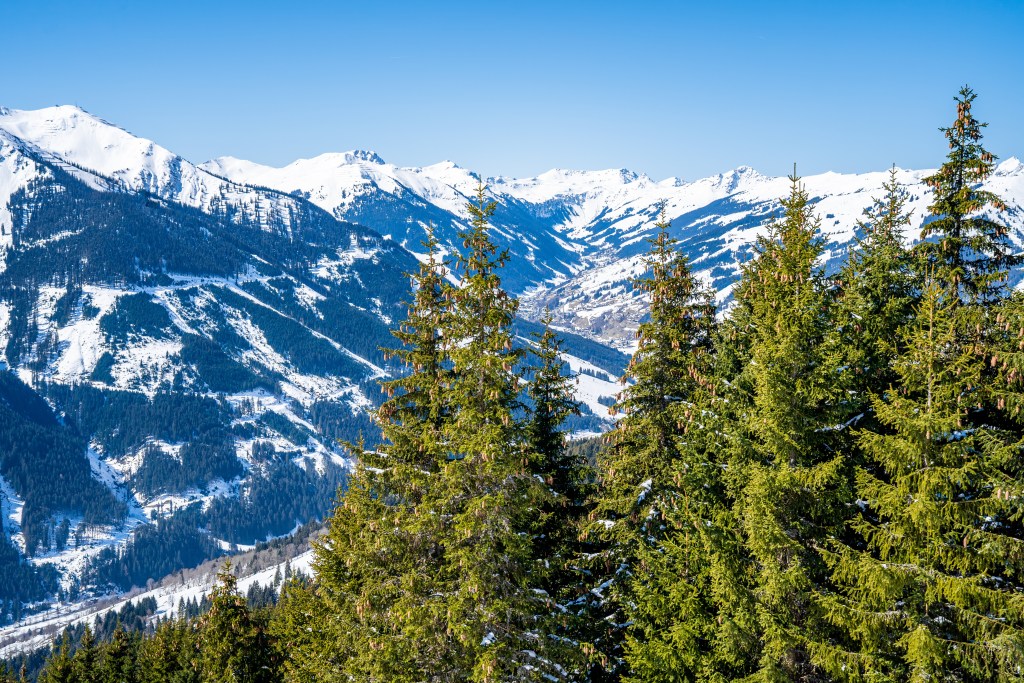
Autumn (September to November) is the season the discerning traveller tends to know about. The skies clear after the rains, the Himalayan range emerges in full definition, and views from Chaubatia in October, with Nanda Devi and Trishul carrying the first dusting of seasonal snow, are genuinely difficult to beat.
Winter (December to February) brings sub-zero nights and occasional snowfall. For those who come prepared, a Ranikhet winter means fireplace evenings, empty trails, and the hill station at its most private.
Places to Visit in Ranikhet
Ranikhet does not offer a theme park. What it offers is a series of unhurried encounters with landscape, history, and the particular quality of light that you only find at altitude. These are the places that repay the journey.
Chaubatia Gardens and Bhalu Dam
Six kilometres from the town centre, the government orchards at Chaubatia spread across 600 acres of hillside. Apple, apricot, peach, plum, and walnut grow in overlapping rows, and the views from the upper reaches take in Nanda Devi, Trishul, and Nilkanth in a single sweep. Come in spring for the blossoms; come in summer for the fruit. A further three kilometres along an easy forest trail brings you to Bhalu Dam, an artificial reservoir ringed by dense trees and frequented by birdwatchers and picnickers.
Jhula Devi Temple
Built in the eighth century and dedicated to Goddess Durga, Jhula Devi Temple is most immediately recognisable for its bells, thousands of them, brass and bronze, hung by devotees whose wishes the goddess has been said to grant. The sound the wind makes through all of this metal is unlike anything a hill station is supposed to produce. Approximately two kilometres from Ranikhet’s main bazaar.
Upat Golf Course
The nine-hole Upat Golf Course, established around 1920, is one of the highest golf courses in Asia and maintained by the Indian Army. The fairways roll through chhir pine forest, and on a clear morning the Himalayan range is visible from almost every hole. The course is open to civilians at an affordable fee. Five kilometres from town on the Almora road.
Majkhali and the Night Sky
Ten kilometres from Ranikhet town, the village of Majkhali sits at an elevation well above the light pollution of the settlements below. On clear nights in autumn and winter, the sky above Majkhali is the kind of sky that reminds you what the sky actually looks like. It is widely considered the best stargazing location in the Ranikhet belt.
Kumaon Regimental Centre Museum
The KRC Museum’s collection of photographs, weapons, uniforms, and medals tells the story of the Kumaon Regiment with precision. A section is dedicated to Field Marshal Sam Manekshaw, who served with the Kumaonis before becoming the only officer in Indian military history to hold the rank of Field Marshal. A small admission fee, and a couple of hours of your attention. Both are well spent.
Day Trips: Dwarahat Temples and Binsar Wildlife Sanctuary
Dwarahat, approximately 33 km south, is an ancient temple town containing a cluster of 55 temples from the 10th to 12th centuries. Binsar Wildlife Sanctuary, 30 km to the north-east, is a 47-square-kilometre forest reserve sheltering leopard, barking deer, red fox, and over 200 bird species. The sanctuary’s Zero Point viewpoint offers a panorama of over 300 km of the Himalayan range on a clear day.
Things to Do in Ranikhet
Ranikhet rewards a certain pace. The things it offers are not spectacular in the engineered sense; they become spectacular over two or three days when the urgency of the city has finally left your body.
Walking and forest trails are the primary activity. The paths between Chaubatia and Bhalu Dam, the lanes around the golf course, the road that winds down from Majkhali at dusk: each is a complete experience. Bring good shoes and no particular schedule.
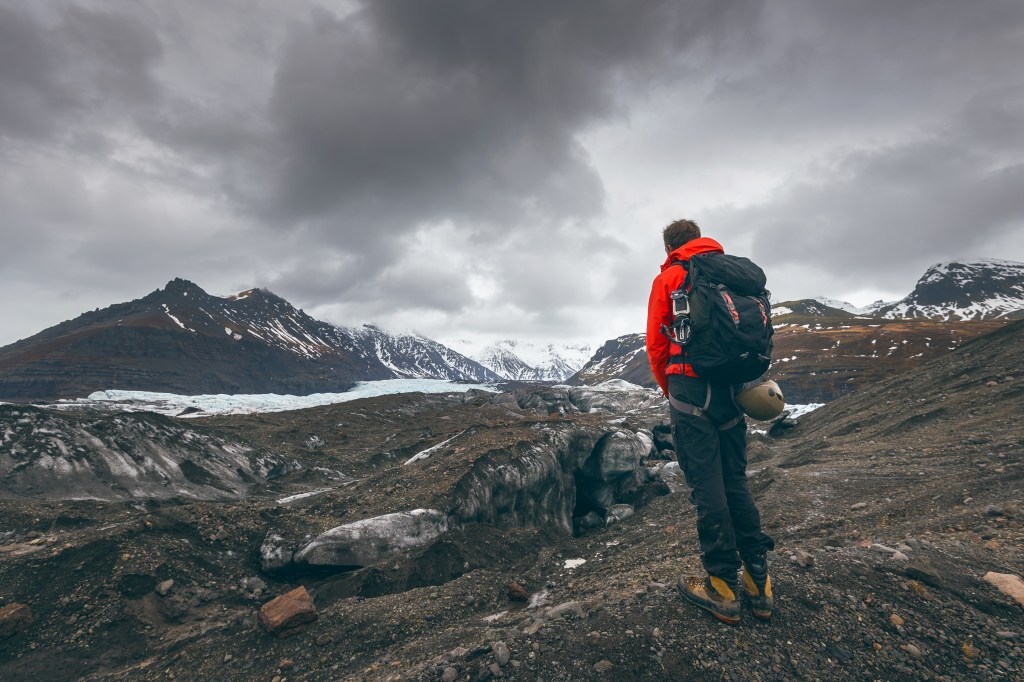
Trekking is available at several grades. The trail to the Haidakhan Temple at Chiliyanaula, 4.5 km from the bus stand, is accessible to most fitness levels and passes through dense woodland. More ambitious trekkers use Ranikhet as a staging point for longer routes into the Kumaon interior.
Birding in Ranikhet is quietly excellent. The forests around Majkhali and Chaubatia support Himalayan woodpeckers, minivets, laughingthrushes, and various raptors. During migration season the list extends considerably.
Local market and shopping. The Sadar Bazaar is where to buy Kumaoni woollens, local honey, rhododendron squash, and handwoven fabrics. The quality is genuine and the transaction is direct.
| Ranikhet does not perform for you. It simply exists, at altitude, in full possession of itself, and waits for you to adjust your expectations downward and your attention upward. |
Where to Stay in Ranikhet: Private Villas Worth Knowing About
A private villa in Ranikhet means a caretaker who knows your name before you arrive, a cook who sources from local markets and produces pahadi dishes that no restaurant menu has ever listed, and mornings that you do not share with strangers. SaffronStays manages a portfolio of private homes across the Ranikhet-Kumaon belt, ranging from architecturally ambitious eco-retreats to classic multi-bedroom estates.
THE CELESTE COLLECTION | Sky, Water, Earth
The Celeste properties are SaffronStays’ most architecturally distinctive homes in the Kumaon hills. Each is built around a different element of the natural world and speaks a completely different architectural language. The question is not which is better. It is which element you want to wake up inside.
Glasshouse Celeste, Bhatrojkhan | Element: Sky

Built around the concept of a glass pavilion and designed by IDIEQ, an architecture practice rooted in Uttarakhand, the villa sits at 4,500 feet in Bhatrojkhan, midway between Corbett and Ranikhet, and delivers a panorama of the Kumaon valleys that is, by any honest assessment, disorienting in the best sense. The floor-to-ceiling glass walls make no distinction between indoors and the mountain sky. The room on the left of the living area faces the sunrise; the two on the right are built for the sunset. The marble bathtubs have radiant skylights above them, so that an evening soak doubles as stargazing.
Chef Prem’s pahadi kitchen has been singled out in review after review for the kind of home cooking that makes resort food feel dishonest by comparison. Solar-powered. Rainwater harvesting. Steam room, outdoor fireplace, hammock, pool table. Pet-friendly. The property runs entirely on its own resources, which is the right way to build something in these hills.
Glasshouse Celeste has been featured in Architectural Digest and won India’s Favourite Villa at the MakeMyTrip Awards, a recognition earned through consistent guest experience rather than marketing. It accommodates up to nine guests across three bedrooms and is one of the few properties in the region where the photograph genuinely undersells the reality.
Aquadome Celeste, Ramnagar | Element: Water
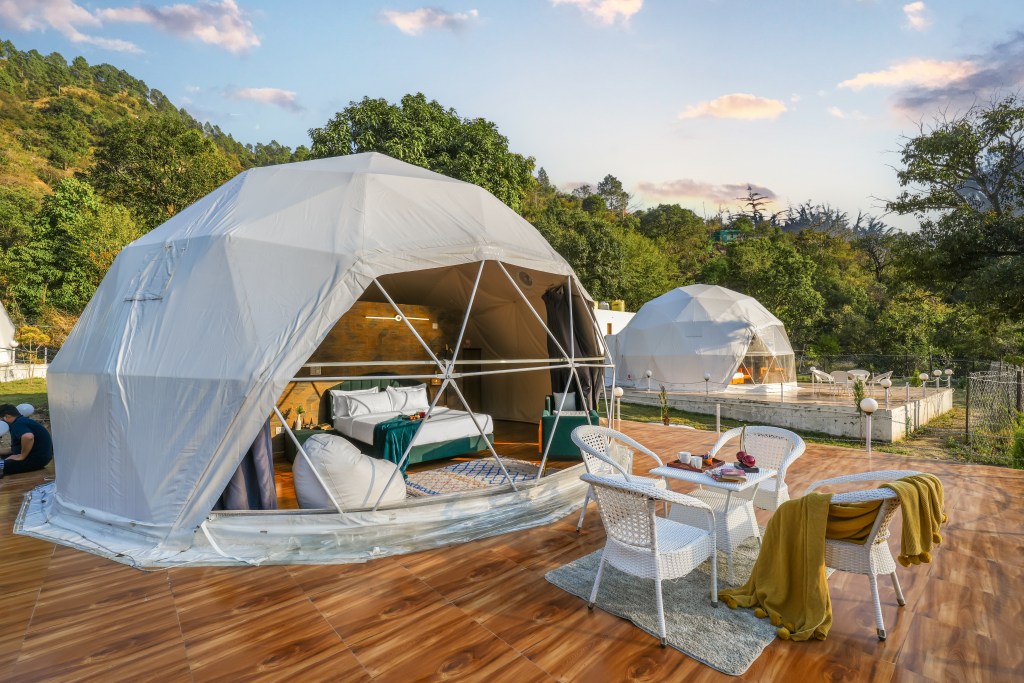
Where Glasshouse Celeste reaches for the sky, Aquadome Celeste settles beside water. Set along the Ramganga River in the Kumaon foothills near Ramnagar, this property takes the geodesic dome as its architectural form: three domes, each self-contained, surrounded by forest, positioned so that the river is not a backdrop but an active part of the experience.
A seven-to-ten minute trek from the property brings you to the Ramganga’s edge. Jim Corbett National Park is roughly two hours away by road, making Aquadome the right choice for travellers who want the hills and the wildlife corridor in the same itinerary. Positioned as a digital detox retreat: eco-conscious in its design, minimalist in its interior, and generous with what it places outside the windows.
Luna Celeste, Ranikhet | Element: Earth

The most earthbound of the three. Luna Celeste is a pod-style villa set within the forests of the Ranikhet-Almora belt, close to the Kasar Devi Temple and within easy reach of the Binsar Wildlife Sanctuary. Three fully independent pods within a forested estate: each private, each with its own valley views, each far enough from the others that a group of three couples can share the property and still feel as though they have the hillside to themselves.
Bonfires and barbecues are a natural part of evenings here, given the forest setting and the open sky above. A recently renovated addition to the collection, it carries a 4.8 rating across 82 stays. Luna Celeste accommodates up to nine guests across its three pods.
THREE MORE STAYS WORTH KNOWING
Edelweiss Estate, Dadgaliya | For Families and Large Groups
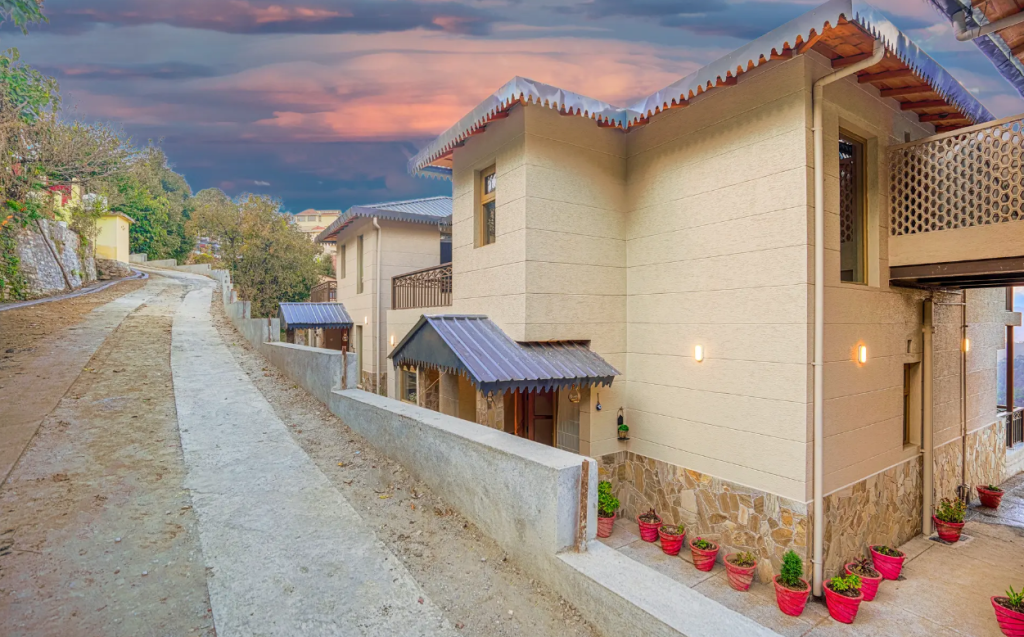
Set in Village Dadgaliya on the Dwarahat-Ranikhet road, Edelweiss Estate sits within fifteen minutes’ walk of the Upat Golf Course and close to Chaubatia Gardens. Available as Amore (one room), Bluebell House (three bedrooms), or Primrose House (three bedrooms), with the option to take the entire estate as a nine-room private takeover for larger gatherings. Views of Nanda Devi and Trishul from all rooms. Chef Surendra’s cooking and caretaker Bhupendra’s hospitality appear by name in enough guest reviews to constitute a character reference.
Brookside Estate, Majkhali | For Stargazers and Larger Parties
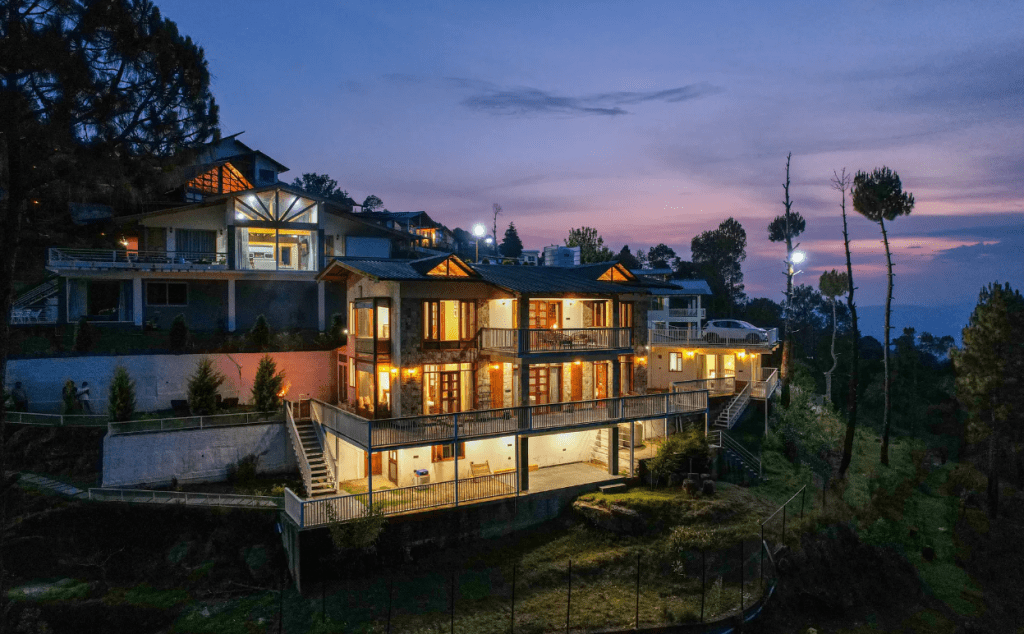
Majkhali is one of the finest stargazing locations in Uttarakhand: low light pollution, open ridgelines, and the kind of clear autumn and winter skies that make the Milky Way visible without optical equipment. Brookside Estate sits within this village: a four-bedroom property sleeping up to ten, rated 4.8 across its reviews. For groups who want to combine Ranikhet’s landscape with genuinely dark-sky evenings, Brookside is the most logical base in the region.
The Entire Edelweiss Estate | For the Big Occasion
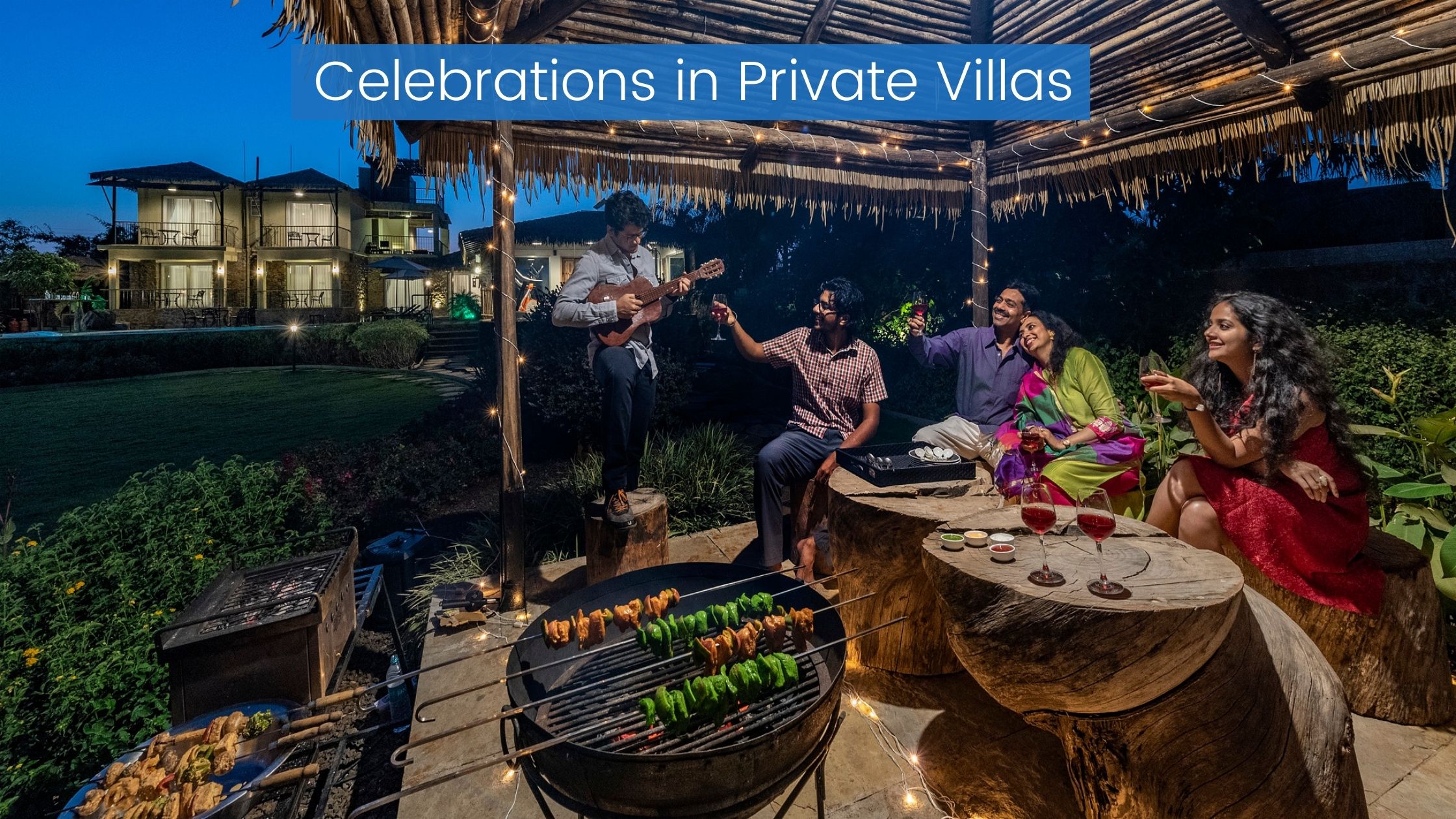
When the occasion is a milestone birthday, a family reunion, or a group large enough to require nine bedrooms and still want the property entirely to themselves. The lawn is large enough for outdoor celebrations. The kitchen team scales accordingly. The views of the Himalayan range do not become less dramatic the more people there are to see them.
Planning Your Ranikhet Trip: Practical Notes
| Quick notes for Ranikhet travellers Pack for two seasons simultaneously. Even in summer, Ranikhet evenings drop sharply once the sun leaves the ridgeline. A fleece or light down jacket is non-negotiable beyond April. Eat local wherever possible. Bhatt ki Churkani (black soybean dal), Gahat Soup (horse gram), Kafuli (spinach), and Bal Mithai (a Kumaoni sugar-coated fudge) are things you should seek rather than default to the pan-Indian menu. Road conditions. The main roads via Haldwani and Bhowali are reliable year-round. Certain access roads can be affected during peak monsoon (July to mid-August). Your villa host will always be the most reliable source of current road information. Allow more time than you think you need. Ranikhet has a habit of making the days feel useful even when nothing scheduled has been accomplished. The best itinerary here is the one with the most empty space in it. |

A Last Word
Queen Padmini was apparently not wrong. Ranikhet does not need to be discovered; it is not lost. But it is easy to overlook, which amounts to the same thing.
The Kumaon hills have always rewarded the traveller who asks less of a destination and is willing to receive more from it. Ranikhet, more than most places in the range, is built for exactly that exchange.
| Find Your Stay in Ranikhet Browse the Celeste Collection, Edelweiss Estate, Brookside Estate, and 30+ private villas across Ranikhet and the Kumaon hills. Your caretaker, your kitchen, your Himalayan morning. |
FAQ: Ranikhet Travel Guide
| PUBLISHING NOTE These 8 Q&As appear in the visible body of the post. The schema code below goes into the WordPress Custom HTML block or RankMath Schema tab only. Never paste schema into the post body. Answers here must match the schema exactly. Do not change one without changing the other. |
Is Ranikhet worth visiting?
Yes, for the right kind of traveller. Ranikhet is a cantonment hill station in Uttarakhand that has remained uncommercialized compared to Nainital or Mussoorie. It offers unobstructed Himalayan views, 600 acres of orchards at Chaubatia, one of Asia’s highest golf courses, and genuine quiet. For families seeking a private villa stay with caretaker hospitality and home-cooked pahadi food, it is one of the most satisfying hill station destinations in North India.
What is the best time to visit Ranikhet?
April to June (summer) and September to November (autumn) are the best times to visit Ranikhet. Summer offers temperatures between 10 and 27 degrees Celsius, ideal for sightseeing and outdoor activities. Autumn brings crystal-clear skies with dramatic Himalayan views after the monsoon. Winter (December to February) sees sub-zero nights and occasional snowfall, suited to travellers who enjoy a snow experience.
How do I reach Ranikhet from Delhi?
From Delhi, Ranikhet is approximately 350 km by road, a 7 to 8 hour drive via NH9 and NH109 through Haldwani and Bhowali. The nearest railway station is Kathgodam (80 km), well connected to Delhi and other major cities. The nearest airport is Pantnagar (110 km), with daily flights from Delhi. From both Kathgodam and Pantnagar, taxis and shared jeeps are readily available.
What are the best places to visit in Ranikhet?
The top places to visit in Ranikhet include Chaubatia Gardens (600-acre orchard with Himalayan views), Jhula Devi Temple (8th-century temple famous for its bells), Upat Golf Course (one of Asia’s highest golf courses), Majkhali (best stargazing in Uttarakhand), the Kumaon Regimental Centre Museum, Bhalu Dam, and day trips to Dwarahat Temples and Binsar Wildlife Sanctuary.
What is the Glasshouse Celeste in Ranikhet?
Glasshouse Celeste is a luxury 3-bedroom glass villa in Ranikhet managed by SaffronStays. Built around a glass pavilion architecture by IDIEQ architects, it sits at 4,500 feet and offers 360-degree panoramic Himalayan views. Solar-powered with rainwater harvesting, it features marble bathtubs with star-lit skylights, a telescope, outdoor fireplace, and sauna. Featured in Architectural Digest and winner of India’s Favourite Villa at the MakeMyTrip Awards.
What is the Celeste Collection by SaffronStays?
The Celeste Collection is three architecturally distinct properties by SaffronStays in the Kumaon hills, each themed around a natural element. Glasshouse Celeste (sky) is a glass villa with 360-degree views near Ranikhet. Aquadome Celeste (water) features geodesic domes along the Ramganga River near Ramnagar. Luna Celeste (earth) is a 3-pod forest villa near Ranikhet offering valley views and bonfire evenings.
Is Ranikhet good for a weekend trip from Delhi?
Yes. At roughly 350 km, a Friday night departure allows arrival by early Saturday morning. Two nights covers Chaubatia Gardens, Jhula Devi Temple, the golf course, and Majkhali. Three nights is recommended for a relaxed pace with day trips to Binsar or Dwarahat.
What makes Ranikhet different from Nainital or Mussoorie?
Unlike Nainital and Mussoorie, Ranikhet is a cantonment hill station that has remained uncommercialized. It offers pine and deodar forests, one of Asia’s highest golf courses, the 600-acre Chaubatia Gardens, and dramatic Himalayan views without the crowds, traffic, or noise. Private villa stays make for a considerably more private experience than the hotel-heavy alternatives.