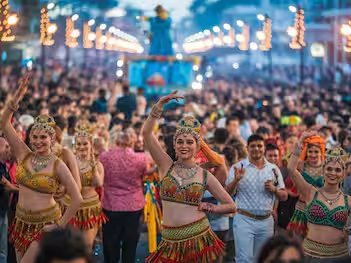
Every February, Goa changes its rhythm. Streets that are usually calm become stages, neighbourhoods fill with music, and entire towns pause their routine to celebrate colour, satire, and collective joy. This is the Goa Carnival.
But Carnival is not something you stumble into and “figure out on the go”. It’s short, it moves across towns, and it draws large crowds. Without context, it can feel chaotic. With the right understanding, it becomes one of the most immersive cultural experiences Goa offers.
This guide is designed to be the most complete, practical, and reliable Goa Carnival resource online. Whether you’re planning your first Carnival visit or returning with more intention, you’ll find everything here: what Goa Carnival is, how it began, what it’s famous for, expected dates for Goa Carnival 2026, where the parades happen, what not to miss, how to build a realistic itinerary, where to eat, what to see between events, and how to choose the right place to stay.
What is the Goa Carnival?
Goa Carnival is a public street festival celebrated every year in the days leading up to Lent. It has its roots in Goa’s Portuguese past, but today it belongs to the streets, neighbourhoods, and people of Goa.
Unlike religious festivals centred on rituals, Carnival is deliberately theatrical and participatory. It is about expression, satire, music, costumes, and community celebration. Most of the experience unfolds outdoors, in full public view, making it accessible to locals and visitors alike.

The history of Goa Carnival: how it started and why it still matters
Carnival was introduced to Goa over 500 years ago during Portuguese rule. Traditionally, it marked the period of indulgence before Lent, when Christians would observe fasting and restraint.
Over time, Carnival in Goa moved out of private halls and elite circles and into public streets. By the mid-20th century, organised float parades, music troupes, and community participation had become central to the celebration.
One of the most recognisable symbols of Goa Carnival is King Momo, the ceremonial figure who declares the festival open. His message is intentionally simple: eat, drink, dance, and enjoy before routine resumes.
What makes Goa Carnival relevant today is not nostalgia, but participation. It remains one of the few festivals in India where the boundary between performer and audience is deliberately blurred.

What is Goa Carnival famous for?
Goa Carnival is famous for its street parades, but the experience goes far beyond watching floats pass by.
It is known for:
- Elaborately designed floats reflecting cultural and social themes
- Costumed performers, dancers, and live brass bands
- Satirical storytelling woven into parade themes
- High-energy street music followed by quieter neighbourhood celebrations
- A sense of collective participation rather than ticketed performance
The atmosphere is playful, loud, and communal, especially in the afternoon when parades are at their peak.

Where does the Goa Carnival take place? (Parade towns & landmarks)
Goa Carnival does not happen in one single location. Parades move across key towns, usually on different days, allowing visitors to attend more than one if planned well.
Main Carnival towns
Panaji (Panjim) – Panaji hosts the largest and most structured Carnival parade. The float parade typically begins near the Patto Bridge area and moves through central parts of the city towards Campal, passing major roads that are temporarily closed for the event. This is where scale, spectacle, and official celebrations are most visible.
Mapusa – Mapusa’s Carnival has a more local, energetic feel. Streets fill quickly, music dominates the atmosphere, and the crowd tends to be more participatory.
Margao – Margao’s Carnival reflects strong community involvement. The pace is slightly different from Panaji, making it a good option for visitors who want cultural depth without the capital-city intensity.
Vasco da Gama – Vasco hosts lively street celebrations and parades, drawing large local crowds and offering a different coastal town energy.
Goa Carnival 2026 dates: what to expect and how to plan
Goa Carnival dates shift every year because they are tied to the Christian calendar leading up to Lent.
Expected Goa Carnival 2026 timeline
Based on current festival calendars and historical patterns, Goa Carnival 2026 is expected to take place in mid-February, likely between 13 and 17 February 2026.
Final dates and detailed parade schedules are usually announced closer to the event by Goa Tourism and local authorities.
Important planning advice:
Treat mid-February as a Carnival window, not fixed dates. Keep at least one flexible day in your itinerary for schedule changes or town-specific parade timings.
What not to miss during Goa Carnival
Carnival can feel overwhelming if you try to do everything. Focus on these core experiences instead:
- Watching the Panaji float parade for its scale and choreography
- Attending at least one Mapusa or Margao parade for a more local vibe
- Standing at one spot along the route for 30–40 minutes, then walking part of the parade trail
- Experiencing the shift in energy after the parade ends, when streets slowly empty and neighbourhood life resumes
Locals rarely follow the entire parade route. They watch, absorb, and move on. Doing the same makes the experience far more enjoyable.
What it actually feels like to attend Carnival (local insight)
This is something most guides don’t tell you.
Carnival is loud, warm, and crowded during peak hours, especially between 1 pm and 4 pm. The best way to experience it is to arrive early, watch part of the parade, and leave before traffic builds up.
Locals often treat Carnival as a time-boxed experience, not a full-day commitment. They attend one parade, return home, and step back out later for quieter evening gatherings.
Planning with this mindset prevents fatigue and frustration.

SaffronStays The White Whale, Parra
A realistic Goa Carnival itinerary (3 days)
Day 1: Arrival and orientation
- Check into your SaffronStays villa in Goa
- Explore Panaji’s Fontainhas Latin Quarter on foot
- Early dinner and rest
Day 2: Carnival parade day
- Late breakfast, light morning
- Reach parade town by late morning
- Watch the parade for 30–60 minutes
- Leave the area before peak traffic
- Evening at leisure or back at your villa
Day 3: Slow exploration
- Visit Reis Magos Fort or Aguada Fort
- Spend time at a quieter beach
- Café hopping or market visits
This balance allows you to experience Carnival without burning out.
Food and sightseeing around Carnival
Where to eat between events
- Local Goan taverns for seafood and traditional dishes
- Bakeries in Fontainhas for breads and desserts
- Cafés in Assagao or Panaji for downtime between parades
Sightseeing that fits well with Carnival
- Fontainhas heritage walk
- Reis Magos Fort
- Chapora or Aguada Fort
- Short beach visits for mental breaks
These experiences help offset Carnival’s intensity.
Where to stay during Goa Carnival (experience-led guide)
Your stay choice determines whether Carnival feels exciting or exhausting.
If you want easy access to main parades, choose areas near Panaji or well-connected parts of North Goa.
If you want space, privacy, and calm after the festivities, villa stays work especially well during Carnival week.
Villas allow flexible schedules, quieter evenings, and a place to recharge between Carnival days.

Practical tips that make Carnival smoother
- Arrive early and leave early from parade zones
- Avoid driving close to parade routes
- Wear comfortable footwear and breathable clothing
- Carry water, sunscreen, and a power bank
- Keep one flexible day in your plan
Carnival rewards preparation, not spontaneity.
FAQs about Goa Carnival
What is Goa Carnival and why is it celebrated?
It is a pre-Lenten cultural festival rooted in Goa’s Portuguese heritage, celebrated today as a public street festival.
When are Goa Carnival 2026 dates?
Expected in mid-February 2026, likely between 13–17 February, with final dates announced closer to the event.
Where does the Goa Carnival take place?
Major parades are held in Panaji, Mapusa, Margao and Vasco da Gama.
Is Goa Carnival suitable for families?
Yes, especially daytime parades. Planning short visits works best for families.
Should accommodation be booked early?
Yes. Carnival coincides with peak season and availability reduces quickly. Amp up your Goan experience by booking your stay at SaffronStays’ luxurious private villas in Goa that are designed for comfort and the true Susegad experience!
Goa Carnival is not just an event, it’s a cultural window. When you understand its rhythm and plan with intention, Carnival becomes vibrant without being overwhelming. The key is balance: step into the celebration, then step back into calm.